


2,99 €
Mehr erfahren.
- Herausgeber: tredition
- Kategorie: Geisteswissenschaft
- Sprache: Englisch
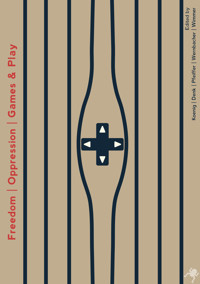
Freedom and Oppression are not simple opposites, they form a dialectical relationship in which, as concepts, one cannot exist without the other. Sometimes, they can even enable, emphasize and strengthen each other: just as freedom begins to shine once it contrasts against oppressive forces, oppression becomes the most effective when it gives a certain amount of leeway to the oppressed. This intricate connection between Freedom and Oppression often shapes political systems, social environments, and personal relationships; but it is also at the heart of matters of Games & Play, which rely heavily on the interplay between artificial constraints and the desire to gain a liberating sense of agency within them. Can a better understanding of Games & Play heighten our understanding of oppressive forces and liberation efforts in real life? Is the act of playing (and creating) games a reflection or even reinforcement of oppressions and freedoms that exist outside the game world? Can Games & Play themselves become liberating forces, or even tools of oppression? And what promises of freedom, what mechanisms of oppression exist in the world of games and gaming? The 16th Vienna Games Conference “FROG - Future and Reality of Gaming” 2022 has aimed to address these and other related questions. This volume presents 24 contributions to the conference, which strive to enlighten the complex relations between Freedom and Oppression, Games and Play.
Das E-Book können Sie in Legimi-Apps oder einer beliebigen App lesen, die das folgende Format unterstützen:
Seitenzahl: 723
Veröffentlichungsjahr: 2023
Ähnliche



















FREEDOM | OPPRESSION | GAMES & PLAY
Editors: Nikolaus Koenig, Natalie Denk, Alexander Pfeiffer, Thomas Wernbacher, Simon Wimmer
This work is licensed under a Creative Commons Attribution-NonCommercial 4.0 International License. (https://creativecommons.org/licenses/by-nc/4.0/)
Editors: Nikolaus Koenig, Natalie Denk, Alexander Pfeiffer, Thomas Wernbacher, Simon Wimmer
Cover, Illustrations: Constantin Kraus
Publisher: University of Krems Press
Print: tredition GmbH, Halenreie 40-44, 22359 Hamburg
ISBN Paperback: 978-3-903470-07-1
ISBN e-Book: 978-3-903470-08-8
DOI: https://doi.org/10.48341/TTMB-RZ82
Contact:
Center for Applied Game Studies Department for Arts and Cultural Studies University for Continuing Education Krems
www.donau-uni.ac.at/ags
Produced with the financial support of the Federal Chancellery of Austria
Contents
Cover
Title Page
Copyright
Introduction
Title: Introduction
SECTION I HOW FREEDOM AND OPPRESSION ARE PART OF PLAYING & CREATING GAMES
Title: Between Agency and the Normative Space
1. GROUNDING THE STUDY OF GAMES: A PHILOSOPHICAL JUSTIFICATION
2. LANGUAGE AS A GAME
3. HOW TO REVERSE THE ANALOGY OF LANGUAGE AS A GAME?
4. GAME AS A LANGUAGE
5. PHILOSOPHICAL LESSONS
6. CLOSING ARGUMENTS
Title: (Un)Restricted Play
1. INTRODUCTION
2. HUMANS AS GAME CREATORS
3. IMAGES OF HUMANITY
4. BOUNDARIES IN GAME DEVELOPMENT
5. METHOD
6. RESULTS
7. TECHNOLOGICAL BOUNDARIES
8. DEVELOPER CENTERED BOUNDARIES
9. ECONOMICAL BOUNDARIES
10. PLAYER CENTERED BOUNDARIES
11. LIMITS OF CONTENT
12. OVERCOMING BOUNDARIES
13. DISCUSSION
14. CONCLUSION
Title: Designing Game-based Moral Courage
1. INTRODUCTION
2. MORAL COURAGE IN GAMES
3. DESIGNING FOR MORAL COURAGE
4. CREATING THREE GAMES FOR MORAL COURAGE
5. DEVELOPING THE NARRATIVE
6. THE HYBRID CARD GAME
7. THE URBAN GAME
8. THE VIRTUAL REALITY EXPERIENCE
9. THE PARADOX OF AGENCY
10. DISCUSSION
Title: For Play’s Sake
1. DELVING IN
2. LONGING FOR RELEVANCE
3. INTERCHANGEABLE UNIQUENESS
4. GOING WITH THE FLOW
5. EVADING IMPOTENCE
6. BREAKING THE ILLUSION
7. FEELING THE FEELS
8. ABOUT THE AUTHOR
9. REFERENCES
Title: Endangered Species
1. STREAMING
2. VANISHED CONTENT
3. IMPACT ON CREATIVITY
4. CURRENT DEVELOPMENT IN HOLLYWOOD
5. GAMES
6. OVERALL
Title: Agency and Codephagy in Mexican Video Games
1. INTRODUCTION
2. MULAKA (2018) BY THE MEXICAN STUDIO LIENZO
3. MINECRAFT MOD “MEXICAN EDITION” (2019)
4. NESMANÍA CHALLENGE BY PIOTR DELGADO, ‘THE MEXICAN RUNNER’
5. 8 BIT BOLERO BOOM BOX BY ARCÁNGEL CONSTANTINI
6. CONCLUSIONS
Title: A Walk in the Park?
1. INTRODUCTION: TIME FOR A STROLL?
2. WHO WALKS YONDER?
3. THEME PARKS AND VIDEO GAMES
4. ORIGINS OF THE LANDSCAPE GARDEN
5. OPPRESSING ARCHITECTURE VS. FREEFORM EXPLORATION: A VERY BRIEF HISTORY
6. FROM THE MYTHOLOGICAL TO THE PICTURESQUE
7. STORYTELLING IN PARKS AND GAMES
8. NO EXPERIENCE WITHOUT EXPERIMENTS
9. DESIGN PRINCIPLES OF THE LANDSCAPE GARDEN
10. PARK DESIGN AND GAME DESIGN
11. A SERIES OF PARKS, A COMPASS OF INTENTIONS
12. CONCLUSION
Title: The Freedom of Choice
1. INTRODUCTION
2. RESEARCH GOAL
3. LITERATURE REVIEW
4. PLAYER TYPE MODEL
5. DISCUSSION
6. IMPLICATIONS FOR THE GAMING INDUSTRY AND POLICY MAKERS
7. CONCLUSION AND FUTURE OUTLOOK
SECTION II HOW REPRESENTATIONS OF FREEDOM AND OPPRESSION CAN FUEL EDUCATIONAL EFFORTS AND SOCIAL DISCOURSE
Title: Work, Play, Escape
1. INTRODUCTION
2. WORKPLACE AS THE GAME WORLD
3. REPRESENTATIONS OF POLITICAL OPPRESSION
4. FREEDOM OF CHOICE
5. CONCLUSION
Title: Further Discussion on Companion NPC Design
1. INTRODUCTION
2. DEFINING THE CNPC
3. PC-CNPC NARRATIVE HIERARCHY
4. LUDIC AFFORDANCES ON A CNPC
5. LUDO-NARRATIVE CO-EVOLUTION
6. CASE STUDIES OF EXISTING GAMES
7. CO-EVOLUTION DESIGN ASPECTS
8. SUBJECTS - CREATING A NEW CASE STUDY
9. CONCLUSIONS
Title: From Vardzia to Val Royeaux
1. INTRODUCTION
2. THE MEDIEVAL CAUCASUS
3. POWER, FACTION, AND THE STATE
4. IDENTITY AND OPPRESSION
5. THE MECHANICS OF REIMAGINATION
6. CONCLUSIONS
Title: Teaching Ethical Decision Taking with Serious Games
1. INTRODUCTION
2. ETHICS, MORALITY AND VALUES
3. POTENTIAL OF SERIOUS GAMES FOR CIVIC LEARNING AND ETHICAL THINKING
4. EPIC FRAMEWORK
5. SELF-DETERMINATION THEORY
6. GAMES FOR CIVIC LEARNING AND ETHICAL THINKING
7. FAIRSIDE STORIES
8. QUANDARY
9. CYBERSECURITY ETHICS
10. CONCLUSION
Title: Freedom and Slavery
1. INTRODUCTION
2. BUNCE ISLAND AND THE TRANS-ATLANTIC SLAVE TRADE
3. BUNCE ISLAND: THROUGH THE MIRROR
4. EXPLORATION AND THE OPEN GAME WORLD
5. AGENCY AND HISTORY
6. CONCLUSIONS
7. ACKNOWLEDGMENTS
Title: Nonlinear Pedagogy in Olympic Fencing
1. INTRODUCTION
2. WHAT IS NONLINEAR PEDAGOGY?
3. WHAT CAN VIDEO GAMES OFFER?
4. PRACTICAL EXAMPLE: THE BEAT
5. CONCLUSION
Title: The Violence of Violence
1. INTRODUCTION
2. OUR FRAMEWORK: VIOLENCE AS DEOPTIONALIZED COMMUNICATION
3. VIOLENCE IN “THE LAST OF US 2”
4. VIOLENCE OF VIOLENCE
5. CONCLUSION
Title: All Work and No Play
1. CHAINS FOR THEE, AND NOT FOR ME
2. “NOW I SEE THIS CLEARLY. THERE NEVER HAS BEEN A CHOICE FOR ME.”4
3. PROCEDURAL SUBALTERN RHETORIC
Title: Let’s Play for a Better Future
1. EDUCATION CAUGHT BETWEEN THE PAST, THE PRESENT AND AN EXPONENTIAL FUTURE
2. VUCA, BANI, WHAT?!
3. FUTURE-ORIENTED LEARNING
4. GAME-BASED LEARNING
5. VIRTUAL WORLDS AND LEARNING
6. DESIGNING A SUSTAINABLE FUTURE WITH MINETEST
7. MAKING SURE DEMOCRACY WILL PREVAIL WITH THIS WAR OF MINE
SECTION III HOW PEOPLE ARE OPPRESSED THROUGH GAMES, OR IN THE WORLD OF GAMING
Title: Escaping the Vicious Circle in Women’s CS: GO
1. INTRODUCTION
2. THE ECONOMY OF ESPORTS
3. DATA AND FINDINGS
4. THE CONTEXT: FEMALE-ONLY TOURNAMENTS
5. CONSTANT STRUGGLE AND LIMITED COMPETITIVE OPPORTUNITIES
6. QUALITY OF ATTENTION AND VALUE OF PLAYERS
7. POSSIBLE INTERVENTIONS
Title: Taking it Public
1. INTRODUCTION
2. CURRENT GAME REGULATION IN THE EU WITH A FOCUS ON GERMANY
3. LEGITIMATE DOES NOT MEAN ETHICAL: GERMANY AS A CASE STUDY
4. ISSUES IN THE SEARCH FOR ETHICAL MODELS OF GAME REGULATION
Title: A short Story of the last seven Years of Oppressive Mechanisms for Women in Game Development Culture
1. EQUAL TREATMENT IN GAME COMPANIES
2. THE UNDERREPRESENTATION OF WOMEN IN GAME DEVELOPMENT
3. IS THERE A FUTURE FOR WOMEN IN GAME DEVELOPMENT?
Title: A Certain Kind of ‘Freedom’
1. SETTING THE STAGE – NEW YORK 2017
2. THE EARLY YEARS – THE FORMATIVE YEARS OF GAME STUDIES IN GERMANY
3. INTERDISCIPLINARITY AND SELF-EXPLOITATION
4. GAME STUDIES AND THEIR INTERIM HOME
5. CONCLUSION
6. ACKNOWLEDGEMENTS
Title: Democracy or “Tyranny by Morons”?
1. INTRODUCTION
2. INDIRECT OPPRESSION
3. DIRECT DEMOCRACY, REPRESENTATIVE DEMOCRACY, AND MINORITY RIGHTS
4. NEOLIBERAL LIBERTY AND THE ILLUSION OF FREEDOM
5. FEATURING AND PROMOTING OPPRESSION
6. OPPOSING AND CRITICIZING OPPRESSION
7. A CRITIQUE OF POPULAR CULTURE AND MASS MEDIA
8. CONCLUSION
Title: Video Games and the New Apartheid
1. INTRODUCTION
2. VIDEO GAMES; POST-APARTHEID (OR) THE NEW APARTHEID
3. BLACK SKIN, WHITE FISTS
4. PLAY; BLACK MARGINALITY; AND RESISTANCE
5. PRESS T TO TOYI-TOYI
Title: Is there a Rise of Totalitarian Propaganda in Russian Game Culture?
1. INTRODUCTION
2. RUSSIAN GAME ENGINE
3. GAMES AS A PROPAGANDA
4. GAME CONTENT FOR AGITATION
5. QUEER GAME CENSORSHIP
6. CONCLUSION
Freedom | Oppression | Games & Play
Cover
Title Page
Copyright
Introduction
Title: Between Agency and the Normative Space
Title: Is there a Rise of Totalitarian Propaganda in Russian Game Culture?
Freedom | Oppression | Games & Play
Cover
1
2
3
4
5
6
7
8
9
10
11
12
13
14
15
16
17
18
19
20
21
22
23
24
25
26
27
28
29
30
31
32
33
34
35
36
37
38
39
40
41
42
43
44
45
46
47
48
49
50
51
52
53
54
55
56
57
58
59
60
61
62
63
64
65
66
67
68
69
70
71
72
73
74
75
76
77
78
79
80
81
82
83
84
85
86
87
88
89
90
91
92
93
94
95
96
97
98
99
100
101
102
103
104
105
106
107
108
109
110
111
112
113
114
115
116
117
118
119
120
121
122
123
124
125
126
127
128
129
130
131
132
133
134
135
136
137
138
139
140
141
142
143
144
145
146
147
148
149
150
151
152
153
154
155
156
157
158
159
160
161
162
163
164
165
166
167
168
169
170
171
172
173
174
175
176
177
178
179
180
181
182
183
184
185
186
187
188
189
190
191
192
193
194
195
196
197
198
199
200
201
202
203
204
205
206
207
208
209
210
211
212
213
214
215
216
217
218
219
220
221
222
223
224
225
226
227
228
229
230
231
232
233
234
235
236
237
238
239
240
241
242
243
244
245
246
247
248
249
250
251
252
253
254
255
256
257
258
259
260
261
262
263
264
265
266
267
268
269
270
271
272
273
274
275
276
277
278
279
280
281
282
283
284
285
286
287
288
289
290
291
292
293
294
295
296
297
298
299
300
301
302
303
304
305
306
307
308
309
310
311
312
313
314
315
316
317
318
319
320
321
322
323
324
325
326
327
328
329
330
331
332
333
334
335
336
337
338
339
340
341
342
343
344
345
346
347
348
349
350
351
352
353
354
355
356
357
358
359
360
361
362
363
364
365
366
367
368
369
370
371
372
373
374
375
376
377
378
379
380
381
382
383
384
385
386
387
388
389
390
391
392
393
394
395
396
397
398
399
400
401
402
403
404
405
406
407
408
409
410
411
412
413
414
415
416
417
418
419
420
421
422
423
424
425
426
427
428
429
430
431
432
433
434
435
436
437
438
439
440
440
442
443
444
445
446
447
448
449
450
451
452
453
454
455
456
457
458
459
460
INTRODUCTION
File #0
Title: Introduction
Subtitle: -
Author(s): Nikolaus Koenig, Natalie Denk, Alexander Pfeiffer, Thomas Wernbacher, Simon Wimmer
As conflicts between liberal democracies and authoritarian regimes rampage throughout Europe and across the world, we are once again reminded that the opposition between Freedom and Oppression rests firmly at the center of any conceivable human struggle: the inner struggles that tear us between our desires and anxieties, our hopes and limitations; the struggles in our relationships to others, where we are torn between commitment and intuition, between hedonism and responsibility; and finally, the struggle between communities, nations, and ideologies, the struggles of class, gender, race, tearing us apart between different ways of thinking, of living, of loving.
The questions are always the same: how much freedom do we need? How much oppression can we bear? Can we resist the urge to oppress? How much freedom do we grant others? And how much freedom can we bear ourselves?
Freedom and oppression are determining factors of the human condition, but they are not simple opposites. They form a dialectic relationship, in which one cannot exist without the other. Freedom is an ephemeral state that we can hardly grasp when we experience it in full, but even the slightest threat of oppression can make it almost physically tangible; freedom begins to shine once it contrasts against oppressive forces. At the same time, oppression becomes the most effective not when it is absolute, but when it gives a certain, calculated amount of leeway to the oppressed.
These are the insidious mechanisms of oppressive regimes, but they also lead us right into the realm of Games & Play, where the mutual facilitation of freedom and oppression is a driving force of the medium and its experiential capabilities: the art of game design rests on the designers’ capability to limit player actions in such a way that the experience of those freedoms still available is maximized; and from the players’ perspective, playing a game does not simply mean to be free, but to struggle for freedom against constant attempts to oppress it.
In most cases, this is a benevolent oppression, aimed at enabling enjoyment, insight or even empowerment through play. But the calculated freedom of play can also make us oblivious to the persuasive power of the game’s rules and can even serve to oppress our critical capacities in order to impose questionable ideologies on us: just as oppression can sometimes urge us to strive for freedom with even more dedication, the promise of freedom can make us submit into oppression and deceit even more willingly.
This carries over into all those areas which have the air of playful freedom about them, and which are therefore all the more in danger of being governed by oppression: we look behind the curtains of the gaming industry, and instead of playful creativity and artistic freedom, we often find inequality and exploitation; we turn to gaming cultures, and instead of liberating play and community spirit, we often encounter sexism, peer-pressure and hate-speech; and even in academia, a domain very particularly associated with “freedom”, the supplement “games-” makes it significantly harder to criticize the oppressive elements inherent to the system. After all, how serious can oppression mechanisms be if they evolve around a free activity such as play?
This difficult relationship between freedom and oppression, games & play, gains yet another dimension in the pedagogical context. Not unsimilar to game designers, we expect educators to take a role of benevolent guides, who temporarily steer those entrusted to them in certain directions, but with the aim to help them define and reach their own goals in the end. But this relationship can take a darker turn when these goals are already predetermined by hidden interests, secretly pushed on students by a corrupted pedagogical process, unbeknownst not only to them, but often even to the educators themselves? And what could better conceal these interests than the seemingly inconspicuous and freedom-promising act of play? It almost seems as if freedom and oppression were so tightly interwoven that any step towards one will also bring us closer to the other. And so we might think that it might not even be worth the effort to strive for freedom when oppression follows so closely on its heels. And even worse, play and games cannot only give us a motivating taste of freedom, but might make us overlook or disregard existing oppression just as easily. But as freedom and oppression intersect with matters of Games & Play on so many levels – theoretically, creatively, academically, and performatively – there is a powerful twist that should keep us from despair: as game scholars, creators, enthusiasts and activists, we are true experts on the complex relationship between freedom and oppression. What do we make of it?
Can we expand our knowledge of play and games to uncover new aspects of freedom and oppression in the real world, to understand how to achieve one and avoid the other? Do we look ever more closely into the oppression mechanisms in our own turf by studying oppressions and injustices in the games industry, in gaming cultures, in academia, how they leech on the idea of freedom, and how true freedom can be won back? Are we creating games to promote freedom, to sharpen the senses for oppression, and to unravel the complex and deceptive relationship between both?
The 16th Vienna Games Conference “Future and Reality of Gaming” (FROG) 2022 – hosted by the University of Krems’ Center for Applied Game Studies in cooperation with the Austrian Federal Chancellery – has brought together game scholars, creators, educators and activists to reflect on the often complex relationships between freedom, oppression, games & play.
During the resulting discussions, three distinct basic areas of investigation have emerged, which also inform the structure of this anthology.
1. The first section revolves around the idea that matters of freedom and oppression always play into the act of playing a game, as well as into the process of making games. In other words, it explores players’ and designers’ experiences of freedom and oppression.
Shifting the analogy of “language as a game” to “games as language”, XAVIER ARANDA ARREDONDO delves into a philosophical investigation of agency and norms that aims to touch on the very foundations of our field; PAULA GOERKE takes an interest in game designers’ awareness of their own power, as they set limitations in their in their games that also perpetuate real life restrictions – and in the potential of games to work against these real-life boundaries; WOLFGANG HOCHLEITNER, JEREMIAH DIEPHUIS, ANKE SCHNEIDER, JULIA HIMMELSBACH and DAVID SELLITSCH present a design approach that focuses on “moral courage” as a game mechanic, and discuss the challenges of balancing out the limitations of social impact games with players’ expectation of agency; this is taken to a more general level by by HARALD KOBERG’s argument that play, while usually considered free and voluntary, is indeed forced upon us by coercive demands – but there might still be a (Brechtian-informed) way to break free of these demands.
The corporate grip on modern media franchises and the strict limitations it imposes on otherwise great creative potentials is the focus of RALPH J. MOELLER’s contribution; JUAN CARLOS PONCE REYES uses four case studies to discuss different forms of agency, and relates them to the idea of codephagy – the mutual “devouring” of cultural codes; FELIX SCHNIZ and CHRISTOPH KAINDEL present a game based on landscape gardening, and examine how freedom and constraint play into as a design principle, from both the players’ and designers’ perspective; and MICHAELA WAWRA and ALEXANDER PFEIFFER present a literature review on lootboxes, in preparation of a closer examination of players’ freedom of choice in regard to financial investments in games.
2. The second section deals with representations of oppression in games, and how they can be used in educational context, or as contributions to critical social discourse?
This section starts off with KÜBRA AKSAY‘s discussion of games about tedious office work, which shows how even play experiences based on oppressive bureaucracies in dystopian environments can be engaging and even joyful, while at the same time making clear statements about freedom and oppression; ALON KFIR and REBEKAH TUMASUS focus on narrative hierarchies and ludic affordances underlying the relation between player characters and NPCs, and specifically the power (im)balance between players and their companion characters, and use case studies to examine the “Ludo-Narrative Co-Evolution” that marks possible changes of this relationship; JAMES BAILLIE takes a close look into history to show us how the imaginations about the oppressive dark ages that fuel many historic and fantasy games have little to do with actual medieval societies – and how this misconception makes us miss out on some great games; SONJA GABRIEL examines possible connections between digital games and ethical thinking – the former providing safe spaces to explore and consider complex ethical dilemmas, the latter being a potential safeguard against oppressive tendencies in politics and society;
KATRINA HB KEEFER discusses the challenges of creating a game about the trans-Atlantic slave-trade in the 18th century – and the ethical considerations that limit the freedoms of game designers when they approach complex heritages that carry matters of trauma and responsibility until today; GUNNAR GRAESBECK, SWEN KOERNER and MARIO S. STALLER examine how video games can make the holistic teaching approach of “Nonlinear Pedagogy” available to the world of fencing, before Swen Körner joins forces with Mario S. Staller to trace a pedagogical potential of violence in videogames, as an instance that triggers reflections on the meaning of violence, and the conditions under which players are encouraged to ask why, rather than how, violence is used in specific situations;
With her concept of “imposed bleed”, FIONA SPENCER SCHOENBERG proposes a way to make systemic oppression tangible in games – and uses a case study to show how this may contradict expectations of play, but can in exchange provide a deeper understanding of human experiences that is valuable on a very different level; and finally, drawing on practical examples, STEPHANIE WOESSNER explores the potential of game-based, future-oriented learning to promote freedom, tolerance, and democratic principles as means to meet the challenges of our time.
3. The third and final section puts the focus on how people are oppressed either with the help of games, or in the world of gaming.
Here, DARIA BALAKINA and ALESHA SERADA show how the Esports sector – in spite of proclamations to the contrary – still presents significant barriers for women striving to become Esports professionals; NILS BUEHLER discusses the oppressive dimension of game regulations, as well as their ability to facilitate a kind of freedom on another level; and, taking #GamerGate as a starting point, RICARDA GOETZ-PREISNER makes oppression mechanisms geared toward women in the world of game development tangible, while also considering the preconditions for a more inclusive future;
RUDOLF INDERST argues that, at least in Germany, game studies are still in a “liminal state”, which can on the one hand foster academic freedom, but at the same time poses its own limitations on game scholars; Distinguishing between obvious and subtle forms of political oppression, HOSSEIN MOHAMMADZADE and ATEFE NAJJAR MANSOOR take a close look on how video games can either criticize or promote oppressive ideas; LULAMILE MOHAPI applies South African protest-dance (toyi-toyi) to video game design, and discusses the potential of such games to serve as tools against the “New Apartheid”; and NIKITA STULIKOV investigates how the Russian game industry and game culture might have become entangled with propagandistic efforts during Russia’s shift from authoritarian to totalitarian politics.
Please note that – in accordance with the publications theme – the authors were free to use whatever citation style they chose for their papers; the unusual variety in this regard is not due to an accidental lack of editorial oppression, but to a dedication to freedom in every way possible.
Also, talking about possibilities – we would like to express our heartfelt thanks to all the amazing contributors who – as speakers, authors, and reviewers - have made the conference and this publication possible and satisfying. Our special thanks, as always, go to Herbert Rosenstingl, whose patronage has once again given us the freedom to bring together colleagues from all over the world, to explore new and exciting ideas, and to let the FROG community grow yet another bit further.
And it is this community that we want to thank above all else: it is your commitment over the years and across all distances that keeps us going, and the inclusive and affectionate environment that you create ensures that even during the most heated debates, no opinions are oppressed, and every thought can be expressed freely. This is truly appreciated.
SECTION IHOW FREEDOM AND OPPRESSION ARE PART OF PLAYING & CREATING GAMES
File #1
Title: Between Agency and the Normative Space
Subtitle: Game as a Constitutive Unit of Meaning Author(s): Xavier Aranda
The following paper will provide an attempt to philosophically ground the study of games, finding the conditions for a general concept of ‘game’, where such conditions must be able: 1) to delimit what a game is (distinct from another while preserving the same universal features), 2) to provide a demarcative notion (which defines what a game is but also what a game isn’t), and 3) to explain how a game can be constitutive of meaning (that is a kind of content), such that can be subject of analysis independently of an specific context (whilst always presupposing a context that is). The current approach to this philosophical grounding will take inspiration from contemporary epistemology, and philosophy of mind and language. Starting from the analogy of ‘language as a game’ I’ll provide an argument to reverse it so there’s a way to understand ‘game as a language’ and apply several philosophical concepts valid to language analysis. Therefore, my aim is to show that to ground the notion of game, and by extension a general study of games, there is no possible a priori starting point, so a holistic nonreductive approach is a requiremente as well. I’ll show this by underlining the obstacles of choosing an a priori starting point (focused on norms or agency), proposing to understand the constitutive relation between rules and agents as immanent.
Keywords: Philosophy, Philosophy of Language, Freedom, Agency, Normativism
-----
1. GROUNDING THE STUDY OF GAMES: A PHILOSOPHICAL JUSTIFICATION
In the context of multidisciplinary studies the idea of ‘grounding’ might suggest a stubborn pursuit that leads to a kind of reductionism (the idea that a less objective discipline can be simplified, reduced or explained by a more objective discipline therefore giving it the status of secondary, or epistemologically dependent), or a position contrary to epistemological pluralism (the idea that there are several valuable ways of knowing that which be complementary and enriching, contrary to the idea that there is only one type of objective knowledge, i. e. scientific knowledge).
Grounding a discipline in the philosophical sense of this proposed task, implies to determine more clearly its object of study to show the possible performance of its theoretical activity, as well as its possible results. To ground ‘game’ as a concept that provides us with a type of novel and interesting analysis implies a serious interest in game studies, but not a displacement or theoretical imposition of a predominantly philosophical perspective. This idea is not in conflict with the plurality of multidisciplinary backgrounds of game studies, though it does raise the need for a ‘general theory of games’ (GTG as I will refer to it onwards) as a general approach to the concept of game, but placed a posteriori, that is, in a way that the alleged GTG presupposes game studies as pre-existing and without disrupting them1, interested first in the notion of game itself and in the manifestations and implications of games later.
In the previous sense, it is crucial to understand the game as a unit of conceptual analysis, to delimit it so that its study provides us with different results from what the mere application of tools from other disciplines can produce and that may well dilute the concept of game or sucit it to a reduction, this, so the future application of interdisciplinary tools enriches the analysis and does not turn it into a derivative or non-novel result (this is a purely theoretical or philosophical enterprise at its core).
For the precise reason this grounding attempt is a predominant philosophical effort since the philosophical questions that arise within every discipline lead to a ‘philosophy of’ and not to a reduction of these theories by revealing themselves as epistemologically dependent on philosophy. At the same time, philosophy has the freedom to relate various fields of study, streams of thought, and theories, without diluting the critical and necessary questioning of the problems it confronts.
From this perspective I’d like to emphasize that a GTG interested in a general notion of game which links all the manifestations of play under a concept with demarcative performance (a concept that can explain what a game is but also what a game isn’t), can bring new light to the way in which other related concepts are assumed in all the possible approaches within game studies.
This drives the question to what is the purpose of understanding the concept of game as a constitutive unit of meaning? Since our interest lies in understanding games, finding a general definition (and not only assuming that all types of games are so because of a contextual classification system) would allow this general stance to link all the different manifestations of ‘play’ (that I propose to take only initially as the development of a game from the point of view of an agent), while granting a conceptual delimitation necessary to give a direct account of the game phenomenon and not only presuppose its nature as that of a diffuse entity which possibly cuts through all facets of human activity.
However, before acting on such a philosophical undertaking, it is necessary to clarify what kind of performance a GTG would seek to obtain from a definition of game, that is, what kind of results it would expect to obtain from that analysis. On the one hand, it can take inspiration from the common goal of an aesthetics of game, application of narrative studies, semiotics, anthropology, sociology and even psychology of games (among many other possible approaches), which together show a reflective purpose (although not exclusively) in their examination: to understand the nature of game, relevance, and other implications in their respective fields. On the other hand, it could take inspiration from approaches focused on the study of game as an analysis on rational decision making, such as game theory in mathematics, where the driving ambition would be predictive.
Contemporary philosophy has made several contributions to the study of language and mind, and important developments such as Wittgenstein’s (2003) stance on language and the constitution of meaning rely in the use of ‘game’ as a deliberately open metaphor emphasizing the pragmatic nature of how speakers relate to language as a normative space. In that regard the idea that there might be a fruitful relationship between the language-as-a-game metaphor and a general study of games is not without merit. So, the overall intention will be to import some of those notions (and treatments), such as the aforementioned metaphor, the concept of agency (the capacity or the set of conditions that enable making decisions, according initially to a causal theory of action in Piñeros & Tenenbaum, 2003, 2), volitions, and the notion of dispositions as related to mental content; aiming to generate a possible argument to explain what a game is or how it could be understood from a general and purely abstract perspective.
In the previous sense, the analysis that will result from the application of concepts originated from epistemology and philosophy of language to the notion of game will determine the possible performance and orientation of our exam which, as I will show, must be aimed at abandoning the predictive goal in a GTG (due reasons that I’ll explain in section 6).
The argument will proceed as follows: First I’ll introduce the importance of the ‘language as a game’ metaphor for the contemporary philosophy of language, pointing out key aspects of how meaning (usually understood as an equivalent to mental content which is the content of mental states, a notion widely used by contemporary philosophy of mind, epistemology, and the philosophy of language) is understood as constitued by speakers insofar they relate to a normative space (language-game rules) that must be objective in itself (via Kripke’s interpretation of Wittgenstein’s private language paradox, 1982), and which has open the way for a contemporary use of the language-as-a-game metaphor as a kind of study of normative2 relations (between speakers and language-rules).
Second, I’ll propose inverting the metaphor to study game-as-language, presenting an argument which pays attention to the equivalent role of the speaker as an agent (since agents are language-rule followers), which is dependant of understanding agents as those who possess volitive states (or volitions) as a kind of mental content (just like meaning is a kind of mental content), showing how for the sake of the game as a rule system (or a normative space), constituing meaning as content or developing agency (through decision making) as content is basically the same. The hard part of this argument is making the case that there’s no real need for volitions to exist to explain how agency is possible, and how dispositions are not enough to explain agency (as a kind of spontaneity of individual action) altogether.
Third, I’ll show how the notion of agency-as-content constitution is in danger following an assumption of what methaphysical necessity entails (a problem of reduction if we choose to give methaphysical priority to the normative space or the individuals-as-agents). This danger will show the theoretical need to ground the concept of game, whereas I’ll claim there’s an alternative to both options (norms are prior or agents/ content are prior) if we pay attention to some of the most important arguments in contemporary epistemology, suggesting an explanation of agency that doesn’t rely in it being an essential property of agents nor an essential property of the normative space.
Fourth, I’ll finally conclude that the concept of agency must be understood as co-determinated by the game as a normative space, in which case agency can not be taken as a concept given a priori, but as the concept through which we can understand the relation between agents and rules. This explanation of how content is then constitued by this mutual relation requires the abandonment of the predictive ambition of a GTG since it would entail that the conditions constitutive of content of a game-as-a-language are immanent (developed from the game-agents relation).
2. LANGUAGE AS A GAME
Our approach to the task originates in the use of the analogy of 'language as a game', which gained special relevance thanks to the influence of the Philosophical Investigations of L. Wittgenstein (2003) originally published in 1953, who decisively changed the way we understand language.
Motivated by the desire to move away from the previous analytical characterization of language in his 1922 Tractatus Logico-Philosophicus (2016), which presented the logical form of the proposition as a type of rigorous generalization, Wittgenstein now proposed instead to understand language as a game, highlighting the diffuse character of this notion.
Wittgenstein argued that most of the times the meaning of a word is its use (2003; §43), so the idea of an analytical (universal and a priori) grounding of meaning (akin to finding a logical structure of language which would possess metaphysical priority over natural language) would be against the pragmatical spirit of the Philosophical Investigations.
Wittgenstein does not define what a game is, neither gives an analytic criterion through we could determine a particular language-game or clearly differentiate it from others. Instead, he uses the term ‘family resemblance’ (Familienähnlichkeit, 2003; §23), which is a purposefully vague term to show how games relate one to another. This led his philosophy to show how meaning should be constituted in a holistic way and through speakers’ usage, where words as meaning-use instances would need to be evaluated by other speakers as well (commonly understood as the ‘private language’ argument in 2003; §244-271).
Saul Kripke famously brought up the evaluation aspect to the philosophical discussion in Wittgenstein on rules and private language (1982), taking as starting point the passages no. 201 and 202 from the Philosophical Investigations (2003) where Wittgenstein argues that the belief of following a rule is not a good enough criterion for following that rule. Kripke underlines that for evaluation to be possible the rules must be objective in themselves (1982; p. 110-111)3.
Kripke’s interpretation of Wittgenstein underlines that meaning is normative, and it’s been especially relevant to a philosophy of normativity which follow’s Kripke’s claims that meaning understood as kind of mental content is therefore normative as well (specially in McDowell & Petit, 1986 and Brandom, 1994).
My innitial hypothesis has been that it is possible to reverse this analogy, moving from language as a game, to the game as a language, pretending to obtain immediate returns on a (universal) notion of the game. But to show how such an argument is possible, it would first be necessary to address the core of the issue.
What will allow the inversion of the analogy is to establish an analogy in turn between the concept of 'agency' (initially in line with the previously noted casual theory of action) and meaning or mental content. Being able to make the analogy between agency and meaning, respectively taking agency in relation to the normative space of the game (just as meaning is for language), and understanding both as types of content in relation to the normative space (of language or a game), will allow to show not only the relevance, but the fruits of the application of these notions from various branches of philosophy (epistemology, philosophy of mind, philosophy of language) to a GTG.
Why is the notion of agency so important? Freedom is a crucial notion to understand what a game is (of any kind), not only from the perspective of J. Huizinga (1980), R. Caillois (2001), and E. Fink (2016): a stance on freedom must be presupposed in the very concept of agency for it to work. This merely points out that every belief possesses an ontological commitment of some sort, yet it’s especially relevant to clear out the implications of the metaphysical status of freedom as I’ll show, those implications put at risk the notion of agency-as-content to be introduced in the next section.
3. HOW TO REVERSE THE ANALOGY OF LANGUAGE AS A GAME?
Here I’ll present an argument that will allow us to reverse the analogy of language as a game. However, this argument will be supported by other arguments important to epistemology, philosophy of language, and philosophy of mind.
i. The first step is to show that agency can be explained without resorting to causal processes of an essentially mental nature, where I’ll rely on the argument of G. Ryle in The concept of mind (2009), who rejects the idea that acts are based on volitions (understood as types of mental content whose function is to account for when an act is intentional or unintentional) as flawed, for it assumes a causal link between volitions and acts, which the same volitions can’t possess between each other otherwise it would lead to an infinite regress (p. 54).
ii. Thus, if agency can’t be explained by ‘volitions’, then we could argue that there is not a big difference between ‘being able to say what we want to say’ in the twist of a given sentence, and ‘being able to say we did what we did’ in a given situation, since agency as a kind of content (the one that agency constitutes) could be explained dispositionally. That is, we could present agency in terms of a dispositional theory of content (equating meaning and agency as types of mental content). This doesn’t necessarily entail equating mental content with agency-content, we might as well expect both to be labeled as different kinds of content4 (both being content nonetheless), but such labels are not important as I’ll be focusing on the problematic aspect of them being dispositional.
iii. I’ll refer now to an argument against content as determinable from a dispositional theory of content in Kripke (1982). Kripke’s argument postulates a possible mathematical operation that can be confused with another5 since both could produce the same result in a certain range, but a different result in another. The example uses a mathematical operation as an instance of an objective rule that would produce objective results, so there’s no ambiguity left. Kripke aims to show that being able to forget what specific rule we used in a past case would still yield the same objective result (it wouldn’t affect it at all), showing how even if we aren’t clear about our dispositions (i.e., we forgot what kind of rule we applied in each context) since the rules are objective themselves, dispositions are not needed to explain how speakers (or agents in this case) are able to constitute contents.
iv. Which would allow us to relate the constitution of meaning with the constitution of acts insofar as both can be understood as types of content…
a. For content related to the normative space of language would be what we usually understand as meaning, and that somehow could be separated from the decision-making process (agency).
b. While content for a game is in fact ‘decision making’, since the actions of an agent or player are the only meaningful things for the game to hold on to (understood as a normative space), that is the interaction between rules and actions carried out by agents, allowing us to reverse the analogy of language as a game.
4. GAME AS A LANGUAGE
The above argument showed that to explain agency there’s no need to invoke volitions as mental causes for actions since explaining what we do through our dispositions is sufficient to do it (just like it is for meaning and mental content). Then went to show that dispositions are not objective enough to constitute meaning-as-content and a normative relation with rules is required such that for agency-as-content the same condition would be needed. And since games are normative spaces -as content is concerned- there’s no real distinction between actions and words, allowing games to be understood as language6 just like language can be understood as a game.
I would now be inclined to point out how the way in which players relate to the rules is constitutive of agency, but Kripke's interpretation of Wittgenstein's philosophy (1982) showed that the analogy between language and games presents some possible options in the way in which rules (such as the normative space of speakers or agents) and mental meaning or content can be constituted (in Glüer & Wikforss, 2018):
1. The content engenders normativity (the content is metaphysically prior to the norms),
2. Content determines normativity (norms are metaphysically prior to content).
This perspective that determines the agency from either (1) or (2) would seem to lead us to understand it as: an essential property of the agents in the first case (where content is metaphysically prior to norms) who would have to own agency before participating in any game (as the very condition to be able to play); or perhaps to assume that agency falls into the normative space of the game (the second case where norms are metaphysically prior), which would lead us to an approach where agency would be what the game determines as such, and where players are not fully free (metaphysically), but only to the extent that agency-as-content is meaningful to the game.
From the perspective of the normative space (2, norms are prior) there’s a couple of options to consider: first, normative space can mean either the rules of a specific game (the same game, e.g., chess, or a specific game carried out at a certain time and space, e.g., the 10th game between Carlsen and Anand on November 22, 2013) or the normative space of the totality of games.
Referring to ‘the normative space of all games’ has the virtue of referring to a holistic understanding of what a game is, but it also entails the problem that it prevents us from being able to separate games in a conceptually rigid way from each other: one game would imply others and there would be no real border between them (just as Wittgenstein intended). This way leads to a dead end if the intention is to make some kind of conceptual delimitation when analyzing a certain game (either chess or the Magnus Carlsen game).
Conceptual delimitation is possible if I refer by ‘the normative space’ to the rules of a game (whether it’s chess or Carlsen's match), but ends up determining in a very categorical way the sense of agency as that constituted from the actions recognized by the rules as meaningful (giving rise to a type of reductionism of agency to norms). This of course has predictive utility since it allows the postulation of a model with adjustable knobs depending on the possible decisions to be placed in the system. It’s also circular in that the question of agency could not be answered in terms of what agency is7, but in terms of what the system preconfigures as agency.
From the perspective of the player or agent (1, content is prior), we would have to assume that agency is already a precondition, which imposes other limits on the notion itself: insofar as the notion is no longer really significant for the conceptual analysis of a GTG, but only the repercussions of agency (the acts) would be significant for a GTG, in addition to postulating agency as a type of essentiality outside the scope of GTG’s analysis (thinking of freedom as essential to the human being). It also conflicts with the spirit of Ryle's argument (2009; p. 54) in that agency would rest if not on ghostly volitions, then on some other type of given content that would exercise the same function (to provide agency to acts).
The latter perspective (1, content is prior) to some extent safeguards the reflective analysis (of aesthetics, narrative studies, semiotics, etc.), but delegates the study of agency to a discipline other than a GTG. Although it also shows the relationship between human beings and games under an essentiality, the analysis is anthropocentric and therefore leaves out the following questions:
• Can animals play in the same way as human beings, that is, can their games constitute meaning? And…
• Can artificial intelligences play? Where this question is the same as the previous one, but in a different context.
Then, neither AI's nor animals would be able to constitute content through a game.
Both ways I mentioned in which players or agents relate to rules as a relation constitutive of agency (content or norms prior) put at risk the idea of agency-as-content as a central notion for a GTG. If norms are prior, agency-as-content ends up being circularly defined. If content is prior, it could be objected that agency-as-content is not novel enough to warrant a GTG a domain of its own, or that the analysis ends up being restricted to what anthropologically can be done with the concept of game (which otherwise opens relevant issues like animals and AI’s), even if the conceptualization I have presented so forth could be rich enough for game studies and other disciplines interested in the game phenomena.
Before providing a solution to the present dilemma I will introduce some key elements to understand what kind of answer would be necessary. That is, what philosophers have learned from the study of the philosophy of language, epistemology, and philosophy of mind, and which I can now apply to concept of game aided by the metaphor of ‘game as language’.
5. PHILOSOPHICAL LESSONS
Some of the most influential arguments in contemporary philosophy of language, epistemology, and philosophy of mind reside in what is called an attack on the given, that is, on categories or concepts that are taken as pure, assumed, or necessary (in the metaphysical sense) for content, showing how the latter is not constituted hierarchically (e.g. from a first concept, first experience, etc.).
Three of the most influential texts in this regard are "Two dogmas of empiricism" by W.V.O. Quine (1951), "Empiricism and the philosophy of mind" by W. Sellars (1991), and the Philosophical Investigations of Ludwig Wittgenstein (2003, specifically the argument against private language).
The idea behind the present section is to collate some of the lessons of these influential texts in relation to our previous exposition showing the relationship between agency and the normative space.
In "Two dogmas of empiricism" (1951) Quine attacks two substantially important issues, first the idea that it is possible to clarify the notion of meaning (the distinction between analytic and synthetic propositions), and second, the idea of reductionism.
According to Quine the notion of meaning is not only diffuse, but impossible to elucidate, considering that the use of meaning is not very different from the use of essence for classical philosophy. Meaning as content according to Quine, cannot be explained a priori (as a given content in a pure way).
Reductionism falls into a similar criticism, since, on the one hand we should be able to reduce every instance of meaning (in the case of Quine's argument) to a set of experiences or a sense-datum vocabulary which is an unfeasible task, on the other, Quine points out that no statement is immune to evaluation, indicating that even logical laws can be revised.
Assuming the previous lessons, it would be necessary to underline the problem that arises when trying to point out that agency would be explicable as something essential to the agents. If it is not possible to come up with a concrete notion that explains what agency is (for example, volition or freedom in the broadest sense), then we would be making a mistake similar to what Quine finds in the notion of meaning. In the same way, it arises with the claim that agency could be reduced to the normative space of game while the rules of games themselves are reviewable either because they are determined insufficient (they are not able to contemplate some behavior of the players) or too diffuse (in the case of children's games in which children can make the rules as they play), showing that reduction is not a good enough explanation for agency in the context of an universal concept of a game.
Sellars' text "Empiricism and the philosophy of mind" (1991) contains the famous argument against the ‘myth of the given’. The given represents any type of content that is assumed as pure, e.g. categories, concepts, definitions, conditions, qualities, first experiences, etc. were Sellars concludes that if the given contents are not propositional then they have no epistemological utility (they can’t generate or transmit knowledge or information as content), and if they are propositional, then they are the result of another type of propositional content in turn (such as other inferences). Like Quine, Sellars also points to another kind of holism in the form of the logical space of reasons, the normative space (of all games and not of a game).
The lesson to be taken would be that both norms (thinking of a game and not the normative space of all games) and agency are in a process of mutual mediation, and that therefore a state of pure rules or pure agency is not possible.
Now, if combined these lessons with Wittgenstein’s idea in the Philosophical Investigations to abandon the logical form of the proposition (analytical definitions), we will arrive at a holistic notion of the normative space of all games, begging the question it would clash with the idea of being able to give a conceptual delimitation to the game as a unit of analysis. However, the possibility of avoiding this conclusion lies in reflecting on Wittgenstein's intention in establishing this diffuse condition of games.
A non-analytic notion of games would therefore have to be presented on the base experience of play. There, the agency-as-meaning or content arises in mediation with the norms and is not the result of the a priori condition of the norms: just as the agency cannot be the result of the norms, and neither the norms nor the agency can be taken as given nor appealing to some kind of essentiality returning to Quine’s critique. And although it is clear how we can possess an understanding of norms not a priori but pragmatically, being subject to revisions depending on what is needed case by case, the idea of agency as a non-essential attribute to players, or even human beings, is more problematic.
6. CLOSING ARGUMENTS
At the end of section 4, I mentioned that from the perspective of the player (who would have metaphysical priority over norms), agency is explained as a type of essentiality often attributed to human freedom that we qualify as anthropocentric (regarding the case of animals and artificial intelligences), leading us to ask if there is a non-human concept of freedom (agency taken as an essentiality).
The objection is twofold, from the potential problem of nonhuman players being unable to constitute content through games (one could even generalize that they would be unable to play because playing would already be a ‘human-ity’), and from the idea that an essentiality does not define or clarify what agency is supposed to be.
I argue that the question so far is badly posed, and it should ask instead: whether the agency (i.e., its essentiality) should be posed a priori? This question allows us to avoid the anthropological trap in which we pigeonhole the concept of game.
The error consists in assuming that the concept of agency (or freedom) is detached from the concept of game, that is, if the players are free, they are free externally to the game, or if the game gives agency to the players, it is the game that grounds the sense of agency without yet contemplating the de facto actions of the agents.
In this sense, the concept of agency (or freedom) cannot be grounded univocally, either on the side of the player, or the game. Nor is it useful to problematize the possibility of the a priori condition of such a foundation since it would necessarily imply such a univocacy. The option I propose is to take the notion of agency as co-determined by the game and the player.
Being able to play (as well as the desire to play) implies the necessary factual setting of the game, which is not something assumed a priori, neither on the side of the agents, nor on the side of the rules (even of a game that involves strict rules and social conventions). One is free to play since freedom refers to the freedom of players who are already (by definition) involved in the activity of playing. Therefore, the question about freedom would not be alien to the concept of the game, on the contrary, both would be concepts that determine each other.
The player is free to the extent that it can leave the game yet continues to play it, but not as long as this possibility is determined a priori; since it is the fact of starting to play that determines whether the player can continue playing or stop to do so, otherwise the notion of agency leads to the contradictions that I have explored before.
The solution would appear to be circular as in "the players are free because they play", but this would only be the case if we continue to expect an a priori determination of freedom, in fact, what I argue here is closer to "the players are free because they continue to play (or were free because they stopped playing)".
Whether an agent can stop playing does not depend entirely on the agent, since the decision to stop playing makes sense only in the context of playing, and the game is a structure made possible by the (necessary) recognition that it is only a game. This last characteristic that would seem trivial extols it’s not-merely-ontological status, but the deontological status of the game insofar as ‘is’ and ‘ought’ are aligned and that is expressed as the very concept of agency-as-freedom (mutually determined by rules and players).
My proposal is precisely that the deontological status of the game is immanent to the play experience in order to achieve the conceptual delimitation that I seek: to be able to understand the game as a constitutive unit of content, allowing to talk about the game while inserting it into the normative space of all games without there being any real tension between both levels.
Since the concept of immanence is loaded with a long metaphysical tradition, I propose advocating for a type of ‘local’ immanence (opposed to global or classical immanence), understanding it as follows: if a question is conceptual, I ought to answer it through concepts in turn (without any other metaphysical assumptions needed in between), therefore, if the question of agency (or freedom) is posed in relation to play, it must be answered through the very concept of a game exhibiting it’s deontological status.
The distinction between one game and another, or between one game and the normative space of all games, lies in the immanent development of the deontological status of a particular game: what makes it ‘what it is’ as a delimited unit but always in relation to other games or to the totality of games, since playing a game is an experience in context with playing or having played other games.
The deontological status surpasses the limit present from one game to another, insofar as the question is relating to the context in question, i.e., asking about a game related to another, or asking about the normative space of all games, since the development I propose is to follow through immanence. Therefore, the notion of agency-as-freedom developing at the same time as the question itself implies a difference in the comprehension of both of those notions of what a game is implies (asking about one game or asking about the normative space of all games).
Consequently, agency can no longer be a metaphysically grounded concept before there’s a discussion about agency in the context of a game. Though it can be provisionally defined. I can have an idea of what agency is supposed to be, but only the immanent development of actions through agency in a game (developing at the same time as the concept of a game) can show how agency is grounded as agency-as-content. Just like using a word in a determinate context constitutes meaning-as-content, but to consider how that particular use of a word constitutes objectively any content requires the communal evaluation through a normative space.
This is the sense behind the question about freedom when placed in the context of a game: Freedom is agency as metaphysically grounded through the development of agency-as-content just like the game is grounded as a unit constitutive of content (such as meaning) in it’s deontoontological status (that coincidence between ‘is’ and ‘ought’).




