


19,99 €
Mehr erfahren.
- Herausgeber: John Wiley & Sons
- Kategorie: Geisteswissenschaft
- Sprache: Englisch
Security is meant to make the world safer. Yet despite living in the most secure of times, we see endangerment everywhere. Whether it is the threat of another devastating terrorist attacks, a natural disaster or unexpected catastrophe, anxieties and fears define the global political age. While liberal governments and security agencies have responded by advocating a new catastrophic topography of interconnected planetary endangerment, our desire to securitize everything has rendered all things potentially terrifying. This is the fateful paradox of contemporary liberal rule. The more we seek to secure, the more our imaginaries of threat proliferate. Nothing can therefore be left to chance. For everything has the potential to be truly catastrophic. Such is the emerging state of terror normality we find ourselves in today.
This illuminating book by Brad Evans provides a critical evaluation of the wide ranging terrors which are deemed threatening to advanced liberal societies. Moving beyond the assumption that liberalism is integral to the realisation of perpetual peace, human progress, and political emancipation on a planetary scale, it exposes how liberal security regimes are shaped by a complex life-centric rationality which directly undermines any claims to universal justice and co-habitation. Through an incisive and philosophically enriched critique of the contemporary liberal practices of making life more secure, Evans forces us to confront the question of what it means to live politically as we navigate through the dangerous uncertainty of the 21st Century.
Sie lesen das E-Book in den Legimi-Apps auf:
Seitenzahl: 388
Veröffentlichungsjahr: 2013
Ähnliche



















Table of Contents
Cover
Dedication
Title page
Copyright page
Preface
Acknowledgements
1 Imaginaries of Threat
States of Normality
The Terror Diagnostic
The Global Real
Two Regimes of Fear
Catastrophic Topographies
2 Liberal Security
The Security Debates
Foucault’s Intervention
The Security Dispositif
The Life-World System
Biopoliticized Desire
3 Potentialities
Bio-Philosophy of Life
Subjects of Crises
Becoming Dangerous
Radical Uncertainty
Infinite Endangerment
4 On Divine Power
Moral Economy of Truth
The Transcendental Principle
Fallen Freedom
Free Market Morality
Capitalization of Peace
5 A New Leviathan
General Crisis Environments
Homo Homini Lupus
Nodal Sovereignty
Nomos as Circulation
Policies of Containment
6 The Event Horizon
Time of the Event
Pre-emptive Governance
The Truth of the Event
Thinking Eventually
Beyond the Catastrophic
Select Bibliography
Index
For Christine
Copyright © Brad Evans 2013
The right of Brad Evans to be identified as Author of this Work has been asserted in accordance with the UK Copyright, Designs and Patents Act 1988.
First published in 2013 by Polity Press
Polity Press
65 Bridge Street
Cambridge CB2 1UR, UK
Polity Press
350 Main Street
Malden, MA 02148, USA
All rights reserved. Except for the quotation of short passages for the purpose of criticism and review, no part of this publication may be reproduced, stored in a retrieval system, or transmitted, in any form or by any means, electronic, mechanical, photocopying, recording or otherwise, without the prior permission of the publisher.
ISBN-13: 978-0-7456-6531-3
ISBN-13: 978-0-7456-6532-0(pb)
ISBN-13: 978-0-7456-6579-5(Multi-user ebook)
ISBN-13: 978-0-7456-6580-1(Single-user ebook)
A catalogue record for this book is available from the British Library.
The publisher has used its best endeavours to ensure that the URLs for external websites referred to in this book are correct and active at the time of going to press. However, the publisher has no responsibility for the websites and can make no guarantee that a site will remain live or that the content is or will remain appropriate.
Every effort has been made to trace all copyright holders, but if any have been inadvertently overlooked the publisher will be pleased to include any necessary credits in any subsequent reprint or edition.
For further information on Polity, visit our website: www.politybooks.com
Preface
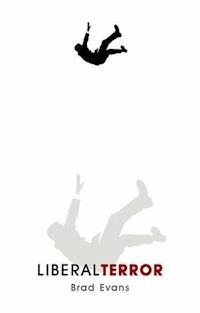
One of the more challenging tasks during the final stages of a manuscript’s production is deciding upon a suitable and appropriate cover. No image could ever of course truly capture the narrative’s essence. Such truthful representations simply don’t exist. Just as every manuscript is open to multiple interpretations, so every image conveys many different feelings, emotions, and political sentiments depending on the person viewing the composition. Despite, however, the well-rehearsed claim about not judging a book by its cover, it is perhaps inevitable (especially in our ‘image-conscious’ societies) that some assumptions will be made before a single page is turned. The author must therefore be mindful that the cover is an aesthetic complement to the text, even though it is anticipated that any preconceptions will eventually be disrupted. The decision to use the image of the fallen man for this book was made after considerable deliberation. Inspired by the advertising campaign for the launch of Mad Men season 5 in the United States, the image seemed to capture the contextual logic of terror normality so central to the book’s narrative. While the Mad Men campaign drew criticism as it invoked memories of the fallen victims of 9/11, that the image was emblazoned across Manhattan at all was testament to the fact that we are in a different political moment. The image of a falling person, it seemed, was no longer sacrosanct; it was, as the show’s producers insisted, simply advertising.
Beneath the superficial level of what many believed was a shameless exploitation of the image for commercial reasons (revealing in itself given the focus of the television series), the Mad Men campaign has subsequently proved to be remarkably political. More than reclaiming the meaning of a symbolic act such that it cannot be reducible to one specific moment in history, however deeply troubling, the campaign allows us to move beyond and yet think before the atrocities of the 9/11 attacks. Indeed, despite the fact that the horrifying scenes of that day have left a lasting imprint on the memory, the campaign proved significant by reminding us that representations of falling victims (actual or metaphorical) are not entirely novel. As Matt Weiner, the creative director for the series, pointed out, ‘I hate to say it, but a businessman falling out of a window is a symbol that far precedes that event.’ Such representations cannot, however, avoid the charges of insensitivity, or, worse, trivialization of the tragic events of 9/11. This is not simply a danger from which we must retreat. It is a political responsibility that requires careful consideration and ethical debate. We may deal with claims of insensitivity here by posing the following two supplementary questions: Why were the images of the falling victims deemed so intolerable? And what is there to be gained politically by drawing reference to wider discourses on the falling subject?
Many people were undoubtedly touched by the raw reality of Richard Drew’s infamous photographs. While a number of media outlets felt obliged to publish these troubling images, critics argued that their publication somehow disrespected the victims as final moments were recorded in horrifying detail. But what was so different about these images as opposed to those of the initial explosion or the cascading towers, which have been continually reprinted ever since? It could be argued that the images of the falling were personally difficult to come to terms with since they forced each of us to confront the pure contingency of the situation. Had any of us happened to visit Manhattan that day for the first time, it is likely that a trip to the World Trade Center’s viewing gallery would have been on the itinerary. How would any of us have reacted should we have found ourselves by the brutal chance of fate alone in such a terrifying predicament? While there is no answer to be given in advance to what can only be termed a ‘non-decision decision’ (i.e. a decision that cannot be made within any bounds of reason), we should remain categorical that the term ‘suicide’ is not in any way appropriate for describing what followed. As Primo Levi once intimated in respect to Auschwitz, even in the most horrifying moments, when death seems almost certain, it is nevertheless possible to still find some degree of freedom, however terrible the inevitable outcome. Maybe, if there is anything positive whatsoever to be salvaged from these tragic moments, we should think about the fallen in those terms.
There was, however, something more at stake here which points to the political intolerability of the photographs. By effectively removing the individual from the dominant frames of perception, so the attack upon the symbolic ordering became the more truthful representation. Personal testimonies as such would be subsumed within a broader narrative in which the quantifiable numbers of the dead affirmed, as the symbolic violence unequivocally illustrated, that something truly exceptional was happening. War was very much taking place. Images of modern warfare are replete with examples of urban destruction. This is not incidental. If utopia remains an urban dream, so dystopia finds sure representation in architectural catastrophe as structural power proves to be illusionary. The images of falling victims, in marked contrast, required a more sombre and humane reflection. Their more serene composition demanded that we refocused our attention instead upon the personal, the intimate, the qualitative, the micro-specific, and the complexity of the stories. Such images defied the absolutist and highly reductionist narrative of the event, which proved so central to the subsequent drums of war. In short, then, the images of the falling didn’t function in a manner that was compatible with the political ambitions to bring about justice, violent retribution, and foreign invasion. How, may we ask, would the world look today if the images of the falling victims had become the defining emblem of the 9/11 attacks? And what would the contemporary state of relations be amongst the world of people had we dared to consider all the human stakes?
Beyond the sacralizing narratives of the 9/11 attacks, the idea of the fall is a recurring motif within Western culture and its metaphysical heritage. Homer’s The Iliad, for instance, narrates the fall of Troy by explaining how the besieged consciously jumped from the tops of burning buildings to avoid the raging fires. Not only has the biblical story of human treachery in the Garden of Eden remained central to Christian eschatology, its prevailing message that we have a predisposition to act without consideration for the greater moral good (what many deem to be a more worldly conception of evil) has also proven wholly compatible with secular reasoning and its allied forms of security governance. Secularism hasn’t, then, fully abandoned the idea of original sin but has reworked it into the modern productive schematic. In this regard, as Gilles Deleuze once insisted, we all remain within the spectre of the Kantian revolution in thought. Not that we are heirs to some inalienable framework for universal right or that we are driven to become perfectly reasonable subjects. Burdened by the weight of an imperfect past while haunted by a future that is insecure by design, liberal societies require some form of divine intervention to help mitigate the ‘imperfections of man’. The idea of the fallen subject thus appears absolutely integral to understanding the liberal account of terror which, emanating out of an endangered sense of belonging in the world, demands the most sophisticated forms of human interventionism on account of the fact that life is the author of its very own (un)making.
Brad Evans (May 2012)
Acknowledgements
This book owes a considerable intellectual debt to a number of remarkable colleagues who still recognize that the essential function of the university is to continue to hold power to account and challenge the troubling moves in academia towards necessary policy entrepreneurship. As always, however, the limits and intellectual deficiencies forever remain my responsibility. I would like to express my continual thanks to Professor Raymond Bush (University of Leeds), Professor Michael Dillon (Emeritus Professor University of Lancaster), Professor Mark Duffield (University of Bristol), and Professor Julian Reid (University of Lapland), whose friendship, collegiality, inspiration, along with their intellectual courage in the face of conformist pressures, are testament to the value of critical pedagogy. I have also been fortunate to have had the intellectual counsel of a number of remarkable scholars whose pioneering work highlights with political surety the less than objective dogmatism of the positivist political sciences. Particular friendship is extended to Philip Armstrong (Ohio State University), Ian Buchanan (Wollogong University), Terrell Carver (University of Bristol), Simon Critchley (The New School, NY), Henry Giroux (McMaster University), Michael Hardt (Duke University), Gregg Lambert (Syracuse University), Todd May (Clemson University), John Protevi (Louisiana State University), Saskia Sassen (Columbia University), Michael Shapiro (University of Hawaii), Cynthia Weber (University of Sussex), and Samuel Weber (North-Western University), along with my close friends Paul Amourdedieu and Tim Hedger, whose conversations are forever cherished. I would also like to extend my sincerest thanks and gratitude to Louise Knight and the team at Polity Press, whose professionalism and commitment to new ways about thinking about the political ensure that the academic world retains its intellectual dignity. Last but not least, I do not forget students past and present who continue to decry the ‘esoteric’ label so easily applied by those who feel intellectually challenged by Continental thought. None of this, however, would have been possible if it wasn’t for the support of my wonderful wife Christine, my loving parents and family, along with my beautiful daughter Amelie, who continually reminds me that there are moments in life that words simply cannot capture.
Segments of this book have been previously published in: Brad Evans, ‘Foucault’s Legacy: Security, War and Violence in the 21st Century’, Security Dialogue, vol. 41 no. 4 (2010), pp. 413–33; and Mark Duffield and Brad Evans, ‘Biospheric Security: The Development-Security-Environment-Nexus [DESNEX], Containment and Retrenching Fortress Europe’, in J. Peter Burgess and Serge Gutwirth (eds), A Threat against Europe? Security, Migration and Integration (Brussels: VUB Press, 2011), pp. 93–110. I would like to express my thanks to the publishers for granting permission for republication. All rights reserved.
1
Imaginaries of Threat
States of Normality
Walter Benjamin once warned that while exceptional moments of crises were politically dangerous, it was the effective normalization of rule that could be altogether more sinister.1 With order finally restored, what previously shattered the boundaries of acceptability now begins to reside in the undetected fabric of the everyday. Such is our warning. What marks the contemporary period is terrifyingly normal. Haunted by the spectre of another attack for over a decade, we have learned to live with terror. It has become part of the everyday political lexicon. Some may even argue that the term has lost all political appeal, displaced by a plethora of new challenges which are more important in defining the twenty-first-century security terrain. That is not to suggest a return to some pre-9/11 normality. The world has been spatially and temporally transformed to the lasting death of the Westphalian Order. This evidences the real triumph of liberal reason, attained not through some universal ascription to liberal values, ideals, or principles. Demanding an inclusive imaginary on account of the way life is radically endangered by its own planetary ambitions, the age of liberal reason is made real as ‘the outside’ no longer appears as a credible political referent – geo-politically or intellectually.
What we may term ‘liberal terror’ refers to this global imaginary of threat which, casting aside once familiar referents that previously defined the organization of societies, now forces us to confront each and every potential disaster threatening to engulf advanced liberal life. Binding terror to the everyday does not simply tie the phenomena to political forms, though it does require the trauma of the past to impress the logic. Neither does the problem register exclusively as a militaristic affair, though the encounter with some form of violence remains its principal form of conditioning. What terrifies is of the order of the catastrophic. It is the future scenario so often played out in our ways of thinking about the world to come. It is the seemingly predictable yet unpreventable that reminds us of the insecure sediment of our very existence. It is the chance encounter with a violent force that doesn’t discriminate one’s political subjectivity. And it is infinitely possible, which, threatening to appear at any given moment, dangerously affirms with each passing occurrence the precariousness of the human condition. The Terror – our terror – is therefore the contingent possibility of a future-coming catastrophic event which increasingly shapes the normality of the times.
The state of normality defining liberal terror runs counter to those ‘States of Exception’ discourses which became popular in the post-9/11 moment.2 This paradigm, for some, was seemingly self-evident. The initial attacks upon New York City and Washington were deemed exceptional by any conceivable measure. Enemies to be fought, it was said, appeared like none ever encountered. In response, the United States and its allies coupled this exceptionality with their own exceptional abuse of sovereign power as they sought to hunt down terror in all its forms. For many, therefore, the subsequent retreat from Iraq and Afghanistan represented far more than a change in the strategic direction of the war effort. It symbolized a return to the civic normality lost, the hope that our civilization credentials would slowly be resuscitated as we began mapping out those comforting demarcations which formerly held between the lawful & unlawful, the citizen & the soldier, the abiding & the recalcitrant, the inside & outside, along with times of peace & times of war. Here Carl Schmitt appeared to be an unlikely ally for those who wanted to distance themselves from excessive militaristic behaviour. Invoking Schmitt’s famous Concept of the Political, which defines sovereignty as the ability to decide upon the exception,3 cosmopolitan theorists resurrected his (dis)comforting fixed order of things in order to challenge the abuse of state power. As Martti Koskenniemi has noted:
Whatever Schmitt’s political choices, readers have been struck by the expressive force of his critiques when applied to contemporary events: the war on terrorism as a morally-inspired and unlimited ‘total war’, in which the adversary is not treated as a ‘just enemy’; the obsoleteness of traditional rules of warfare and recourse to novel technologies – especially air power – so as to conduct discriminatory wars against adversaries viewed as outlaws and enemies of humanity; Camp Delta in the Guantánamo naval base with its still over 500 prisoners from the Afghanistan war as a normless exception that reveals the nature of the new international political order of which the United States is the guardian – the source of the normative order, itself unbound by it.4
These types of analysis, however, failed on a number of levels. Firstly, since they remained tied to the telluric world of nations, the state remained the only credible referent for political assessment. Not only was this trope therefore dominated by theories of state power, it offered a very outdated analytic in which the state still appears to be the natural ontological and epistemological foundation for political belonging and contestation.5 What is more, since these types of analysis proposed a new planetary idealism premised upon the structural remnants of the Westphalian order, so the constituted sovereign power remains primary. Nobody is saying here that states don’t exist, or that sovereignty is some abstract or redundant concept. It is, however, to accept, as Boutros Boutros-Ghali once insisted, that ‘[t]he time of absolute and exclusive sovereignty … has passed; its theory was never matched by reality.’6 Many academics who remain committed to the idea of a Westphalian order will no doubt have been troubled by Boutros-Ghali’s honesty. Tony Blair, however, was a learned disciple: ‘Before Sept. 11, I was already reaching for a different philosophy in international relations from a traditional one that has held sway since the Treaty of Westphalia in 1648 – namely, that a country’s internal affairs are for it and you don’t interfere unless it threatens you, or breaches a treaty, or triggers an obligation of alliance.’7
Secondly, since these approaches have taken distinct sites of abandonment, e.g. Guantánamo Bay, to be paradigmatic, Schmitt’s ideas have been deployed in order to condemn the ‘international’ nature of liberal interventionism, while in the process rescuing its more humane ‘cosmopolitan’ variant.8 The politics of exceptionalism thus became the principal rallying cry for those who, lamenting a still fractured terrain, highlighted the inherent dangers of spatial division in order to summon its lasting foreclosure. This position was invariably compromised – theoretically and ontologically. ‘Truer liberals’ would actually start their theoretical position by taking the worst aspects of Schmitt’s thought (i.e. ontologically prior enmity) in order to use it against its resulting tensions. This proved convenient (not to say self-fulfilling) as neatly identifiable forms of geo-strategic separation (the dangerous reality) could be taken to fully vindicate the eventual closure of political space (the cosmopolitan promise). Questions of legitimate power as such would be firmly tied to competing grand visions of political formation. With Schmitt’s nightmare vision of the fall of jus publicum Europaeum therefore recast as the liberal condition of possibility for the twenty-first century,9 selective appropriation of his ideas put Schmitt in a peculiar bind as the diagnostician in chief along with the chief adversary to be vanquished at all political costs. What happened to Schmittean ontology, however, remained a complete mystery.
The third reason for the failure of a Schmittean approach was that, since universality was taken here to be the natural foundation for all analysis – even though the empirical reality of the world continuously eschews any factual basis for universal ascription – the political subject was always assumed to be a universal subject in waiting. Questions of ontology and epistemology would therefore be colonized by what we may term a ‘universal image of thought’, which, proposing a linear way of thinking, offered a profoundly faith-based ontological positioning. Humanity thus appeared as always naturally there in waiting, yet to reveal itself. It would logically follow that whatever challenged this universal orientation would not only be disqualified as a less than authentic political subject; it could also be presented to be a direct challenge to a world of lasting security, peace, and prosperity. Ontologically speaking, however, not only has this arcane aspiration appeared in direct conflict with the contemporary bio-philosophy of life which, counter-intuitively, argues that the more interconnected life becomes, the more its form actually proliferates and differentiates (see below), but it is precisely the adoption of such universal imaginaries which has effectively allowed systems of power to mask the contingent use of power, while retaining political difference as the start-point for the liberal understanding of war, injustice, and political contestation.
David Chandler was correct to point out that the selective use of Schmitt provided the ‘last refuge of critical theorists’ working in the International Relations discipline. By using Schmitt’s framework devoid of any ontological consideration – hence as a heuristic device in order to affirm existing normative frameworks and pre-existing visions of the world – he was juxtaposed with his apparent resulting tensions, highlighted the ‘weakness and defensiveness of critical theoretical positions themselves’. Previous structural musings are excavated, and Schmitt is simplified without ever questioning his contemporaneousness. As Chandler explains: ‘The clarity and cause of the critical position is becoming increasingly uncertain as the clear frameworks of state-based international relations are undermined, not by progressive movements constituting new collectivities beyond the state, but by leading western states and international institutions which claim to be operating beyond the sphere of national interests and in the interests of the emancipatory subject.’ This ‘lack of clarity’, Chandler argues, enables Schmitt to be used ‘symbolically or rhetorically to reassert clear lines of political division, demarcating the “purity” of the critical theorist from those alleged to be serving the interests of power’.10 These marks of separation weren’t incidental. Despite the failures in liberal policies, it was possible, by means of tactical separation, to retain a lasting faith in the project as a shared telos of the world of peoples.
This brings us directly to the problem of temporality. Time is one of the most important political concepts. It is inextricably bound to the entire truth-telling process upon which regimes of power depend. Time, however, is not simply value-neutral. Neither does it only appear diachronically, i.e. seconds, minutes, hours, days, years. While this concept of time has undoubtedly dominated the modernist industrial period, it increasingly appears arbitrary and redundant. As John Hall writes, ‘[D]espite how nearly ubiquitous measurement of time has become, people in different social settings organize and experience even objective temporality in highly divergent ways.’11 Time in fact has always been a construct which reveals many different rhythms, meanings, interpretations, quantitative forms, and qualitative expressions. Once the concept of time is broached politically, we discover that history ‘remains fundamentally an account, and what is called explanation is nothing but the way in which the account is arranged in a comprehensible plot’.12 This bracketing of time is not simply about the historical record. In the process of narrating the past, what needs to be done in the present begins to find its most purposeful expression: ‘[B]ecause diachronic time makes possible the projection of alternative future events, it puts into play the planning of the future, such that any given present is no longer simply a “here and now,” but also the realization of a (past) projected future and the anticipation of events to come, already plugged into diachronic schedules.’13
Take the events of 9/11. It was common to date the history of the violence to that fateful morning. This played into the narrative of the unprovoked attack: ‘They simply hated us for who we were.’ It also fostered a collective belief that everything had changed. So what had previously been taken for granted would now become the source of uncertainty, anxiety, and despair. ‘The kaleidoscope has been shaken,’ Blair famously explained. ‘The pieces are in flux.’ Armed with this truth, what followed proved to be reminiscent of what Merleau-Ponty referred to as being a ‘historical epoch’: ‘one of those moments where the traditional ground of a nation or society crumbles and where, for better or worse, man must reconstruct human relations’.14 It was the perceived lack of provocation in particular which constituted the truth of the event, as well as ascribing a certain validity or righteousness to the retributive violence which followed. In this way, as Paul Ricoeur once noted, ‘the very notion of the history of a long time-span derives from the dramatic event … in the sense of the emplotted event.’15 Making ‘sense of the event’ was essential to the conditioning of what then became possible. Of course, if we decided here to broaden the time-frame ever so slightly and delve further into the history of the violence, alternative and less politically expedient histories of the events of 9/11 begin to surface that are altogether less comfortable. Or as Merleau-Ponty would no doubt have more critically put it, ‘We do not have a choice between purity and violence but between different kinds of violence.’
Times of exceptionality have followed the lines of a diachronic temporality. They have been neatly bracketed in time by the threshold that binds lawfulness/unlawfulness so that the course of events could be subjected to the legitimate routines of calculated power. Time in this sense has revealed a particular disjuncture since it would be fully bound to the normalized laws of what we may term the Sovereign Chronos, while nevertheless suspended by the sovereign moment on account of its juridical abandonment. Times of exceptionality therefore corresponded to the time witness of particular regimes whose temporal imperfection was to categorically refute the timelessness of universal law. While the time of the exception appeared diachronically certain inasmuch as there was an absolutely pin-pointable start-point for the unfolding of the exceptional moment, i.e. the point where it all went wrong, it also appeared ‘out of time’ in the pure teleological sense of its lasting completion, i.e. universal peace. This highlighted a familiar time/space continuum with which to castigate political entities which (a) temporally abandoned a commitment to international norms on account of some desire to reassert sovereign authority or (b) permanently operated outside of the rule of international law, i.e. the Geneva Conventions. There was, however, a ready-made easily digestible fix. Since a clear break in time could be detected, so the time of the exception could be put to an end once the legitimate exercise of sovereign power was finally restored.
This linear understanding of time has proved to be completely problematic and woefully inadequate. It neatly synchronized political activity to ideological persuasion, while time itself was fully colonized by the juridical imperative. History thus became tied to a narrative of greater/lesser perfectibility on the road to either (a) the natural unfolding of the world into its promise of a universal state of lasting peace and (b) the unnatural continuation of war, misery, and suffering. Just as the problem of sovereignty would therefore be bracketed in order to allow for highly reductionist structural narratives which were easily digestible, the time of the exception equally provided epistemic comfort by resurrecting the untroubling familiarity of rehearsed spatial orthodoxy. It necessarily followed that any political statement which threatened to disrupt this time-sequence of events was seen to be, at best, self-serving, or, at worst, an example of outright deception. So while these types of approaches took issue with Schmitt’s own lack of faith in human nature (especially its completion), they, too, rested upon a conspiratorial approach to power in which the political classes could not be taken at their word. Statements which ordinarily evidenced allegiance to liberalism’s foundational principles were simply read as a deceptive mask to geo-political ambition: ‘We have no desire to dominate, no ambitions of empire. Our aim is a democratic peace.’16 Mitchell Dean has been less deceived by the convenience of partial historical memory:
This [perceived] contest between European cosmopolitanism and American conservatism misses the point of the intrinsic connection between the contemporary liberal critique of sovereignty and the authorization of the use of deadly force. Even the most Kantian and philosophical among contemporary commentators on International Affairs, Jürgen Habermas, recommended a police action in the name of human rights and justified the NATO bombing of Yugoslavia in 1999 as possible anticipation of the leap from the classical conception of international law for sovereign states toward the cosmopolitan law of a world society. At the very least such a stance would seem to suggest that even cosmopolitans are willing to suspend current international law in an emergency in order to advocate the use of military violence if their morality dictates it.17
Cosmopolitan approaches to universal law are idealistic at best. There is no law without enforcement or relations of power. As Jacques Derrida explained by drawing specific reference to Immanuel Kant’s Theory of Right,
There is no law that does not imply in itself, a priori, in the analytical structure of its concept, the possibility of being ‘enforced’ applied by force. … There are, to be sure, laws that are not enforced, but there is no law without enforceability, and no applicability or enforceability of the law without force, whether this force be direct or indirect, physical or symbolic, exterior or interior, brutal or subtly discursive – even hermeneutic – coercive or regulative, and so forth.18
Implicit in Derrida’s ‘Force of Law’ is that no enforceability exists without some intimate relation to crises. This contingency of law’s enforceability is crucial. Every law, every decision, responds to an exceptional moment.19 It brings force to bear upon that which breaks from the norm in order to rework the basis of normality anew. There is therefore no pure theory of the exception, no absolute break from law. An exception simply infers the ‘order-word’ proper to the continuous recovery of sovereign power out of the unending cinder of its own disorder. Law, in other words, reserves the right to transgress its own foundations after the experience of ‘crises-events’, which profoundly alters our sense of meaning and action in the world. It is no surprise, then, to find that states of exception are all too frequent once the broad sweep of history is considered. Temporal crisis simply permits the reworking of the ‘legitimate’ normative boundaries out of the ashes of a disrupted existence. In doing so, law continues to illustrate a fluctuating shift from (dis)ordered sovereign recovery to further emerging disruptions that continue to define the modern condition.
Our task is to move beyond the simple linearity which colonizes our political understanding of space and time. This requires us to question the political and philosophical stakes of late liberalism, in which familiar modernist concepts of space and time have effectively entered into lasting crises. What happens, for instance, when space is no longer an obstacle to power? And what happens when past/future frames of reference blur into a unifying strategic framework that shapes the present? It is important to point out here that these spatial and temporal crises are not incidental. As we shall discover, they are fully integral to the bio-philosophy of late liberalism, which, proposing an entirely new social morphology of life that promotes complex, adaptive, and emergent qualities, demands new spatial and temporal awareness that moves beyond fixed frames of reference. With this in mind, our task is not to show allegiance to the messianic nature of the liberal promise, whatever the perceived nature of its perpetual glory. Our task is to understand how this faith-based narrative conditions the present so that serious questions can be raised about the profoundly onto-theological dimensions to the liberal will to rule planetary life. Only then can we begin to set aside the universalizing moral entrapments of liberal humanism, which reduces political ethics to a question of relations amongst already compliant political subjects.
The Terror Diagnostic
Terror – or at least terror(ism) – is not a new problem. Ever since Maximilian Robespierre orchestrated his régime de la terreur (1793–5), it has become a permanent feature of the modern political vernacular. While Robespierre’s ‘reign of terror’ is credited with coining the term, for the most part the phenomenon has been directly associated with internal challenges to sovereign authority. A supplementary function, then, to ‘legitimate’ juridical power, terror has been condemned for occupying an excessive or extra-juridical position in relation to the legitimate order of things. Importantly, given that no sovereign power has ever perceived itself to be illegitimate – that is to say, from the moment of its inception it always believes in the timelessness of its rule – terror has effectively been openly recruited into a profound metaphysical game in which notions of truth, order, righteousness, and justice have continued to depend upon each other. Metaphysics (without oversimplifying) refers to a mode or style of thinking which seeks to be able to grasp and recover the very truth of being out of some transcendent exteriority. Metaphysics, as such, places specific demands upon thought. It makes it incumbent upon the thinker to believe that since the political ‘subject’ has been thrown back upon some insecure ground, the true ‘object’ for thought is to authenticate life by establishing firm and secure foundations. As Michael Dillon explains:
Metaphysics, then, is the masque of mastery; securing some foundation upon which to establish the sum total of what is knowable with certainty, and conforming one’s everyday conduct – public and private – to the foundation so secured. Such foundations may go by different names but that of the project itself does not. Hence, the responsibility, traditionally incumbent upon the philosopher – his ‘true’ mission – consisted in securing ultimate referents or principles. Philosophy was, as Nietzsche put it, a matter of valuation, ‘that is, establishment of the uppermost value in terms of which and according to which all beings are to be’.20
Plato is partly credited with beginning this tradition. His allegory of the cave not only gave the metaphysical world real tangible purchase by proposing the authentic subject; insisting that this subject necessarily produces its own mimetic rival allowed him to couple authenticity with an intimately bound copy or imitation. This was necessary for the authentic to have any true meaning. For Plato, this mimetic rival, like a shadow on the wall of a cave, is a product of a world of re-presentation. Originality has its own unique presentation – a truly unique form which accompanies the reality of its presence – whereas the imposter merely resembles or falsifies that presence. Platonic reason thus gave to us the necessity of the image (eidolon), which enables one to differentiate between the true/false, original/fake, authentic/imposter, secure/dangerous, and so forth. Importantly, while the Platonic world of representation proved compatible with the iconography of Christianity, modernity has taken this aesthetic compulsion and made it his own.21 Confronting the dangers of its own making, the modern condition has required what Martin Heidegger once termed the ‘certainty of representation’, in which truth can find its optical expression.22 Indeed, as Gilles Deleuze and Félix Guattari once indicated, ‘the form of subjectivity, whether consciousness or passion, would remain absolutely empty if faces did not form loci of resonance that select the sensed or mental reality and make it conform in advance to a dominant reality.’23 Such mimetic rivals have been thoroughly recast throughout the representational schema of the modern political sensibility. Imitating and aspiring, they continue to appear like some virus, feeding off the system, copying its behaviours, while directing its productive energies back upon itself for destructive ends.
This mimetic approach to terror is conceptually beneficial. It certainly goes some way to explaining why a concise definition is difficult to obtain. Since systems are constantly evolving – politically, socially, culturally, and technologically – so too must the nature of threat. Philip Bobbit is a principal advocate of a mimetic approach to terror. In his volume Terror and Consent he adopts such an approach to present an entire history of the phenomenon’s evolving nature.24 Central to Bobbit’s thesis is the assumption that every human order produces its own novel brand of terror whose defining features show a remarkable resemblance to the system it wishes to destroy: ‘In each era, terrorism derives its ideology in reaction to the raison d’être of the dominant constitutional order, at the same time negating and rejecting that form’s unique ideology by mimicking the form’s structural characteristics.’25 So just as the colonial seafaring powers had to contend with the terror of piracy, while modern industrial capitalist societies had to deal with the terror of the industrial-minded communist vanguard, contemporary market states must deal with their own parasitical entrepreneurs which show hostile self-destructive intent. Terror is thus like a distorted mirror image of the vision of peace it continually haunts. It turns strengths into weaknesses, freedoms into vulnerabilities, optimisms into despair, hopes into fears, and the means of production into the means for destruction. This proves to be conceptually significant. While adopting a mimetic approach to terror allows us to account for its omnipresent nature, it also permits us to appreciate (without any contradiction) why the phenomenon is a highly contingent product of its own productive time:
Just as earlier forms of terrorism reacted against the values while mimicking the techniques of the prevailing constitutional order, this new mode of terrorism reflects the new constitutional order coming into being, the informational market state. … [T]he market state finds it has generated a terrorism that negates the very individual choice that the state exalts, and puts in service of that negation the networked, decentralized, outsourcing global methods characteristic of the market state itself. … Market state terrorism will be just as global, networked, decentralized, and devolved and rely just as much on outsourcing and incentivizing as the market state.26
Bobbit effectively consolidates here a number of strands of thought that have been in currency for well over a decade. Network theorists have for some considerable time been proposing a mimetic approach for understanding the changing nature of social organization, none more so than the military and strategic analysts who at the forefront of this strategic rethink inaugurated an entire revolution in global military affairs. The RAND Corporation in particular has been a notable advocate of network theory, promoting its now well-established doctrine of Networked Centric Warfare: ‘The term we coined was Netwar, largely because it resonated with the surety that the information revolution favoured the rise of network forms of organization, doctrine, and strategy.’27 Crucially, for RAND, the advent of network-centric thinking is not confined to any particular sector.28 It points to a much wider revolution in thought in which the ‘age-old ideas about life as a “great chain of being” or as a progression of nested hierarchies are giving way to new ideas that networks are the key to understanding all of life.’29 Militarism alone is not therefore shaping the world. It is responding in equal measure to the new science of life which is fundamentally transforming, for better and worse, all life-world systems beyond any previous comprehension. Militarism may not be the principal driver behind this revolution, but it does stress the theory’s imperative since organization literally becomes a matter of life and death. As the two main architects of the US transformation in military affairs once so forcefully explained, ‘Across the 1990s global rule sets became seriously misaligned, with economics racing ahead of politics … and technology racing ahead of security (e.g., the rise of transnational terrorists exploiting globalization’s growing network connectivity). Now it is time to play catch-up.’30
Borrowing heavily from post-structural thinking,31 this brought to the fore a number of key principles which have left a lasting imprint on the twenty-first-century security terrain:
1 Nothing and nowhere is strategically marginal. With the capacity for terror to happen ‘anywhere, anyplace, anytime’, geo-strategic concerns have become displaced by planetary problems which must be matched in ambition, scope, and mission.
2 It is the radically singular which has the capacity to inflict most damage. Unlike conventional warfare, in which the enemy’s capability was dependent upon material massification (soldiers, bombs, etc.), in these open conditions where the ability to remain undetected is more of a tactical advantage, less is actually more.
3 Success requires pre-emptive action. Since human capabilities (including the catastrophic attack) have increased exponentially, waiting is simply not an option.
4 Since total security is impossible, one has to appreciate that further attacks are inevitable. As lasting insecurity becomes the default setting, so unending emergency becomes the norm.
5 All conventional referents blur into a zone of indistinction. So the major distinctions that once marked out conventional modern thought – i.e. war/peace, enemies/friends, soldiers/citizens, outside/inside, law/strategy, politics/economy – have been firmly undermined by the complex account of life, whose adaptive ontology actually takes pride in the abandonment of compartmentalized mentalities and the effacement of neat lines of identification.
When the source of potentiality becomes the source of the problem, improved capability effectively heightens the stakes. There are a number of reasons for this. Firstly, whereas hierarchical forms of organization have provided clear epistemic guidance, network forms are more problematic since their outcomes are ambivalent: ‘The same technology that aids social activists and those desiring the good of all is also available to those with the darkest intentions, bent on destruction and driven by a rage reminiscent of the Middle Ages.’32 Secondly, since the network form affords greater organizational efficiencies, they are exponentially more powerful: ‘This distinctive, often ad-hoc design has unusual strengths, for both offense and defense. On the offense, networks tend to be adaptable, flexible, and versatile vis-è-vis opportunities and challenges. … In terms of their defensive potential, networks tend to be redundant and diverse, making them robust and resilient in the face of attack.’33 And thirdly, whereas hierarchical models presuppose fixed (hence epistemologically certain) properties, networks pose entirely new problems by radically altering the strategic terrain, collapsing once familiar dialectical terms of engagement: ‘The blurring of offense and defense reflects another feature of net-war (albeit one that is exhibited in many other policy and issue areas): It tends to defy and cut across standard boundaries, jurisdictions, and distinctions between state and society, public and private, war and peace, war and crime, civilian and military, police and military, and legal and illegal.’34
Networks promote radical forms of interconnectivity which dissipate all meaningful demarcations. Their principal message is systemic complexity:
Seemingly out of nowhere, in the span of a few years, network theory has become one of the most visible pieces of the body of knowledge that can be applied to the description, analysis, and understanding of complex systems. New applications are developed at an ever increasing rate and the promise for future growth is high. Network theory is now an essential ingredient in the study of complex systems.35
This has undoubtedly radicalized the strategic terrain. With everything potentially (re)connectable, all that was once solid truly melts into air. As Luis Amaral and Julio Ottino explain, ‘A complex system is a system with a large number of elements, building blocks or agents, capable of interacting with each other and with their environment.’ While ‘interaction between elements may occur only with immediate neighbours’, they may also ‘move in space or occupy fixed positions, and can be in one of two states or of multiple states’. ‘The whole’, as such, is ‘much more than the sum of its parts’.36 Importantly, since there are no elements (human/non-human, animate/inanimate, actual/virtual) which are to be considered outside of the strategic play, everything matters, for every element in this complex arrangement has the potential to be truly disastrous. As Duncan Watts argues:
When it comes to epidemics of disease, financial crises, political revolutions, social movements, and dangerous ideas, we are all connected by short chains of influence. It doesn’t matter if you know about them, and it doesn’t matter if you care, they will have their effect anyway. To misunderstand this is to misunderstand the first great lesson of the connected age: we may all have our own burdens, but like it or not, we must bear each other’s burdens as well.37
Such burdens have redefined our understanding of social responsibility. As Zygmunt Bauman acutely observed, today ‘there is no “outside”, no escape route or place to shelter, no alternative space to isolate and hide in. … On this planet, we are all dependent on each other and nothing that we do or refrain from doing is indifferent to the fate of everyone else.’38 This has a number of telling implications. With the world effectively foreclosed, every frame of reference is deemed inclusive. Catastrophe therefore finds a new location – integral to the living conditions which sustain advanced life. It logically follows that since the potential for catastrophe is the product of our radically interconnected times, dealing with its unknowability is to accept the possibility that the worst can happen. Only then does it become possible to bring that which is beyond comprehension within our calculable models for assessment, damage limitation, and future amelioration. So not only have we become ever more dependent on complex, adaptive, dynamic, and distributed systems for the sustenance of life, it is assumed with equal measure that within this systemic trope even the smallest of disruptions can end up having enormous and sometimes catastrophic consequences:
The novelty of the global risk society lies in the fact that our civilizational decisions involve global consequences and dangers, and these radically contradict the institutionalized language of control – indeed the promise of control – that is radiated to the global public in the event of catastrophe (as in Chernobyl, and now also in the terror attacks on New York and Washington). Precisely this constitutes the political explosiveness of the global risk society. This explosiveness has its centre in the mass-mediated public sphere, in politics, in the bureaucracy, in the economy, though it is not necessarily contiguous with a particular event to which it is connected.39
Terror terrifies precisely because of its radical interconnectivity. This is not new thinking. It was fully understood by Paul Wolfowitz, who in a testimony to the US Congress in October 2001 was already of the opinion: ‘Along with the globalization that is creating interdependence among the world’s free economies, there is a parallel globalization of terror, in which rogue states and terrorist organizations share information, intelligence, technology, weapons materials and know-how.’ For Wolfowitz, what made this new form of terror particularly dangerous was its ‘parasitical’ nature. It operated within the very system that ordinarily gives form to life, appearing like some intelligent virus intent upon destroying its host. Terror in this regard is seen to be altogether more terrifying precisely because it displays intelligent co-evolving capabilities. It is constantly on the move, traversing fixed boundaries, mutating to avoid meaningful detection, while continually infecting the vital global networks of advanced liberal societies. As Bobbit further explains:




