


19,99 €
Mehr erfahren.
- Herausgeber: John Wiley & Sons
- Kategorie: Geisteswissenschaft
- Sprache: Englisch
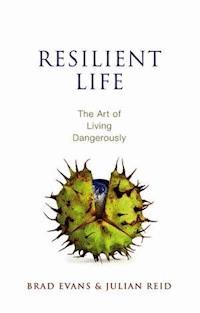
What does it mean to live dangerously? This is not just a philosophical question or an ethical call to reflect upon our own individual recklessness. It is a deeply political issue, fundamental to the new doctrine of ‘resilience’ that is becoming a key term of art for governing planetary life in the 21st Century. No longer should we think in terms of evading the possibility of traumatic experiences. Catastrophic events, we are told, are not just inevitable but learning experiences from which we have to grow and prosper, collectively and individually. Vulnerability to threat, injury and loss has to be accepted as a reality of human existence.
In this original and compelling text, Brad Evans and Julian Reid explore the political and philosophical stakes of the resilience turn in security and governmental thinking. Resilience, they argue, is a neo-liberal deceit that works by disempowering endangered populations of autonomous agency. Its consequences represent a profound assault on the human subject whose meaning and sole purpose is reduced to survivability. Not only does this reveal the nihilistic qualities of a liberal project that is coming to terms with its political demise. All life now enters into lasting crises that are catastrophic unto the end.
Sie lesen das E-Book in den Legimi-Apps auf:
Seitenzahl: 390
Veröffentlichungsjahr: 2014
Ähnliche




















Table of Contents
Dedication
Title page
Copyright page
Epigraph
Preface and Acknowledgements
1: Anthropocene
All Too Human
Sublime Habitus
A Fallible Existence
Collective Amnesia
Whose Survivability?
2: Insecure by Design
The Life of Late Liberalism
Evacuating the Social
The Posthuman
The Valorization of Adaptability
Connecting with Danger
3: The Poverty of Vulnerability
Sustainable Recoveries
Uncommon Futures
Debasing the Subject
The Margins of Existence
Actually Existing Resourcefulness
4: Living Dangerously
The Anxious Mass
The Full Life Crisis
The Tragedy of Vulnerability
Violently Exposed
Premetic Violence
Nihilism Unbound
5: Atmos
Beyond Bios
The Politics of Atmosphere
A Pathological Earth
Atmosis
6: Endgames
The Coming Catastrophe
The Truth of Catastrophe
Catastrophism
Dead Zones
The Last Empire
7: The Art of Politics
More Than Human
Life as a Work of Art
Exhausted by Suffering
The Politics of Prophecy
Beyond the End of Times
End of a Start
Select Bibliography
Index
For Those Past and Present who we Continue to Collaborate with ‘In Confidence’
Copyright © Brad Evans and Julian Reid 2014
The right of Brad Evans and Julian Reid to be identified as Authors of this Work has been asserted in accordance with the UK Copyright, Designs and Patents Act 1988.
First published in 2014 by Polity Press
Polity Press
65 Bridge Street
Cambridge CB2 1UR, UK
Polity Press
350 Main Street
Malden, MA 02148, USA
All rights reserved. Except for the quotation of short passages for the purpose of criticism and review, no part of this publication may be reproduced, stored in a retrieval system, or transmitted, in any form or by any means, electronic, mechanical, photocopying, recording or otherwise, without the prior permission of the publisher.
ISBN-13: 978-0-7456-7152-9
ISBN-13: 978-0-7456-7153-6(pb)
ISBN-13: 978-0-7456-8283-9(epub)
ISBN-13: 978-0-7456-8282-2(mobi)
A catalogue record for this book is available from the British Library.
The publisher has used its best endeavours to ensure that the URLs for external websites referred to in this book are correct and active at the time of going to press. However, the publisher has no responsibility for the websites and can make no guarantee that a site will remain live or that the content is or will remain appropriate.
Every effort has been made to trace all copyright holders, but if any have been inadvertently overlooked the publisher will be pleased to include any necessary credits in any subsequent reprint or edition.
For further information on Polity, visit our website: www.politybooks.com
‘Finished, it's finished, nearly finished, it must be nearly finished’
Samuel Beckett, Endgame
‘It may be that believing in this world, this life, becomes our most difficult task, or the task of a mode of existence still to be discovered’
Deleuze and Guattari, What Is Philosophy?
Preface and Acknowledgements
Michel Foucault's Preface to Gilles Deleuze and Felix Guattari's Anti-Oedipus is a standalone work every student of politics should read before they are indoctrinated by the tyranny of positivism. Allowing us to denounce all trite readings of his oeuvre as criticism for criticism's sake, this politically charged essay provided us with clear and meticulous guidelines for a liberated existence. Capturing the mood of the times, the target for Foucault's intervention was not simply an increasingly dominant neoliberalism revealing of its own novel fascistic tendencies, but the orthodox voices on the Left whose political artistry (ars politica) was more than complicit in the perpetuation of oppression as it failed to challenge power on its own terms. Foucault took direct aim here at what he termed the ‘sad militants’ of theory who were incapable of withdrawing their allegiance from the ‘categories of the negative’. The spirit of this critique is most relevant today. For the power of the negative remains as dogmatic as ever – albeit shrouded in the new guise of an authenticated vulnerability that underwrites our concerns in this text. Revising, then, Foucault's work in light of the new cartography of political power in the twenty-first century, we maintain that every intellectual project of a political kind should follow a number of basic principles:
Just as there is no affirmation to be found in a technical pursuit of happiness, so is there nothing compelling to any political prose that does not excite our imagination to compel us to live our lives differently. Such a journey begins by challenging what seems to be reasoned, benevolent and in keeping with the logic of the times. Both of us came to the problematic of this book by adopting precisely this angle of vision. We detected before everyone else that resilience was becoming ubiquitous, and hence this is the first substantial political critique of the concept. While its traces were already well established in a number of fields, it was apparent to us that the political sciences were going to become fully complicit with its influence. While the mergers of security, development and ecology permitted the cross-fertilization of ideas on systemic resilience, thereby introducing the term into our political lexicon, soon it became a key term of art deployed by funding bodies and human resource departments that were seeking to promote both the resilience agenda and resiliently-minded academics. We were especially troubled by the pace with which this doctrine went from being an ill-defined curiosity to a universal dogmatism that was bereft of any rigorous critical reflection. Our work was to take the prevailing mantra that we ‘must all learn to become more resilient’ and question the ontological and epistemological assumptions out of which this dogmatism had emerged with such speed. The political stakes could not be clearer to us. More than simply asking that academics study resilience so that we could improve the lives of oppressed peoples, providing new ways to authenticate and disqualify the meaning of lives in times of unending crises, resilience presented a new form of political intervention, impacting upon all aspects of human existence and experience.
But what did it mean to be academically resilient? And what assumptions underwrite this demand such that to question it is seemingly futile? A number of these assumptions became very evident to us by simply looking at the prevailing dogma of those in the worlds of policy and notably the fields of ecology, economics and psychology which had a particular lead (not surprisingly) to political academies still mourning the demise of its sovereign stranglehold that once afforded, albeit in a deluded way, some privileged position in the world. Resilience spoke the language of insecurity as the natural order of things; it made itself morally imperative on account of its relationships to catastrophic reasoning as a logical response to unavoidable major crises; and it presented itself as a universal attribute, one that required us to learn the complex skills of adaptation and bouncebackability. None of this is controversial from the perspective of survivability, unless of course we consider the political stakes. As academics, should we, for instance, accept that our working environment is fundamentally insecure by design? Must we simply accept our vulnerable and precarious status as producers, such that education, like anything else, is prone to catastrophic failure? What does it really mean for academics in the social sciences and humanities to actively partake in a world that promotes vulnerability as the authentic basis for intellectualism? What would an intellectual commitment to survivability look like, given the continued neoliberal assault upon academia wherein success increasingly appears to be a precarious conformity to the dominant yet crises-laden mantra of the times? How did we come to think that individuals and societies must accept catastrophe as the start point for comporting themselves towards the future? And what does it mean to deny us the possibility of constructing new imaginaries and concepts for political belonging beyond the catastrophic imaginaries of late liberal rule?
We have been compelled to question and rethink the meaning of our acknowledgements given this state of affairs. What does it mean, after all, to give acknowledgement to an intellectual project such that we stay true to the principles we outlined above? This book undeniably owes a tremendous personal debt to some remarkable colleagues with whom we have shared our ideas, thoughts and problems. Not that we hoped that they would respect some confidentiality pact – as if we could only impart our ideas to a select few who we believed wouldn't give the game away until it was ready for market so to speak. We have no fear for the sharing of ideas. Every one of us is a collaborator of multiple kinds. We maintain that friendships worthy of the name demand giving over the work to those who will offer a rigorous critique and infidelity to the prose. It is done so with confidence. And so it is to the critically minded in our midst, those who have the courage to speak truth to power that we begin our acknowledgements and offer our sincerest gratitude. Their names are sufficiently etched throughout this text for those who are intrigued to know more about our sources of inspiration to be able to recognize.
Increasingly in academia we are being forced into a confidential deception. On the one hand, there is the need to authenticate and establish ownership of the work. Such crude assessments which accompany this prove to be a mockery to the notion that genuinely original thought never appears in the most established of places. And yet, as academics, we are also forced to accept that our contributions may only resonate today for the briefest of moments. For the next crisis on the horizon, we are told, in all its catastrophic permutations, invalidates all that went before. To operate in the academy today, then, is to be as vulnerable as anybody else operating in late liberal societies. Confidence and principles about reclaiming the meaning of the University as such go out of the window as we are told to accept the intellectual realities of the times. The friendships we openly celebrate with colleagues and students alike categorically reject this model which, at best, continues to lead to the promotion of intellectual mediocrity, while at worst, naturalizing new forms of insecurities by disingenuous careerists who militaristically continue to rank and profile colleagues. And so we acknowledge intellectuals worthy of the term, who still believe that the essential function of the University is to continue to hold power to account. We thank those who refute the crudity of intellectual quantification, and find motivation in the field of critical pedagogy not simply for the sake of education as a public good in itself, but out of a love for the impossible, the intangible, and for the poetry of imagining and crafting lives that may be lived with dignity and freedom. We remain inspired by those who put a lifetime of principled effort into their works, so they may forever outlive their own wilful capture so common in the one-dimensional personalities of reasoned experts.
Academia is a fraught and sometimes openly hostile place, especially for those of us who have never really been on the ‘inside’ of any particular school or movement, as if that is any reflection on an intellectual corpus which is primarily driven to interrogate the conditions of the new. While both of us can personally relate to encounters with previous colleagues who appeared more like ‘thought police’ as they preferred to suffocate or diminish the force of our ideas instead of celebrating intellectual differences, in these testing times, we have been thankful to the personal advice and institutional support offered to stay true and principled to the work. We have also found allies with those who we continually collaborate with in absentia. Whether we return to the enriching words of Friedrich Nietzsche, Michel Foucault, Hannah Arendt, Gilles Deleuze and Jacques Derrida, who continue to teach us that another political imaginary is possible, or the creative and illuminating force that still resonates through the works of Franz Kakfa, Ingmar Bergman, Bertolt Brecht, Lewis Carroll, George Orwell, Samuel Beckett, Francis Bacon, and Philip K. Dick, our project is fully indebted to those who sided with the poetic over and above the tyrannical attempts to make our political imagination the servant of a normalizing reason. And so we acknowledge here the real revolutionary figures – the poetic subjects of our historical present, who continue to shape our existence in the most creative, compelling and affirmative ways.
The real wonder of any book is the way in which it potentially forces pasts, presents and futures to collide. It is made up of all our past experiences, many of which may seem insignificant or fleeting at the time, and yet may end up profoundly influencing our contemporary sense and perception of ‘the world’ which is always, ultimately, ‘our world’. We sometimes forget to acknowledge these chance encounters, brief moments of disruption, which nevertheless constitute the complex archive of our minds and its connections to the material and immaterial facets of existence. Further to this, there is always the prospect it will resonate beyond the body of the text. If the work works at all, it must perform and function in ways that the authors could not have envisaged during its production. While this inevitably leaves us open to malicious and arbitrary readings by those who fail to properly engage with the integrity of the prose, hopefully it will also bring about transformations in the thought processes of its readership, not to establish a gospel or creed, but to inspire the creation of new subjectivities that continue to condemn the abuses of power and the greying of existence by those who demand that we surrender ourselves to the mercies of the world. Nietzsche once gave to us his arrows so that unknown thinkers could pick them up and fire in new directions. And so we acknowledge and welcome those encounters with academics, students and poets yet to have happened, with a certitude that they will continue to transform our lives, in hope of a new time to come, and against political imaginaries that continue to construct a fascistic earth.
That said, there are some debts to be paid and acknowledgements to be made to those who have truly helped us along the way of the writing of this text. We both wish to thank the organizers of the Resilience Workshop at the University of Copenhagen, Denmark, for a truly mind-blowing experience that affirmed to us with renewed vigour and intellectual purpose why this project was important, if not untimely in terms of its reception in a policy-dominated field. We also extend our most sincere appreciation to Louise Knight and all the Polity team for their continued professionalism, integrity and commitment to critical pedagogy. They remain a shining light in a world of publishing increasingly driven by the power of conformity and the seduction of mediocrity.
Brad Evans would like to thank Tom Osborne for his continued support and guidance while Head of School and his colleagues within the Global Insecurities centre at the University of Bristol, who foster a truly collegial and welcoming environment. A special mention goes to Henry A. Giroux, Mark Duffield, Michael Shapiro, Saskia Sassen, Sam Weber, Simon Critchley, Gregg Lambert, Keith Tester, Terrell Carver, Raymond Bush and Michael Dillon for their continued guidance and inspiration. Friendship is extended to Nadine Boljkovac for her compassion and poetic commentary on a variety of issues. Brad would also like to thank all the members of The Society for the Study of Bio-Political Futures. He remains honoured and privileged to be part of such a vibrant and generous collective of pioneering scholars. Students past and present forever remain a source of inspiration. Long may you continue to remain suspicious of the prevailing dogma and deception of those who only reason to teach mediocrity on account of their intellectual limitations! He remains blessed by the timelessness of personal bonds of friendship and the care of his wonderful family. None of this, however, would be possible were it not for the continued love and support of Christine, and the presence of his beautiful daughter Amelie who is growing into the most delightful, intelligent and endearing little girl.
Julian Reid thanks his friends at the University of Nottingham Malaysia, Mika Aaltola at the Finnish Institute for International Affairs, friends at the University of Lapland, and Dan and Nandita Mellamphy at the University of Western Ontario, Canada, for invitations to keynote events, where many of the ideas developed in this book were first tried out. He also thanks participants at the IPSA Conference at the University of Madrid, Spain, the Western Political Science Association Annual Meeting in Portland, Oregon, the Association of American Geographers Annual Meetings in New York and Seattle, United States, the International Studies Association North East Annual Conference in Providence, United States, the Global Studies Conference, Rio de Janeiro, Brazil, the State and State-Building: Theory and Practice in Retrospect Conference, Belgrade, Serbia, the National Security and Strategic Contexts Conference, National Institute for Advanced Study, Bangalore, India, the International Studies Association Convention in New Orleans, United States, all of which were also useful events. In addition, the Violence and the Environment Workshop, at Coimbra University, Portugal, the Climate Change, Migration and the Border Research Conversation, University of Durham, Durham, UK, the Critical Approaches to Climate-Induced Migration Workshop, University of Hamburg, Hamburg, Germany, the Political Violence after the Death of God Workshop, University of Leeds, Leeds, UK, the International Development-Security Network Workshop, Swedish Institute of International Affairs, Stockholm, Sweden, the Politics Beyond the Biopolitical Subject Workshop, Griffith University, Australia, the Biopolitics of the Commons Colloquium, Diego Portales University, Santiago, Chile, the Calotte Academy, Inari, Finland, the Politics of the Brain Workshop, Westminster University, London, UK, the Reading Michel Foucault in the Postcolonial Present Symposium, University of Bologna, Bologna, Italy, the Development and Colonialism Workshop, University of Vienna, Vienna, Austria, the Vulnerability Symposium, University of Otago, Dunedin, New Zealand, the Biopolitics of Development Workshop, Swabhumi, Calcutta, India, the Climate Change and Human Security Workshop, Arcticum, University of Lapland, Finland were all useful.
Thanks to Gideon Baker, Andrew Baldwin, Oliver Belcher, David Chandler, Sandro Mezzadra, Johanna Oksala, Mustapha Pasha, Manas Ray, Ranabir Samaddar, Giorgio Shani, Annika Skoglund, Jens Sorensen, Monica Tennberg, Ben Trott, Miguel Vatter and Geoffrey Whitehall, for their hospitality and invitations. He also wishes to thank Michael Dillon for the invitation to perform ‘An Open Letter to Immanuel Kant’ at Sehir University, Turkey as well as Marten Spangberg for the invitation to perform ‘Curious Orange, Paranoid’ at MDT Stockholm, Sweden, both of which performances fuelled the imaginary of this book immensely. Thanks to my students on the Biopolitics of Development and Security course taught at the University of Lapland as well as Istanbul Technical University, Istanbul, and the students on the Master's programme in Global Biopolitics at the University of Lapland. Thanks also to the Finnish Academy, the European Union and the University of Lapland for the generous funding of the research that has made his contribution to this book possible. Most of all he thanks Sandra Lolax for being the post-biopolitical subject which she is. A total inspiration.
Brad Evans and Julian Reid, 2013
1
Anthropocene
All Too Human
Friedrich Nietzsche once insisted that the surest sign of living was to forever be in danger.1 Only now are we beginning to appreciate the political significance and consequences of this claim. As liberal regimes move beyond the security imperative so foundational to modern politics for over two centuries, along with the bounded sense of community this engendered, the dream of lasting security is being seconded by a catastrophic imaginary that promotes insecurity by design.2 There is a long tradition of scholarly criticism of the concept of security as a political construct. Moving beyond the illusion of political neutrality, numerous authors have illustrated how security has been central to the technologies of subjectification through which liberal regimes have governed historically. But we are now in a new and distinctly different political era, defined by the emergence of a different kind of liberalism, less easy to recognize through the critical lenses of the past. As the belief in the possibility of security, once integral to the rise of the modern state and international system of states gives way to a new belief in the positivity of danger, new technologies for rule and subjectification are appearing, themselves based upon a suspicion of security, but which are no less problematic in their guiding assumptions, rationales and implications. The very concept of security itself is being shod by liberalism as it embraces not simply forms of endangerment, but a new ideal of . Resilience is currently propounded by liberal agencies and institutions as the fundamental property which peoples and individuals worldwide must possess in order to demonstrate their capacities to live with danger. This book is the first substantial study of the significance and implications of this shift within liberalism, whereby it has seemingly embraced the Nietzschean imperative to ‘live dangerously’.
Lesen Sie weiter in der vollständigen Ausgabe!
Lesen Sie weiter in der vollständigen Ausgabe!
Lesen Sie weiter in der vollständigen Ausgabe!
Lesen Sie weiter in der vollständigen Ausgabe!
Lesen Sie weiter in der vollständigen Ausgabe!
Lesen Sie weiter in der vollständigen Ausgabe!
Lesen Sie weiter in der vollständigen Ausgabe!
Lesen Sie weiter in der vollständigen Ausgabe!




