


Erhalten Sie Zugang zu diesem und mehr als 300000 Büchern ab EUR 5,99 monatlich.
- Herausgeber: Pitkin
- Kategorie: Geisteswissenschaft
- Sprache: Englisch
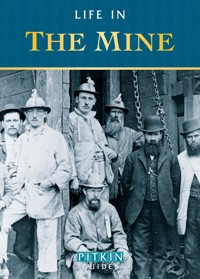
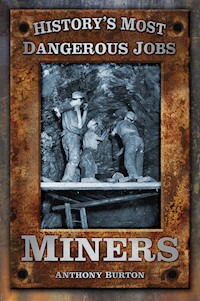
Over 4,000 years of history lie in the seams of British mines, beginning all the way back in the New Stone Age. Large-scale coal mining in Britain developed during the Industrial Revolution, providing energy for industry and transportation in industrial areas from the 18th century to the 1950s. This classic Pitkin guide provides a history of mining in Britain as well as of the hard lives of those who worked in them. Child labour was a normal part of Victorian life, so women and children were found in the dangerous deep pits until 1842, while male miners relied on safety lamps and canaries to avoid mining disasters. Fascinating photographs accompany this guide's history of these people's lives, including their time outside of the mines, their homes and hobbies. Whole villages grew up around mines, with close comradeship and tightly knit mining communities emerging. Here is the story of what that life was like for so many, up until British mining's decline in the 19th and 20th centuries. Includes a list of mines, museums and heritage centres to visit.
Sie lesen das E-Book in den Legimi-Apps auf:
Seitenzahl: 52
Veröffentlichungsjahr: 2013
Das E-Book (TTS) können Sie hören im Abo „Legimi Premium” in Legimi-Apps auf:
Ähnliche













LIFE IN
THE MINE
ANTHONY BURTON
Pitkin Publishing
The Mill, Brimscombe Port
Stroud, Gloucestershire, GL5 2QG
www.thehistorypress.co.uk
This ebook edition first published in 2013
All rights reserved
Text © Pitkin Publishing, 2013
Written by Anthony Burton. The right of the Author, to be identified as the Author of this work has been asserted in accordance with the Copyrights, Designs and Patents Act 1988.
Edited by Gill Knappett.
This ebook is copyright material and must not be copied, reproduced, transferred, distributed, leased, licensed or publicly performed or used in any way except as specifically permitted in writing by the publishers, as allowed under the terms and conditions under which it was purchased or as strictly permitted by applicable copyright law. Any unauthorized distribution or use of this text may be a direct infringement of the author’s and publisher’s rights, and those responsible may be liable in law accordingly.
EPUB ISBN 978 0 7524 9441 8
Original typesetting by Pitkin Publishing
CONTENTS
Important Dates
An Ancient Industry
T’owd Man
Deep Pits
The Steam Age
At the Coalface
Women in the Mines
Children in the Mines
The Safety Lamp
Mining Disasters
Tin and Copper
Ups and Downs
Masters and Men
The Miner at Home
Time Off
Changing Times
Places to Visit
Glossary
IMPORTANT DATES
c.2300 BC Flint mining begins at Grimes Graves, Norfolk.
c.2000 BC Mining for copper and tin begins.
c.500 BC First iron ore mines opened.
AD 43 Romans settle in Britain and introduce new mining technology
1228 Earliest record of coal being sent from Tyneside to London.
1294 370lbs (170kg) of silver ore sent from Devon to King Edward I.
1556 Agricola’s De Re Metallica provides the first detailed illustrations of mining technology.
1686 First account of the use of a furnace for mine ventilation.
1705 First recorded colliery explosion at Gateshead: 30 miners died.
1712 Thomas Newcomen’s steam engine installed at a coalmine in Dudley, Staffordshire.
1769 James Watt takes out a patent for his steam engine.
1776 John Curr develops a system for moving trucks underground on iron rails.
1812 Opening of the world’s first successful steam railway at Middleton Colliery, Leeds.
1815 Sir Humphry Davy designs his safety lamp.
1863 Invention of mechanical coal cutter.
1919 Cornwall’s worst disaster at Levant Mine.
1947 Coal mines nationalized.
1985 The year-long miners’ strike against pit closures ends: 25 pits are closed immediately.
1991 Wheal Geevor, the last deep tin mine in Cornwall, closes.
2008 Tower Colliery, the last deep coal mine in South Wales, closes.
AN ANCIENT INDUSTRY
Men have been burrowing deep under the ground in Britain for more than 4,000 years. It all began in the New Stone Age when tools such as axes and knives were made out of flint. Some flint could be picked up at the surface, but the very best lay under a thick layer of chalk. Around 2300 BC, miners began digging pits as deep as 40 feet (12m) in an area now known as Grimes Graves in Norfolk. From the bottom of a pit they dug narrow tunnels through the chalk and began excavating the flint, using antlers as pickaxes and animals’ shoulder blades as shovels. The only illumination consisted of little bowls made from chalk that would have been filled with animal oil and lit to produce a flickering flame. Altogether 300–400 pits were sunk.
The Stone Age gave way to the Bronze Age (c.2300–700 BC) and then the Iron Age (c.700 BC–AD 43). Now miners went in search of the raw materials, the ores that could be smelted to make the different metals. Copper and tin that were used to make bronze were mostly found in south-west England, and merchants came to Cornwall from as far away as the eastern Mediterranean to trade in the valuable metals. Ancient copper mines have also been identified at Great Ormes Head in North Wales. Here the miners had to cut through solid rock, and they used a technique known as fire setting. A fire was lit against the rock face and allowed to burn fiercely. When the rock became red hot, water was dashed against it, splintering the stone. A similar technique was used at iron mines such as those at Clearwell Caves in the Forest of Dean, Gloucestershire.
T’OWD MAN
The strange name ‘T’Owd Man’ is Derbyshire dialect for ‘The Old Man’, and was used by the lead miners of that area to describe their predecessors who had started the industry. It almost certainly started with the Romans who really began the modern age of mining in Britain. They continued to work the older mines and also opened up new areas of exploration, such as the gold mines at Dolaucothi in Mid Wales. Here they introduced a whole new range of technologies. They began with a process called ‘hushing’. This involved creating a reservoir of water, which could be released to cascade down a hillside, sweeping away the thin surface soil to reveal the veins of ore underneath. To get the water to the top of the hill in the first place they had to construct aqueducts, running many miles to the nearest river. They also brought in a new machine, the waterwheel, to power pumps to drain water from the workings. The men who worked there enjoyed the luxury of a bathhouse – something British coal miners did not get on a regular basis until the second half of the 20th century.
STAKING A CLAIM




