


Erhalten Sie Zugang zu diesem und mehr als 300000 Büchern ab EUR 5,99 monatlich.
- Herausgeber: Pitkin
- Kategorie: Geisteswissenschaft
- Sprache: Englisch
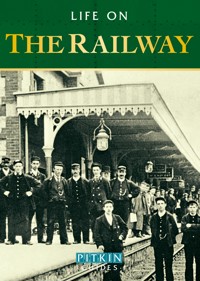
On Christmas Eve 1801, Cornish mining engineer Richard Trevithick tested the first steam locomotive on the road. Though it was short-lived, exploding four days later, this was the beginning of the railway age in Britain. By the end of the 18th century, there was a considerable number of railways across Britain with well established steam engines. This informative guide tells the story of these railways, beginning with the pioneers of locomotive engines and the navvies who built the railways themselves. A must for anyone interested in the history of the railways, industrial Britain and travel, this informative guide explores the lives of those on the railway. Train guards, station staff and passengers are all touched on, as well as underground railways and tragic rail disasters. Colour photographs and illustrations bring the golden age of rail in Britain to life. Includes a list of places to visit which specialize in railways, as well as a glossary of the key terms in the book.
Sie lesen das E-Book in den Legimi-Apps auf:
Seitenzahl: 50
Veröffentlichungsjahr: 2013
Das E-Book (TTS) können Sie hören im Abo „Legimi Premium” in Legimi-Apps auf:
Ähnliche











LIFE ON
THERAILWAY
ANTHONY BURTON
Pitkin Publishing
The Mill, Brimscombe Port
Stroud, Gloucestershire, GL5 2QG
www.thehistorypress.co.uk
This ebook edition first published in 2013
All rights reserved
Text © Pitkin Publishing, 2013
Written by Anthony Burton. The right of the Author, to be identified as the Author of this work has been asserted in accordance with the Copyrights, Designs and Patents Act 1988.
Edited by Gill Knappett.
This ebook is copyright material and must not be copied, reproduced, transferred, distributed, leased, licensed or publicly performed or used in any way except as specifically permitted in writing by the publishers, as allowed under the terms and conditions under which it was purchased or as strictly permitted by applicable copyright law. Any unauthorized distribution or use of this text may be a direct infringement of the author’s and publisher’s rights, and those responsible may be liable in law accordingly.
EPUB ISBN 978 0 7524 9439 5
Original typesetting by Pitkin Publishing
CONTENTS
Important Dates
The First Railways
The Pioneers
Navvies
The Early Years
On the Footplate
The Railway Guard
Station Staff
Signals
Passengers
Travelling in Style
Servants of Industry
Going Underground
The Railway Works
Railway Disasters
End of the Railway Age
Places to Visit
Glossary
IMPORTANT DATES
1804 The first public demonstration of a steam locomotive running on rails. Designed by Richard Trevithick, it ran on the Penydarren tramway in South Wales.
1808 Trevithick’s locomotive Catch-me-who-can gives the first passenger rides on a circular track in London.
1812 The first commercial steam railway opens at Middleton colliery near Leeds.
1814 George Stephenson builds his first locomotive, Blücher, for the Killingworth Colliery railway, near Newcastle upon Tyne.
1825 Opening of the Stockton & Darlington Railway, the first public railway to be built for use by steam locomotives.
1830 Opening of the Liverpool & Manchester Railway, the first to use locomotives for both freight and passengers, and scene of the first fatal railway accident.
1836 The opening of the 23½in (approximately 0.6m) Ffestiniog Railway in Wales, the first narrow gauge to be converted to steam.
1838 The opening of Brunel’s broad-gauge Great Western Railway (GWR) between London and Bristol.
1841 Thomas cook runs the first railway excursion train from Leicester to Loughborough; electric telegraph first used with signals.
1863 The world’s first underground railway opens in London.
1873 The first sleeping car introduced by North British Railways between London and Glasgow and Edinburgh.
1879 The Tay railway bridge in Scotland collapses with the loss of 78 lives.
1883 Opening of Volk’s Railway at Brighton – Britain’s first electric railway.
1904City of Truro becomes the first locomotive to travel at over 100mph (160kph).
1923 A total of 123 separate railway companies are amalgamated to form four groups: London, Midland and Scottish (LMS), London & North Eastern Railway (LNER), Great Western Railway (GWR) and Southern.
1938 The A4 locomotive Mallard sets a world speed record for steam locomotives of 126mph (203kph), a record that still stands.
1948 The railways are nationalized.
1960Evening Star is the last steam locomotive to be built by British Railways.
1993 Railways are privatized, and divided between one organization responsible for infrastructure and separate companies to run the trains.
2013 The London Underground celebrates its 150th anniversary.
THE FIRST RAILWAYS
By the end of the 18th century there were a considerable number of railways in Britain, most of them linking industrial sites, such as collieries, to navigable rivers and canals. They were generally known as tramways, and horses were used to pull the trucks along. By this time steam engines were well established and used for many tasks, from pumping water from mines to providing power for textile mills. They all used steam at low pressure: if more power was needed, a bigger engine had to be built – and some were enormous, with cylinders 6 feet (1.8m) or more in diameter, and as high as a two-storey building.
It was a brilliant young Cornish mining engineer named Richard Trevithick, itching to find new ways of using steam, who realized that the other way to get more power was to increase steam pressure, and he was able to build portable engines that could be pulled along by horses. Then he went a stage further and decided to build an engine that would move itself: a locomotive. His new engine was given its first outing on the road at Camborne in Cornwall on Christmas Eve 1801. Its career was short-lived: four days later it ran off the road and its boiler exploded. Trevithick failed to interest anyone in steam road carriages, so in 1804 he built an engine to run on the rails of the Penydarren tramway that served an iron works in the Welsh town of Merthyr Tydfil. He wrote: ‘It works exceeding well, and is much more manageable than horses.’ But it broke the rails. Trevithick made one last attempt to sell his idea when he ran another locomotive, Catch-me-who-can, for paying passengers in London. When that failed, he gave up and left it to others to continue what he had started.
THE PIONEERS
A




