


9,99 €
Mehr erfahren.
- Herausgeber: Parkstone International
- Kategorie: Geisteswissenschaft
- Sprache: Englisch
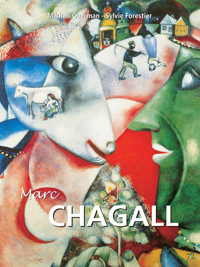
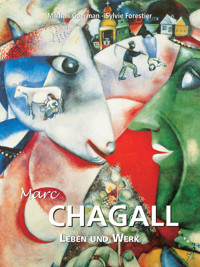
Chagall’s life and works have an international dimension that endows it with universal appeal. Throughout his life, this Jewish artist imbued his painting with passion and poetry, and left his mark across the world, from the Metropolitan Opera House of New York to the Opera Garnier of Paris.
Das E-Book können Sie in Legimi-Apps oder einer beliebigen App lesen, die das folgende Format unterstützen:
Seitenzahl: 180
Veröffentlichungsjahr: 2019
Ähnliche







Mikhail Guerman
Text: Mikhail Guerman
Sylvie Forestier
Layout: Stephanie Angoh
© Confidential Concepts, worldwide, USA
© Parkstone Press International, New York, USA
© Marc Chagall, Artists Rights Society, New York, USA/ ADAGP, Paris
Image-Barwww.image-bar.com
ISBN: 978-1-78310-430-7
All rights reserved. No part of this may be reproduced or adapted without the permission of the copyright holder, throughout the world.
Unless otherwise specified, copyright on the works reproduced lies with the respective photographers. Despite intensive research, it has not always been possible to establish copyright ownership. Where this is the case, we would appreciate notification.
Contents
Chronology Of The Life And Work Of Marc Chagall
I The Land Of My Heart…
II Los Primeros Años
III Graphic Works
Index Of Works Reproduced
Notes
CHRONOLOGY OF THE LIFE AND WORK OF MARC CHAGALL
7 July 1887: Marc Zakharovich Chagall, the son of a fish vendor, was born in Vitebsk.
1906: Studied at the art school of Yuri Pen in Vitebsk, leaving for St. Petersburg in the winter.
1907–1910: Studied at the Drawing School of the Society for the Encouragement of the Arts, St. Petersburg (then directed by Nicholas Roerich) and the private school of S. Saidenberg; entered the private art school of Yelizaveta Zvantseva, where he studied under Léon Bakst and Matislav Dobuzhinsky. Showed his works at the school exhibition held in the office of the magazine Apollon.
1910–1914: Lived in Paris, on the Impasse du Maine. In 1911, moved to La Ruche. Met Pablo Picasso, Georges Braque, Fernand Léger, Amedeo Modigliani, Alexander Arkhipenko, Guillaume Apollinaire, Max Jacob, Blaise Cendrars, and other famous artists and writers. Exhibited at the Salon des Indépendants and the Salon d’Automne in Paris, with the Donkey’s Tail group in Moscow, at Der Sturm Gallery in Berlin (first one-man show) and also in St. Petersburg and Amsterdam. On the eve of the war, returned to Vitebsk.
July 1915: Married Bella Rosenfeld.
1915–1917: Worked in Petrograd, served on the military-industrial committee. Exhibited in Moscow and Petrograd.
1916: Birth of his daughter Ida.
1918–1919: Appointed Commissar for the Arts in the Regional Department of People’s Education in Vitebsk. Set up and ran (from early 1919) an art school in Vitebsk, where the teachers included Mstislav Dobuzhinsky, Ivan Puni and Kasimir Malevich. Headed the Free Painting Workshop (Svomas) and the museum. Organized the celebrations in 1918 for the first anniversary of the October Revolution. Took part in the First State Free Exhibition held in the Winter Palace, Petrograd.
1920–1921: Conflict with Malevich and Lissitzky forced Chagall to leave Vitebsk. He lived in and near Moscow, producing works for the Jewish Chamber Theatre and teaching in the Malakhovka and Third International colonies for homeless children. Began work on the book My Life.
1922: Joint exhibition in Moscow with Nathan Altman and David Sterenberg.
1922–1923: Travelled to Kaunas with an exhibition of his works. Visited Berlin and Paris. Settled in Paris in September 1923. Produced etchings for My Life and began work on illustrations to Gogol’s Dead Souls.
1926: One-man shows in Paris and New York.
1930–1931: Worked on illustrations to the Bible. Travelled to Switzerland, Palestine, Syria and Egypt. Exhibitions in Paris, Brussels and New York.
1933: At Goebbels’ command, Chagall’s works were burnt in public in Mannheim. Exhibition in Basle.
1935: Visited Poland.
1937: Granted French citizenship. Travelled to Italy.
1939: Carnegie Prize (USA).
Marc Chagall’s parents. Photography, early twentieth century.
The Chagall family. Photography, c.1906.
The house of Chagall in Vitebsk. Photography, early twentieth century.
1940: Moved to the Loire and then to Provence.
1941: Arrested in Marseille and then freed. Moved to the USA.
1942: Worked for theatres in the USA and Mexico.
1944: Death of Bella Chagall in New York.
1945: Set designs and costumes for Stravinsky’s ballet The Firebird.
1946: Exhibitions in New York and Chicago.
1947: Exhibition at the Musée National d’Art Moderne in Paris.
1948: Returned to France. Publication of Dead Souls with illustrations by Chagall. Exhibitions in Amsterdam and London. Travelled widely in this and the following years.
1950: Moved to Vence, near Nice. Worked on lithographs and ceramics.
1951: First stone sculptures. Large exhibitions in Bern and Jerusalem.
1952: Married Valentina Brodsky. Visit to Greece.
1953–1955: Major exhibitions in Turin, Vienna and Hanover.
1956: Publication of the Bible with illustrations by Chagall.
1957: Began work on stained-glass windows (for Assy, Metz, Jerusalem, New York, London, Zurich, Reims, Nice). Exhibitions of graphic works in Basle and Zurich.
1959: Murals in the foyer of the Theatre in Frankfurt am Main. Exhibitions in Paris, Munich and Hamburg.
1963: Exhibitions in Japan.
1964: Ceiling paintings in the Opera in Paris. First mosaics and tapestries.
1966: Moved to Saint-Paul-de-Vence. Painted murals in the Metropolitan Opera in New York.
1969–1970: Foundation of the Musée Chagall in Nice. Major retrospective exhibition at the Grand Palais in Paris.
June 1973: Trips to Moscow and Leningrad at the invitation of the USSR Ministry of Culture.
July 1973: Opening of the Musée Chagall in Nice.
October 1977: Exhibition of paintings produced between 1967 and 1977 in the Louvre.
1982–1984: Major exhibitions in Stockholm, Copenhagen, Paris, Nice, Rome and Basle.
28 March 1985: Marc Chagall died at Saint-Paul-de-Vence in the ninety-eighth year of his life.
1987: Major exhibition of Chagall’s works in Moscow.
Marc Chagall. Photography, 1908.
Marc Chagall and Solomon Mikhoels with members of the Jewish Chamber Theatre on tour in Berlin. 1927.
Marc Chagall at the exhibition of his work in the Tretyakov Gallery. Moscow, 1973.
I THE LAND OF MY HEART…
Through one of those curious reversals of fate, one more exile has regained his native land. Since the exhibition of his work at the Pushkin Museum of Fine Arts in Moscow in 1987 and which gave rise to an extraordinary popular fervour, Marc Chagall has experienced a second birth. Here we have a painter, perhaps the most unusual painter of the twentieth century, who at last, attained the object of his inner quest: the love of his Russia. Thus, the hope expressed in the last lines of My Life, the autobiographical narrative which the painter broke off in 1922 when he left for the West – “and perhaps Europe will love me and, along with her, my Russia” – has been fulfilled.
A confirmation of this is provided today by the retrospective tendency in his homeland which, beyond the all-in-all natural re-absorption of the artist into the national culture, also testifies to a genuine interest, an attempt at analysis, an original viewpoint which enriches our study of Chagall. Contrary to what one might think, this study is still dogged by uncertainties in terms of historical fact. As early as 1961 in what is still the main work of reference[1], Franz Meyer emphasised the point that even the establishment of, for example, a chronology of the artist’s works, is problematic. In fact, Chagall refused to date his paintings or dated them a posteriori. A good number of his paintings are therefore dated only approximately and to this, we must add the problems caused to Western analysts by the absence of comparative sources and, very often, by a poor knowledge of the Russian language. Therefore, we can only welcome such recent works as that of Jean-Claude Marcadé[2] who, following the pioneers Camilla Gray[3] and Valentina Vassutinsky-Marcadé[4], has underlined the importance of the original source – Russian culture – for Chagall’s work. One must rejoice even more in the publications of contemporary art historians such as Alexander Kamensky[5] and Mikhail Guerman with whom we now have the honour and pleasure of collaborating.
Yet, Marc Chagall has inspired a prolific amount of literature. The great names of our time have written about his work: from the first serious essay by Efros and Tugendhold, The Art of Marc Chagall[6], published in Moscow in 1918 when Chagall was only 31, to Susan Compton’s erudite and scrupulous catalogue, Chagall[7], which appeared in 1985, the year of the artist’s death. On the occasion of the exhibition at the Royal Academy in London, there has been no lack of critical studies, but all this does not make easy our perception of Chagall’s art. The interpretation of his works – now linking him with the Ecole de Paris, now with the Expressionist movement, now with Surrealism – seems to be full of contradictions. Does Chagall totally defy historical or aesthetic analysis? In the absence of reliable documents – some of which were clearly lost as a result of his travels, there is a danger that any analysis may become sterile. This peculiarity by which the painter’s art seems to resist any attempt at theorization or even categorization is moreover reinforced by a complementary observation. The greatest inspiration, the most perceptive intuitions are nourished by the words of poets or philosophers. Words such as those of Cendrars, Apollinaire, Aragon, Malraux, Maritain or Bachelard… Words which clearly indicate the difficulties inherent in all attempts at critical discourse, as Aragon himself underlined in 1945: “Each means of expression has its limits, its virtues, its inadequacies. Nothing is more arbitrary than to try to substitute the written word for drawing, for painting. That is called Art Criticism, and I cannot in good conscience be guilty of that.[8]” Words which reveal the fundamentally poetic nature of Chagall’s art itself.
Even if the arbitrariness of critical discourse appears to be even more pronounced in the case of Chagall, should we renounce any attempt at clarifying, if not the mystery of his work, then at least his plastic experience and pictorial practice? Should we limit ourselves to a mere lyrical effusion of words with regard to one of the most inventive individuals of our time? Should we abandon research of his aesthetical order, or on the contrary persist in believing that his aesthetic lies in the intimate and multiform life of ideas, in their free and at times contradictory exchange? If this last is the necessary pre-requisite of all advance in thought, then the critical discourse on Chagall can be enriched by new knowledge contributed by the works in Russian collections which have up to now remained unpublished, by archives which have been brought to light and by the testimony of contemporary historians. The comparison gives us a deeper comprehension of this wild art that exhausts any attempt to tame it despite efforts to conceptualize it. About 150 paintings and graphic pieces by Chagall are analysed here by the sensitive pen of the author. They were all produced between 1906–1907 – Woman with a Basket – and 1922, the year in which Chagall left Russia for good, with the exception of several later works, Nude Astride a Cockerel (1925), Time is a River without Banks (1930–1939) and Wall-clock with a Blue Wing (1949).
The corpus of works presented provides a chronological account of the early period of creativity. The author’s analysis stresses with unquestionable relevance the Russian cultural sources on which Chagall’s art fed. It reveals the memory mechanism which lies at the heart of the painter’s practice and outlines a major concept. It is tempting to say a major “tempo”, that of time-movement perceptible in the plastic structure of Chagall’s oeuvre. Thus we can much better understand the vivid flourishing of the artist’s work with its cyclical, apparently repetitive (but why?) character, which might be defined as organic and which calls to mind the ontological meaning of creation itself as set out in the writings of Berdiayev.
My Fiancée in Black Gloves, 1909. Oil on canvas, 88 x 65 cm. Kunstmuseum, Basle.
Bella with a White Collar, 1917. Oil on canvas, 149 x 72 cm. Collection of the artist’s family, France.
Birth of a Child, 1911. Oil on canvas, 65 x 89.5 cm. Collection of the artist’s family, France.
This primordial outpouring of creativity which brought the admiration of Cendrars and Apollinaire, this imperious pictorial paganism which dictates its own law to the artist, sets forth an aesthetic and an ethic of predestination which, for our part, we would like to clarify. It is in the immediacy of Chagall’s pictorial practice, in the immediacy of each creative decision that his own identity lies, that he himself is to be found. This self-revelation is related to us by Chagall himself. The autobiographical My Life, written in Russian, first appeared in 1931 in Paris, in a French translation by Bella Chagall. Providing us with extremely precious evidence of a whole part of the artist’s life, this text – tender, alert and droll – reveals behind its anecdotal nature the fundamental themes of his work and above all, its problematic character. The tale as a whole is not moreover without some evocations of the artists’ biographies studied by Ernst Kris and Otto Kurz[9] who set out a typology. From the first lines one’s attention is attracted by a singular phrase: “That which first leaped to my eyes was an angel!” Thus, the first hours of Chagall’s life were registered here specifically in visual terms. The tale begins in the tone of a parable and his life-story could not belong to anyone but a painter. Chagall, who recalls the difficulties of his birth, writes: “But above all I was born dead. I did not want to live. Imagine a white bubble which does not want to live. As if it were stuffed with paintings by Chagall.[10]” Thus, did living there perhaps meant to liberate that which lay inside him – painting? The theme of vocation contained within this premonitory dream, the obvious sign of a unique predestination, seems to us to be even more significant in that it determines the events in the artist’s life and gives meaning to his destiny.
Marc Chagall was born into a strict Jewish family for whom the ban on representations of the human figure had the weight of dogma. If one is unaware of the nature of traditional Jewish education, one can hardly imagine the transgressive force, the fever of being which propelled the young Chagall when he flung himself on the journal Niva (Field) to copy from it a portrait of the composer Rubinstein. This education was based on the historic law of Divine Election and covered the religious side of life only. The transmission to the very core of the Jewish hearth was essentially effected through oral means. Each prayer, each recitation from the Torah or the Talmud imposed on the believer was in a sing-song voice; reading lessons were held out loud; everyday life was given rhythm by the repetitive times of the ritual practice of songs and on the sabbath day, solemn benedictions. Each Jewish house is a place made holy by the liturgy of the word.
The Chagall family belonged to the Hassidic tradition. We should emphasize here that this form of piety – hassid means devout – gives preference to direct contact between the individual and God. The dialogue which is thus set up between the faithful and Yahweh exists without the mediation of rabbinical pomp and display. It is born directly from everyday ritual and is expressed in the exercise of personal liberty. Hassidism lies outside the scholarly talmudic culture, the institutional commentary of the synagogue. It was historically found in rural Russian and Polish communities, communities based on the original fundamental nucleus of Jewish society which is, of course, the family.
Chagall’s father, Zakhar, was a pickler at a herring merchant’s. Sensitive, secretive, taciturn, the figure of Zakhar seems to have had the tragic dimension inherent in the destiny of the Jewish people. “Everything in my father seemed to me to be enigma and sadness. An inaccessible image”, Chagall wrote in My Life. On the other hand, his mother, Feyga-Ita, the eldest daughter of a butcher from Liozno, radiated vital energy. The psychological antithesis of their characters can be seen in Chagall’s very first sketches and in his series of etchings produced for Paul Cassirer in Berlin in 1923 which were intended to illustrate My Life. This antithesis, so strongly felt by Chagall, embodies the age-old experience of the whole of Jewish existence: his father and mother in the artist’s paintings, in the very heart of the plastic space of the picture or drawing bring into play not only the specific reality of a memory but also the two contradictory aspects which form Jewish genius and its history – resignation to fate in the acceptance of the will of God and creative energy bearing hope, in the unshakeable sense of Divine Election. Marc had one brother and seven sisters: David, of whom he produced some moving portraits but who died in the flower of youth; Anna (Aniuta), Zina, the twins Lisa and Mania, Rosa, Marussia and Rachel, who also died young. If family life was difficult, it was not miserable. It was part of the life of the stedtl, that specificially Jewish cultural reality connected to the social structure of the ghetto. In Vitebsk, this reality fitted into the structure of rural Russian life.
In the late nineteenth century Vitebsk was still a small town in Byelorussia situated at the confluence of two waterways, the Dvina and the Vitba. Its economy was expanding greatly but despite the arrival of the railway, the station, small industries and the river port, the town still retained the characteristics of a large rural village. While the numerous churches and the Orthodox cathedral gave it a more urban appearance, most of the houses were still of wood and the streets, frozen in winter, running with water in spring, were not yet paved. Each house, evidence of an economic unity founded on a traditional domestic way of life, had its little garden and poultry-yard. With their wooden fences and multi-coloured decoration, the houses of Vitebsk live on eternally in Chagall’s pictures. The Russian Orthodox and Jewish communities rubbed along side by side without ever coming into conflict. The divisions between the two were more on the social than on the confessional plane. There was a Jewish middle class made up of rich merchants for whom the process of integration was clearly effected through education. Chagall himself went to the parish school even though the institution did not accept Jewish children.
It was from this childhood experience that the pictorial schemes of Chagall’s plastic vocabulary originate. But the fragments of memory, which we easily identify in concrete objects even in the very first works – the room, the clock, the lamp, the samovar, the Sabbath table, the village street, the house of his birth and its roof, Vitebsk recognizable through the domes of its cathedral – did not crystallize into clearly defined images until after the passage of many years. It was only in obeying his calling (“Mummy… I would like to be a painter…[11]”), that is to say in tearing himself away from his family and social milieu, that Chagall could evolve his own pictorial language. A memory metamorphosed into an image will break with all everyday realism and express another reality which lies at the basis of its outward forms. Several relevant details about the artist’s life are needed here. Chagall succeeded in persuading his mother to enrol him in the school of drawing and painting of the artist Pen. But the methods of training and the laborious copying exercises soon ceased to satisfy the young Chagall. That which he was still seeking confusedly, that which he barely touched upon in his first daring colouristic experiments, had nothing in common with the academic tradition to which Pen adhered. The painting which Chagall was carrying within himself was poles apart from the representative realism which Pen inherited from The Wanderers. Rebelling against all teaching, from 1907 Chagall began to show a precocious capacity for invention – did he not use the colour violet in a way which defied all known laws? – the autodidactic quality which is the mark of true creative spirits. The painter’s destiny worked itself out in the image of some hero of the great fundamental myths which make up the collective subconscious. It was a destiny shaped through trials, of which the most decisive was tearing himself away from the place of his birth. In 1907, accompanied by his friend Viktor Mekler, Chagall left Vitebsk – one of the main symbolic images in his later work – for St. Petersburg.
The Wedding, 1918. Oil on canvas, 100 x 119 cm. Tretyakov Gallery, Moscow.
Self-Portrait with Seven Fingers, 1911. Oil on canvas, 128 x 107 cm. Royal Collection, The Hague.
His departure for St. Petersburg gives rise to several questions. Chagall could in fact have wished to pursue his artistic quest, which was only just beginning, in Moscow. The choice of St. Petersburg is of particular significance.
Chagall was conforming above all – without being aware of it – to a tradition stemming from the Renaissance, a tradition which makes travel one of the principal means of any apprenticeship. Whilst painting is also a craft – despite the romantic revolts, the status of the artist at the dawn of the twentieth century was still not that far from the craftsman’s status it had in the fifteenth century – the social recognition of this status was inevitably dependent on academic training. St. Petersburg, among other things, was the intellectual and artistic centre of imperial Russia. Much more than continental Moscow, it was a city whose own history was always characterized by an openness towards Western Europe. Through its architecture, its urbanity, its schools and salons, it dispensed a formal and spiritual nourishment which was to enrich the young provincial. Chagall’s keen gaze sought the least reflections of the transparent light of the North on the surface of the city’s canals. He came to seek St. Petersburg’s excellence. His failure in the entrance examination for the Stieglitz School did not stop him from later joining that founded by the Imperial Society for the Encouragement of the Arts, and directed by Nicholas Roerich.




