


5,99 €
Mehr erfahren.
- Herausgeber: Lozzi Roma
- Kategorie: Fachliteratur
- Sprache: Englisch
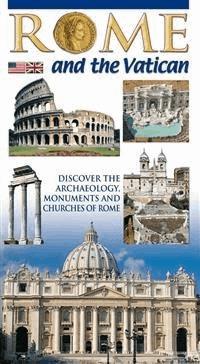
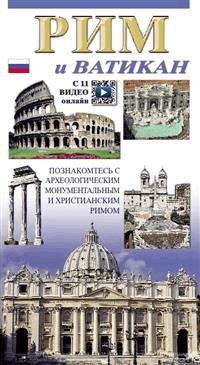
This guide divides Rome in 10 areas, plus the Vatican City, providing a handy approach to understanding all the places of artistic, cultural and religious interest. The volume offers anecdotes, in-depth and practical information, updated in annually revised editions.
Das E-Book können Sie in Legimi-Apps oder einer beliebigen App lesen, die das folgende Format unterstützen:
Veröffentlichungsjahr: 2014
Ähnliche
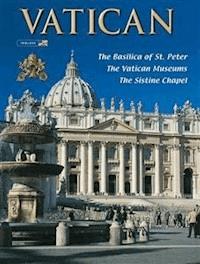
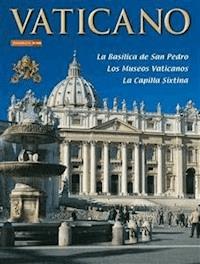
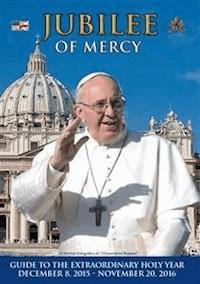
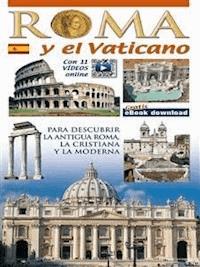
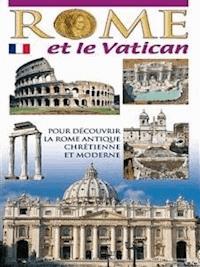




ROME
GUIDE TO THE CITYDIVIDED INTO 11 ZONES
Contents
Brief historical outlines
Around the Capitol
The Colosseum and the Forums
Circo Massimo and Trastevere
From the Aventine to the EUR
Along the Via Appia Antica
The Lateran and San Lorenzo
Quirinal and Esquilino
Via Veneto and Villa Borghese
Along Via del Corso
Campo Marzio and Castel Sant’Angelo
The Vatican
Brief historical outlines
Rome is situated 41° 53’ 54” N. lat., and 12° 59’ 53” E. long., on the banks of the River Tiber. According to Varro’s calculations, Rome was founded on April 21th, 753 B.C. Rome was first governed by Kings (753-510 B.C.); then as a Republic by Consuls (510-30) and finally by Emperors (30 B.C. to 476 A.D.). During the Middle Ages, the Church established its temporal rule and Rome remained the seat of the Papal Court until September 20, 1870 when the Italian army entered Rome and the Eternal City became the capital of a united italy. The Vatican, a small territory of 0,440 Km2 occupied by St. Peter’s Basilica, St. Peter’s Square and the Vatican Palaces, is under the sovereignty of the Pope, and it has been called the “Vatican City State” since 1929.
ANCIENT ROME
The Kings of Rome. According to the legend, the seven Kings of Rome were: Romulus, Numa Pompilius, Tullus Hostilius, Ancus Martius, Tarquinius Priscus, Servius Tullius, and Tarquinius the Proud.
667. Romans and Albans contesting for superiority agreed to choose three champions on each side to decide the question. The three Horatii, Roman knights, overcame the three Curiatii, Alban knights, and unite Alba to Rome.
509. Tarquin the Proud and his family expelled for tyranny and licentiousness; royalty abolished; the Patricians established an aristocratic commonwealth.
The Republic. First period (510-87 B.C.) from the expulsion of Tarquin to the Dictatorship of Sylla. - Second period (87-30 B.C.) from Sylla to Augustus.
496. The Latins and the Tarquins declared war against the Republic and were defeated at Lake Regillus.
477-396. Wars with Veii and the Etruscans. Veii taken by Camillus after ten years’ siege.
390. The Gauls, under Brennus, won a remarkable victory over the Romans on the banks of the little River Allia, after which they sacked and plundered Rome. However, they eventually returned to their own land and Rome was gradually rebuilt.
264-146. The Punic Wars, which culminated in the destruction of Carthage, the leading naval power in the Mediterranean.
88-86. Fighting between Marius and Sylla.
82-79. Sylla’s dictatorship. Decline of the Republican institutions.
60-53. The First Triumvirate: Caesar, Pompey and Crassus.
58. Caesar’s campaigns in Gaul and Britain.
48. Pompey was defeated at Pharsalus.
Caesar was assasinated on March15, 44 (the Ides of March), during a Senate Meeting.
43. The Second Triumvirate: Octavian (the future Augustus), Anthony and Lepidus.
31. Octavian defeated Anthony and Cleopatra at Actium (Greece).
The Empire. The Emperor Octavian (63 B.C. - 14 A.D.) took the name of “Caesar Augustus”. The birth of Jesus Christ.
The reign of Augustus coincided with the golden age of Latin literature: this was the era of Writers such as Cicero, Virgil, Lucretius, Horace, Ovid, Livy and Tacitus.
70. Jerusalem was razed to the ground by Titus. Vespasian began to build the Colosseum in 72.
98-117. Under Trajan, the Roman Empire reached its maximum expansion.
117-138. during Hadrian’s reign, Rome was at the peak of its architectural splendour. The Empire began to decline between the 2nd and 3rd centuries.
284. Diocletian and Maximian: the first division of the Empire.
313. Constantine the Great allowed the Christians freedom of religious practice. In 331 he transferred the capital of the Empire to Byzantium (Constantitople).
395. The Roman Empire was definitively divided between the East (Arcadius) and the West (Honorius).
404. Transfer of the Capital to Ravenna.
410. Rome sacked by the Goths.
475. Romulus Augustulus, the last Emperor.
476. Odoacer’s conqueror of Rome put an end to the Roman Empire in the West.
THE MIDDLE AGES. 493. The Goths established their reign in Italy, defeating Odoacer.
535-553. The Byzantine-Gothic war.
568. The Lombards invaded Italy. It was divided among the Barbarians and the Eastern Empire (the Byzantines).
729. With the donation of Sutri by the Lombard king Liutprandus, the temporal rule of the popes began.
800. On Christmas day, Leo III crowned Charlemagne Emperor of the Holy Roman Empire.
1073-1085. Pope Gregory VII, a fervent and energetic reformer, began his fight against the Emperor Henry IV.
1084. Rome was invaded and sacked by the Romans, led by Robert the Guiscard.
1305. Clement V moved the papal seat from Rome to Avignon, where it remained until 1377.
RENAISSANCE. 1471. The foundation of the Capitoline Museum, the oldest public collection in the world.
1503-1513. Julius II began to pull down the old St. Peter’s in order to build the present Basilica, under Bramante’s supervision.
1513-1521. Leo X, the son of Lorenzo the Magnificent, made Rome the greatest cultural centre. - Under the pontificate of Leo X the Lutheran Reform began. - The imperial invasion of Italy and the disastrous Sack of Rome (16 May, 1527) put an end to the golden age of the papal city in a nightmare of fire and blood.
THE MODERN AND CONTEMPORARY AGE. 1799. The Jacobine Republic in Rome, pope Pius VI was deported to France.
1800. The First Restoration: Pius VII was re-established in Rome.
1861. On March 27, the Italian Parliament declared Rome the natural and indispensable capital of the new State.
1870. On September 20, Italian troops entered Rome through the breach in Porta Pia.
1929. On February 11, the “Roman Question” between the Church and the State was finally resolved by the Lateran Treaty, which came to be part of the Constitution of the Italian Republic.
1946. In Italy, the Republic was proclaimed in accordance with the June 2 referendum.
1962-65. The Ecumenical Council, Vatican II, was summoned by John XXIII and concluded by Paul VI.
1978. After the death of Paul VI and the pontificate of John Paul I which lasted one month, John Paul II the Polish Pope, acceded to the pontifical throne.
2000. Great celebration of the Holy Year.
2005. The death of John Paul II brought over three million faithful to Rome. On
April 19th, the German Joseph Ratzinger was elected Pope with the name Benedict XVI.
2013. On February 11th, Benedict XVI quits the papacy. On the evening of 13 March, the argentine Jorge Mario Bergoglio was elected Pope and took the name of Francis.
1 - Around the Capitol
Capitoline Hill
Capitoline Museums
St. Mary in Aracoeli
Vittoriano
Two pictures of the huge statues of Roman age representing the Dioscuri (Castor and Pollux), defenders of the Republican Rome.
♦ The Capitol, once sacred to the Romans and the destination of the triumphal processions of victorious generals, is today the headquarters of the Mayor and the Municipality of Rome.
In spite of changing events and historic conditions, the CAPITOLINE HILL has remained the basic nucleus of Roman life for thousands of years. It is reached by the grand flight of steps known as the “Cordonata”, built to a design by Michelangelo especially for the triumphal entry of the Emperor Charles V in 1536.
The bronze statue of Cola di Rienzo is by Masini. It’s placed to the left of the Cordonata on fragments of ancient remains, to show that the last Roman Tribune wanted to re-establish the Republic on the ruins of the Empire.
Statue of roman age rappresenting the Tiber divinity.
Aerial view of the Capitol.
The Esquiline Venus and, below, the bust of the Emperor Caracalla, Capitoline Museums.
At the top of the stairs are the colossal groups of the Dioscuri, Castor and Pollux, found near the Ghetto and placed here in 1583 by Gregory XIII. Sixtus V added the Trophies of Marius and the statues of Constantine and his son Constantine Caesar.
Lesen Sie weiter in der vollständigen Ausgabe!
Lesen Sie weiter in der vollständigen Ausgabe!
Lesen Sie weiter in der vollständigen Ausgabe!
Lesen Sie weiter in der vollständigen Ausgabe!
Lesen Sie weiter in der vollständigen Ausgabe!
Lesen Sie weiter in der vollständigen Ausgabe!
Lesen Sie weiter in der vollständigen Ausgabe!
Lesen Sie weiter in der vollständigen Ausgabe!
Lesen Sie weiter in der vollständigen Ausgabe!
Lesen Sie weiter in der vollständigen Ausgabe!




