


Erhalten Sie Zugang zu diesem und mehr als 300000 Büchern ab EUR 5,99 monatlich.
- Herausgeber: Fernhurst Books Limited
- Kategorie: Lebensstil
- Sprache: Englisch
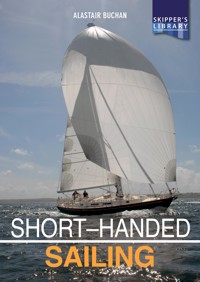
While relatively few cruise single-handed, many sail short-handed. It may be a couple sailing together or a skipper with a novice crew – he may have lots of people onboard but, in terms of the sailing, he is probably short-handed. They soon discover that there is so much more to short-handed sailing than a lack of crew. It demands a different approach, a new mindset. The skipper has a much greater workload but there are also fewer people, sometimes no-one at all, to consult during the decision-making process. Under these circumstances fatigue can be as dangerous as heavy weather: it creeps up on you, often unnoticed, destroying your morale and ability to make rational decisions. And when short-handed, the crew's limited physical resources must be watched over and zealously guarded. In this heavily illustrated book Alastair Buchan passes on the lessons of his hard-won experience gained short- and single-handed sailing in coastal, offshore and ocean waters. It will show you everything you need to know about handling a boat alone or short-handed, from choosing a suitable craft to passage planning, manoeuvring, sleep management and watch keeping.
Sie lesen das E-Book in den Legimi-Apps auf:
Seitenzahl: 288
Veröffentlichungsjahr: 2019
Das E-Book (TTS) können Sie hören im Abo „Legimi Premium” in Legimi-Apps auf:
Ähnliche

















CONTENTS
1 INTRODUCTION
2 THE BOAT
3 THE SKIPPER
4 EVOLUTIONS: INTRODUCTION
5 EVOLUTIONS: CASTING OFF
6 EVOLUTIONS: SAIL HANDLING
7 EVOLUTIONS: HEAVY WEATHER
8 EVOLUTIONS: BERTHING
9 PASSAGE PLANNING
10 SLEEP MANAGMENT
11 WATCH-KEEPING
12 SUMMARY
Dedicated to:Lucas Elliot Thurm
1
INTRODUCTION
I never set out to sail alone. It just happened. For years I wandered the coasts of Britain and Europe in a Hurley 20 called Mintaka. Like many, when I could not find a crew, I took to sailing single-handed. Initially my solo passages were modest, hardly more than a long day sail, but you can circumnavigate Britain in daily hops and one summer I did. Gradually I began modifying Mintaka to make life easier. First came a second-hand Navik self-steering gear, then head and mainsail reefing systems.
I played around with leading halyards aft to the cockpit for several years until I found an arrangement that worked, and the accommodation was tweaked until life below was reasonably civilised in harbour and at sea. I was learning the tricks of short-handed sailing the hard way. Hopefully this book will allow you to learn some of the tricks more quickly.
Mintaka in Martinique
THE DEVELOPMENT OF SHORTHANDED SAILING
The history of short-handed sailing goes back to the late 19th century when it seemed as if flotillas of small yachts, many single-handed, were crossing the Atlantic. Howard Blackburn crossed the Atlantic single-handed twice and gave new twist to single-handed sailing, as years before he set out he had lost the fingers on both hands. Joshua Slocum circumnavigated the world in Spray and made single-handed sailing sound easy and fun.
Captain John Voss disapproved of Slocum’s enthusiasm for single-handed sailing and set out to show how it should be done with a crew in a converted dugout canoe, bought from Canadian Indians, and called Tillikum. Captain Voss believed in sea anchors and you get the impression that whenever he met a gale he threw out his sea anchor and the seas calmed. When his crew fell overboard and drowned he discovered that he was perfectly happy sailing alone.
Around the same time and nearer home, yachtsmen like E F Knight and Erskine Childers began the tradition of shorthanded cruising around European coasts that persists to this day. In the 1950s a revival of blue-water sailing saw many of the early pioneers’ feats repeated. This culminated in 1960 with the first single-handed trans-Atlantic race, where the handful of boats taking part lit the fuse to an explosion in long distance short- and single-handed sailing and the development of equipment to ease a short-handed sailor’s workload.
Compared to the pioneers we have it easy. They had no self-steering and their sail handling systems were designed by pharaohs to keep slaves busy. Sails were of canvas and ropes were of hemp, manila and sisal. These are all hard to handle when wet and will rot before your eyes if given the chance. Not surprisingly, tales of their voyages are peppered with accounts of bad weather and battles with recalcitrant sails that, given half a chance, would flog themselves to tatters.
SHORT-HANDED SAILING TODAY
Although over a third of UK yachtsmen sometimes sail solo, and even more shorthanded, somehow short- and single-handed sailing is regarded as a minority activity. The image of the lone sailor is of a nautical hermit wandering the oceans and actively rejecting the company of others. Blue-water solo sailors are frequently asked, ‘How do you manage by yourself?’ meaning not, ‘How do you sail the boat?’ but ‘How do you survive the solitude?’ Since most people have never been truly alone they see isolation as a problem, perhaps even a danger, to be overcome. I am not sure this is true but, like most single-handed sailors, far from knowing the answer, I have not even considered the question and retreat behind inane remarks like, ‘There’s always plenty to do’.
Short-handed sailing is a broad church with room for all persuasions. For every blue-water solo sailor there are a hundred who mix and match, sailing with family or friends one weekend and by themselves the next. There are those who day sail happily by themselves but would never consider an overnight passage alone and those who cheerfully cruise for weeks by themselves provided that family and friends join them from time to time to hear of their exploits.
To claim that one form of short-handed sailing is better or more demanding than another is silly. Every short-handed sailor faces the same problems of passage planning and boat handling. Every solo skipper walks the high wire, balancing competing demands on his time.
A solo overnight coastal passage may not carry the cachet of an ocean crossing but the worries of weather, pinpoint navigation, busy shipping lanes, pot buoys and objective dangers make it as challenging and often more dangerous. The sight of land, however distant, terrifies most blue-water sailors. Bill King, solo circumnavigator, considered coastal sailing so hazardous that, when he was in coastal waters, he took a crew whenever possible.
The difference between solo coastal and ocean passages is mostly of scale. Unlike the coastal cruiser, whose exposure to the pressures of being alone lasts only hours and whose problems are solved quickly or not all, the solitary blue-water cruiser measures his stress in weeks, but his problems become old, familiar friends whose idiosyncrasies are tolerated and are dealt with at a gentler pace. It is the difference between a sprinter and a marathon runner.
SINGLE-HANDED SAILING
Somebody, somewhere, has almost certainly prepared a personality profile of the single-handed sailor. It would make interesting reading but ticking boxes will not be of much value to the would-be single-hander who wants to know if solo sailing is for him. I know no shore-bound answer to that question. Being a social isolate is not essential. If single-handed sailors are loners, then they are the most sociable loners in the world. Their cruises tend to be one long party interrupted by the occasional sail to a different location. It is a busy social life.
Sir Robin Knox-Johnston, a famous solo sailor, could hardly be described as a social isolate – here sailing Suhaili out of Falmouth in 2018 replicating his depature 50 years previously
My first port of call in Les Saintes was the Anse du Bourg on Terre de Haut but I found the anchorage crowded and uncomfortable and the streets ashore full of noisy mopeds. So, I headed for what looked from the chart to be a quiet anchorage in Anse Sous Vent on the uninhabited Islet A’Cabrit, a couple of miles away, only to discover friends that I had not seen for months had exactly the same idea. My anchor had barely reached the sandy bottom before the first invitation for drinks arrived and, when I took that up, I was ordered to that evening’s beach barbeque.
Nor is sailing alone a path leading to deeper truths or the meaning of life. Reading this book, or any other, will not tell you if you can sail solo. I suspect the only sure way of finding an answer is to sail on your own. If you enjoy it then it is for you. If not, then put that voyage down to experience and look for a crew. At least you will know for certain that single-handed sailing is not for you and plan accordingly.
SHORT-HANDED SAILING
However, just because you chose sail with a crew, do not assume that you are not short-handed. Short voyages and kind weather can conceal the truth that many yachtsmen, who would never consider leaving the pontoon without company and would vehemently deny ever considering sailing solo, are a whisker from unwittingly joining the ranks of those who sail alone.
Regardless of how many people are aboard, if the skipper is the only person competent to stand a watch, then he is effectively sailing single-handed. He must either be in the cockpit or on call for the duration of the voyage. He makes every decision, however minor, and then oversees its execution. This describes the single-handed sailor’s life afloat.
Skippers with inexperienced or incompetent crews who require constant instruction and supervision have a hard time. Nothing can be taken for granted. Lack of initiative amongst crew is as much a blessing as a curse, for unwanted enterprise is dangerous. The skipper issues instructions for even the smallest task and can never rely on it being executed properly never mind promptly. From the moment he casts off until he berths, the responsibility for the safety and well-being of the crew niggles at him like toothache.
In the early part of a voyage, or with the arrival of bad weather, the skipper of such crews may find himself alone in the cockpit while his crew lie below, prostrate with seasickness. Some incapacitated crew members, clutching to the erroneous belief that looking towards the horizon is a sure cure for mal de mer, huddle be-hooded and useless in the cockpit. They insist fresh air is good, defiantly rejecting suggestions to go below. They throw up over the compass and court hypothermia until they become comatose and are carried to a bunk. If there is an emergency, then lord help the skipper! At least the single-handed sailor has only his own incompetence and temporary lack of sea legs to worry him.
SAILING WITH CHILDREN OR PARTNERS
Mum and Dad sailing with the kids is a special case. Often only one parent is competent to take command and, if that parent is out of action, the other is confronted with what politicians call ‘hard choices’. Even if both parents are able sailors, in an emergency one will be tasked to look after the children to the exclusion of all else. The other is left to sort the problem out and faces exactly the same challenges as a single-handed sailor but without the benefit of having thought through the options beforehand. This is hindsight speaking. When my kids were young I never realised how close to the wind I was sailing sometimes.
Sailing with children you will almost certainly be sailing short-handed – #Mothershipadrift
Many years ago, we were creeping into an anchorage. Liz was on the helm. I stood on the bows and our new firstborn was asleep below. At just the right moment I cried, ‘Way enough’. There was an answering cry of ‘The Baby!’ from the cockpit and when I looked round I discovered that I was alone on deck, the helm was abandoned, and the beach was fast approaching. As I rushed back to the cockpit a couple of small boys building sand castles advised me that the water was getting shallow. Now I see it as part of a learning curve. Then it was good grounds for divorce.
It is more than a question of numbers aboard and their ability. When couples sail together the person on watch is sailing single-handed for the duration of their watch, and the boat is being sailed single-handed 24 hours a day. If there is a task requiring two people, such as reefing, then the person off watch is dragged out of bed to help and, as a result, neither ever receives enough proper rest.
BOATS DESIGNED FOR A FULL CREW
Anyone who believes they always sail with a full crew will have a boat set up to keep the crew busy. A walk round any boat show reveals that many production yachts have cockpits planned around the principle of providing work for willing crews of thousands. Sometimes the cockpit layout makes it difficult, even impossible, for the helmsman to steer and reach the sheets at the same time. Evolutions, even one as simple as tacking, becomes at least a two-man task with one person on the helm and another on the sheets. Reefing the mainsail takes a minimum of three people and changing sails a small army.
Normally this is unimportant but, if for some reason, you unexpectedly find yourself sailing single-handed it can create so many unforeseen problems that the boat is almost unmanageable.
On every boat the cockpit is always large enough to take the entire crew at one sitting. This makes them unnaturally large on small boats. The only reason I can see for this is that designers assume everyone aboard sits in the cockpit holding hands for the entire passage, every passage and, as a corollary, no one ever goes below at sea. This would explain why on so many boats the quality of life below decks at sea barely reaches that of a slum clearance project. I have never understood why being tired, cold, wet and living in squalor is supposed to be both enjoyable and character building.
The occasional single- or short-handed sailor may baulk at the effort and expense of modifying his boat for short-handed sailing. Wind vane self-steering, and inmast or in-boom mainsail reefing systems are not cheap. There is nothing wrong with sailing your boat as it is or with minimal modifications, but you must factor the effects of your decision into your planning, for there is more to short-handed sailing than setting up the boat to minimise the lack of numbers.
A DIFFERENT MINDSET
Short-handed sailing is a different mindset. Compared to the skipper of a fully crewed boat, the short-handed sailor takes a very different approach to passage planning, passage making, and crew organisation. Just carrying out evolutions short-handed must be pre-planned, and probably requires modifications to your boat. Short-handed skippering is not an option or fall-back position that you can pull out of the hat when problems arise on passage. It is a skill that needs to be learnt and every passage requires careful planning and preparation before you even think about casting off.
The purpose of this book is to show you how to go about becoming a short-handed sailor. This is not the same as claiming to have all the answers. No one, and certainly no book, can ask all the questions, far less provide all the answers. It attempts to describe short-handed techniques, and the thinking behind them. Nothing is carved in stone. There are no formulaic routines that, slavishly followed, promise success every time. Even simple, repetitive events such as berthing, or tacking, are slightly different on every occasion. The principles remain constant but how you follow them varies to suit your circumstances.
These circumstances include you. We all bring a unique baggage of preferences, experience and expertise to every task. What works for one person will be a disaster for another. Hopefully this book will help you find the solutions that suit you and your style of sailing. Throughout, let the principle of the ‘Seven Ps’ dominate your thinking. It was taught to me many years ago in a different world. It is, ‘proper planning and preparation prevents pretty poor performance’. This is the expurgated version. Take your pick. Both versions hold true.
2
THE BOAT
All boats are a compromise. If you are looking for a safe, solid cruiser that wins races, sleeps six in separate cabins, each with en suite heads, and needs no more than a lick and a promise between seasons, dream on. Adding ‘suitable for single- or short-handed cruising’ to your wish list turns dreams into nightmares. Boat builders see no market here, although some may make a token gesture by bringing every halyard aft to the cockpit.
CHOOSING YOUR BOAT
Almost any boat can be sailed single- or short-handed. Some are better suited than others and some require above average effort to sail, but there is no ideal boat or type of boat for short-handed sailing.
There are very few opportunities for the average yachtsman to take part in single- or short-handed racing. Almost without exception these are high-profile events and participation needs a very high level of personal commitment and extraordinarily generous sponsorship. The organisers will impose their requirements on the type of vessel, how it is equipped and how experienced you must be before allowing you to participate. This is beyond the scope of this book.
Cruising is where most single-handed sailors are found. You may choose between:
■ Coastal cruising
■ Offshore cruising
■ Blue-water cruising
■ Trailer sailing
■ Open boat sailing
These activities are not mutually exclusive. Boats fitted out for one form of shorthanded cruising can, if all else is equal and if you want, take part in any sort of shorthanded passage. I would not sail an open boat or an inflatable across the Atlantic, but it has been done, several times.
TYPE OF BOAT
The boat that suits you best balances your type of sailing against your bank balance. There is no perfect boat.
Go to Las Palmas on Gran Canaria any year around the beginning of November and you will find the marina and anchorage crowded with boats preparing to sail to the Caribbean. Most are short-handed, some are fully crewed and a few single-handed. No two boats are alike, and, without exception, their crews will swear with their last breath that they have the ideal shorthanded boat.
So, do not overlook your existing boat. It has a lot going for it. You know it, warts and all, and have probably made many of the modifications needed for short-handed sailing. If you are starting from scratch and buying a new or second-hand boat, then identify your principal sailing interest and buy a boat suited to that activity.
Some hull forms provide greater internal accommodation than others. This is usually at the expense of performance. Boats can be buxom and boxy or sleek and fast but, rarely, buxom and fast.
Three yachts in Las Palmas preparing to cross the Atlantic… all very different
Light displacement yachts are fast and place a premium on windward performance but are unforgiving of errors either in the way they are set up or how they are sailed. These boats are popular and put up truly astounding performances, but they are demanding to sail and place considerable strain on their crews. The standard of accommodation rarely rises above that found in a one-man mountain tent.
A comfortable cruising yacht, but it will perform relatively poorly to windward
Heavy displacement yachts are more stable, much slower, less demanding to sail and much more forgiving of errors. They will sail themselves for long periods but are slower to respond when carrying out manoeuvres and, once a manoeuvre is started, they react badly or not all to sudden changes of mind. In light winds their performance is poor to non-existent, but they are more comfortable to live aboard than a light displacement boat.
Aft cockpits can feel exposed in big following seas especially in light displacement yachts with an open stern. Centre-cockpit yachts normally have fairly deep cockpits and provide a feeling of absolute security, but they require long control lines for self-steering. In both aft and centre cockpits, protection from weather and seas comes in the form of a pramhood or a doghouse.
Extreme angles of heel make life uncomfortable. Crashing to windward through the waves is a pretty picture for others to admire but, when you are on passage for several days (or weeks), once the angle of heel exceeds 20° even the simplest task becomes a chore and movement around the boat tiring.
On monohulls the only solution is to reef and bring the boat upright. On multihulls it is best to panic when they sail at high angles of heel. They also slam and thump in a seaway. When running in strong winds they can begin to surf and risk broaching or pitchpoling. Cruising multihulls reduce this danger by fitting shorter masts compared to a similar sized monohull. Even so they often require someone on the helm, which imposes considerable strain on shorthanded crews.
A sloop in Las Palmas: the aft cockpit doesn’t offer much prtection
The Swales helmed for much of their circumnavigation in their catamaran Anneliese. Multihulls are also very sensitive to their all-up weight and, if their recommended maximum is exceeded, performance suffers. Forget speed, on most cruising multihulls passage times are on a par with similar sized monohulls.
SIZE OF BOAT
Small boats are more easily handled than larger boats: the gear is lighter, and everything requires less effort. As boats increase in size, mechanical or hydraulic assistance is used to reduce effort – but what if the gadgetry fails? Can you raise the anchor single-handed by muscle power if your power winch fails? Can you rig some alternative to muscle power?
Starting at the smallest end of the spectrum, Frank Dye showed what could be done in a Wayfarer dinghy with seamanlike passages to Iceland and Norway. Today, cruising Wayfarers are found everywhere, and they are, by definition, short-handed.
A cruising Wayfarer dinghy which had just crossed the Engligh Channel with a crew of two living onboard in comfort
Excluding dinghies, I would suggest that the lower size limit is between 5.5 and 6.0 metres (18-20 feet) LOA (length overall) for no other reason than it is extremely difficult to fit a wind vane self-steering system to a very small boat.
One of the very best small boat voyages was Allan Toone’s 1978 Atlantic Circuit in a Corribee (6.4m / 21ft). He sailed 8,467 miles in 97 days, an average of over 87 miles per day in a boat with an 5.5-metre (18-foot) waterline! This is a truly astounding, and largely unsung, performance.
Yachts between 5.5 and 7.5 metres (18-25 feet) normally come with two berths in the forepeak and two or three in the main cabin. Usually between the forepeak and main cabin are the heads to port and a hanging locker to starboard.
The galley, which is only used in harbour, doubles as the chart table, and stowage is provided either in the form of open trough lockers or under the bunks, which are also seats except when they are beds. This is fine for living out of a sea bag over a weekend provided everyone goes to bed at the same time. It is just about acceptable for a short cruise but, for extended cruising, the maximum that can live aboard is two. Even then it is only possible to separate social and sleeping facilities in harbour when the forepeak becomes a bedroom and the main cabin general living space. On passage, the settees in the main cabin double up as bunks. It is not until around 12 metres (40 feet) LOA that that there is a proper separation between living and sleeping accommodation at sea.
A home-built sloop which sailed from Sweden to Las Palmas and then across the Atlantic
At the other end of the spectrum, regardless of aids and devices to take the strain, at some point, probably around 18 metres (60 feet), a yacht will become too large for the average single- or shorthanded crew to handle safely. Bigger does not always mean quicker. In 1972 Jean-Yves Terlain entered Vendredi Treize (39m / 128ft) in the single-handed Trans-Atlantic Race and came second to Alain Colas in the 21-metre (70-foot) trimaran Pen Duick IV. Four years later Colas entered the four-masted Club Mediterranée (72m / 236 ft), probably the largest boat ever sailed single-handed. He came second to Pen Duick IV sailed by Eric Tarbarly, but time penalties (because he needed help in raising sails) pushed Colas back to fifth place. Ironically in the 1964 race the Pen Duick II (13.5m / 44ft) was condemned as too large for one man to sail.
Nowadays the upper limit for comfortable short-handed sailing is probably between 13.7 and 15.2 metres (45-50 feet) LOA.
CONSTRUCTION MATERIAL
If you are planning to make modifications and intend to carry out the work yourself, then it helps if the boat is built of a material that you have the skills to work. If you cannot weld, then either learn how or do not buy a steel or aluminium hull. If you cannot laminate GRP, practise before trying it for real. If, like me, you can reduce a 20x10cm (8x4 inch) sheet of plywood to sawdust in under 30 seconds and effortlessly strip the heads off screws, then do not buy a wooden boat.
If you intend to cruise in the tropics, wooden hulls will need protection against teredo worm.
A sloop, home-built in steel, which crossed the Atlantic, crossed the Caribbean and on to India
BUYING, BUILDING & RUNNING YOUR BOAT
BUYING
If you buy a new (to you) boat, you must add the costs of the modifications to the purchase price. Two obvious areas are sail handling and self-steering. Less obvious are improving liveability and safety above and below decks. These are all covered later in the chapter.
At the planning stage it is easy to underestimate the amount and complexity of the work and, as a consequence, your estimates may be unduly optimistic, but the section on ‘Modifying Your Boat’ should help here, together with the checklist at the end of the chapter.
BUILDING
On paper, building from scratch, finishing a kit boat, or completing a partially finished home-built boat is cheaper than buying a new factory-produced boat, but the savings you see are often a mirage. When you buy fixtures and fittings wholesalers’ and chandlers’ mark-ups are unavoidable. You pay more, sometimes several times more, than the professional boat builder.
Using cheap, second-rate materials and tools is false economy. Good second-hand timber can be found in scrapyards but only if you know your wood. Occasionally genuine bargains can be picked up but, when you are costing the work, use figures based on the going rate.
Without a suitable back garden, you must rent yard space. This may cost close to that of keeping your boat afloat in a marina. Weather protection is essential and the price of buying or hiring decent scaffold tenting hurts your wallet. Cheap and cheerful lightweight polythene sheeting or tarpaulins will not survive the first strong wind. Inevitably the work will take far longer than you first thought, and costs will increase. A good rule of thumb is to double or even treble your estimate of the time you need for the work and multiply the costs by four. It lessens the shock.
I write from bruising experience. I once tried my hand at building a yacht from scratch. I cut costs by using the garage, with a temporary extension, as a yard and the dining room as a store. My family were remarkably tolerant when the stench of styrene filled the house. I learned a lot about yachts and their construction but mostly it taught me that anyone taking this route to getting afloat must enjoy yacht building as much as sailing.
RUNNING
Annual running costs are in direct proportion to boat size. The smaller the boat the less you pay in marina charges and the annual refit requires less paint and varnish. Sails are cheaper to replace. Blocks, winches, halyards and rigging are all lighter, smaller and cheaper to renew. It pays to check these costs out before buying a boat or you may find yourself working hard to pay for keeping the boat on a pontoon.
The checklist opposite should enable you to have a stab at the running costs.
Note: This does not include the costs of buying large items of equipment or a major refit.
This checklist is available to download from www.fernhurstbooks.com
ANNUAL RUNNING COST CHECKLIST
HEADING
AMOUNT
REMARKS
MARINA
Annual berthing charge
Lift out
Lift in
Pressure wash
Un-stepping mast
Stepping mast
Cradle hire
Mast storage
Car parking
Sub-total
TRAVEL
Travel between home & marina
Sub-total
MAINTENANCE
Engine maintenance
Sail valeting
Anti-fouling
Paints & varnishes
Rigging & lines
Hull cleaner & polish
Cloths
Protective clothing & equipment
Contingencies
Sub-total
ADMINISTRATION
Insurance
Ship’s radio licence
Harbour dues / licence
Sub-total
ANNUAL CRUISING
Overnight / marina charges
Fuel
Charts
Pilots
Almanac / tide tables
Sub-total
GRAND TOTAL
MODIFYING YOUR BOAT
You may be fortunate that your boat is ideally equipped for short-handed sailing, but it is likely that some modification will be required. In this section we will go through the key areas which you need to consider and there is a checklist at the end.
RIGGING
TYPE OF RIG
Improving sail handling is one of the most important modifications you should consider.
Once the conventional wisdom was that many sails make light work. Ketches, yawls, schooners, often cutter-rigged, were a popular choice for the long-distance cruiser. The idea was to break the total sail area into a number of smaller sails, which were easier to handle than the large sails of a Bermuda rig. Occasionally the ability to rig twin-boomed headsails was built in. But in most cases sail handling meant a trip on deck regardless of the weather.
Modern sail handling challenged this thinking and won. Jester, of Transat fame, with its junk rig that could be handled from within the cabin, was an early example. For a time, it looked as if this would become the rig of choice for the long-distance cruiser. Then came the likes of:
■ Roller reefing headsails
■ In-mast mainsail reefing
■ In-boom mainsail reefing
■ Snuffers for spinnakers
■ Slab-reefing systems
■ Fully-battened mainsails
■ Computer-controlled wing sails
■ Aero rig
■ Freedom rig
They did not all appear at once and early examples were sometimes unreliable but they all aim take the pain out of sail handling and reduce the need to work on deck. Choice is a matter of personal preference but think carefully before making dramatic changes to the existing rig. You can retro fit in-mast reefing, but it makes for a very broad mast compared to purpose-designed system. Fitting an inboom reefing system means a new boom. Changing a Bermuda rig to a ketch is a major undertaking but the work involved pales into insignificance if altering it to a junk rig.
A junk-rigged boat which successfully crossed the Atlantic
A modern single-line slab reefing system
In-boom reefing
In-mast reefing
Twin roller-reefing headsails: the height of luxury
It makes sense to opt for a system that requires the least alteration to your existing rig but, unless you are prepared to call upon those off watch to help with sail handling, then your choice system is directly related to the number of people on watch. If this is one person, then you need a single-handed sail-handling system.
HALYARDS
There is a tendency to accept unquestioningly that all halyards must be led aft to the cockpit. The reasoning behind this is that working on deck in a small boat is hazardous and should be reduced to a minimum.
But this is true only if the sails can be raised, lowered and reefed from the cockpit. If you have, for example:
■ hanks on headsails
■ a mainsail that will not drop by itself to be reefed
■ to work at the mast to reef the main even if it does drop by itself
■ a spinnaker without a snuffer,
then you will need to go on deck to change headsails, reef the main, hoist, lower and recover the spinnaker. If the halyards for these sails are led aft to the cockpit, then you face the dilemma of having to be in the cockpit to drop the sail while, at the same time, working at the mast or standing on the foredeck. When planning your halyard layout, identify those that must stay on the mast for these reasons.
Climbing the mast at sea is something to be avoided if at all possible. Whatever rig is chosen then all sails should have a spare halyard to reduce the need to replace a halyard at sea. Internal halyards are neater, but external halyards are easier to check and replace.
BOW ROLLERS & GOALPOSTS
BOW ROLLERS
Cruising boats anchor not for lunch but for days at a time. On many modern yachts, bow rollers (often little more than a fairlead) are pitiful. The idea that they would withstand the savage pitching and yawing at anchor in heavy weather is laughable and, if your anchor fails, you could find yourself on the beach.
You may find it necessary to fit a much stronger bow roller that will take the inevitable abuse. You may also wish to fit a powered winch to help recover the anchor but remember that these are power greedy.
When up grading the bow roller, every other link in the chain between anchor and chain locker also needs to be upgraded. This includes the cleat or samson post used to secure the anchor. On many yachts these are good for a lunch break on a calm day but will not survive the yawing and pitching of being anchored in heavy weather.
Anchor and bow roller: need to be oversized and robust
GOALPOSTS
These are an increasingly popular way of carrying equipment like antennas. They normally have to be custom-made rather than bought off the shelf. They rarely come as standard.
Goalposts at the stern to carry equipment
SAFETY ON DECK
If a single-hander falls overboard then, miracles excepted, he is dead. If you are sailing short-handed the chances are better, perhaps as high as zero. Keep the crew aboard or, failing that, ensure they remain attached to the boat with a means of climbing back aboard.
When on deck it is important that, when you put your foot down, it stays there. Teak laid decks provide a good non-slip surface, but many GRP decks have patches of moulded non-slip patterns alternating with areas of slippy, smooth gelcoat. This looks pretty but, when the decks are wet, the gelcoat is like ice and extraordinarily dangerous. Steel boats achieve the same effect with painted decks. You may not fall overboard but even a slip can be very painful. It is worth investing in good quality non-slip paint and covering the deck with it.
GRABRAILS
Grabrails may be a strip of wood which is fitted to small pillars moulded into the GRP deck. If the coachroof is curved to follow the shape of the hull, then the line of the grabrail will follow this curve. Ideally the wood should have been steamed and bent to the curve, but it is more likely to have been sawn, which significantly reduces its strength as the grain of the wood no longer follows the curve.
A very common arrangement is a strip of timber with handholds cut out at intervals and attached directly to the deck.




