


Erhalten Sie Zugang zu diesem und mehr als 300000 Büchern ab EUR 5,99 monatlich.
- Herausgeber: Atlantic Books
- Kategorie: Geisteswissenschaft
- Sprache: Englisch
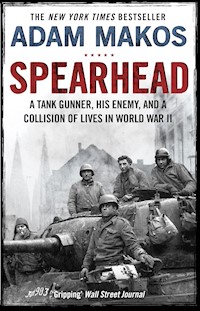
The New York Times Bestseller 'Brilliant... Gripping' Wall Street Journal From the Sunday Times bestselling author of A Higher Call comes the riveting World War II story of an American tank gunner's journey into the heart of the Third Reich. At first, gunner Clarence Smoyer and his fellow crewmen in the legendary 3rd Armored Division - 'Spearhead' - thought their tanks were invincible. Then they met the German Panther, with a gun so murderous it could shoot through one Sherman and into the next. Soon a pattern emerged: the lead tank always gets hit. After Clarence sees his friends cut down breaching the West Wall and holding the line in the Battle of the Bulge, he and his crew are given a weapon with the power to avenge their fallen brothers: the Pershing, a state-of-the-art 'super tank', one of twenty in the European theatre. But with it comes a harrowing new responsibility: now they will spearhead every attack. That's how Clarence finds himself leading the U.S. Army into its largest urban battle of the European war, the fight for Cologne, the 'Fortress City' of Germany. Battling through the ruins, Clarence will engage the fearsome Panther in a duel immortalized by an army cameraman. And he will square off with Gustav Schaefer, a teenager behind the trigger in a Panzer IV tank, whose crew has been sent on a suicide mission to stop the Americans. As Clarence and Gustav trade fire down a long boulevard, they are confronted by a tragic mistake of war. What happens next will haunt Clarence to the modern day, drawing him back to Cologne to do the unthinkable: to face his enemy, one last time.
Sie lesen das E-Book in den Legimi-Apps auf:
Seitenzahl: 621
Veröffentlichungsjahr: 2019
Das E-Book (TTS) können Sie hören im Abo „Legimi Premium” in Legimi-Apps auf:
Ähnliche

















SPEARHEAD
Published by arrangement with Ballantine Books, an imprint of Random House, a division of Penguin Random House LLC, New York.
First published in Great Britain in 2019 by Atlantic Books, an imprint of Atlantic Books Ltd.
Copyright © Adam Makos, 2019
The moral right of Adam Makos to be identified as the author of this work has been asserted by him in accordance with the Copyright, Designs and Patents Act of 1988.
All rights reserved. No part of this publication may be reproduced, stored in a retrieval system, or transmitted in any form or by any means, electronic, mechanical, photocopying, recording, or otherwise, without the prior permission of both the copyright owner and the above publisher of this book.
1 2 3 4 5 6 7 8 9
A CIP catalogue record for this book is available from the British Library.
Hardback ISBN: 978-1-78239-578-2
E-book ISBN: 978-1-78239-580-5
Paperback ISBN: 978-1-78239-581-2
All interior maps by Bryan Makos of Valor Studios, Inc.
Photo credits can be found on p. 383
The image on the front cover is taken from the film of cameraman Jim Bates and shows the Pershing crew in Cologne on March 6, 1945. Left to right: Smokey Davis, Bob Earley, Woody McVey, Clarence Smoyer, John DeRiggi.
Book design by Simon M. Sullivan
Printed in Great Britain
Atlantic Books
An Imprint of Atlantic Books Ltd
Ormond House
26–27 Boswell Street
London
WC1N 3JZ
www.atlantic-books.co.uk
To those brave American tankers—the “power and might” of the New World—who went to the rescue of the Old
CONTENTS
Introduction
1 The Gentle Giant
2 Baptism
3 “Bubi”
4 The Fields
5 The Foray
6 Beyond the Wall
7 Respite
8 The Fourth Tank
9 Hope
10 Something Bigger
11 America’s Tiger
12 Two Miles
13 Hunting
14 The Fire Department of the West
15 Going First
16 Victory or Siberia
17 The Monster
18 The Conquerors
19 The Breakout
20 The American Blitz
21 The Fatherless
22 Family
23 Come Out and Fight
24 The Giant
25 Getting Home
26 The Last Battle
Afterword
Acknowledgments
Sources
Notes
Photo Credits
Index
INTRODUCTION
Some stories begin with a roll of the dice.
It was a Sunday morning in 2012 when I approached a brick row house in Allentown, Pennsylvania. The working-class neighborhood was quiet and no one paid me any notice.
I had come chasing a story.
My former college classmate Pete Semanoff had given me a lead on a World War II veteran living here in relative obscurity. Pete said this veteran had a tale to tell, maybe a book in the making. Supposedly, he had been a tank gunner in one of the war’s most legendary tank duels, and an army cameraman had filmed the whole thing.
But did he want to share his story? And would anyone want to read a book about tanks? This was before Brad Pitt strapped on his three-buckle boots for the filming of Fury, and before World of Tanks became all the rage.
And there was another question looming in my mind. The veteran had served in the 3rd Armored Division—the “Spearhead” Division. Most history buffs know of the Screaming Eagles. The Big Red One. Patton’s Third Army.
But the 3rd Armored Division?
The only 3rd Armored soldier I knew of had joined them during the Cold War. His name was Elvis.
• • •
I checked the house numbers against the address I had noted on my phone. This was the place.
I knocked, and Clarence Smoyer answered. He was eighty-eight and surprisingly tall, dressed in a simple blue polo shirt that stretched over a robust stomach. His thick glasses made his eyes seem small. Clarence welcomed me inside with a chuckle and pulled up a chair for me at his kitchen table. There, I’d make a discovery.
It was true. All of it.
This gentle giant held the keys to one of the last great untold stories of World War II, and he was ready to talk.
I’ve always visited the battlefields before I write about them. A Higher Call took me to a dusty airfield in Sicily. Devotion led my team and me into the misty mountains of North Korea.
To bring you the deepest level of historical detail for this book, we went to new lengths in our research. This time, we traversed the battlefields of the Third Reich—with the men who made history.
In 2013, Clarence Smoyer and three other veterans traveled to Germany and allowed us to tag along, to interview them on the ground where they had once fought. We recorded their stories. We recorded what they remembered saying and hearing others say. Then we verified their accounts with deep research.
We drew from four archives in America and one in England. We even traveled to the German Bundesarchiv in the Black Forest in search of answers. And what we found was staggering. Original orders. Rare interviews between our heroes and war reporters, conducted while the battle was raging. Radio logs of our tank commanders’ chatter, allowing us to time their actions to the minute. Daily weather reports. And much more.
Prepare to mount up.
In a few short pages you’ll find yourself behind enemy lines with the 3rd Armored Division, a “workhorse unit,” one of the “most aggressive” American divisions, and arguably the best in the armor business.
Even General Omar Bradley saw something special in Clarence and his comrades. When asked to gauge the personality of his units, Bradley wrote that Patton’s tankers adopted his “flair.” Simpson’s in the Ninth Army were known for their “breeziness.” And the 3rd Armored? They led the fighting march across Europe “with a serious and grim intensity.”
Serious. And grim. That’s who you’ll be riding with.
But this is not a story about machines, how one tank stacked up against another. This is a story about people.
We’ll drop you inside the tanks with Clarence and his fellow crew members, strangers from across America who became family.
We’ll lift you outside, into the elements and enemy fire, with an armored infantryman fighting to clear a path for the armor.
And we’ll explore the other side, stepping into the boots of a German tanker and into the shoes of two young fräuleins caught in the crossfire.
Ultimately, we’ll see what happens when these lives collide, leaving aftershocks that still shape the survivors more than half a century later.
Is the world ready for a book about tanks?
There’s one way to find out.
Shut the hatches.
Tighten your chin strap.
It’s time to roll out.
SPEARHEAD
CHAPTER 1 THE GENTLE GIANT
September 2, 1944
Occupied Belgium, during World War II
Twilight fell on a country crossroads.
The only sounds came from insects buzzing in the surrounding blue fields, and something else. Metallic. The sound of hot engines ticking and pinging, decompressing after a long drive.
With silent efficiency, tank crewmen worked to rearm and refuel their tired Sherman tanks before the last hues of color fled the sky.
Crouched behind the turret of the leftmost tank, Corporal Clarence Smoyer carefully shuttled 75mm shells into the waiting hands of the loader inside. It was a delicate job—even the slightest clang could reveal their position to the enemy.
Clarence was twenty-one, tall and lean with a Roman nose and a sea of curly blond hair under a knit cap. His blue eyes were gentle, but guarded. Despite his height, he was not a fighter—he had never been in a fistfight. Back home in Pennsylvania he had hunted only once—for rabbit—and even that he did halfheartedly. Three weeks earlier he’d been promoted to gunner, second in command on the tank. It wasn’t a promotion he had wanted.
The platoon was in place. To Clarence’s right, four more olive-drab tanks were fanned out, “coiled,” in a half-moon formation with twenty yards between each vehicle. Farther to the north, beyond sight, was Mons, a city made lavish by the Industrial Revolution. A dirt road lay parallel to the tanks on the left, and it ran up through the darkening fields to a forested ridge, where the sun was setting behind the trees.
Clarence Smoyer
The Germans were out there, but how many there were and when they’d arrive, no one knew. It had been nearly three months since D-Day, and now Clarence and the men of the 3rd Armored Division were behind enemy lines.
All guns faced west.
Boasting 390 tanks at full strength, the division had dispersed every operational tank between the enemy and Mons, blocking every road junction they could reach.
Survival that night would hinge on teamwork. Clarence’s company headquarters had given his platoon, 2nd Platoon, a simple but important mission: guard the road, let nothing pass.
Clarence lowered himself through the commander’s hatch and into the turret, a tight fit for a six-foot man. He slipped to the right of the gun breech and into the gunner’s seat, leaning into his periscopic gun sight. As he had no hatch of his own, this five-inch-wide relay of glass prisms and a 3x telescopic gun sight mounted to the left of it would be his windows to the world.
His field of fire was set.
There would be no stepping out that night; it was too risky even to urinate. That’s what they saved empty shell casings for.
Beneath Clarence’s feet, the tank opened up in the hull, with its white enamel walls like the turret’s and a trio of dome lights. In the bow, the driver and bow gunner/assistant driver slid their seats backward to sleep where they had ridden all day. On the opposite side of the gun breech from Clarence, the loader stretched a sleeping bag on the turret floor. The tank smelled of oil, gunpowder, and a locker room, but the scent was familiar, even comforting. Ever since they’d come ashore, three weeks after D-Day, this M4A1 Sherman had been their home in Easy Company, 32nd Armor Regiment, of the 3rd Armored Division, one of the army’s two heavy tank divisions.
Tonight, sleep would come quickly. The men were exhausted. The 3rd Armored had been charging for eighteen days at the head of the First Army, leading two other divisions in the breakout across northern France. Paris had been liberated, the Germans were running back the way they’d come in 1940, and the 3rd Armored was earning its nom de guerre: the Spearhead Division.
Then came new orders.
The reconnaissance boys had spotted the German Fifteenth and Seventeenth Armies moving to the north, hightailing it out of France for Belgium and on course to pass through Mons’s many crossroads. So the 3rd Armored turned on a dime and raced north—107 miles in two days—arriving just in time to lay an ambush.
The tank commander dropped into the turret and lowered the split hatch covers, leaving just a crack for air. He slumped into his seat behind Clarence, his boyish face still creased by the impression of his goggles. Staff Sergeant Paul Faircloth of Jacksonville, Florida, was also twenty-one, quiet and easygoing, with a sturdy build, black hair, and olive skin. Some assumed he was French or Italian, but he was half Cherokee. As the platoon sergeant, Paul had been checking on the other crews and positioning them for the night. Normally the platoon leader would do this, but their lieutenant was a new replacement and still learning the ropes.
M4A1 (75mm) Sherman
Paul Faircloth
For two days Paul had been on his feet in the commander’s position, standing halfway out of his hatch with the turret up to his ribs. From there he could anticipate the column’s movements to help the driver brake and steer. In the event of a sudden halt—when another crew threw a track or got mired in mud, for instance—Paul was always the first out of the tank to help.
“I’m taking your watch tonight,” Clarence said. “I’ll do a double.”
The offer was generous, but Paul resisted—he could handle it.
Clarence persisted until Paul threw up his hands and finally swapped places with him to nab some shut-eye in the gunner’s seat.
Clarence took the commander’s position, a seat higher in the turret. The hatch covers were closed enough to block a German grenade, but open enough to provide a good view to the front and back. He could see his neighboring Sherman through the rising moonlight. The tank’s squat, bulbous turret looked incongruous against the tall, sharp lines of the body, as if the parts had been pieced together from salvage.
Clarence snatched a Thompson submachine gun from the wall and chambered a round. For the next four hours, enemy foot soldiers were his concern. Everyone knew that German tankers didn’t like to fight at night.
Partway through Clarence’s watch, the darkness came alive with a mechanical rumbling.
The moon was smothered by clouds and he couldn’t see a thing, but he could hear a convoy of vehicles moving beyond the tree-lined ridge.
Start and stop. Start and stop.
The radio speaker on the turret wall kept humming with static. No flares illuminated the sky. The 3rd Armored would later estimate there were 30,000 enemy troops out there, mostly men of the German Army, the Wehrmacht, with some air force and navy personnel among them—yet no order came to give pursuit or attack.
That’s because the battered remnants of the enemy armies were bleeding precious fuel as they searched for a way around the roadblocks, and Spearhead was content to let them wander. The enemy was desperately trying to reach the safety of the West Wall, also known as the Siegfried Line, a stretch of more than 18,000 defensive fortifications that bristled along the German border.
If these 30,000 troops could dig in there, they could bar the way to Germany and prolong the war. They had to be stopped, here, at Mons, and Spearhead had a plan for that—but it could wait until daylight.
Around two A.M. the distinctive slap of tank tracks arose from the distant rumble.
Clarence tracked the sounds—vehicles were coming down the road in front of him. He knew his orders—let nothing pass—but doubt was setting in. Maybe this was a reconnaissance patrol returning? Had someone gotten lost? They couldn’t be British, not in this area. Whoever they were, he wasn’t about to pull the trigger on friendly forces.
One after the other, three tanks clanked past the blacked-out Shermans and kept going, and Clarence began to breathe again.
Then one of the tanks let off the gas. It began turning and squeaking, as if its tracks were in need of oil. The sound was unmistakable. Only full-metal tracks sounded like that, and a Sherman’s were padded with rubber.
The tanks were German.
Clarence didn’t move. The tank was behind him, then beside him. It slowed and sputtered then squeaked to a stop in the middle of the coiled Shermans. Clarence braced for a flash and the flames that would swallow him. The German tank was idling alongside him. He’d never even hear the gun bark. He would just cease to exist.
A whisper shook Clarence from his paralysis. It was Paul. Without a word, Clarence slipped back into the gunner’s seat and Paul took over.
Clarence strapped on his tanker’s helmet. Made of fiber resin, it looked like a cross between a football helmet and a crash helmet, and had goggles on the front and headphones sewn into leather earflaps. He clipped a throat microphone around his neck and plugged into the intercom.*
On the other side of the turret, the loader sat up, wiping the sleep from his eyes.
Clarence mouthed the words German tank. The loader snapped wide-awake.
From his hatch, Paul tapped Clarence on the right shoulder, the signal to turn the turret to the right.
Clarence hesitated. The turret wasn’t silent, what if the Germans heard it?
Paul tapped again.
Clarence relented and turned a handle, the turret whined, gears cranked, and the gun swept the dark.
When the gun was aligned broadside, Paul stopped Clarence. Clarence pressed his eyes to his periscope. Everything below the skyline was inky black.
Clarence told Paul he couldn’t see a thing and suggested they call in armored infantrymen to kill the tank with a bazooka.
Paul couldn’t chance some jittery soldier blasting the wrong tank. He grabbed his hand microphone—nicknamed “the pork chop” due to its shape—and dialed the radio to the platoon frequency, alerting the other crews to what they likely already knew: that an enemy tank was in the coil. In a Sherman platoon at that time, only the tanks of the platoon leader and platoon sergeant could transmit. Everyone else could only listen.
“No noise, and no smoking cigarettes,” Paul said. “We’ll take care of him.”
We’ll take care of him? Clarence was horrified. He had hardly used the gun in daylight and now Paul wanted him to fire in pitch-darkness, at what? A sound? An enemy he couldn’t see?
He wished he could return to being a loader. A loader never saw much. Never did much. On a tank crew, the loader was pretty much just along for the ride. That was the good life. A gentle giant, Clarence simply wanted to slip through the war without killing anyone or getting killed himself.
No time for that. The German tank crew had likely realized their mistake by now.
“Gunner, ready?”
Panicked, Clarence turned and tugged on Paul’s pant leg.
Paul sank into the turret, exasperated. Clarence rattled off his doubts. What if he missed? What if he got a deflection and hit their own guys?
Paul’s voice calmed Clarence: “Somebody has to take the shot.”
As if the Germans had been listening, they suddenly cut their power. The hot engine hissed, then went silent.
Clarence felt a wave of relief. It was a reprieve. Paul must have been biting his lip in anger, because he said nothing at first. Finally, he informed the crew that now they would have to wait to fire at first light.
Clarence’s relief faded. His indecision had cost them whatever advantage they’d had. And against a German tank, they’d need every advantage they could get, especially if they were facing a Panther, the tank of nightmares. Some GIs called it “the Pride of the Wehrmacht,” and rumor had it that a Panther could shoot through one Sherman and into a second, and its frontal armor was supposedly impervious.
That July, the U.S. Army had placed several captured Panthers in a field in Normandy and blasted away at them with the same 75mm gun as in Clarence’s Sherman. The enemy tanks proved vulnerable from the flanks and rear, but not the front. Not a single shot managed to penetrate the Panther’s frontal armor, from any distance.
Clarence checked his luminescent watch, knowing the Germans were probably doing the same. The countdown had begun. Someone was going to die.
The loader fell asleep over the gun breech.
Three A.M. became four A.M.
Clarence and Paul passed a canteen of cold coffee back and forth. They had always joked that they were a family locked in a sardine can. And like a family, they didn’t always see eye to eye. Unlike Paul, who was always running off to help someone outside the tank, all Clarence cared about was his family on the inside—him and his crew.
This had been his way since childhood.
Growing up in industrial Lehighton, Pennsylvania, Clarence lived in a row house by the river, with walls so flimsy he could hear the neighbors. His parents were usually out working to keep the family afloat. His father did manual labor for the Civilian Conservation Corps and his mother was a housekeeper.
With the family’s survival at stake, Clarence was determined to contribute. When other kids played sports or did homework, twelve-year-old Clarence stacked a ballpark vendor’s box with candy bars and went selling door-to-door throughout Lehighton. Just a boy, he had vowed: I’ve got to take care of my family because no one is going to take care of us.
Clarence checked his periscope. To the east, a faint tinge of purple colored the horizon.
He kept his eyes glued to the glass until a blocky shape appeared about fifty yards away.
“I see it,” he whispered.
Paul rose to his hatch and saw it too. It looked like a rise of rock, highest at the midpoint. Clarence turned handwheels to fine-tune his aim.
Paul urged him to hurry. If they could see the enemy, the enemy could see them.
Clarence settled the reticle, as the gun sight’s crosshairs were known, on the “rock” at center mass and reported that he was ready. His boot hovered over the trigger, a button on the footrest.
“Fire,” Paul said.
Clarence’s foot stamped down.
Outside, a massive flash leapt from the Sherman’s barrel, momentarily illuminating the tanks—an olive-drab American and a sandy-yellow German—both facing the same direction.
Sparks burst from the darkness and a sound like an anvil strike pierced the countryside. Inside the turret, without the fan operating, smoke hung thick in the air. Clarence’s ears throbbed and his eyes stung, but he kept them pressed to his sight.
The loader chambered a new shell. Clarence again hovered his foot over the trigger.
“Nothing’s moving,” Paul said from above. A broadside at this range? It was undoubtedly a kill shot.
The intercom came alive with voices of relief, and Clarence moved his foot away from the trigger.
Paul radioed the platoon; the job was done.
Through his periscope, Clarence watched the sky warm beneath the dark clouds, revealing the boxy armor and the 11-foot, 8-inch long gun of a Panzer IV tank.
Known by the Americans as the Mark IV, the design was old, in service since 1938, and it had been the enemy’s most prevalent tank until that August, when the Panther began taking over. But even though it was no longer the mainstay, the Mark IV was still lethal. Its 75mm gun packed 25 percent more punch than Clarence’s.
More light revealed the tank’s dark green-and-brown swirls of camouflage and the German cross on the flank. Clarence had nearly placed his shot right on it.
“Think they’re in there?” One of the crewmen posed the question, seeing that the Mark IV’s hatch covers hadn’t budged.
Clarence envisioned a tank full of moaning, bleeding men and hoped the crew had slipped out in the night. He had no love for the Germans, but he hated the idea of killing any human being. He wasn’t about to look inside his first tank kill. A shell can ricochet like a supersonic pinball within the tight quarters, and he’d seen maintenance guys go inside to clean and come out crying after discovering brains on the ceiling.
“I’ll go.” Paul unplugged his helmet.
Panzer IV
Clarence tried to dissuade him. It wasn’t worth looking inside and getting his head blown off by a German.
Paul brushed away the concerns and radioed the platoon to hold their fire.
Through his periscope, Clarence watched Paul climb the Mark IV’s hull and creep toward the turret with his Thompson at the ready. With one hand steadying his gun, Paul opened the commander’s hatch and aimed the Thompson inside.
Nothing happened.
He leaned forward and took a long look, then shouldered his gun.
Paul sealed the hatch shut.
* A WWII tanker’s helmet was in fact patterned after a 1930s-era football helmet and carried the manufacturer’s stamp of sporting goods companies such as Rawlings, A. G. Spalding & Bros., and Wilson Athletic Goods.
CHAPTER 2 BAPTISM
That same morning, September 3, 1944
Mons, Belgium
After the tense standoff of the previous night, the tanks were on the move.
Traveling solo or in pairs with the rising sun at their backs, multiple companies of Shermans flooded across the Mons countryside to extend the division’s reach, pressing the enemy into an ever-tightening cordon.
Every country lane, every farmer’s path, had to be roadblocked, which meant that Easy Company, too, would operate piecemeal today, and its crews would do their fighting alone.
With his goggles lowered, Paul rode head and shoulders above his open hatch, his jacket flapping in the wind. Thirty-three tons of tank churned beneath him, going about 20 miles per hour, following the road uphill between foggy fields.
The machine seemed alive. Everything vibrated: helmets and musette bags hung from the turret, a .30-caliber machine gun on a mount, spare tracks and wheels tied down wherever they would fit. The tank cleared its throat with each gear change. At the heart of its power was a 9-cylinder radial engine that had to be cranked awake by hand if it sat overnight.
This Sherman was a “75,” owing to its 75mm gun, but to Clarence’s crew it had a name—Eagle—and someone had painted an eagle head on each side of the hull. For recognition purposes, every tank’s name in Easy Company began with the letter E.
Paul raised his field glasses to his eyes and studied the terrain ahead. The tank was bound for the tree-lined ridge, the source of the nighttime commotion.
One by one, the neighboring Shermans vanished from sight. They plunged into patches of woods or slipped around edges of fields and set their guns toward the enemy.
While Clarence and the crew inside assumed that a mighty force still surrounded them, Paul could see that his tank was alone. Every swaying tree, every shifting shadow now assumed a sense of hostile intent.
Paul held his course. His orders were to set a roadblock atop the tree-lined ridge where the German tanks had originated the night before.
His crew hadn’t been the only one to experience a fraught encounter. At one American bivouac, a fatigued MP had directed a Panther tank off the road and into a parking space meant for Shermans. The German crew realized their mistake and came out with their hands up.
As the tank barreled toward the ridge, Clarence pestered Paul on the intercom.
“Are you sure?” Clarence asked, again, from his perch in the gunner’s seat.
Paul wasn’t deviating from his story. “Don’t worry, they all got out.”
Paul had assured Clarence that the German crew escaped the Mark IV alive, but Clarence had a suspicion that his friend was just trying to protect him. Paul had done it before.
It happened after the last furlough before the unit shipped overseas in September 1943. Clarence had been on a date in a park in Reading, Pennsylvania, and was so enjoying the young woman’s company that he missed the bus back to base. By the time he hitchhiked back, he’d been declared AWOL.
When Easy Company arrived in the English village of Codford, Clarence’s punishment was handed down. Every night after the evening meal, Clarence was ordered to cut the grass around the company’s three Quonset huts with just the butter knife of his mess kit. He’d take a fistful of grass, saw away, and then move to the next clump, from about seven to eleven each night.
Paul wasn’t one to frequent the local pub or foray on a pass to London, so he’d sit against a Quonset hut and keep Clarence company while he worked. Over the course of three months, they talked. Clarence learned that Paul’s father had been an engineer for Georgia Southern Railroad and that his mother was a full-blooded Cherokee and convert to Evangelical Christianity.
When Paul was in sixth grade, his father had died, so he quit school and became a clerk at a general store to support his mother and sisters. Surprised by Paul’s keen mind for numbers, the store owner soon had him doing the bookkeeping.
A few tankers from the company found Clarence’s punishment amusing and took to urinating behind the huts on grass that Clarence was due to cut. Paul called them together. “It’s the latrine that separates us from animals,” he said.
That put an end to it.
At the crest of the ridge, Clarence’s periscope filled with sky as the mighty tank’s nose lifted from the road.
He’d never get to see what lay on the other side.
As the tank settled forward, a crack rapped the gun barrel with a spit of sparks. Clarence reeled from the periscope. We’re hit! A gong-like sound resonated through the steel walls.
Paul dropped into the turret and screamed for the driver to reverse. Gears ground and the tank tilted and backtracked downhill. At the base of the hill, Paul guided the driver backward into a sunken road lined by trees, until only the top of the tank was visible.
Paul and Clarence climbed out to inspect the damage. Atop the turret they froze at the sound of thunder in a perfectly blue sky.
A battle was raging beyond the nearby hills. Smoke rose into the sky, and P-47 fighter-bombers powered overhead, bound for a distant tangle of roads where German vehicles were reportedly snagged in a “delicious traffic jam.”
Clarence eyed the gun barrel with concern. A shell had struck the side and removed a scoop of metal before deflecting over the turret. A few more inches to the right and the shell would have come straight through his gun sight, killing him instantly. They had probably driven into the sights of an antitank gun—an enemy tank would surely have maneuvered to take a second shot.
Clarence gave Paul the bad news. The gun barrel was likely collapsed internally, and if he fired, the shell could get jammed and its backblast could come into the turret, wiping out the crew.
That settled it. It was simply too risky to fire.
Back in the safety of the turret, Paul radioed Easy Company’s headquarters for permission to retreat. On the other end, a shaky voice reported that the Germans were attacking across a wide front, probing for holes in the lines. The situation had turned so dire that clerks and men from the supply train were being sent out to fight.
The orders to Paul were firm: “Hold your position.” Paul asked for reinforcements, anyone they could spare.
Transmissions were always broadcast throughout the tank, for the awareness of the crew, so it was clear to them all that the situation was desperate. Clarence asked the loader to go below and get extra ammo for the coaxial—a .30-caliber machine gun that was set on the loader’s side with its barrel protruding outside the gun shield, where it was fixed to fire wherever the main gun was pointed. A second trigger on Clarence’s footrest, left of the cannon trigger, would fire the coaxial.
Paul reviewed their roles. He and Clarence would cover the tree-lined ridge, while the bow gunner would guard the front with his .30-caliber machine gun, which projected from the tank’s frontal armor. The driver was to keep the engine running.
Paul rose from his hatch and swiveled the roof-mounted machine gun.
Everything revolved around him as the turret swung to the right then stopped sidelong from the tank. The main gun and coaxial elevated toward the ridge.
From between his partially open hatch covers, Paul took aim.
About two hundred yards away, on top of the ridge, the silhouettes of men appeared.
A dozen soldiers waded cautiously down the gentle slope as more soldiers appeared behind them. They spread out, clambering down the field in staggered groups. There were about one hundred of them, wearing German gray, some with green smocks. Sunlight beat down on their faces.
The turret slid beneath Paul; Clarence was tracking them too.
The enemy had come far enough.
Paul clenched his trigger, sending fire leaping from the muzzle. He worked his gun side to side as the bolt blurred and spat empty casings. Clarence’s coaxial added its earsplitting roar, its smoke rising in front of Paul.
The Germans fell in droves—many killed or badly wounded. Others pawed for cover in shallow gullies. A few fired back, their bullets snapping the air around Paul.
Inside the tank, Clarence held an eye to his 3x telescopic gun sight. It was kill or be killed—them or his family. Clarence’s foot came down, the coaxial thumped, then he turned a handle, an electric motor whined, and the turret swung his reticle to the next target.
A German working the bolt of a rifle. An officer screaming into a radio. A soldier running away. Clarence’s foot came down again. The action was so fast, there was no discerning.
Almost as quickly as they had appeared, the enemy stopped coming over the hill.
“Cease fire!” Paul shouted.
Clarence lifted his foot and caught his breath. From above the turret, Paul gazed upon a massacre. More than a dozen German bodies dotted the slope and survivors limped away, dragging their wounded. The enemy attack appeared uncoordinated, desperate, and blundering. But it was over. Or so Clarence hoped.
Within thirty minutes, engines revved behind the Sherman.
An American M3 half-track armored personnel carrier pulled up, followed by an M8 Greyhound, a scout car with a 37mm gun. A squad of armored infantrymen leaped from the half-track and took up firing positions. Known to the tankers as “doughs,” in homage to the “doughboys” of World War I, they were the division’s infantry arm and often rode tanks or half-tracks into battle. The reinforcements that Paul asked for had arrived.
A sergeant stood in the Greyhound’s open turret, gripping a machine gun.
Paul was about to brief the reinforcements when popping sounds came from the ridge, as if the Germans were opening champagne bottles.
Shouts of “Mortars!” resounded through the sunken road. The doughs took cover. Paul slammed the hatch cover to secure the turret. From his seat, Clarence heard shells whooshing down. Explosions and shrapnel thumped the tank’s steel hide. With the Sherman blocking their route homeward, this was the Germans’ reply.
Above the chaos of the barrage came bone-chilling screams. The horrifying sounds leaked through the cracks into the turret. Clarence twisted in his seat, wanting to plug his ears and bury his head. Something terrible was happening outside. The shells kept bursting as the screams cycled up into inhuman wails.
A hand shook Clarence by his shoulder. “Clarence, you’re in charge!”
Clarence turned and found Paul swapping his tanker’s helmet for a steel pot. He was going out there.
Paul grabbed his Thompson and opened his hatch. The cacophony of battle flooded the tank.
Clarence sprang from his seat and grabbed Paul’s leg, desperately trying to hold him back from something foolhardy. No stranger’s life was worth throwing away his own.
“We gotta help those guys!” Paul shouted, and kicked free from Clarence’s grasp.
Clarence rose from the turret and spotted Paul running through dark smoke, toward the source of the cries.
The Greyhound had taken a direct hit into the turret and the men inside were suffering.
The sky whistled as a fresh round of mortar shells rained down.
Clarence hollered—“Get back here, Paul!” But Paul didn’t look back as he rushed through the inky haze, determined to save what lives he could.
A dark streak punched the road with a burst of orange and a shockwave of smoke. Another orange burst leapt from the road, then another. Clarence ducked from the force of the blasts, which were so strong that they blew the leaves off the surrounding trees. He rose back to eye level. Paul had almost reached the Greyhound when a mortar shell landed to his right. The explosion lifted him from his feet and flung him askew through the smoke. Clarence’s legs became weak at the sight and he collapsed into the turret.
The barrage soon lifted. Clarence stood and frantically searched for his friend.
Paul had landed almost upside down on a bank. The blast had shattered his arm, and his right leg had been blown completely off below the knee.
Clarence stared, horror-struck.
This can’t be happening.
He fumbled for the pork chop and called company headquarters, stuttering, and begging for any medics they could spare.
Before Clarence could move to Paul’s aid, a rifle barked. Then more rifles joined in, crackling like a string of firecrackers. The doughs fired feverishly in the direction of fresh silhouettes pouring over the ridgeline. The timing couldn’t have been worse. The Germans were back in force.
On the intercom, Clarence heard his crew panicking, some wanting to drive away. He was the ranking crewman; they wanted to know what to do.
Clarence felt an emotion welling, one he barely recognized. He glanced at Paul. His friend still hadn’t stirred.
Dropping back into the gunner’s seat, Clarence told the crew, “We aren’t going anywhere.”
He swung the turret into action.
The Germans were moving tactically, hitting the dirt every few yards then advancing and repeating. Clarence’s foot smashed down on the trigger. The coaxial hammered, spitting a tracer downrange every four bullets, venting his rage.
The manual instructed gunners to fire in bursts, but Clarence still thought with the instincts of a loader. He swept the hose of fire across the enemy. There were so many silhouettes, he nearly stood on the machine gun button.
The gun consumed one belt of ammunition after another as the loader kept them coming. When Clarence finally lifted his foot, the gun didn’t stop, it kept firing every few seconds. He’d overheated it and now heat was flowing back from the red-hot barrel and “cooking off” the bullets.
“Turn the belt!” Clarence shouted to the loader. The loader twisted the bullets and jammed the gun by hand.
Clarence yelled for a “barrel change.” Using asbestos gloves, the loader could unscrew the barrel—but it would take time. Time they didn’t have facing the enemy’s onslaught.
Clarence emerged from the commander’s hatch and swung the roof-mounted machine gun into play.
Now halfway down the field, the Germans were coming into focus. Clarence could see their camouflaged smocks, wire helmet netting, and faces shouting orders or contorted with fear.
Taking the grip hand over hand, Clarence resumed firing, this time in bursts.
Germans fell. His bullets danced across the dirt and through them. It was impossible to tell who had been hit and who was taking cover.
The gun rhythmically shook its mount. The belt of bullets sank lower and lower until the box was empty and the gun was silently smoking. Clarence grabbed the pork chop. He needed the coaxial but the loader was saying he needed more time.
The Germans seized upon the lull to strike back. Bullets began pinging off the tank and buzzing from the turret, forcing Clarence lower in the hatch.
Frantic voices drew Clarence’s attention. Two young doughs lay behind the tank as bullets sliced the air above the sunken road. They begged for permission to hide beneath the tank.
“Fine,” Clarence said, but with a disclaimer: “If you hear the engine revving, get the hell out of there!”
The doughs disappeared beneath the tank.
The Germans were back up on their feet and charging. As they raced toward the tanks, the loader came on the intercom. The coaxial was ready. Clarence returned to the gunner’s seat and pressed his eyes to the periscope. The enemy was closer than ever, seventy-five yards, then sixty, fifty . . .
Clarence heard voices beneath him. Somehow, over the engine’s idling and the crackle of gunfire the voices rose through the tank’s hollow confines. It was the young doughs beneath the hull, making promises to God if he’d only save them now.
Clarence violently stepped on the trigger and drowned out their prayers with gunfire.
• • •
The field in front of the tank was a graveyard.
Morning had become afternoon and the cacophony of battle had faded.
The remains of German soldiers littered the slope to the ridgetop. From the midst of the motionless gray and green lumps, those left alive were struggling to step over fallen comrades on their way down to surrender.
“You Americans don’t want to fight,” said one prisoner, “you just want to slaughter us.”
Countless scenes like this played out across Mons.
“As though drawn to the city by a fatal fascination, German troops kept pouring in to 3rd Armored Division road blocks,” the unit recorded. “Tanks and tank-destroyers enjoyed a brief field day, the crews firing their big guns until the tubes smoked.”
The American victory was resounding.
The 1st Infantry Division, the “Big Red One,” would come in to finish what the 3rd Armored had begun, and out of the 30,000 Germans who came to Mons, 27,000 would leave as prisoners, including three generals and a lowly sailor who had hitchhiked from his port in western France.
“Probably never before in the history of warfare has there been so swift a destruction of such a large force,” concluded the 3rd Armored Division history.
The turret floor was slippery with bullet casings as Clarence rose halfway from the commander’s hatch and eyed the sunken road.
Reinforcements had arrived in the form of more doughs, but it was too late. Paul’s lifeless body lay at the medics’ feet. Clarence silently pleaded for his friend to cough or flinch or show any sign of life.
That time had passed.
The medics packed up their bags to move on. “Can we take him back with us?” Clarence asked with a trembling voice from his perch in the turret.
The medics were sympathetic. “Graves Registration will be along soon.”
At the words, Clarence buried his face in his sleeve. Paul’s body. The field of dead Germans. He sank down into the turret and shut the covers.
The Sherman belched a grunt of smoke before rolling from the sunken road, bound for the bivouac.
Inside, Clarence folded over in the commander’s seat and wept. The night before, he and Paul had shared a thermos of cold coffee. And now Paul was dead. It had not even been twenty-four hours. But for a Spearhead tanker, this was just another day in the hard-fighting division that would suffer more men killed in action than the 82nd or 101st Airborne Divisions, and would lose the most American tanks in World War II.
And Germany was yet to come.
CHAPTER 3 “BUBI”
Five days later, September 8, 1944
Eighty-five miles southeast—Luxembourg
The thunder of heavy artillery rippled over the village of Merl, on the western outskirts of Luxembourg City.
Beneath leafy trees on a country lane, a young German tank crewman performed a balancing act as he carried five mess kits brimming with food.
Shells burst in the fields to his left, tossing embers and vaporized dirt into the morning sun.
Private Gustav Schaefer watched the explosions in awe. Far beyond the forests that ringed the fields, the Americans were firing blindly, hitting nothing, putting on a fireworks show seemingly just for him.
Gustav Schaefer
Barely five feet tall, Gustav resembled a child in camouflaged tanker coveralls. He was seventeen, blond, and square-jawed, with a disposition so quiet that his lips seldom moved to speak. His dark eyes did his talking for him—there was nothing they couldn’t convey with a glance. On this, his first day in combat, his eyes spoke volumes. Despite the explosions detonating nearby, Gustav was having fun.
The thunderclaps grew louder as they landed closer and closer.
Gustav increased his pace to a brisk walk, but refrained from running. As the crew’s radioman, who doubled as the bow gunner, he was known as the “girl for everything,” because his role also entailed fetching food and fueling the tank. Gustav accepted the tasks—and the title—without complaint. Hot stew rocked in the mess kits, the crew’s meager rations for the day. He couldn’t afford to spill a drop.
About one hundred yards up the road, his crewmates were running back to their tank, which was parked in the shade alongside a hedge. A web of hand-cut branches served as camouflage and further masked the sharp lines of a Panther. Before disappearing inside, the men shouted for Gustav to hurry.
Another thunderclap rippled. This one was so close that the shockwave slapped Gustav’s cheek. Brown clouds of vaporized dirt floated closer than before. He broke into a jog, holding the mess kits high as the stew sloshed inside. Another thunderclap shoved him. He felt its heat and smelled burnt powder.
The tank was bouncing in his vision, he was nearly there. He had only about forty yards farther to go and he’d be safe, a returning hero with the crew’s rations. But before he could make it, the field to his left exploded.
A blinding flash. A deafening crack. An invisible hand seemed to pick him up and sweep him across the road into a ditch.
Gustav opened his eyes to a rain of dirt. His eardrums throbbed with pain and he felt a burning sensation on his chest.
I’m hit!
He pawed at his coveralls and his hand came away wet, which sent him into an even greater panic. Then he saw the spilled mess kits oozing with stew and knew what he was feeling. Another shockwave rippled overhead. He had to move before he ended up a casualty along with the rations.
Scooping up his black overseas cap, Gustav bolted for the tank. Thirty yards away, twenty, ten . . .
With an athletic leap he grabbed the gun barrel and swung himself onto the frontal armor. Scampering higher, he parted the camouflage branches and entered his hatch.
Panther G
Safe in the tight, oil-scented confines, he collapsed against his machine gun. The others couldn’t see him. A wall of spare shells, stacked horizontally, separated him from the driver to his left, and more shells obscured the three men in the turret basket behind him. It was too soon to show them his fear.
They were all veterans who knew him as Bubi, or little boy. After their units had been devastated on the Eastern Front, they, together with rookies like Gustav, had been placed into the 2nd Company of the newly formed Panzer Brigade 106, and sent to Luxembourg City, just twelve miles west of the German border.
With a strength of forty-seven vehicles—thirty-six Panthers and eleven Jagdpanzer IV self-propelled guns—the brigade’s orders were hopelessly overreaching: delay the American advance at any cost.
Like a U-boat crew in the ocean depths, the men listened to the explosions thumping outside. Gustav eyed the hull’s ceiling, expecting it to burst at any moment. He would have given anything to be back on his farm in Arrenkamp, in the windswept fields far in the German north.
Home was a humble ranch lit by candles, with a stable attached to the entrance and swallows fluttering inside. Abiding by folklore tradition, his father always cut a hole in the roof so the birds could build their nests within the walls and bring the family luck.
Gustav’s parents had one bedroom while Gustav and his younger brother shared the other with their grandparents. His best friend was his grandmother Luise. A short, sturdy woman who wore her blond hair in a bun, she would read fairy tales to the boys, including Gustav’s favorite, “Snow-White and Rose-Red.” It was a simple life, but far better than in any tank.
No one spoke after the shelling tapered to nothing. Was that it?
The tank wasn’t big enough for Gustav to hide forever. Sooner or later his crewmates would notice that he was wearing their supper.
His gut instinct told Gustav to blame the kitchen crew. They had parked a half mile from the tanks to protect their own necks.
But his emotion couldn’t overcome his upbringing. “Always be modest,” his grandmother had taught him, “and always be honest.”
Facing an entirely different kind of fear, Gustav broke the silence. “I lost it . . . I lost all our precious food!”
The men were furious, as Gustav knew they’d be. “What about our smokes?” one asked.
Gustav retrieved five small cigarette packets from his pockets. Each held four cigarettes and was badly crumpled. Gustav passed the packs through the shells to the other men, which sparked a fresh round of cursing.
Gustav pulled a wooden box from a cloth bag he kept beside his seat. Inside were numerous packets of cigarettes and a bed of cigars. He slipped the crumpled cigarettes inside and returned the box to the bag.
As the crew continued to grumble, the commander reassured them: “He’ll be punished.”
Once the shadows had shifted with the afternoon sun, the camouflage branches were cleared.
The Panther idled on the dirt road, its steady growl reverberating between the fieldstone homes of Merl.
A Panther G model, the tank was sandy yellow with green and brown swirls of camouflage. A forward-leaning turret sat atop a sleek hull and housed a gun that stretched more than half the tank’s length. Everything flowed from a slanted two-ton slab of frontal armor, known as the upper glacis. Equivalent to 5.7 inches thick, it dwarfed the 3.5-inch front plate on an M4A1 75mm-armed Sherman.*
The Panther gave a snort.
Drive sprockets cranked, steel tracks clanked, and sixteen interlacing wheels turned on each side. When the machine rolled forward and away, it revealed Gustav lying on the road, a hammer and tools at his side.
The little radioman sat up, coughing from the dust that the tank had kicked back in his face. Normally after a road journey it was the driver’s job to tighten or replace the pins that held the tracks together. Today it had been Gustav’s punishment. His hands were greasy and his knuckles were bloody as he wiped the tools down with a cloth.
In front of the Panther, the commander guided the driver toward a barn where they’d park for the night. Second Company was in reserve, with its twelve Panthers dispersed throughout Merl, hidden wherever the machines could be concealed. After parking the tank, the commander approached Gustav.
Staff Sergeant Rolf Millitzer was tall and lanky. Beneath a black forage cap, his face was long and lined with the stress of command. The war had aged him far beyond his twenty-six years.
Rolf squatted to Gustav’s level, his dark eyes friendly in spite of Gustav’s earlier accident. There were larger concerns. In the early hours that morning, their three sister companies had crossed the border into France before running into American lines. They hadn’t radioed back since. The silence could only mean one thing: the Americans were on the doorstep of Luxembourg and coming here next.
“I told them they can open the emergency rations, so they’ll lay off you,” Rolf said, referring to Gustav’s fellow crewmen.
Each tanker carried a ration of spreadable pork, biscuits, and a tin of Scho-Ka-Kola—dark chocolate infused with caffeine, which was only to be opened in an emergency.
Gustav was relieved and he apologized for his actions.
“You need to be more careful,” Rolf said. “There’s no need to push too hard any longer. The main thing now is to stay alive.”
Rolf departed, leaving Gustav puzzled.
They were German soldiers on the eve of battle, on the verge of losing the war, and Rolf was urging thoughts of survival already?
Gustav held no illusions, himself—victory was impossible. He had known it that autumn day in 1943 when his mother took him to the train station to report to the military.
The 6th Army had been wiped out at Stalingrad, the Afrika Korps had surrendered in Tunisia, and Germany was at war with the entire world. There was no way to win.
But what about their “duty”?
As Gustav carried his tools back to the tank, Rolf’s admonishment wouldn’t leave him.
The main thing now is to stay alive.
Coming from a battle-hardened veteran, what kind of words were those?
* Armor took on additional thickness when laid at an angle. For example, a Panther’s upper glacis was 3.149 inches thick when stood vertically, but when laid at a 55-degree angle, it took on the equivalent thickness of 5.7 inches. In this book, the author will refer to armor by its equivalent thickness.
CHAPTER 4 THE FIELDS
The next morning, September 9, 1944
Merl
The farm courtyard was cool and quiet around seven A.M., as Gustav prepared to shave.
The sky was warming overhead. Seated on a stool, he leaned into a mirror propped on a well, gazing contentedly at himself as he lathered his face with soap and dipped his razor into a bucket of cold water. The farmer who had provided the water must have chuckled at the little German who barely showed any stubble to shave.
Today was Gustav’s eighteenth birthday and this was his gift to himself.
He wasn’t about to tell the crew about the occasion; no one was in the mood anyway, after what had happened to their sister companies. The previous night, the survivors limped back with stories of a massacre.
Under the confusion of darkness they had mistakenly wandered into American lines in a forest and were surrounded, losing twenty-one tanks and self-propelled guns, nearly half the unit, in the first day.
Still, Gustav didn’t feel right about fighting Americans. As a boy, he had enjoyed reading books about cowboys and Indians and even Mickey Mouse. And back home, nearly every farmer had relatives who had emigrated to the New World or sent their children there when there were too many mouths to feed. Even his grandmother’s family had gone, and Gustav had pondered the idea too.
Gustav had barely swiped the razor when a courier bolted into the courtyard looking for Rolf. His spirits sank. The courier could only mean one thing.
It was time to fight.
Sizzling with power, the line of twelve Panthers rolled into the fields of Merl and headed west.
Churning slowly through the soft earth, the machines seemed to chomp at the bit, eager to run. The throaty growl of their engines coursed through the air as puffs of smoke rose from their exhaust stacks.
The tanks were fresh off the assembly line. Crisp black numbers lined the turrets and their hides were covered in smooth concrete ridges called Zimmerit, for shaking off magnetic mines.*
But even brand-new, the Panther came with worrisome defects. All that armor made the tank front-heavy, which wore out the drivetrain, and the tank’s interlacing wheels were easily clogged, so that when one wheel jammed, all were affected. A year earlier, 200 Panthers had debuted at the Battle of Kursk. After five days of action, wear, and tear, only 10 remained operational.
Gustav and the driver rode with their hatches open.
Behind them smoke rose in Luxembourg City. The German administrators were destroying the city’s phone grid, water lines, and other infrastructure as they fled. In the process, they were also leaving Gustav’s brigade to operate without these necessities.
Gustav wore a throat microphone around his neck and a headset over his cap. A purr filled his ears, coming from the FU5 radio mounted over the transmission to his left. As radioman, he listened simultaneously to the intercom and the company frequency.
Rolf stood in the commander’s position, ribs-deep in the turret, with his hat turned backward so the brim wouldn’t hit his periscopes. The radio antenna waved behind him.
The Panthers were driving toward a gap in the distant forest, where they expected the Americans to arrive. The 5th Armored Division was on the way. A “regular” division with 32 percent fewer tanks than the 3rd Armored, it was now contending for a historic feat.
With Allied units in Italy running up against the Germans’ defensive Gothic Line north of Florence, and the Soviets stalled in Poland along the river Vistula, the 5th Armored found itself in position to reach Germany first, after Spearhead’s unexpected detour to Mons. All that remained was to charge into Luxembourg City and then springboard to the border.
With just twelve Panthers, 2nd Company would try to spoil that feat.
The Panthers had barely traveled a mile when a voice erupted in Gustav’s ears—“Fighter-bombers!” High above Gustav to his two o’clock, a dozen silver planes with red noses were curving around from the right. They were American P-47s, Thunderbolts of the 50th Fighter Group.
Gustav stared in awe as the planes leveled their wings and dove toward him.
Rolf disappeared from above the turret; the driver sank from sight and sealed his hatch. But Gustav wasn’t moving. He held his gaze on the lead plane, captivated. The propeller spun hypnotically. The closer the plane came to him, the wider and wider apart the wings seemed to stretch. Sunlight sparkled from the canopy glass.
“Bubi!” Rolf shouted on the intercom. “Button up!”
Snapped free of his trance, Gustav dropped into his compartment and slammed the hatch cover just before a torrent of bullets sprinted across the tank, leaving a high-pitched ringing noise that reverberated through the hull.
Gustav wanted to slap himself for being so foolish.
The radio squawked with the company commander’s order to disperse. It was every crew for itself. The hull in front of Gustav vibrated as the Maybach engine surged in the rear of the tank. Seven hundred horsepower coursed through the floor.
Outside, the tanks accelerated in the field and fanned out in an effort to put more space between them and become more difficult targets for the planes.
Rolf’s Panther took up the left flank of the formation. Smoke now blasted from its stacks. Its tracks chewed the farm dirt like a coffee grinder before spitting it out the back. The interlacing wheels rose and fell with the terrain, absorbing the bumps, while the cannon stayed level, ready for anything.*
At 18 miles per hour the tank hit its stride. But the American planes were hot on their trail. Over the deafening throb of the engine, Gustav heard a clinking and clanging above him, then the thunderous roar of a P-47 ripping overhead. Gustav made himself small and held on for dear life. The tank was barreling along like a runaway train.
The P-47s made pass after pass, mercilessly targeting the vulnerable air intakes over the Panther’s engine. But without bombs or rockets underwing, those grates were too small for the Americans to land a deadly blow. The planes abandoned the hunt and departed, off into the horizon.
Gustav could breathe again, but he couldn’t relax for too long. A new order came on the radio: take cover. Rolf ordered the driver to move the Panther toward a thick grove of woods on their left. Gustav opened his hatch and stood to help the driver steer. Even in the midst of combat, his job was to stick his head out and watch for threats from the side.
Bathed in the sharp shadows of spruce trees at the end of the forest, the Panther halted with a sigh. Rolf had chosen this position for its proximity to a potential escape route, a shady cut in the neighboring woods. The frontal armor faced westward toward the gap.
With the Panther in position, its hatch covers were flung open. After being enclosed in the tight space during the race for their lives, everyone rose hungry for air.
Gustav was surprised to find they had traversed the farthest distance of anyone in their company. Across a field to the right lay a road that led to the gap. Everyone else was on the other side. Just the turret of a Panther tucked beside the road was visible. Two other tanks had slipped among the trees of a hilltop estate. None of the tanks moved as they waited in ambush.
After taking fire from the planes, Gustav’s once pristine tank was scarred. Bullets had raked the turret numbers, stripped the Zimmerit, and blasted away the tow cable.
Rolf lowered himself to the hull, directly between Gustav and the driver. “I need your mirror, Bubi,” he said. “Mine caught bullets.”
Gustav removed the mirror from his periscope and gave it to Rolf. It was more important that the commander could see outside than that he could.




