



Erhalten Sie Zugang zu diesem und mehr als 300000 Büchern ab EUR 5,99 monatlich.
- Herausgeber: JABberwocky Literary Agency, Inc.
- Kategorie: Gesellschafts- und Liebesromane
- Sprache: Englisch
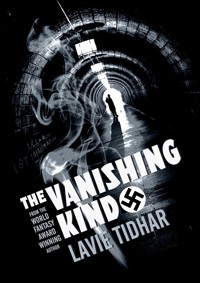
"Tidhar is a genius at conjuring realities that are just two steps to the left of our own." –NPR "A warped genius... There is no one like him." – Ian McDonald With an introduction by Silvia Moreno-Garcia, author of New York Times Bestseller Mexican Gothic Lavie Tidhar's ground-breaking, award winning novel A Man Lies Dreaming introduced Adolf Hitler as a down-at-heels private detective, forced to eke out a miserable living in 1930s London. Forgotten by history, the man now calling himself Wolf is the lowest of the low, suffering fresh humiliations at every turn. Now Wolf is back, in five darkly comic new stories that see him take on blackmail, murder, and theft – not to mention his old comrades. A brilliant alternate history noir with a heart, these stories are in turn shocking, horrifying and comic, as could only come from the mind of World Fantasy Award winner Lavie Tidhar. PRAISE FOR LAVIE TIDHAR'S A MAN LIES DREAMING JERWOOD FICTION UNCOVERED PRIZE WINNER 2015 BRITISH FANTASY AWARD NOMINEE 2015 PREMIO ROMA NOMINEE 2016 GEFFEN PRIZE NOMINEE 2019 DUBLIN LITERATURE AWARD LONGLIST 2016 "Complex, elusive and intriguing" –The Jerusalem Post "Nasty, clever, waspish and witty… a brilliant and potent thought experiment" –The Sunday Herald "Bold and unnerving" –NPR "Damn good" –Jewish Book Council "A wholly original Holocaust story: as outlandish as it is poignant." –Kirkus (starred review) "A vital, brilliant novel" –Barnes & Noble SFF Blog "Outstanding and moving" –Maxim Jakubowski, LoveReading.co.uk "Gripping… clever and thrilling work" –Buzz Magazine "In turns brutal, harrowing, heartbreaking and intriguing…. [an] unforgettable novel." –Gulf Weekly "Poetic & terrible… quite incredible" –Tor.com "A brilliant novel." –Pop Verse
Sie lesen das E-Book in den Legimi-Apps auf:
Seitenzahl: 171
Veröffentlichungsjahr: 2021
Das E-Book (TTS) können Sie hören im Abo „Legimi Premium” in Legimi-Apps auf:
Ähnliche













The Lunacy Commission
Copyright © 2020 by Lavie TidharAll rights reserved.
Introduction © 2020 Silvia Moreno-Garcia
“Red Christmas” © 2016. First published in Apex Magazine.
“The Lunacy Commission” © 2020. Original to this collection.
“Killing Kiss” © 2020. First published in The Book of Extraordinary Impossible Crimes and Puzzling Deaths.
“A Wonderful Time” © 2019. First published in The Book of Extraordinary Amateur Sleuth and Private Eye Stories.
“The Spear of Destiny” © 2017. First published as “My Struggle” in Apex Magazine.
Published as an ebook in 2020 by Jabberwocky Literary Agency, Inc., in association with Zeno Agency LTD.
Cover design © 2020 Sarah Anne Langton.
ISBN 978-1-625675-11-8
This book is a work of fiction. Names, characters, businesses, organizations, places and events are either the product of the author’s imagination or are used fictitiously. Any resemblance to actual persons, living or dead, events or locales is entirely coincidental.
TABLE OF CONTENTS
Title Page
Copyright
Introduction by Silvia Moreno-Garcia
1 — Red Christmas
2 — The Lunacy Commission
3 — Killing Kiss
4 — A Wonderful Time
5 — The Spear of Destiny
Historical Afterword
About the Author
Other Books by Lavie Tidhar
INTRODUCTION
SILVIA MORENO-GARCIA
When thinking of writers that have influenced Lavie Tidhar’s output, one of the first ones that comes to mind is that colossus of science fiction, Philip K. Dick. Dick’s alternate reality World War II novel, The Man in the High Castle, bears a semblance to Tidhar’s first novel, Osama, as well as later works such as A Man Lies Dreaming and the parallel reality hopping of Unholy Land.
Less mentioned, and perhaps less obvious, are Tidhar’s allusions to noir writers, something that becomes clear when flipping through the pages of this collection. Tidhar deploys the hardboiled tactics of writers such as Raymond Chandler, James M. Cain and Dashiell Hammett. That he does it in the form of short stories is even more striking, considering that the noir short story market is not exactly booming. Tidhar obviously likes to go against the grain in more than one way.
If Tidhar were just copying a product, we could call him an amazing mimic. But he ventures further. Chandler once wrote a line in chapter five of The Big Sleep that said “she had the fine-drawn face of an intelligent Jewess.” Tidhar’s work essentially reworks that line, opens it up, dissecting concerns about Jewishness, about identity, about history, about discrimination, about politics. He does it all while also balancing a bevy of pulp elements.
It’s a tough tightrope act, but Tidhar never falls into parody.
If Tidhar had been born a few decades earlier, he’d probably have made a decent living as a noir writer. Maybe he would have even made the jump to Hollywood, since his razor-sharp dialogue seems to be tailor-made for black and white flicks. In our reality, though, he’s become the kind of creator you rarely see these days. While most writers are forced to think in terms of the elevator pitch (Game of Thrones meets My Little Pony!), Tidhar cannot be telegrammed. His work is intelligent, moody, and self-aware.
Adolf Hitler, private detective! Say that out loud and it conjures the sort of premise that seems suitable for a cheap Asylum film rather than a proper science fiction writer. But Tidhar is extremely aware of the power and place of that sort of exploitative entertainment. He loves to blend disparate elements, to thread where others would not, to experiment. His work is a loving nod to the pulp fiction of another era and a scathing critique. It shows a magpie’s love of historical tidbits and facts, while never neglecting the beating heart of the story.
Tidhar constructs a gateway into a maze of mirrors that offers, like any good science fiction, a look not of the past despite being set in it, but of our present.
Having known Lavie for more than a decade now, I’ve long thought I have been lucky to make his acquaintance, and to share lively discussions on literature through the magic of the Internet. As I said in the beginning of this brief introduction, Philip K. Dick was a colossus of science fiction. It’s not every day you get to meet someone who will surely be called by a similar name in decades to come. Lavie Tidhar is one of the great writers of my generation and this collection shows a fraction of his might.
—Silvia Moreno-Garcia, July 2020
ONE
Red Christmas
In another time and place, Shomer still has Fanya and the children. He watches his wife as she lights the Hannukah candles on the windowsill. A hush has settled over the ghetto, and the children, Avrom and Bina, watch the weak, flickering lights of the candle stubs. Shomer watches them too, how they struggle to survive, to hold this flickering flame. He knows that soon, no matter what he’d do, these lights will burn out and die.
But for now, he has them all, and there is no happier man alive than Shomer, that one time purveyor of lurid tales, back when there were still rags to print such nonsense; and after the lighting and the blessing, he takes the children out for a walk. How thin they are, he marvels, watching them spin their makeshift dreidels with the other children, squatting on their haunches in the corner like born gamblers. ‘And are we not all gamblers?’ he says to Yenkl, who materialises out of the Yiddish Theatre’s door, still dressed as Kuni Leml. ‘Betting against the odds?’
And Yenkl merely nods his head, and rolls a cigarette with long thin fingers. ‘They say the trains will soon take all of us all to the east,’ he says. ‘A promised land of miracles and plenty, eh, Shomer?’
And Shomer knows the children listen, and he knows that he cannot tell them. Rumours only, whispered, of what’s happening in the east, what they do to the Jews in those camps in Poland. Rumours only, and surely there can be nothing in them, there can be no truth—
And so his mind shies from the glare of time present and travels elsewhere, to another time and place of his own making, and to a sordid little tale of shund, that is to say, of pulp—of blackmail, violence, and murder.
1.
She puffed on the cigarette with quick, nervous jerks of her hand. The fur coat she wore was mottled in places and her big, dark eyes looked at me with a sort of nervous excitement. ‘I am being blackmailed, you see, Herr Hitler.’
I hated the smell of tobacco. I hated the cold of my office, above the Jew baker’s shop. I hated London, and this cold, soulless island on which I’d found myself, a refugee. I hated what I had become.
‘It’s Wolf, now,’ I told her. ‘The name. Just Wolf.’
She shrugged. She didn’t care who or what I was.
You probably wouldn’t remember her, now. I will call her Elske Sturm, though that was not her real name, exactly. She often played the kind of girl who drowned at the end of the movie. Sometimes I wished a rain would come and drown the whole world, and everything in it. Once, I was going to conquer the world. Now I was a piece of gum stuck to a spassmacher’s shoe.
I said, ‘Blackmail, Fraulein Sturm?’
‘I have been sent pictures,’ she said. ‘Compromising photographs. The blackmailer threatens to, well, you can connect the dots.’
‘Is there any more?’ I said. There usually was.
She shrugged. It was a very Teutonic shrug. ‘The… other person in the photographs,’ she said. ‘He’s married.’
‘I see.’
‘We’re in love.’ She said it like it meant nothing, and she was right, because it never does. It was just an ugly case of adultery, the kind I wouldn’t usually touch, but I needed the money. It was December, 1937, and it was a cold winter and only going to get worse. I was behind on my rent and down on my luck, and the old wound from the concentration camp the communists had put me in after my Fall ached in cold weather.
‘Who is the other party?’
‘I’d rather not mention his name,’ she said quickly. ‘He is a prominent politician.’
‘…I see.’ And I did. She was just an actress, and no one expects high morals from a simple bird of paradise. They were pretty and empty headed, and dirty pictures would just as likely help their careers as ruin them. ‘…Does he know?’
She shrugged. ‘I don’t know,’ she said in a flat voice. ‘We haven’t spoken about it.’
She was lying, of course. She was never that good an actress. I took down the details. She had met with this man three times in different hotels around London. The blackmailer must have followed them, snapped photographs through the window of one of the rooms. I could imagine it easy enough. I said, ‘Do you have the note?’
‘Yes. Here.’ She pushed it across my desk. The message was short: Bring £300 in notes, Leave the bag by the Eleanor Cross, Sunday, 1pm, come alone, I will be watching you. No funny stuff.
‘I had to look up the Eleanor Cross,’ she said. ‘It’s that hideous monument outside Charing Cross Station.’
I nodded. I knew the place. I myself had arrived in London into that cesspit of racial impurity that was Charing Cross. It had become the gateway into London for us refugees from the Fall. The Jews and the communists held Germany now in their filthy hands, and good, honest Volk, proud Aryans, were now the scum of Europe, beggars arriving on the filthy shores of England cap in hand. How I hated them! How I hated them all!
‘You will make the drop? Alone?’
She bit her nails. ‘If that’s what you’d advise.’
‘It is.’
‘And you will…?’
‘I will be there. You won’t see me.’
‘I would be ever so grateful,’ she said. She shimmered over to me. She draped herself over my desk and crossed her long pale legs, one over the other. ‘I remember you from the old days,’ she said. ‘I saw you speak once, in Munich. You were so magnetic on stage. When you spoke, I really believed in you, we all did, I think. You said Germany could be great again.’ She sighed. ‘But I guess you were wrong after all.’
‘Germany was betrayed!’ I said. ‘I would have led her to victory, to, to…!’ Words failed me. She smiled at me pityingly. Her long fingers reached down and curled around my collar. Her nails were painted crimson. She was a cheap whore like all actresses are. Her perfume mixed with the smell of her cigarette as she leaned close into me. Her lips were red and ripe for the picking. ‘I would be so grateful for your efforts…’ she said.
With an effort I pushed her away. I liked my women the way I liked my dogs, vicious and submissive at once. ‘I shall see you Sunday,’ I said, coldly. ‘A retainer of five pounds would suffice, Fraulein Sturm.’
For a moment her eyes flashed; then she laughed, her tongue darting in between those white teeth of hers, as though she held me in contempt. She took the money out of her purse and laid it on my desk.
‘Is that all,’ she said.
I let it go past me. These days, I let a lot of things slide.
‘Auf Wiedersehen,’ I said.
She nodded, wordlessly. Then she left my office, slamming the door shut in her wake. I guess for a woman of her kind seduction was just another transaction on the balance sheet of life, like buying bread or paying off a blackmailer. I sat there for a long moment, thinking of all I had lost. Then I got up, retrieved my raincoat and my fedora, and followed her.
2.
A drunk Santa Claus bumped into me as I crossed Shaftesbury Avenue, his disgusting breath rancid on my face.
‘Scheisse!’ I said, trying to push him off. He staggered but stood his ground, and stared at me with mean little eyes.
‘Filthy foreigners,’ he mumbled. ‘Why don’t you all just f—k off back to your own country.’
Before I could reply I saw a couple of bobbies in uniform turn and look our way.
‘Forget it,’ I said, and began to walk away. He sneered behind me.
‘Run away now, little Kraut!’ he shouted. I hated his entire race at that point. Hate was a powerful motivator, it had once made me great, and it sustained me, still. I nearly went back at him, but the bobbies were watching, and I had my job, still.
I don’t know why I was following Elske. I did not quite believe her story. I followed her to Sakall’s, near the Hippodrome, on Little Newport Street. Sakall’s was one of the fashionable new establishments, opened by a Hungarian bit part actor, and it catered to many of the performers who trod the Hippodrome’s stage. There were usually a couple of photographers stationed outside, and I recognised Hoffmann, who I used to be friendly with back in Munich. He waved when he saw me. There was a bottle of cheap red wine by his feet, which he raised in greeting at my approach. Already, he was quite drunk.
‘Wolf,’ he said. ‘It is good to see you.’
‘Hoffmann.’
‘We have fallen on hard times, eh, my friend?’ He gave me a sardonic salute, arm extended, and chuckled. He was in his fifties and a good Aryan, and he had always served me well. ‘Yet still we carry on.’
I ignored him and his little jokes and fixed my eyes on the entrance to Sakall’s. The actress, Elske, disappeared inside. Hoffmann watched me watch her and chuckled again. ‘She’s a nice bit of totty and no mistake,’ he said.
‘Do you know who she’s meeting?’
‘Sure, sure. Some big shot out of Hollywood, one of those Warner brothers.’
‘A Jew?’
He shrugged. ‘Who isn’t a Jew, these day,’ he said.
‘Is she looking for a job?’
‘Rumour has it she’s desperate to get out. California, Wolf!’ he said. ‘Picture it, the sand beaches and the palm trees and the girls…’
‘California,’ I told him coldly, ‘is filled with dirty Jews.’
‘Sure, sure,’ he said. ‘But that’s show business.’
It was cold. I rubbed my hands together, stamped my feet, but it didn’t really help. I remembered the cold of the Great War, the trenches and the stench of men’s fear. It is easier to be cold when one is younger.
‘Do you know if she’s seeing anyone?’
‘Seeing?’ he said. ‘I do not know about seeing. But word is she plays footsie with half the eligible bachelors of London. And they’re not always bachelors, either, if you get my meaning.’
‘Anyone in particular?’ I said, without much interest.
He shrugged, then brightened up suddenly. ‘That young whippersnapper of yours,’ he said. ‘That Heydrich.’
‘Heydrich?’ I said. ‘Reinhard Heydrich? Himmer’s man?’ I remembered him, vaguely. A thin faced former musician with a high pitched voice, who got kicked out of the Navy for conduct unbecoming of a gentleman. I remembered his wife better than him, Lina, a pleasant enough wench who was charmingly anti-Semitic. She almost came in her drawers every time she met me. She was the one who sent her husband for the job interview with Himmler.
‘He was in charge of intelligence, as far as I remember. He would have made a good detective if only he could keep it in his pants from time to time.’
‘Who of us can,’ Hoffmann said, philosophically.
‘But what is he doing in London? I thought the communists had him.’
‘He got out even before the Reichstag burned,’ Hoffmann said. ‘He was always a practical man, as far as I remember.’
I could not even blame him, I realised. I had surrounded myself with ruthless, efficient men. Their loyalty was not in question—they had always been loyal first and foremost to themselves.
‘He’s got a place in town, as far as I know,’ Hoffmann said. ‘Wife and kids and all. I don’t know what he does, exactly. Something in the movies. A guy like him’s bound to land on his feet.’
I nodded, thoughtfully.
‘Thanks, Hoffmann,’ I said.
‘You going to stick around?’
‘No,’ I told him. ‘I think I saw all I needed to see.’
‘Go well, Wolf,’ he said. ‘Go in peace.’
‘We both,’ I told him, ‘know that’s unlikely.’
I could hear his chuckles all the way until I turned the corner.
3.
I headed down Charing Cross Road to the train terminus. I wanted to see the drop point for myself. The night had thickened about me and the London fog rose from the pavements and made the movements of people seem like a sort of shadow play. Hoffman used to have a studio in Munich, but when the communists took Germany he ran. Many of my old comrades did, escaping like rats, and now they infested this town with their presence. Passing St Martin-in-the-Fields I could hear carol singers, and a beggar shook his metal bowl at me, hoping for alms that weren’t going to come. I could hear the whistle of the trains as they crossed over the river, my native tongue being spoken, the shrill cries of a boy selling the Evening Standard, the drunken laughter of revellers at a nearby pub.
I did not see the two men in the black uniform of the British Fascists. They blended perfectly into the dark.
When I reached sight of the station I stopped and simply stared. The Eleanor Cross was surrounded by recent arrivals, all milling about like cattle. The cross, I remembered, had been erected as an act of love, one of twelve monuments King Edward had put up in memory of his late wife. I hated sentimental fools. When Geli killed herself, with my own gun, I was outraged at her betrayal. How dared she defy me in this way!
I stared at the monument, thinking. It was a nice, busy spot. Easy to disappear in a crowd. I could see why the blackmailer chose it. I decided to buy myself a cup of hot chocolate, since I had money in my pocket for once. I had always had a fondness for sweet things. I turned, which was when I saw them. There were two of them and they were ugly in that English sort of way, as though they raise the boys alongside the pigs. They wore black with the jagged lightning bolt of the British Union of Fascists on the breast, and they had bad teeth, bad breath, and nasty grins.
‘Going somewhere?’
‘Excuse me, fellows,’ I said, trying to look round them for an avenue of escape—just as the one on the right sank his fist into my stomach and knocked all the air out of me.
‘No need to apologise, old boy,’ the one on the left said pleasantly. He had a cosh in his hand.
‘No, don’t—’
It came down and connected with the back of my head. Pain exploded behind my eyes, and a million yellow stars swam in my field of vision and were replicated sixfold; but luckily I lost consciousness at that point.
4.
‘So you’re the Charlie Hunt who’s been messing with my girl,’ the man said.
‘Eh?’ I said, confused.
‘He means you’re a c—’
‘That’s enough, Reggie.’
My head felt like a football that’s been kicked round in No Man’s Land during the Christmas Truce. I looked around me, carefully. I was in a dark warehouse of some sort. On the walls I could see posters for Oswald Mosley, the Smethwick MP and leader of the BUF. He had a thin aristocratic face and a thin moustache and a ghoul’s smile. Re-Elect Mosley! Said the posters.
I was bound to a chair. Standing above me were the two Fascist goons and a third man. He wore a good suit, with lightning strike cufflinks, and he looked down on me with bloodshot eyes.
‘Who the f—k are you?’ I said.
He backhanded me. My head snapped sideways and the pain burned like a flame and I thought a tooth might have come loose.
‘I’m the one asking the questions here!’ he said.
I spat out blood, just missing his shoes, and he backhanded me again.
‘What were you doing with my girl?’ he said.
‘Elske?’
‘You’re not worthy to speak her name!’
He slapped me again. I was getting tired of it. Like Germany, a man can only take so much before he must resort to violence.
I wanted very much to kill him at that moment.
His two boys stood on either side of him and looked at me with amused butcher boys’ grins.
‘Fat pigs,’ I said, and tried to spit again, but there wasn’t much in me.
‘Who are you?’ the man in the suit said.
‘Wolf,’ I said. ‘My name’s Wolf. I’m a private eye.’
‘A what?’ he said, sounding confused.
‘A P.I. A gumshoe. A shamus. A dick!’
He looked even more confused, if that were possible. They don’t breed them for intelligence, in England, so much as for a sort of bovine endurance.
‘You mean, like in Agatha Christie?’ he said.




