



Erhalten Sie Zugang zu diesem und mehr als 300000 Büchern ab EUR 5,99 monatlich.
- Herausgeber: JABberwocky Literary Agency, Inc.
- Kategorie: Fantasy und Science-Fiction
- Sprache: Englisch
Three wise men came from the East for the infant Jesus in The New Testament. Three brave companions accompany the Buddha in the Chinese classic A Journey to the West. Could they have been the same three? Guided by a star, three strange companions arrive in the barbarous land of Judea to seek a newborn child–a possible messiah to some, and the reincarnation of the Budda to others. When the child's life is threatened, his family and new guardians escape to Egypt, returning years later, to a Jewish land on the cusp of annihilation by the Roman Empire. Once a general in the Judean army, now a Roman agent, Josephus Flavius is sent by Caesar back to his home land to observe and report on the actions of the troubling young man now preaching sedition in the Galilee – a boy with the unsettling powers of kung-fu. . . Their lives would collide in a cataclysmic confrontation between Romans and Jews, between empire and rebels–and change the world forever. . . REVIEWS: "inspired and fantastical" – Asimov's Science Fiction Magazine "A vivid and gonzo reimagining of the life of Jesus. . . hugely entertaining" – Locus Magazine
Sie lesen das E-Book in den Legimi-Apps auf:
Seitenzahl: 104
Veröffentlichungsjahr: 2014
Das E-Book (TTS) können Sie hören im Abo „Legimi Premium” in Legimi-Apps auf:
Ähnliche



















Jesus & the Eightfold Path
Copyright © 2011 Lavie TidharAll rights reserved.
Published as an ebook in 2014 by Jabberwocky Literary Agency, Inc., in conjunction with the Zeno Agency LTD. Published as a limited edition hardcover by Immersion Press in 2011.
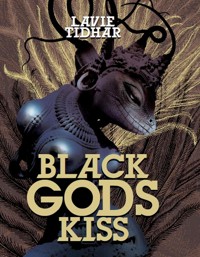
Cover art by Melissa Gay.
ISBN 978-1-625671-05-9
TABLE OF CONTENTS
Part One: His Birth and Early Years
Episode One: Journey to the West
Episode Two: The King of the Jews
Episode Three: A Star Over Bethlehem
Episode Four: Egypt
Part Two: The Temptation of the Christ
Episode One: Nazarene
Episode Two: The Baptist
Episode Three: The Great Old One
Episode Four: The Sermon on the Mount
Part Three: The Gospel According to Josephus
Episode One: The Roman Agent
Episode Two: Tiberias
Episode Three: Demons and Storms
Episode Four: Walking on Water
Part Four: The Passion of the Christ
Episode One: A Ramble in the Temple
Episode Two: The Last Supper
Episode Three: The Hill of Skulls
Episode Four: Resurrection
Also by Lavie Tidhar
Part One
Episode One Journey to the West
Now when Jesus was born in Bethlehem of Judea in the days of Herod the king, behold, there came wise men from the east to Jerusalem.
—Matthew 2:1
They were not entirely men, and they were not entirely wise; however, here they were, three pilgrims clothed in the dust of the road, travelling faster than men do: for the road was long and dangerous and hard, and a single star in the sky beckoned them on, as if to say, hurry, hurry.
“Barbarous country,” Sūn Wùkōng said. He was tall and thin and had the wizened face of a monkey. He raised a hand and touched the gold band around his head. “I could be back in the Bloom Mountains, or better yet, making play for the Jade Emperor’s daughter.”
The fat companion beside him roared with laughter and said, “Really, Monkey! The girls in these parts are not too bad. You are too aloof! Too selective! You are a connoisseur, whereas I—” he took two enormous fingers and pinched a lavish section of the pink ample skin of his belly—“I am a democrat, a man of the people! I like to try everything!”
“Like the Princesses of the Moon?” the third companion, a quiet, narrow-shouldered man said. His name was ShāWùjìng, and it was Monkey’s turn to laugh as the fat man scowled and said, “That was uncalled for, Sandy.”
“It was your own fault, Pigsy,” Sandy said. “If only you learnt to keep your hands to yourself . . . ”
“Like last night,” Monkey said.
Pigsy opened a snout-like mouth wide and grinned and said, “I tell you again, Monkey, the lasses here are none too bad, and willing, for an exotic stranger and a charmer, too.”
“Charmer!” Sandy said. “The girls here must be barbarous indeed!”
“You sound envious!” Pigsy said.
“Never!” Sandy said.
Monkey smiled. “You’ll find a nice girl and settle down one day, Sandy.” And the monk blushed. He was not like the other two. He was more refined, and delicate.
Pigsy was back to his exploits of the night before. “Such arms!” he said. “Such belly! Such . . . such thighs!” His hands drew vulgar shapes in the air.
“She sounds like an elephant!” Monkey said, and Pigsy, not listening, responded, “I tell you again, Monkey, the girls here may be farmer-girls and chunky, but they know how to rut.”
“Enough!” Monkey said. He touched again the golden crown on his head. “Time is growing short, and the stars will soon be in alignment. We should be there soon.”
“Sooner we get there, the sooner we can go back,” Sandy said. Monkey smiled; it was a small, strange smile, like that of a man who knows, or guesses, more than his companions; but he said nothing.
They had travelled far. Many weary days they spent, crossing the great sullen mountains beyond the Emperor’s realm, hiking through treacherous snow and beside deep gorges. Many were the snow-demons they had fought, and many were the deep and ancient cave-dwellers, things of darkness and fear, that tried to waylay them on their way. A giant bird had taken Pigsy for a meal and carried him by its talons to its high eyrie at the top of the world, and it took all of Monkey’s power to rescue him. He had summoned a cloud and he and Sandy rode it to the top, where the giant bird, its feathers the colour of blood and the sun, its scales glittering like jewels, was already pecking at Pigsy’s pink, succulent flesh.
Oh, how the once-Commander of the Heavenly Naval Forces shrieked! Oh, how he cried! Eight babies did the monster bird have, eight sharp-beaked monstrosities clamouring for Pigsy’s flesh!
The battle was lengthy and worthy of song. Sandy used his fighting spade against the bird, but it was of little use against her giant beak. Monkey plucked hairs from his body and blew on them, until soon there were many Monkeys flying around, fighting the bird, while all the while Pigsy screamed and screamed like a pig about to be devoured.
Oh, they had laughed! It took Pigsy almost a week to get over his ordeal. Luckily they had found that hidden city high up in the Himalayas, where lights came from shining crystals and the women were fair and wore shimmering robes . . .
They had almost lost Sandy there, to the charms and grace of the beautiful Princess of the Pale Water, she who was like a mountain spring . . . They were two beings of water, she and the once-water ogre, and it was only the importance of the journey—and the wiles of Monkey, who had set out to seduce the princess—that saved the day.
Long and hard the journey had been! Across the mountains at last, and down into the hot lands below, and across a vast distance of danger and temptation. There were nomads on the plains, strong harsh men who tried to attack the three travellers; and there were wizards too, of a new ilk not seen in the Middle Kingdom, preying on travellers—man-eaters and uncouth. There had been many fights, but always the three travellers were triumphant.
The lands gradually changed. The air became hot and humid. The barrenness of the plains turned lush and there were many trees, and their fruits were exotic and new, and Pigsy lusted after the fruits of the land (and the fruits of men’s loins, too!).
At last there was a great crossing of a sea, by ship sturdy and taut of sail. “A good craft,” Monkey said thoughtfully as he patted the beams of cedar.
Pigsy leered and said, “Fishermen’s tubs, Monkey! One Imperial ship would sink a whole fleet of them.”
“Perhaps,” Monkey said, and his wise monkey’s eyes were thoughtful.
At last they had come to the barbarous land called Judea. They went as men here, and old men at that. On the first night coming off the ship brigands tried to rob them. After that there had been no more attempts.
Episode Two The King of the Jews
When Herod the king had heard these things, he was troubled.
—Matthew 2:3
“What’s their king like?” Sandy said.
“A provincial,” Pigsy said and laughed a har-har sound, showing teeth. He picked at them with the long sharp nail of his small finger. “What do you expect?”
“I don’t know,” Monkey said. He had been mainly silent since they had entered Judea. It was not at all, as Pigsy privately thought, like him, but then Monkey was a more complicated creature. He, Pigsy, was a simple man and liked the simple life: food and drink and wenches. What more could you want?
But Monkey was different and sometimes Pigsy worried about him. It was the influence of the Tripitaka on Monkey, he thought. It had turned him into a sometimes-philosopher.
It did not occur to Pigsy that his thinking this, his worrying about Monkey, was itself an influence of the Tripitaka. “He seems capable. A bit ambitious in his building projects—”
“What king isn’t?” Sandy said.
“But a good politician. Which he probably needs to be, in these barbarous lands. They have their own emperor, you know—”
“A Roman,” Sandy said.
“They’re called Romans.” Pigsy snorted.
“Enough!” he said. “When do we leave?”
“We just got here!” Monkey said, and a new smile came over his wizened face. “It could be fun to stick around . . . ”
They were walking up the mountain road to the city called Jerusalem. They did not quite go unnoticed. There had been . . . indiscretions.
Such as at the inn that stood outside the little hovel of a town called Beersheba. It was a hot place and Pigsy was irritable and sweating. When he saw a pool of mud outside the stables he did not even stop to look around but jumped in, and was soon rolling in the yellow-brown mud, making the strange grunting noises that meant he was happy.
It might have ended at that if not for a most delectable black-eyed girl who had chosen that exact moment to walk past the stables, slipped in the mud, and was amorously wrapped in the arms of the pig. The girl had shrieked, the household was alerted, and the companions had to beat a hasty retreat and spend the night camped under the stars.
And there was the moment Sandy got drunk. It was in a tavern further down the road. After a couple of bottles of the potent local red wine Sandy, quite earnestly, began to tell the assembled company camel-drivers and traders and even, alas, the old king’s man, all about the Tripitaka, and the star, and their journey.
That was not a good move, but the situation was made even worse when Sandy, innocently, seemed to have offended one of the ladies present whose man, a large, beefy Edomite, charged at him.
Soon Sandy’s spade was flying everywhere, and then Pigsy joined in, and bodies were flying around as if a desert wind had passed through the tavern, and tables and chairs, too. Monkey had not been pleased.
“The road seems awfully quiet,” Sandy said now. The three walked slowly, as old men. Above them, far in the distance, towered the city of white stone. “I wonder where everyone is.”
Monkey smiled. It did not escape his notice that the general populace had been giving them a wide berth of late. In fact, quite a blockage was forming about a mile behind them, as cart-drivers became aware of the three travellers’ presence ahead and slowed down to a crawl.
“There’s someone coming,” he said and pointed. Indeed, coming down the mountain road at a gallop was a young man on a horse, wearing a uniform that seemed part-local and part-Roman (as far as the travellers, who had encountered few Romans, could tell) and looking quite official and self-important.
“Do you think he wants to talk to us?” Sandy said, and Pigsy said, “I’m hungry.”
The horse came thundering towards them. It was a handsome specimen, black coat and shiny, and it seemed aimed directly at the three travellers. When it came within a few feet from them the horse had stopped. The three travellers, too, stopped, and stood staring at the animal and its rider.
When the rider dismounted they could see that he was indeed young, but that his face was already hardened by fighting. He seemed a local boy, what they called a Hebrew, and he spoke in Aramaic. He said, “Greetings, venerable gentlemen”—or something to that effect.
“Greetings, soldier,” Sandy said. “What can we do for you”—or something to that effect.
“Venerable one,” the boy said, “the king wishes to have conversation with yourselves. I am requested to escort you the rest of the way to Jerusalem, and to the palace itself.”
“Will there be food?” Pigsy asked.
The soldier turned to him and smiled, if only briefly, and said gravely, “There will be.”
“We are old men,” Monkey said, and he leaned on his staff as if to demonstrate his feebleness. “And peaceful. We have no business with your king, and our errand is urgent.”
The boy’s raised eyebrow said, “Is that so?” but aloud he said, “But the king, it seems, has business with you.”
“Very well,” Monkey said amiably. “Seeing as our path leads us to Jerusalem on its own, I believe we could spare your king some moments.”




