


0,49 €
Niedrigster Preis in 30 Tagen: 0,00 €
Niedrigster Preis in 30 Tagen: 0,00 €
Mehr erfahren.
- Herausgeber: e-artnow
- Kategorie: Gesellschafts- und Liebesromane
- Sprache: Englisch
George Bellow, an American millionaire, sets off to England following the lady he wants to propose. However, she declines his proposal since she is about to marry the Duke of Ryde. Bellow sets off to a hike across the English countryside in order to clear his mind where he meets a little boy named George Porgy. Porgy is on his way to Africa where he plans to make a fortune and take care of his aunt's problems. Bellow takes the kid home, promising him that he will take him to a treasure hunt on the night of the Money Moon. Porgy's aunt is too proud to receive help, but the situation gets very complicated and Bellow is determined to stuck up for the boy and his aunt.
Das E-Book können Sie in Legimi-Apps oder einer beliebigen App lesen, die das folgende Format unterstützen:
Veröffentlichungsjahr: 2023
Ähnliche














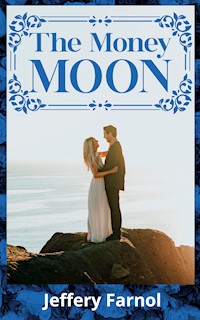
The Money Moon
Table of Contents
CHAPTER I
WHICH, BEING THE FIRST, IS VERY PROPERLY THE SHORTEST CHAPTER IN THE BOOK
When Sylvia Marchmont went to Europe (adequately chaperoned, of course), George Bellew being, at the same time, desirous of testing his newest acquired yacht, followed her, and mutual friends in New York, Newport, and elsewhere, confidently awaited news of their engagement. Great, therefore, was their surprise when they learnt of her approaching marriage to the Duke of Ryde.
Bellew, being young and rich, had many friends (a quite natural result), who, while they sympathised with his loss, yet agreed among themselves, and with great unanimity that, despite Bellew's millions, Sylvia had done vastly well for herself, seeing that a duke is always a duke, especially in America.
There were also divers ladies of uncertain age in New York, Newport, and elsewhere, chiefly matrons, and celebrated for their exclusiveness, the magnificence of their receptions, their palatial homes, their jewels, and their daughters, who were anxious to know how Bellew would comport himself under his disappointment. Some leaned to the idea that he would immediately blow his brains out; others opined that he would promptly set off on another of his exploring expeditions, and lose himself in the Himalayan snows, or get himself torn to pieces by lions and tigers, or devoured by alligators; while others again feared greatly that, in a fit of pique, he would marry some "young person" unknown, unheard of, and therefore, of course, utterly unworthy.
How far these worthy, and uncertain aged ladies (matrons for the most part, as has been said) were right or wrong in their surmises, they who take the trouble to turn the following pages shall find out.
CHAPTER II
HOW GEORGE BELLEW SOUGHT COUNSEL OF HIS VALET
The first intimation Bellew received of the futility of his hopes was the following letter which he received one morning as he sat at breakfast in his chambers in St. James' Street, W.
"MY DEAR GEORGE,
"I am writing to tell you that I like you so much that I am quite sure I could never marry you, it would be too ridiculous. Liking, you see, George, is not love, is it? Though, personally, I think all that sort of thing went out of fashion with our great-grandmother's hoops and crinolines. So, George, I have decided to marry the Duke of Ryde. The ceremony will take place in three weeks' time at St. George's, Hanover Square, and every one will be there, of course. If you care to come too, so much the better. I won't say that I hope you will forget me, because I don't; but I am sure you will find some one to console you, because you are such a dear, good fellow, and so ridiculously rich.
"So good-bye, and best wishes,"Ever yours most sincerely,"SYLVIA."
Now, under such circumstances, had Bellew sought oblivion and consolation from bottles, or gone headlong to the devil in any of other numerous ways that are more or less inviting, deluded people would have pitied him, and shaken grave heads over him; for it seems that disappointment (more especially in love) may condone many offences, and cover as many sins as Charity.
But Bellew, knowing nothing of that latter-day hysteria which wears the disguise, and calls itself "Temperament," and being only a rather ordinary young man, did nothing of the kind. Having lighted his pipe, and read the letter through again, he rang instead for Baxter, his valet.
Baxter was small, and slight, and dapper as to person, clean-shaven, alert of eye, and soft of movement; in a word, Baxter was the cream of gentlemen's gentlemen, and the very acme of what a valet should be, from the precious parting of his glossy hair, to the trim toes of his glossy boots. Baxter, as has been said, was his valet, and had been his father's valet before him, and as to age, might have been thirty, or forty, or fifty, as he stood there beside the table, with one eyebrow raised a trifle higher than the other, waiting for Bellew to speak.
"Baxter."
"Sir?"
"Take a seat."
"Thank you, sir." And Baxter sat down, not too near his master, nor too far off, but exactly at the right and proper distance.
"Baxter, I wish to consult with you."
"As between master and servant, sir?"
"As between man and man, Baxter."
"Very good, Mr. George, sir."
"I should like to hear your opinion, Baxter, as to what is the proper and most accredited course to adopt when one has been—er—crossed in love?"
"Excuse me, Mr. George, but am I to understand you as meaning heart-broke, as it were, or merely—jilted?"
"What is the difference?"
"A great deal, sir."
"Then let us say—both, Baxter."
"Well then, sir," began Baxter, slightly wrinkling his smooth brow, "so far as I can call to mind, the courses usually adopted by despairing lovers, are in number, four—though there are doubtless numerous others."
"Name them, Baxter."
"First, Mr. George, there is what I may term the course Retaliatory—which is marriage——"
"Marriage?"
"With—another party, sir,—on the principle that there are as good fish in the sea as ever came out, and—er—pebbles on beaches, sir. You understand me, sir?"
"Perfectly, go on."
"Secondly, there is the army, sir; I have known of a good many enlistments on account of blighted affections, Mr. George, sir. Indeed, the army is very popular."
"Ah?" said Bellew, settling the tobacco in his pipe with the aid of a salt-spoon. "Proceed, Baxter."
"Thirdly, Mr. George, there are those who are content to merely disappear."
"Hum," said Bellew.
"And lastly, sir, though it is usually the first, there is dissipation, Mr. George. Drink, sir—the consolation of bottles, and——"
"Exactly!" nodded Bellew. "Now, Baxter," he pursued, beginning to draw diagrams on the table-cloth with the salt-spoon, "knowing me as you do, what course should you advise me to adopt?"
"You mean, Mr. George, speaking as between man and man, of course—you mean that you are in the unfortunate position of being—crossed in your affections, sir?"
"Also—heart-broken, Baxter."
"Certainly, sir!"
"Miss Marchmont marries the Duke of Ryde—in three weeks, Baxter."
"Indeed, sir!"
"You were, I believe, aware of the fact that Miss Marchmont and I were as good as engaged?"
"I had—hem!—gathered as much, sir."
"Then—confound it all, Baxter!—why aren't you surprised?"
"I am quite—overcome, sir," said Baxter, stooping to recover the salt-spoon, which had slipped to the floor.
"Consequently," pursued Bellew, "I am—er—broken-hearted, Baxter."
"Certainly, sir."
"Crushed, despondent, and utterly hopeless, Baxter, and shall be, henceforth, pursued by the—er—Haunting Spectre of the Might Have Been."
"Very natural, sir, indeed!"
"I could have hoped, Baxter, that, having served me so long, not to mention my father, you would have shown just a—er shade more feeling in the matter."
"And if you were to ask me—as between man and man, sir—why I don't show more feeling, then, speaking as the old servant of your respected father, Master George, sir,—I should beg most respectfully to say that regarding the lady in question, her conduct is not in the least surprising, Miss Marchmont being a beauty, Master George, and therefore vain, spoilt, and shallow. Referring to your heart, sir, I am ready to swear that it is not even cracked! And now, sir,—what clothes do you propose to wear this morning?"
"And pray, why should you be so confident regarding the condition of my heart?"
"Because, sir, speaking as your father's old servant, Master George, I make bold to say that I don't believe that you have ever been in love, or even know what love is, sir."
Bellew picked up the salt-spoon, balanced it very carefully upon his finger, and put it down again.
"Nevertheless," said he, shaking his head, "I can see for myself but the dreary perspective of a hopeless future, Baxter, blasted by the Haunted Spectre of the Might Have Been; I'll trouble you to push the cigarettes a little nearer."
"And now, sir," said Baxter, as he rose to strike and apply the necessary match, "what suit will you wear to-day?"
"Something in tweeds."
"Tweeds, sir! Surely you forget your appointment with the Lady Cecily Prynne, and her party? Lord Mount-clair had me on the telephone, last night——"
"Also a good heavy walking-stick, Baxter, and a knapsack."
"A knapsack, sir?"
"I shall set out on a walking tour—in an hour's time."
"Certainly, sir—where to, sir?"
"I haven't the least idea, Baxter, but I'm going—in an hour. On the whole, of the four courses you describe for one whose life is blighted, whose heart—I say, whose heart, Baxter, is broken—utterly smashed, and—er—shivered beyond repair, I prefer to disappear—in an hour, Baxter."
"Shall you drive the touring car, sir, or the new racer?"
"I shall walk, Baxter, alone,—in an hour."
CHAPTER III
WHICH CONCERNS ITSELF WITH A HAY-CART AND A BELLIGERENT WAGGONER
It was upon a certain August morning that George Bellew shook the dust of London from his feet, and, leaving Chance, or Destiny, to direct him, followed a haphazard course, careless alike of how, or when, or where, sighing as often, and as heavily as he considered his heart-broken condition required—which was very often and very heavily—yet heeding for all that, the glory of the sun, and the stir and bustle of the streets about him.
Thus it was that, being careless of his ultimate destination, Fortune condescended to take him under her wing (if she has one), and guided his steps across the river, into the lovely land of Kent—that county of gentle hills, and broad, pleasant valleys, of winding streams and shady woods, of rich meadows and smiling pastures, of grassy lanes and fragrant hedgerows—that most delightful land which has been called, and very rightly, the Garden of England.
It was thus, as has been said, upon a fair August morning, that Bellew set out on what he termed "a walking tour." The reservation is necessary because Bellew's idea of a walking-tour is original and quaint. He began very well (for Bellew); in the morning he walked very nearly five miles, and in the afternoon, before he was discovered, he accomplished ten more, on a hay-cart that happened to be going in his direction. He had swung himself up among the hay, unobserved by the somnolent driver, and had ridden thus an hour or more in that delicious state between waking and sleeping, ere the waggoner discovered him, whereupon ensued the following colloquy:—
THE WAGGONER (indignantly). "Halloa there! what might you be a-doing of in my hay?"
BELLEW (drowsily). "Enjoying myself immensely."
THE WAGGONER (growling). "Well, you get out o' that, and sharp about it."
BELLEW (yawning). "Not on your life! No, sir, 'not for Cadwallader and all his goats!'"
THE WAGGONER. "You just get down out o' my hay, now come!"
BELLEW (sleepily). "Enough, good fellow; go to! Thy voice offends my ear!"
THE WAGGONER (threateningly). "Ear be blowed! If ye don't get down out o' my hay, I'll come an' throw ye out."
BELLEW (drowsily). "'Twould be an act of wanton aggression that likes me not."
THE WAGGONER (dubiously). "Where be ye goin'?"
BELLEW. "Wherever you like to take me; thy way shall be my way, and—er—thy people—(yawn). So drive on, my rustic Jehu, and Heaven's blessing prosper thee!"
Saying which, Bellew closed his eyes again, sighed plaintively, and once more composed himself to slumber.
But to drive on, the Waggoner, very evidently, had no mind; instead, flinging the reins upon the backs of his horses, he climbed down from his seat, and spitting on his hands, clenched them first into fists and shook them up at the yawning Bellew, one after the other.
"It be enough," said he, "to raise the 'Old Adam' inside o' me to 'ave a tramper o' the roads a-snoring in my hay, but I ain't a-going to be called names, into the bargain, furrin' or otherwise, no, not by you nor nobody else. 'Rusty' I may be, but I reckon I'm good enough for the likes o' you, so come on down!" and the Waggoner shook his fists again.
He was a very square man, was this Waggoner, square of head, square of jaw, and square of body, with twinkling blue eyes, and a pleasant, good-natured face; but, just now, the eyes gleamed, and the face was set grimly, and, altogether, he looked a very ugly opponent.
Therefore Bellew sighed again, stretched himself, and, very reluctantly, climbed down out of the hay. No sooner was he fairly on the road, than the Waggoner went for him with a rush, and a whirl of knotted fists. It was very dusty in that particular spot so that it presently rose in a cloud, in the midst of which the battle raged, fast and furious.
And, in a while, the Waggoner, rising out of the ditch, grinned to see Bellew wiping the blood from his face.
"You be no—fool!" panted the Waggoner.
"Thank you," panted Bellew, "though there are others who think differently, I believe."
"Leastways, not wi' your fists," said the Waggoner, mopping his face with the end of his neck-cloth.
"Why, you are pretty good yourself, if it comes to that," returned Bellew, mopping in his turn. Thus they stood a while stanching their wounds, and gazing upon each other with a mutual and growing respect.
"Well," inquired Bellew, when he had recovered his breath somewhat, "shall we begin again, or do you think we have had enough? To be sure, I begin to feel much better for your efforts; you see, exercise is what I most need, just now, on account of the—er—Haunting Spectre of the Might Have Been, to offset its effect, you know; but it is uncomfortably warm work here, in the sun, isn't it?"
"Ah," nodded the Waggoner, "it be."
"Then suppose we—er—continue our journey?" said Bellew, with his dreamy gaze upon the tempting load of sweet-smelling hay.
"Ah!" nodded the Waggoner again, beginning to roll down his sleeves, "suppose we do; I aren't above giving a lift to a chap as can use 'is fists—not even if 'e is a vagrant, and a uncommon dusty one at that, so, if you're in the same mind about it, up you get, but no more furrin' curses, mind." With which admonition the Waggoner nodded, grinned, and climbed back to his seat, while Bellew swung himself up into the hay once more.
"Friend," quoth he, as the waggon creaked upon its way, "dost thou smoke?"
"Ah," nodded the Waggoner.
"Then here are three cigars which you didn't manage to smash just now."
"Cigars! why it ain't often as I gets so far as a cigar, unless it be squire, or passon—cigars, eh!" Saying which he turned and accepted the cigars, which he proceeded to stow away in the cavernous interior of his wide-eaved hat, handling them with elaborate care, rather as if they were explosives of a highly dangerous kind.
Meanwhile, George Bellew, American citizen and millionaire, lay upon the broad of his back staring up at the cloudless blue above, and despite heart-break, and a certain "haunting shadow," felt singularly content, which feeling he was at some pains with himself to account for.
"It must be the exercise," said he, speaking his thought aloud, as he stretched luxuriously upon his soft and fragrant couch; "after all, there is nothing like a little exercise."
"That's what they all say," nodded the Waggoner; "but I notice as them as says it, ain't over fond o' doing of it, they mostly prefers to lie on their backs, an' talk about it—like yourself."
"Hum," said Bellew, "ha! 'Some are born to exercise, some achieve exercise, and some, like myself, have exercise thrust upon them.' But, anyway, it is a very excellent thing, more especially if one is affected with a—er—broken heart."
"A wot?" inquired the Waggoner.
"Blighted affections, then," sighed Bellew, settling himself more comfortably in the hay.
"You aren't 'inting at—love, are you?" inquired the Waggoner, cocking a somewhat sheepish eye at him.
"I was, but, just at present," and here Bellew lowered his voice, "it is a—er—rather painful subject with me; let us, therefore, talk of something else."
"You don't mean to say that your 'cart's broke, do ye?" inquired the Waggoner, in a tone of such vast surprise and disbelief that Bellew turned and propped himself on an indignant elbow.
"And why the deuce not?" he retorted. "My heart is no more impervious than any one else's—confound it!"
"But," said the Waggoner, "you ain't got the look of a 'eart-broke cove, no more than Squire Cassilis, which the same I heard telling Miss Anthea as 'is 'eart were broke, no later than yesterday, at two o'clock in the arternoon, as ever was."
"Anthea," repeated Bellew, blinking drowsily up at the sky again, "that is a very quaint name, and very pretty."
"Pretty—ah—an' so's Miss Anthea!—as a pict'er."
"Oh, really?" yawned Bellew.
"Ah," nodded the Waggoner, "there ain't a man, in or out o' the parish, from Squire down, as don't think the very same." But here the Waggoner's voice tailed off into a meaningless drone that became merged with the creaking of the wheels, the plodding hoof-strokes of the horses, and Bellew fell asleep.
He was awakened by feeling himself shaken lustily, and, sitting up, saw that they had come to where a narrow lane branched off from the high-road, and wound away between great trees.
"Yon's your way," nodded the Waggoner, pointing along the high-road, "Dapplemere village lies over yonder, 'bout a mile."
"Thank you very much," said Bellew, "but I don't want the village."
"No?" inquired the Waggoner, scratching his head.
"Certainly not," answered Bellew.
"Then, what do ye want?"
"Oh, well, I'll just go on lying here, and see what turns up—so drive on, like the good fellow you are."
"Can't be done," said the Waggoner.
"No?"
"Not nohow."
"And why not?"
"Why, since you ax me—because I don't have to drive no further. There be the farmhouse, over the up-land yonder, you can't see it because o' the trees, but there it be."
So Bellew sighed resignedly, and, perforce, climbed down into the road.
"What do I owe you?" he inquired.
"Owe me?" said the Waggoner, staring.
"For the ride, and the—er—very necessary exercise you afforded me."
"Lord!" cried the Waggoner, with a sudden, great laugh, "you don't owe me nothin' for that—not nohow—I owe you one for a knocking of me into that ditch, back yonder; though, to be sure, I did give ye one or two good 'uns, didn't I?"
"You certainly did," answered Bellew smiling, and he held out his hand.
"Hey, what be this?" cried the Waggoner, staring down at the bright five-shilling piece in his palm.
"Well, I rather think it's five shillings," said Bellew. "It's big enough, Heaven knows. English money is all O.K., I suppose, but it's confoundedly confusing, and rather heavy to drag around if you happen to have enough of it——"
"Ah," nodded the Waggoner, "but then nobody never has enough of it—leastways, I never knowed nobody as had. Good-bye, sir, and thankee, and—good luck." Saying which, the Waggoner chirrupped to the horses, slipped the coin into his pocket, nodded, and creaked and rumbled up the lane.
Bellew strolled along the road, breathing an air fragrant with honeysuckle from the hedges, and full of the song of the birds, pausing, now and then, to listen to the blythe carol of a skylark or the rich, sweet notes of a blackbird, and feeling that it was, indeed, good to be alive; so that, what with all this—the springy turf beneath his feet, and the blue expanse overhead, he began to whistle for very joy of it, until, remembering the Haunting Shadow of the Might Have Been, he checked himself, and sighed instead. Presently, turning from the road, he climbed a stile, and followed a narrow path that led across the meadows, and, as he went, there met him a gentle wind laden with the sweet, warm scent of ripening hops, and fruit.
On he went, and on, heedless of his direction until the sun grew low, and he grew hungry; wherefore, looking about, he presently espied a nook sheltered from the sun's level rays, by a steep bank where flowers bloomed, and ferns grew. Here he sat down, unslinging his knapsack: and here it was, also, that he first encountered Small Porges.
CHAPTER IV
HOW SMALL PORGES, IN LOOKING FOR A FORTUNE FOR ANOTHER, FOUND AN UNCLE FOR HIMSELF
The meeting of George Bellew and Small Porges (as he afterwards came to be called) was sudden, precipitate, and wholly unexpected; and it befell on this wise.
Bellew had opened his knapsack, had fished thence cheese, clasp knife, and a crusty loaf of bread, termed, for some occult reason, "cottage," and having exerted himself so far, had fallen a thinking or a dreaming in his characteristic attitude, i.e. on the flat of his back, when he was aware of a crash in the hedge above, and then, of something that hurtled past him, all arms and legs; that rolled over two or three times, and eventually brought up in a sitting posture; and lifting a lazy head, Bellew observed that it was a boy.
He was a very diminutive boy, with a round head covered with coppery curls; a boy who stared at Bellew out of a pair of very round, blue eyes, while he tenderly cherished a knee, and an elbow. He had been on the brink of tears for a moment, but meeting Bellew's quizzical gaze, he manfully repressed the weakness, and, lifting the small, and somewhat weather-beaten cap that found a precarious perch at the back of his curly head, he gravely wished Bellew "Good afternoon."
"Well met, my Lord Chesterfield," nodded Bellew, returning the salute, "are you hurt?"
"Just a bit—on the elbow; but my name's George."
"Why—so is mine!" said Bellew.
"Though they call me 'Georgy Porgy'."
"Of course they do," nodded Bellew, "they used to call me the same, once upon a time—
"'Georgy Porgy, pudding and pie, Kissed the girls and made them cry;'
though I never did anything of the kind—one doesn't do that sort of thing when one is young—and wise; that comes later, and brings its own care, and—er—heart-break." Here Bellew sighed, and hacked a piece from the loaf with a clasp-knife. "Are you hungry, Georgy Porgy?" he inquired, glancing up at the boy who had risen, and was removing some of the soil and dust from his small person with his cap.
"Yes, I am."
"Then here is bread, and cheese, and bottled stout,—so fall to, good comrade."
"Thank you, but I've got a piece of bread an' jam in my bundle——"
"Bundle?"
"I dropped it as I came through the hedge; I'll get it;" and as he spoke, he turned, and, climbing up the bank, presently came back with a very small bundle that dangled from the end of a very long stick, and seating himself beside Bellew, he proceeded to open it. There, sure enough, was the bread and jam in question, seemingly a little the worse for wear and tear, for Bellew observed various articles adhering to it, amongst other things, a battered pen-knife, and a top. These, however, were readily removed, and Georgy Porgy fell to with excellent appetite.
"And pray," inquired Bellew, after they had munched silently together, some while, "pray where might you be going?"
"I don't know yet," answered Georgy Porgy, with a shake of his curls.
"Good again!" exclaimed Bellew; "neither do I."
"Though I've been thinking of Africa," continued his diminutive companion, turning the remains of the bread and jam over and over thoughtfully.
"Africa!" repeated Bellew, staring; "that's quite a goodish step from here."
"Yes," sighed Georgy Porgy; "but, you see, there's gold there, oh, lots of it! They dig it out of the ground with shovels, you know. Old Adam told me all 'bout it; an' it's gold I'm looking for; you see, I'm trying to find a fortune."
"I—er—beg your pardon——" said Bellew.
"Money, you know," explained Georgy Porgy, with a patient sigh, "pounds, an' shillings, an' bank-notes—in a sack, if I can get them."
"And what does such a very small Georgy Porgy want so much money for?
"Well, it's for my Auntie, you know, so she won't have to sell her house, an' go away from Dapplemere. She was telling me, last night, when I was in bed—she always comes to tuck me up, you know,—an' she told me she was 'fraid we'd have to sell Dapplemere an' go to live, somewhere else. So I asked why, 'cause I'm fond of Dapplemere, an' so is she, an' she said 'cause she hadn't any money, an' 'Oh, Georgy,' she said, 'oh, Georgy, if we could only find enough money to pay off the—the——'"
"Mortgage?" suggested Bellew, at a venture.
"Yes, that's it; but how did you know?"
"Never mind how, go on with your tale, Georgy Porgy."
"'If we could only find enough money, or somebody leave us a fortune,' she said—an' she was crying too, 'cause I felt a tear fall on me, you know. So this morning I got up, awful early, an' made myself a bundle on a stick—like Dick Whittington had when he left home, an' I started off to find a fortune."
"I see," nodded Bellew.
"But I haven't found anything—yet," said Georgy Porgy, with a long sigh. "I suppose money takes a lot of looking for, doesn't it?"
"Sometimes," Bellew answered. "And do you live alone with your Auntie then, Georgy Porgy?"
"Yes, most boys live with their mothers, but that's where I'm different; I don't need one 'cause I've got my Auntie Anthea."
"Anthea," repeated Bellew, thoughtfully. Hereupon they fell silent, Bellew watching the smoke curl up from his pipe into the warm still air, and Georgy Porgy watching him with very thoughtful eyes, and a somewhat troubled brow, as if turning over some weighty matter in his mind. At last he spoke.
"Please," said he, with a sudden diffidence of manner, "where do you live?"
"Live," repeated Bellew, smiling, "under my hat—here, there, and everywhere, which means—nowhere in particular."
"But I—I mean—where is your home?"
"My home," said Bellew, exhaling a great cloud of smoke, "my home lies beyond the 'bounding billow.'"
"That sounds an awful long way off."
"It is an awful long way off.'
"An' where do you sleep while—while you're here?"
"Anywhere they'll let me. To-night I shall sleep at some inn, I suppose, if I can find one, if not—under a hedge, or hay-rick."
"Oh, haven't you got any home of your own, then, here?"
"No."
"And—you're not going home just yet, I mean across the 'bounding billow'?"
"Not yet."
"Then—please—" the small boy's voice was suddenly tremulous and eager, and he laid a little, grimy hand upon Bellew's sleeve, "please—if it isn't too much trouble—would you mind coming with me—to—to help me to find the fortune? You see, you are so very big, an'—oh, will you please?"
George Bellew sat up suddenly, and smiled; Bellew's smile was, at times, wonderfully pleasant to see, at least, the boy thought so.
"Georgy Porgy," said he, "you can just bet your small life, I will—and there's my hand on it, old chap." Bellew's lips were solemn now, but all the best of his smile seemed, somehow, to have got into his grey eyes. So the big hand clasped the small one, and as they looked at each other, there sprang up a certain understanding that was to be a bond between them which was to endure. And thus was the compact made.
"I think," said Bellew, as he lay and puffed at his pipe again, "I think I'll call you Porges, it's shorter, easier, and I think, altogether apt; I'll be Big Porges, and you shall be Small Porges—what do you say?"
"Yes, it's a lot better than Georgy Porgy," nodded the boy. And so Small Porges he became, thenceforth. "But," said he, after a thoughtful pause, "I think, if you don't mind, I'd rather call you—Uncle Porges."
"Just as you like, Porges," nodded Bellew lazily. "Have it your own way."
"You see, Dick Benney—the blacksmith's boy, has three uncles, an' I've only got a single aunt, so if you don't mind——"
"Uncle Porges it shall be, now and for ever, Amen!" murmured Bellew.
"An' when d'you s'pose we'd better start?" inquired Small Porges, beginning to re-tie his bundle.
"Start where, nephew?"
"To find the fortune."
"Hum!" said Bellew.
"If we could manage to find some—even if it was only a very little, it would cheer her up so."
"To be sure it would," said Bellew, and, sitting up, he pitched loaf, cheese, and clasp-knife back into the knapsack, fastened it, slung it upon his shoulders, and rising, took up his stick.
"Come on, my Porges," said he, "and, whatever you do—keep your weather eye on your uncle."
"Where do you s'pose we'd better look first?" inquired the Small Porges, eagerly.
"Why, first, I think we'd better find your Auntie Anthea."
"But——" began Porges, his face falling.
"But me no buts, my Porges," smiled Bellew, laying his hand upon his new-found nephew's shoulder, "but me no buts, boy, and, as I said before, just keep your eye on your uncle."
CHAPTER V
HOW BELLEW CAME TO ARCADIA
So they set out together, Big Porges and Small Porges, walking side by side over sun-kissed field and meadow, slowly and thoughtfully, to be sure, for Bellew disliked hurry; often pausing to listen to the music of running waters, or to stare away across the purple valley, for the sun was getting low. And, ever as they went, they talked to one another whole-heartedly, as good friends should.
And from the boy's eager lips, Bellew heard much of "Auntie Anthea," and learned, little by little, something of the brave fight she had made, lonely and unaided, and burdened with ancient debt, to make the farm of Dapplemere pay. Likewise, Small Porges spoke learnedly of the condition of the markets, and of the distressing fall in prices in regard to hay and wheat.
"Old Adam—he's our man, you know—he says that farming isn't what it was in his young days, 'specially if you happen to be a woman, like my Auntie Anthea, an' he told me yesterday that if he were Auntie, he'd give up trying, an' take Mr. Cassilis at his word."
"Cassilis? Ah! and who is Mr. Cassilis?"
"He lives at Brampton Court—a great, big house 'bout a mile from Dapplemere; an' he's always asking my Auntie to marry him. But, of course, she won't, you know."
"Why not?"




