


14,99 €
Mehr erfahren.
- Herausgeber: John Wiley & Sons
- Kategorie: Geisteswissenschaft
- Sprache: Englisch
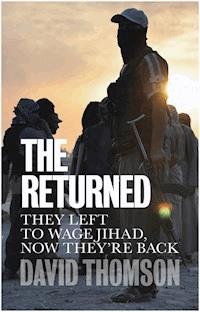
Since 2012, hundreds of men and women have left Western countries to join jihadist groups fighting in Syria. Many are still there, many have been killed, but some have chosen to return to their countries of origin. French Journalist David Thomson met some of those who came back. Bilel, Yassin, Zoubeir, Lena, each has a different profile and story. Some have returned disgusted by the violence of the Syrian battlefields, or the terrorist attacks that have struck across Europe; they try to become forgotten, living under extreme surveillance. Others return seriously wounded or psychologically destroyed. Others still are in jail, a breeding ground for broader radicalization. And some have come back to continue to carry out jihad in Europe. In utmost secrecy, David Thomson gathered their testimonies and recounts them in this remarkable and revealing book. With ISIS losing ground on all fronts, the steady flow of jihadists returning to Europe represents one of the greatest challenges facing countries across the continent. This nuanced analysis of the social, religious, political, familial and psychological factors that push people to violent extremism is more necessary now than ever. It will be essential reading for all those seeking to understand how we might address this threat.
Sie lesen das E-Book in den Legimi-Apps auf:
Seitenzahl: 409
Veröffentlichungsjahr: 2018
Ähnliche




















Contents
Cover
Copyright
The Protagonists
Introduction
Part One. Bilel
Leaving the Islamic State
The arrival in Syria
‘I had no long-term plans in France’
Al Qaeda in open war with the Islamic State
Joining the Islamic State
‘The war zone around Latakia was like the Wild West’
‘It was Ramadan, the atmosphere was convivial’
Abu Maryam is still alive, according to friends and relatives
Daily life in the Islamic State
Inside the Islamic State, Bilel says he drove a minibus
‘Sharia isn’t just cutting off a hand or cutting off a head’
The proclamation of the caliphate: a publicity coup for the IS
The rupture after the Paris attacks
The Islamic State offers $1,500 for every new marriage
‘I came for life and I find a reign of death’
Notes
Part Two. Yassin
A bullet in his stomach
‘No, why would it be forbidden?’
The Stalingrad of the Islamic State
Some fighters were ecstatic – others were terrified
$20 bonus for his wounds
‘Anything to bring him back’
‘Anything to bring him back’
‘I said to myself: “The only solution is to pretend.”’
The leap into the unknown
‘Salam alaykum, my son is in Mayadin’
‘They were bearded men, and they spoke Arabic well. But I don’t speak Arabic at all’
‘The worst enemies of women were the other women’
‘He weighed less than 40 kilos’
‘Over there, it’s not like here: there’s nothing’
The French doctors in Raqqa
The IS busses in surgeons from Damascus
‘Abu Claus’ – a kind of IS Santa
‘We had France 2, we would watch Nagui’
Running backwards
The guards paid less attention during the prayers
‘We couldn’t go back to Raqqa. Faysal and Yassin would have been put in prison, perhaps even killed. The girls and I would have been married off’
‘Now you’re going to tell us what really happened’
‘There’s a difference between being at home eating crisps in front of your computer and being over there in a trench’
Electronic bracelet on his ankle, confiscated identity papers
‘Just sit there and wait for someone to bring him back to me? No.’
Notes
Part Three. Zubeir
Zubeir, 20 years old, the repentant jihadist
Not too long ago and these ‘weak signals’ would surely have passed by unnoticed
‘I don’t agree with those people any more’
Zubeir describes a ‘gangster culture’ among the French jihadists
‘Stop Jihadism’, a drop in the bucket compared to the IS’s strike force
Being a jihadist means feeling important
As a teenager, he was a pretty good student
‘We are driven to consume and consume . . . But . . . there’s much more to life’
The tipping point
After the virtual exchanges, the first meetings
‘It felt like being in a Muslim country’
Losing interest at school
‘I’ve always supported people and parties that were against the system, like the Front National or the far left’
Zubeir acquires a certain notoriety within the jihadosphere
‘I’d never been so handsome in my entire life’
Jihadist seeks YF for marriage
The attractiveness of the houris in paradise
A revelation during an unusual trick
‘LOL jihad’
The first French ‘star’ of jihad 2.0
Often at the bottom of the social ladder in France, they joined the group in power in Syria
Like being at summer camp
When the coalition goes to war
‘I found ISIS at Fleury-Mérogis’
General euphoria after the Charlie Hebdo attacks
‘Some even say they’ll carry out jihad all by themselves’
The Islamic State, prison ward
His cellmate steps into the public eye in Saint-Étienne-du-Rouvray
‘Many brothers would rather have Trévidic as a judge’
‘Even when they pray, they try to hide it’
‘Even those in for drugs or burglary would start shouting “Allah Akbar!”’
Prison, jihadist territory
Prison as a beneficial ordeal
‘Is it permitted to steal from the kuffars?’
We passed around a book by the No. 1 in Al Qaeda
The inmate who attacked guards in Osny
‘I’m afraid that people are afraid of me’
‘You’re never proud of doing something stupid’
Zubeir can’t leave Syria behind
Notes
Part Four. The Women
After jihad, a ‘quiet’ return to classes for Safya
Released after 96 hours of police custody
So far, the French authorities have been rather lenient
Impossible to escape from the Islamic State without a husband or guardian
‘Sharia is sharia, that’s all!’
‘I had everything I wanted in terms of clothes and perfumes, so it was perfect’
Safya is released
Lena, the women and the desire to kill
Jilbab, black gloves, make-up and a little Chanel bag
The main mission of the women
A waiting list for kamikazes
The women demand the right to carry out suicide attacks
An early version of the car bomb terrorist cell in Paris
‘I felt powerful. Better than everyone else’
Wearing a full veil as a ‘liberating’ experience
A ‘land of humiliation’
First comes the embracing of non-violent radicalism
‘So good, like a princess’
Express weddings and quick divorces
‘It was ridiculous when I think about it’
Safya’s tutor
‘A woman has three or four husbands over there on average’
In the marriage factory
Oum Adam’s whipping boy
Slaves captured in Iraq
Daily speed-dating
‘We’re fed up, they all want Kim Kardashian’
Notes
Part Five. Kevin and Quentin
The former choirboy from Brittany
Converted at the age of 14
Departure for Syria
A ‘big family’ man
‘The Khawarij sect’
Nice
Omsen, the contraction of ‘Omar Senegal’
The boss
Mourad Farès
And so on
In the lion’s den
Crossfire
Disputes
‘Their blood may be spilled’
Return to Nice
Notes
Part Six. Those Who Didn’t Return
Dope, rap, nashid and terrorism
An early death
‘They kill us, we kill them’
Reasons to attack France
A small-time drug dealer
‘What I called the truth’
‘But I hold no grudge against Jacquie or Michel’
From rap to nashids
Rachid Kassim
From the French army to the caliphate
‘The important thing is how you die’
Younes the deserter
Notes
Epilogue
End User License Agreement
Guide
Cover
Table of Contents
Begin Reading
Pages
iii
iv
vii
viii
ix
x
xi
1
2
3
4
5
6
7
8
9
11
12
13
14
15
16
17
18
19
20
21
22
23
24
25
26
27
28
29
30
31
32
33
35
37
38
39
40
41
42
43
44
45
46
47
48
49
50
51
52
53
54
55
56
57
58
59
60
61
62
63
64
65
66
67
68
69
71
72
73
74
75
76
77
78
79
80
81
82
83
84
85
86
87
88
89
90
91
92
93
94
95
96
97
98
99
100
101
102
103
104
105
106
107
108
109
110
111
112
113
114
115
116
117
118
119
120
121
122
123
124
125
126
127
129
131
132
133
134
135
136
137
138
139
140
141
142
143
144
145
146
147
148
149
150
151
152
153
154
155
156
157
158
159
160
161
162
163
164
165
166
167
168
169
170
171
172
173
174
175
176
177
178
179
181
183
184
185
186
187
188
189
190
191
192
193
194
195
196
197
198
199
200
201
202
203
204
205
206
207
209
211
212
213
214
215
216
217
218
219
220
221
222
223
224
225
226
227
228
229
230
231
232
233
234
235
236
237
238
239
240
241
242
243
244
245
246
The Returned
They left to wage jihad, now they’re back
David Thomson
Translated by Gregory Flanders
polity
First published in French as Les Revenants. Ils étaient partis faire le jihad, ils sont de retour en France, © Éditions du Seuil, 2016
This English edition © Polity Press, 2018
Polity Press65 Bridge StreetCambridge CB2 1UR, UK
Polity Press101 Station LandingSuite 300Medford, MA 02155, USA
All rights reserved. Except for the quotation of short passages for the purpose of criticism and review, no part of this publication may be reproduced, stored in a retrieval system or transmitted, in any form or by any means, electronic, mechanical, photocopying, recording or otherwise, without the prior permission of the publisher.
ISBN-13: 978-1-5095-2694-9
A catalogue record for this book is available from the British Library.
Library of Congress Cataloging-in-Publication Data
Names: Thomson, David (Journalist), author.Title: The returned : they left to wage jihad, now they’re back / David Thomson.Other titles: Revenants. EnglishDescription: Cambridge, UK ; Medford, MA : Polity Press, 2018. | Includes bibliographical references and index.Identifiers: LCCN 2017054308 (print) | LCCN 2018004836 (ebook) | ISBN 9781509526949 (Epub) | ISBN 9781509526901 | ISBN 9781509526901(hardback) | ISBN 9781509526918 (pbk.)Subjects: LCSH: Terrorists--France--Biography. |Terrorists--Recruiting--France. | Islamic fundamentalism--France. |Jihad--Political aspects--Syria.Classification: LCC HV6433.F7 (ebook) | LCC HV6433.F7 T4813 2018 (print) | DDC 956.9104/230928970944--dc23LC record available at https://lccn.loc.gov/2017054308
The publisher has used its best endeavours to ensure that the URLs for external websites referred to in this book are correct and active at the time of going to press. However, the publisher has no responsibility for the websites and can make no guarantee that a site will remain live or that the content is or will remain appropriate.
Every effort has been made to trace all copyright holders, but if any have been inadvertently overlooked, the publisher will be pleased to include any necessary credits in any subsequent reprint or edition.
For further information on Polity, visit our website:politybooks.com
The Protagonists
Abu Bakr al-BaghdadiCaliph of the Islamic StateIn his mid-forties, Abu Bakr al-Baghdadi, unknown to the general public before 2014, became the emir of the Islamic State in 2010 after the death of his predecessor, Abu Omar al-Baghdadi. Since the proclamation of the caliphate on 29 June 2014, he has adopted the Caliph name of ‘Ibrahim’. A former detainee in the American prisons in Iraq, he was, before the invasion of 2003, an imam in Fallujah. He holds a doctorate in Islamic Sciences from the University of Baghdad. He belongs to the tribe of the Bou Badri of Samara, which claims to descend from the Prophet.
Abu MaryamThe jihadist who joined the IS with BilelKevin (his real name) is a 25-year-old convert from the Mirail neighbourhood in Toulouse, known in France for being a drug addict, juvenile delinquent and burglar. In 2013, he went to Syria and joined Harakat Sham al-Islam, a combat unit made up of Moroccan jihadists, where he met Bilel. After integrating into the Islamic State, Abu Maryam became famous in his home country for burning his passport in a video in which he threatened the people of France while holding a sword and a Kalashnikov. He was killed in a suicide attack when he drove a truck loaded with explosives into an Iraqi army base.
Abu Mujahid20 years old, still in SyriaHis dream is to die under the Islamic State flag and fight against France in order to reach paradise. A soldier and imam for the IS in Mosul, his life before the jihad was anything but religious. Born in France to Maghrebian parents, he was a high school student, rapper and dope dealer in his neighbourhood in Seine-Saint-Denis, the French département that has sent the most jihadists to Syria. Within the IS, Abu Mujahid moved from rap lyrics to nashids, and now broadcasts videos on the internet to incite other young people to carry out attacks against civilians in France.
Bilel27 years old, returned from the Islamic StateAfter crossing the Syrian border, Bilel (his first name has been changed) became the first Frenchman to be prosecuted on Turkish soil for terrorism. Holding a high school diploma, Bilel lived on welfare and worked a series of temping jobs. He says that he embraced jihadist ideology after a brief spell with Quietist Salafism. He went to Syria in the spring of 2014. Bilel first took up with a combat unit close to Al Qaeda before joining the Islamic State, where, he said, he never took part in fighting. It was the attacks of 13 November in Paris, he says, that made him decide to return to France.
FaisalYassin’s fatherThis short-bearded, slender and discreet man in his fifties, the father of Yassin, is a private doctor and has lived in France for nearly thirty years. He was born in Algeria. He is a practising Muslim and French citizen, and is also the father of three daughters. Every summer he spends a relaxing holiday with his large family in hotels outside of France: Dubai, Turkey, etc. His children were born and raised in France in a relatively well-off environment, brought up according to a liberal Muslim tradition and encouraged to succeed in their studies.
Former French soldiers in the ISBorn in France, these former French soldiers are both under the age of 30 and have joined the Islamic State. The first admits to having enlisted in the French army before his conversion to Islam simply out of a desire to kill. The second finished school and then became a French paratrooper, taking part in several military operations outside of France. He joined the French armed forces in order to receive a solid military training and then join a jihadist group to fight for the enemy. Both put their French military expertise to use in the caliphate’s army.
Ibrahim BenchekrounFounder of the Harakat Sham al-Islam BrigadeHarakat Sham al-Islam is a jihadist brigade with close ties to Al Qaeda and made up mainly of Moroccan fighters. The group was founded in 2013 by former jihadists in Afghanistan, including Ibrahim Benchekroun. A former detainee in the US prisons in Bagram in Afghanistan, and then in Guantanamo, he was released in 2004 and then re-incarcerated in Morocco for terrorism. He then left for Syria in 2012, where he trained and led the Harakat Sham al-Islam group. Before his fortieth birthday, Benchekroun was said to have been killed in combat in Syria in 2014 during the Battle of Kassab against the Syrian regime in the coastal region of Latakia. The brigade, classified as a terrorist group by the United States, lost much of its influence after the death of its founding emir. It partially merged with other pro-Al Qaeda jihadi groups, while other members preferred to join its rival, the Islamic State.
Kevin21 years old, returned from the Islamic StateRaised a Catholic, this Breton converted to Islam at the age of 14, embraced jihadism at 17 and ended up a few years later in the IslamicState. His name was placed on the UN Security Council’s list of sought-after international terrorists. Kevin is far from being a high-ranking figure within the organization, but he drew attention to himself on the internet by recruiting several French women to join the IS, in order to marry them. After four years in Syria, worried about the organization’s military retreats, he now claims to have rejected its vision of Islam and has decided to return to France with his four wives and their six children.
Nabia22 years old, Bilel’s wifeNabia (her first name has been modified) is a young French woman of Algerian origin. She got to know Bilel through Facebook and left France to join the Islamic State in the company of her two daughters. Upon her arrival, she was sent to one of the women’s homes in Raqqa. Bilel and Nabia married in Raqqa and she gave birth to a boy. After leaving the IS, Nabia and her three children were expelled from Turkey to France.
NadiaYassin’s motherNadia, around 50, is the head of the family. She works as a private physician like her husband, and was also born in Algeria. She is a French citizen. This warm, energetic and determined woman is a practising Muslim, who does not wear the veil. Mother of four children, she says that she is ready to do anything to save her son Yassin and has no regrets about her decisions.
Quentin17 years old, in prison in FranceQuentin represents a French Riviera version of jihad recruitment. He might have remained just another lady’s man on the Promenade des Anglais had he not crossed paths with Omar Omsen. For several years, this former armed robber had taken up jihadist preaching in the working-class neighbourhood where Quentin grew up. At the age of 16, Quentin left behind his parents and his vocational diploma to join OmarOmsen in Syria with his older brother and a neighbourhood friend. Once in Syria, however, he discovered a reality that was far removed from what he was expecting, and returned to France seven months later, without his brother, with the intention of reintegrating himself into society. He wound up in prison instead.
Yassin23 years old, returned from the Islamic StateYassin – whose first name has been modified and whose place of residence in France has not been specified for security reasons – arrived in Syria in September 2014. He was wounded three weeks later. Now he has returned to France at the age of 23. Before leaving for Syria, Yassin, who had never had any problems with the law, graduated from high school with good notes.
Zubeir20 years old, returned from SyriaBorn in France, Zubeir grew up in a rather quiet public housing district in Seine-Saint-Denis. This discreet, solitary, intelligent and humorous child was brought up in a conservative Muslim family by parents from the Maghreb, both of whom work in France. When he left for Syria, Zubeir was a normal high school student, leading a somewhat monotonous life. A lover of manga, rap and video games, he never fell into crime. He admits, however, to having a penchant for political radicalism. Zubeir, who voluntarily returned to France, disgusted by the year he spent with Al Qaeda and the Islamic State in Iraq and the Levant (the current ISIL), now goes so far as to reject his religion completely, after spending one year in prison. Today, he is the first French returnee from Syria to agree to collaborate with the authorities and talk about his experience in order to fight against jihadist indoctrination.
Introduction
Covering the jihadist movement today is thrilling but exhausting work. Often thankless, it can be dangerous too. In practical terms, it means practising a ‘journalism of anxiety’, one that predicts and announces nothing but bad news. ‘David Thomson, or the kind of person you want to invite to parties, because he puts everybody in a good mood’, a colleague tweeted one day, in jest. I first encountered jihadist ideology by chance in Tunis in late 2011, when I spotted a roadside stand adorned with black flags. I stopped, talked. The uninhibited radicalism of this discourse after the revolution gave me pause. I was struck by its growing popularity with Tunisian youth, who were becoming increasingly violent. Since then, I’ve devoted a large part of my life to trying to understand this current of Islam – not entirely successfully.
This kind of journalism teaches you humility too. It’s a schizophrenic juggling act. I’ve discovered complexity where the explanation seemed obvious. I’ve often been forced to think against the grain of my own prejudices. To accept mystery beyond understanding. To keep the right distance, maintain a journalist’s neutrality. I’ve never been more than a mere observer. Even when conducting interviews with an old source who, at the same time, was holding hostage in Syria reporters I had worked with, before their execution. Of James Foley, my last memory is not of a man in an orange jumpsuit in an Islamic State execution video – rather, of a colleague I saw risk his life in Libya during the battle of Syrte to save a friend, under Kadhafist fire, whose body had just been torn to pieces by an RPG. My last memory of Steven Sotloof is that of a talented reporter who, during an evening vigil, generously helped me finish off a bottle of cognac after the fall of Tripoli. My last memory of Ghislaine Dupont, murdered together with Claude Verlon on another continent by AQIM [Al Qaeda in the Islamic Maghreb], is that of a courageous, demanding and passionate colleague, the terror of African despots, who edited my first articles at Radio France Internationale.
Covering contemporary jihadism also means talking with another source I’ve worked with for a long time, whose joking demeanour belies his role as an executioner inside the Islamic State – and the fact that he wouldn’t hesitate to threaten or even kill me if necessary. Five years of daily conversations, of impossible trust and relentless suspicion, between enemy camps. Where every interviewee, at any of our meetings, can decide to kill me. An immersion in death, with young men and women barely 20 years old, whose goal in life is to kill and be killed. It also means hearing regularly that a contact you’ve known for years has just been killed in combat, by a drone, or in a terrorist attack. Or finding out through a notification on my iPhone that another has just been arrested in a ‘sweeping anti-terrorism operation’.
These are some of the most difficult milieus to gain access to. That’s why journalists are almost always forced to work at one remove, via secondary sources, through the police or judicial system: police custody reports, indictments, wiretaps, etc. Knowing that such an approach was indispensable yet biased, I decided from the outset not to use that kind of information, but to work only with primary sources, i.e. the jihadists themselves.
Almost all of the sources here have been anonymized so as to let them speak freely. The only material I’ve used is from my own articles and from interviews I’ve been conducting since 2011 with around 100 different jihadists – first with Tunisians, then with French, Belgian and even Swiss nationals. I’ve kept track of most of these jihadists for five years – some right up to their deaths. This has meant having to convince people who hate you three times over (as a French citizen, a Christian and a journalist) to spend a lot of time with you. This was made possible by my work as a regional correspondent in Tunis for Radio France Internationale for three years following the revolution.
It was in Tunis, in 2012, that I first established relations with jihadists. At that time, I knew nothing of their mental universe. I was filming a Salafist party meeting where sharia and Islamic jurisprudence on women’s rights were being discussed. At the end of the meeting, two young men with long beards and shaved moustaches approached me. One of them stood in front of me and waved a finger to say ‘No’. I thought he wanted to forbid me from filming. But it was something else. ‘These people aren’t real Salafis’, he said to me in French; ‘We are the real Salafis. We are jihadist Salafis.’ I didn’t know it then, but these two young men, both under 30, were already very influential within the Tunisian jihadist movement.
Before the revolution, they had been imprisoned for their relations with a group linked to the Algerian GSPC [Al Qaeda in the Islamic Maghreb], who had attacked the Tunisian army under Ben Ali near the village of Soliman. After the revolution, they were granted amnesty. One currently holds an important position within the Islamic State. They agreed to let me follow them for several months, but only on the condition that I wouldn’t record, film or write anything down. Over the course of several months, they introduced me to the recently formed jihadist movement Ansar al-Sharia, which was taking advantage of the post-revolutionary instability to quickly become a mass movement preaching jihadism.
I followed them when they brought money to the families of the first ‘martyrs’ killed in Syria. And when they stepped in for the failing government, providing milk packs, blankets, copies of the Koran and niqabs to people left to fend for themselves in the mountains near the Algerian border. I followed them as their officers, some of whom would become muftis in the Islamic State, tirelessly preached jihad, every day, in the suburbs of Tunis. And again, when they attacked the American embassy in Tunis. And when, after fighting with the state security forces, they buried their first dead.
It was because of this same movement that Tunisia was affected by the jihadist phenomenon more than any other country in the world. Almost 6,000 young Tunisians have left to take part in jihad since 2012, out of a population of 11 million. The same Tunisian youths who, throughout 2011, had tried to reach Europe illegally via Lampedusa, now began to flock to Syria the following year. Disappointed by the revolution, their hopes switched from the ideal of a land of plenty to that of a heavenly paradise. From economic to jihadist emigration.
I produced my first report on Tunisians leaving to fight in Syria in the spring of 2011. It featured a charismatic young man with a long beard and piercing green eyes. His name was still unfamiliar to me, but he quickly became an important figure in international jihad. The following year he was part of the commando team that assassinated the Tunisian opposition leader Chokri Belaid and the politician from Sidi Bouzid, Mohamed Brahmi.
His brother had been in Iraq since 2003 and was already an important member of the jihadist movement. After a brief spell in prison for participating in the attack on the US consulate in Benghazi in Libya, he joined his brother in 2014, and became the emir of the borders of the Islamic State. The United States put a $3 million reward on the head of his brother, who was the emir of suicide operations. Both ended up being ‘droned’.
In Tunisia, after a few months, the emir of Ansar al-Sharia, Abu Ayadh, agreed to let me film his supporters. He was a veteran of the jihadi movement in Afghanistan, and formerly one of Bin Laden’s lieutenants in Europe. He had been the leader of the Tunisian Combat Group (TCG) under Al Qaeda, responsible for the assassination of Ahmad Massoud on 9 September 2001. He too had been granted amnesty after the Tunisian revolution. I followed Ansar al-Sharia for a year making a documentary about the group, which was later broadcast on the French–German cultural television channel, Arte.
At that time, I was publishing my work every day on social networks, especially on Twitter. From France and Belgium, jihadists following the turmoil in Tunisia would subscribe to my feed to stay informed. That’s how we began to communicate, freely. Some of them came to Tunisia to attend classes in the mosques of Ansar al-Sharia, before leaving for Libya, then on to Syria. This was the context in which our meetings took place. Among these French citizens, some went on to have significant ‘careers’ in the Islamic State. This allowed me to make my first contacts with dozens of jihadists from France, and with a few from Belgium. These relations were forged before their departures for Syria, and maintained during their stay – in some cases right up to their deaths or their return to France.
The jihadists try to give the impression that they represent a nebulous and sprawling organization. But it is actually a small world, where almost everyone knows everyone else and everything gets done on the basis of personal recommendation. One contact leads to the next. My first book came out in March 2014 and contained interviews I had conducted for over a year with twenty of these jihadists, all of whom were by that stage totally dedicated to their project. This second book, stemming from my work with the news website Les Jours, is the result of two years of interviews conducted with jihadists between 2014 and 2016, at their homes in France, in prison, in Syria and in Iraq by telephone, and with twenty or so others who came back disappointed, without necessarily having repented of jihad. A few are now free; many are in prison. Most are men, but there are a few women too.
This book tells their story, and tries to deconstruct the social, religious, political, familial and psychological mechanisms that pushed them over the edge. It also portrays their disappointments and the threat they continue to represent in France – an unprecedented threat that the state authorities, literally overwhelmed by the flood, have yet to learn how to manage.
Reporting on this reality, I have seen people come back to France to commit the most murderous attacks in its history, people I have known and kept track of for years. That simple fact continues to amaze me, even in people who had spoken and written openly about their intentions to commit acts of terrorism, often for a long time. Has the scale of this phenomenon been taken seriously enough, and understood in time? Certainly not. Covering the jihadi movement among the ‘Syria generation’ since its inception in 2011 has meant confronting, in television studios, a protean and cosmopolitan form of denial, tinged with ignorance and vanity. The denial expressed by those you could call the ‘jihad sceptics’.
In April 2014, the proponents of this ‘jihad scepticism’ hauled me over the coals on a public channel’s late-night TV show, as I tried in vain to explain that many French jihadists had left for Syria with the intention, right from the start, of committing terrorist attacks. A month after the publication of my first book, certain members of a French-speaking jihadist unit based in Aleppo told me anonymously that, as early as 2013, they had planned to return to France to kill as many civilians as possible. And, indeed, these were the very same people who, two years later, constituted the terrorist cell responsible for the attacks of 13 November 2015 on the Bataclan in Paris.
But evoking such a possibility was still taboo. For doing so on that TV programme in April 2014, I was called every name in the book. Having made a distinction between jihadist groups, I began to explain that, as regards the French citizens who formed part of a group as yet unknown to the general public (the ISIL, the Islamic State in Iraq and the Levant, now IS), the logic was clear: ‘When you ask them about terrorist acts on French soil’, I said, ‘they’ll all tell you that it’s legitimate, they have to do it . . .’ At that point, I was interrupted by a sociologist. ‘Not at all!’ he cried. He mentioned one of his colleagues ‘who has been working on these subjects for fifteen years and has never encountered this phenomenon’. ‘Wait, let David Thomson finish’, said the presenter, with the satisfied smile of someone looking at an oddball whose amusing eccentricities are helping to bring the panel’s discussion to life. I tried to continue: ‘In their minds, attacking France would be a legitimate act, because its army is present . . .’ This was followed by another unanimous interruption. The panel was in an uproar. Without a doubt in his mind, the academic refuted what I’d just said: ‘I’ve never heard the like! Why would they travel so far, if their enemy is already right here? That’s what I’d like to know!’ He accused me of playing into the hands of the extremists: ‘You’re painting the same picture that lets some people in France think of this war as a potential terrorist threat to European territory, which gives European populists exactly what they want.’ A picture? No. Rather, factual analysis based on two years of work in the field with Tunisian and French jihadists.
It was a lonely moment for me, on live television. And it wasn’t over. A female sociologist who, a year later, would become the ‘Pasionaria of deradicalization’ in France, agreed: ‘Their fantasy is to die over there, not to come back here!’ Another sociologist then jumped in to warn against the risk of stigmatizing Muslims. ‘It’s a dangerous path to go down! Won’t it allow policies to be put into place that will target the Muslim population even further?’ And then came the final blow, by a famous lawyer. ‘What does Marc Trévidic say about this?’, the camera-friendly lawyer said; ‘He doesn’t agree with what you’re saying at all. I think he knows a bit more about this subject than you. Just because you’ve done some reporting and met a few dozen jihadists doesn’t make you the expert on the issue. I think a bit more humility is in order.’
Very well. Two years later, after almost 240 deaths and three times as many wounded, not counting French victims abroad, terrorism is now part of French daily life. It’s on everyone’s minds, and will be for a long time to come.
This reminder of the tenor of the debates before the 2015 attacks gives an idea of the level of denial and ignorance on the topic at a time when the general public was just beginning to learn of its existence. It also explains why the public is still so misinformed about jihadism. And politicians as well. Because, even if no one on that night’s TV panel had done any empirical work on the subject, every one of them drew on their academic or media credentials to legitimize what they were saying. It is this same alleged legitimacy that they use to market themselves to private and public institutions, parliamentary committees and ministerial offices. This posturing in turn misleads public debate and understanding, and for that reason has significant political consequences.
I am sometimes blamed for humanizing the jihadists. I fully accept this charge. Because the majority weren’t born jihadists. It’s something they became, often as teenagers. But even this reality is changing. Today, more than 400 French children live in Syria, being conditioned and socialized within the jihadi movement. A third of them were born there. Around 1,100 French citizens have left for Syria since 2012, often in a family group. The number of departures dropped for the first time in the summer of 2016, but almost 700 are still there, half of them women. One fifth have been killed. Another fifth have preferred to come back.
On the site Les Jours, we refer to them as the ‘returned’, and they’ve given this book its title. Not only because that’s what they sometimes call themselves, but also because they seem to be returning from ‘the beyond’. Recording their words allows me not to justify them, but rather to try to explain, understand and dissect these individual stories of French life that have driven their country into a new era of terrorism.
PART ONEBILEL
Leaving the Islamic State
This phone call between a French citizen and a government official might sound like any other. The man asks for some information and the official responds to his questions. Except for one small detail: this particular telephone conversation took place between a member of the jihadist Islamic State (IS) in Syria and an official in the French consulate in Istanbul, Turkey. After more than a year inside this jihadist group, Bilel,1 27, decided to return to France with his 22-year-old wife and their three children: two girls and a 3-week-old baby.
Before crossing the Turkish border, as dozens of French nationals had done before him, he chose to hand himself over to the French authorities. He therefore contacted the French embassy, hoping to prepare his return and to convince them that he wasn’t coming back to France to carry out a terrorist attack. Bilel is currently in prison in Turkey, the first French citizen to be prosecuted on Turkish soil for acts of terrorism. As expected, his wife and three children were deported to France, after spending three weeks in a Turkish detention centre.
Of course, Bilel has his own version of what happened over there. Despite having spent a long period with several groups in Syria classified as terrorist organizations, he swore that he never took part in combat and decided to return to France one week after the killings in Paris on 13 November, because he did not agree with these attacks by the Islamic State. That was also why he recorded the calls he made from Syria with the French consulate in Turkey, before transmitting them to Les Jours. There is no trace of animosity in this phone conversation between these two men, though they are in opposing camps in a state of war. The tone is courteous, even benevolent. Both act as if they’re trying to find an administrative solution to an unusual situation.
Bilel: Hello?
Consulate: Yes, hello.
Bilel: Good morning, sir. Mr V.?
Consulate: Yes. Mr Y.?
Bilel: My family contacted you about me . . .
Consulate: I can’t hear you very well. The sound keeps cutting out. Where are you now?
Bilel: Right now I’m in Syria.
Consulate: When do you plan on crossing?
Bilel: Well . . . As soon as I get the green light from your side.
Consulate: Okay, we’ll give you the green light, but in general terms. Because we can’t take responsibility if something happens to you on the Syrian side.
Bilel: No, the Syrian side is fine . . .
Consulate: But as soon as we get confirmation we’ll let you know – as soon as the Turks receive our notification about your arrival.
Bilel: No, there’s no risk there. To be honest, sir, what I’m more afraid of is the Turkish side. There’s no risk from the Syrian side.
Consulate: There’s nobody at the border outside the station?
Bilel: No, nobody.
Consulate: There’s no IS checkpoint?
Bilel: No. But I’m worried more about the Turkish side . . .
Consulate: No, no. I’ll call you back. I’ll tell you when the Turks have been notified. But you have to go during the day, okay? Not at night . . .
Bilel: Sure, I know what I have to do on my side . . . My plan is to go around 9 or 10 in the morning . . .
Consulate: That’s good, that’s good. Well, depending on the feedback I get, would tomorrow morning be possible for you?
Bilel: Yes, I can come as soon as possible, sir.
Consulate: All right . . . Well, listen, I’ll get back to you. Stay next to your telephone, I’ll call you back during the day.
Bilel: Okay.
Consulate: Okay, good, I’ll get back to you, then.
Bilel: Ah, one last question.
Consulate: Yes?
Bilel: I’d appreciate it if you could ask them what procedure I should follow, because I’ve got young children with me.
Consulate: I understand, yes.
Bilel: I’ll have bags of clothes with me, so I want to be sure they don’t think I’m carrying anything dangerous . . .
Consulate: The best thing would be to travel as lightly as possible.
Bilel: I have a three-week old baby . . .
Consulate: Yes, about the little one, do you have a birth certificate from the hospital?
Bilel: Yes, I was going to ask about that too. What should I bring along as proof?
Consulate: Well, a birth certificate would be good . . .
Bilel: In French, I suppose?
Consulate: Well, no, it’ll be in Arabic. But get it in Arabic and you can have it translated here . . .
Bilel: I think I can get it in French too.
Consulate: You think you can get it in French?
Bilel: Yes.
Consulate: All right, get one in Arabic and one in French in that case, that would be best. And your girls, they don’t have any papers, is that right?
Bilel: They’ve still got their identity cards.
Consulate: Ah, they’ve still got their identity cards? Ah, I didn’t know that. And their mother?
Bilel: She’s got hers too.
Consulate: Ah, she’s got hers too? Well, that’s good news. That’ll keep the paperwork down. So you only need a pass for the baby?
Bilel: Yes.
Consulate: Good, that’s good news. Try to get a birth certificate for the baby. Do you have any other questions?
Bilel: No, I’ve got it.
Consulate: OK. Good, well I’m going to check with the Turkish police to see where they’re at with things, and I’ll let you know if everything is in order.
Bilel: Okay, very good, thanks a lot.
Consulate: Goodbye.
Bilel: Goodbye.
A few hours later, Bilel called the consulate again.
Consulate: Hello?
Bilel: Yes, hello. Mr V.?
Consulate: Yes, Mr Y. OK, well I tried to get some news. I know that you tried to call your sister. Uh, anything new on your side?
Bilel: Uh . . . Well, I went to the hospital, I tried to get a certificate for my son, I didn’t manage to get one.
Consulate: Ah. OK. We’ll see what can be done. So, for the moment, the only information I have, well actually I have two pieces of information to give you. First of all, the Turkish authorities have acknowledged that they received your notification. Uh, one small and important detail, they’re saying: ‘We don’t know how he’s going to cross, the border is closed.’ So, I don’t know if you’ve checked out how to cross?
Bilel: Yeah, I’ve taken a look around the area, I’ve seen how it is. The Turks have put up a dividing wall on their side. A concrete wall, a big concrete wall. I thought I could walk to the end of it.
Consulate: Uh, listen . . . You see . . . In any case, well . . . Here’s their response. They’re sovereign in their country, so they have the right to oppose your entry. That said, I don’t think they will. Now, if you manage to get through, all the better, at least they’re in the know.
Bilel: But what if they shoot at me?
Consulate: No, I don’t think they’ll shoot at you. I don’t think so, but we obviously can’t give you a guarantee, we’re not them. But it seems pretty unlikely that they’ll shoot at you. Because they know you’re coming, they’ve responded to us, that’s a good sign. But obviously we can’t give you any guarantees.
Bilel: Can you tell me again what they told you?
Consulate: They said they’ve noted that you might be coming, but they don’t know how it’s possible, given that the border is closed at that particular spot.
Bilel: And mined, too . . .
Consulate: Ah, I didn’t know that.
Bilel: Yes, on the Syrian side, it’s mined.
Consulate: Okay. Well . . . Isn’t there another place to cross?
Bilel: Uh, it’s the shortest way, you see? Because afterwards, further on, there’s the risk that the organization might try to catch me.
Consulate: Why, are you currently on the run?
Bilel: Yes, I’ve been on the run for several months now.
Consulate: But they’re not necessarily on your heels right now, right?
Bilel: No, I’ve dropped off their radar.
Consulate: That’s good . . . Well, in any case, with what I’m telling you, do you think it will work for you? I’m thinking maybe not . . . Um . . . Now, I don’t know, do you still want to cross, possibly tomorrow morning, is that right?
Bilel: Yes, yes, of course. I want to get out of this organization’s territory.
Consulate: OK, so in principle they won’t shoot. Do you know how to say ‘France’ in Turkish?
Bilel: No.
Consulate: Well, they say ‘Fransa’.
Bilel: ‘Fransa’, got it.
Consulate: Ah, like in Arabic too. So just say that, if you encounter Turkish troops.
Bilel: Because they’re trigger-happy on the border, right?
Consulate: Yes, yes, I know. Now, they know there’s a chance that you’ll cross at that specific point. So they’re waiting for you.
Bilel: OK. They’ve got my description. They know I’m coming with my family, they know I’ve got three children?
Consulate: Yes, yes. They’ve got the names of everyone, the number of people coming.
Bilel: But has anything like this happened before? Have they ever faced a similar situation?
Consulate: Well, no, because there isn’t a border control post there. That’s what’s new about the situation. But being notified and then waiting for someone to arrive – they’ve already done that.
Bilel: And how did it go?
Consulate: Fine. Nothing bad. But that was at the border control posts. That’s the difference. That means they opened the door, because there was a door there already. In this case, there’s no door.
Bilel: Yes, it’s a spot I found a while ago. But I hadn’t been to the border since then, and when I went back I saw the trenches, the walls . . .
Consulate: Listen, try to walk along it, that might be the solution. So, if they ask, you might try tomorrow morning?
Bilel: Yes. Or tonight, if there’s a lot of bombing around me.
Consulate: It’s dark there already, isn’t it?
Bilel: Yeah, that’s the problem, we said during the day.
Consulate: In that case, the best would be stay out in the open as much as possible. But you yourself will see what’s best, obviously.
Bilel: And do you know what’s going to happen afterwards?
Consulate: Well, afterwards there’s the deportation procedure. That could take a long time, three weeks on average.
Bilel: Fine. OK. And, during those three weeks, I’ll be in prison?
Consulate: Incarcerated.
Bilel: Will I be with my family?
Consulate: I don’t know. No, generally men and women are separated.
Bilel: Okay, listen, I’m going to try tomorrow.
Consulate: OK, well, good luck. But if it goes well, or even if it goes poorly, uh . . . you’ll call me back?
Bilel: And what do I do if they shoot at me? How should I call you?
Consulate: No, obviously not in that case. If you manage to cross to the other side, ask if you can make a call and call us.
Bilel: Because that’s why I contacted you, to explain my approach, to rule out that possibility.
Consulate: Rule out what possibility?
Bilel: The possibility that they shoot at me.
Consulate: Yes, yes, we’re on the same page, that’s the idea. Now that they’ve been informed, that at least limits the risk.
Bilel: Fine.
Consulate: So, good luck.
Bilel: Thank you.
Consulate: And let us know.
Bilel: Okay. Well, listen, if all goes well and I manage to cross without too much trouble . . . But the problem is that nobody speaks French there, is that right?
Consulate: No, nobody speaks French there. You don’t speak Turkish, do you?
Bilel: Not at all, not a word.
Consulate: With a little luck, there may be some Arabic speakers.
Bilel: Okay. Well, listen, I’ll let you know right away, tomorrow at 10 o’clock on the dot, I’ll be there, Insha’Allah.
Consulate: OK, got it, good luck, sir.




