


4,99 €
Mehr erfahren.
- Herausgeber: Samuel Shepherd
- Kategorie: Religion und Spiritualität
- Sprache: Englisch
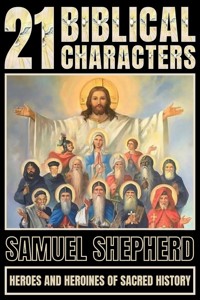
📖 **21 Biblical Characters: Heroes and Heroines of Sacred History** 📖
🌟 **Discover the Epic Stories of Faith and Courage** 🌟
Step into the timeless world of the Bible with **21 Biblical Characters: Heroes and Heroines of Sacred History**. This captivating book takes you on an extraordinary journey through the lives of some of the most remarkable figures in biblical history. From the faith of Abraham to the courage of Esther, these stories offer profound insights into the human experience and the divine plan for humanity.
🌿 **Why This Book?** 🌿
✨ **Inspiring Stories:** Dive deep into the lives of 21 biblical heroes and heroines whose faith and courage have shaped history. Their stories are not only captivating but also filled with powerful lessons that resonate with us today.
✨ **Rich Historical Context:** Each chapter provides a detailed backdrop, bringing the ancient world to life. Understand the cultural and historical settings that shaped these incredible figures and their monumental acts of faith.
✨ **Timeless Lessons:** Learn about unwavering faith, resilience in the face of adversity, and the transformative power of divine encounters. These timeless lessons will inspire and challenge you in your own spiritual journey.
✨ **Engaging and Accessible:** Written in a compelling and easy-to-read style, this book is perfect for both new readers of the Bible and those looking to deepen their understanding of these sacred texts.
🌟 **Meet the Heroes and Heroines** 🌟
👑 **Abraham:** The Father of Nations, whose faith laid the foundation for God's covenant with His people.
👩🦳 **Sarah:** The Matriarch of Faith, whose patience and trust in God's promise brought forth a legacy that shaped Israel's future.
🦸♂️ **Moses:** The Deliverer, who led the Israelites out of bondage with divine guidance.
🛡️ **Joshua:** The Conqueror, whose steadfast courage helped lead the Israelites into the Promised Land.
👸 **Esther:** The Courageous Queen, whose bravery saved her people from annihilation.
🔍 **Mary Magdalene:** The Redeemed Disciple, who witnessed the resurrection and became a pivotal figure in the early church.
💡 **Paul:** The Apostle to the Gentiles, whose transformative journey and missionary zeal spread Christianity far and wide.
✍️ **John:** The Beloved Disciple, whose visions on Patmos offer profound insights into the ultimate triumph of good over evil.
🌿 **And Many More!** 🌿
🔥 **What Readers Are Saying** 🔥
🌟 "A must-read for anyone looking to deepen their faith and understanding of the Bible. Each story is a treasure trove of wisdom and inspiration." - ⭐⭐⭐⭐⭐
🌟 "Beautifully written and deeply engaging. This book brings the ancient heroes and heroines to life in a way that is both relatable and inspiring." - ⭐⭐⭐⭐⭐
🌟 "An enlightening journey through the Bible. Perfect for personal study and group discussions." - ⭐⭐⭐⭐⭐
✨ **Get Your Copy Today!** ✨
Don't miss out on this incredible journey through sacred history. Whether you're a lifelong student of the Bible or new to these stories, **21 Biblical Characters: Heroes and Heroines of Sacred History** offers something for everyone. Let the lives of these remarkable figures inspire and guide you on your own path of faith.
📚 **Available Now in Hardcover, Paperback, and eBook** 📚
➡️ **Order your copy today and embark on a transformative journey through the timeless stories of the Bible!** ⬅️
Das E-Book können Sie in Legimi-Apps oder einer beliebigen App lesen, die das folgende Format unterstützen:
Veröffentlichungsjahr: 2024
Ähnliche















21
BIBLICAL CHARACTERS
HEROES AND HEROINES OF SACRED HISTORY
SAMUEL SHEPHERD
Copyright © 2024 by Samuel Shepherd
All rights reserved. No part of this book may be reproduced or transmitted in any form or by any means, electronic or mechanical, including photocopying, recording, or by any information storage and retrieval system, without permission in writing from the publisher.
Published by Samuel Shepherd
Library of Congress Cataloging-in-Publication Data
ISBN 978-1-83938-820-0
Cover design by Rizzo
Disclaimer
The contents of this book are based on extensive research and the best available historical sources. However, the author and publisher make no claims, promises, or guarantees about the accuracy, completeness, or adequacy of the information contained herein. The information in this book is provided on an "as is" basis, and the author and publisher disclaim any and all liability for any errors, omissions, or inaccuracies in the information or for any actions taken in reliance on such information.
The opinions and views expressed in this book are those of the author and do not necessarily reflect the official policy or position of any organization or individual mentioned in this book. Any reference to specific people, places, or events is intended only to provide historical context and is not intended to defame or malign any group, individual, or entity.
The information in this book is intended for educational and entertainment purposes only. It is not intended to be a substitute for professional advice or judgment. Readers are encouraged to conduct their own research and to seek professional advice where appropriate.
Every effort has been made to obtain necessary permissions and acknowledgments for all images and other copyrighted material used in this book. Any errors or omissions in this regard are unintentional, and the author and publisher will correct them in future editions.
TABLE OF CONTENTS – 21 BIBLICAL CHARACTERS
Introduction
Chapter 1: Adam: The First Man
Chapter 2: Noah: The Faithful Builder
Chapter 3: Abraham: The Father of Nations
Chapter 4: Sarah: The Matriarch of Faith
Chapter 5: Moses: The Deliverer
Chapter 6: Joshua: The Conqueror
Chapter 7: Ruth: The Loyal Daughter-in-Law
Chapter 8: David: The Shepherd King
Chapter 9: Solomon: The Wise Ruler
Chapter 10: Elijah: The Prophet of Fire
Chapter 11: Esther: The Courageous Queen
Chapter 12: Job: The Suffering Servant
Chapter 13: Daniel: The Faithful Exile
Chapter 14: Mary: The Mother of Jesus
Chapter 15: John the Baptist: The Forerunner
Chapter 16: Peter: The Rock of the Church
Chapter 17: Paul: The Apostle to the Gentiles
Chapter 18: Mary Magdalene: The Redeemed Disciple
Chapter 19: Thomas: The Doubting Disciple
Chapter 20: Stephen: The First Martyr
Chapter 21: John: The Beloved Disciple
Conclusion
Introduction
The Bible is a rich tapestry of narratives that span centuries, cultures, and continents, offering profound insights into the human condition and the divine plan for humanity. At its heart are the stories of individuals whose lives have been touched and transformed by their encounters with God. These heroes and heroines of sacred history, though separated by time and place, share a common thread of faith, courage, and a deep commitment to their calling.
"21 Biblical Characters: Heroes and Heroines of Sacred History" is a journey through the lives of some of the most remarkable figures in the Bible. This book seeks to explore the complexities, triumphs, and trials of these individuals, providing a deeper understanding of their significance and the lessons they impart to us today. From patriarchs and prophets to kings and queens, from disciples and martyrs to those redeemed and transformed, each character offers a unique perspective on the nature of faith and the enduring power of God's love and grace.
The stories included in this book cover a broad spectrum of human experience and divine interaction. We begin with Abraham, the father of nations, whose unwavering faith set the foundation for the covenant relationship between God and His people. We journey through the life of Sarah, whose patience and trust in God's promise brought forth a legacy that would shape the future of Israel. We delve into the leadership and resilience of Moses, who led the Israelites out of bondage, and the steadfast courage of Joshua, who led them into the Promised Land.
We explore the loyalty and love exemplified by Ruth, and the complexities of leadership and repentance seen in David, the shepherd king. We witness the wisdom and ultimate downfall of Solomon, and the fiery zeal of Elijah, the prophet of fire. The bravery of Esther, the profound suffering and faith of Job, and the unwavering devotion of Daniel in exile highlight the multifaceted nature of faithfulness in the face of adversity.
The New Testament characters bring us closer to the heart of the Christian message. Mary, the mother of Jesus, and John the Baptist, the forerunner, prepare the way for the arrival of the Messiah. Peter, the rock of the church, and Paul, the apostle to the Gentiles, demonstrate the transformative power of Jesus' ministry and the expansive reach of the Gospel. Mary Magdalene, the redeemed disciple, and Thomas, the doubting disciple, offer powerful testimonies of forgiveness and revelation.
The ultimate sacrifice of Stephen, the first martyr, and the visionary experiences of John, the beloved disciple, encapsulate the enduring legacy of those who witnessed and proclaimed the resurrection of Christ. Each of these characters, in their unique ways, reflects the profound impact of divine encounter and the ways in which ordinary lives can be transformed into extraordinary testaments of faith.
In studying these 21 Biblical characters, we aim to draw out the timeless lessons embedded in their stories. Their lives provide us with models of faithfulness, perseverance, and devotion, encouraging us to reflect on our own spiritual journeys. Through their examples, we see the importance of trust in God's promises, the power of obedience, and the strength found in community and fellowship.
This book is not just a historical exploration but a spiritual journey that invites you to connect with the faith and experiences of these remarkable individuals. As we delve into their stories, may we be inspired to live with the same courage and dedication, allowing their legacies to guide us in our own walk with God. The heroes and heroines of sacred history remind us that, regardless of our circumstances, we too can be instruments of God's purpose, reflecting His love and grace in our lives.
Chapter 1: Adam: The First Man
Adam, the first man, holds a significant place in the annals of biblical history. His creation marks the beginning of humanity, and his subsequent fall signifies the introduction of sin into the world. According to the Genesis account, God formed Adam from the dust of the ground and breathed into his nostrils the breath of life, making him a living being. This act of creation was unique, setting Adam apart from the rest of creation. Unlike the animals, Adam was created in the image of God, endowed with the capacity for reason, moral decision-making, and a relationship with the Creator.
Placed in the Garden of Eden, Adam's initial existence was one of harmony and innocence. The garden itself was a paradise, a lush and verdant space filled with every kind of plant and tree, including the Tree of Life and the Tree of the Knowledge of Good and Evil. In this idyllic setting, Adam had a clear purpose: to tend and keep the garden. He was also given the authority to name all the animals, signifying his dominion over the natural world. This act of naming was not merely a task but a demonstration of his unique role and the intimate relationship between man and the rest of creation.
However, God noted that it was not good for Adam to be alone, leading to the creation of Eve from Adam's rib. This act established the first human relationship, underscoring the importance of companionship and partnership. Eve's creation from Adam's rib symbolized equality and unity, as she was not taken from his head to rule over him, nor from his feet to be trampled upon, but from his side to be his equal and closest companion. Together, Adam and Eve enjoyed the perfection of the Garden of Eden, living in direct communion with God and each other.
Despite this perfect beginning, a shadow loomed in the form of the Tree of the Knowledge of Good and Evil. God had commanded Adam not to eat from this tree, warning that doing so would result in death. This command was a test of obedience, highlighting the importance of free will and the ability to choose. Adam and Eve's existence in Eden was contingent upon their adherence to this divine command. The presence of the tree introduced a moral dimension to their lives, emphasizing the significance of obedience and trust in God's word.
The serpent, described as more cunning than any other beast, entered the scene, setting the stage for the fall. Engaging Eve in conversation, the serpent questioned God's command, sowing seeds of doubt and mistrust. He suggested that eating the fruit would not lead to death, but instead, open their eyes to be like God, knowing good and evil. This temptation appealed to Eve's desire for wisdom and autonomy. She saw that the tree was good for food, pleasant to the eyes, and desirable for gaining wisdom. Succumbing to the serpent's deception, she ate the fruit and gave some to Adam, who also ate.
With this act of disobedience, their eyes were indeed opened, but the immediate consequence was a devastating awareness of their nakedness and vulnerability. This newfound knowledge brought shame and fear, emotions they had never experienced before. They attempted to cover their nakedness with fig leaves, a feeble attempt to hide their guilt and shame. When God came to walk in the garden, they hid from Him, further illustrating the fractured relationship between humanity and the divine caused by sin.
God's inquiry into their actions led to a cascade of confessions and blame. Adam blamed Eve, and Eve blamed the serpent. This blame-shifting highlighted the erosion of trust and unity that sin had wrought. God's pronouncement of judgment was severe and far-reaching. The serpent was cursed to crawl on its belly and eat dust all its days. Enmity was established between the serpent and the woman, and between their respective offspring. For Eve, the consequence of her disobedience was increased pain in childbirth and a complex relationship with her husband, marked by a desire for him and his rule over her.
Adam's punishment struck at the heart of his identity and purpose. The ground itself was cursed because of him, bringing forth thorns and thistles. The labor that was once a joyful stewardship became toilsome and fraught with difficulty. The sentence of physical death was pronounced: from dust he came, and to dust he would return. This marked the entrance of mortality into human experience, a stark contrast to the immortality symbolized by the Tree of Life.
Expelled from Eden, Adam and Eve embarked on a new chapter of human history, one characterized by struggle, pain, and the enduring hope for redemption. The consequences of their actions were profound, affecting not only their lives but the entirety of creation. The fall introduced a state of brokenness and separation from God that would define human existence. Yet, within the narrative of judgment, there was a glimmer of hope. The promise of a future offspring who would crush the serpent's head hinted at the possibility of redemption and restoration.
Adam's story, from his creation to his fall, is a foundational narrative that explains the human condition. It encapsulates themes of free will, temptation, disobedience, and the resulting consequences. Adam's life serves as a paradigm for understanding the inherent struggle between human frailty and the divine call to obedience and righteousness. His creation reflects humanity's intended glory and purpose, while his fall underscores the pervasive impact of sin and the need for divine intervention.
Adam, the first man, stands at the beginning of humanity's complex and multifaceted legacy. As the progenitor of the human race, his story is not just one of individual experience but the foundational narrative that shapes the understanding of human nature, sin, and redemption. The legacy of humanity, as rooted in Adam, intertwines with themes of identity, morality, and the perpetual struggle to align with divine purpose amidst inherent flaws.
In the biblical account, Adam's creation marks the inception of human existence. Formed from the dust of the ground and animated by the breath of God, Adam embodies the intrinsic connection between the physical and spiritual realms. This dual nature, flesh and spirit, underpins the human experience and the ongoing tension between earthly desires and higher callings. Adam's life in the Garden of Eden reflects an initial state of harmony and direct communion with God, an ideal that humanity continually strives to regain.
The act of naming the animals, assigned to Adam by God, symbolizes humanity's unique role within creation. This task goes beyond mere labeling; it represents authority, stewardship, and the capacity to discern and categorize the world. Through this act, Adam establishes a relationship with the created order, one that is meant to be marked by care, responsibility, and understanding. This aspect of Adam's legacy highlights the human vocation to engage with and protect the natural world, a charge that has both ecological and ethical dimensions.
However, the narrative of Adam also introduces the concept of free will and the moral consequences of choice. The presence of the Tree of the Knowledge of Good and Evil in the garden sets the stage for a pivotal decision. God's command to abstain from eating its fruit serves as a test of obedience and trust. Adam and Eve's choice to eat the forbidden fruit, influenced by the serpent's deceit, results in the fall, a foundational event that explains the origin of sin and its pervasive impact on humanity.
The fall of Adam brings profound changes to human existence. The immediate awareness of nakedness and subsequent feelings of shame and fear mark the loss of innocence. This newfound vulnerability signifies a deeper spiritual and relational rupture. Adam's attempt to hide from God reflects the alienation that sin introduces between humanity and the divine. This separation is a core element of the human legacy, manifesting in the persistent struggle to reconcile with God and restore broken relationships.
The consequences of Adam's disobedience extend beyond personal guilt, affecting the entire created order. The curse pronounced by God alters the nature of human labor and the environment itself. The ground, once yielding effortlessly to Adam's care, now produces thorns and thistles, symbolizing the hardships and frustrations inherent in human endeavor. This shift underscores a legacy of toil and struggle, a reality that defines much of human experience. Yet, within this pronouncement lies a deeper truth about resilience and the enduring human spirit to overcome adversity.
Adam's legacy is also familial and generational. As the father of Cain and Abel, his story continues through his descendants. The conflict between his sons, resulting in Abel's murder by Cain, introduces themes of jealousy, violence, and the complexities of sibling relationships. This tragic episode reflects the broader human condition, where familial bonds can be sources of both profound love and intense conflict. Adam's lineage, recorded in the genealogies of the Bible, traces the spread of humanity and the perpetuation of both virtue and vice.
The theological significance of Adam's legacy is profound. In Christian doctrine, Adam is often contrasted with Jesus Christ, referred to as the "second Adam." While Adam's disobedience brought sin and death into the world, Christ's obedience and sacrificial death offer redemption and eternal life. This parallel underscores the concept of original sin and the need for divine intervention to restore humanity to its intended state. Adam's story thus serves as a backdrop for the broader narrative of salvation history, illustrating the depth of human brokenness and the magnitude of God's redemptive plan.
In addition to theological implications, Adam's legacy influences cultural and philosophical understandings of human nature. The concept of original sin, rooted in Adam's fall, has shaped Western thought on morality, ethics, and the human condition. It offers an explanation for the pervasive presence of evil and suffering, emphasizing the inherent flaws and limitations of human nature. This perspective fosters a sense of humility and dependence on divine grace, acknowledging that human efforts alone cannot achieve perfection.
The enduring relevance of Adam's story is evident in its reflection on identity and purpose. As the first human, Adam represents the prototype of humanity, embodying both its potential and its pitfalls. His life prompts fundamental questions about what it means to be human, the nature of existence, and the pursuit of meaning and fulfillment. The tension between the ideal state of Eden and the reality of a fallen world resonates with the human aspiration for a return to paradise, a longing for wholeness and harmony.
Moreover, Adam's legacy is a reminder of the interconnectedness of all people. As descendants of the first man, humanity shares a common origin and a collective destiny. This shared heritage fosters a sense of unity and mutual responsibility. The story of Adam invites reflection on the impact of individual actions on the broader community and the environment, encouraging a mindful and ethical approach to life.
Adam's narrative also underscores the importance of hope and redemption. Despite the profound consequences of the fall, the promise of a future redeemer embedded in the Genesis account points to a brighter future. This hope is a central theme in the human legacy, inspiring perseverance and faith amidst trials. The anticipation of restoration and renewal is a powerful motivator, driving efforts to create a more just, compassionate, and harmonious world.
In summary, the legacy of humanity as rooted in Adam is rich and multifaceted, encompassing theological, cultural, and philosophical dimensions. Adam's creation, fall, and the resulting consequences provide a foundational narrative that continues to shape understanding of human nature, morality, and the pursuit of redemption. His story is a mirror reflecting the complexities of the human condition, the enduring struggle between sin and virtue, and the profound hope for a restored relationship with the divine.
Chapter 2: Noah: The Faithful Builder
Noah, known as the faithful builder, is a pivotal figure in biblical history, particularly renowned for his role in the story of the Ark and the Flood. This narrative, found in the Book of Genesis, underscores themes of divine judgment, human obedience, and the promise of renewal. Noah's unwavering faith and meticulous adherence to God's commands are central to his legacy and serve as a testament to the power of steadfast belief amidst widespread corruption and impending destruction.
The world in Noah's time was steeped in moral decay. The biblical account describes humanity as being deeply corrupt, with every inclination of the thoughts of the human heart being only evil all the time. This pervasive wickedness grieved God, prompting Him to decide to cleanse the earth with a catastrophic flood. However, amidst this rampant immorality, Noah stood out as a righteous man, blameless among the people of his time. He walked faithfully with God, and it was this righteousness that led God to choose him as the instrument of humanity's survival.
God's instructions to Noah were precise and detailed. He was to build an ark, a massive vessel constructed from gopher wood, with exact dimensions and specifications provided by God. The ark was to be 300 cubits long, 50 cubits wide, and 30 cubits high, with a roof, a door on the side, and three decks. This colossal task required immense faith, patience, and diligence. Noah's obedience to God's command, despite the likely skepticism and ridicule from those around him, underscores his deep trust in God's plan.
As Noah set about building the ark, he was also tasked with gathering pairs of every living creature, male and female, to preserve their species during the impending deluge. Additionally, he was to take with him his wife, his sons, and their wives, ensuring the continuation of human life. The logistical challenges of constructing such a large vessel and assembling a multitude of animals must have been staggering. Yet, Noah's steadfastness in fulfilling God's directives without wavering is a profound example of faith in action.
The narrative of the ark's construction is also a story of divine provision and human cooperation. God provided the plans and the resources, while Noah and his family provided the labor and commitment. This cooperation between the divine and the human highlights the symbiotic relationship necessary for achieving God's purposes on earth. The ark itself, a symbol of salvation and refuge, represents the tangible result of this collaboration.
When the time came, God commanded Noah to enter the ark with his family and the gathered animals. The onset of the flood was marked by the opening of the fountains of the great deep and the windows of heaven, resulting in a torrential downpour that lasted for forty days and forty nights. The waters rose, covering even the highest mountains, and every living thing that was not aboard the ark perished. This overwhelming destruction served as a powerful reminder of the consequences of human sin and the seriousness of divine judgment.




