


4,99 €
Mehr erfahren.
- Herausgeber: Samuel Shepherd
- Kategorie: Religion und Spiritualität
- Sprache: Englisch
📖
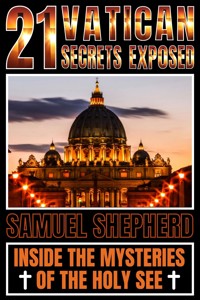
21 Vatican Secrets Exposed: Inside The Mysteries Of The Holy See
📖
Are you fascinated by the hidden stories and secrets of one of the most mysterious institutions in the world? 🌍 Dive deep into the enigma of the Vatican with our riveting book:
21 Vatican Secrets Exposed: Inside The Mysteries Of The Holy See. This book will take you on an unforgettable journey through the sacred halls and hidden chambers of the Vatican, revealing secrets that have been guarded for centuries.
✨ What You'll Discover ✨
🔍 Sacred Relics and Artifacts: Explore the awe-inspiring relics and artifacts, each with a miraculous history that has captivated believers for centuries.
📜 Hidden Manuscripts: Unearth secret manuscripts that contain ancient wisdom, prophecies, and forgotten languages, shedding light on the intricate history of the Holy See.
⚖
️ Legal Systems and Papal Justice: Understand the unique legal framework that governs the Vatican, where religious doctrines and civil law intertwine to maintain order and justice.
🕵️♂️ Prophecies and Predictions: Delve into the world of prophecies and predictions, including the mysterious works of Nostradamus and their influence on papal decisions.
🔥 Trials and Controversies: Examine the notable trials and controversies that have tested the Church's leadership and doctrinal integrity through the ages.
🌟 Why This Book is a Must-Have 🌟
Exclusive Insights: Gain access to meticulously researched secrets that provide a deeper understanding of the Vatican.
Engaging and Informative: Written in a captivating narrative style, this book is perfect for history buffs, religious scholars, and curious minds alike.
Beautifully Illustrated: Rich illustrations and detailed descriptions bring the Vatican’s secrets to life.
A Unique Gift: This book makes an exceptional gift for anyone fascinated by history, religion, or the Vatican's allure.
🌍 Embark on Your Journey 🌍
Don’t miss your chance to explore the mysteries and secrets of the Holy See with
21 Vatican Secrets Exposed: Inside The Mysteries Of The Holy See. This book offers a rare glimpse into the hidden world of the Vatican, revealing the stories and secrets that have shaped its history.
Order your copy today and embark on an enlightening journey through time and faith. 📚✨
👉
Order Now
Discover. Unveil. Believe. 🌟
Das E-Book können Sie in Legimi-Apps oder einer beliebigen App lesen, die das folgende Format unterstützen:
Veröffentlichungsjahr: 2024
Ähnliche













21
VATICAN SECRETS EXPOSED
INSIDE THE MYSTERIES OF THE HOLY SEE
SAMUEL SHEPHERD
Copyright © 2024 by Samuel Shepherd
All rights reserved. No part of this book may be reproduced or transmitted in any form or by any means, electronic or mechanical, including photocopying, recording, or by any information storage and retrieval system, without permission in writing from the publisher.
Published by Samuel Shepherd
Library of Congress Cataloging-in-Publication Data
ISBN 978-1-83938-811-8
Cover design by Rizzo
Disclaimer
The contents of this book are based on extensive research and the best available historical sources. However, the author and publisher make no claims, promises, or guarantees about the accuracy, completeness, or adequacy of the information contained herein. The information in this book is provided on an "as is" basis, and the author and publisher disclaim any and all liability for any errors, omissions, or inaccuracies in the information or for any actions taken in reliance on such information.
The opinions and views expressed in this book are those of the author and do not necessarily reflect the official policy or position of any organization or individual mentioned in this book. Any reference to specific people, places, or events is intended only to provide historical context and is not intended to defame or malign any group, individual, or entity.
The information in this book is intended for educational and entertainment purposes only. It is not intended to be a substitute for professional advice or judgment. Readers are encouraged to conduct their own research and to seek professional advice where appropriate.
Every effort has been made to obtain necessary permissions and acknowledgments for all images and other copyrighted material used in this book. Any errors or omissions in this regard are unintentional, and the author and publisher will correct them in future editions.
TABLE OF CONTENTS – 21 VATICAN SECRETS EXPOSED
Introduction
Chapter 1: The Hidden Vaults of History
Chapter 2: The Pope's Private Paradise
Chapter 3: Mysteries of the Sistine Chapel
Chapter 4: Beneath St. Peter’s: The Vatican Necropolis
Chapter 5: Stars and Faith: The Vatican Observatory
Chapter 6: The Passetto di Borgo: Escape Route of the Popes
Chapter 7: The Enigmatic Vatican Bank
Chapter 8: Guardians in Stripes: The Swiss Guard
Chapter 9: The Secret Bunker: Vatican’s Nuclear Fallout Shelter
Chapter 10: Art of the Unseen: Hidden Artworks
Chapter 11: The Last Judgment's Hidden Meanings
Chapter 12: The Pope’s Personal Pharmacist
Chapter 13: The Little-Known Vatican Radio Station
Chapter 14: The Altar of the Dead
Chapter 15: The Vatican's Mosaic Studio
Chapter 16: The Smallest Country’s Unique Economy
Chapter 17: The Secret Languages of the Vatican
Chapter 18: Unpublished Papal Documents
Chapter 19: The Trials of the Vatican Court
Chapter 20: The Lost Relics of the Vatican
Chapter 21: Prophecies and Predictions: The Role of Nostradamus
Conclusion
Introduction
Welcome to **21 Vatican Secrets Exposed: Inside The Mysteries Of The Holy See**, a captivating exploration of one of the most intriguing and secretive institutions in the world. For centuries, the Vatican has been shrouded in mystery, its walls guarding countless stories of faith, power, intrigue, and revelation. This book aims to peel back the layers of secrecy and provide a rare glimpse into the hidden facets of the Holy See.
The Vatican, with its rich history and profound influence, stands at the heart of the Roman Catholic Church. It is a place where ancient traditions intersect with modern-day governance, where spiritual guidance meets temporal power, and where every stone and manuscript tells a story of its own. From the awe-inspiring art and architecture of St. Peter's Basilica to the enigmatic manuscripts housed in the Vatican Secret Archives, the Vatican is a treasure trove of untold stories and undisclosed facts.
In this collection, you will journey through time, uncovering secrets that span from the early days of Christianity to contemporary times. Each chapter delves into different aspects of the Vatican's mysteries—sacred artifacts with miraculous histories, hidden manuscripts that foretell the future, and clandestine operations that have shaped global events. You will meet controversial figures and learn about the prophecies that have influenced papal decisions. You will explore the legal systems within this sovereign entity and discover the trials that have tested its leaders.
This book is not just an exposition of secrets; it is an invitation to understand the complexities and nuances of the Vatican. Whether you are a devout believer, a history enthusiast, or a curious mind, these pages offer insights that challenge perceptions and deepen your appreciation for the Vatican's role in world history.
As you embark on this journey, prepare to be fascinated, enlightened, and perhaps even surprised by the revelations that await you. The mysteries of the Vatican are vast and profound, and through this exploration, you will gain a unique perspective on the institution that has been at the center of faith and controversy for millennia.
Let the journey into the heart of one of the world's most enduring enigmas begin.
Chapter 1: The Hidden Vaults of History
The Vatican's Secret Archives, a treasure trove of historical significance, are densely packed with century-old letters and papal bulls that narrate the saga of the Catholic Church’s influence over the ages. These documents, some written on fragile parchment, others on more resilient materials, hold the decrees and correspondences of popes who shaped not only religious doctrine but also the geopolitical landscapes of their times. Each papal bull, with its distinctive lead seal, known as a ‘bulla’, served as a formal proclamation issued by the pope on matters of public importance or doctrinal statements. The contents of these documents varied widely, covering topics from the appointment of bishops and the establishment of monasteries to significant decrees like the excommunication of notable figures or the sanctioning of new religious orders.
The intricate calligraphy found on these documents reveals the meticulous care with which scribes approached their craft, a reflection of the seriousness with which the Church regarded these communications. As one delves into the texts, it becomes apparent how these letters served as vital tools for administering the vast territories under the Church's influence. They were the primary means through which the pope would communicate with distant bishops, kings, and even emperors, thereby extending the Vatican's reach across continents. Moreover, the letters often included detailed instructions on how to implement decrees, reflecting a complex bureaucracy that had a profound impact on medieval European politics.
Among these venerable texts, one can also find personal letters written by the popes themselves, offering a glimpse into the human aspects behind the papal office. These letters sometimes express concerns about specific regional conflicts or issues within the Church, showing the popes' hands-on approach in governance and their awareness of the Church's global standing. Such correspondence often reveals the strategic thinking behind decisions that would have lasting effects on Christian doctrine and its followers worldwide. For instance, letters discussing the Crusades or the handling of heresies uncover the intricate balance the Church sought to maintain between spiritual leadership and temporal power.
These documents are not merely historical artifacts but are active agents in the ongoing study of history, providing scholars with firsthand accounts of the Church’s decisions and their worldwide implications. The evolution of Church laws and doctrines can be traced through these papal bulls, each one adding a layer to the understanding of how modern Catholicism has been shaped. Researchers poring over these documents can see the evolution of Church positions on various issues, from usury and the legitimacy of certain political powers to the reconciliation of science and faith.
In exploring these century-old letters and papal bulls, one also encounters the lesser-known aspects of papal influence, such as the patronage of arts and sciences. The popes often wrote to commend or instruct artists, architects, and scholars, thereby fostering a culture that would lead to the Renaissance. These letters sometimes included detailed descriptions of artistic or architectural projects that the popes envisioned, highlighting their role in shaping European cultural heritage.
Furthermore, the study of these documents sheds light on the personal relationships and networks that the popes cultivated, which were crucial for maintaining papal authority during tumultuous periods. Through alliances forged by marriage, diplomacy, or spiritual kinship, the popes managed to navigate the complex political landscapes of their times. Letters to and from various political leaders reveal negotiations and alliances that underscore the Vatican’s role as a central power in world politics.
As historians and archivists continue to digitize and study these documents, new layers of understanding emerge about the medieval world. Each letter and bull is a piece of a larger mosaic that, when assembled, portrays the vast influence of the papacy. These documents not only offer insights into the administrative and doctrinal developments of the Church but also serve as a reflection of the societal values and legal principles of the time.
Preserving these documents is a monumental task, involving delicate restoration processes to prevent further deterioration. The Vatican’s commitment to preserving its archival heritage ensures that future generations will have access to these critical historical records. This ongoing preservation effort not only safeguards the physical documents but also ensures that the knowledge contained within them remains accessible to scholars and the public alike.
These century-old letters and papal bulls thus continue to inform and enlighten, bridging centuries of history and providing continuity between the past and the present. They stand as enduring testimonies to the pivotal role the Vatican played in shaping global history, offering endless material for scholars dedicated to unraveling the complexities of the past and its influence on the contemporary world.
The Fourth Crusade, initiated in 1202 under Pope Innocent III, is enveloped in mysteries and controversies, diverging significantly from its original intent to reclaim Jerusalem. Instead, it culminated in the unforeseen and unprecedented sack of Constantinople in 1204, a Christian city under Eastern Orthodox control. This diversion is often attributed to a series of complex political and economic factors that entwined the Crusaders with the Venetians, who were then led by the shrewd and ambitious Doge Enrico Dandolo. The secret machinations that led to this dramatic shift involve a web of deceit, financial desperation, and opportunistic alliances that rerouted the crusade’s purpose from holy war against the Muslims to a fratricidal conquest against fellow Christians.
The agreement between the Crusaders and Venice was pivotal; the Venetians, under Dandolo, agreed to transport the Crusaders to the Holy Land. However, the Crusaders failed to pay the full amount agreed upon for their transport, plunging them into debt. To settle this, Dandolo leveraged the situation to divert the crusade to Zara and later Constantinople, cities that posed economic and strategic benefits to Venice. This manipulation highlights the underlying economic motives dressed as religious fervor, revealing a layer of complexity in understanding the crusade’s objectives.
Further intrigue is added by the presence of Prince Alexios Angelos, son of the deposed Byzantine Emperor Isaac II, who promised the Crusaders wealth, military support, and the submission of the Eastern Orthodox Church to Rome in exchange for his restoration to the throne. This promise fueled the redirection of the crusade towards Constantinople, setting the stage for one of the most controversial episodes in Christian history. The interaction between Alexios Angelos and the Crusaders reflects a deep interplay of personal ambitions and the broader political dynamics of the era, demonstrating how individual aspirations can alter the course of history.
Once in Constantinople, the sequence of events led to escalating tensions between the city’s population and the Crusaders. The eventual assault on Constantinople was marked by a brutal and comprehensive looting of one of the richest cities in Christendom, contradicting every declared religious intent of the Crusades. The sack resulted in immense cultural and economic loss, including the dispersal of religious relics and treasures that had been accumulated over centuries. This act not only weakened the Byzantine Empire, leaving it vulnerable to future conquests, but also deepened the schism between the Eastern and Western Churches, a rift that was ostensibly meant to be healed through the crusade.
The role of the papacy in this debacle is complex. Initially endorsing the crusade, Pope Innocent III later condemned the attack on Constantinople, although his disapproval did little to alter the course of events or mitigate the fallout. This situation exposed the limits of papal power in controlling the crusader forces, underscoring the secular motivations that often drove the ostensibly religious crusades. It raises questions about the sincerity and integrity of the papal endorsements of crusades, suggesting that political expediency often overshadowed spiritual leadership.
The aftermath of the Fourth Crusade had lasting impacts on the geopolitical and religious landscape of Europe and the Near East. It not only marked a significant decline in the power and prestige of the Byzantine Empire but also altered the balance of power in the Mediterranean, enhancing Venice’s commercial and maritime dominance. The weakening of Byzantium also indirectly facilitated the later rise of the Ottoman Empire, which would eventually pose a new set of challenges to Christian Europe.
As historians delve deeper into the archival materials, such as letters, chronicles, and decrees from the period, the layers of political intrigue, economic motives, and the sheer human ambitions that characterized the Fourth Crusade become more apparent. These sources provide a nuanced narrative that challenges the straightforward, valorous accounts of the crusades taught in traditional histories. They reveal a tapestry of human motives interwoven with the proclaimed divine missions, offering a more holistic and perhaps more somber view of the crusading era.
The sack of Constantinople stands out as a stark illustration of how a crusade, ostensibly launched for the highest religious motives, was diverted to serve economic interests and personal gains, leading to actions that contradicted the very principles it was supposed to uphold. The story of the Fourth Crusade, thus, serves as a cautionary tale about the dangers of blending religious zeal with political and economic ambitions, highlighting the complexities and often unintended consequences of such enterprises. As such, the secret of the Fourth Crusade lies not just in the historical events themselves, but in the enduring lesson about the human capacity for rationalization and self-justification, especially when such actions lead to outcomes that stray far from their original, noble intentions.




