


Erhalten Sie Zugang zu diesem und mehr als 300000 Büchern ab EUR 5,99 monatlich.
- Herausgeber: The History Press
- Kategorie: Sachliteratur, Reportagen, Biografien
- Sprache: Englisch
Do you remember getting up on a Saturday morning to watch Going Live? A time when scrunchies and curtains were the height of cool? Playing Sonic the Hedgehog on your Sega Mega Drive? Then the chances are you were a child in the nineties. This trip down memory lane will jog the memory of even the coolest 30-year-old, and make you long for the days when Gladiators was on the telly and the Spice Girls spiced up your life.
Sie lesen das E-Book in den Legimi-Apps auf:
Seitenzahl: 242
Veröffentlichungsjahr: 2018
Das E-Book (TTS) können Sie hören im Abo „Legimi Premium” in Legimi-Apps auf:
Ähnliche


















ToRachel, Amelia and Isabel‘TBTG’
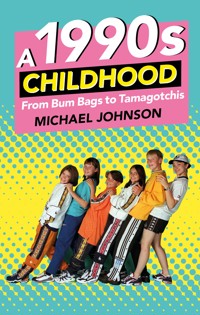
Front cover: School kids fashion shoot, August 1997, Sports Connection competition. (Trinity Mirror/Mirrorpix/Alamy Stock Photo)
First published 2017
The History PressThe Mill, Brimscombe PortStroud, Gloucestershire, GL5 2QGwww.thehistorypress.co.uk
© Michael Johnson, 2017
The right of Michael Johnson to be identified as the Author of this work has been asserted in accordance with the Copyright, Designs and Patents Act 1988.
All rights reserved. No part of this book may be reprinted or reproduced or utilised in any form or by any electronic, mechanical or other means, now known or hereafter invented, including photocopying and recording, or in any information storage or retrieval system, without the permission in writing from the Publishers.
British Library Cataloguing in Publication Data.A catalogue record for this book is available from the British Library.
ISBN 978 0 7509 8653 3
Typesetting and origination by The History PressPrinted and bound by CPI Group (UK) Ltd
eBook converted by Geethik Technologies
CONTENTS
Acknowledgements
One Introduction
Two Fashion
Three Music
Four TV Shows
Five Movies
Six Toys and Games
Seven Technology
Eight Births, Marriages and Deaths
Nine World Events
ACKNOWLEDGEMENTS
With thanks to all those that have kindly supported me with feedback, memories and advice as well as enduring months of me waffling on about nineties trivia.
Thanks also to those who have contributed photography to this project through Wikimedia Commons including users: Brian Moody, Alan Light, The US National Archives, DeaPeaJay, Randop, Mgct1506, Zoyetu, JuneGloom07, Arnoldent, Michael Gorzka, Richard Goldschmidt, David Shankbone, Maxwell Hamilton, Bob McNeely and the US Air Force.
All other photos are from my own personal collection and were taken either by me, my dad David Johnson or my father-in-law Peter Julian. Thanks to my brother Martin Johnson for letting me share a photo of the two of us as children and also thanks to my wife Rachel Johnson and her sister-in-law Fiona Julian who have kindly given permission for me to use one of their old photos from before we met to illustrate nineties fashion.
Thanks also to the community of nostalgia fans at www.doyouremember.co.uk who helped with my research.
While every reasonable care has been taken to avoid any copyright infringements, should any valid issue arise then I will look to correct it in subsequent editions.
One
INTRODUCTION
We are the children of the nineties: a special collection of people who had the unique privilege and honour of being the final generation born in the last millennium. It’s remarkable to think that we share the same century of birth as the very last of the Victorians, the same century that saw World Wars I and II take place, in which the aeroplane and the television were invented, and in which the majority of people either walked or rode horses instead of travelling by car. We are the last children to emerge from the twentieth century and we will be the last to remember what it was like growing up in the second millenium.
We will tell our children and our grandchildren of a time, long ago, when instead of sending messages to our friends on our smartphones, we would get on a bicycle, ride round to their house, knock on the door and ask if they could come out to play. We will share unbelievable tales of a time when we played with non-electronic toys and used our imaginations to conjure up stories and games to entertain ourselves. And our descendants will marvel at our descriptions of the good old days when children played in the streets until the light grew dim and it was time to come in for bathtime.
It seems somewhat fitting that, as the last generation of the twentieth century, we were also the last children to experience the relative purity and innocence of a traditional childhood untainted by smartphones, social media and cyber-bullying.
It’s not that we were without technology in the nineties; on the contrary, we had just the right amount. We had computer games and electronic toys but they didn’t dominate our lives. We were the masters of our Game Boys instead of the slaves of our smartphones and we were able to enjoy our technology free from the tyranny and pressure of the constant demands of social media.
Growing up in the nineties we experienced a quality of life undreamed of by our forefathers. We were healthier, lived longer, had more disposable income and more recreation time than at any time before in human history. We had better cars, more TV channels, increasingly exotic holiday destinations and ate out more often.
Tony Blair, the British Prime Minister between 1997 and 2007 and leader of the Labour Party between 1994 and 2007.
The world entered a time of relative peace as we were finally free from the ever-present threat of global nuclear war following the collapse of the Soviet Union and the end of the Cold War; apartheid was successfully being dismantled in South Africa; the Oslo Accords negotiated a way for Israel and Palestine to coexist in peace; and the Good Friday Agreement brought a period of peace to the Troubles in Northern Ireland.
We were blissfully unaware of the impending threat of climate change and lived in the idyllic days of pre-9/11 and 7/7 security concerns. Even the most intimidating threat of the time, the Millennium Bug, failed to materialise.
The nineties were, without a doubt, the happiest ten years of our lives.
In 1990 the average house price in the UK was £59,587 rising to £74,638 by the end of the decade. The price of a loaf of bread was 50p and and a litre of petrol would set you back just 40p. Wages had increased significantly over the previous twenty years and workers aged 21 in 1995 earned 40 per cent more, after adjusting for inflation, by the age of 39 than those aged 21 in 1975 did up to the age of 39. Gross Domestic Product (GDP) per capita rose from around £14,000 in 1980 to over £18,000 by the beginning of the nineties and by the end of the decade had escalated to in excess of £22,000.
This relative increase in wealth resulted in a decline in overall poverty in the UK and a rise in consumer spending, which meant that we had more toys and gadgets than ever before and spent more money on our leisure and entertainment. For some, shopping in itself became a source of entertainment, and with the wide availability of credit cards and in-store credit we began to hear the term ‘shopaholic’ being bandied around as people got themselves into serious trouble buying things they simply couldn’t afford.
We didn’t have streaming music or video yet so we bought our music from Our Price, the music shop, on CDs and cassette tapes; we rented VHS videos from the Blockbuster shop. Amazon didn’t exist for most of the nineties so we bought our books from Borders or Waterstones and if we wanted toys, we’d go to one of the shiny new American Toys ’R’ Us stores that had recently arrived in the UK.
Our parents named us with the most popular names at the time, which were Thomas, James, Jack, Daniel and Matthew for boys and Rebecca, Lauren, Jessica, Charlotte and Hannah for girls. The name James was so popular, in fact, that in one of my school classes four of the fifteen boys were called James, leading to numerous cases of mistaken identity and incorrectly assigned rebukes.
We played with Tamagotchis, Pokémon and Pogs, Furbies, Power Rangers and Teenage Mutant Ninja Turtles. We had Golden Grahams, Lucky Charms and Pop Tarts for breakfast, Nerds, Dweebs and Flumps between meals and had baked-bean pizzas, Turkey Twizzlers, McCain’s Micro Chips and Frubes for dinner.
We belong to the demographic collective alternatively known as the Millennials or Generation Y, sandwiched between the earlier Generation X and the later Generation Z or Post-Millennials.
If you were to turn back the clock to 1990 and take a walk into town, you’d immediately notice a number of significant differences compared to today. Driving past you on the roads would be an assortment of nineties cars, the most popular being the Ford Fiesta and the Ford Escort, followed by the Vauxhall Astra, Ford Mondeo, Rover 200, Vauxhall Cavalier, Vauxhall Corsa, VW Golf, Nissan Micra and Renault Clio. Of course, alongside all these ‘new’ cars there would still be plenty of older cars from the eighties and even seventies on the roads but it was easy to identify the nineties cars since they were generally a lot more curvy with smooth, computer-designed aerodynamic curves rather than the angular designs of the previous decade.
Everyone would be dressed differently too in the clothes of that awkward transitionary period between eighties and nineties fashions where the big hair and stonewash denim of the previous decade hadn’t yet been fully eradicated and the cool, classic nineties styles like the Grunge look, tartan miniskirts and Rachel-from-Friends haircuts hadn’t yet become popular.
The shops in the town would all be different and you would see long-forgotten gems like C&A, Dolcis, Morgan, Tammy Girl, Madhouse, the Sock Shop, the Sweater Shop, MK One, Past Times, Athena, Woolworths, Great Mills, Do It All and John Menzies.
There would be a noticeable absence of mobile phone shops, computer shops and drive-thru fast food restaurants, since they would all arrive later in the decade; coffee shops were few and far between, having not yet been popularised by American TV shows like Friends and Frasier. Amazingly, the first Starbucks didn’t arrive in the UK until as late as 1998 when real coffee was still something of a rarity for the British. At this time, most people preferred to drink a hot beverage that really can’t be called coffee: made with instant coffee granules like Nescafé or Maxwell House, whitened with a spoonful of Coffee Mate powder instead of using milk or cream, and maybe a sachet of artificial sweetener or two in place of sugar. The resulting concoction neither looked nor tasted like real coffee but many people, to this day, prefer it to the potent brown liquid served at the new-fangled Starbucks chain.
Even the language was different in the nineties. If you told your friends that you were going to Google something they would have literally no idea what you were talking about, and if you asked them to DM or PM you they may have had some real concerns about what you were suggesting. They would probably also spend hours trying to figure out what the various acronyms LOL, YOLO and ROFL meant and would likely assume that #hashtags were something that you either wore or ate.
The author demonstrating what ‘hanging around’ meant to the children of the nineties.
You would also notice a lot more people smoking than today, since around one in three adults were smokers in 1990. Ten years later that figure would drop to one in four adults smoking and after another ten years it would reduce to just one in five. In fact, this was the last decade before smoking bans in public places came into effect so if you went into a restaurant or pub for lunch (with your parents, of course, because you were a kid), the air would often be so thick with second-hand smoke that you would passively smoke half a dozen cigarettes in the time it took to you to eat your ploughman’s lunch.
Of course, the classic ploughman’s lunch was still the main (and in some cases, only) food on offer in many pubs since this was a time when pubs were still pubs rather than the family restaurants with a bar attached that most pubs became after the smoking ban was introduced. If you wanted anything else to eat, your only choice might have been packets of peanuts, Mr Porky pork scratchings and those funny little scampi crisp things that would come in a green packet and hang on the wall behind the bar.
While it’s true for many children that the nineties were the happiest time of our lives, it’s important to remember that for others it was a decade of almost unimaginable suffering. The Gulf and Bosnian wars both took place in the early nineties and led to the deaths and serious injury of hundreds of thousands of people along with the destruction of countless homes and livelihoods; and the Rwandan genocide of 1994 resulted in the mass murder of as many as a million people and the displacement of 2 million others.
In the UK things weren’t perfect either, and around 1.8 million people faced the prospect of negative equity after house prices fell by over a quarter. The BSE or ‘mad cow disease’ epidemic also reached its peak in the mid-nineties, resulting in the slaughter of over 4 million cows and the consequential destruction of the livelihoods of many farmers.
On top of this, the nineties saw a marked increase in the use of heroin among the middle classes, and particularly those in the entertainment industry. The eighties had seen a growing awareness of the drug, and the risks of addiction and disease from needle use, and children’s TV show Grange Hill famously featured a storyline which portrayed Zammo McGuire’s drug addiction and launched the ‘Just Say No!’ campaign.
But by the nineties, the number of heroin users was still increasing and statistics for this period show that in 1993 there were an estimated 155 deaths in England and Wales from heroin and morphine use. By the mid-nineties the number of annual deaths had increased massively to around 400 and by the end of the decade that figure had doubled again, reflecting the severity of the problem.
While the nineties clearly had its fair share of troubles, for many of us growing up in the UK, the world seemed like a happy and safe place. We simply weren’t aware of the troubles going on around the world or perhaps we didn’t care. We had everything we could possibly want: toys and games, satellite TV and computer games, the latest Hollywood films and MTV. We even had our very own European Disney theme park that had just opened a short distance away in Paris, and a train that would take us there in a brand new tunnel under the English Channel.
We were inundated with new music in the nineties and saw the rise of Britpop and Madchester, Grunge and Rave and Techno and Girl Power. We listened to music on our new CD Walkman and Minidisc players and by the end of the decade replaced these with the even newer MP3 players.
Our favourite songs of the decade according to the number of sales were ‘Candle in the Wind’ (1997) by Elton John, which was a tribute to the late Princess Diana, ‘Unchained Melody’ (1995) the Robson and Jerome version that had first been sung on the TV show Solider Soldier and ‘Love Is All Around’ (1994) by Wet Wet Wet, whose success can be attributed to its use as the soundtrack to the film Four Weddings and a Funeral.
At first glance it would seem that our taste in music in the nineties was somewhat soppy and sentimental but the next best-selling song of the nineties, ‘Barbie Girl’ (1997) by Aqua, shows that we were actually all just a little bit ‘Insane in the Brain’, to quote nineties hip-hoppers Cypress Hill. This is further evidenced by the fact that the British public bought over a million copies of ‘Teletubbies Say “Eh-Oh!”’ in 1997 and gave Mr Blobby the number one spot in the charts for Christmas 1993 with his imaginatively titled song ‘Mr Blobby’.
We also saw the arrival of fantastic new TV shows, many of which were targeted directly at us kids like Live and Kicking with Zoë Ball and Jamie Theakston, and SM:tv Live with Ant and Dec and Cat Deeley, with memorable features like ‘Wonky Donkey’ and ‘Challenge Ant’.
There were fantastic new comedies including The Fast Show, Father Ted and One Foot in the Grave, brand new American dramas like Baywatch, The X-Files and Beverley Hills 90210 and we also enjoyed the latest family entertainment with Noel’s House Party, Gladiators and Stars in Their Eyes.
The nineties also brought us some of the greatest films ever made and, with the phenomenal advances in technology and computerised special effects that were taking place at the time, we saw the film industry go through a transformation as significant as the revolution when cinema transitioned from silent movies to ‘talkies’ or from black and white to colour.
We were the first generation to witness the ultra-realistic resurrection of the dinosaurs in Jurassic Park (1993) and watch a convincing worldwide alien invasion in Independence Day (1996). We saw mind-bending special effects in Terminator 2 (1991) and The Matrix (1999), and witnessed the introduction of a whole new genre of film with the first feature-length computer-animated movies like Toy Story (1995), Antz (1998) and A Bug’s Life (1998).
We enjoyed new comedies like Home Alone (1990), Groundhog Day (1993) and Clueless (1995), were treated to three new James Bond films with Pierce Brosnan playing the titular character, and saw the release of critically acclaimed cinematic masterpieces like Thelma and Louise (1991), Forrest Gump (1994), Schindler’s List (1993) and of course, the most high-brow of them all, Ace Ventura: Pet Detective (1994).
The Nintendo Game Boy, first released in Europe on 28 September 1990, introduced the Great British public to the concept of playing Tetris in the bathtub.
Advances in computer technology meant that we now saw the arrival of super-advanced games consoles like the PlayStation and hand-held games machines like the Game Boy. Home computers moved on from the previous generation of Commodore 64s and ZX Spectrums and now we had new, super-powerful gaming computers like the Commodore Amiga 500 and the Atari ST. By the end of the decade we also witnessed the birth of the first iMac computers with built-in modems allowing us to access the exciting new world of the World Wide Web.
The arrival of the Web in the nineties was as significant an innovation as the invention of the internal combustion engine, the television or even the wheel, although few people realised it at the time. We unwittingly witnessed the birth of a new technology that was going to revolutionise business, politics, entertainment and virtually every other area of our lives in the near future, and yet we had no idea that the nineties would be the last decade in which we would actually need to look things up in books, send written letters to people or talk to our friends in person if we wanted to find out what they had for breakfast.
The nineties was also a time of political interest, beginning with Margaret Thatcher, our Prime Minister at the beginning of the decade, being ousted by her own party and replaced with John Major in 1990. In 1997 we then saw the switch from a Conservative government that had been in place since 1979 to a Labour government with Tony Blair as Prime Minister. In the USA the decade began with George Bush Senior as President, followed in 1993 by President Bill Clinton, the man who would famously lie to the world’s press about his extra-marital relationship with White House intern Monica Lewinsky, ultimately leading to his impeachment on charges of perjury and obstruction of justice.
The politics of Europe also changed significantly after the signing of the Maastricht Treaty in 1992 paved the way for the establishment of the ‘Three Pillars’ structure of the European Union and the introduction of the single European currency, the euro, which was first used in 1999. Elsewhere in Europe the demise of the Soviet Union had brought about the breakup of Yugoslavia and the reunification of East and West Germany after forty-five years of separation along the Berlin Wall.
At the very beginning of the decade, we still shared the planet with a number of great people who were shortly to leave us, such as Princess Diana (1 July 1961–31 August 1997), Mother Theresa (26 August 1910–5 September 1997), Freddie Mercury (5 September 1946–24 November 1991), Gene Kelly (23 August 1912–2 February 1996), Ginger Rogers (16 July 1911–25 April 1995), Jimmy Stewart (20 May 1908–2 July 1997), Marlene Dietrich (27 December 1901–6 May 1992), Greta Garbo (18 September 1905–15 April 1990), Audrey Hepburn (4 May 1929–20 January 1993), George Burns (20 January 1896–9 March 1996), Frank Sinatra (12 December 1915–14 May 1998), Burt Lancaster (2 November 1913–20 October 1994), John Candy (31 October 1950–4 March 1994) and Benny Hill (21 January 1924–20 April 1992).
And at the same time, the world was bracing itself for the arrival of the next generation of celebrity including the likes of Justin Bieber (born 1 March 1994), Harry Styles (born 1 February 1994) and Miley Cyrus (born 23 November 1992).
The nineties was a period of unparalleled peace and prosperity in the history of the western world. A time of health, wealth and technological progress. Our lives had never been so easy, so carefree or so enjoyable.
We had reached the pinnacle of human achievement in the twentieth century and hadn’t yet faced the threats of the twenty-first. We were privileged, we were spoiled and we were the children of the nineties.
Two
FASHION
1 January 1990: as the first dawn of the new decade lazily stretches its orange fingers across the skies of London, a blanket of silence lies over the city that, a few hours before, was the site of wild and exuberant New Year’s celebrations. As the revellers now lie dreaming of all the new decade will bring, the silence is broken only by the faint clatter of an empty can of Hofmeister rolling into the gutter.
As the sun rises through the early mist, the nation begins to awake. As bleary eyes are rubbed clear, many head to the windows to get their first glimpse of the bright new decade – the nineties.
The eighties are over at last. This thought brings a thrill of excitement to each person. No longer do people have to wear ridiculous-looking neon-coloured leg warmers and mullet haircuts. Gone are the espadrilles and shoulder pads, the ra-ra skirts and the white stilettos. Never more will people wear head-to-toe denim or suit jackets with the sleeves rolled up.
Smoke begins to rise in the gardens of suburban homes across the country as a funeral pyre of eighties clothes are ceremonially burned to ashes, liberating the wardrobes of the masses. Lines of excited people form outside the doors of Tammy Girl, Dolcis and C&A waiting with eager anticipation for the fanfare that will herald the arrival of nineties fashion ...
In reality the transition between eighties and nineties fashion was a far more gradual affair and at the beginning of the new decade the clothes that people were wearing were pretty much the same as the clothes they were wearing at the end of the last. Men with mullet haircuts were still commonplace and shoulder pads and big hair for women was still de rigueur; but gradually, little by little, eighties fashion receded and gave way to tantalising glimpses of what was to come.
When it comes to the fashion of the nineties, there’s a feeling that it is less well-defined perhaps than the fashions of other decades. The sixties, with their miniskirts, bright colours and black and white patterns, are easily recognised, as are the seventies with flares, platform boots and lots of glitter and satin. The eighties, with their shoulder pads, big hair and leg warmers, are equally easy to identify, but if you were invited to attend a nineties-themed party, would you know what to wear?
With the influence of cinema, television and music on fashion and culture exponentially increasing with each passing decade, we reached a point in the nineties where we were saturated with imagery and messages telling us how to dress, talk and behave. With hundreds of TV and radio stations now available to most people, each interest group had its own set of influencers, resulting in dozens of different fashion niches, each tailored to the lifestyle of a particular demographic.
My sister-in-law (left) modelling her own distinct take on nineties fashion, and my future wife (right) sporting more traditional nineties ‘mum jeans’ and a crop top.
Rather than seeing the mass appeal fashion trends of former years, like the original miniskirt craze, we now saw micro-fashion trends that targeted a small but dedicated group of followers whose interests and lifestyle could be quite accurately identified simply by the clothes they wore.
This phenomenon can perhaps be best seen in the slew of adolescent-themed TV shows and movies emanating from America in the nineties in which high-school pupils belonged to cliquey groups such as skater boys, stoners, the heavy metal crowd, valley girls and spoiled rich kids, jocks, preppies, hip-hop kids, Grunge fans, goths and of course nerds. Each little group had its own defining fashion characteristics: the skater boys wore baggy trousers and trainers and back-to-front baseball caps; valley girls and rich kids wore stylish, expensive clothes with prominent designer labels; jocks wore varsity jackets; the goths dressed all in black and wore heavy eye make-up with powder-white faces and piercings; and the nerds who, in their attempt to reject fashion trends entirely, somehow created one of the strongest trends of all, wore the heavy-rimmed spectacles, cardigans, bow ties, clashing patterns etc. that became an inspiration for the millennial Hipster movement.
It also seems that we made a conscious and deliberate effort to move away from some of the more extreme and glamorous fashions of the previous decades and adopt a more minimalist and sophisticated approach to our clothing. We were now far more interested in brands and labels and were introduced to the concept of ‘supermodels’ who showed us that there was more to fashion than just competing with each other for who had the biggest hair and shoulder pads.
In fact we moved so far away from the glamour of the eighties that we nearly went off the other end of the scale with the Grunge movement which eschewed the widely accepted belief that fashion was about making you look good. What started as an anti-fashion statement worn by rock musicians in Seattle became a widespread fashion trend popularised largely by the band Nirvana and, in particular, the iconic lead singer Kurt Cobain. Grunge clothing for men usually comprised an assortment of baggy and ill-fitting clothes purchased from charity shops, paired with ripped jeans, black military-style boots and often an unbuttoned flannel shirt over the top for good measure. The less flattering the look, the better! Of course it was no good having a snazzy haircut with a Grunge outfit, so the general idea was to let your hair grow to an awkwardly shaggy length and rarely brush it, resulting in that been-up-all-night-playing-rock-music-on-my-guitar look. This was the perfect fashion trend for many men whose naturally dishevelled appearance was less about fashion-consciousness than it was their innate inability to dress well.
Women, on the other hand, generally took more effort perfecting their anti-fashion statement, carefully planning the exact location for each of the rips in their low-rise jeans and spending an extraordinary amount of time fixing up their hair to look as though it hadn’t been fixed up at all. Kurt Cobain’s wife, Courtney Love, proved to be a key inspiration for female Grunge fashion and is credited with debuting the ‘Kinderwhore’ style which usually comprised some form of ripped baby-doll or slip dress, knee-high socks, hair that looked like you had been sleeping rough and heavy make-up with a particular emphasis on black eyeliner. The overall impression was of somebody who lived on the streets and had been attacked on the way to wherever they were going. The central concept of Grunge fashion was generally to look Elegantly Wasted, to use the name of a 1997 INXS album. Kurt and Courtney pulled this off to perfection.
The relationship between music and fashion had grown much closer during the previous decade with the advent of MTV, which provided non-stop music videos and introduced us to an onslaught of new fashion trends, largely from the UK and USA.
Pop princesses Britney Spears, Christina Aguilera and Jessica Simpson frequently modelled super-low-rise jeans paired with either boob tubes or crop tops that exposed a sizeable portion of midriff. In particular, Britney and Christina seemed to be engaged in an unofficial competition to see who could expose the most of their abdomen with both popsters ultimately reaching the limits in terms of taste and decency.




