


13,99 €
Mehr erfahren.
- Herausgeber: THP Ireland
- Kategorie: Sachliteratur, Reportagen, Biografien
- Sprache: Englisch
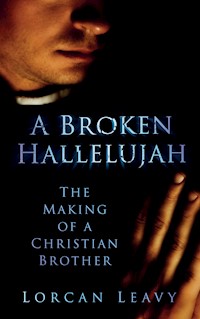
A Broken Hallelujah traces a young man's path through the Christian Brothers' regime from Juniorate through the Leaving Certificate year to Teacher Training, and from there to work 'on the mission'. The author describes in intimate detail the experiences and challenges he faces on the way, culminating in the final and most difficult decision of all, whether or not to remain in the fold of the Brothers' Congregation. This unique story recalls a type of education which has long since passed out of use, and has become, for many, a piece of history in itself. In detailing his experiences, the author describes the dilemmas faced by a great number of people, dilemmas which reflect many of the choices and difficulties that have shaped the Ireland of today.
Das E-Book können Sie in Legimi-Apps oder einer beliebigen App lesen, die das folgende Format unterstützen:
Veröffentlichungsjahr: 2011
Ähnliche


















To the boys and men who shared the Broken Hallelujah with me in Baldoyle, Marino and Bray.
CONTENTS
Title
Dedication
Introduction
At the Crossroads
Beginnings
Bracklyn Estate
Summer Work
School Days in Killough National School
The Beginning of the End
18 August, the Leaving and the Entering
Life in the Juniorate
The Door Closes
A Holiday at Home
Second Year in Baldoyle
The Novitiate
Taking Vows
Mount St Mary, Bray
Coláiste Chiaráin, Bray
The Leaving Certificate Examination
Teacher Training in Marino
UCD – On a Bike
Changing Direction
Teaching
A Holiday in the Real World
On the Mission
Decision Time
Leaving
Epilogue
Addendum
Copyright
INTRODUCTION
In the formation houses where young Christian Brothers were trained in the 1960s and earlier, an occasion of celebration was called a Gaudeamus – from the Latin for ‘let us rejoice’. I originally intended to use the term ‘A Broken Gaudeamus’ as my book title, to reflect both the positive and the negative aspects of that training; a cause for celebration but with some significant cracks in the system. Wiser minds have since convinced me that A Broken Hallelujah would be more immediately understandable to potential readers, while at the same time retaining some hint of the conflict between good and not so good which permeated those years of training to become a Christian Brother. The story that follows is an account of events and situations as they happened and existed during the years of my early childhood and merging into the seven eventful years I spent in the Christian Brothers’ houses of formation – a time which spanned the 1950s and on into the first half of the 1960s.
I try to describe the world in which I grew up with its own simple richness in order to highlight the contrast between that and the world I inhabited when I left home. My early life could be seen as the seedbed, so to speak, where I and my siblings were nurtured and grew in security and warmth, while the world and the regime I inhabited when I left home could be seen as something of an assault on all that went before. I tell this story to help facilitate understanding of the Christian Brothers and to attempt to cast a critical eye – my own and others’ – over what was involved in the making of a Brother.
I also tell it as an account of a personal journey, enriched at one level by a wealth of highly intense experiences and at another level rendered perilous by other, less positive experiences. The recollections of that journey are dependent on the capacity and accuracy of my own memory, their veracity being subject to my own ability to absorb them in the first instance, bearing in mind my youthfulness at the time, and also my ability to recall them, given the passage of many years in the interim. My own possible failure to understand what was happening all around me and the possibility of misinterpretation on my part, would, too, I must admit, colour my telling of these events. However, in so far as I can, I will try to be as accurate as possible.
The story I tell within these pages reflects my own experiences, my feelings, dilemmas, doubts and aspirations. The ideals and values are mine too, as are the regrets, the guilt and the failures. Others may see a different picture when they look back on those days. Their joys and woes may be different to mine, their experiences too. But I can only tell my own story, and I tell it fully conscious and totally respectful of the fact that others may tell it differently.
I hope that truth and understanding are enhanced in some small measure by this exercise.
Lorcan Leavy
January 2012
AT THE CROSSROADS
So there we were, chugging away in the old Ford Anglia, destination Dublin; Mam and Dad in the front, Dad driving, Mam navigating; me and my sister Anita in the back. As the miles scudded past and the idyllic countryside faded into the distance while the threatening bulk of the approaching city loomed, my heart sank deeper and deeper into my new black shoes. Was I mad? What had I been thinking? I could have gone to the local vocational school in Killucan, like everyone else did; could have studied Woodwork and Rural Science and Mechanical Drawing as my brothers did, could have become a mechanic or a carpenter … but no, I had to be different. I had to choose an original road – a secondary school miles from home, a boarding school at that, and one that set me on a course that would lead to me becoming a member of a Religious Order. The choice had been mine. There was no way out.
Maybe we’ll get lost.
Maybe we’ll never find the place.
Maybe …
BEGINNINGS
17 January 1946: that was my birthday. I was born at home in Bracklyn in the county of Westmeath, just like all my older brothers and my one older sister. I was the fifth of a family of five – much later to become six. I hated being the youngest, the tag of ‘pet’ of the family being a difficult one to bear. I feel though, that being the youngest made me fiercely individualistic, always wanting to go my own way, rather than being the scut who tagged along after the rest. I had three brothers: Seán, who was seven years older than me; Mícheál, who was six years older, and Jim, who was five years older. My mother had a few years’ rest after Jim. Then came Maureen, and then, eighteen months later, I made my entrance.
Because of the way that our ages ranged, I tended to be ‘lumped in’ with Maureen, and this I didn’t like. I always wanted to be with the boys, doing the things that they were doing. I suppose this made me grow up quickly because in order to keep up with them I was always at full stretch, so to speak, acting beyond my years. I had a summer job at seven years old, for example! Well, to be exact, my brothers had a summer job between them, thinning kale, and for peace sake they allowed me to go with them. But I did learn to do the work, however, and did it right from the beginning. In spite of my best efforts, I never succeeded in being included as one of ‘the boys’. This term referred to Seán, Mícheál and Jim. When I was eleven years old, my mother, to her own amazement and to everybody else’s, produced a baby girl whom she called Anita. At last, I was no longer the bottom of the pile, the youngest in the house. Anita grew up almost like an only child – everybody’s pet and spoiled silly. Unfortunately she was only with us for seventeen years, as she was involved in a traffic accident and died in the summer of 1974.
My father, for his own reasons, wanted to name me ‘Mortimor’! My mother vetoed this, saying that it was a silly name. She insisted that I be called Ignatius, even though that was my middle name. My first name was Laurence, after my father, which may have been a consolation for the maternal veto on Mortimor. I hated the name Ignatius so much. I thought that the only people who were named Ignatius were fops and leprechauns. I was nicknamed from the start: Éannaí, which I quite liked; Iggy, which I dreaded (although I don’t mind it now). Variations on Iggy were myriad: Iggy the Piggy; Iggywiggy; Iggypops … One uncle liked to call me Éannaí Biddy Dirt and a cousin called me Ignatius Leprechaun – a fact that I had forgotten until he reminded me of it quite recently. I always swore that at the first opportunity I would change my name, and this I did, but more of that later. I discovered recently, however, that if we went back five generations through my father’s family, my great-great-grandfather was called Mortimor. This was shortened to Matt, which has been a family name ever since.
My preschool days were warm and blissful. Precise memories are few; just a feeling of security and warmth. I remember hearing the radio coverage of the Queen’s Coronation in England and my mother telling me that she travelled in a golden coach pulled by horses. I also remember hearing, but not necessarily listening to, various programmes on the radio: Listen with Mother; Mrs Dale’s Diary; Dan Dare and Digby on Radio Luxembourg. I remember lots of music too. The name of one group has stuck in my mind from way back then – Edmondo Ros and his band. We didn’t have electricity then – I was definitely going to school by the time we got that – so we had light from a blue oil lamp which was hung on the wall of the kitchen. The radio had two big batteries: one operated the radio while the other was being charged in a shop in nearby Delvin.
My mother cooked on an open fireplace, as did most people in our locality at that time. The fireplace had an iron grate with bars across the front and two iron hobs on either side. There was also a crane, from which pots were hung, and it swung out from the fire when necessary. I have a vague memory of bricks or stone surrounding the fireplace, and a high mantelpiece overhead with a serrated valance or pelmet. The iron hobs were always hot and were used for slow cooking or simmering food. Because of all the boiling water and food, and the fire itself, the open fireplace was quite dangerous – a fact of which I became very aware at the age of five, when I pulled a teapot full of scalding tea down on top of myself, resulting in severe scalding on my upper body.
The accident with the teapot gave me a whole new status: I became ‘the boy with the scald’. Lots of neighbours called in, with consoling words and cures and holy medals, but more importantly with sweets and biscuits. Unfortunately my mouth was very sore, some splashes of the scalding tea having even got in there, so I couldn’t eat much. However, the other children in the house showed remarkable bedside manners and the goodies disappeared a lot faster than it took for my scars to heal over.




