


Erhalten Sie Zugang zu diesem und mehr als 300000 Büchern ab EUR 5,99 monatlich.
- Herausgeber: Story Machine
- Kategorie: Sachliteratur, Reportagen, Biografien
- Sprache: Englisch
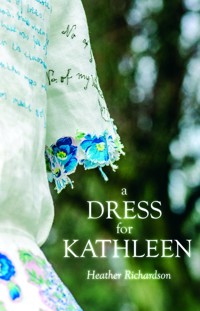
'Every family has shadow people, the ones who slipped out of the story too soon, leaving a blank space where they should have been. In my father's family that person was his sister Kathleen.' So begins Heather Richardson's astonishing fragmentary celebration of her aunt, Kathleen Hutchinson, whose life was cut tragically short aged just 14. It is the early days of WW2 and Kathleen has just left school to start her first job at a linen mill. But this dark and cold December night she doesn't make it home. Originally stitched into the fabric of a dress, Kathleen's life is presented here as a book for the first time. In the process, Heather Richardson also tells the stories of Kathleen's parents and their lives together in rural Northern Ireland in the first half of the 20th Century. A Dress For Kathleen is a labour of love from niece to the aunt she never met. Every sentence sparkles. Heather Richardson's masterpiece is a poetic portrait in prose and one of the finest books you will read this year.
Sie lesen das E-Book in den Legimi-Apps auf:
Seitenzahl: 65
Veröffentlichungsjahr: 2023
Das E-Book (TTS) können Sie hören im Abo „Legimi Premium” in Legimi-Apps auf:
Ähnliche



















A DRESS FOR KATHLEEN
Heather Richardson
A Dress for Kathleen, copyright © Heather Richardson, 2023
Print ISBN: 9781912665297
Ebook ISBN: 9781912665303
Published by Story Machine
130 Silver Road, Norwich, NR3 4TG;
www.storymachines.co.uk
Heather Richardson has asserted her right under Section 77 of the Copyright, Designs and Patents Act 1988 to be identified as the author of this work.
All rights reserved. No part of this publication may be reproduced, stored in a retrieval system, or transmitted in any form or by any means, graphic, electronic, recorded, mechanical, or otherwise, without the prior written permission of the publisher or copyright holder.
This publication is sold subject to the condition that it shall not, by way of trade or otherwise, be lent, re-sold, hired out or otherwise circulated without the publisher’s prior consent in any form of binding or cover other than that in which it is published and without a similar condition including this condition being imposed on the subsequent purchaser.
In memory of my dad, Tom Hutchinson
Heaven Is Our Home
Every family has shadow people, the ones who slipped out of the story too soon, leaving a blank space where they should have been. In my father’s family that person was his sister Kathleen, who died in December 1939 at the age of fourteen. Cycling home from work on a Friday night, on a dark country road made darker by the wartime blackout, she didn’t see a local farmer, Robert McCahon, making his own way home by foot. Perhaps she swerved at the last minute: he reported feeling something touch his right hand and then hearing a crash. The fall knocked her unconscious, and she was bleeding from a cut above her left eye. McCahon lifted her to the side of the road and went for help.
There was a little shop nearby at a junction of country roads known as the Cross Keys, and the shopkeeper, Lily Canning, had a car. She drove Kathleen to the nearest doctor some five miles away in the village of Swatragh, and he in turn took her to the infirmary in Magherafelt where she was admitted some time after midnight. She died in the early hours of Sunday morning without ever regaining consciousness.
I knew about Kathleen from visits to my grandparents at their home in the County Derry town of Kilrea. Not that she was talked about – not at all. But she was buried in the graveyard of St Patrick’s Parish Church, just a short walk up the road from my grandparents’ house. If our visits fell on a summer Sunday the Kilrea cousins would take my brother and me for a walk. The town had limited places of interest for us youngsters: a tiny play-park tucked away beside the primary school, a gnarled fairy thorn on Church Street, kept upright by rusted iron struts, and Kathleen’s grave.
The plot was marked with a modest cross and surrounded by large white pebbles of the sort you might pick up on the beach at White Park Bay thirty-odd miles away on the north Antrim coast. Kathleen was buried beside her baby sister, Ruth. (Poor Ruth is hidden even further in the shadows than Kathleen. Born in 1930, the fourth of my grandparents’ children, she lived only fourteen days. Her death certificate records the cause of death as ‘congenital debility’. She was born weak, in other words, and in the days before the NHS and Special Care Baby Units the odds were against her.)
I was intrigued by death, as children often are. But I had little direct experience of it, being blessed with a full quartet of long-lived grandparents. Kathleen challenged my understanding of time and family. Could I call her my aunt when she had died twenty-five years before I was even born? Both my parents had a sprawling, fecund heritage where generations of women gave twenty or thirty years of their lives to pregnancy, birth and childrearing. Dad was one of eleven children, Mum one of eight. I found it impossible to conceptualise having a sibling who was decades older or younger than me. It was still more impossible to imagine what the death of a child might do to a family.
If you go to the churchyard in Kilrea now you’ll not find the simple grave with the white stones around it. A wide new grave-surround was installed – polished black granite filled with quartz chips – after my grandparents died and were buried in the same plot. It’s in a beautiful spot, as graves go, shaded by a venerable copper beech.
In the years since then the grave has filled up as Kathleen, Ruth and their parents were joined by two more of the children – Anna and Jack – both of whom managed the full span of years their sisters never saw. The black granite headstone has grown crowded with names. Engraved at its base, partly hidden by grave pots and arrangements of artificial flowers, are the words HEAVEN IS OUR HOME.
There was nothing remarkable about Kathleen’s short life, but it has become for me a doorway into unexplored corners of my family’s past and the world they inhabited. My father was only six years old when she died, but the memory of that bleak December remained seared in his memory, and in the collective memory of his family.
Kathleen was born in 1925, the second child of Thomas and Hannah Hutchinson. Her father had fought with the 36th Ulster Division in the First World War, and survived the carnage of the Somme. After the war he joined the police and served during the turbulent years before and after the partition of Ireland. Thomas was an intelligent but difficult man. His childhood was blighted by blinding headaches that forced him to abandon his schooling early on, and as an adult he was prone to resentments and fallings-out. No doubt his experiences of violence both as a soldier and a policeman contributed to his temperament.
It was during his time with the police that he married Hannah, a farmer’s daughter, who was twelve years his junior. She had played her own part in the war effort in her early teens, working in the household of a veterinary surgeon and travelling with his family to the military training camp on Salisbury Plain where he attended to the army horses.
By the time Kathleen was born her father had settled into a job with the LMS railway company. The family lived in a railway ‘gatehouse’ in the townland of Drumagarner, just outside Kilrea. The gatehouse stood beside the train line that ran from Macfin Junction to Magherafelt. In 1939, at the age of fourteen, Kathleen left school and began work as a trainee typist in the offices of William Clark and Sons, a linen manufacturer in the village of Upperlands, six miles from the gatehouse. Every day, as summer turned into autumn and rumours of war became a reality, she made the journey to and from work on her bicycle.
Ideas for ways I might explore Kathleen’s life emerged slowly. I tracked down her birth certificate and death certificate, but there was little in between except two photographs and my elderly dad’s memories. I thought I knew more about my grandparents, Thomas and Hannah, but when I reflected about it more deeply I realised they were nearly as mysterious to me as Kathleen was. My father’s life had taken him much further away from home than might be suggested by the forty miles between Kilrea and Belfast, where we lived. We visited his parents two or three times a year, and they were shy and silent in the presence of this son who’d gone to the big city and made good. All I really knew of them were fragmentary anecdotes that had been told and retold so many times they bore little imprint of the real experiences they described. But where knowledge runs out imagination takes over, and in re-imagining Kathleen I also re-imagined Thomas and




