


6,99 €
Mehr erfahren.
- Herausgeber: The History Press
- Kategorie: Sachliteratur, Reportagen, Biografien
- Sprache: Englisch
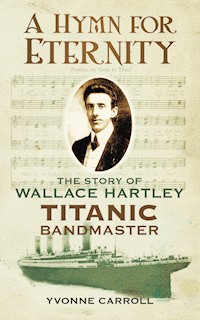
The band playing 'Nearer my God to Thee' as the ship went down is probably one of the most famous stories relating to the Titanic. The bravery of the band and their leader, Wallace Hartley, is one of the endearing stories to come out of the worst disaster to happen to a British passenger liner. Who comprised the band? Who was Wallace Hartley and where did he come from? Not much has been written about this enigmatic band leader or of his part in the tragedy, beyond a few mentions in the many books on the disaster. But he was one of the most important characters in the story of Titanic. Yvonne Speak has spent years researching the life story of Wallace Hartley and has conducted interviews with remaining members of his family. Here she tells his story and remembers this most British of heroes.
Das E-Book können Sie in Legimi-Apps oder einer beliebigen App lesen, die das folgende Format unterstützen:
Veröffentlichungsjahr: 2011
Ähnliche



















This book is dedicated to my mother, Katie Eileen Carroll, 1916–2011,
The book is also dedicated to the late Jean Elizabeth Martin, who was devoted to keeping the memory of Wallace Hartley and the other bandsmen alive.
ACKNOWLEDGEMENTS
I’d like to thank the many people who helped me with this project:
Various libraries throughout the North of England, with a special mention for the staff of Rawtenstall Library; my friend Andrea Whitehouse for invaluable help with research at the Public Record Office, Kew; Mrs D. Stevens, a relative of Wallace Hartley, for receiving me into her home; Garry Shutlak, Nova Scotia Archives, Halifax; Michelle Lefevre, Leeds Library and Information Services; Katie Hooper, University of Liverpool Special Collections (Cunard Archives); Terence Kiernam, architect of Ripon, for information re the building that was Collinson’s Café, Victoria Quarter, Leeds; Richard Taylor, department of listed buildings, Leeds, for information re the Victoria Quarter, Leeds; Christine Bryant for help with the 1881 census; my husband, Chris Speak, for photographs, support, for accompanying me on countless research expeditions and for coming up with a title for the book.
For help with the second edition: Darran Ward for interesting discussions and for allowing me to publish items from his collection; Jenny O’Hara McRandall, manageress of Jigsaw, Leeds, for allowing me to use one of her pictures of the interior of the shop that used to be Collinson’s Café; and Steve Charldwood.
My sincere apologies if I have inadvertently missed someone.
CONTENTS
Title
Dedication
Acknowledgements
Preface
Prologue
1.Bonnie Colne Upon the Hill
2.The Yorkshire Connection
3.Cunard
4.Titanic
5.A Brilliantly Beautiful Starlit Night
6.In the Wake of the Disaster
7.The Homecoming
8.Nearer, My God, to Thee
9.Tributes and Memorials
Epilogue
Select Bibliography
Plates
Copyright
PREFACE
Wallace Hartley and his fellow musicians gained international fame almost overnight as news of their heroic deed made headlines around the world. Wallace was not a public figure and was relatively unknown until his death. Nor was he even a householder. It has been necessary, therefore, to trace his and his family’s movements through his father, Albion.
With regard to Wallace Hartley’s musical career, we know the main stages, but not necessarily the correct order. At times, therefore, in the absence of definite dates and facts, I have had to do some educated guesswork. Since the first edition was written, a few more facts have come to light and some errors have been amended. However, there are still some pieces of the jigsaw missing, or possibly in the wrong place. I trust I have made it adequately clear when I am making assumptions and when I am portraying fact, and hope I have done justice to Wallace Hartley.
PROLOGUE
The four colossal funnels of the Titanic stood out, black and ochre, against the April sky above Southampton. The black gang and other members of the crew, with their kits slung over their shoulders, were streaming down towards the ship. Passengers were gathering on the White Star dock, and excitement began to mount. But the real rush would start when the boat trains arrived from Waterloo.
Wallace Hartley was also making his way to the ship. In the last few hours, since leaving Liverpool, he had had time to ponder over his decision. He had not wanted to be bandmaster on the Titanic. She might be the largest and most luxurious vessel afloat, and this was her maiden voyage, but he had been happy enough on the Mauretania. He had only just arrived back from New York the day before, and it all seemed ‘a bit of a rush’. So, of course, he would have preferred to go straight home to his parents in Yorkshire. And then there was Maria … Maria, who was soon to be his wife.
Wallace loved the sea, and had already crossed the Atlantic eighty times on various liners as a member of the ship’s orchestra, but he was thirty-three now and, in a few months’ time, he was going to give it up and settle down.
Anyway, it was too late now. He had allowed himself to be persuaded and there was no going back. He had managed to send a letter home; the Titanic was due back in Southampton on the 27th, so he would be home in Yorkshire on the Sunday …
1
BONNIE COLNE UPONTHE HILL
Bonnie Colne, Bonnie Colne.
Bonnie Colne, let come what will,
Tha’lt ever be most dear to me
Bonnie Colne upon the Hill.1
Wallace Hartley was not a Yorkshireman. He was born across the border in the hill town of Colne, in Lancashire, on 2 June 1878. Wallace was born in the family home at 92 Greenfield Hill,2 one in a row of six cottages that still stand in isolation, just outside the built-up area of Colne.
Colne is in the northern part of East Lancashire, on the border with West Yorkshire, approximately thirty miles north of Manchester. It was built on Colne Water, which runs into the River Calder. Situated in the Pennines, it is surrounded by hills and moorland. Looming up a few miles to the south-west of the town is Pendle Hill, of ‘Lancashire Witches’ fame.3
The area where Colne is situated is formed from a type of sandstone called millstone grit, which forms prominent hills with valleys in between. Colne itself is situated on such a hill that stands 623ft above the surrounding countryside, with valleys to the north and south.
From a medieval market town, Colne became a centre for the woollen industry, and three-storey handloom weavers’ cottages sprang up. Elizabeth Hartley, Wallace’s mother, was herself a worsted weaver. John Wesley had visited the town in 1759 and had this to report: ‘We went to Colne, situated on the top of a high, round hill … the drunken mob of this town used to be the terror of all the county.’
From the early nineteenth century onwards, Colne became a servant of King Cotton. Around the time Wallace Hartley was born, the nearby town of Burnley, with its 50,000 looms, produced more woven cotton than any other town in the world. It was said that, in the heyday of the cotton industry, ‘The world hangs on Lancashire thread.’
Wallace’s father was himself employed in the cotton industry and, at the age of twenty, he was a sizer. For some, if not all his time spent in the industry, he probably worked at Greenfield Mill, which stood on Colne Water. The main river of Colne, although little more than a stream, it ran just below the row of cottages where Wallace’s family lived, the mill itself being about a hundred yards downstream. The mill was the property of John Catlow, cotton spinner.
Albion Hartley had married Elizabeth Foulds, in September 1874, at St John the Evangelist Church, Great Marsden.4 Albion was twenty-four years old and Elizabeth twenty-three. One of the witnesses was unable to sign the register and instead made her mark, not an unusual occurrence at a time when education was not compulsory and there was still a good deal of illiteracy.
Both bride and groom came from families who were employed in the textile industry: Albion’s father, Henry, by this time deceased, had been a weaver, and Robert Foulds, the bride’s father, was an overlooker. Albion himself was making headway in the industry and was now an overlooker. Albion did not move far when he married, as his family’s address was Greenfield Hill (later Greenfield Road). The Foulds family lived at Primrose Bank. Albion and Elizabeth both came from fairly large families, as was usual at the time. Wallace had five uncles and aunts on his father’s side alone: Martha, John Rushton, Ellen, Margaret and Henry. Grandmother Mary Hartley was a dressmaker.
The day on which Wallace Hartley was born was also the anniversary of the Sunday school attached to the Bethel Independent Methodist Chapel, where his father was choirmaster. The doctor in attendance said jokingly that he would give five shillings to the collection if, at the anniversary service, they would sing Unto Us a Child is Given. Albion Hartley replied, ‘Let me have your five shillings. We have been rehearsing it and will sing it today.’
Bethel Chapel would continue to play an important part in the life of the family, and we will return to it later in the story. While choirmaster at the chapel, a role he performed for twenty-five years, Albion Hartley introduced and popularised the hymn Nearer, My God, to Thee.
Mr Hartley had to travel to Burnley to register the birth, which he did in July. He named his son Wallace Henry, the second name after his own father. The name Hartley was very common in Colne, and at one time there were Hartleys living on more than eighty streets in the town.5 Moreover, many, if not most, of the Hartleys on the Civil Register were from this area.
Wallace was not the first child born to Albion and Elizabeth Hartley: a daughter, Mary Ellen, had been born the previous year. According to the 1881 census, Elizabeth Hartley stated her profession as a worsted weaver, but, with two small children, she may have given up work temporarily, or perhaps she just ran a few looms. Certainly, by 1891, with an even larger family, she was no longer working outside the home.
What was it like living in Colne in the late Victorian period? The Industrial Revolution had wrought great changes, but not always for the better. Handlooms had been replaced by labour-saving machinery. Spinners and weavers no longer worked in their own cottages but in huge mills. The cotton industry engendered vast wealth, but only the mill-owners became wealthy, or benefited in any way.
King Cotton ruled supreme, and by-products of this industrial and social change were the slum dwellings and generally poor, less than salubrious, living conditions of the masses. The poorest conditions were in the area of the town where most of the industry was concentrated, down by the river. Here there was back-to-back housing, as in so many industrial towns of the North. The population of the town was rapidly increasing; from approximately 8,000 in 1861, by 1911 it would be at its peak with 25,000 inhabitants. This huge influx of people could only cause enormous housing problems and overcrowding.
In the 1860s, there had been an eleven-month cotton strike bringing hundreds of weavers to the brink of starvation and also a cotton famine due to the American Civil War, when supplies of the raw material were cut off. Although Wallace Hartley was not born at the time, his parents were residents, and were probably just entering the workforce, but it is not known if or how they were affected by this hardship. By the end of the nineteenth century, conditions were generally improving: the work was better paid and the hours shorter (only fifty-six and a half hours per week!).
Most of the buildings in this area of Lancashire, even the lowliest dwellings, used to be made of the local sand-coloured millstone grit. In those far-off days before the introduction of anti-pollution laws, the air was laden with smoke and tiny particles of soot, or smuts, that came belching out of factory chimneys from the coal-powered steam engines. This smoke-laden air left its mark on buildings and found its way into people’s lungs. This was certainly a very unhealthy environment, which caused various chest ailments. The buildings soon lost their golden colour, and became dark and ugly. These grim, blackened factories, with their chimneys reaching skywards, became associated with northern mill towns and gave rise to the phrase ‘dark, Satanic mills’ from William Blake’s hymn Jerusalem.6
There was no sanitation in the town. Houses did not have water closets but ‘privies’, many households having to share with other tenants. The privies had to be emptied by shovel, and the ‘night soil’ cart would come around and collect the contents, which were then spread on fields, unless there was an epidemic in the town. Epidemics of various diseases were not uncommon, given the lack of sanitation, and typhoid broke out in the late 1870s. The usual remedies were fumigation and white-washing, and a Nuisance Inspector reported cases of disease. In 1875, a few years before Wallace Hartley was born, a local board was formed in Colne, empowered to levy rates in order to improve conditions in the town in line with the Public Health Act of the same year. The resulting sewage works were completed in 1885 and were situated on land just below the Hartley home at Greenfield Road, on the other side of the river, the land having been bought from the mill owner.
The Hartley family were fortunate enough to live well away from the slum areas of the town. Although there was a mill behind their house and Greenfield Mill not far, there were plenty of fields and open spaces for a small boy to play in.7 The family home was typical of many dwellings built in this period, comprising a parlour at the front of the house, a living room at the back and a small, ‘lean-to’ kitchen. Upstairs were two bedrooms and an attic. In front of the house there was, and still is, a small garden, an advantage that most of the terraced houses of the time did not enjoy. To the rear of the house was the usual backyard, which, in those days, would contain the privy.
Those of us whose parents or grandparents were contemporaries of Wallace Hartley are familiar with such local delicacies as black pudding (served from huge vats on outdoor markets), cow heel, tripe and elder (cow’s udder), sheep’s head (not enjoyed by everyone!), bread and dripping. There is no evidence to show that any of these dishes were served in the Hartley household, but Wallace would certainly be familiar with them as part of the local fayre. As a matter of interest, the first fish and chip shop inland opened in Colne in 1880.
By the end of the century, more children were being educated, as the rising number of schools shows. At first, all education was provided by church schools, built by voluntary subscription and the occasional government grant, and run by the churches concerned. A Wesleyan Sunday school opened on Great George Street in the centre of the town in 1869, and it became a day school ten years later. A number of wealthy Methodists, notably cotton manufacturers, donated sums of money to fund the building of the school. Tablets of stone with the names of the benefactors form a frieze along the front of the building. This is the school which, as a Methodist, Wallace Hartley attended. Education was not free: parents were charged a small fee, which varied according to their earnings. The Three Rs were taught in the school. A native of Colne, who attended the school in the 1950s, remembers that the interior of the building was very handsome with large quantities of oak in evidence.
The headmaster at George Street Wesleyan was Mr Thomas Baldwin, who would remain there throughout Wallace’s school career. In charge of the infants when Wallace began school was Miss Etherington, replaced not long after by Miss Kezia Whittam. Wallace would have had to walk about one mile to reach the school, which was ‘up town’. From his house he would have walked along Greenfield Road, which joined the main road at the bottom of Primet Hill, up the hill past the railway station, carrying on up Albert Road, and, when he reached the top of the hill, he would turn right into Exchange Street, where the main entrance to the school was situated.
The Education Act of 1870 allowed for schools to be created by elected School Boards with powers to charge fees and accept government grants. Local church schools were fiercely opposed to Board schools, and local people feared a rise in rates to fund them. Consequently, a School Board was not set up in Colne until 1896, by which time Wallace Hartley had completed his education.
By 1881, Wallace’s father had been made mill manager. He had worked his way to the top, and owed his success to his sound financial sense and skills for leadership, qualities that would stand him in good stead when embarking on a career change that was soon to take place.
A dramatic episode in the lives of the Hartley family occurred in February 1885. On the morning of Sunday the 1st, fire broke out at Greenfield Mill. The fire started in the new section of the building, which was three storeys high with attic rooms above, and eight windows long. The building contained 15,000 spindles. The damage caused amounted to approximately £10,000, but fortunately no one was hurt, and the fire led to the formation of Colne’s Volunteer Fire Brigade. The most important outcome of the event was the fact that 120 lost their livelihoods, including, presumably, Wallace’s father.
Albion Hartley was therefore obliged to seek alternative employment, and he became an agent with the Refuge Assurance Company, whose headquarters for the Colne and Nelson district were based on Manchester Road in the centre of Nelson, approximately two miles from where the family lived.8
Another direct consequence of the fire and change of employment was that the family moved from their cottage in Greenfield Road to a slightly larger house at 1 Burnley Road, at the foot of Primet Hill. This was near the site of Primrose Bank, where Wallace’s mother had lived as a girl. The house was at the end of a short block; next door was (and still is) a post office and, at the other end, stands a public house called The Queen’s. About 100 yards up the hill was the railway station, which was convenient, as Albion Hartley may have used the railway to travel the two miles to his new job in Nelson; the tram service between the two towns would not start until 1903. Another advantage of living here was that Wallace would not have so far to walk to school, as his journey had been practically halved.
Towards the end of 1885, when Wallace was seven years old, a brother, Ughtred Harold, was born. This unusual name is not unique to the Hartley family, as a prominent citizen of the town shared the same name. Unfortunately, tragedy struck a little more than a year later, when, at the beginning of 1887, the little boy died. Infant mortality, although on the decrease, was still high, and family historians will agree that most families lost at least one child, usually under the age of five, to one of of the many diseases that were rife at the time: diphtheria, meningitis, scarlet fever, and the odd outbreak of typhoid. Wallace’s brother died of scarlatina and was buried in the local cemetery on Keighley Road at the other end of town.
Around the time of Ughtred’s death, another daughter was born to the Hartley family. She was named Elizabeth after her mother, but would be known as Lizzie. Her exact date of birth is not known, as two children of the same name were registered in Burnley in that period: one being born in the third quarter of 1886, the other the first quarter of 1887, which is when her brother died. Elizabeth was four years old at the time of the 1891 census.
Wallace’s school days were remembered by another pupil at the school, Mr Tom Hyde, who, as an old man in the mid-1950s (at the time the film A Night to Remember came to the screens), recalled:
I was at George Street Wesleyan School with him, though he was at a higher standard than me. I found him all right. He seemed a very nice lad, a bit what you might call roughish – a big tomboy. But he was very smart-looking, a lad with a sense of fun. We all started learning music and the violin together in the bottom classroom at George Street. There would be about twenty of us, and we were all about eleven or twelve years old. I don’t remember that Wallace was any different from any of us in his violin playing, but he seemed to come on remarkably afterwards. I also used to go swimming with him, and we went to the baths once a week. He was a jolly good swimmer.
Mrs Hyde also remembered Wallace, as the Hartley family home at 1 Burnley Road is near Knott’s Lane, where she lived as a girl. The journey from Colne to Albion Hartley’s new place of work must have proved arduous as, in 1888, the family moved to Nelson and took up residence at 13 Carr Road, a handsome terrace near the centre of town. We must assume that Wallace and his sister had to transfer temporarily to another school, but we have no record of this.
In the summer of 1889, a new brother arrived for Wallace, Mary Ellen and Elizabeth. Conrad Robert was Albion and Elizabeth’s third son, but, alas, he was to share the same fate as his brother Ughtred, and died in the spring of 1891, aged one year and several months. He was the second son that his parents had to bury: Conrad Robert joined his infant brother in Colne Cemetery.
For much of their childhood, and certainly their formative years, Wallace and his sister Mary were the only children in the Hartley household. Because of the rather isolated location of their Greenfield Hill home, they may have had few other companions outside school hours. Even when the other children came along, the age gap was so great that Wallace and Mary probably continued to spend a great deal of time in each other’s company. Music would become another bond between them. They grew so close, in fact, that Mary would later call her first child after her brother.
There is a school photograph in a private collection showing Wallace aged about fourteen, with approximately fifteen other boys and their teacher. These were probably the school-leavers for that year, and were from families who could afford to continue sending them to school as opposed to sending them out to work in a local mill to augment the family income. This was the fate of most working-class children, as attendance at school was compulsory only until the age of ten. Some of the boys in the picture were wearing fob watches, an indicator of their family’s relative affluence. In 1895 there were three outbreaks of infectious diseases at the school, but, fortunately for Wallace, he had already left the school. By 1899 it would be the largest school in Colne with 624 pupils.
Wallace’s violin playing certainly was ‘coming on’ and he later joined the Colne Orchestral Society, which was founded in 1892 by J. Lascelles-Wildman. The first concert was held in the Cloth Hall. Wallace was also a chorister at Bethel Chapel, where his father was choirmaster. There were instrument dealers and private music teachers in the town, and Wallace continued to have music tuition after he left school, as we are told that his father ‘placed him under capable instructors’. One of these was Mr Pickles Riley of Bridge Street in the town. He was not a professional music teacher, but was an overlooker, and later manager, in the textile industry. He was probably chosen because of his connection with Bethel Chapel.
Wallace’s father, however, did not wish his son to embark on a musical career. On leaving school, therefore, Wallace went to work at the Union Bank, which was situated at 17 Albert Road. It is highly probable that the position was found for Wallace by his father, who was keen that he should start a career in commerce. As a bank clerk, Wallace ‘gave every satisfaction, for he was steady, attentive and capable’.
While out and about in town, Wallace was able to observe the progress being made on the new Town Hall building. With its tall clock tower, it became the highest building in Colne, and, situated at the very top of the hill, is still a landmark that can be seen from far and wide.9
Some years later, a Mr Edward Johnson, from Yorkshire, recalled that Wallace, while in his teens, had travelled over with his parents and sister, Mary, to the Wesleyan School, Savile Town, Dewsbury, to perform at a concert given there. His sister ‘sang very beautifully’ and Wallace ‘delighted everyone with his playing of the violin’. Wallace was described as a ‘grand lad’, which is the highest praise, in North Country terms, for a boy or young man.
Albion Hartley was being quickly promoted in the insurance business. In 1890 he had become assistant superintendent with the Refuge. This promotion enabled the family to move up the hill onto Albert Road, which had become the main residential area in the town. The Hartleys moved into No.90, which was situated in a block of three houses attached to the Crown Hotel, just above the railway station.
The last surviving child born to the Hartleys was Hilda. In all likelihood, she was born in 1894, as, although two baby girls of that name were registered that year in Burnley, there were no others in the previous or subsequent years. By this time, Albion and Elizabeth had been married for twenty years. Wallace was therefore brought up surrounded by three sisters, but he was not spoilt. His father would later say that Wallace was ‘an ideal son’ who never spoke an unkind word to his parents or the members of his family and ‘never caused his father or mother a single moment’s trouble.’ One can imagine that Albion and Elizabeth Hartley cherished their only surviving son, and, at times, must have feared losing him, too.
By 1893, Albion had become superintendent at the Refuge, and, two years later, he was moved to Huddersfield to pursue his career. Thus began the family’s residence in Yorkshire. Wallace Hartley was seventeen years old.
1Colne’s anthem, composed by Frank Slater.
2Now Greenfield Road.
3The supposed witches, among whom were Dame Demdike and Old Chattox, lived in the hamlets and countryside near the foot of the hill in the seventeenth century, when witch hunts were rife. They were taken to Lancaster jail, tried and publicly hanged in 1612. Books on the subject include Mist over Pendle and Lancashire Witches. The hill is also famous among Quakers as being the site where George Fox, founder of the Quaker religion, had his first ‘vision’. There is a Quaker building in Pennsylvania called Pendle House.
4This is the town which is now called Nelson and is situated between Burnley and Colne, the boundary being very close to where Wallace was born.
5William Pickles Hartley, the jam manufacturer, was a native of Colne, but was no relation.
6These conditions prevailed until the introduction of anti-pollution legislation and ‘smoke-free’ zones in the late 1960s.
7Behind the row of houses is a field where a corn mill once stood. The M65 motorway runs along the perimeter of the field and comes to an end at a roundabout at the corner of the same field. The back of the row of houses can be seen from the motorway, which is less than 100m away.
8The branch closed down and has now been replaced by another business, but, until recently, the faint lettering REFUGE ASSURANCE CO. could still be read on the front of the building.
9The architect was Alfred Waterhouse, who also designed the magnificent Town Hall in Manchester, both buildings sharing the same pseudo-gothic style. It was opened on 13 January 1894, and Colne gained borough status in 1895.




