


Erhalten Sie Zugang zu diesem und mehr als 300000 Büchern ab EUR 5,99 monatlich.
- Herausgeber: The History Press
- Kategorie: Sachliteratur, Reportagen, Biografien
- Sprache: Englisch
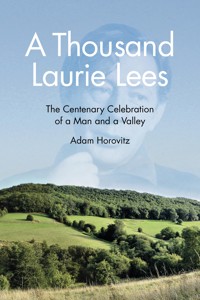
This is not a book about Laurie Lee, still less a biography. It is about the spirit of the man and the spirit of a place. A Thousand Laurie Lees is a poetic reassessment of the Slad Valley, a memoir from a different age rooted in the same idyllic landscape that inspired Cider with Rosie. A year after Lee's death in 1997, a handful of locals dressed up as him for an epic, drunken cycle ride right through the heart of Laurie Lee country. They called it The Night of a Thousand Laurie Lees and stopped off at all the pubs on the way, signing books, singing and carousing. Taking this as a starting point, poet Adam Horovitz reaches back through myth, memory and literature to explore Laurie Lee's impact on the Slad Valley and its people. Lyrically evoking his own childhood there sixty years after Lee, he explores the connections between family, the valley and learning to write, and examines what has changed since Lee's day and what remains the same.
Sie lesen das E-Book in den Legimi-Apps auf:
Seitenzahl: 233
Veröffentlichungsjahr: 2014
Das E-Book (TTS) können Sie hören im Abo „Legimi Premium” in Legimi-Apps auf:
Ähnliche



















‘As a writer Laurie Lee was the disengaged onlooker who understood how his presence altered a place or a situation.’
The Independent, 1997
‘Are you writing?’ he asked me.
‘A little,’ I said. ‘I’m going to a summer class in a few weeks.’
‘Ah, writing classes,’ said Laurie, and he raised his eyebrows and smiled. ‘Do you need them when you’ve got all this?’
He gestured to the party, the valley, the world at large, his drink slopping a little, like late winter sunlight over the edge of his glass.
To the memory of Frances Horovitz, 1938–83, and Laurie Lee, 1914–97
Contents
Title
Dedication
Acknowledgements
Introduction
1 The Apple’s Rounded World
2 Katy
3 Three Points of the Diamond
4 Religion, Sex and Chickens
5 Beat
6 You’ll Be Kissed Again
7 Midsummer Morning Log Jam
8 Changing the Record
9 Are You Writing?
10 The Real Rosie?
11 Party Time
12 Making Music
13 Cannabis with Rosie
14 Not Available
15 Burials
16 Beginnings
17 The Buddha of Swift’s Hill
18 Notting Hill in Wellies
19 Coming Home
20 The Spring is Sprung
21 Tramadol with Rosie
22 Coda
Plates
Copyright
Acknowledgements
My thanks to The Society of Authors for the support provided by a Society of Authors’ Authors’ Foundation grant (www.societyofauthors.org).
The writing of this book would not have been possible without the generosity of Jacqueline Kroft, who let me stay at her house to write the first section of the book, and of the Painswick Quakers for giving me access to their exquisite Meeting House, where I was able to write several more chapters. I am also grateful to the Greenshop in Bisley and to my editor, Shaun Barrington, for their patience and understanding. Thanks also to Karen Walker for her careful, considered and helpful readings of the manuscript and to my father, Michael Horovitz, for his contributions to the fluidity of text and memory. Thanks also to Jane Percival for the use of her painting and to Patricia Hopf, whose book The Turbulent History of a Cotswold Valley (Nonsuch, 2006) was an invaluable resource during the writing of this book. Thanks are also due to Andrew Wood for showing me the photograph of Diana Lodge, and to Jessie Ann Matthew for allowing me to use it at such short notice.
I would particularly like to thank Jo Sanders for her illustrations and Dan Brown for his photographs, which have made this book such a joy to look at, as well as Mark Anderson, who provided the title of this book many years ago.
Thanks are also due to Joe and Imogen Reeve, Anne Garcin and Nik Bragg, Rick Vick, Alex Jamieson, Brian and Carole Oosthuysen, Francoise Pinteaux-Jones, Isa Clee-Cadman and Gavin McClafferty and Anne and Ian Mackintosh, who looked after me when I broke my arms ten days after signing the contract to write this book and whose generosity allowed me the space and time to rethink it as I mended.
‘An Owl Breaks the Silence’ was originally published in John Papworth’s Fourth World Review (1989) and then in Grandchildren of Albion (New Departures, 1992). ‘Earth Song’ first appeared in Earth Ascending (Stride, 1996). ‘Burials’ and ‘At This Time’ first appeared in Oral (Sceptre, 1999). A version of ‘Roots’ first appeared in issue 1 of Bare Fiction magazine (2013).
‘Burials’ and ‘Cheese Kisses’ are published in Adam Horovitz’s collection Turning (2011), and reprinted with the permission of Headland Publications.
Extracts from Frances Horovitz’s poetry appear courtesy of Bloodaxe Books, taken from Frances Horovitz, Collected Poems: New Edition (Bloodaxe Books, 2011).
Quotes from Laurie Lee’s poetry are taken from his Selected Poems (Andre Deutsch Ltd, 1983) and are reproduced with the permission of his estate.
The quote attributed to John Papworth is taken from Frances Horovitz, Poet: A Symposium, edited by Father Brocard Sewell (Aylesford Press, 1987).
The quote attributed to Laurie Lee regarding the development of the Slad Valley is taken from Laurie Lee: The Well-Loved Stranger by Valerie Grove (Viking Penguin, 1999).
The extract from Midsummer Morning Jog Log by Michael Horovitz is used courtesy of Five Seasons Press.
Introduction
The Night of a Thousand Laurie Lees
Into the quiet of the valley the drunken cyclists came roaring, dressed all in white, veering across the road like baffled owls, tearing up the stillness of the May twilight, disturbing bats in their feeding dance and drowning out the last low hum of fleeing insects. Singing and shouting they came, all dressed as Laurie Lee, fedoras jammed on their heads, tilting at the Woolpack pub as if it were a squat stone windmill. In their pockets were books, any books they could lay their hands on. The Observer Book of Dogs, something by Barbara Cartland. It didn’t matter so long as it was a book.
The pub was humming gently along as it always did in the early evening on the outskirts of the tourist season; a few locals propped at the bar chewing their way through Uley ale or Old Rosie cider which, if it wasn’t drunk quickly enough, tended to simmer in the barrel until it became a sort of explosive West Country Calvados that tore at taste buds and brain cells and, later on, the sides of cars taken home by incautious drivers. Dave the landlord was more than likely stooped by the battered till as usual, barking with laughter at the bawdy jokes that swim gasping for reaction through any bar where everyone knows everyone else.
The Woolpack was a delightfully battered and quasi-homely place in 1998, a year after Laurie Lee died. A simple kitchen lurked behind the stairs to the apartment above, ready to catch the tourists if they were exhausted from long walks through the steep valley, or to feed the hungry natives if they were desperate to escape their own kitchens.
Downstairs, through the dark cellar where a lonely fruit machine lingered dolefully amongst bashed and aged firkins of ale, there was a pool table for the younger generation to hang out at, sucking slowly at thin roll-ups and making a couple of pints last the whole night. Sometimes, if the pub was quiet and they were very quick, enterprising couples would hang out on the table half in their clothes, keeping a weather ear open for the creak of the door, the heavy footsteps of someone coming down to change the lines.
It was a place where nothing much happened, other than the usual mythologising, the arguments about football, politics or the price of eggs or the occasional lonely old man in his cups who blew beer froth through his beard as he clumsily entreated the latest pretty young pot girl to come home with him. He usually went home happy if the expected ‘No!’ came with a gentle smile. No one left in the pub had ever quite achieved Laurie’s sly, twinkling charm, although many tried to reincarnate it.
On The Night of a Thousand Laurie Lees, however, a little anarchy and devilment was coming back, careering down the road from Miserden, from Frank Mansell’s old pub The Carpenter’s Arms where the drinking had begun in earnest, carried on battered bicycles and powered by laughter and beer.
Imagine, if you will, the bikes being steered through a long line of cars parked on the road; the concerned lights blinking sleepily on in the old schoolhouse as riders curse and topple and laugh at the clumsiness of their arrival. The machines being parked hugger-mugger against the solid metal fence, there to prevent drunks from falling into the beer garden. The wheels tangled with pedals, feet and brambles. One bicycle narrowly avoiding the steep careen down the steps to the outside lavatory – slippery, uneven slabs that have cricked the backs of many an unwary drinker over the years.
Silence in the pub as a football chant (‘Laurie LEE Laurie LEE Laurie LEE-EE!’) goes up outside, building in rounds before it blows in through the door followed by a number of men dressed as Laurie and thrusting books into the faces of the bewildered drinkers. ‘Signed books available!’ barks one of the Lauries, scribbling in The Observer Book of Dogs and putting it down amidst the pints on the nearest table. ‘Drinks available.’
More Lauries enter, all signing books, adjusting their hats and husking out requests for beer, their tongues parched with the effort of song and cycling. The bar fills, bodies pressed against each other in a scrum for drink. The locals are crowded into pockets of confusion, subsumed by Lauries. Laughter and song swell like a bubble, bursting from the window behind the bar that overlooks Swift’s Hill, the woodland Laurie bought years ago with the profits from Cider with Rosie, and sinks down the hill to Laurie’s house where his widow and daughter, Kathy and Jessy, are remembering Laurie with a gathering of friends, marking the first anniversary of his death.
They are drawn up the hill from their quieter memories by the chanting, the echo of Laurie’s name bouncing off the bruised old stone of the cottages. Over the car park they come, stepping carefully on the erratic stairs past the lavatory and in through the Woolpack’s door. The painted packhorse sign swings in the breeze, its creak obliterated. The valley feels empty. All life is gathered in the pub, anarchic and beery.
The many arms of Laurie open in welcome as Kathy enters the pub. Books are dropped and drinks passed around, charged and recharged. Laurie suddenly seems alive and well and living on in the valley’s dreaming, in the mouths and minds of everyone who lives there or passes through, bound into the landscape like a white clad Jack-in-the-Green.
The Slad Valley has been bound in, farmed and fenced by literature for as long as I can remember, one of a few Southern English rural idylls to have survived semi-intact into the twenty-first century without succumbing entirely to the deathly creep of empty commuterism.
The quiet boundaries of Laurie Lee’s Edwardian upbringing, through which news or the occasional deserter from distant wars crept furtive and wary, have gone. Broadband has opened wider than the sky the horizons of this small, glacier-cut valley, fringed though it still is by an endless quiff of deciduous trees.
It is a place of quiet mystery in its deepest recesses, with the contentment of a blurry feudal ease at its surface, into which the wider world bounds irregularly like a large, alarming dog only to be rebuffed – or, better still, absorbed with a game of fetch-the-stick. Landowners and workers rub shoulders in the valley’s heart: the pub. Even modern celebrities, whose notoriously unwieldy egos can easily destabilise any community into which they move, are moving to the outlying villages and country houses and being subsumed by Slad.
Slad is place that exists curiously out of time, like the sort of fantastical land I read about as a child (when I wasn’t chasing off into the valley after butterflies, or looking for sheep skulls and badger setts) where dimensions in time and space would interlock. The tattered remnants of rural hierarchy coexist with patchy mobile signal, sleek celebrity alongside scuff-booted workman, artist alongside merchant banker. The past intrudes on the present. Even the sort of idyllic hippy upbringing I had in a thumb offshoot of the valley to which my parents moved in 1971, out beyond the farmhouse racing stables, still exists in places, free from creeping urban paranoia, streetlights and the imperative of labour to the exclusion of dreaming.
1
The Apple’s Rounded World
Behold the apples’ rounded worlds:
juice-green of July rain,
the black polestar of flowers, the rind
mapped with its crimson stain.
From ‘Apples’ by Laurie Lee
Things are changing. A year lost to sorrow recedes into the distance and I am cleaning up and clearing out the house in which I grew up. A time of stepping back and moving on. There is a great deal of work to be done sifting and sorting papers; my father’s archive needs taming and ordering, as does mine. There is such a lot of it, much-layered with dust in the further reaches of the attic. Dust and the early history of the counterculture; books and memories spider-webbed in glass.
On the one clear day of the Jubilee bank holiday, I have come with friends to the house. They are gardening. The garden needs as much ordering as the archive – it is a church of little light under the steepling trees.
I dive into the wealth of papers and begin to clear some space. The long day passes in dust clouds, which dance like long-lost faces on the edge of daylight. My father has returned to London when suddenly, in amongst a pile of addled, raddled and mouse-ridden jiffy bags, I discover a cache of handwritten manuscripts of my mother’s poetry, only one of which the mice had got to: a poem of hers about a Peruvian flute carved from human bone – it too had been shaved down to the essentials – and a collection of photographs. Of us. Of the family, all my life ago.
In the photos, I too am shaved down to the essence of existence – I must be three months old. These are the photos taken when we moved to the cottage, out of London to this branching out of the valley at the heart of Cider with Rosie country. The house, heavy in the here and now with jasmine, boxed in by privet and yew and beech, also looks bare and young and clean.
My parents too; they hold their bodies like saplings, my mother sharp and fluid as a willow, my father a little more knotted, with a beard as tenacious as ivy. The land is bare; an apple tree, a few distant saplings; light. The black and white prints are bleached with age; only a few figures stand out in dark relief.
I am caked in dust, encased in a skin of the past, sat at the top of the narrow curve of attic stairwell, my tea going cold. In the distance I hear chainsaws and laughter, the noise of change. I get up and go downstairs. In the front room, the new curtains are drawn. I walk to the front door and find myself surrounded by light, lifted out of dusty reflection of the past and into its daylight.
One small section of the garden has travelled backwards, has been shaved down to that earlier state. Photographs and present day have merged in palimpsest. The yew trees lour above us, yet this is still a small, bare but fruitful Eden – the earth is dark and rich with neglect, the brutal, invasive stems of nettle and mint are tamed. The apple tree has been cut down. New knowledge needs planting out.
Memories are hardy as seeds; you plant them young and watch them grow in unexpected directions, germinating and cross-pollinating until a full-grown plant shadows everything you remember. Nothing ever grows into quite the shapes you expect or hope for.
As I grow older, remembering my mother in the valley in which I grew up, lost in the intense heat of the summers that book-ended gloriously cold, brief winters where snow piled up on the narrow, walled lane twice as high as myself, the memories of her creep through me like ivy through a dry-stone wall. They clutch at and change my perception, and the landscape becomes darker.
I am too young, perhaps, to remember arriving in the valley, or to see Slad over the tops of saplings and through close-cropped fields of cattle and sheep through anything other than the photographer’s faded lens, but I remember the sensation of belonging that rippled through me as I waded in bright red boots through the ford in the stream, heading up to the badger sett at the edge of Catswood, or as I basked beneath the Roman bridge playing high-pitched troll to any passing gruff two-legged goat.
The valley was my mother’s then, and I’d have defended it and her with all the animal instinct and animosity a three-year-old can rustle up; would have waded to the Octopus Tree downstream from Snows Farm, in whose flailing roots I nestled as if holding some sort of fort against the threat of invasion, would have baaed and mooed and waved my sticks (which dreamt of being weapons) at passing livestock or at wasps until, laughing, my mother picked me up, clutched me to her shiny black quilted walking coat and hauled me home through the young, narrow woods which grew up through jaw-line husks of dry-stone walls, as the dark came down and intermittent lights flicked on one by one in dark corners of the valley.
The valley was my playpen; bound in by walls and fences, I was safe to run and, as I grew, run further within the square mile or so of Slad Valley that was mine, that idyllic Venn confusion point where the parishes of Painswick and Bisley meet; it was never certain to the outside world where it was exactly that one lived.
When I answered the phone aged three or four, running determinedly towards the new technology, as all children do when presented with alluring adult toys, I remember speaking into the receiver, in the clear tones I had learned from my mother, that this was Painswick, followed by the four-digit number that was ours alone. Or almost ours alone, because I also remember the way that sometimes, mysteriously, other voices would appear on the party line, incomprehensibly not there to talk to me. I would listen, intrigued, and pipe up with question and complaint until my mother came to restore my peace (and theirs) and take the telephone away.
The apple tree that is now gone, seasoning slowly for the fire in this suddenly forested garden, is the first thing I truly remember of early childhood, outside my yellow bedroom speckled with stars and the intense universe of my mother’s arms. It was my grotto, that apple tree, my small church hung with laundry, mirrors, fruit. It bore apples that burst still in my mouth like dreams. It fruited year round until I was five, I’m certain of that.
The photos from the attic are stuck into collages like eyes gummed up with sleep. There are photos of me, my large head curtained in a wisp of gold that Rumpelstiltskin might have spun, lurching up the slight slope beneath the apple boughs and wearing a smile whose cherubic nature is sullied slightly by a smear of mud, or the pulp of fruit – the process of peeling these pictures apart makes it hard to be sure. Photos of my mother, smiling through elderflower; of my father, laughing, gnomic, bearded as Pan; of lovers, family, friends. All of us play second fiddle to the valley in these photos, poor players in a stage of its growth, a small harmonious chorus to its relentless song.
It was music that brought us here, the alluring song of the countryside that called so many of the beatnik and hippy generation away from the cities. Certainly, the strident operatics of London were too much for my mother to bear. She had grown up in ‘shabby’ wartime Walthamstow and run to the edges of Epping Forest to erect altars to Pan as a teenager, urgent to escape the suburban confines of her parents’ aspirations and the depredations of rationing. My father, ‘incorrigibly urban’ according to Robert Graves, dreamed the same dream (at least for a while) and found a cottage, advertised in the Evening Standard as ‘going for a song’.
For two poets of the hopeful 1960s bound up in the music of language and at least one of them keening to escape the high towers of London, this was enough – a song was pretty much all they could afford. Yet it was the song that bought them and brought them; this was a valley they had visited before, had known in walks and dreams and trips of all varieties, getting out of London in the comedown years of the 1960s to befriend and stay with the artist Diana Lodge at Trillgate, calling on John Papworth, the founder of Resurgence, in Elcombe and, completing a wonky and arbitrary geographical and artistic triangle that became a rough-cut diamond when we moved in to our mullion-windowed cottage, Laurie Lee, whom my father had met in London around jazz and poetry gigs and at the Chelsea Arts Club and bohemian parties around the capital.
The valley was alive with musics: the curdling, piercing soprano scream of vixens, the angry punkish bark of jays, the wind dragging its endless fugue in green through the trees. It infiltrated everything, penetrating the stone walls of our cottage as if they were paper, leading words in a new dance. It seemed as if my parents had stepped into some sweet-scented Arcadia built out of Blake’s Songs of Innocence.
No Arcadia is complete without people. At the end of our garden, which comprised a quarter-acre stretch partitioned into sunlight and a hill of trees and watched over by the triple-eyed mullion arches that gave the cottage its name, lived Bill, ancient to my young eyes, though he can’t have been more than twenty. He was living in the old chapel in the very early days of my life and I remember him striding across the garden in heavy boots, a big friendly presence with a cat called Bilbo stalking the long grasses and nettles behind him, wary of our cat, Arwen, so called because she had a small white evening star on her pitch black chest, like the Evenstar in The Lord of the Rings.
When my father was away, which was often in those early days, in London or America for readings, Bill was there to help with house repairs, or to flirt, or both. I remember my mother leaping from the bath to pull down the yellow and orange floral blind when she realised that Bill was climbing the ladder to fix the flat roof; her half-angry, half-amused expression at the wolf whistles that her sudden and brief display of nakedness elicited as she slid back into the bath.
CHEESE KISSES
In a bright kitchen the colour of custard
the black cat’s curling out of a yawn
on the long pine table,
spread for the beginnings of a meal.
The oven is hot and creaking.
She turns to it, dons her striped blue and grey apron.
Hair hides her face as she bends to check the baking,
all but her eyes, which laugh at me.
A knock at the door. Come in, she calls.
Bill swings in smiling
the muck of gardens on his boots
She turns, rests against the cooker, greets him warmly.
He still away? asks Bill. A nod, hair bobbing, and a smile.
I watch in silence as the game begins.
Too young to call it flirting,
all I know is that I’ve been sidelined.
I watch, jealous, tease the cat.
There is fire suddenly –
her apron strings have caught
on the hob. My mother’s backside is on fire.
Bill swings her round, slaps.
The fire goes out. There is silence in the kitchen,
but for my laughter, asking for the trick
to be worked again.
Bill leaves quickly.
Out of the oven
come cheese kisses
which melt in my mouth only.
I soon realised, jealously, that my opinion was not just a child’s natural, bonded opinion of his mother. Other men than Bill came visiting when she was alone with me in the valley. Some came hopeful, bearing gifts. Ossie, the photographer who brought the black cat down from London when I was one year old, adored her and named the cat for her symbolically, I’m certain, after Arwen, the elf princess from Tolkein’s The Lord of the Rings who waited in Rivendell for her beloved to rule before she could marry him. A dream, like many dreams that came to nothing in the waking world. I just liked the sound of the name – Arwen. A good word to roll on the tongue as you’re learning to speak.
I held them all at bay as best I could aged two and three and four, demanding and receiving attention in equal measure, being taken for walks in the valley and learning the names of the flowers and the birds. My mother held many of them at bay just as earnestly, walking the valley in the quiet evening light, working in local schools or shooting off to record poetry for the BBC but always waiting for my father to conquer America or London, or wherever he was setting out his poetic stall that week, and come home to the valley. All I wanted from my father then was for him to be my first and best gruff billy goat as I lurked beneath the Roman bridge watching a sliver of summer sun slash through the water like laughter.
Books and songs and poetry were as important as landscape, as vital as breath. Freed from working on the land, I was taught to linger in it and take in every detail that I could. Farming was dying out, becoming broad and intensively agricultural in far-flung flatter lands than this, lands that didn’t fold up like a fist – the fields below us were good for little but Melsome’s cows and Captain George’s sheep, which breached their fences with alarming regularity and came ambling through our gardens in a flurry of dung and hunger, looking for the choicest morsels the garden had to offer, flattening the tomatoes my father had raised, knocking over the towers of tyres in which we grew potatoes.
I was taught to delve into the landscape aesthetically rather than physically, so I learned to float into the names of flowers, lost in the beauty of cowslip and campion, dead nettle and Michaelmas daisy, beech tree and ash, but not much of immediate practical value was hard-pressed upon me. The valley was a palimpsest of imagination, of the living and the dead, and was accessible only through thought.
Occasional visitors would take us deeper into the landscape’s confidence. John Cage came to visit us in the valley when I was very young and took us hunting after mushrooms, picking carefully through the clustering white skulls of fungus until he found something worth eating, which he brought back and cooked with what my father described as an intense care that produced four leathery fragments on a plate. I am fairly certain I refused to eat my share.
I was more interested in the sights and sounds of the valley, in imitating the birds and exclaiming excitedly about the pigs up at the sty attached to Sydenhams farm which my father held me up to see.
Mostly I remember walking in the harsh, exquisite summer light through the contrast between abbey-corseted lanes and fields that shimmered green as chameleons then vanished in a blaze of white. Nothing in between, no glum-clouded afternoons where all the greens of tree and field feel formulaic and even the campion fades from vibrant reddish pink to blackboard chalk simulacrum. Every morning was rosy in our little corner of the Slad Valley, and apples were abundant as dew.
Now the apple tree is gone, but for a bolt of knuckled wood that sinks into the landscape like Excalibur into a mossy stone. The soft lilacs of dwarf cyclamen are buried under scrub and all the Lords-and-Ladies have slithered off with their stems like sticky microphones to parties and pastures new. I am alone in the valley, with only words and memories to sustain me, and the echo of a song that hugs the tree line like a hunting owl.




