


Erhalten Sie Zugang zu diesem und mehr als 300000 Büchern ab EUR 5,99 monatlich.
- Herausgeber: spiritbooks
- Kategorie: Sachliteratur, Reportagen, Biografien
- Sprache: Deutsch
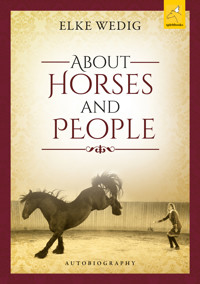
Horses have accompanied me my whole life. For a long time I believedthat it was my job to correct them and to teach them something. I onlyunderstood relatively late that this goes both ways best. Today I knowthe horses have made me who I am today. They are my best friends, myteachers and my therapists. They are straight, much smarter than wethink and loyal. They reflect us and always give us the chance to do better.If they love, they will never use their speed and strength against us andabove all, they can forgive and have infinite patience.With this book, with my personal experience, I tried to give back someof their gifts. I wish that more riders and horse people have similarexperiences as I did and are able to meet their horses and perhaps eventheir fellow human beings with an open heart, patience and love.
Sie lesen das E-Book in den Legimi-Apps auf:
Seitenzahl: 345
Veröffentlichungsjahr: 2025
Das E-Book (TTS) können Sie hören im Abo „Legimi Premium” in Legimi-Apps auf:
Ähnliche
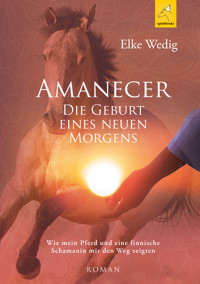

















Table of Contents
Cover
Title
Copyright
Foreword
Attunement
Childhood and First Encounter with Horses
The Greatest Happiness on Earth at the Riding School Hölzel
Leasure Riding at the Hasenhof – My First Horse
First Experiences in Competitions
Wenninger Stables and Gunnar Schlosser
Finally Successful in Show Jumping
The Dressage Stable of Udo Lange
Elegant
In the Reitinstitut of Egon von Neindorff
My Time with Melissa
Time of Change
My Farm
Monty Roberts
Building the Barockreitzentrum
In the Footsteps of Xenophon and Guérinière
Presenting Barockreitzentrum to the Public
Cor de Jong — Circus Lessons and Carriage Driving
The Time of the Friesians
Jean Claude Racinet — Fine Riding in the French Tradition of Légèreté
Schiefentherapie / Straightening Training
Dr. Gerd Heuschmann and a Holistic View of the Horse
Summer Festivals, Workshops, Trade Fairs
Ulrike Dietmann, Epona, and First Therapeutical Approaches
Back in the USA
Rasa Dance with Linda Kohanov
Contents of the workshop
The authentic community
Meet the Herd
The Body Scan
Energetic Fields and Boundaries
Authentic Self versus False Self
Emotional Message Chart
Nuno Avelar and Working Equitation
Amanecer
Concluding Thoughts
Acknowledgements
Landmarks
Cover
Title
Copyright
Foreword
Acknowledgements
The work of the author, all parts included, is protected by copyright. The publisher is responsible for the content. Any use is prohibited without the consent of the publisher. Publication and distribution are carried out by the publisher.
The automated analysis of the work in order to obtain information, in particular about patterns, trends and correlations according to § 44b UrhG (text and data mining) is prohibited.
© 2023 Elke Wedig · elke-wedig.de
Contact address according to the EU Product Safety Regulation, Publisher: spiritbooks · www.spiritbooks.de · Mansfield Height Lot 73, Ocho Rios, Jamaica
Typesetting and printing/E-Book: Büchermacherei · Gabi Schmid · buechermacherei.de
Translation: Angelika Taubmann · [email protected]
Cover design: OOOGrafik · ooografik.de
Image sources: Privatarchiv Autorin; Anja Blum · anja-blum.com; Angela Brückl; Thomas Hartig · tomspic.de; Karolin Heepmann; Miriam Heidt · miriam-heidt.fotograf.de; Carola Steen · carola-steen.de;Sabine Walczuch · swphotoart.com
Printing and distribution on behalf of the publisher: tredition GmbH, Heinz-Beusen-Stieg 5, 22926 Ahrensburg
ISBN Softcover: 978-3-946435-34-1
ISBN Hardcover: 978-3-946435-35-8
ISBN E-Book: 978-3-946435-36-5
Wir haben dieses E-Book speziell für Kindle Paperwhite, iBooks (iPad) und Tolino Vision 3 HD optimiert, damit Sie es dort besonders angenehm lesen können. Auf anderen Geräten oder in anderen Lese-Apps kann es in seltenen Fällen passieren, dass sich Texte oder Tabellen etwas verschieben. Wir hoffen, dass Sie uns diese kleinen Abweichungen nachsehen – und wünschen Ihnen weiterhin viel Freude beim Lesen!
Foreword
It is well-nigh impossible to paint the character of Elke Wedig in all its colors. She is a spirit of many dimensions.
For me, Elke is a wonderful friend who’s game for anything. I can always count on her. She is always prepared for a new adventure or some shenanigans, trustworthy, and reliable. In Germany, we say, “someone with whom you can steal horses.”
She is a great inspiration, and not just when it comes to horses. She is not just a world traveler but a traveler between the worlds. She speaks four languages fluently, plus a few languages known only to travelers of the otherworld.
I know no other horsewoman who has experienced and learned as much and looked for so many new horizons as Elke. Her spirit is ever curious, just like mine, and whenever we meet, there is no stopping us.
I have learned so much about horses from Elke. We met when I was looking for a farm where I could create more awareness of Linda Kohanov’s work in Germany. Elke generously made her unique, valuable horses available to me. She allowed me to work with them in workshops for many years – with Maxim, Baron, Habanero, Impressioso, the ponies Susi and Snow, and many others. Elke’s horses have touched the hearts and souls of many people, never to be forgotten.
Elke also let me host the Horse & Spirit Festival at her Barockreitzentrum for ten years, an event that spread new visions of the non-dominant handling of horses and a more peaceful relationship between people and horses.
Elke and I have taught Horse Dancing and other workshops together for many years. We have made some fantastic journeys, and in the jungle of Jamaica, she even saved my life by finding a doctor for me.
Elke is a person of outstanding intellect and vigor. Running the Barockreitzentrum, including managing the program with international trainers, was a feat only a very few could have accomplished. Still, her unerring sense of reality, her tolerance, and her very high work ethics have made it possible.
There are few people with whom I can talk this frankly, straightforwardly, honestly, and often bursting with laughter. She is not only a tough businesswoman but also a creative, free spirit, always willing to seek new adventures.
And at the same time, she is loving and affectionate, benevolent and generous. As I already mentioned, it is hard to describe Elke. You need to meet her to experience all her facets. Or read her words. I recommend her autobiography to all horse people.
Elke’s book is a testimony to the most important developments that have taken place in the equine world in recent decades. Elke experienced it firsthand. Egon von Neindorff, Monty Roberts, Linda Kohanov – you name it – Elke has met and worked with them all.
Elke’s book describes how the horse world has changed towards a more sensitive approach to horses. And she herself helped to set this movement into action.
It is an honor, a pleasure, and a gift to be her friend.
Every single line of her book is filled with valuable information, but above all, you can feel her tremendous and unconditional love for horses.
Thank you for writing everything down, dear Elke.
I hope many other readers will savor this book as much as I did.
Yours, Ulrike
Attunement
My name is Elke Wedig, and I have dedicated my life to horses. With more than 50 years of riding experience, I dare say this is a valid statement.
I have always been fascinated by horses – paired with great respect due to my first fateful encounter with a snappish mare at the tender age of six.
My riding career began at the age of thirteen, and just a few years later, I became a successful competition rider. I was proud to have committed myself to equestrianism.
I rode in competitions almost every weekend for over twenty years. First, I competed at show jumping competitions up to advanced international level, later in eventing competitions up to medium level, and finally, for another ten years, in classical dressage, again up to advanced level.
Back then, I was also very interested in esoteric theories. I attended lots of national and international workshops and conferences, and I practiced Raja Yoga on a daily basis. I realized more and more that riding is not just about a perfect technique. Horses aren’t objects. They aren’t machines. You don’t ride them like a motorbike. You don’t flick a switch to make them work. You need to value them and build a personal and trusting relationship – you need to become friends. And you need to acknowledge their mentality and find out what they want.
Competition riding, however, is about success. Unfortunately, the maxim “to fight by all means possible” is not just a rumor but actually very common. As a result, success and ribbons lost their fascination, and I could no longer approve of the conditions prevailing at those competitions. Riding as a sport was suddenly no longer an option.
I wanted more, and so I set off to new pastures. My desire to learn not just the best techniques but the art of riding kept growing, and the idea of the Barockreitzentrum was born.
It should take more than fifteen years of my life to implement and develop this idea, although I knew from the very beginning what the concept should entail: My equestrian center should be a temple of peace, competence, and opportunity to train riders and horses alike – expertly and patiently.
As a result, the horses should be happier and become more beautiful. The riders should not only learn to provide the correct aid but also to see and understand the souls of the horses, to see the world through their eyes. Therefore, I offered only ten paddock stalls for client horses besides my own, which served as school horses and show horses. I needed space – not only for clients and students but also for new ideas. I wanted to incorporate my personal experiences and skills.
But the most important thing was that this training center should become a meeting place for the best. I started to create workshops in collaboration with the most excellent instructors and coaches I could find.
The Reitinstitut and, later on, my comprehensive training in American Horsemanship with Monty Roberts in California and the continuous very therapeutical training with Linda Kohanov in Arizona were most helpful for my intention to work holistically. Monty taught me that “fast is slow” and “slow is fast.” Linda was even more precise with the “Tao of Equus”: “It’s not about the destination,it’s about the journey.”
This insight was crucial for me. I suddenly understood that the decisive factor was the process itself. I had to gain the patience to make only small steps and learn to understand and implement the importance of Mr. von Neindorff’s standard phrase, “Go to the limit, but never overstep!” I had to stop giving commands and trying to force the final product. I had to learn to listen and to trust the process.
The best teachers, however, were – with the support of my two-legged instructors – undoubtedly the horses. I owe them everything. A wise trainer will tell you that “to ride means to develop your personality.” And yes, if you are persistent enough, if you are not afraid of setbacks and disappointment, and if you are willing to have yourself corrected by experienced riders and especially by the horses, you will get the chance to be cut into a diamond.
I will never forget the discussions between Mr. von Neindorff and myself because, as a young person – I was in my early thirties then – I simply didn’t want to admit that riding requires maturity and experience. We spoke several times about Nicole Uphoff, who won the individual and team gold medals with Rembrandt in Seoul in 1988. I thought it highly unfair that Mr. von Neindorff attributed the actual success to her coach, Uwe Schulten-Baumer, and said that Ms. Uphoff was far too young to cope with a challenge like that. Back then, I thought his words spoke of envy for the young, pretty girl who owned them all – the equestrian world and the favorites alike.
Today, I know the importance of the instructor. I know that the rider needs help from an experienced instructor, and the horse needs a herd leader as well as a friend who can be respected and trusted. It needs a counterpart with equal strength, speed, and sensitivity. It needs a person who does not care about image cultivation, a selfish achievement of objectives, and showmanship; a person who can keep to the sidelines; a person who will be there for his or her horse every day for years to come; a person who offers lifelong training adapted to the age and the skills of the horse; a person who enables the horse to develop its potential without time pressure.
To make a long story short, I no longer fight by any means possible. I do not fight at all.
Instead, my approach is holistic. The work with my horse covers body, mind, intuition, and soul.
I wish that more people would learn to see the world through the eyes of their horses and find joy in refining themselves. I wish these riders would become mindful, learn to observe, trust their experience, and accept the insights their horses communicate.
I am proud that I have been able to awaken the same passion for horses that I have felt from an early age in some of my riding students – a passion that has accompanied me throughout my life and made me the person I am today.
Audrey Hasta Luego, a young rider I first met at Apassionata in 2006 and who I admire greatly, once said that a passion made true can be the source of the greatest happiness. But it can also lead to isolation if there is nobody to share it with.
And so, I would like to share my story and my experiences, and I hope they will lead to a little more understanding of and love for horses.
Cordially, Elke Wedig
Childhood and First Encounter with Horses
I grew up in a very sheltered environment with my parents and my great-grandmother Friederike, who was over 80 years old. She and I shared the children’s bedroom. My life was utterly unspectacular. Like all the children in the neighborhood, I went to kindergarten at three. There was a lovely, big garden with wildflowers and many colorful butterflies, which I loved very much.
I was a dreamy child, and I liked watching animals – not just butterflies but also ants and pill bugs. I could name most of the field flowers and knew their benefits.
I didn’t see much of my father during the week. After the war, he became an architect, which happened quite on a whim. Being a displaced person from Silesia, he had to help remove the wreckage in Stuttgart, his new home of choice, to receive food stamps.
This task was recognized as fieldwork for architecture studies, and as most of the houses were destroyed after the war, he decided to become an architect. Instead of becoming an aircraft maker – which would have been his dream job – and building aircraft, he opted to build houses. His decision proved to be the right one. He was successful and built several hundred houses during his professional career. For me, as a child, this had rather negative consequences because I hardly ever saw my father. He rarely showed up for lunch and came home so late in the evenings that I was often already sleeping. Even on the weekends, I saw him only during meals, and if the weather was good, we went for a walk around Lake Ried on Sunday afternoons. He spent the rest of his time in the office, at construction sites, or in meetings with clients and craftsmen.
As I was an only child and always had to keep my mouth shut and be good and modest (at least from my point of view), I spent most of my time across the street with my friends Christine and Conny. There we could be free. We played in the garden and the house. We even altered half of the flat to build our own “tunnel of horror.” We closed the shutters and placed bed linen on the furniture. Two of us would hide inside this scenery and try to scare the third one, who had to walk through the tunnel of horror. That was so much fun. Such games would have been impossible at my home.
Christine and Conny also had a doll’s kitchen that worked with carbide. During the winter months, we cooked stewed apples and roasted oat flakes. It tasted delicious, and we could also play “restaurant.”
We also loved to sleep in a tent in the garden. As we grew a little older, we invented a test of courage. At midnight, we had to climb over the fences to other properties. That was very thrilling, as we sometimes didn’t know if there would be dogs. The scariest thing, however, was walking across the cemetery in the dark. That was terribly frightening, but we were also incredibly proud because we were so brave. Our parents, of course, didn’t have a clue about our nightly adventures.
Another thing I loved was going to the funfair on the Cannstatter Wasen, the Stuttgart Beer Festival. There, we rode the chain carousel, bumper cars, and rollercoaster, and we went, of course, into the tunnel of horror. What impressed me the most, however, was that Conny, the youngest of us, always wanted to ride on a horse. I was totally in awe because I was terrified of horses.
This resulted from my very first and rather traumatic encounter with horses: Like every Sunday, I had to go for a walk with my parents and my great-grandmother – an activity I thought silly but unavoidable. My parents knew that I didn’t like these walks, especially as we always went the same way. From Sonnenberg towards Möhringen, around the aforementioned Lake Riedsee, and then back home. An absolutely futile endeavor, at least in my opinion. Afterwards, we would have some coffee. This was incredibly boring and pointless for me, as I didn’t even like coffee.
On that sunny Sunday in May, however, we left our usual route and walked across the fields and along a paddock where several horses were grazing. I assume my parents wanted to increase my enthusiasm concerning Sunday afternoon walks. Well, they failed. Until today, I haven’t been able to find valid reasons for walking or hiking.
Nevertheless, I liked the prospect of passing the paddock on our walk. I’ve always liked animals, especially horses, and I was very sad that even after years of begging, I only got a turtle. A dog, a cat, or possibly a real pony were entirely out of the question.
I was only six years old and had never sat on a horse before. I always admired my friend Conny, who never missed an opportunity to interact with horses. She always beamed happily while riding endless laps on the back of a horse at a circus or a funfair while her sister and I ate some ice cream or rode the chain carousel, the Ferris wheel, or bumper cars.
When we approached the paddock, I wanted to take a closer look at the horses. After all, it had been my secret wish for a while to ride one day. The horses seemed rather big, but fortunately, a high fence made the whole encounter quite secure — or so I thought. Imagine how startled I was when a giant white horse jumped lightning-fast forward, bent its long neck over the fence, set back its ears, and bit me vigorously in the back. It wouldn’t let go but bit into my jacket, lifted me, and shook me around. I still remember the pain and the panic I felt. I was sure this wild horse would break my back, and I was going to die. My father intervened by screaming and waving a stick around, and that threatening gesture did the trick. The white horse dropped me. After this experience, it took seven years before I dared to get close to a horse again.
When I was twelve years old, a classmate at grammar school told me that she was taking riding lessons. I was at a loss for words. I was horrified and jealous at the same time and struggled with myself for weeks trying to find out what that meant for to me. But the longer I pondered the situation, the more certain I felt that I, too, wanted to learn how to ride.
I gathered all my courage and talked to my mother about my wish. She answered: “You are already playing the piano. Apart from that you are attending grammar school. That doesn’t leave any time for another hobby.”
I am basically an artistically inclined person and have always been open to the arts. But playing the piano was about the same as our Sunday afternoon walks: an activity as unpleasant as pointless. I couldn’t find any sense in practicing endless etudes, especially as you could listen to the radio or use record players if you wanted to listen to good music. The never-ending finger exercises really didn’t knock my socks off. And anyway – why did I have to do the exercises without moving my hand and with slightly bent fingers? That felt totally stupid.
My piano teacher, at least seventy, in my juvenile opinion, did nothing to contribute to my enthusiasm for playing the piano either. It was all about Czerny, the art of dexterity, and short but daily exercises. I simply could not enjoy it.
I still remember the pain I felt when she pressed my little finger on a black key with her fat thumb and yelled: “Hoooold!” All my friends, although they’d started to play much later than I, were allowed to play Schlager music and folk songs. But I still slogged away at chords and stupid triplet exercises.
The worst, however, were my friends Christine and Conny, whose house I had to pass on my way to my piano lessons. They knew exactly when to wait for me at their garden gate. They’d jump around, point their fingers at me, and laugh at me because my piano case was bigger than I.
After my mother had read an article about Mozart, the prodigy, she asked me when I was three if I wanted to learn how to play the piano. Obviously, I said “yes” at the wrong moment, and as a result, I had to stay the course for nine years.
As I hadn’t gotten anywhere with my mother, I asked my father the following Sunday. His diplomatic answer was I should think about it for four weeks. After all, riding was an expensive affair, and I should be very sure to stick with it once I started.
I was an obedient, rather shy child and, as an only child, found it difficult to stand up for myself anyway. My upbringing in the nineteen fifties was still influenced by the war experiences of adults in general and, of course, by those of my parents in particular. My mother had lost her parents during the war and lived with her grandmother. My father had been a night fighter from the age of sixteen and didn’t know for a long time if his family was even alive and, if so, where they lived.
After they had been expelled from their home in Silesia, the most important thing for my father was that they left the Soviet occupation zone. Otherwise, he would never visit them, as he had told them already during the war. He went with a war comrade, who had been born in Stuttgart, into the American occupation zone – as far away from the Soviets as he could get – and thus ended up in Stuttgart. This turned out to be very fortunate for him and our family. Many of his relatives and friends had stayed in East Germany and lived in the GDR until the fall of the Berlin Wall on November 9, 1989.
I will never forget that date and how I learned about the fall of the Berlin Wall. I was on vacation with my parents in the United Arab Emirates, which had become a tradition over the years. My father’s birthday was in November, and we always spent it on a beach vacation in Sharjah.
We stayed in the best hotel in town and treated ourselves to the sumptuous Arabic buffets — fresh fruit, desserts, crawfish, oysters, and caviar. None of these things were affordable for the average consumer or even known in post-war Germany. After dinner, we usually took a long walk to the Arab souks, a kind of market hall where you could buy all kinds of exotic and European goods at bargain prices. The Emiratis were used to pay with natural gas and oil that gushed out of the desert ground and, therefore, had little relation to Western goods or international currencies.
On the evening of November 9, 1989, we indulged in a fruit cocktail: half a liter of freshly squeezed fruit in various layers of color. It consisted of at least five different fruits like kiwi, mango, strawberry, banana, and orange. We loved that delicious beverage, and so we sat at a table in one of the many juiceries next to some local Arab men. They were dressed in the traditional dishdasha with the typical white cotton cloths and the double-braided headband that holds the fabric and was supposedly used in the past to tie camels in the desert. It could be shaped into a figure of eight to tie the front legs of the camels together. That way, they couldn’t run away and disappear in the desert.
I watched the locals. They seemed mysterious and elegant, and although I understood only a little Arabic, I always found their conversations harmonious and cheerful. That was quite different from the conversations of German men, which, in my experience, often ended in arguments about politics, economics, or the like.
For that reason, I noticed that the mood at the other table suddenly changed. They all became very excited, and I automatically looked at the TV and recognized Willy Brandt on the Berlin Wall. My first thought was, “The Arabs are totally crazy. Why make such a bad movie? And how did they even do it? Unbelievable.” My parents also thought it was a poorly produced movie. We simply couldn’t imagine that what we were seeing could be true. We didn’t realize until the following morning, when we read about it in the newspaper, that it was reality.
Many similar experiences in my life have taught me how deeply prejudices, upbringing, and the environment influence us. I understood that I, too, was living in a subjective reality. Even if I saw them, things I couldn’t imagine simply did not exist.
One good example is the afternoon I walked into our living room on September 11, 2001, and found my husband staring at the TV, spellbound. He was watching a scene with a plane crashing into one of the towers of the World Trade Center. I wasn’t particularly impressed because I thought it was just another one of those typical disaster movies he liked so much.
These experiences significantly influenced how I dealt with events of all kinds, with other people and, in later years, especially with horses.
But let’s return to the year 1967 – the year in which I decided that there was nothing more important all over the world than to learn how to ride a horse.
The negotiations with my father were laborious.
After four weeks, I was pretty sure about my decision, but my father kept stonewalling. Riding was rough, expensive, exhausting, and dangerous, and I should think about playing tennis instead. Of course, it wasn’t ideal that my father learned riding when he was in the Hitler Youth (HJ) when he was at my age. Learning to ride or even fly a plane was relatively easy for young men back then, even if they had no money. It happened in preparation for war, although probably very few people realized that in those days. Anyway, my father learned to ride a horse a few years before the war, and unfortunately, he had no memory of white unicorns with glitter in their flowing manes or horse whisperers who worked without a lunge or a whip. And, of course, he had never heard of subtle aids or gentle communication in the HJ.
As a result, I had to listen for weeks to reports about my father’s unpleasant experiences in the Reiter-HJ. He constantly hammered away on the rough way of teaching and the vicious horses that sought your blood as soon as you attempted to saddle up. During their first riding lesson, the instructor told them they were very fortunate to learn how to ride because they no longer had to walk. Then it was “Mount, ride in a group.” After two rounds at a walk, they started trotting, which resulted in half of the boys falling off their horses for the first time. “Mount!” It was time for cantering. Of course, most of them fell off again, which really hurt, and those who had managed to stay up until then – like himself, according to his report – had to jump over cavalettis at the end.
This story ended the discussion for the time being, and it should take more than six months until I could make some inroads. At the beginning of January, my mother asked me what I wanted for my birthday. I spontaneously replied: “I want to stop playing the piano and learn how to ride instead.” My mother said nothing at first, but the following weekend, my father told me I had to attend piano lessons until Easter. After that, I could start with riding lessons.
I could hardly believe my luck, and I just grinned happily when my piano teacher once again complained that I couldn’t get Czerny right.
A new era was about to begin. The ten years of piano lessons had taught me one thing: hard drills and authoritarian teaching methods did not bring joy. And without joy, enthusiasm, and ease, you will never achieve brilliant performances.
The Greatest Happiness on Earth at the Riding School Hölzel
Even today, after more than fifty years have gone by, I still remember the day i the Easter holidays when my parents took me to the Martin Hölzel riding school in the lower Körschtal valley in Stuttgart-Möhringen to sign me up for riding lessons. It was a sunny day. The sky was blue. We all stood around a round table in the entrance area of the pub adjacent to the riding school, where we were told what I needed for the lessons: breeches, riding boots, helmet, riding whip, and gloves.
In the background, I overheard some young people talking about a competition they were preparing for. I was thoroughly impressed. Furthermore, they discussed the results of the youngsters who had already ridden in competitions. I heard Martin Hölzel’s daughter Gisela had finished sixth in level A dressage. Again, I was totally impressed.
From that moment on, everything happened very fast. The following week, I would take the first of five individual lunge lessons, after which we would switch to group lessons. The plan was to take two riding lessons per week. I was happy.
But first, we went into town to the tack shop Reiter und Pferd (rider and horse), where I was allowed to pick my first horse riding clothes. My parents also bought me a green riding jacket. I looked like a real horsewoman.
The week went by slowly, but finally, the day of my first riding lesson had come. I fetched my horse, a little grey named Polar, from the school stable. I was a bit shocked, to be honest, as they demanded I lead the horse without any help to the riding hall, which was about two hundred meters away. The horse took full advantage of my insecurity and constantly pushed me against the loose-boxes in the stable and tried to turn around several times. No one was there who could have helped me, but somehow, we finally made it.
I climbed into the saddle, which turned out to be the first big challenge, and we did our first laps at a walk. I was very surprised at how much that swayed to and fro and how difficult it was to keep my balance. However, I relaxed a little after a while and decided that riding at a walk wasn’t too bad. Just as I began to think that this was really cool, stage two of the training commenced. We started trotting, which was a very frightening experience. I felt utterly unsteady and feared falling off the horse the very next second. I was told to go at a rising trot and to pay attention to the outer foreleg. I was supposed to sit down when the foreleg went back and stand up when it went forward. That was quite a lot all at once, but it worked out well over time. My father sat in the grandstand and watched the whole time. The lesson flew by. Polar allowed me to lead him back to the stable, and I was very proud to have mastered my first riding lesson so well.
I was already looking forward to my next lunge lessons, during which my seat in the saddle should become increasingly more secure.
In the fifth lunge lesson, I should ride King, a larger black horse. We reached the riding hall without any problems. I was pretty surprised when four other horses appeared in the arena, and only one of us was lunged, while the other four were to go large at a walk. On the second lap, King bucked, bolted with me in the saddle, and changed into a full gallop. I didn’t even have time to collect my thoughts before he sent me flying. I landed not very gently, and I felt like I had broken every bone in my body. Mr. Schreiner, my riding instructor, was a war invalid with a wooden leg and a voice so loud you could hear him three villages away, a voice he used at that moment. I should mount that horse again. Immediately! Someone came from outside the arena, caught my horse, and held it so I could mount again. After that incident, I was allowed to lunge, and the rest of the lesson went smoothly. However, I kept trembling all over, and the uplifting feeling of being on horseback was gone for that day.
I must admit that my riding career would have been over at that point. The only problem was that I had been pestering my parents for months, and my father had made it very clear that this sport wasn’t for me and that I could not stop after the first setbacks once I started with the lessons. He also accompanied me to all my riding lessons to follow my progress.
To make matters worse, he complained to Mr. Hölzel about Mr. Schreiner’s unrefined yelling. Mr. Hölzel answered that it only sounded like in the barracks when you were sitting on the spectator’s bench. He suggested my father should also ride instead.
My father had received bronze and silver riding and driving badges for young riders before the war and was far superior to me. However, to my astonishment, he agreed to Mr. Hölzel’s suggestion, and we soon started our riding lessons together.
That was not what I had planned, and I absolutely did not like this turn of events. But what else could I have done but keep my mouth shut and play along?
We stayed at the Hölzel riding school for about six months. Occasionally, I was allowed to go for short “rides,” which turned out to be half-hour rounds at a walk. These were a lot of fun and always took place on Saturdays. I only got my favorite horse, Kristall, when Mr. Grimm, a regular client at the Hölzel riding school (a rather old gentleman in my perception at the time), wasn’t there or didn’t feel like riding.
I was even allowed to ride in the parade at the children’s festival in Möhringen, which was a real highlight for me. There are still some cringeworthy pictures of me hanging crooked and lopsided on my horse.
After those six months, our (rider’s) life changed very unexpectedly as a business friend of my father’s, Walter Osterland, invited us to the Hasenhof in Waldenbuch, where he had three horses, to go for rides with him on the weekends. That was awesome, as there was a long waiting list at the Hölzel riding school for the popular Saturday morning rides, and we had little chance of taking part – especially when the weather was fine. Mr. Hölzel had already offered to sell a horse to my father because he thought we had made good progress, and if we wanted to learn to ride properly, we needed our own horse.
Our first day at the Hasenhof was fantastic. We were given two horses and went for a beautiful ride through meadows and forests. Afterward, Mrs. Osterland offered coffee and cake, and we sat outdoors in front of the caravan, which was parked in the paddock, and watched the grazing horses. Our second stay was just the same. At the third time, Mr. Osterland showed me a bay gelding grazing in the paddock. His name was Flingo, and I should ride him that day. Surprised, I went into the arena with Flingo, and we had a lot of fun. His owner, Mr. König, even set up a small jump for us, which we managed pretty well. I was thrilled. After the riding lesson, Mr. König asked our opinion. Did we like the horse? We assured him that it was a really great horse. Mr. König told us Flingo would cost five thousand marks.
My father, always the architect, remarked that he could build an entire house for that much money. To get rid of Mr. König, he asked if at least the saddle, bridle and halter were included. Mr. König answered that the saddle alone would cost six hundred marks. My father countered that you couldn’t ride without a saddle and thought that was the end of the story. Danger averted.
He was wrong. Less than five minutes later, Mr. König approached us again and said it was okay. We could get the horse and the riding equipment for five thousand marks. The most important thing, however, was that we now needed to buy a round for everyone, as that was custom when buying a horse. Word spread like wildfire. All the people in the stable, with whom we now seemed to be friends in one fell swoop, gathered at the pub, the Hasenhofwirtschaft. And I enjoyed my first Williams Christ schnaps at the tender age of thirteen.
After a while, it occurred to us that we should probably call my mother. My father transferred that task to me. After all, it was my horse, too. When she asked if something was wrong because we still weren’t home, I answered, “Don’t worry, everything’s fine. We merely bought a horse!” My mother was stunned. She was worried that she would have to clear out the garage because none of us, least of all me, had expected to buy a horse, and we hadn’t even thought about where we should stable it. When I broached that subject at the pub table, Mr. Beck, the owner of the riding stable, immediately told us that he happened to have a free horse stand.
That was another important lesson for me as an only child who was always left to my own devices regarding my tasks and challenges at school or in general. As one could see, problems were best solved in a group and in the field, and talking was extremely helpful.
Flingo was a Württemberger warmblood, a five-year-old gelding. After a short time, we became a really good team. We regularly took part in the group riding lessons. Still, at least once or twice per lesson, Flingo would bolt in the top right corner, buck wildly, and gallop diagonally across the arena – like a rodeo horse. By then, my seat was stable enough that I thought it funny. But I was also a little ashamed because I couldn’t stop my horse from doing his shenanigans. At the weekends, we took part in large group rides that lasted at least two to three hours, and six months later, in October, I rode my first foxhunt. It was a wonderful time. We were very content and happy and in complete harmony with ourselves and our horse, and I was unspeakably proud of my horse.
Flingo was a life insurance. We rode dressage and show jumping – at least that’s what we thought at the time – and regularly went cross-country. We rehearsed our first Quadrille for the Christmas party at the barn, and at the carnival, we even had a show jumping quadrille in colorful costumes. A year later, we decided to buy a second horse so we could finally ride together. We purchased a super beautiful eight-year-old Hanoverian mare, a chestnut with white legs and lots of white in her eyes. Her name was Welfenherz, and her father was Welf, a beautiful Hanoverian stallion who, as we learned later, had sired many horses with spine problems. These horses have so-called kissing spines, meaning the gaps between the vertebrae are too narrow. Carrying a rider can cause massive problems and be very painful for these horses.
We called our pretty mare Winnie and loved that she had a natural “go”. She went forward very well, moved elegantly, and jumped very well. However, she would also rear straight up and jump the courbette. Of course, we didn’t know back then that the courbette is a higher-level classical dressage airs above the ground movement in which the horse rears and then jumps forward several times without touching the ground with its front legs – like a kangaroo.




