


13,99 €
Mehr erfahren.
- Herausgeber: The History Press
- Kategorie: Sachliteratur, Reportagen, Biografien
- Sprache: Englisch
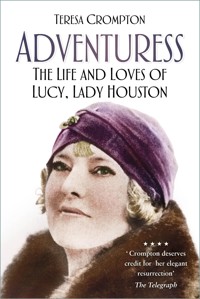
In the 1930s Lady Lucy Houston was one of the richest women in England and a household name, notorious for her virulent criticisms of the government. But politics had been far from her mind when, as young Fanny Radmall, she had set out to conquer the world. Armed with only looks and self-confidence, she exploited the wealth and status of successive lovers to push her way into high society. Brushing off scandal, she achieved public recognition as an ardent suffragette, war worker and philanthropist. Having won control of her third husband's vast fortune, she enjoyed the trappings of wealth – jewellery, couture, racehorses and a luxury yacht – but she wanted more. Seeking influence in national politics, Lady Houston financed the first flight over Mount Everest, backed secret military research, and facilitated the development of the Spitfire aircraft. Engaging with famous contemporaries such as Winston Churchill and Oswald Mosley, Lucy sought her own public voice and so purchased a newspaper. Seeking to expose the Prime Minister as a Soviet agent and promote Edward VIII as England's dictator, Lucy was loved as a patriot but loathed as a troublemaker. Adventuress draws upon hitherto unpublished archival material to reveal how Lucy Houston achieved her fame and fortune, and how she exploited them.
Das E-Book können Sie in Legimi-Apps oder einer beliebigen App lesen, die das folgende Format unterstützen:
Veröffentlichungsjahr: 2020
Ähnliche



















Adventuress: a woman adventurer, specif. one who seeks to become rich and socially accepted by exploiting her charms, by scheming, etc.
Collins English Dictionary
First published 2020
This paperback edition first published 2022
The History Press
97 St George’s Place, Cheltenham,
Gloucestershire, GL50 3QB
www.thehistorypress.co.uk
© Teresa Crompton, 2020, 2022
The right of Teresa Crompton to be identified as the Author of this work has been asserted in accordance with the Copyright, Designs and Patents Act 1988.
All rights reserved. No part of this book may be reprinted or reproduced or utilised in any form or by any electronic, mechanical or other means, now known or hereafter invented, including photocopying and recording, or in any information storage or retrieval system, without the permission in writing from the Publishers.
British Library Cataloguing in Publication Data.
A catalogue record for this book is available from the British Library.
ISBN 978 0 75099 443 9
Typesetting and origination by The History Press
Printed and bound in Great Britain by TJ International Ltd.
eBook converted by Geethik Technologies
CONTENTS
Acknowledgements
Note on Sources
Preface
1 No Lady
2 Miss Grafton and Mrs Brinckman
3 Becoming Mrs Broadhead
4 Lady Byron
5 Identities
6 War Worker
7 A Real Man
8 Lady Houston
9 Six-Million Widow
10 Into the Jolly Old Limelight
11 Were I Prime Minister
12 Born to Strife
13 The Saturday Review
14 The Bludgeon, Not the Rapier
15 Rule Britannia and Damn the Details
16 Intrigue
17 Patriot No. 1
18 Hitleress
19 Legacy
Notes
Bibliography
ACKNOWLEDGEMENTS
Ancestry (website)
British Newspaper Archive (website)
Cambridge University Library (Stanley Baldwin and Lord Birkenhead correspondence)
Dr James P. Catty
Churchill Archives Centre, Churchill College, Cambridge (Churchill correspondence)
City of London School Archives
Cornell University, Division of Rare and Manuscript Collections (Ford Madox Ford Collection, Violet Hunt Papers)
Dr. Peter Crompton
Hansard 1803–2005 – Parliament UK (website)
John Rylands Library, University of Manchester (Ramsay MacDonald Papers)
Dr. Myrddin Lewis, Department of Humanities, Sheffield Hallam University
National Brewery Museum, Burton on Trent
Miranda Seymour
Alan Taylor, Folkestone and District Local History Society
University of Manchester Library (forged Russian letters correspondence)
University of Oxford, Bodleian Libraries, Weston Library, (T.E. Lawrence and Lord Wolmer correspondence)
NOTE ON SOURCES
Lucy Houston began her life in obscurity and ended it as a household name, with episodes of scandal, notoriety and public acclaim along the way; it is inevitable, therefore, that the biographer’s source material is varied. The richest mines of personal information are two biographies, written in 1947 and 1958 respectively by employees, newspapermen Warner Allen and James Wentworth Day. These are invaluable as a behind-the-scenes record of Lucy’s later lifestyle and her attempts to alter the course of British politics. The present work often draws upon them, and also gleans information from other first-hand accounts written by political associates such as Oswald Mosley and friends such as the writer Eveleigh Nash. Although in her later years Lucy was a prolific correspondent, not hesitating to publish letters of advice or commendation to strangers such as British Prime Ministers, Hitler and Mussolini, relatively few private letters have survived. A number of letters to and from Lucy are held in public archives, however. This biography has drawn upon, for example, her correspondence with Winston Churchill, T.E. Lawrence (Lawrence of Arabia), Stanley Baldwin and the writer Violet Hunt. Much of the information revealed by the archival material – for example, Lucy’s attempt to prevent Baldwin making Lord Birkenhead a cabinet minister, her dealings with Scotland Yard about forged letters from Ramsay MacDonald to leading Bolsheviks and her support of the novelist Violet Hunt – has, to my knowledge, never been published before.
There is, however, less hard information about Lucy’s earlier life, in the late Victorian, Edwardian and First World War periods. Even when she did confide in others, as readers will soon note, her memory was highly selective, always impressionistic, sometimes deceitful and suspiciously self-serving. This book therefore uses other documentary sources to tell a fuller story of Lucy’s earlier life, and also some episodes of her later life unknown to those earlier biographers, such as her purchase of the forged Ramsay Macdonald letter to the Bolsheviks. The pages of the press, many local newspapers recently having been made available online, have also been helpful, particularly for establishing Lucy’s activities and whereabouts. To avoid drowning the text in source notes, rather than identify individual press articles, which were in any case often syndicated and thus appeared in many publications, I have generally referred to ‘the press’. Memoirs and biographies used are referred to in the text and details provided in a bibliography. Where archive material is used, referencing is provided in the endnotes.
Despite my best efforts to tell as complete a story as possible, gaps remain. Lucy’s childhood and her life as the teenage mistress of Frederick Gretton are largely undocumented and throughout there are periods, such as that of the ‘Madame Chabault’ episode of 1906–08, where a biographer can only speculate how she was spending her time. Overall, big money leaves a bigger trail, and the task of accounting for Lucy’s whereabouts and activity is easier after her marriage to the millionaire Sir Robert Houston. This fact explains the biography’s emphasis on the final decade of the subject’s lifespan.
PREFACE
With a spring in his step Winston Churchill, Chancellor of the Exchequer, entered the Treasury building in Whitehall. It was 5.30 p.m. on the last Saturday in October 1929. The windows in the imposing façade of the deserted building were dark but Churchill had come for a secret meeting. Upstairs in his grand office he found Lord Hailsham (the Attorney General) flirting with the person he had come to meet, Lucy, Lady Houston. Her husband Sir Robert Houston, a multi-millionaire shipowner, had died and, having inherited the bulk of his fortune, Lady Houston was reputed to be England’s richest women. Strong-minded, imperious and formidable though she was, the thrice-married Lady Houston possessed both wit and charm.
Since Sir Robert Houston’s death the Treasury had been trying to charge death duties on his estate and now his widow wanted the Treasury off her back. Lady Houston greatly admired Churchill and he had been surprised and delighted when she sent him a telegram offering to make a voluntary contribution to the nation’s coffers. The talks in his office continued for more than an hour over cups of tea. Churchill tried to persuade Lady Houston to hand over £2.5 million but the wealthy widow, as she would relate, ‘argued and bargained’ and ‘wheedled and bullied’ Churchill into accepting less. At £1.5 million – the equivalent of £85 million today – her offer was still an enormous sum. Churchill, Chancellor for five years, had been under continual criticism for his financial policies and he was delighted at this great personal triumph that would boost his reputation.
A few days later Lady Houston returned to pay the money over. She swept into Churchill’s office, he told a friend later, like a ‘British Boadicea – ridin’ in an invisible chariot, with unseen scythe-blades mowin’ down hordes of unguessed enemies!’ She sat down opposite him and took her cheque book from her capacious handbag. Flirting outrageously, she asked to borrow Churchill’s pen. ‘Tell me, how many noughts are there in a million?’ she asked. Then she added archly, ‘Don’t you think you’d better come and guide my hand?’ When the cheque was written Lady Houston handed it across the desk: ‘Now, haven’t I been a good girl? Don’t you think I deserve a kiss?’ When the news came out, Lady Houston boasted of her achievement in the press. Her donation, she said, was of ‘enormous magnitude and importance’. She had written the cheque with a ‘joyful heart’ as an ‘act of grace’ to the nation.
Having offloaded £1.5 million, Lady Houston still had £4 million of her husband’s money remaining. How she would spend it for the good of England would occupy her mind day and night for the rest of her life.
1
NO LADY
Fanny Lucy Radmall – called Poppy by her family and Lucy by everyone else – never scorned her origins. At the end of her days, as a super-rich woman with a title and a famous yacht, she would boast, ‘I’m a pure Cockney, my dear, born within sound of Bow Bells.’ The Cockney traits of optimism, determination, quick thinking and humour would characterise all that she did. Her upbringing in Victorian London would exert great influence upon her life. By the time of her birth in the 1850s, London, the capital of the British Empire, was developing rapidly and abounded with optimism and opportunity. For decades people had been flooding into the city from across Britain; the families of Lucy’s parents, Thomas and Maria, crafts- and tradespeople seeking to exploit the city’s markets, had been among them. Thomas Radmall, born in about 1816, was the son of a stonemason while Maria Clark, born in 1818, was the daughter of a brewer.
With a young population, London had a high birth rate and with it a high level of illegitimacy. By the time of their marriage in June 1840, Thomas and Maria already had two daughters, Margaret and Eliza. Maria was pregnant again when she married and bore another girl, Mary, six months after the wedding. The fact that Maria signed her marriage certificate with a cross indicates that she was illiterate. The lives of the Radmalls, with the frequent changes of occupation and location that indicated economic instability, were typical of the lower classes. They lived at various addresses south of the River Thames until about 1840 but then moved north into the City of London, the capital’s historic centre. There Thomas worked firstly as a warehouseman and then as a boxmaker, and later Maria would run a clothes shop from the family home in Shoe Lane in the parish of St Bride.
In April 1843 their first son, Thomas, known as Tom, was born, followed by another girl, Sophia, and then three boys, Alfred, Walter and Arthur. Mary and Alfred had died by the time that Lucy, Thomas and Maria’s penultimate child, was born on 8 April 1857 at 13 Lower Kennington Green in Lambeth. In 1861, when Lucy was aged 4, the Radmalls moved once more, for Thomas had risen to become a junior partner in the firm of J.T. Powell and Co., a wholesale woollen-drapers in Newgate Street. Thomas had charge of the warehouse, overseeing the dispatch of orders of cloth to retailers in better parts of London. The Radmalls lived on the premises, sharing the crowded rooms ‘above the shop’ with two company porters and two female servants. This would be Lucy’s home for seven years. In 1862, Maria’s last child, Florence, was born. She usurped Lucy’s position as baby of the family but was destined to spend her life in the shadow and under the patronage of her big sister.
Outside the family home the streets offered entertainment and drama. Newgate Street itself was a busy trading thoroughfare but had never been a salubrious address; it was described in a guidebook at this time as ‘little better than a lane’ in a ‘greasy’ neighbourhood, featuring an ‘odorous and insanitary’ meat market. Newgate Prison, a gloomy building with high walls, was one of the area’s attractions and, until 1868, hangings took place on gallows erected in the street. Either Lucy’s parents were happy to allow her the freedom to explore the City of London or they had little control over their strong-willed daughter. Newgate Street was near St Paul’s Cathedral and there, she would recount, almost as soon as she could run she played hide-and-seek among the tombstones in the churchyard: ‘My playmates were the bones of the City Fathers,’ she said. On another occasion she told a friend how she had once led a ‘band of little ragamuffins up and down Drury Lane’. In her 70s, out in her Rolls-Royce, she would direct her chauffeur through the maze of little streets that she had known as a child. She knew every inch of the City, she told a companion, for as a child she had ‘run wild through its streets like a street arab’ until she could not have got lost if she had wanted to. The City, she said, had been her home.
In the wider sphere, lavish expenditure was being made on infrastructure and public buildings. For example, in the year of Lucy’s birth the South Kensington Museum (the predecessor of the Victoria and Albert Museum) opened its doors, and the following year the new Royal Opera House was inaugurated at Covent Garden. Communications advanced. In the late 1850s public post boxes appeared, Westminster Bridge was built in 1862, and the following year the world’s first underground railway opened, with a line between Paddington and Farringdon Street operated by steam locomotives pulling gas-lit wooden carriages. These developments were a grand display of the power of money.
In later life Lucy would be proud to be labelled ‘patriot’ but her patriotism would always belong to the England of her youth, when, with London the global centre of finance and commerce, Britain’s power and reach was extending ever further. In 1858 the British government took direct control of India to establish the British Raj, or Rule, and India became the ‘jewel in the crown’ of the Empire and a key source of British strength. Lucy’s upbringing in the imperial capital would shape the beliefs and feelings that became a key component of her patriotism in later life. Another strong influence in Lucy’s early life was the changing lives of women. Women were at this time gaining an increasing role in public life and Lucy was greatly influenced by stories of Florence Nightingale, then a national icon for her work in the care of soldiers wounded in the Crimean War of 1854–56. Lucy’s parents had named their youngest child after the great nurse, and Lucy’s admiration of Nightingale would contribute both to the development of her own feminist aspirations and to her later charitable support of hospitals and nurses’ welfare.
The regular income and more settled way of living that came with Thomas Radmall’s partnership in J.T. Powell and Co. provided a foundation from which the Radmall siblings could advance. As a group they possessed intelligence, ability and a culture of achievement that enabled them to make their own luck; in time each would rise considerably above the social and economic level of their parents. Significant moves into higher levels of society were made by Lucy’s brothers Arthur and Tom in the 1860s. In 1862, at the age of 12, Arthur was enrolled in the City of London School, an independent day school for boys from poorer backgrounds. Arthur did well to get in, for it had an excellent reputation and there was a long waiting list for scholarships. He was in the same class as Herbert Asquith, later British Prime Minister, and at the school’s annual prize-giving ceremony of 1864 he received a prize for arithmetic – no small achievement in a school known for the quality of its mathematics scholars. Arthur left school that December to become an apprentice accountant. Lucy, meanwhile, may have attended James Allen’s Girls’ School in Dulwich village, which educated girls from less well-off backgrounds.
But it was Tom, the oldest boy, who was destined to rise the highest and fall the furthest. After leaving school he became one of the many young men who worked as clerks in the City of London, but as he laboured with ledgers and invoices Tom set his mind on greater things. Quick-witted, clever, capable and sociable, he was a person, a friend wrote of him later, who ‘could do and did everything well and without trouble’. Short and wiry, at the age of 18 Tom took up rowing, becoming a founder member of the Thames Rowing Club, which had been formed that year at Putney. Racing events were reported in the London newspapers and successful rowers became celebrities of the river; it was something to be associated with the rowing club. Tom’s move would allow the young Radmalls to mix with or succeed among social superiors. In time Tom’s brothers Arthur and Walter would join, and two of their sisters would marry club members. Tom became a leading member of the club and he and his rowing partner James Catty were so successful that, it was reported some years later, they became ‘all but worshipped names between Putney and Mortlake’. Both would serve as club captain.
In 1868, when Lucy was aged 11, Thomas Radmall’s partnership with J.T. Powell and Co. was dissolved and he set up in business as a picture-frame maker. At about this time the family seems to have broken up, for Lucy went to live with her sister Sophia in Earls Court; she was baptised at the church of St Matthias there in September 1869. In doctrine the church was ‘high’, veering towards Anglo-Catholicism, a religious line to which Lucy would adhere throughout her life. The baptismal record shows that she had already swapped her first names, and by this effected an early, if minor, change of identity. A photograph from about this time shows Lucy with small determined eyes protruding slightly from beneath bony, prominent, brows; the strong chin is inclined to be fleshy. There is no indication of her later famed beauty.
In the 1860s Tom Radmall had left clerical work to begin his own business as a wine merchant and restaurant owner, but in 1870 he went bankrupt. Nevertheless he got married that same year. Insecurity about their ages or social status would over the years lead various Radmall siblings to lie on official documents. On Tom’s marriage certificate, for example, he gave both his and his father’s profession as ‘Gentleman’. The term had traditionally been the preserve of the gentry and a right of birth, and the rising middle classes were anxious to have it applied to themselves, but even by the standards of the day Tom was stretching things too far. When, five weeks after Tom’s wedding, his sister Sophia married James Catty, her marriage certificate was strikingly different, for Thomas Radmall’s profession was more correctly given as ‘warehouseman’. A precocious ‘Lucy Fanny Radmall’ signed with a flourish of confidence beyond her 13 years; Lucy felt grown-up, for education was not compulsory and she had already left school.
After signing Sophia’s wedding certificate Lucy all but disappears from the contemporary record for a decade. Many years later she would say that as a ‘poor girl’ she had worked for her living and gone on the stage as a ‘ballet dancer’, although others interpreted this as meaning ‘chorus girl’. But long after Lucy’s death a newspaper would report that she had been a showgirl who appeared at ‘bachelor dinner parties’, and on one occasion had emerged ‘high-kicking, from a huge pie’. Certainly, Lucy’s petite form and extrovert personality would have lent themselves to such employment, and the story would also explain how she first attracted the eye of the man who would change her life.
Frederick Gretton, a partner in the prosperous brewing firm of Bass, Ratcliff and Gretton, was fifteen years Lucy’s senior. Bombastic and alcoholic, he was also nouveau riche and indeed very wealthy. He was brought up in the brewing town of Burton-on-Trent, which owed its fame to the qualities of its spring water. In Tudor times water obtained from a ‘Holy Well’ dedicated to Modwen, a local female saint, had been found to be particularly suited to brewing; beer made with Burton water became clear without the need for further processing. Small breweries had sprung up and with industrialisation in manufacturing and transportation the beer trade expanded rapidly. As demand grew there were fortunes to be made and Frederick Gretton’s father John was one who took advantage of the boom.
John Gretton’s background had been lowly. Born in 1792 into a poor Staffordshire family, he had begun his working life as a carter. But when in his early 30s he started work as a brewer for the Bass company, his outstanding capabilities and business acumen ensured that he was soon appointed manager of the malting and brewing departments, and within a few years taken on as a partner. John Gretton inspired affection, respect and admiration, not only for his ability but also for his service to the town. For the following thirty years he would be one of the triumvirate who ran Bass, Ratcliff and Gretton. The company’s aggressive exporting across the British Empire meant that by the mid-1850s Bass ‘bitter’ was the world’s best-known beer and a symbol of Englishness, as a contemporary rhyme showed:
John Bull, indeed, would be defunct, or else look very queer,
If Bass and Co. should cease to brew their glorious bitter beer.
Frederick, born in 1839, was one of five children. During his childhood the family still lived in an unpretentious home in Bass’s premises on Burton-on-Trent’s High Street. He grew up amid great piles of stacked casks, breathing brewing-scented air, and to the sound of locomotives rumbling through the streets pulling trucks loaded with beer barrels. During Frederick’s teenage years the value of his father’s capital as partner rose dramatically. Money projected the young Grettons into a higher social class but, like Thomas and Maria Radmall, John Gretton and his wife were personally ill-equipped to prepare their children for sophisticated social environments. Frederick attended a small local school but left as a teenager to work in the brewery; he had no opportunity to acquire the polish that a public school and university education had given his financial peers. Contemporary news articles indicated unease and disorientation among the families in Burton-on-Trent as a new generation, the recipients of unearned wealth, arose out of the success of the town’s brewing industry. The young people, it was feared, would be unable to cope with the opportunities, perils and pressures that money would bring. As Frederick Gretton would show for one, as they entered higher levels of society and interacted with those who had been born into money, they would bear the stigma of being first-generation rich.
Frederick and his older brother John were expected to dedicate their lives to the service of the company in whose rapid expansion their revered father had played such a prominent role. Indeed, initially both seemed set to follow this path and John junior, being quiet, competent, hard-working and ambitious, seemed a worthy successor. Frederick, on the other hand, was boisterous and sociable, and in his youth participated keenly in the sporting life of the area, rowing and playing cricket for local teams, and leasing a large shooting estate. He and John also joined the local branch of the Volunteer Rifle movement and participated in drill and shooting practice, and it would be shooting that would eventually lead Frederick to Lucy.
In his mid-20s Frederick Gretton became manager of Bass’s thirty-two malt houses, supervising 200 employees. It was a responsible position, for upon his department the reputation of the company depended. The work of maintaining the supply of Bass beer in sufficient quantity and quality was no easy task. Pacing the hollow wooden floors of the tall brewery buildings Gretton oversaw the hops and malt, water and yeast as they progressed through the various processes of brewing. Sieving, crushing, mashing, blending, separating, boiling, straining, cooling and fermenting brought forth the end product, which was barrelled up and transported out of Burton by rail. The Bass company continued to grow so that within a few years its annual output reached 720,000 barrels, each containing 36 gallons of beer. This, a newspaper reported, was enough to provide more than half of the human race with a glass each.
Frederick Gretton seemed set for a lifetime in brewing but as a minor celebrity in the town he was closely observed, and the pressure to live up to his father’s reputation was a burden. At the age of 27, and rich but restless, he began to cast off the constraints of Burton life and would increasingly become an embarrassment to Bass & Co. and to his family. He began to shift his focus to London, his initial visits to the capital probably made in connection with the Bass premises then under construction at St Pancras Station, but before long he joined the fringes of Victorian London’s ‘social season’, as enjoyed by the upper classes. Wanting to test his skills against a different class of shot he joined the newly formed Shepherd’s Bush Gun Club, essentially a betting venue based on pigeon-shooting events using live birds. The all-male membership was cosmopolitan and sophisticated, comprised mainly of aristocrats, military officers and members of prestigious London clubs. Gretton could join on the basis of his money but, despite that fact that he had more disposable income than many of his social superiors, with his wealth coming from manufacturing and trade he had no class. However, he was generous and sociable and those gun club members who would tolerate his company could introduce him to all that London had to offer. Many members were prominent in horse-racing circles and it was probably this connection that introduced Gretton to the lifestyle that would soon consume his interest.
After the death of his father in 1867, Gretton was made a partner in Bass & Co. and he and his brother each held a 12.5 per cent share of the company’s capital. With an increased income and freedom from his father’s expectations Gretton could live as he pleased, and he increasingly grew away from his brother’s steadying influence. While he occupied his father’s home, Bladon House, with his unmarried sisters, Frances and Clara, he sought excitement elsewhere and in 1868 took up horse racing and betting. In this way he used money that had originated with the Bass company for purposes that many in Burton thought selfish, reckless and immoral. In particular Michael Thomas Bass, the strait-laced but influential senior partner, disapproved strongly. Frederick Gretton, people told each other, was on the slippery slope to hell but, having found his life’s passion, he was not going to give it up for a few critics.
The ‘Turf’, as the world of horse racing was called, was then in its heyday and England’s most popular sport. The headquarters of the exclusive Jockey Club, the Turf’s governing body, in Newmarket, was its centre. Beginning to build a stable of racehorses, Gretton adopted ‘racing colours’ for the jockeys who would ride his horses, choosing the garish scheme of orange jacket with purple belt and cap, and gave himself over to horse racing almost entirely. Most owners were aristocrats, landowners or those such as Gretton who made their money from trade and industry. That the Prince of Wales and many in his circle were Turf enthusiasts greatly raised the prestige of the sport, and involvement offered enhanced social status. Gretton’s ownership of horses therefore allowed him to mix with members of the highest society at the many meetings that made up the annual racing calendar. He quickly made a name for himself when in October 1871 his bay colt, Sterling, had a sensational win at Newmarket. The horse became an instant equine celebrity, reported in the press as being ‘undeniably the best animal of his age in the world’. Gretton was delighted and when a few months later Sterling won again at Newmarket, he was so proud that he commissioned an equine portraitist to depict the horse in oils.
When in London, Gretton made his headquarters at the Bath Hotel, located in fashionable Piccadilly. As there is no photograph of Frederick Gretton he may have disliked his appearance and avoided the camera – perhaps because he took after his father. A photograph of John Gretton senior shows a dour visage that, by the standards of the day, belonged to a farmer rather than a gentleman. A magazine suggested that, for all his money, Frederick Gretton’s figure ‘never seemed in harmony with the landscape of Piccadilly’. Gretton, well aware that his lack of manners and polish created a barrier between him and those in higher social circles, surrounded himself instead with people with whom he felt comfortable. He held a kind of court at the Bath Hotel in which he was the centre of a group of cronies and hangers-on, some of them old friends from Burton. With money but no intellectual interests or acquirements, Gretton relied entirely on others for diversion and entertainment. But his desire for constant company, and in particular his generosity as a host, made him vulnerable to sycophants and parasites. Not only did his associates eat and drink at his expense – and at any event hosted by Gretton the drink was sure to flow freely – they also sought betting tips, with which he could be generous when he chose.
While Gretton’s wealth may have brought attention from middle- and upper-class women, he seemed comfortable only with working-class girls such as barmaids and chambermaids. Stories went around about Bath Hotel barmaids. One, for example, was that in 1872, when his horse Playfair was due to run in an important race, Gretton offered to put a sovereign on the horse for two of the girls. One asked for the coin instead, while the other took up Gretton’s offer and enjoyed a handsome win. Gretton’s first meeting with Lucy occurred probably in the early 1870s for, according to James Wentworth Day, who would work for Lucy in the 1930s, she became Gretton’s mistress at the age of 16. In later life, to protect her reputation and the secret of her age, Lucy was always vague about the chronology of her early years and the date of the start of their liaison is not known. Lucy once admitted that she had been on the stage for only six weeks before meeting the brewer, but given that she had left school at the age of 12 and gone on the stage soon after, this would have made her only 12 or 13 when she became Gretton’s mistress. In this case there would have been no illegality for the age of consent in England was then 12, but such a relationship would hardly have been socially acceptable. If, on the other hand, she did not go on the stage until the age of 16, there is a mystery about her whereabouts in the three or four intervening years. But, whatever the chronology, it seems clear that sometime between the ages of 12 and 16, Lucy met Gretton and was initiated into a new life.
Wentworth Day’s account of Lucy’s relationship with Gretton was, in part, mere speculation. Having not heard the story of Lucy emerging from a pie he imagined Poppy Radmall in the back row of the chorus kicking her legs and showing her figure, and thereby catching the eye of Gretton watching from his theatre box. He envisaged Gretton as a ‘masher’ – one of the ‘gilded youth’ of the day who dressed as a dandy in silk hat and white tie, and inspected chorus girls as though they were ‘yearlings at the Newmarket sales’. In those ‘golden, gas-lit nights’ of the 1870s, when hansom cabs ‘jingled their tiny bells down Piccadilly’, the ‘mashers’ invited the girls to supper at fashionable restaurants such as the Café Royal and Jimmy’s, where, in curtained alcoves and private rooms, they plied them with champagne.
Whatever the actual circumstance, Lucy effectively became another hanger-on, preying upon Gretton’s amenability and money, and her brother Tom, who at some point in the 1870s became a professional racecourse bookmaker, also joined the group surrounding the brewer. In later life Lucy would acknowledge and regret that in her youth she had been unscrupulous and heartless in her pursuit of money, but the brewer was easy prey for one as young, pretty, vivacious and scheming as Lucy. Yet they were not ill-matched. A friend would write of her in those early days that, ‘spontaneous and natural, Lucy possessed the rare gift of wit, which rendered her conversation a delight. Men adored her.’ Lucy, then, could provide the amusement that Gretton craved, and with her excellent dress sense she could look the part in any social environment. She was no social threat, for with her low-class origins she would hardly turn up her nose at the source of Gretton’s money. But even as Lucy dropped her Cockney accent and moderated her manners, she was still only a counterfeit lady to his counterfeit gentleman.
Did she love him? Wentworth Day would write that Lucy ‘fell in love, truly, deeply and sincerely, with her dashing masher’. While this may have been Wentworth Day’s invention, Lucy perhaps had some feelings for Gretton for, as an old woman, on the anniversary of his death she would tell her secretary that it was a ‘very sad day’. Someone she had ‘loved dearly’, she said, had died on that day fifty years ago: ‘He worshipped me and said that I was the apple of his eye. Now wasn’t that a sweet thing to say?’ Wentworth Day states that Lucy and Gretton went to France and lived there ‘as man and wife for ten or a dozen years’, and indeed Lucy did go to Paris. The city was hugely attractive for it was then experiencing the start of the belle époque, the ‘Beautiful Era’, in which science, technology, fashion and the arts – especially literature, painting, music and theatre – flourished. For Lucy, Paris was the height of sophistication, offering excitement, novelty and French fashions. In addition, for someone in her position, the anonymity and looser moral climate offered a more accepting environment than London, although she did adopt the name of ‘Mrs Gretton’. While 15-year-old Lucy was wild to go to Paris, Gretton, however fond and indulgent, would not allow it until she turned 16. The couple departed after Lucy’s birthday in April 1873 and, as the papers made no mention of Gretton in England until October that year, presumably they spent six months together in the French capital. After that, Lucy may have divided her time between London and Paris, Gretton could not have spent more than a few months at a time out of England at any time prior to his death in 1883.
Why did Gretton and Lucy not marry? The objection may have been on Lucy’s side for, as events would prove, she was so clever and tenacious that she would probably not have found it impossible to push him to the altar. She might simply not have liked Gretton enough, or not wanted to chain herself to an alcoholic and throw away the chance to make a better catch – perhaps one with a title. It seems likely that it was Gretton who resisted marriage for, after all, a mistress provided everything that he wanted from a woman. But Lucy’s use of the name ‘Mrs Gretton’ suggests that she appreciated married status and, indeed, later she would go to great lengths to attain it. Gretton had no wish for children and so Lucy, anticipating a lifetime with the rich brewer, underwent a sterilisation procedure in Paris. For now, her lifestyle based on Gretton’s money – Paris society, gowns, theatres and art galleries – seemed all that she could ever wish for. The reckoning would come later. Her sister Florence had joined Lucy and, although five years younger, she had the same operation, for which presumably Gretton paid indirectly through Lucy.
Despite his success on the Turf, Gretton was already attracting criticism for his habit of ‘scratching’, or withdrawing, his horses before the start of races. The press generally attributed this to his desire to maximise his betting wins, and he was condemned as running his horses for profit and not for pure love of the sport as a true sportsman should. But Gretton, brought up in a commercial environment, looked on racing as a business and hoped to make money from it. If he was disliked for bringing the vulgar principles of trade to the Turf, his reputation suffered further when he was compared to his brother, who in 1873 also began a racing stable. But, perhaps with one eye upon appeasing his Turf-averse colleague Michael Thomas Bass, John never placed a bet.
Perhaps envy of Gretton’s wealth contributed to the attacks on his racing habits but, lacking family connections and influence, he was unable to command the respect or obtain the silence about his shortcomings that was enjoyed by aristocratic ‘Turfites’. Gretton was fair game for the sporting press and from 1873 his name began to appear in the scurrilous gossip columns of the popular weekly, The Sporting Times, printed on salmon pink paper and hence known as the Pink ’Un. When the Pink ’Un exposed not only Gretton’s questionable racing policies but also the company that he kept and his heavy drinking, the negative attention that its ‘black sheep’ attracted was embarrassing to a family attempting to rise in the social hierarchy. As Gretton’s reputation deteriorated, perhaps in part because he kept a mistress, in the spring of 1873 a rift occurred between him and his brother and thereafter they largely went their separate ways. Unfortunately, however, the separation threw Gretton further into the arms of less scrupulous associates.
Lucy’s liaison with Gretton gave her entry into the world of the Turf with all its glamour, excitement and gossip. Race meetings provided a good day out in a fairground atmosphere; racegoers could try their hand at the coconut shy, for example, or enjoy the entertainment of banjo minstrels, acrobats and conjurors. A race meeting was an intensely social affair, providing an opportunity to see and be seen. At prestigious events such as Goodwood and Ascot, the Prince of Wales and other members of the royal family were greeted by cheering crowds as they drove to their reserved enclosure in horse-drawn carriages. The more fashionable race meetings served as an arena for women to display the latest styles of the season. Lucy, with no reputation to maintain, could dress to impress. Sixty years later she would recall a gown that she had worn at the Epsom Derby during her Gretton years; entirely covered in sequins and featuring a fish tail, it had been designed to give a ‘mermaid’ effect. It was, Lucy would recall gleefully, the ‘sort of dress no lady could have worn’. Every eye, she remembered, had been upon herself, and the horse racing nearly forgotten. But as the heads turned towards the glistening figure, those not in the know would have asked one another, ‘Who is she?’ and the whispered reply of ‘Frederick Gretton …’ would have been enough to enlighten them. As Gretton’s mistress Lucy had no real identity of her own but was effectively a manifestation of her lover’s wealth, and was hence his property.
In 1874 Gretton placed his stable of thirty horses at the establishment of trainer John Porter of Kingsclere in Hampshire, almost monopolising Porter’s business. Early success with Sterling had given Gretton confidence as a judge of horseflesh and as the 1870s progressed he began to spend excessively, and often indiscriminately, on horses. Imagining that an expensive animal was a good one he paid sums of up to £2,500, but throwing money at horses did not guarantee winners. By 1876, after two or three years of lacklustre racing, the press suggested that Gretton had bought a lot of expensive horses for nothing, and commented upon his ‘unlucky’ racing colours.
But Gretton’s luck was about to turn. In 1877 he purchased Isonomy, a bay colt, for the relatively modest sum of 320 guineas. The small but powerful-looking horse had been sired by Sterling, now retired and out at stud. Isonomy showed promise, and Gretton and Porter came up with a plan. The result would become a Turf legend. For a year they kept the colt out of the public eye while Porter prepared him for one race – the Cambridgeshire Handicap at Newmarket in October 1878. Gretton’s intention was to pull off a huge gambling coup. Having complete confidence in Isonomy, Gretton backed the horse with large sums, and when Isonomy, a complete unknown with odds of 40–1, crossed the finishing line first by a large lead over a field of thirty-four runners there was an uproar. Gretton received £2,187 in prize money but his betting winnings were thought to amount to £40,000. Gretton and Isonomy were instant celebrities and John Porter’s reputation as a trainer was made. At the Bath Hotel, Gretton and his friends celebrated late into the night for weeks on end, and a horse portrait painter was commissioned to depict Isonomy. Over the next two years Isonomy won the majority of the races in which he was entered and no more was heard of Gretton’s bad luck.
It was probably during this period that Lucy, calculating that she could benefit financially from Gretton’s success, returned from Paris to live in London full-time. Having acquired some of the polish and dress sense of French women, she appeared in London society transformed. In Paris she had made a friend, Eva Thaddeus, who wrote later that Lucy’s emergence in London created a ‘sensation’ because of her ‘extreme youth and beauty’. Lucy was ‘small, exquisitely made, with tiny waist and beautiful shoulders, her carriage was superb, her head proudly carried; her taste in dress was infallible, coming up to the highest standards of Parisian elegance.’ Lucy, wrote Eva Thaddeus, became a ‘famous toast and beauty of the late Seventies and early Eighties, in the spacious days when the fair one’s health was drunk in champagne from her satin slipper’. Eva Thaddeus had even heard of a ‘certain London clubman whose proudest boast it was that on one romantic evening he had kissed “Poppy” Radmall in the height of her beauty’. Having learned fast in Paris, Lucy was able to move in the exclusive circles of the very rich, and years later would relate how she had often seen the Prime Minister Benjamin Disraeli in company, although she had never spoken to him. Lucy may have lived at Claridge’s Hotel in Brook Street, Mayfair, an establishment that was the height of fashion, exclusivity and comfort, for she would recall how when she drove up the hotel’s carriage sweep people had climbed on the iron railings to look at her. It was a triumph for the girl who only a few years previously had run through the city’s streets as a ragamuffin.
When Tom Radmall turned to bookmaking as a quick escape from his financial problems he had a special advantage – his connection with Gretton through Lucy. His business as a professional racecourse bookmaker did well and, while the extent of the relationship between the two men is unclear, Radmall may have owed his success to Gretton’s influence and racing tips. By 1878 Tom had done so well that he was able to buy an elegant four-storeyed house, 12 Pelham Place, in the heart of South Kensington. While Lucy was the toast of London society, Radmall became a racehorse owner, purchasing fourteen horses within a few months. He still maintained his bookmaking business and, probably with Lucy’s help, expanded it to France. In the winter of 1879–80 Lucy travelled with her brother and his wife to the French Riviera, while in the months of her absence Gretton returned to his sisters at Bladon House.
English visitors delighted in stepping off the train into the warmth and beauty of the Riviera, with its grand snow-covered mountains and coastal panoramas. The Radmalls first attended the annual two-day racing event at Nice which marked the start of the Riviera’s winter ‘season’, occupying the first three months of the year. After the races ended the Nice Carnival began, bringing thousands of visitors the city to enjoy a great procession of floats which paraded the streets, balls and fireworks. As they strolled in the sunshine along Nice’s famous Promenade des Anglais among the monied of many nations, did Tom and Lucy Radmall reminisce about the old days? They had come a long way from Newgate Street.
After the Nice carnival the Radmalls, along with many others, moved along the coast to the gambling resort of Monte Carlo in Monaco, where Lucy stayed at the fashionable and expensive Grand Hotel. Monte Carlo, gloriously situated on a rocky slope at the foot of the Alpes Maritime, offered a lovely environment, with one visitor describing the ‘azure tints of the Mediterranean, the ethereal blue sky, the tropical plants, the orange and lemon plantations, the luxuriance of the olive and the fig trees’. But a greater attraction that winter was the newly opened Grand Casino with its magnificent decorations, parquet floors, chandeliers and lounges furnished in crimson velvet. The Radmalls were among the first visitors.
Lucy was a keen gambler and in later life it would be said of her that she usually gained more money than she lost. The casino had eight tables – six for roulette and two for rouge-et-noir – and the gambling rooms, an observer noted, had a ‘hubbub of voices’ and a ‘general sense of scuffle and turmoil’ in an atmosphere that resembled that of a ‘thriving city bank’. As Lucy jostled with those pressed three or four deep around the tables, she was among British, French, Italian and Russian gamblers. Monte Carlo drew some whose curiosity overcame their strong disapproval of gambling, and one woman correspondent of the Dundee Evening Telegraph was disgusted by the ‘foetid atmosphere’ of the casino where people stayed for hours, ‘every feeling and thought absorbed in the passion which is born of the greed for gold’. Monte Carlo, she wrote, represented all that was ‘mischievous, false, and unholy in the world’. There were women ‘dressed in the height of Parisian fashion, wearing garments and jewels the price of which may have been the ruin of some youth born for better things’. If Gretton had been born for better things, then Lucy could be classed among them. But the Monte Carlo authorities ensured that there was plenty to please the non-gambler. High-class cultural attractions were provided free of charge and Lucy was probably present at the inauguration of the Opéra de Monte Carlo in the casino’s theatre, the Salle Garnier, with a performance by the French actress Sarah Bernhardt, then at the height of her fame. Outside, the casino’s terraced gardens were expensively laid out with exotic plants, flowers and trees to provide an exotic environment for visitors from northern climes. One reporter found them too lovely to describe: ‘The high rock rising from the sea is draped in fine terraces and white marble balustrades, and all about overhung with palms, acanthi, cacti, myrtles, and all the tropical vegetation of North Africa.’ On the lowest terrace was a grassy shooting ground where the best shots from among the world’s wealthy took aim at live pigeons fluttering skywards from little boxes. The shooting tournaments were major betting events, and the high-stakes bidding would make Tom Radmall a considerable sum of money in the coming years.
While Lucy was away, back in Burton-on-Trent Gretton felt it politic to show his face and involve himself in the company of which he was a partner, for in January 1880 Bass, Ratcliff and Gretton was converted into a limited liability company. All 32,000 shares, with a value of £100 each, were divided equally between the eight partners. Gretton was now aged 41 but showed no sign of curtailing his prodigal lifestyle. John may have taken the opportunity of this rare trip home to have a brotherly talk, perhaps discussing questions of responsibility and marriage, and if so he may have been indirectly responsible for the step that Gretton now took. In April, with Lucy back in London, Gretton returned to the Bath Hotel and contacted his lawyers, and on 10 April they drew up the terms of a bond that would pay Lucy £1,000 a year for life. As Lucy had turned 23 two days previously, the legacy may have been a birthday present. Given that a well-paid servant might earn £75 a year the provision was generous, and equivalent in today’s values to about £100,000 a year. It demonstrated that Lucy was firmly established as Gretton’s long-term mistress and favourite.
In the spring of 1880 Isonomy was entered in the Manchester Cup and gave a performance that would go down in Turf folklore. When after a thrilling race the horse passed the post first out of a field of twenty-one a great cheer went up from both those who had won money on him and those who had lost. The press paid glowing tributes, with one magazine reporting that Isonomy’s achievement was the ‘most wonderful feat of modern, or indeed any time’. As Isonomy went on to score victory after victory, admirers crowded to the Bath Hotel and the drink flowed freely in long nights of celebration for weeks on end. Gretton’s life had entered its apogee and he floated on success, full of bravado and his own cleverness. But Gretton was becoming notorious for the conduct and management of his stable, and was further criticised for scratching some horses and not running others. In 1880 the negative press reached a crescendo. Because Gretton apparently failed to heed public opinion the press concluded that he cared nothing for it, but, a friend wrote, beneath his ‘ruggedness’ there lay a ‘sensitive nature’ and he could be very hurt by unfair criticism. In August 1880, perhaps to remove himself from the hostile atmosphere, Gretton went to Scotland for the grouse-shooting season, having leased the remote 30,000-acre Ben Alder estate in Inverness-shire. Lucy was probably with him on this first visit and, many years later, she would return to Ben Alder under quite different circumstances.
Gretton’s intense involvement in the affairs of the Turf gave him frequent reason to drink – for celebration or consolation – and by 1880 alcohol had him in its grip. He was planning another Cambridgeshire betting coup in November with a colt, Fernandez, brother to Isonomy. However, when his scheme went wrong the extent of his alcohol problem was revealed. In June Fernandez had performed so well in a race that he had shown his form and thereby thwarted Gretton’s plans. Blaming the jockey, Tom Cannon, for letting Fernandez run so well, Gretton complained to a friend, Sir John Astley, who wrote a comic account. Gretton met Astley with ‘mingled tears of brandy, whisky, champagne, port wine, brown sherry, and other fluids coursing down his face’, exclaiming, ‘Oh, Sir John! What in the world was Tom Cannon about, to ride such a race as that!’ When they met again five months later, on the day before the Cambridgeshire race, Gretton had ‘done himself a little extra well (as was not his unfrequent habit)’, Astley wrote, and was still ‘bemoaning his jockey’s uprightness over a glass of scotch’. But worse was in store. During the race Fernandez was in the lead when a mare, Lucetta, swerved across the course towards him, forcing Gretton’s jockey to hold Fernandez back. Fernandez did not win and after the race the race stewards investigated the matter. When they decided in favour of Lucetta, Astley wrote, Gretton was furiously angry and ‘consumed enough Scotch to wash a bus’.
By the end of 1880 Gretton’s health had deteriorated to the extent that he gave the management of his racing engagements over to an old Burton friend, Freddy Swindell. When in November Swindell manipulated Gretton’s horses before the Liverpool Cup race the betting public was confused and angry, and the sporting press in an uproar. Gretton, one newspaper commented, had achieved in the public mind ‘unpopularity rarely attained in so comparatively brief a career on the Turf as his has been’. It was the last straw for his trainer John Porter, and when he asked Gretton to remove his horses from Kingsclere it was the beginning of the end for the brewer.
Such was Gretton’s state of health that his doctors prescribed a sea cruise. He already had a yacht, the Modwena, but in 1880 gave it to his brother and bought a larger one, the Margaret, ordering it to be fitted out for a Mediterranean cruise for the spring of 1881. Lucy was already in France and perhaps the plan was that she would meet Gretton on the Riviera. But as the Margaret, flying a flag in the racing colours of orange and purple from its mizzen mast, waited for Gretton to join it, he had an accident. One night at the Bath Hotel he fell downstairs in the dark and was so badly injured that travel was out of the question, and the Mediterranean cruise was abandoned.
Meanwhile, in the spring of 1881, Gretton’s horses won few races and the press commented on his long run of bad luck. By now Isonomy had retired and been put out to stud, and Gretton’s other horses were no longer in the first rank; the root cause was generally thought to be their removal from John Porter’s care. In June, with Lucy back from France, Gretton joined the Margaret for several weeks but, perhaps frightened of being far from his doctors, only shuttled only between the Isle of Wight and Gosport. Then in August he again visited Ben Alder with a party of friends, one of whom was probably Lucy. But Gretton did not stay long in Scotland, for the Turf acted like a drug. That autumn he was seen at many race meetings but it was the last period in which he attended on a regular basis. In December it was revealed that Gretton’s prize money had been only £1,726 that year, whereas it was rumoured that he had spent £40,000 on his horses.
But if Gretton’s situation was deteriorating, Tom Radmall’s was on the up; on the strength of his foreign winnings in 1881 he had added eleven more horses to his stable. Radmall was becoming a force to be reckoned with on the Turf. Early in 1882 he was once more on the Riviera, and The Sportsman noted that the ‘genial and popular sportsman’ was as well known in sporting circles in France as in England. Radmall had a particularly successful season and upon his return to London in mid-April it was reported that he was ‘swimming on a tide of fortune’, and in betting at Monte Carlo casino ‘Tom Radmall couldn’t do wrong’. While he continued to work as a bookmaker, his wealth and aura of luck and success were helping him up the social ladder; in April he was reported as being among the ‘many “swells” and leading patrons of racing’ at Newmarket. Money, success and status were his, for now.
Early in 1882 Gretton again ordered the Margaret to be fitted out for a Mediterranean cruise but by this time alcoholism was reducing him to a state of invalidity, and for a second time his plan came to nothing. Gretton did not attend races during the early part of the season and in April his condition was so precarious that his family chartered a special train from Burton-on-Trent to London. Gretton, it was rumoured, was to be carried home to die. However, he rallied once more. Lucy was almost certainly with him from this time until his death; she could hardly have abandoned him now and besides, she was working to get more money out of him.
Gretton attended Ascot in early June 1882 but by this time, as a friend reported, he was a ‘great invalid’. He did not get out of his carriage, and although he drew it up near the finishing line, not one of his horses won a race. Gretton spent most of June and July again shuttling in the Margaret between Southampton and the Isle of Wight with friends, but cruising for the sake of his health was futile when he did not remove himself from the temptations of alcohol, and he had 2,000 bottles of wine and spirits stowed aboard the yacht. Despite his poor health Gretton still hoped to attend Goodwood, and the Margaret anchored nearby in the Solent off Ryde Pier. On a fine day, it was said, Goodwood racegoers with binoculars could see the white sails of yachts, but if from the yacht’s deck Gretton caught a glimpse of Goodwood it would be his last view of a racecourse.
Gretton’s illness forced him to give up his peripatetic Turf lifestyle and he leased or purchased 22 Thurloe Square, a five-storey Italianate townhouse in South Kensington. The house was well located in a fashionable area near the Victoria and Albert Museum, fronting the large Thurloe Square garden with its paths and shrubs for the enjoyment of the square’s residents. Lucy had probably influenced Gretton’s choice, for Thurloe Square was only a short walk from Radmall’s more modest home in Pelham Place. Early in August the Margaret returned to Southampton and Gretton, too ill to shoot at Ben Alder, let the estate and went to Brighton for his health. His horses were still being entered in races and by now Tom Radmall was playing a major role in the management of Gretton’s stable.
In August Gretton had a stroke and on 26 August he hastily drew up a will. The only specific bequests were for the two people who were with him at Thurloe Square at the time – Lucy, and William Pawsey, his ‘man servant’. Under the terms of the will Lucy was left £6,000 (£600,000 in 2019 values) per year for life, which probably represented the amount that she calculated would keep her in the style to which she had become accustomed. The residue of Gretton’s estate was left to his unmarried sisters Frances and Clara. That his brother John and married sister Mary were not mentioned suggested that Gretton and Lucy regarded them as their particular enemies. The decade that Lucy had invested in Gretton had paid off handsomely; her future was financially secure.
Two distinguished doctors, probably the most expensive in England, were treating Gretton for enlargement of the liver and dropsy, or oedema, caused by alcohol abuse. Sir William Jenner had a great reputation, being Physician in Ordinary to the Queen and the Prince of Wales. Sir Alfred Cooper was a fashionable English surgeon whose patients also included the Prince of Wales. Cooper and Jenner apparently did not believe Gretton’s life to be in immediate danger and, perhaps unaware of the Margaret’s alcoholic cargo, recommended another cruise. For the third time, therefore, the yacht was put under orders for the Mediterranean, with the voyage to begin shortly after Christmas. Gretton now made the drastic decision to greatly reduce his stable and gave instructions to Tattersalls, the auctioneers, to sell ten horses, including the famous Isonomy. But his change of lifestyle had come too late.
Gretton was well enough to entertain company at Thurloe Square during the second week of November, and spoke of his forthcoming cruise. Then a few days later, on the evening of Wednesday, 15 November, he again sat down to dinner in his dining room at about eight o’clock. Lucy was in the house, and probably with him, when shortly after eating Gretton was seized with a violent fit of coughing which ruptured a blood vessel in his lungs and caused a haemorrhage. Doctors Jenner and Cooper were called with haste but could do nothing, and Gretton died at about twenty minutes to nine. It must have been a harrowing experience for Lucy to wait helplessly for the doctors while Gretton drowned in his own blood. Lucy acted quickly. Calculating that once the news reached Gretton’s family they would descend upon the house, she hurriedly gathered jewellery and valuables and departed for Victoria or Charing Cross railway station, from where she could travel to a south coast port to catch a cross-Channel steamer ferry to France. Gretton’s death exposed Lucy in the press, and a newspaper reported with heavy sarcasm that she was ‘so overcome by the shock of his sudden death that she felt herself obliged to leave town for Paris the same evening. The painful surroundings were too much for her.’
Gretton’s brother and sisters duly arrived to reclaim their ‘black sheep’ and carry his body home; they placed a terse announcement in the ‘Deaths’ column of a local newspaper: ‘On the 15th inst., Frederick Gretton Esq., of Bladon House, Burton-on-Trent. No cards.’ This notice made it seem that Bladon House had been Gretton’s habitual home; his life with Lucy at Thurloe Square was obliterated. There was a general consensus in the press obituaries that Gretton had not approached sport as a true gentleman should: ‘His career was harmful, for he lowered racing to the lowest business level,’ was how one journal put it. References to the cause of his ill health were guarded, however, with one newspaper regretting the ‘wreckage of a once stalwart frame’. Another reported delicately that Gretton had ‘succumbed to a long illness which might perhaps have been averted had the deceased observed a little more care in his mode of life’. All in all, as another writer mused, it was ‘sad to think of a life closed at the early age of 43, with little else in its leisure hours to cheer it but the din of the racecourse and the approving smiles of doubtful friends’.




