


9,99 €
Mehr erfahren.
- Herausgeber: Jonathan Ball
- Kategorie: Sachliteratur, Reportagen, Biografien
- Sprache: Englisch
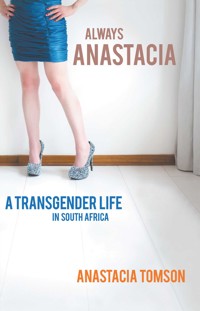
I stand in front of the mirror as I remind myself that I no longer have to wear the 'uniform'. I can grow my nails, and paint them. I am free, finally, to have my ears pierced. I can use the voice that I've spent so many hours meticulously cultivating with my speech therapist. I no longer have to hide my disgust at being called boet or sir, or tolerate any references to my deadname. I have fought hard, held back for decades by a body that did not fit and an identity that did not belong. At first, it had seemed like transition was a vague and unattainable aspiration, a romantic ideal that was incompatible with reality. But now – after five months of hormone therapy, countless sessions of painful laser hair removal and multiple appointments with doctors and psychologists – it is very much a reality . . . Born into a Jewish family in Johannesburg and raised by her parents as a boy, Anastacia Tomson was never sure just how much of her persistent internal discomfort to blame on her often troubled family life and strict upbringing. She qualified and practised as a doctor, but it would take a great deal more clear-sighted and difficult questioning, not least of the medical fraternity, to finally find peace and self-acceptance. This memoir is a clarion call for a more nuanced understanding of trans people and the concepts of sex, gender and identity. It is a courageous account of self-discovery and transition as Anastacia embraces her truth, as the woman she has always been.
Das E-Book können Sie in Legimi-Apps oder einer beliebigen App lesen, die das folgende Format unterstützen:
Veröffentlichungsjahr: 2016
Ähnliche


















.
ALWAYS
ANASTACIA
A TRANSGENDER LIFE
IN SOUTH AFRICA
ANASTACIA TOMSON
Jonathan Ball Publishers
Johannesburg & Cape Town
.
AHHM, I love you. I know that you know.
To Gabriella and Amilia, with all of my love.
To the tiger who always has my back.
To those in whose footsteps I follow,
And to those who follow in mine.
To the child who had to grow up too fast.
You always did the best you could.
.
And the day came
when the risk it took
to remain tight in a bud
became more painful than
the risk it took to blossom
– Elizabeth Appell
Contents
Preface
With pride
Potpourri
Missed a spot
Not man enough
Ownership
Independent woman
Dysphoria
Reminiscence
Diagnosis
In luck
Handshakes
Cryobank
Six more months
Selfie-esteem
Tablets
Gender issues
Like the patriarchy
Tears
Coming out
A mental association thing
The viewing
One of the girls
My brother’s sister
Limbo
Cosmic prank
The Last Seder
All the way
Saying goodbye
Thank you for noticing
Everything?
Potpourri, Part 2
Breaking the silence
Celebration
Mother’s Day
Misconceptions
Privilege
Dating while trans
Thriving
Safe space
Promises
Agents of the dispensary
Anathema
Dogma
Sobriquet
Break-up
Acknowledgements
Glossary
About the Book
About the Author
Imprint Page
Preface
Being out
When I first understood that I needed to transition in order to live, I started thinking about the kind of life that I would pursue. Specifically, I spent much time thinking about the prospect of ‘going stealth’.
It was a real temptation, the idea of packing my bags and disappearing to some other town with no ties to the life I had pretended to live. Leaving behind my old name, my traumatic childhood, my confusing adolescence, and those first hollow years of my adult life.
I could settle somewhere new, where no one would recognise me.
Transition is a gruelling process. There is hardship at every turn: dealing with ignorant and insensitive health-care professionals to gain access to treatment, trying to convince government departments to amend identity documents, fighting against a conservative society that would sooner write people off as freaks than try to understand their struggles or ease their strenuous journeys.
Many people act as if they have rights to transgender people’s bodies, asking us intimate and inappropriate questions and expecting answers. Some touch without permission, and become offended when we rebuke them. People fixate and quiz us on our sexuality. They ask after our genitalia, whether we’ve had surgical procedures, whether we intend to. How we knew, whom we’ve told, whether we sit or stand to pee, how we have sex. Transgender people who wish just to sink into anonymity and live the peaceful life for which they have fought have my unending empathy and respect.
There was a time when I wanted that too – when I used to say that I was not an activist. That I did not need to make my voice heard to make a difference. I was content to initiate change through my work, and felt that my activism was quiet and non-confrontational.
But, as I grew more confident in my identity, I discovered that not only did I have a voice, but that it insisted on making itself heard. I was a proud woman and a proud feminist. Discrimination and oppression based on gender, gender identity, sexual orientation, or race had always worried me, but I had never known how to address them. I had never felt that I had the agency to speak out, or anything worth saying.
As my self-respect grew, I re-examined my priorities. I wanted to live the life that I felt I deserved, in peace. But I also wanted people to understand the lengths to which I had gone to be seen for who I was. I was not ashamed of being trans, and I did not want to have to live in fear of my ‘secret’ being discovered someday.
I knew there would be a price – that to make some kind of difference to those who faced struggles similar to mine, I’d have to lay bare the intimate details of my life. But I knew, also, that doing so would bring me freedom. My dark ‘secret’ could hold no power over me if it wasn’t a secret at all.
So, I made my decision. I came out – first individually, to friends and family, and then to the world. I made no attempts to hide who or what I was. It was not easy, but embracing my truth has allowed me to strengthen so many of my bonds and relationships. Of course, a few have suffered. Some friends, even ones who are mentioned in this book, have grown distant from me. Some of them still associate with me, though our dynamic has shifted irrevocably; others refuse to talk to me at all. But my connection with those who have stood by me is stronger than ever.
I chose to combat prejudice and hatred with empathy and understanding. I am many things: a woman, a friend, a doctor, a confidant. I am transgender. Sometimes I am afraid and overwhelmed. I am a human being, and these are my experiences. I hope you enjoy sharing them – my pain and my happiness.
I entrust my secrets to you. All I ask for in return is your compassion.
With pride
Day 0, 1 July 2015
I rub the sleep from my eyes as I open them, squinting at the bedside clock. Eight o’clock – earlier than I expected it to be. The first weekday morning in a long time that I haven’t been roused by an alarm clock. The sensation is novel.
I feel the morning chill of the Johannesburg winter against my face, as the scent of freshly brewed coffee wafts from the kitchen into my bedroom. I am grateful that I neglected to turn off the timer switch, despite my plans to sleep in. I gaze briefly at the bare, off-white walls of my bedroom, reminding myself that I still haven’t got around to hanging the prints of the wildlife photographs I used to take while working in Mpumalanga four years ago.
As I crawl out of bed, it takes a few moments for the reality to settle in: today is the first day that I am free of the expectations of maleness to which I have been subject for so many years. For months, I had been presenting exclusively as female in every setting barring my workplace. My job has been the last outpost of that old shell of a life.
I pull back the curtains and stare, for a moment, out my bedroom window, watching the palm trees in my neighbour’s yard swaying in the breeze. The feeling is surreal: that I no longer have to act every day, switching back and forth between voices, mannerisms, vocabulary. That I am free to live the life I believed would never be mine to live. It is overwhelming. I feel relief, but even so, I know that I can’t comprehend just how enormous this change has been.
Yesterday was my last evening at the practice. It was heart-wrenching and bittersweet. I left without fanfare, without the opportunity to say my goodbyes properly. That chapter of my life ended anticlimactically, with a whimper far more than a bang. I still feel that I need closure, but that will have to wait for another time. Right now, I am just relieved to be absolved of that job and its responsibilities.
I stand in front of the mirror as I remind myself that I no longer have to wear the ‘uniform’. I can grow my nails, and paint them. I am free, finally, to have my ears pierced. I can use the voice that I’ve spent so many hours meticulously cultivating with Michelle, my speech therapist. I no longer have to hide my disgust at being called boet or sir, or tolerate any references to my deadname.
I have fought hard, held back for decades by a body that did not fit and an identity that did not belong. At first, it had seemed like transition was a vague and unattainable aspiration, a romantic ideal that was incompatible with reality. But now – after five months of hormone therapy, countless sessions of painful laser hair removal and multiple appointments with doctors and psychologists – it is very much a reality.
This is far from the end of the road, however. Hormone therapy will be lifelong. At some stage, I envision perhaps undergoing surgery, or surgeries. I continue to wait for the Department of Home Affairs to make the changes to my name official and to amend my legal gender. But none of these details seem to matter terribly much in the face of my new-found freedom. Transition is no fanciful daydream – it is the life that I am living, and no longer has to share its time with falsehood.
Overnight, ‘he’ has ceased to exist – the performance ended, the character retired, the uncertainty, fear and pervasive disquiet replaced with confident calm. I have never been without my positive attributes: I was always smart and compassionate, kind and caring, honest and just. But I’ve had to temper many of those qualities with my forcibly guarded, defensive nature. Now, they can blossom unhindered. All of my favourable traits are still present, but accompanied now by so many more.
For the first time, I am allowed to be myself, with no reservations or restrictions. And I am proud.
* * *
A week ago, I was sitting at my desk when the phone rang. As usual, I panicked briefly – a throwback to my days of working shifts in a busy rural hospital in the mountains of Mpumalanga. In those days, a phone call was never good news; someone had died, or was in the process of dying, or needed to be rushed to theatre. Since moving to an upmarket private practice in the northern suburbs of Johannesburg, phone calls are usually nothing more serious than a pharmacist checking the details of a prescription. I took a moment to remind myself that this phone call would be nothing worth worrying about.
Except, it was. When I answered, the voice on the other end asked me if I knew that there were photos of me on the Internet dressed as a woman. I wanted to answer, ‘That’s because I am a woman,’ but for the next few moments I was paralysed with fear.
For six weeks prior to that phone call, I had not left the house in men’s attire except to go to work. I had scoured away every reference to my deadname on social media. Even at work, I had begun to make concessions to make sitting behind my desk more bearable. I had taken to wearing my nails longer, and I’d started to grow my hair. It didn’t surprise me that someone had recognised who I was – what did surprise me was that it hadn’t taken longer.
I panicked, overcome with fear that my dreadful ‘secret’ had been revealed. As a child I, too, had been subconsciously conditioned to think that there was something abnormal about transgender people. The idea that transness is deviance, that being trans is intrinsically wrong, has become less pervasive in media and contemporary culture in recent years, but many of us still harbour such sentiments.
My panic and humiliation stemmed not from truth, but from internalised notions imprinted on me as a child growing up in a world where anyone who wasn’t cisgender and heterosexual was considered an aberration. But I was no aberration. I was better than I had ever been – warm-hearted, compassionate and liberated, and unafraid to care, speak, love and be loved.
My terror subsided. I knew that word was spreading, and I could imagine what people would say about me. The words flashed through my mind. Cross-dresser. Transvestite. Tranny. He-she. Shemale. Sex change. A slew of inaccurate, derogatory, or obsolete terms. I needed to set the record straight as a matter of urgency.
I cleared my head with a few deep breaths, and willed my frenzied pulse to slow. Then, I began to type.
We live in a society in which people thrive on the shame of others, clamouring after gossip and scandal. Maybe it makes us feel better about ourselves – reminds us that we’re not the only ones with dirty laundry.
My journey began a long time ago. It’s been filled with challenges that many people will never have to face. That’s not to say that my challenges are more significant than anyone else’s, but simply that many people will never be able to relate to them.
I have no choice in the matter of who I am. I made no decision to be this way; it’s intrinsic and immutable. The only choice I made was whether to live honestly or to die pretending.
I am not ashamed. People like me face preconceptions and prejudices. We’re stigmatised, ostracised and ridiculed for who we are. We are victims of assault and abuse. Many of us lose our lives to violence or suicide.
I am a good human being. I am compassionate, empathic and caring. I stand up for the people about whom I care and the principles in which I believe. I work hard. I’m a good friend, sister, daughter and doctor. I refuse to sell myself short any longer.
Some of you out there will try to scandalise what and who I am, and will want to make a spectacle of me as you would an animal in a zoo. Say what you wish. Come and gawk at me. Everyone who is close to me – friends, family, even my employer – has known this truth for months. Everyone who matters in my life knows me, accepts me, loves me and supports me.
Right now, I am fulfilling the final commitments of the person I once pretended to be. Once that is done, my double life will be over. This is who I am, and who I have always been. I neither offer nor owe any apologies or explanations. The days of shame and pretence and insecurity are behind me. If you are looking to satisfy your craving for scandal and guilt, you will not find it here.
This post is public, as are many others of mine. Whether you are a friend, an acquaintance, a patient or a stranger, I leave this here for you to see. Pass it around, share it, send it to everyone you know. The truth may persecute some, but it liberates me.
I did not choose to be who I am. But today, and every day, I choose to live.
With pride.
Within minutes of posting, I began receiving phone calls and messages from patients. The outpouring of support took me by surprise: messages that praised me for staying true to myself, and that commended my courage for being open about what I was experiencing. Patients and old school friends slowly began to get in touch with me as the days passed.
I had always been accustomed to avoiding attention, and now found myself at the centre of it. To know that for every person who talked to me there were tens that were talking about me was unsettling. But I was secure in who I was, and the details of what people were saying about me lost their significance. All traces of fear had left me: this liberation was exhilarating.
Now, standing in front of my mirror, naked and exposed, I don’t feel vulnerable. It doesn’t matter what anyone thinks of me. I am worthy. Majestic. Freedom is mine at last.
* * *
The first day of the rest of my life is upon me. The gravity of this has yet to sink in. For the few mornings that follow, I wake and drag myself out of bed, often before I remember, gleefully, that the life I’d pretended to lead is a relic of the past.
The future belongs to Anastacia.
Potpourri
Day –252, 22 October 2014
I heard about the support group from a friend I’d met at a dinner party. Originally I had thought that she was a cisgender lesbian. I later learned that they (a chosen gender-neutral pronoun) were in fact genderfluid, and non-binary, and self-identified as ‘hella queer’. Their hair had been cropped short, and what little remained had been dyed a vibrant colour – if memory serves, at that time it was blue. Sam dressed in clothes that I’d normally regard as androgynous, but in comparison to their partner’s attire, they looked quite femme. They were a student at the time, on the verge of qualifying as a homeopath. Their partner was an accountant, dressed in chinos, suspenders, a collared shirt and a necktie, with cropped hair and a smile that was ever-so-slightly mischievous, but still quite reserved.
It was a group dinner, an informal mixer organised by an Internet community. I found the two to be refreshingly intelligent, with wonderful senses of humour and a world view that didn’t clash with mine. I’d always felt uncomfortable at social gatherings, but I quickly warmed up to the pair of them.
I continued chatting with Sam online in the days following the dinner, and they suggested to me that I should attend a meeting of the support group. I was still coming to terms with my identity at the time. Like many, I had grown up with the misconception that gender and sex were one and the same – a fallacy that masquerades as an immutable truth.
The group’s meetings had been advertised as a safe space, a gathering of non-judgemental people whose identities spanned the length and width and depth of the gender spectrum. They met on Wednesday evenings, the venue rotating between the homes of the various members.
On this particular evening, the meeting was hosted by one of the group’s founders. She lived with her parents in a lavish house on an equestrian estate; I was told that the estate had the highest density of horses in the world, though no reference for the claim was cited.
The house was astonishingly large, sprawling out from the entrance hall in every direction. The word ‘mansion’ did not seem out of place. The decor had an African bush theme – each room was littered with wooden sculptures of warthogs or antelopes or rhinos and the door handles were fashioned to look like elephant tusks. I had not yet met Michaela’s parents, but I suspected they had more money than taste.
I was neither the first nor the last to arrive. A few of the group members were already seated on the couches in the lounge, cups of coffee in hand and side plates with biscuits or pastries in front of them. Michaela waited outside to greet me, dressed casually in azure skinny jeans, a pair of white-toed sneakers and a T-shirt with a skull print on it. Her turquoise hair cascaded down the sides of her face, which broke into a wide smile. I’d met her the week before, when I had been her plus one at a social engagement. We hugged in greeting and she led me inside, to a seat next to the one she’d reserved for herself.
The meeting began; each attendee gave an introduction. We sat in a circle, the introductions proceeding in a clockwise direction. I was sure it wasn’t accidental that I would be last – Michaela must’ve sensed my apprehension, being in such an unfamiliar environment, and was trying to put me at ease.
Bryan was first. He introduced himself as a trans man, preferring the pronouns ‘he’ and ‘him’. He was short, but stocky and muscular; his arms were adorned with tribal tattoos, and his jaw covered in blonde stubble. If I had to guess how long he’d been on hormones, I’d have said for his whole life. Testosterone works quickly, and it clearly agreed with him.
Taylor – who, at that point, still went by Luke – identified as genderqueer, and preferred gender-neutral pronouns. Today, they wore a cream dress with black heels, their hair short, in a boyish style.
Becca was a photographer and a model. She had striking features and an imposing physical presence, a throwback to her days as captain of the high-school rugby team. She joked freely about the life she used to have, and the surprise it had caused her classmates when they learnt who she really was.
Next to introduce himself was Steve. He was one of the older attendees, and did not identify as trans. He was, in fact, the father of a trans girl who was not in attendance that evening – she was still recovering from a surgical procedure. Steve was unassuming and pleasant enough, the first to admit that he didn’t always understand all of the issues that were discussed in the group, but was putting a great deal of effort into trying to.
I had met Margaret before. She was a friend of Sam’s and the other co-founder of the group. She wanted top surgery so she’d have breasts over which she could wear a binder, and bottom surgery so that she could ‘pack’ (wear a prosthetic phallus, used predominantly by trans men). ‘Fucking with society’s notions of gender’ further was one of her greatest aspirations in life.
Dianne exuded an air of grace and patience. She was softly spoken and chose her words carefully, clearly taking the feelings of others into consideration before she spoke. She seemed to enjoy a great degree of respect from the other members, who always spoke of her fondly.
Then it was my turn. Hearing all the introductions brought home to me the fact that although these people all shared a common thread, each one had an identity and experiences that were unique. Society often wants us to fit into neat little compartments, but the group of glorious misfits in whose company I sat were a testament to the obsolescence of that concept. I still had no idea what to say about myself, but was, by now, at least convinced that there was no right or wrong answer.
I have always maintained that not everything or everyone needs to have a label. There is no conceivable way in which a singular term can accurately encompass all the facets of a group of individuals; by labelling them, we leave ourselves susceptible to preconception and prejudice. If your label was, for example, ‘transgender woman’, people would often assume that you’d gone through a phase trying to be a gay man, that you’d insisted on wearing dresses in your youth, and that you’d tried to mutilate your body with various bladed instruments at some point in your life to escape from the intense psychological torment that you suffered by virtue of having a penis. While for many those experiences may be true and valid, they are far from universal.
At the same time, though, I realised that labels were not without their benefits. They encouraged us to search for and embrace commonality, and they gave us a frame of reference, albeit sometimes a vague one, for some of our experiences. And, probably above all else, they made it easier to find support. After all, it’s much easier to find meaningful results on Google for a term like ‘genderqueer’ than it is for ‘gender that changes sometimes and doesn’t quite fit in with being either fully male or female’. The label can be empowering, as long as its limitations are acknowledged.
I had not yet found my label.
‘My name is Staci,’ I stammered, painfully aware that at that moment, in my mind, I looked very little like a Staci, ‘and I’m ... gender ... something. I don’t know yet.’
‘Don’t worry,’ said Taylor, ‘it will all fall into place with time.’
‘Nice to meet you,’ Bryan offered. ‘I hope you feel welcome here.’
Michaela silently reached an arm across my shoulders and squeezed gently.
The subject of that night’s meeting was hormone replacement therapy. I participated, to an extent, by virtue of my medical knowledge rather than my personal experiences. Some of the members were on hormones, and had been for a while. Others were not, and had no desire to be. Some were eagerly awaiting a time when they would be able to start. Again, I was reminded that no two people’s experiences are ever identical.
That I was dressed as a man that night, in beige trousers and golf shirt, didn’t matter. I was who I was, whatever I may have been wearing – nothing could change that. I knew the space was a safe one, but I was still apprehensive. Although the clothes had felt wrong for some time, there was a degree of comfort in the familiarity of playing such a well-rehearsed role. At one point, Steve glanced at me from across the circle and smiled. One of the ladies had just made a remark about struggling to get her eyeliner right. Steve was also looking for commonality; in a circle of trans people, I suspected he was feeling quite isolated. It took conscious effort, but I managed to give him a sympathetic nod. It drove home the extent to which my appearance betrayed me – I’d spent my whole life being read as male, and it was becoming increasingly apparent that I’d always been anything but.
The meeting came to an end, and we all began to say our goodbyes. I exchanged hugs with each of the members, feeling at ease by now. Steve offered me a handshake, the universal male greeting. I reluctantly reached for his hand, compromising my own discomfort to avoid offending him. I felt like I was betraying my own nature, and I was. It had taken me 29 years to realise that I didn’t have to.
It may have been my first meeting with the group, but I decided, as I left, that it was the last one at which I would arrive cross-dressed.
Missed a spot
Day –245, 29 October 2014
It had been more than five months since the first time I’d gone for a wax. Prior to that, it had always been a razor, or a tube of foul-smelling hair-removal cream. The nicks and cuts were frustrating, and the occasional chemical burns, though mild, were horribly uncomfortable. I gradually learnt which areas of my skin were the most sensitive and adapted my technique accordingly.
I remember always being embarrassed by my body hair, even though I may not have known why. I had shaved my chest once before, when I was still a student, for anatomy class. We had been divided up into small groups of seven or eight for a simple exercise: one volunteer from each group would disrobe from the waist up and have his chest covered in cling wrap so the other students could use markers to draw the outlines of the thoracic and abdominal organs.
I knew I would have to be the volunteer for my group, as I was the only student in the group who was not read as female. The night before the activity, I had frantically shaved my chest in the shower, trying desperately to remove all traces of hair. I’d never been comfortable exposing myself in front of people to whom I wasn’t very close, and I had been mortified by the thought of doing so with a hairy chest. By the time I was done, my skin was red and raw. The hairs were mostly gone, but prickly stubble remained. To my relief, no comments were passed the next day. I remembered it being horribly itchy as it regrew.
By now, I’d kept my body hairless for longer than I could remember. The rashes and the bumps and the burns were all less uncomfortable than the notion of letting my hair regrow. That hair was proof of somatic betrayal – a ubiquitous reminder of testosterone, that ill-fitting molecule that coursed through my veins.
I had never been especially hairy, and for that I was glad. But the struggle against the relentless regrowth was a constant one. I remembered having to allow the hairs to grow before my first wax – if they weren’t at least a centimetre long, the wax would have nothing to grip onto, and the hair would not be removed. That was the longest I’d allowed them to be in months, and watching them grow was demoralising.
Being smooth always left me with a sense of well-being, irrespective of how that smoothness was achieved. Over the months, the waxing had become less painful, and I’d figured out the perfect cocktail of painkillers and meditation techniques to make even the most sensitive areas bearable. I’d had two or three different therapists as time went by, some of them better and some worse.
For the past few weeks, I’d been seeing Melissa, a young blonde girl with a demeanour that was friendly though not effervescent. Her friend and colleague Kirsty had been treating my chest with laser. Kirsty was a fair bit shorter than Melissa, and quite a bit bubblier. The two were always glad to see me when I arrived at the spa, and they made sure that I knew I was one of their preferred customers.
Today, I had come in just for a wax. Melissa was gentle, and good at what she did, and a decent conversationalist. I lay naked on the treatment bed, covered with a towel. The room was spacious and comfortable, with wooden fittings and a pale tiled floor. Ambient lighting in the ceiling slowly shifted through a spectrum of colours, while new-age spa music competed with the hum of the air conditioner. A faint scent of vanilla floated in the air. The spa was just off a bustling main road, but the noise of the street was the farthest thing from my mind; I drifted away from the taxis and the newspaper vendors and the wire-animal sculptures.
Melissa entered the room and, after exchanging greetings and how-are-yous, she set about her business beginning, as she always did, with my right leg. She’d start with the foot and the calf and work her way up until she’d completed the whole leg, before moving on to the other side. She occupied herself by making small talk, though she caught me off guard when she began on my left foot.
‘I like the colour you had on your toenails.’
I thought I’d managed to get it all off after my shower that morning. Must’ve missed a spot, I thought.
‘Oh do you? I’m glad, it’s one of my favourites,’ I replied, without missing a beat.
‘I prefer purples myself,’ she said, ‘but yes, I think it’s pretty.’
There was no judgement or animosity on her part, and no nervousness or guilt on mine. It reminded me how comfortable I’d become with the idea of who I was.
It wasn’t until my next session that she worked up the nerve to ask about who or what I was, though it took her until my left thigh to do so.
‘So, you’re gay, right?’ she asked.
‘Well. Maybe. But I’m not a gay man. I’m transgender,’ I replied.
‘Oh ... I used to date a man who cross-dressed,’ she ventured.
‘Um, that’s a different thing,’ I said. ‘I’m not a transvestite. I don’t dress up for kicks. I’m transgender – it means that actually, I am a woman.’
She nodded in appreciation.
She asked me about the process of transitioning, and the effect that hormones would eventually have. By the time I was done explaining, she’d just about finished my right arm.
‘Well, I think it’s cool that you’re going to be yourself.’
I didn’t think it was especially cool. I was just doing what I needed to do to survive. Colourful hair dye is cool – transitioning is a challenge, and a commitment, and often an intense source of anguish. I knew she meant well, however, and I took the comment in the spirit in which it was given.
‘Thanks, so do I,’ I replied, as she moved on to my left arm as if nothing out of the ordinary had happened.




