


Erhalten Sie Zugang zu diesem und mehr als 300000 Büchern ab EUR 5,99 monatlich.
- Herausgeber: Grosvenor House Publishing
- Kategorie: Sachliteratur, Reportagen, Biografien
- Sprache: Englisch
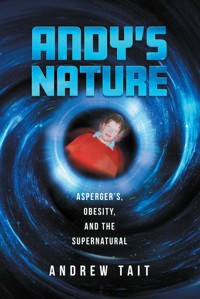
Why is Andy scared of stepping stones? Why can't Andy concentrate at school? Why doesn't Andy join in with the other children? Why does Andy keep making involuntary promises to perform mundane actions? Why is Andy fat? Do photographs show, between unrelated people, genetic links independent of matter? Here is a book about unorthodox persuasions, unexpected inhibitions, and the idea that matter may transcend physical limitations.
Sie lesen das E-Book in den Legimi-Apps auf:
Seitenzahl: 565
Veröffentlichungsjahr: 2023
Das E-Book (TTS) können Sie hören im Abo „Legimi Premium” in Legimi-Apps auf:
Ähnliche



















For Mam and Dad.
Contents
Dedication
Okay, What’s All This About?
1987
1988
1989
1990
1991
1992
1993
1994
1995
1996
1997
1998
1999
2000
2001
2002
2003
2004
2005
2006
2007
2008
2009
2010
2011
2012
2013
2014
2015
2016
2017
Afterword
Copyright
Okay, What’s All This About?
Hello, welcome to my book, and thank you for reading its opening sentence.
This book is my account of growing up with difficulties perplexing, unfashionable and, contrary to what some people seemed to suspect, due to subtler conditions than my supposed laziness or selfishness.
This book is also about phenomena which I believe to be supernatural. Aged seventeen, I began to see broadcast and recorded faces in such a way which persuaded me, undoubtedly, of their relation, independently of genetic transition, to each other. I later termed this tendency transgenic kinship.
Aged about twenty, I began, occasionally, to see stars and aeroplanes behave unaccountably; for example, what appeared to be a star, in a clear sky, seemed, before my eyes, to disappear and reappear.
I realise that what I claim may sound like self-deluding fantasy. But, if you’re interested, whether in observation of a delusion or the possibility of a glimpse beyond the realm of matter – or even the perspective of a fat kid with Asperger’s – feel free to come in and have a look.
1987
Going Home
I was born at ten past three in the morning, on Saturday the 18th of July 1987, at Ashington Hospital, Northumberland. Shortly afterwards, my father, known to his sons as Dad, drove my mother, known to her sons as Mam, and me, Andrew Tait, back home to Rothbury.
The large village, or small town, was, that weekend, host to both the annual Music Festival, and heavy rain.
The Living Room
Into the living room’s gloom, the tall windows cast soft daylight. Outside, above the sloping roadside green, towering trees shaded a row of housing.
I sat in a small, plastic bath. My brother James, not quite six, having been instructed by our mother’s younger sister Jess in the art of swearing, offered impudent commentary.
In the armchair behind me, Mam supervised my bath. On a friend’s borrowed video camera, Dad captured the scene.
I, intrigued by the blue sponge in my hands, decided to find out what it tasted like.
1988
Who?
I can’t really remember much about this year.
A memory which may have been constructed later involves the square, glass-screened box in the living room’s right hand corner.
The telly shows a distant scene. In clear daylight, across urban streets, glides a smooth, white, bulky metallic dome, with projecting mechanical limbs.
From a low angle shot, a small, wavy-haired man, his eyes filled with dangerous secrets, glares at the creature.
In years to come, a name would rouse memory of this man. A genius, a time traveller, an alien, an explorer of the terrible and wondrous – whether for good or ill not yet clear.
The name was Doctor Who.
1989
Rothbury
I liked going outside.
Across the paved valley floor, amidst roads and forested green, rows of housing met in three streets of shops.
Above a tree-shaded graveyard loomed the squared, clock-faced tower of All Saints Church.
Behind our terraced house lay the village park. Its grass, by the tranquil River Coquet, reached a forested riverside path. Across the river, fields sloped for miles towards the pine-shaded, boulder-crowned Simonside hills, home of the legendary Dwarves.
The park had a towering slide, a climbing frame, see-saw, spring-mounted horse and two sets of swings. In windswept air, beneath a hot blue sky, the colours of this place shone with soothing brilliance. Frequently host to the merry yells of children and the easy mumbling of adults, the park was a place of purest peace.
Along our terrace pavement, my older brother James, now aged eight, rode a gaudily coloured skateboard. He’d been schooled in this mode of transport by fifteen-year-old Ted, whose accent merged Canada with Northumberland. In awed fascination, I watched the two boys roll along the pavement.
Right of the terrace, a broad, flat green held the twenty-four-foot Armstrong Cross. From the slam of a car door to a casually calling human voice, the open air soothed to distance any sound.
In Dad’s red Fiesta, past sheep-grazed fields, we rode up the Cemetery Bank, around the farming estate of Whitton and onto a small road between two fields.
Rightward stood Sharpe’s Folly, a crenellated tower.
Leftward, a field overlooked the horizon-spanning, heather-swathed Bilberry hills, whose rightward crest of pines bridged Cragside, a moor host to thousands of trees, mainly pine, planted by Victorian engineer Lord William Armstrong and wife Lady Margaret Armstrong.
On the valley floor lay the village of Rothbury.
Climbing the Wall
At the front of the house, above the living room, Mam, Dad, newborn John and I slept in the largest bedroom. One evening, with Dad and me in bed, Mam sat on the edge of the double bed, feeding Johnny. Through the open door, light from the upstairs landing partially illuminated the darkened room.
Right of the door, Mam looked at the wall – and saw what she immediately took to be me.
The first thing she noticed, and was therefore perplexed by, was that this being, who resembled my two-year-old self, appeared to be crawling up the wall.
It definitely looked like me. However, it wore a flowing white gown. Around the small body shone a faint, golden aura. The being turned his face to Mam and smiled.
“What’s Andy doing walking up the wall?” Mam bewilderedly asked.
Dad, however, was half-asleep.
Barrowburn
In the Fiesta, Dad took us further afield. Sixteen miles into the Upper Coquet Valley, beneath the Cheviot hills, lay Barrowburn.
Having been worked by my father’s family since the 1860s, the farm had been purchased in 1941 by the Ministry of Defence, from whom Dad now rented it. Its farmhouse, a 1961 two-storey replacement for a bungalow, was equipped with old furniture. In the event of heavy snow, Dad would spend the night.
Travel here meant a half-hour car ride past rugged fields and smooth hills. Often to the merry sounds of Mam’s Jason Donovan tape, I thrilled to the speed.
Past the farmhouse, a concrete path reached a yard where stood several ancient stone farm buildings. Before the outermost wandered several hens, whose unpredictable motion had me staunchly nervous.
Sometimes, on the red quad bike, or the four wheeler as he called it, Dad drove me around the fields. The vehicle’s raspy engine, with lurching speed, ploughed us through blustering wind.
Before its handlebars lay a rectangular plastic box. One day, I had a ride in here. Corrie, one of Dad’s Border Collie sheepdogs, decided to join me. Although an amiable creature, sudden proximity to his powerful body gave me quite a fright.
1990
Home and Away
On mine and Johnny’s respective beds, Mam sat and eased our passage to sleep with songs. Throughout the days, at my every request, she readily embraced me.
On the sofa, Dad read me Enid Blyton’s Noddy books and respective prose adaptations of Thomas the Tank Engine, Postman Pat, Fireman Sam and Ghostbusters II.
Everything my older brother James said and did, with his sobriety, reflectiveness and eloquence, inspired me. By his example, I sought to get into the habit of calling my mother “Mam” rather than “Mammy.”
On some days, to prepare me for the eventual shock of having to start school, Mam took me to playschool. Amidst bright yellow walls and a crowded wood-tiled floor, Mam, with reassurance of her imminent return, explained that she would have to leave me here for a while.
Enforced separation from my mother, for even a few hours, devastated me. On the several occasions of my confinement to this place, I sobbed almost constantly.
For much of the time, kindly, Standard-English-accented Mrs Fennell had us all sit on the floor and sing.
“Let’s try that again,” she said, after one such concert.
“Yes, let’s try that again,” I blubbered, in search of anything that might conceivably soothe me.
Up at the Pinfold
Sometimes, Dad drove John and me across the village and up a steep bank which led to a bungalow district termed the Pinfold. Up a set of broad concrete steps, Granda Tait welcomed us to his small house.
Born in 1922 to a farming estate near Ashington, Granda Tait had taken employment thirty miles north at Barrowburn, and by Nana Tait, who died in 1989, had two children.
His face, while stern, was peaceably open. A steely voice, accented with Broad Northumbrian, drew its vowels across a soft, throaty r-roll. Denied a place in the army by his farming duties, Granda Tait had met the outbreak of the Second World War by joining the Upper Coquetdale Home Guard.
Granda Tait enjoyed Dandelion and Burdock and ice cream, ideally combined in a mug, a recipe I myself came to savour. Affectionate without sentiment, he had much time for cartoons, many of which he taped, to watch with Dad, John and me. Favourites included Bangers and Mash and Popeye and Son.
Next Door
To John and me, Mam announced that we were all going to see Granda. I understood the title of Granda to refer to two people. I asked if we were going to see Granda Tait.
“No,” said Mam, “we have to go and see Granda Widdrington.”
Through the heavy front door, we stepped onto the doorstep, and to our right mounted a joint doorstep, which bridged another front door.
Through the following hallway, we approached the kitchen. Right of the table, in a bare armchair, sat my mother’s father, Granda Widdrington. His weathered face regarded me with impudent delight.
“Hello, Tiger Dick!” he said.
One of nineteen siblings, Granda Widdrington had been born, in 1938, to an impoverished Longhorsley farmer and a Scottish mother reputedly cousin to television inventor John Logie Baird. In 1959, during his National Service stint in the army, Granda Widdrington had married Nana Widdrington, to have four children.
Born in 1938 in Rothbury, Nana Widdrington had instilled in my older brother James a love of the piano, having taught him to play Henry Mancini’s theme from The Thorn Birds.
Granda Widdrington was prone to severe anxiety. He warned fiercely against things that were “highly dangerous,” such as fire, electric wires and Aunty Jess’s driving. He lamented the degenerate brutality that stalked the world.
“Terrible people, son,” he’d said to James. “Terrible people in the world w’ live today.”
In his own infancy, James had returned from next door with the awed summation: “There’s a lot of bad people in the world, isn’t there?”
From next door, Granda Widdrington was a frequent, unannounced visitor.
“This,” he said of my brothers and me, “is wor second crop.”
His eldest son, Uncle Ross, worked with him in the building trade. Ross, easy-going and jovial, was raptly cautious in regard to electronics and dog faeces. He addressed James and me with civil candour – making sure we knew not to “fool on” with electric sockets and such like.
Granda Widdrington’s youngest son, Uncle Gordon, a pianist and self-taught guitarist with a degree in architecture, had left for Sydney, Australia, to marry.
Mam and Gordon’s younger sister, Aunty Jess, worked for the police in Ashington – although would sometimes return to raid the cupboards for sugary snacks, or “ket.”
Telly
In the living room’s front rightward corner, atop a chest of draws, perched on a video recorder, was the telly.
Mam and James followed Neighbours and Home and Away; sun-drenched sets and Australian accents had a soothing consistency.
A video of James’s held several episodes of Britt Allcroft’s adaptation of the Rev W Awdry’s Thomas the Tank Engine. In intricate, open-aired sets, to a droll, jaunty score, Ringo Starr’s dreamy drawl voiced brightly coloured train-engines.
On Postman Pat, amidst model buildings and greenery, Ken Barrie’s North-West-accented narration voiced a nurturing community of stop-motion puppets. Fireman Sam’s mellow eponymous hero, with affectionately drawn neighbours and colleagues, voiced in the Welsh affectations of John Alderton, offered a warm-hearted blend of comedy and action. Both shows, with richly joyous songs and score, wove realism in a veil of whimsy.
One evening, as John and I sat in the bath, Dad mimicked the high-pitched, agitated tones of Fireman Sam’s shopkeeper, Dilys Price. This jovial parody of a cherished fantasy somehow embarrassed me.
“Don’t say that,” I managed to articulate.
James’s VHS copy of Cosgrove Hall’s 1989 hand-drawn cartoon adaptation of Roald Dahl’s The BFG opened with orphan Sophie’s (voiced by Amanda Root) late night glimpse of a black-cloaked, hooded giant, who reached a hand into the dormitory to snatch her.
In his cave, the Big Friendly Giant’s removal of his cloak soothed the fearful atmosphere. David Jason’s West Country impression voiced both a childlike excitability and ancient wisdom.
From Sophie’s moonlit village to the starlit void of Dream Country, the film, with tenderly awed electronic score and songs, offered fear, tenderness and pure wonder.
Ghosts, I understood, were what people turned into when they died.
James’s Channel-4-recorded tape of Clive Donner’s deliciously scored 1984 version of A Christmas Carol, or Scrooge, as we always called it, featured a memorable ghost in the form of Frank Finlay’s Jacob Marley. In the darkness of his front yard, Scrooge (George C Scott) sees his lion-faced door knocker shine the blue-glowing, deathly staring face of his seven-years-dead partner. This blend of matter with spirit so awed me that I persuaded Mam to buy for our front door a similar knocker.
James also owned a VHS copy of Ghostbusters (1984). Towards the start, the New York City Library is explored by three men, detachedly dry Dr Peter Venkman (Bill Murray), affectionately enthusiastic Dr Ray Stantz (Dan Aykroyd) and calmly intense Dr Egon Spengler (Harold Ramis). On the basement floor they find the transparent, purple-glowing shade of elderly librarian Eleanor Twitty (Ruth Oliver). Her sudden transformation into a flaming, skull-faced fiend was scary, but not quite overwhelmingly so.
Later joined by drily practical Winston Zeddemore (Ernie Hudson), the Ghostbusters, in beige jumpsuits, with back-born Proton Packs, hand-held Particle Throwers and rectangular ghost traps, face ravenous green blob Slimer and Sumerian god Gozer (Slavitza Jovan, voiced by Paddi Edwards), who eventually manifests as the gargantuan Stay Puft Marshmallow Man. Persecution of politely reserved Dana (Sigourney Weaver) by bear-sized, demonically horned Terror Dog Zuul (voiced by Ivan Reitman) lends genuine menace.
The tangible marvel of gadgetry, the primal thrill of the ether, and the blend thereof in the world of bills, business, alcohol and romance, set to a jauntily eerie score, offered an exciting glimpse into the mystery of adulthood. The mere sight of the Ghostbusters logo, set to Ray Parker Junior’s theme song, roused in me a unique glee.
Shortly after Christmas, from SPAR, Mam and Dad rented Ghostbusters II. On a tranquil daylit street, the pram housing Dana’s baby son Oscar (played respectively by Will and Hank Deutschendorf) is suddenly psychokinetically wheeled across the pavement and into heavy traffic. The scene sets the film’s tone; the ghostly threats, while serious in the first film, now terrorise a mother and baby.
Peter, Ray and Egon, on the spot where the pram suddenly stopped, drill through the road and uncover an old air shaft. On a winch, Ray is lured into its darkened depths, to dangle, eventually, through a hole in the roof of an underground subway tunnel, through whose track flows a ponderous river of glutinous, glowing pink slime. The image roused in me a fearful, fascinated awe.
1991
One’s Plenty
On two years’ acquaintance with it, I’d cultivated a zest for solid food. Having wolfed down my own, I eyed Johnny’s uneaten Yorkshire pudding and sausages. Of my enthusiasm to ensure they weren’t wasted, Mam grew wary.
Whereas Mam and Johnny could hardly ever bring themselves to finish a meal, I, on finishing mine, always remained hungry. A dull, expectant sinking in my stomach and a residual dragging sensation in my throat stoked an impassioned desire for reunion with taste and texture.
At a speed similar to that of Granda Tait, I ate with fervour. I needed food’s regenerative nurture immediately and thoroughly.
At mid-morning, Mam, whose willowy thinness now held a post-natal paunch, often enjoyed a small snack, termed a “ten o’clock.” This typically entailed a bag of crisps, poured onto the table and shared with Nana Widdrington.
James, Johnny and I might each have a bag of Wotsits. While no one else seemed to desire a second bag, I saw little point in having only one. While the flavoured corn fingers supposedly weren’t very fattening, Mam eventually forbade sequels.
“One’s plenty,” she said.
My insatiable desire for extra food was starting to take noticeable effect.
“That laddie,” Granda Widdrington warned Mam, “is ganna fall off his legs.”
Splash
Sometimes, an excitingly long car ride brought us to Cramlington Swimming Baths, a cavern of sleek, bright tiles, in which lay a vast body of warm water.
While Dad and James were off having a swim, I stood in the shallow end with Mam, who held onto Johnny. Across the pool, children yelled, jumped and splashed.
With wanton raucousness, these unknown people cavorted before me. Had they no decorum, no sense of personal space?
“Boys and girls,” I called sternly, “don’t you dare splash!”
Mam nervously soothed my ire.
A boy slightly older than me happened to pass through our vicinity.
“Who are you?” I sternly acknowledged the newcomer.
Back home, I proudly told Nana of the encounter.
“‘What’s your name,’” she corrected gently.
“What a Load of Crap”
Dad bought a Sky Box. This black plastic device supplied the telly with satellite-aired channels. With Dad’s guidance, I learned to use the Sky Box’s small remote control, or the Gadget, as such devices were termed in our house. Following my usual breakfast of Oxo sandwiches in a blue plastic bowl, I adjourned to the living room.
“Press ‘five’ on the telly and ‘three’ and ‘two’ on the Gadget,” Dad reminded me, before heading off to Barrowburn.
Joined eventually by Johnny, I watched the Children’s Channel. One of my favourite of its offerings was The Little Green Man. In bright, gentle animation, with the narrating voice of Jon Pertwee, it wove a tale of interstellar friendship. Having arrived in a flashing conical spaceship, the Little Green Man and sentient miniature sun Zoom Zoom befriend young Skeets, with whom they explore the planet Earth.
For some reason, when James echoed their names, or the lyrics of the catchy theme tune, I would feel embarrassed. In their medium of expressive colour and emotive sound, these figures were a conspicuous addition to the room – an extravagance, in whom my indulgence felt decadent.
On some mornings, when John and I sat on the living room floor, engrossed in the telly, we’d hear the heavy crash of the front door, followed shortly by the click of the living room door and its slow slide across the carpet. Granda Widdrington drifted into the room and regarded us with amused delight.
“Here’s Granda come to see y’,” he announced.
He noted the sounds and images which streamed from the television screen and speakers. A playful smirk lit his face.
“What a load o’ crap,” he said.
I felt some indignation.
One day, either John or I expressed discomfort at his authoritative inspection.
“You mustn’t like Granda anymore,” he said with a gentle hint of sorrowful reproach.
One or both of us hastened to assure him otherwise, but he was already drifting towards the door.
“Granda knows where he’s not wanted… Granda’ll go…”
Granda Widdrington learned of my fear of sitting on toilets. These eccentrically fashioned chairs, with a hole leading to goodness knew where, were scarily mysterious. Might I not fall down the hole and into the irretrievable unknown?
I’d briefly seen the next-door toilet. Its seat was an eerie shade of black.
On a visit to next door with Mam, my need of the toilet became apparent. While the toilet back home daunted me, the one here was downright frightening.
Granda Widdrington held me aloft against his chest and tried to force me out of the room. In panicked desperation, I wailed and struggled. After a fearsome minute or so, he relented.
Slime
The Sky Box’s provision of the Movie Channel allowed a repeat viewing of Ghostbusters II.
The film was announced with a black screen’s display of the British Board of Film Classification’s yellow PG certificate.
Re-encounter with the River of Slime renewed my fearful fascination. Did the experimental subway track usually have a river of water, which had been replaced by the slime? Did all roads, then, have rivers flowing beneath them?
In the recreation room of the Ghostbusters’ headquarters, Ray (Dan Aykroyd) and Egon (Harold Ramis) show Peter (Billy Murray) and Winston (Ernie Hudson) the psycho-reactive properties of the pink Mood Slime: on shouted insults, a dish of the stuff froths and grows. When ladled into a toaster, and introduced to Jackie Wilson’s “Higher and Higher,” the slime rouses the toaster to dance across the Ghostbusters’ pool table.
The scene offered a glimpse into the mystery of adulthood – the recreation room, with its domestic furnishings and heavy equipment, recalled Uncle Ross’s bedroom next door. The Ghostbusters’ intense discussion of Mood Slime presented the burdens of manhood in a context of intrigue.
The scene where the slime comes out of the bath tap and amasses into a growling blob which reaches for baby Oscar (respectively played by Will and Hank Deutschendorf) was intensely scary, yet fascinating, the fun kind of scary. The idea that a tap could suddenly spout pink goo was mind-blowing.
By ghost-summoning pink slime, parental concern and a score rich in fear and care, Ghostbusters II staged the Ghostbusters with an edge of tenderness and vulnerability.
Rothbury County First School
I proudly anticipated starting school. Going to school was what James did – to do so myself would be to share in his mysterious career. I recalled attending playschool last year, and the fright and loneliness of being taken away from my family and left in a roomful of strangers. In my youthful zest, I now trusted that this time might somehow be different.
On the first day of my five years at Rothbury County First School, Mam led me along pavements, across the road, past the Queen’s Head pub and up a steep bank.
A broad, single-storey greystone building with high windows and a bluish grey roof, Rothbury County First School, beneath the Bilberry hills, from across a concrete yard, overlooked the village.
As with the rest of the inside, the long bare walls of the Reception classroom were a bracing shade of yellow. Around the wood-tiled floor were plastic-topped tables, with small plastic chairs. The room was crowded with people my age. Within a minute of our arrival in this lurid scene, Mam reminded me that she’d have to leave me here until noon.
Realisation that I was to be forcibly parted from my mother and confined to a place alien to everything I knew overwhelmed me with despairing sorrow. I sobbed and beseeched her not to leave me. Reluctantly, and with much reassurance, she eventually did.
At a central table, small, dark-haired, County-Durham-accented Mrs Hunter supplied reassurance to a tearful few. Enfolded in the dutiful arms of a stranger, I eventually managed to contain my distress.
Over the next week, Mam and I parted similarly.
“Pete Venkman doesn’t cry when he has to leave his Proton Pack,” she coaxed.
My time here gradually became more tolerable. Between occasional handwriting tasks, I hovered indecisively around the classroom. Some tables held such recreational items as crayons, plasticine and Lego.
I felt little, if any, inclination to interact with other students. At first, I was too busy being sad. At having been torn away from home, no one else seemed quite as bothered.
By this point, my torso had swollen to a cumbersome bulk of loose flesh.
“You’re fat,” a classmate told me.
Mrs Hunter shared charge of the Reception class with Mrs Tendall, a stout, towering woman with short dark curly hair. Her deep, Standard-English-accented voice was mild but strict.
To the far end of the classroom, I was frequently summoned to glue a colourful array of paper shapes onto a blank sheet. The intended arrangement was called a Sticky Picture.
I wasn’t very good at making Sticky Pictures. On Mrs Tendall’s instruction, I, to one of the paper shapes, applied a plastic glue spreader. I couldn’t seem to grasp that one and only one side of the shape should be smeared with glue.
“An-drew!” said Mrs Tendall sharply, when I tried to obey her in this task. Her loud, urgent voice issued a lamentation which I uncomprehendingly recalled as something along the lines of “a bir-bir, bir, bir, bir!”
I came to regard the term Sticky Picture with a creeping dread.
One morning, when Nana brought me to school, my gaze fell on a black-haired, heavily freckled boy. His expression put me in mind of gormless roughness. His name was Keith Dobson. Whether I ever addressed him in such a way as to provoke dislike, I can’t remember, but over the coming years, he would have no shortage of fat jibes for me.
Scrumptious
At noon, on the ring of a hand-held bell from the central hallway, we formed a line, filed out of the main building, across the yard and into a small stone building, which housed the Dinner Hall. Across its bare floor stood rows of metal-legged, plastic-topped rectangular tables. Through high windows, daylight dimly lit the grey walls.
Once everyone was seated, their loud, discordant babble would continue for a minute or so. I felt no desire to add to it. These strangers held no comfort for me.
On our first visit here, a Dinner Nanny called for quiet.
“We say a prayer,” she announced, “before you eat.”
“For what we are about to receive, may the Lord make us truly thankful. Amen,” was the prayer.
Each noon, after about a minute, a Dinner Nanny would call for attention.
“For dinner today, it’s either – er, quietly – for dinner today, it’s either…” – there followed today’s choices – “and for pudding, it’s…” – there followed today’s choices – “…hands together, eyes closed.”
After prayer, we rose from our benches to form a line. By the serving counter, a table held stacked green plates and a box of cutlery. One could choose certain foods, but others were compulsory.
While I could force myself to gnaw at balls of mashed potato, aversion to peas and carrots overwhelmed me. A smooth, orange block implied a moist, stiff crunch. A mound of tiny spheres implied a stiff chewiness. Their vivid green evoked the vile notion of mucus.
Mrs Tendall occasionally strode between tables. She noticed my reluctance to eat certain things. I dreaded her smiling commands to “try it!”
One day, she watched me swig Ribena from the detachable cup of the plastic flask I’d brought in my bag.
“No, eat something first – then we have a drink,” she instructed.
On more sinister occasions, she gestured to the fearfully avoided mound of peas which remained on my plate.
“Look at that,” she urged, “scrumptious!”
One day, she took a more direct approach to this not eating peas business. She picked up my spoon, plunged it into the mound of peas, gathered a load, wielded the spoon into a preparatory position and commanded me to open my mouth.
Afraid not to, I obeyed.
The peas were pushed into me. Horrified, I forced myself to swallow the small, firm spheres.
I’ve disliked the word “scrumptious” ever since.
Wall
At half past ten, and on leaving the Dinner Hall, we were sent onto the concrete front yard. Here, the children would run, talk, shout and play games. Sometimes, a car would roll onto the yard.
“Get to the wall!” called Mrs Tendall.
The children dashed across the yard, to stand either at the school building’s wall, or by the yard’s rightward wall.
I devised a way to avoid the panic of running for my life. I spent whole break periods standing by the rightward wall.
Other children began to notice.
One afternoon, half a dozen or so of them gathered in a semicircle to watch this fat, anxious recluse. One of them took up a chant.
“An-drew’s a nincompoop! An-drew’s a nincompoop!”
Several others joined in.
While their leers and inane raucousness were mildly intrusive, I was largely just glad to be safe.
Mrs Tendall arrived, dismissed peripheral onlookers and scolded the singers.
“Sorry, Andrew,” several of them mumbled and dispersed.
Sometime later, Mrs Tendall announced the recent installation of traffic cones around the yard’s inner entrance, so there would be no more need for “get to the wall.”
Shortly after dinner, Reception children were taken home. On release from the Dinner Hall, I would cross the yard to the short leftward wall, atop which a tall frame of meshed wire screened a downward-sloping field. Around the fence coiled a few small, bunched loops of wire. I twiddled these and imagined that I was operating the controls of some fantastically advanced computer. I had an idea that this process somehow arranged the arrival of Mam, who would then come to take me to freedom.
Society
Within a few weeks, Reception children had to stay at school for the full six and a quarter hours. No longer fearful of vehicle collision, I now spent break times meandering across the yard. I enjoyed the freedom of my mind to wander, often in adventures shared with an imaginary version of myself and various fictional characters.
One or two older boys and girls would approach me casually and proffer a black, fist-sized rubber spider, whose dangling legs bristled with rubber fur. Horrified, I retreated to the school wall, under the reassuring watch of one or two Dinner Nannies.
Some of my peers approached me with the scornful address of “Fatty.” On my angry approach, they ran, laughing in triumphant knowledge of my inability to keep up.
The fractured, brown-stained frame of my two front teeth, shattered by a fall from the table two years ago, earned me the nickname of Rotten Teeth.
“I don’t like girls,” I announced one day.
“A lot of people don’t like girls,” said Mam understandingly, albeit with a hint of resignation, as if my outlook wasn’t quite as wholesome as it might be.
I had no real contempt for girls. What I really resented was school, with its enforced separation of me from home, its horde of alienating strangers and rituals – just what was Mrs Hunter’s obsession with sitting us all on the floor and making us sing? It was embarrassing.
With their finely dainty faces, long hair and gay attire, girls seemed to have a tender respectability, and so served as my chosen scapegoat for the system that had turned my life upside down.
Walking with Mam through a supermarket, we neared a girl of about three with a dummy in her mouth. At the refinement of her dainty features and fine curly hair, I felt a tiny sense of intrusion. As we passed, I curled my forefinger against my thumb and launched it against the sleeve of her coat.
“You,” I explained gently, “get the Bick Flick.”
Rather than a sign of contempt, I meant it as a social designation. Embarrassed, Mam urged me away.
Our small back yard, enclosed by a stone wall and black metal gate, bridged a downward sloping lawn, shared by the rest of the terrace, and by a vertically opposite row of houses. That directly behind ours housed the Sintons, Rodd and Jan with daughters Vera, a year older than me, and Eve, same age as John. During the merrily rambling interactions of the four of us, my supposed aversion to girls was nowhere in sight.
Toilet
At home, I didn’t mind standing before a toilet, as long as someone accompanied me. Between us, John and I kept a custom of escorting each other to the bathroom. John soon lost any need for such moral support; I, not so easily. At school, it wasn’t available.
Even at home, I remained daunted by prolonged direct contact with the toilet seat. While no longer overwhelmed with fear at the prospect, I still preferred the comfortable simplicity of postponing it for as long as possible.
I ate too much, I was too heavy, and my fears, to which others of my age were desensitised, resulted in barbarous defilement of my clothes. I realised I must be getting something wrong.
Video
One of James’s Virgin VHS releases of Belvision’s Hergé’s Adventures of Tintin opened with a promotional reel of other titles, including a few seconds of DIC’s 1985 series Care Bears, a cartoon adaptation of a range of greetings cards by Those Characters From Cleveland. In a brightly coloured cartoon realm, small, pink and blue anthropomorphised bears walked about on a cloud.
On the Children’s Channel, I watched a few minutes of another cartoon. Similarly soft and bright, it entailed a teddy bear, who, on rubbing noses with his young girl owner, came to life. I knew this wasn’t Care Bears, but called it that, for simplicity’s sake.
In concession to my desperation for reunion with the cartoon, Mam and Dad, at Bridge Street’s short-lived video shop, bought me the only available Care Bears video. Of the Tempo Kids’ Club range, it included two ten-minute episodes, The Magic Lamp and The Caring Crystals.
On sight of the cardboard video case, whose cover was quite distinct from what I’d watched today, I felt some dismayed vexation. This was the only one they could get, explained Mam. I conceded the point and resolved to see what I could make of the new video.
The cartoon was delicious. In richly detailed backgrounds, to a gently euphoric score and jubilant theme song, softly expressive characters were drawn with both humour and affection.
Before a storm-cloud-mounted castle, hooded sorcerer No Heart, whose face encompasses hooded darkness, bushy eyebrows and glowing red eyes, with the silken, thunderous voice of Chris Wiggins, conjures, from a vaporous abyss, pink Bubbles of Uncaring.
Purple-haired, similarly bushy-eyebrowed niece Shreeky, with the softly lilting voice of Terri Hawkes, excitedly watches No Heart fling dwarfish troll Beastly, voiced with a guttural cackle by John Stocker, into the abyss. In one of the rising Bubbles floats Beastly, now with feral tusks and a crazed glare. Despite her aspirations to evil, Shreeky gets a fright.
In the hint of dark fantasy, semi-spectral No Heart, aptly named Beastly and feral yet slightly vulnerable Shreeky, I found myself engrossed.
Grumpy Bear, with the frustrated yet earnest voice of Bob Dermer, ventures alone into a mine, in search of the Caring Crystals. With his blue colouring, love of rain, stubbornness and petulance, I delightedly empathised with Grumpy.
With The Care Bears Family, I became irretrievably obsessed.
“Load o’ bloody crap!” said Granda Widdrington, on exposure.
As Christmas neared, I longed to own a plush effigy of Grumpy. For some reason, the thought of referring to the character by name embarrassed me. The cartoon, with its sumptuous colours, jovial expressionism, fanciful imagery and buoyant voices, had an exotic exuberance, my engrossment in which, I somehow felt, was an imposition on my elders. I could only bring myself to refer to Grumpy as “the Blue One With the Rain On Its Belly.”
1992
Bed
At bedtime, Mam sitting on John’s or my bed and singing provided a sense of reassurance which helped me to fall asleep. However, this effect was noticeably lessening. After twenty minutes of songs, while John had fallen asleep, I remained awake. For long afterwards, either Mam or Dad would remain in the room, in aid of my elusive relaxation.
I came to regard the approach of ten o’clock with sorrowful dread. As I lay in the semi-darkness, the world around me was climbing further into the savagery of night, a time when even adults had to go to sleep. My inability to escape into sleep frightened me.
I desperately tried to relax, but it was no good. Forlornly, I wondered why I alone inflicted this on my parents – why could John fall asleep, but not me?
One night, when it was Dad’s turn to stay in the bedroom, I asked what time it was.
“Ten o’clock,” said Dad.
While sobs didn’t quite come, my distress was such that I almost managed to force them.
Mam eventually resorted to lying beside me on the bed. This worked, but only after many minutes.
Greedy
My face now had a slight extra breadth. My torso, as mightily as ever, bulged in a hefty flow. When sitting down, I could comfortably cover my hands with my stomach flab. Such exertion as walking uphill or running strained my lungs and legs more quickly than those of James, John or my classmates.
Dad, at my age, while nowhere near my size, had been slightly overweight, but, without any laborious dieting, had eventually slimmed. It was vaguely hoped that I would follow suit.
Around seven, supper for John and me often consisted of two small grilled Co-op pizzas each. John seldom finished his. On finishing mine, a faint dragging sensation in my chest stoked an urgent desire for more food. I was allowed a packet of crisps, but that was it, mind.
With my torso as large as ever, my parents decided to wean me onto more modest fare – a sandwich and a packet of crisps. Meanwhile, Mam guarded against any urge I might have to eat in between meals.
The Rothbury Practice waiting room, as well as magazines, had several children’s books. Greedy Graham (I forget precisely which year I read it) depicts a young boy who, despite his elders’ warnings, fecklessly indulges his appetite. A stomach ache (or some such; I can’t seem to find the book online) eventually enlightens him to the error of his ways – until, in comedic subversion, he commandeers an entire chocolate cake.
The cartoon illustrations of an overweight boy offer an image of childhood innocence, comically distorted by bulbous excess flesh. Greedy Graham bloats his young frame to ungainliness – all because of his disinclination to stop being greedy. If only he could reign in his childish excesses, he’d be normal.
Why did I still feel hungry on finishing a meal? Did I alone have this residual hunger? Or did everyone have it, albeit usually with maturity enough to restrain it?
Why did I lack such resolve?
Why was I frightened of toilets and hens?
I had no answer.
Blood
In the Dinner Hall, I joined the queue to return my tray and utensils. In line, I stood ahead of Mark Cowens. Mark was one of those who sometimes made fun of me, although his jibes were impudent rather than scornful.
In line, he now stepped ahead of me, to stand level with the counter.
“Andrew, Andrew!” He grinned, as if at some secret joke. I looked blankly at him.
“Bonk me on the head!” he urged and turned to face the counter.
In acceptance of this offer of a taste of free vengeance, I contracted my hand into a loose fist and brought it lightly onto the top of his head.
The next few seconds were a confused blur. Towards the counter, Mark fell forward. He straightened and began to wail in severe distress. Most of the inside of his gaping mouth was layered with some dark red substance. I idly wondered if he’d snuck some of the strawberry jam to be served with today’s pudding.
Several Dinner Nannies led away poor Mark.
I collected a bowl of semolina and returned to my table. Shock and remorse lay on me like a wet blanket. In my prideful desire for revenge, I’d reduced Mark to a bloodily despairing mess. The burden of what I’d done horrified me.
As it turned out, Mark had slipped on the floor and, on the counter, split his lip open, a wound later treated with stitches.
At home, with my shock having numbed, my family rallied around me. James urged me to tell the teachers that my parents had said “well done,” although Mam advised against this.
It would be a few years before I fully logically accepted that Mark’s mishap had been an accident of his own manoeuvre.
Sharks
Mam and Dad had both seen Jaws (1975), which, in a few nights’ time, would air on BBC One. It was about a shark, the kind of large fish as seen on Tintin, which Jaws, famously misleadingly, portrayed with a partiality to human flesh. Intrigued by the idea of a fish bigger than a person, I asked Mam and Dad to tape and let me watch it. With some reservation, they agreed.
“You don’t see the shark for a long, long time,” warned Dad.
On sunlit Amity Harbour, my curiosity feasted on the erroneously slain tiger shark. In its sleekness, peaceful gaze and might, I delighted.
Arrival of John Williams’ legendarily ominous theme would announce the eponymous jaws to be on the scene.
“Don’t look,” said Mam.
Before the seaborne Orca, with an explosive splash, the enormous head of the Great White surges above the water. The sea’s production of something so wondrously strange yet gloriously powerful amazed me. When the poor shark got blown up at the end, I was rather indignant.
In the media, any hint of a shark now delighted me. The Care Bears Family episode Hearts at Sea, with lush pastels and soft expressionism, embraced the Great White.
How wondrous that a fish, placid denizen of the deep, could be so big and powerful. Fish, I understood, were preyed on by birds. For their dainty grace and ravaging of my exotic brethren, I acquired a brief, irrational contempt.
“Bords is the most beautiful things in nature,” Granda Widdrington gently chided.
“They’ve got to eat something,” said Mam.
Cats also ate fish, which inspired a similar, although slighter contempt – I knew they really couldn’t help it. Since dogs were supposed to chase cats, I reasoned, dogs were “heroes to fish.” Even though direct contact with the mightily bounding animals still scared me, my admiration of man’s best friend was renewed.
From Bridge Street’s ill-fated video shop, Mam bought a copy of Jaws: The Revenge (1987). Not yet familiar with the recent certification of the British Board of Film Classification, Mam didn’t realise the video’s “15” certificate officially deemed it unsuitable for those of us beneath that age. Near the film’s start, the nighttime dismemberment of Sean Brody (Mitchell Anderson) rather took us aback.
Nana protested mine and John’s watching the film.
“You have to be fifteen!” she said.
Mam bought me the rather more age-appropriate Sharks: The Death Machine (1980). Later, a televised shark documentary hosted by Ron and Valerie Taylor heartened me with appreciative talk of sharks, and introduced the horrifyingly cruel practice of cutting off shark fins and throwing back the carcasses to die.
In British waters, bigger sharks, apparently, were comparatively scarce. However, an hour down the road, Tynemouth Sealife Centre had several smaller sharks, a species known as dogfish.
Past several brightly lit fish tanks of local aquatic exotica loomed an underwater glass tunnel. Through the overhead depths glided what were clearly sharks, albeit about a foot in length. I savoured their serene, eerie beauty.
With the chance of souvenirs in the gift shop, followed by sandwiches in the car, and a visit to the nearby beach, the Sealife Centre became a favourite outing.
For my fifth birthday, I excitedly unwrapped Shark Chase, a board game whose fish-shaped counters were designed for evasion of a plastic shark with a battery-operated chomping jaw.
Penguins
One day, Dad proposed a trip to Edinburgh Zoo. After a two-hour car ride across the border, Mam, Dad, James, John and I wandered a broad walkway.
We passed a fenced concrete yard. Mam and Dad noted the penguins. In glaring sunshine, I squinted through the fence and caught a distant view of several tall, waddling birds.
They were being fed, my parents observed. Sure enough, a man with a bucket now approached the penguins.
What were they being fed?
Well, fish, of course.
This revelation gripped me with a burning, humiliated resentment. Sharks were fish. Of the mysterious beauty of fish, I felt proudly protective. Even though I myself enjoyed eating fish, I was galled by the notion of birds and cats doing so. In their dainty, lauded grace, presumption of these creatures to prey on my spiritual kith felt an outrageous intrusion.
Helpless with anger, I faced the distant penguins and loudly pronounced my disgust. In forlorn embarrassment, Mam and Dad steered us all away.
Perhaps in regret of my misplaced ire, I would later find myself poignantly moved by the vulnerable image of the penguin.
Selfish
From September, while my class still occupied the Reception classroom, we were now in Year One and shared the classroom with the newly arrived Reception children. Mrs Hunter taught both classes.
One afternoon, as home time neared, Receptions and Year Ones alike sat on the wooden floor. While parents occasionally entered to take home their children, Mrs Hunter, at a table, lifted home-brought items from the Blue Tray for owners to claim.
While Mam stood in the corner in wait for me, I saw a raised item to look familiar – a six-inch soft plastic dolphin.
For my last birthday, I’d received an identical item.
Logically, I knew I hadn’t brought it into school.
In the hand of Mrs Hunter, the item’s familiarity, and my sense of territorialism, somehow overruled logic to persuade me that unforeseen circumstances must have conspired to tip the dolphin into my bag, remove it and put it in the Blue Tray.
With only a vague sense that I shouldn’t, I raised my hand and declared myself its owner.
To “return” it to me, Mrs Hunter seemed hesitant. Closer to her table, someone else also seemed to have claimed it. Mam concernedly stepped in to persuade me to renounce my false claim. As we left, Mam noted Lindsey Logan to have been crying.
While Mam didn’t berate me, I realised myself to have done something particularly wrong – in my territorialism, I’d made a younger child cry. In grudging shame, I became conscious of the brutality to which my introverted self-assertion might lead.
Nativity
As Christmas neared, the teachers had us all singing even more than usual. In addition to the morning assembly concert, lesson time was devoted to sitting us on the floor and singing Christmas songs.
Mrs Hunter addressed the pertinence of Christmas to Jesus. The archangel Gabriel’s announcement of Mary’s conception by God of Jesus, Mary and Joseph’s eventual shelter in the cattle shed, and respectively star-inspired and angelically guided visit by the Wise Men and shepherds to the baby Jesus, were observed with such songs as “Little Donkey.”
Of my enforced participation in reverential sing-songs, I grew weary. Christmas was supposed to be about getting stuff and watching Scrooge warned of the error of his miserly ways by the ghost of Jacob Marley. At Mrs Hunter’s earnest observance of the Nativity, I rebelled.
Mam and James gently urged me against such impiety.
While our parents passively acknowledged the creed into which we were all christened, James, with his usual sobriety, pondered its cosmic implications.
I was ultimately persuaded against my rebellion. Even if academic observance thereof was tedious, the figure of Jesus embodied a cosmic sacredness – and if James adhered to this, then so, there was no point denying, should I.
Mega Drive
On Christmas morning, one of James’s presents was a sleek, black, plastic Mega Drive. Dad connected it to the telly.
On-screen, above a bright blue ocean, in a red, banner-adorned ring, a blue, pointy-eared creature, with a reassuring smirk, wagged a white-gloved finger.
Via a wire-attached, boomerang-shaped “joypad,” James manoeuvred, around an on-screen background, a smaller embodiment of the blue creature. This, James explained, was Sonic the Hedgehog, protagonist of something called a computer game, sort of like a video, but one you could partially control – like James’s old Commodore 64.
I watched James pilot Sonic across a digital painting of a colourful rural landscape. On contact with spikes, or one of the villainous robots that roamed the land, Sonic would leap into the air, spread his limbs and fall to the bottom of the screen and out of sight. This meant he had been “killed,” and had to start again.
“There’s a shark,” said James, of one of the robotic piranhas who constantly leapt above a small wooden bridge. Despite my stirrings of instinctive disdain for this grand endeavour, I began to succumb to its colourful splendour.
James gave me a go with the joypad, whereupon I deliberately ran Sonic into one of the robots.
“Did you want to kill Sonic?” asked James.
My answer was non-committal.
1993
Sonic
In James’s bedroom, the Mega Drive was placed, beside the small portable telly, atop an ancient school desk which had somehow fallen into James’s possession. At an incautious pull of the joypad wire, the Mega Drive fell onto the floor, where, James decided, it would be safer.
The largest bedroom, once shared by Mam, Dad, John and me, was now James’s. Light blue walls framed a hairy brown carpet, on whose middle stood a snooker table – James raptly followed BBC2-aired snooker games. Even if I maintained these to be boring, I appreciated their sober intensity – I even wished I had it within me to enjoy them myself. To me, anything that inspired James had an alluring eminence.
As the year began, I watched James guide Sonic through the Zones of Mobius. Before long, everything about the game delighted me. With the strong blues of sea and sky, the deep green of vegetation and the rich brown of earth, the Green Hill Zone gleamed a sleek, digital lustre. Masato Nakamura’s score, a euphoria of electronic chimes and flutes, stoked a sense of excited curiosity. Through the Zones swarmed Badniks, robotic animals, each of which, when smashed, released one of Sonic’s animal pals.
And then, there was Sonic himself. About a centimetre high, the dark blue figure, with his large, tilted eyes, sweeping dorsal spines and red shoes, had a reserved merriment. How could a hedgehog be blue? Or have a circular head? Such incongruity had its own eccentric mystique. At the press of the joypad’s “right” button, Sonic ran, until his small blue legs became a circular blur. At the press of one of three round buttons, he became a blue ball and leapt through the air.
A fearsome change of score announced the arrival of a small, ovoid flying machine, from whose belly dangled a wrecking ball. The craft was piloted by a bald man with a huge brown moustache and spherical torso – the sinister Dr Robotnik.
“What’s that thing he’s in?” I asked.
“One of his latest inventions, probably,” said James.
Before Robotnik “killed” Sonic, Sonic had to “kill” him – which meant leaping eight times into the flying Egg-O-Matic, until it bloomed several small explosions, whereupon a scowling Robotnik would fly away in wait for revenge.
Under my guidance, Sonic kept getting fatally whacked by the wrecking ball.
“Better give me a go,” said James, “before he kills the daylights out of you.”
Sonic the Hedgehog, dauntless explorer and conqueror of evil robots, was, to me, a joy. On weekends, with sunshine streaming through the landing window, exciting possibilities lay not only in the chance of something interesting on telly, but in helping Sonic reach a new Zone. James generously kept giving me goes, and my prowess improved.
The Mega Drive had also come with Sonic the Hedgehog 2, in which Sonic was accompanied by Miles “Tails” Prower, a small, doe-eyed, two-tailed fox, who aided Sonic’s quest by mimicking the player’s movements.
“Tails,” decided John, “is mah favourite boy.”
One of James’s Sega magazines announced the release of a Sonic comic. Giddy with anticipation, I awaited this new perspective of Sonic’s world. On Saturday the 29th of May, around noon, Mam returned from the shops and produced, from a grey paper carrier bag, a magazine. On a white cover, ablaze with multicoloured titles, Sonic, with a dynamic smirk, bounded forth.
In the sunlit kitchen, while I looked at the pictures, James read aloud the dialogue.
“Who said that?” I kept asking.
“Him,” said James, pointing.
Not quite attuned to the concept of speech bubbles, I wondered how James knew.
Each fortnight, I cherished a further such glimpse of this world: the Zones’ fanciful vibrancy, and the characters’ quirky whimsy, shone in bright inks. Helped by the rather more prudent Tails, Sonic fought with jovial egotism.
One of James’s Sega magazines had a page of merchandise available for purchase. In superimposed thumbnail lay a plush Sonic figurine, labelled “Sonic the Hedgehog Cuddly Toy: £12.99.” Mam and Dad agreed to order me one.
Fourteen inches high, with a large, spherical head and dangly limbs, its sleek fibres offered a solid approximation of the beloved image. I cherished it.
At nine on Sunday morning, Channel 4 aired the first episode of Adventures of Sonic the Hedgehog. A jolly orchestral theme tune oversaw whimsically warped backgrounds, over which Sonic, with madcappery in the style of Tom and Jerry or Road Runner, foiled Dr Robotnik (voiced by Long John Baldry) and Badniks Scratch (voiced by Phillip Hayes) and Grounder (voiced by Gary Chalk).
Sonic (voiced by Jaleel White) spoke with a good-naturedly cocky North American drawl. Beneath his self-aggrandisement, love of speed and chilli dogs lay a deep protectiveness of Tails (voiced by Christopher Welch). While certainly not without merit, the cartoon’s sparse backgrounds and madcap lightheartedness, for me, rather missed the games’ scenic lustre and high-stakes thrill. Nevertheless, because it involved Sonic, I watched with religious devotion.
Friend
In the second term of Year One, the new Reception children had become more familiar. While solitude remained my general preference, I fell into fond acquaintance Jason Brown. Someone who held me in open esteem, with whom to converse in mutual good humour was a pleasant surprise.
“I like you this much!” I said, vertically spreading my arms to their limit.
“I like you this much!” he retorted, mimicking the gesture.
Around this time, Mam told me of a cassette tape, once owned by James, of a dramatisation of Roald Dahl’s The BFG. At my entreaty, she tirelessly mined the draws and finally unearthed a red cassette tape: Roald Dahl’s The BFG, dramatised by Edward Kelsey.
With its gently spooky incidental music and minimal cast, I rapturously savoured yet another adaptation of the beloved story. To hear aloud nearly every line of dialogue offered a similar thrill to that of the film, but with the intrigue of their printed roots.
To something called “the pictures,” Dad and James went to see Jurassic Park. Directed by Steven Spielberg, who’d made E.T. and Jaws, its depiction of dinosaurs was said to be astounding. The next day, James recalled “a really realistic triceratops,” and how, when eaten by the T-Rex, a man had “his body parts flicked across the screen.”
Since the film was only a PG, Dad was eventually persuaded to take John and me to see it. We rode up the steep bank of the Pinfold to pick up Granda Tait and then undertook the hour-long drive to Gateshead, where stood the Metrocentre.
Going to the pictures, explained Granda Tait, was like watching the telly, only really, really big.
In the dark hall of the auditorium, we, having bought from SPAR a supply of toffee-flavour popcorn, sat on plush, reddish purple seats. I gazed at the vast screen. Set to the heartfelt awe of John Williams’ score, jungle-heavy Islar Nublar’s survival contest with mightily animate dinosaurs re-introduced me to the miracle of captured sounds and images.
For my sixth birthday, I received, from Soulsby’s toyshop, a bright yellow cassette personal stereo – now, like James, I could listen to recorded sound in the privacy of headphones!
That afternoon, I proudly welcomed Jason over for cherryade and cake.
While he and John inspected my presents, I sat in an armchair and, on my new Walkman, listened to The BFG. Around me, John and Jason, in their exploration, conversed loudly. Their happy yelps frequently diluted the recorded dialogue in which I was engrossed. I crossly demanded quiet. While I loved to talk to Jason at school, running around and shouting held no interest for me.
Mam and Dad noticed my grumpy protestations. With no ire, they conveyed their despondence – instead of welcoming my friend, I’d angrily dismissed him in favour of reclusive spectatorship.
Ashamed and saddened by my parents’ sorrow, I pondered the boundaries I’d breached. My obsession with a recorded story had trounced any capacity I might have had to make my friend feel welcome. Not only did I eat too much and lack the will to overcome such petty fears as solitary toilet visits, but my introversion had now gendered heartless indifference to my friend.
What an Idle Boy
In September, my class finally moved out of the shared Reception classroom and into the first of the classrooms which rowed the hallway’s far wall. Year Two’s teacher was Mrs Scott. A sweep of urchin-short black hair topped a thin face, often pinched in understatement, with her Standard English voice lowered to a playfully sarcastic drone.
Schoolwork now involved frequent use of photocopied sheets. Before distributing these, Mrs Scott told the class which photocopied ink box required what arrangement of numbers or words.
Within seconds of the start of her explanation, Mrs Scott’s talk of addition, punctuation and arrangement thereof quickly slipped my grasp. Within seconds, I forgot the meaning of each instruction and failed to grasp its relation to its successors. In seconds, the briefing was a barely intelligible drone.
After staring bewilderedly at the worksheet for some time, I approached Mrs Scott’s desk.
“Mrs Scott,” I said, in the First School drone of deferential ascent, “wha’ d’ y’ have to dooo?”
Mrs Scott had just told us all what to do. Hadn’t I listened?
My incessant demands for repeated explanation galled and wearied her. With solemn sternness, she urged me to listen. While not shouted, her urgency steadied me with cautious fear. For some reason, try as I might, I seemed unable to force myself to listen. Instead of risking further admonishment, I cultivated the habit of keeping my perplexity to myself.
James, as he sometimes somewhat sternly reminded me, had been able to tie his shoelaces at the age of three, and to tell the time at the age of five. At well over the age of five, I could do neither.
One day, as my work rate sorely lagged, Mrs Scott placed before me a stack of worksheets, each of which had been respectively completed by my classmates, as well as one for me. She told me to concentrate on this task for now.
I thought she wanted me to fill in everyone else’s already completed worksheets. Although baffled, I set about adding to each already graphite-inscribed space the required combination of letters. As I worked, I vaguely supposed it to be unlikely that the teacher would want me to graffiti everyone else’s work. This reservation was overwhelmed by a decisive aspiration to obedience.
Mrs Scott returned, and, at my vandalisation of my classmates’ work, was aghast.
“What an idle boy!” she said.
While the word evoked a stern-faced totem pole as worshipped by obscure islanders in Tintin, I understood it to refer to laziness. Was that where my inhibitions lay? In a grossly selfish lack of motivation?
Vengeance
Keith Dobson continued to supply me with impudence and scorn. Arnold Ainsley and Mark Cowens sometimes lent a hand, but Keith was my arch-enemy, and I his.
At mid-morning break and lunchtime, I continued to wander the yard in fanciful contemplation, often to meet observations of my weight.
I, urged by Mam, James and Granda Widdrington, replied in ready defiance.
“Just give them a bit o’ that




