


8,49 €
Mehr erfahren.
- Herausgeber: Bookness
- Kategorie: Sachliteratur, Reportagen, Biografien
- Sprache: Englisch
What are the secrets to making real deals in the art world? Why does one artwork cost millions while another remains unsold? How is an artwork appraised? When does art represent a good investment opportunity? What are the main fairs in the global art market? How do you purchase at an auction? What elements should not be overlooked when buying an artwork? How are new technologies influencing the art market?
A simple yet comprehensive guide that will lead you towards understanding and comprehending the art market with its complex and too often "unwritten" rules.
Daniela Lauria shares her twenty years of experience to help readers understand the sophisticated art market and navigate its complex rules.
For over two decades, Daniela Lauria has worked as a consultant, curator, appraiser, critic, and art historian, specializing in the attribution and provenance of artworks. Thanks to her extensive experience, deep knowledge of the art market, and an international network of contacts, she provides consultancy for private individuals, companies, artists, galleries, architectural and legal firms to enhance their art collections. She is the author of numerous publications and monographs. She has overseen the creation of both public and private museums. She also creates archives for artists and collectors for the management of their works.
Das E-Book können Sie in Legimi-Apps oder einer beliebigen App lesen, die das folgende Format unterstützen:
Veröffentlichungsjahr: 2024
Ähnliche


















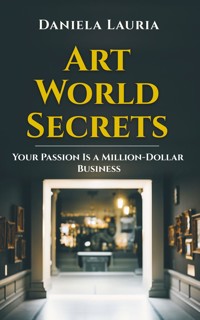
Art World Secrets
daniela lauria
danielalauria16
daniela lauria
www.danielalauria.com
Daniela Lauria
ART WORLD SECRETS
Your passion is a million-dollar business
Art World Secrets
Your passion is a million-dollar business
Copyright © 2022 Daniela Lauria
All rights reserved.
No part of this book may be reproduced
without the prior consent of the Author.
First edition March 2024
ISBN 9791254894606
Published with
www.bookness.it
To my Mother and Father
Summary
Introduction
Briefly About Daniela
Why You Should Read This Book
Who is this book for?
The Fears of Those Asking For My Help
The Desires of Those Who Trust Me
Three Stories to Share
Carlo and the Artworks from the ‘80s
Financial Consulting and the Worthless Artwork
Massimo and His Favorite Piece by an Emerging Artist
My Story
A Little Girl Enchanted by Art
Sense of Responsibility vs Following Passions
Continuous Study, Specializations, and Professors Who Shaped My Curiosity and Knowledge
Empathy for Artworks and Observing Art Observers
My First Job in the Art World
The Collapse of My Marriage and My Rebirth
The Challenges
The Evolution So Far, Taking Risks
Book Recommendations for You
Possible Objections
MANUAL
CHAPTER I
LOVING ART
CHAPTER II
BECOMING A COLLECTOR, NOT BORN ONE
CHAPTER III
CHOOSING THE RIGHT ARTWORK FOR YOU
CHAPTER IV
ARTISTIC TECHNIQUES
PAINTING
SCULPTURE
PHOTOGRAPHY
DRAWING
PRINTS
MODERN PRINTS
VIDEO ART
"NON-FUNGIBLE TOKEN" NFT
CHAPTER V
SOME WE LIKE, SOME WE DON'T
CHAPTER VI
CHOOSING THE RIGHT CHANNEL
WHERE TO BUY THE ART YOU LOVE
ART PROFESSIONALS
THE COLLECTORS
ART GALLERISTS
CHAPTER VII
THE ART VENUES
ART FAIRS
STUDIO VISITS
BUYING ART ONLINE
ONLINE FROM ARTISTS
ONLINE FROM GALLERIES
ART AND SOCIAL NETWORKS
CHAPTER 8
ALL ART PAYS DIVIDENDS
SEEK THE ARTWORK THAT SUITS YOU
THE RIGHT DOCUMENTATION
THE CATALOGUE RAISONNÉ
THE CERTIFICATE OF AUTHENTICITY
PROVENANCE
"ATTRIBUTED" ARTWORK
EXPERTISE, APPRAISAL, ESTIMATE, AND VALUATION
HOW ARE VALUATIONS MADE?
WHO CAN EVALUATE ART?
CONDITION REPORT
CHAPTER IX
FORGERIES
WHY SOME ARTWORKS INCREASE IN VALUE
CHAPTER X
ART AND SPECULATION
EVALUATING THE RIGHT PRICE
THE MATHEMATICAL FORMULA
THE CYCLICAL NATURE OF ART PRICES
DISPELLING MYTHS
CHAPTER XI
EMERGING ARTISTS
CHAPTER XII
BUYING THE ARTWORK YOU LIKE
CHAPTER XIII
THE WORLD OF AUCTIONS
MISCONCEPTIONS PEOPLE HAVE ABOUT AUCTIONS
IDENTIKIT OF AUCTION CLIENTS
HOW TO BUY AT AN AUCTION
ONLINE AUCTIONS
CHAPTER XIV
CONCLUSIONS
THE 10 RULES FOR BUYING ART WELL.
THE 5 SUPERPOWERS OF AN ART COLLECTOR...
ESSENTIAL BIOGRAPHY
Introduction
Briefly About Daniela
My name is Daniela Lauria, and art is my greatest passion. I believe that each of us, as is often said, is born with gifts, and understanding them and putting them to the service of others is extremely important and rewarding. My greatest love is indeed art, and helping people understand it, love it, and guide them in comprehending what lies on a canvas—both its emotional and economic value—are the factors that have allowed me to turn this passion into my profession. Yes, the journey hasn't been easy, but I've turned my passion into a job.
Through the pages of this book, we will embark on a journey of discovery into this wonderful world, which sometimes hides "pitfalls."
In reality, I'll be talking to you about a love story, not a job. A love story that began when I was three years old. No one in my family has ever been involved in art. My parents are entrepreneurs; they own a metalworking company, and I've often wondered where this immense love of mine comes from. Well, I don’t know, but I do know that I can't live without it.
My mom, when I was three years old, bought a book. She has always bought many; she loved books, and perhaps I inherited this passion from her. I remember that day vividly; she brought home a book about Vincent van Gogh with "The Sunflowers," and I spent hours captivated by that image that day and in the days that followed.
Today, I have this memory of myself, flipping through those photographs, sitting with that book in my lap. I was enchanted, captivated, completely fascinated, and in love with the sunflowers. From there, the love began and has been growing ever since. After so many years, my heart still races when I see a canvas, attend an opening, or move frames around in someone's basement who has called me for an unexpected discovery. Nothing has changed; I'm still that three-year-old discovering Vincent van Gogh's "The Sunflowers."
You see, my library is very well-stocked with editions concerning this subject. And the first evening I decided to begin writing this manuscript, I asked myself why, if I were a potential reader with a bursting library like mine, would I buy yet another book like mine? Why could I claim to be the "right" person to write a book on art?
The answer came by itself.
Because I have 20 years of experience. I have dedicated my entire life solely to this. I have followed an academic path that led me to graduate once, then go to a highly specialized school in art history, and I have a resume with five master's degrees and the creation of three museums. A very rich academic and professional journey. Sometimes I look at the wall in my home where my degrees, diplomas, and certificates hang and realize how art is the fundamental element of my existence, how having educated myself and acquired a wealth of knowledge in this world has allowed me to have truly diverse and important experiences, even from a work perspective. It hasn't been easy, and we'll talk about it, but it's as if, in every single moment of my life, even in the darkest ones, art, studying it, and having it before my eyes, has been the only way I have been able to exist and sometimes heal my life wounds. I'm starving for art; I continually study; I can't stop visiting museums or exhibitions and remain enchanted in front of canvases that touch my heart. Unlike other people who do my job, I am truly one of the few with the "right credentials" and such rich preparation, all thanks to the path I have taken.
This journey of mine is still unfolding; I don't feel like I've arrived or am lacking in stimuli and the desire to discover more subjects, to go deeper. You never stop progressing, improving, studying...
So what is art to me? It's a journey to discover the human soul. I am fascinated by humanity, by human beings, and so art is like a magnifying glass for me. Artists become the interpreters of a feeling. I love the fact that the artist creates the work with their own feelings, and you, in reading it, put in yours. So every time it's a journey into your own soul; it's a tool through which you know and recognize yourself. This has grown so much with me that there is no logical reason; for me, it just is. It's pure feeling. I partly live the frustration of not being able to paint. I've tried, but I can't hold the pencil or convey on the canvas as I'd like, so I thought it wasn't for me. When I was five, my parents decided to have a decorator redo my little room, and once finished, I began to add my touch with colored pencils. Apart from the fact that I believe my mom wanted to "kill me" that time, the result was really poor, and I think that was the first episode that made me realize I wasn't cut out to create my own works. Better to look at it and not create it. I almost feel a reverential fear for art; I dare not pick up a brush, as if, in doing so, I would scratch its sanctity.
Why You Should Read This Book
I've already hinted at why, if I were a reader, I'd linger on my book and choose it, but I'd like to explain further. I've envisioned it on the nightstand of a high school art student, or on the table of someone who, until some time ago, cleaned oil colors off their fingers before going to bed. I've imagined it on the wooden table of an elderly man who wants to leave the paintings on his walls as an inheritance to his grandchildren, or even in the hands of someone who claims not to understand much about art. But let's go step by step.
At this point in my life, both personally and professionally, I felt the need to go beyond my own reserve and shyness to share my knowledge. More importantly, I wanted to allow ordinary people to approach the world of art and the buying and selling of artworks with a new perspective. This is not my first foray into writing; I've written other books before, but those were essays, topics for experts.
This book originated as a parallel to one of the activities I've been doing on social media for almost two years now. Every day on LinkedIn, I publish a topic related to the art market, which is my job, and I've garnered so much attention that many people have written to me asking, "Why not turn all of this into a book? Why not give us more information?" Some have even told me that they've printed out all my posts and used them as a guide to the world of art.
I also wanted to make myself known, and by putting all these elements together, I decided to write a book that is a bit different from everything else on the market. This is specifically to navigate this wonderful but often tricky and deceptive world of art. I want to be very direct, clear, and honest with you. I aim to simplify complex topics, to make the complicated utterly straightforward. I want to help you understand where to look and how to take the first steps.
Not long ago, I hinted to someone about my desire to write a book and was asked if I intended to produce "the usual book on the art market." This served as further motivation for me to pursue this project. As I’ve already said, this is intended to be a sort of manual, a travel guide for those who have no basis and don't know how to begin navigating this world, but also for those who have been "burned" or love the sector but don't have clear ideas.
The first evening I sat down at my computer keyboard, I was convinced that I had to accomplish something I believe doesn't exist: to simplify something that is not simple at all. Books on art all say the same things; I will strive to be different. This book will be. And I say this not out of arrogance but with great humility and love for the subject matter.
Who is this book for?
For aspiring art dealers. Unfortunately, most people in the art world actually know nothing about art. However, attracted by the possibility of million-dollar transactions and more, they approach this sector. So, they then need people like me to guide them correctly, both in terms of documentation and a series of evaluations they can't perform on their own.
I often interact with collectors or wealthy individuals who want to get closer to this world but are often scared, perhaps because they've had some really unpleasant experiences. Many come to me after they've been deceived. Many say they love art very much but, after these deceptions, prefer to invest money in real estate.
In my daily life, I often collaborate with the children of collectors or artists, the heirs. At some point in their lives, they find themselves with a substantial number of works and have no idea what to do, how to act. They see in me someone capable of helping them manage this legacy completely.
Lastly, I often engage with contemporary artists who need a guide to take them by the hand through the market.
In my opinion, reading this book, even those who know nothing about art will know what to say at dinner with friends. Meaning, the art world sometimes features personalities who show off a lot but know very little about art. With this book, which is definitely simple but provides many basic concepts, I am sure that many will find points for reflection or sharing even with friends.
Of course, I'm not saying you'll be able to "pose" as a specialist, but as someone who "knows what they're talking about" or is truly passionate, definitely yes. Having knowledge and talking about it, for example, at a dinner, will be a good way to disseminate and harmoniously spend an evening. Or you could also go to art fairs and, with this in your pocket, know the questions to ask the gallery owner. Thus, having knowledge that many often ignore.
You could be an aspiring collector or art dealer who, rather than going blindly and randomly, has a sort of travel itinerary suggested by me.
The Fears of Those Asking For My Help
The biggest fear among my clients, some of whom, as I've already mentioned, come to me after negative experiences in the art world, is getting ripped off and losing money. But it's not just about losing money; the fear of "losing face" also plays a role. In the mindset of collectors and art buyers, art serves as a status symbol—the idea is to "buy what everyone else desires but only I can have." It's not just about having the money; even if you're a billionaire, you may still fail to acquire a particular piece. Hence, those with the financial means must also have the right knowledge and know how to move in this world to get what others want but can't have. The dynamic introduces a subtle divide; it's not just about money, but also about prestige.
For art dealers, the greatest fear is ending up on a blacklist—that is, among those who can't deliver results. Failing to establish oneself as an excellent seller and mediator. The fear of being overtaken, of being exposed as unskilled.
For the children of collectors or artists, the greatest fear is failing to fulfill the commitment made to their father or grandfather. On one hand, they feel a strong sense of responsibility—not just toward the financial but also the human legacy—and on the other hand, the fear of being deceived, perhaps by an art dealer who sweeps everything away with a small amount of money. The complete lack of knowledge among those who inherit creates a huge fear, a sense of inadequacy, and again, the great fear of not being able to properly value something that has been passed down or created by a family member. The vulnerability of these individuals sometimes makes it easy for dishonest or unprofessional people to approach them.
There's also the fear of encountering a forgery and subsequently facing legal issues. In the art world, anyone who mediates the sale of a counterfeit artwork—even unknowingly—faces criminal charges. This is a sort of Achilles' heel, as most people casually send photos or data via WhatsApp and then end up in court.
The fear of losing face, of losing money, and of encountering someone smarter—these are the common concerns for all categories of people who contact me. I talk a lot with my clients, and I sometimes find myself hearing confessions about past experiences or emotions tied to this sector. I believe this is also one of the reasons that ultimately pushed me to clarify these topics. You won't become art experts by reading a book, but you'll begin to grasp certain elements and concepts that will allow you to navigate more safely. This will give you the basics to also choose the right professional to consult, specifically to dismantle these fears and avoid unpleasant situations.
The Desires of Those Who Trust Me
The first desire, undoubtedly, is to be the "best," to possess that unique object in the world that everyone desires but only the wealthiest can own. Culture also gives those who've made money but don't possess a deep knowledge of art a sort of credibility that belongs to those who were born into that social position. I meet industry captains who've made millions through work but have never had the time to cultivate art, and are therefore ignorant in this field. They turn to me to find and purchase prestigious artworks that allow them to enter certain circles. It is thus a desire for prestige.
There are also patrons, those who promote the arts. Here there's a bit of a race to discover and reveal an artist to the world before anyone else. Again, it's something subtle that goes beyond money.
The same applies to the child of an artist or collector. The aim is to elevate the name of their relative. Everyone would like to be Johanna Gezina van Gogh-Bonger, Vincent van Gogh's sister-in-law, who transformed van Gogh's standing in a market that now generates millions.
For the aspiring art dealer, the primary desire is to establish themselves among the elites who truly matter in the art world.
Art creates great desires in the hearts of the most diverse people every day. A canvas offers different emotions to each of us, even when the artist was focused on expressing their own emotional experiences, perhaps very private and undisclosed. There are equally many clear or hidden reasons why people covet one work over another. I love getting in touch with all these facets; I love hearing the reasons of the heart as well as the colder, calculated reasons that might prompt someone to seek my expertise. However, I always start with a fundamental premise: I love art, I love this job, and above all else—before any artwork or compensation—I am an honest and upright person.
Three Stories to Share
Carlo and the Artworks from the ‘80s
A few months ago, Carlo, a gentleman who had a financially prosperous past, contacted me through a mutual friend. Carlo was a freelancer who had made substantial earnings back in the day and had purchased a series of artworks. We're talking about the '80s, a time when many invested in art that lacked proper certification. At that time, providing documentation was uncommon; you saw the artwork, liked it, and purchased it. Today, it's absolutely unthinkable to consider trading artworks without any documentation. We do it for cars and homes; nowadays, any movement of money is justified.
My work often comes through word-of-mouth, and that was the case with Carlo, who called me one morning after receiving my number from a mutual friend. This often happens because I enter people's homes; it's a bit like being a doctor—you have to trust me. So, I go to this gentleman's home and discover that over the years, he had amassed a rather intriguing collection of artworks. He tells me that his financial situation isn't as robust as it once was and that, due to some unforeseen expenses, he's facing some difficulties. In his words, "I'm alone in an apartment with these artworks on the walls; my children are grown and live far away." Carlo realized that he wasn't getting any younger, that he still wanted to enjoy life, and so, looking at his artworks one evening, he figured that he might regain some financial freedom by selling them.
This is a common scenario. People who are in financial distress or who no longer want to keep artworks hanging on their walls prefer to set aside money for the coming years or want to use it right away.
Carlo then showed me an antique painting, claiming it was the best in his collection and that he was counting on it. I examined it and realized that wasn't the case. In industry terms, the painting was a dud. I understood that Carlo had high hopes for this piece, but, as I've said before, I'm an honest person and carry out my work with great sensitivity and sincerity. I couldn't bring myself to advise this man to invest money in that piece. He was already struggling, and it would have been wasteful to go in that direction. However, upon examining his collection, I discovered two works by a renowned 20th-century master beloved worldwide. Carlo had no documentation for either. I explained that it would be wise to invest the money he had considered for the worthless painting into these two significant works instead. He trusted me and followed my advice. We then undertook all the necessary activities—research, scientific analyses, and so on. For these steps, I work in collaboration with a team of specialists. We did a thorough job on the historical, scientific, and artistic data; the results were more than reassuring. We went to the Foundation and obtained the necessary certification.
Carlo then sold his principal artwork for a million. For me, it was a tremendous satisfaction. Carlo was overjoyed and had far exceeded any expectations he had.
It's experiences like these that not only validate the honesty and expertise I bring into my profession but also underscore the profound impact that art—and proper guidance—can have on people's lives.




