


4,99 €
Mehr erfahren.
- Herausgeber: The Lilliput Press
- Kategorie: Sachliteratur, Reportagen, Biografien
- Sprache: Englisch
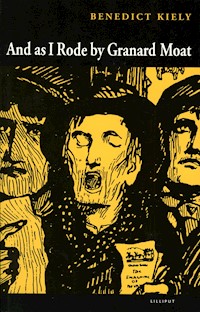
Rescued from memory by Ireland's leading short-story writer and raconteur, this anthology weaves a rich tapestry of songs, ballads and poetry reaching across three centuries and drawn from the lanes and highways of thirty-two counties. Contents include poetry by W.B. Yeats, A.E., F.R.Higgins, Louis MacNeice, Patrick Kavanagh, Francis Ledwidge and Oliver St John Gogarty; and songs of love, rebellion and in praise of nature including 'The Yellow Bittern', 'The Bold Fenian Men', 'Ringletted Youth of my Love', 'Galway Races' and 'My Love is Like the Sun'.
Das E-Book können Sie in Legimi-Apps oder einer beliebigen App lesen, die das folgende Format unterstützen:
Veröffentlichungsjahr: 1996
Ähnliche


















For Ciarán MacMathúnawho owns the world that I wandered through
And as I Rode by Granard Moat
Benedict Kiely
THE LILLIPUT PRESS DUBLIN
Contents
Dedication
Title Page
Map
Preface
I Ulster
‘The Green Flowery Banks’ [Anon.]
‘The Ballad of Douglas Bridge’ [Francis Carlin]
‘Me an’ Me Da’ [Rev. Marshall]
‘When I Was a Little Girl’ [Alice Milligan]
‘The Ould Orange Flute’ [Anon.]
‘The Hills above Drumquin’ [Felix Kearney]
‘Drumquin Creamery’ [Anon.]
‘The Man from God Knows Where’ [Florence Wilson]
‘Old Ardboe’ [Anon.]
‘Lament for Thomas Davis’ [Samuel Ferguson]
‘’Tis Pretty tae be in Baile-liosan’ [Joseph Campbell]
‘Sweet Omagh Town’ [Anon.]
‘The Treacherous Waves of Loughmuck’ [Frank McCrory]
‘Song of the Little Villages’ [James Dollard]
‘The Winding Banks of Erne’ [William Allingham]
‘The Pilgrim’ [W.B. Yeats]
‘The Lough Derg Pilgrim’ [Seamus Heaney]
‘Like Dolmens Round My Childhood, the Old People’ [John Montague]
‘A Lost Tradition’ [John Montague]
‘Lough Erne Shore’ [Anon.]
‘The Maid of Lough Gowna Shore’ [Anon.]
‘The Mantle So Green’ [Anon.]
‘Nell Flaherty’s Drake’ [Percy French]
‘O’Hussey’s Ode to the Maguire’ [James Clarence Mangan]
‘The Wake of William Orr’ [William Drennan]
The Maiden City’ [Charlotte Elizabeth]
‘Aodh Ruadh Ó Domhnaill’ [Thomas MacGreevy]
‘The Forsaken Soldier’ [Hudie Devaney, tr. Paddy Tunney]
‘A Christmas Childhood’ [Patrick Kavanagh]
‘Deirdre’ [James Stephens]
‘The Lions of the Hill Are Gone’ [Samuel Ferguson]
‘Lent’ [W.R. Rodgers]
‘I Am the Mountainy Singer’ [Joseph Campbell]
‘Ballad to a Traditional Refrain’ [Maurice Craig]
‘Sarah Ann’ [Rev. Marshall]
‘The Runaway’ [Rev. Marshall]
‘The Boys of Mullaghbawn’ [Anon.]
‘Wild Slieve Gallen Brae’ [David Hammond]
II From Ulster to Leinster
‘Boyne Water’ [Anon.]
‘Train to Dublin’ [Louis MacNeice]
‘Dublin’ [Louis MacNeice]
‘The Humours of Donnybrook Fair’ [Anon.]
‘Dublin Made Me’ [Donagh MacDonagh]
‘Down by the Liffey Side’ [Donagh MacDonagh]
‘Autumn Afternoon’ [Roibeard Ó Faracháin]
‘Dublin’s Children’ [Padraic Gregory]
‘The Hill of Killenarden’ [Charles Halpine]
‘She Walked Unaware’ [Patrick MacDonogh]
‘Mary Hynes’ [Padraic Fallon, after Raftery]
‘The Western World’ [Robert Farren]
‘Spraying the Potatoes’ [Patrick Kavanagh]
‘Renewal’ [Patrick Kavanagh]
‘Spring Stops Me Suddenly’ [Valentin Iremonger]
‘A Racehorse at the Curragh’ [Francis Stuart]
‘My Love Is like the Sun’ [Anon.]
‘Bellewstown Hill’ [John Costello]
‘The Night before Larry was Stretched’ [attd to Rev. Robt Burrowes]
‘The Boyne Walk’ [F.R. Higgins]
‘On Seeing Swift in Laracor’ [Brinsley MacNamara]
‘Going to Mass Last Sunday’ [Donagh MacDonagh]
‘The Yellow Bittern’ [C.B. Mac Giolla Gunna, tr. Thomas MacDonagh]
‘Padraic O’Conaire – Gaelic Storyteller’ [F. R. Higgins]
‘Georgian Dublin’ [Maurice Craig]
‘An Elegy on the Death of a Mad Dog’ [Oliver Goldsmith]
‘Twenty Golden Years Ago’ [James Clarence Mangan]
‘The Time of the Barmecides’ [James Clarence Mangan]
‘The Woman of Three Cows’ [Anon., tr. James Clarence Mangan]
‘Gone in the Wind’ [James Clarence Mangan]
‘King Brian before the Battle’ [William Kennelly]
‘Lament for Dædalus’ [John Sterling]
‘Leda and the Swan’ [Oliver St John Gogarty]
‘Canal Bank Walk’ [Patrick Kavanagh]
‘Lines Written on a Seat on the Grand Canal’ [Patrick Kavanagh]
‘The Blackbird of Derrycairn’ [Austin Clarke]
‘The Fool’ [Patrick Pearse]
‘A Prayer for My Daughter’ [W.B. Yeats]
‘The Spanish Lady’ [Joseph Campbell]
‘The Old Road Home’ [Teresa Brayton]
‘The Lost Ones’ [Francis Ledwidge]
‘My Mother’ [Francis Ledwidge]
III From Leinster to Connacht
‘A Drover’ [Padraic Colum]
‘Old Woman of the Roads’ [Padraic Colum]
‘The King of Ireland’s Son’ [Nora Hopper]
‘A Day in Ireland’ [Anon., tr. Michael Cavanagh]
‘Carrowmore’ [AE]
‘The County of Mayo [Thomas Lavelle, tr. George Fox]
‘Galway Races’ [Anon.]
‘A Vision of Connacht in the Thirteenth Century’ [James Clarence Mangan]
‘Ringleted Youth of My Love’ [Anon., tr. Douglas Hyde]
‘In a Foreign Land’ [Douglas Hyde]
‘The Isle of the Blest’ [Gerald Griffin]
‘O, Sweet Adare’ [Gerald Griffin]
‘Orange and Green’ [Gerald Griffin]
‘Pattern of Saint Brendan’ [Francis MacManus]
‘The Homeward Bound’ [Thomas D’Arcy McGee]
‘I Think if I Lay Dying’ [Winifred Letts]
‘Excerpts from an Irish Sequence’ [Francis MacManus]
‘Ascent of the Reek’ [Francis MacManus]
‘The Oak of Kildare’ [Francis MacManus]
‘St John’s Tower, Limerick’ [Francis MacManus]
‘ALL Over the World’ [C.J. Boland]
IV From Connacht to Munster
‘The Blacksmith of Limerick’ [Robert Dwyer Joyce]
‘The Night We Rode with Sarsfield’ [Denis A. McCarthy]
‘Drunken Thady’ [Michael Hogan]
‘Johnny in Killaloe’ [Jerome Flood]
‘The Limerick Rake’ [Anon.]
‘The Lambs on the Green Hills’
‘For a Bride You have Come!’ [Padraic Colum]
‘The Bold Fenian Men’ [Michael Scanlan]
‘Kincora’ [tr. James Clarence Mangan]
‘Gougaune Barra’ [J.J. Callanan]
‘The Convict of Clonmel’ [tr. J.J. Callanan]
‘The Outlaw of Loch Lene’ [tr. J.J. Callanan]
‘The Three Old Brothers’ [Frank O’Connor]
‘The Groves of Blarney’ [Richard Alfred Milliken]
‘Castle Hyde’ [Barrett the Weaver]
‘Aghadoe’ [John Todhunter]
V And Back to Tyrrellspass
‘The Deck beside the Road’ [Anon.]
‘The Circus Is Coming to Town’ [Denis A. McCarthy]
‘At Ardaloo’ [P. Connor]
‘The Blackbird’ [Anon.]
‘An Ode in Praise of the City of Mullingar’ [Anon.]
‘The Battle of Tyrrellspass’ [Arthur Gerald Geoghegan]
Acknowledgments
Copyright
Preface
Sometime towards the end of the 1920s, when I was eight or nine, my elder brother, who was a great man for hoarding books, considered that I was mature and literate enough to be allowed access to his collection of Our Boys: back numbers of that famed periodical that had been printed and published even before my time. My recollection is that it was indeed a very superior effort, and the feature that most attracted me was a serial called ‘Tyrrell of Tyrrellspass’. Perhaps it was simply the fine sound of the names that first got to me, the repetition, the sibilants, which evoked the slapping of scabbards and the creaking of saddle-leather. But I read and reread that blessed serial until I practically knew it by heart and thus became, at an early age, an undoubted authority on the history of the wars of Elizabeth and Hugh O’Neill.
My learning I carried with me – with, I hope, modesty and dignity – to the farmhouse of my Aunt Kate Gormley at Claramore, near Drumquin, a great house for local people coming and going. And, at the age of ten or thereabouts, I most generously decided to give those uninstructed rural people an insight into the history of their country. But one neighbouring farmer, a man called Paddy McCillion (he had a drooping moustache and a dozen or so lovely sons and daughters), elected to play the cynic and pretend that Richard Tyrrell of Tyrrellspass, Hugh O’Neill’s famed guerrilla captain, had never existed.
What followed was my first major controversy, and I can still clearly recall the length and intensity of the argument, as I brought up all my learned references from the Our Boys to flatten that imperturbable unbeliever. And I can recall, too, the frustration with which I would withdraw from the warm farm-kitchen to the cool privacy of the orchard and there stamp my feet in frenzy. But in the end, generous Paddy confessed to the hoax; we became firm friends and I admitted that he was, after all, a proper Irishman.
So the name of Tyrrellspass has a Proustian effect on me, and when I hear it I see first of all not that handsome little town on the road from Dublin to Galway, but the farmhouse at Claramore and the steep hill called Con’s Brae, from the top of which you could see, very far away, Mounts Errigal and Muckish. And I see the two deep lakes of Claramore like the eyes of a giant buried in the bogland. And I see Drumard Hill, which had the most fruitful hazelwoods, and out on the heather the bilberries or blayberries or fraughans or what-you-will. And I see the byres and barns and stables, and the two cart-horses, Jumbo and Tom, and the multitude of collie-dogs, and the hearthfire, and the wide flagged floor of the kitchen. And Paddy McCillion’s moustache. And I hear the chirping of the crickets.
And, now that I think of it, some time ago I heard a man on the radio say that the cricket, like the corncrake, is now about extinct in Ireland – two of the species disposed of by modern methods and modern living.
Because of that Our Boys serial, Richard Tyrrell, captain of cavalry, rides on in my imagination as he once rode in reality for Hugh O’Neill, and with Domhnall Cam O’Sullivan Beare on that final, marathon march from the far end of the Eyeries peninsula to O’Rourke’s Leitrim: all to fade away in the end, like so many more out of that time, and die in distant Spain, unchronicled, unchaunted.
But not quite. For always to reawaken my memory there was Geoghegan’s 108-line ballad of ‘The Battle of Tyrrellspass’, in which Tyrrell and O’Connor Offaly, with four hundred men, defeated, it was said, one thousand of the English and their Irish supporters. Here’s a bit of the old ballad:
The baron bold of Trimbleston hath gone, in proud array,
To drive afar from fair Westmeath the Irish kerns away.
And there is mounting brisk of steeds and donning shirts of mail,
And spurring hard to Mullingar ‘mong riders of the Pale. […]
For trooping in rode Nettervilles and Daltons not a few,
And thick as reeds pranced Nugent’s spears, a fierce and godless crew;
And Nagle’s pennon flutters fair, and, pricking o’er the plain,
Dashed Tuite of Sonna’s mailclad men, and Dillon’s from Glenshane. […]
MacGeoghegan’s flag is on the hills! O’Reilly’s up at Fore!
And all the chiefs have flown to arms from Allen to Donore,
And as I rode by Granard moat right plainly might I see
O’Ferall’s clans were sweeping down from distant Annalee.
Now there by the Lord were rolling, resounding lines and a fine iron clangour of Norman names. If you know anything about the ballad history of Ireland you will know that those two verses come from a ballad by Arthur Gerald Geoghegan, whom in old books you will find described simply as the author of The Monks of Kilcrea’, a book-length series of stories in verse with songs and interludes.
Tyrrell of Tyrrellspass defied Elizabeth’s captain, the great Mountjoy, who proclaimed the Norman-Irishman’s head for two thousand crowns. But in his midland stronghold, ‘seated in a plain, on an island, encompassed with bogs and deep ditches, running in line with the River Brosna, and with thick woods surrounding’, Tyrrell laughed at armies and broke them as they came, and when he had to retreat did so successfully, leaving behind him only some wine, corn, cows and garron, and beasts of burden.
He was true to his country, faithful to his friends and a holy terror to the Elizabethan foe – in a skirmish in the O’Moore country he had almost taken the life of Lord Deputy Mountjoy. With his assistance, O’Donnell had evaded Mountjoy’s blockade and crossed the Slieve Phelim mountains into Munster. Tyrrell controlled the vanguard after the disaster of Kinsale, he helped MacGeoghegan to defend Dunboy and, in the end of all, fell back to Cavan, his head still on his shoulders. And from Cavan to Spain …
I first encountered this ballad in the two volumes of Edward Hayes’s splendid anthology The Ballads of Ireland (A. Fullarton & Co., London 1855), loaned to me when I was here at school in Omagh, by that great teacher, M.J. Curry, who also once suggested to me that you could make a book about Ireland by just wandering around, and here, there and everywhere reciting a poem or singing a ballad. I would begin here in the Strule Valley and go here and there until in the end I came to Granard Moat and the countryside that had inspired Geoghegan’s resounding ballad. It would be a long and intricate journey and I would meet many songs, poems and ballads on the way.
Then I had the pleasure and privilege of encountering a young Dublin publisher, Antony Farrell of The Lilliput Press, who also thought it was a good idea. For one thing he is an O’Farrell, even if he went to school as far away as Harrow. And he came from the land around Granard Moat, and is very proud of that. So we set together to make a book. And here is how I begin the journey.
I
Ulster
So there, or here, am I, in Sweet Omagh Town, at the beginning of my road of poems and ballads round Ireland. And it occurs to me now that the idea may have been put into my head by the men who taught me when I had the privilege of going to school on Mount St Columba. And not just by M.J. Curry. The teachers came from everywhere and you saw Ireland, and other places, through their eyes and memories and conversations.
Brother Hamill from Belfast had been as far away as China, spoke Chinese, and could talk most eloquently about the multitudinous peoples and great rivers of that vast land. His brother in the world was Mickey Hamill, the famous centre-half, whom I once met.
One Brother Burke came from Dublin and was a rugby football man. The other Brother Burke, a hurling man, hailed from Birdhill, Tipperary, from where you have the heavenly vision of Lough Derg and the stately Shannon spreading, as Spenser said, like a sea.
Brother Clarke, a quiet man, was from Wexford, and he was as proud of it as any rebel-pikeman.
One of my happiest memories is of walking with Brother Walker, long after I had left school, and talking about James Joyce – about whom Brother Rice was a learned authority. Indeed, the first reasonable statement I ever heard about Joyce came from Brother Rice in the middle of a class in trigonometry. Mr Joyce would have been impressed, and grateful.
Anthony Shannon came from Derry, and his memories of student days in Dublin were vivid. The great M.J. Curry was a Clareman, but had been to university in England and could talk most eloquently on all authors, from Cicero to Bret Harte. Frank McLaughlin came from Cork and Leo Sullivan from Wexford, but both of them, one a classicist, the other a scientist, were totally devoted to the Tyrone countryside. And there were others. In the pulpit in the Sacred Heart Church was Dr John McShane, who had studied in Rome and talked in friendship with Gabriele D’Annunzio.
There was Father Lagan who was related to a famous family in the town, and Dr Gallagher, and Father MacBride and Father McGilligan. And in Killyclogher there was Father Paul McKenna, who could quote Robert Burns forever and who brought me one day to Mountfield to visit the aged priestess Alice Milligan.
Patrick Kavanagh in ‘The Great Hunger’ made a reference to Mullagharn as the hub of a cartwheel of mountains. As I remember, it was something Brother Rice said that set a group of us, one day early in the year, to conquer that mountain. We were Joe Gilroy, Gerry McCanny, Michael Mossy, Larry Loughran, and myself.
Then away with us, up the Killyclogher Burn to Glenhordial, then up and up to the mountain top. Snow still lay in some of the hollows of the mountainside. And when we stood up there together, and looked down on O’Neill’s country, and shouted and sang in Irish and English, we felt that we owned Ireland and the world. Perhaps at that moment we did.
That was a day that stays forever in my memory.
We begin the journey, then, if you will bear my company, in my home town of Omagh. Right in the heart of the town the Owenreagh, or Drumragh as we locals call it, accepts the silver Camowen and from that confluence, and north as far as Newtown-Stewart, the bright water is called the Strule. The great lauded names along the splendid river valley between Bessy Bell mountain and the odd-shaped hill of Mary Gray (and Mullagharn and the Gortin hills, outriders of the Sperrins) were Mountjoy and Blessington. And away back about the time of Bonaparte it is possible that the felling of trees in the Strule Valley helped to pay for the cavortings of Lord and Lady Blessington and the ineffable Count D’Orsay. In time of war there was a demand for timber.
After Waterloo that demand diminished and some of the hired woodcutters were forced to go west over the ocean to make a livelihood, most of them strong young men from the Sperrin Mountains. The local historian, the remarkable Robert Crawford, has described how, on a market-day, those woodsmen would walk the streets of Omagh with great axes on their shoulders and fearing no man. About 1821 this threnody was written for the passing of the woodsmen, Blessington’s Rangers – no author have I ever heard named.
THE GREEN FLOWERY BANKS
Thrice happy and blessed were the days of my childhood,
And happy the hours we wandered from school
By old Mountjoy’s forest, our dear native wildwood,
On the green flowery banks of the serpentine Strule.
No more will we see the gay silver trout playing,
Or the herd of wild deer through the forest be straying,
Or the nymph and gay swain on the flowery bank straying,
Or hear the loud guns of the sportsmen of Strule.
It is down then by Derry our dear boys are sailing,
Their passions with frantics they scarcely could rule.
Their tongues and their speeches were suddenly failing
While floods of salt tears swelled the waters of Strule.
No more will the fair one of each shady bower
Hail her dear boy of that once happy hour,
Or present him again with a garland of flowers
That they of times selected and wove by the Strule.
Their names on the trees of the rising plantation,
Their memories we’ll cherish and affection ne’er cool,
For where are the heroes of high or low station
That could be compared with the brave boys of Strule.
But this fatal ship to her cold bosom folds them,
Wherever she goes our fond hearts shall adore them,
Our prayers and good wishes shall still be before them
That their names be recorded and sung to the Strule.
Here’s to Patrick McKenna, that renowned bold hero,
His courage proud Derry in vain tried to cool.
There’s Wilkinson and Nugent to crown him with glory
With laurels of woodbine they wove by the Strule.
But now those brave heroes are passed all their dangers,
On America’s shores they won’t be long strangers,
And they’ll send back their love to famed Blessington’s Rangers,
Their comrades and friends and the fair maids of Strule.
In the part of Omagh town where I grew up there was born, and lived for a while, a man by the name of Francis Carlin. He wrote some poems, then went off to the USA, where that hard world was not overkind to him. He was contacted, or unearthed, in New York City by the poet Padraic Colum and his wife, Mary, who found him a job in Macy’s department store: an odd place, perhaps, for a poet who, downriver from Omagh at Douglas Bridge, had seen a vision of the last of the Rapparees. Carlin died in 1945.
THE BALLAD OF DOUGLAS BRIDGE
By Douglas Bridge I met a man
Who lived adjacent to Strabane,
Before the English hung him high
For riding with O’Hanlon.
The eyes of him were just as fresh
As when they burned within the flesh;
And his boot-legs were wide apart
From riding with O’Hanlon.
‘God save you, Sir,’ I said with fear,
‘You seem to be a stranger here.’
‘Not I,’ said he, ‘nor any man
Who rode with Count O’Hanlon.’
‘I know each glen from North Tyrone
To Monaghan. I have been known
By every clan and parish since
I rode with Count O’Hanlon.’
‘Before that time,’ said he to me,
‘My fathers owned the land you see;
But now they’re out among the moors
A-riding with O’Hanlon.’
‘Before that time,’ said he with pride,
‘My fathers rode where now they ride
As Rapparees, before the time
Of trouble and O’Hanlon.’
‘Good night to you, and God be with
The tellers of the tale and myth,
For they are of the spirit-stiff
That rode with Count O’Hanlon.’
‘Good night to you,’ said I, ‘and God
Be with the chargers, fairy-shod,
That bear the Ulster heroes forth
To ride with Count O’Hanlon.’
By Douglas Bridge we parted, but
The Gap o’ Dreams is never shut,
To one whose saddled soul to-night
Rides out with Count O’Hanlon.
A great friend in my home town was Captain William Maddin Scott, head of a notable family and, as owner of Scott’s Mills, a good and fair employer. Captain Scott had prepared an anthology, A Hundred Years A-Milling, relating his family to the town and the Tyrone countryside, which they had honoured and aided for so long by their presence. When Seán MacRéamoinn and myself featured the book on a Radio Éireann programme called (how hopefully!) ‘The Nine Counties of Ulster’, the Captain was mightily pleased and I was elevated to being a dinner-guest at the Scott mansion at Lisnamallard, where I was introduced to the Rev. Marshall of Sixmilecross.
Marshall was a most gracious and learned gentleman, and a prime authority on Ulster folk-dialect. When the Captain told me that ‘our friend Marshall’ was ‘a Doctor of Divinity’ we both laughed merrily. Now there was no reason why Marshall of Sixmilecross should not be a Doctor of Divinity, or a doctor of anything and everything; what set us laughing was that the learned doctor had also written in his TyroneBallads (The Quota Press, Belfast 1951) of the sad plight of the man in Drumlister:
ME AN’ ME DA
I’m livin’ in Drumlister,
An’ I’m gettin’ very oul’
I have to wear an Indian bag
To save me from the coul’.
The deil a man in this townlan’
Wos claner raired nor me,
But I’m livin’ in Drumlister
In clabber to the knee.
Me da lived up in Carmin,
An’ kep’ a sarvint boy;
His second wife was very sharp,
He birried her with joy:
Now she was thin, her name was Flynn,
She come from Cullentra,
An’ if me shirt’s a clatty shirt
The man to blame’s me da.
Consarnin’ weemin’ sure it was
A constant word of his,
‘Keep far away from them that’s thin,
Their temper’s aisy riz.’
Well, I knew two I thought wud do,
But still I had me fears,
So I kiffled back and forrit
Between the two, for years.
Wee Margit had no fortune
But two rosy cheeks wud plaze;
The farm of lan’ wos Bridget’s,
But she tuk the pock disayse:
An’ Margit she wos very wee,
An’ Bridget she was stout,
But her face wos like a gaol dure
With the bowlts pulled out.
I’ll tell no lie on Margit,
She thought the worl’ of me;
I’ll tell the truth, me heart wud lep
The sight of her to see.
But I was slow, ye surely know,
The raison of it now,
If I left her home from Carmin
Me da wud rise a row.
So I swithered back an’ forrit
Till Margit got a man;
A fella come from Mullaslin
An’ left me jist the wan.
I mind the day she went away,
I hid one strucken hour,
An’ cursed the wasp from Cullentra
That made me da so sour.
But cryin’ cures no trouble,
To Bridget I went back,
An’ faced her for it that night week
Beside her own thurf-stack.
I axed her there, an’ spoke her fair,
The handy wife she’d make me.
I talked about the lan’ that joined
– Begob, she wudn’t take me!
So I’m livin’ in Drumlister,
An’ I’m gettin’ very oul’.
I creep to Carmin wanst a month
To thry an’ make me sowl:
The deil a man in this townlan’
Wos claner raired nor me,
An’ I’m dyin’ in Drumlister
In clabber to the knee.
From that same time in the past dates a friendship with a priest, Father Paul McKenna, who brought me one day to the old rectory in the village of Mountfield, where the aged poet Alice Milligan then lived in a dusty grandeur recalling the home of Miss Haversham in Great Expectations. But the garden where she played in her girlhood could still be seen at the end of Omagh town where one road divides to make three: at a place called the Swinging Bars, where there once may have been a toll-gate.
WHEN I WAS A LITTLE GIRL
When I was a little girl,
In a garden playing,
A thing was often said
To chide us, delaying:
When after sunny hours,
At twilight’s falling,
Down through the garden’s walks
Came our old nurse calling –
‘Come in! for it’s growing late,
And the grass will wet ye!
Come in! or when it’s dark
The Fenians will get ye.’
Then, at this dreadful news,
All helter-skelter,
The panic-struck little flock
Ran home for shelter.
And round the nursery fire
Sat still to listen,
Fifty bare toes on the hearth,
Ten eyes a-glisten.
To hear of a night in March,
And loyal folk waiting,
To see a great army of men
Come devastating –
An Army of Papists grim,
With a green flag o’er them,
Red-coats and black police
Flying before them.
But God (who our nurse declared
Guards British dominions)
Sent down a fall of snow
And scattered the Fenians.
‘But somewhere they’re lurking yet,
Maybe they’re near us,’
Four little hearts pit-a-pat
Thought ‘Can they hear us?’
Then the wind-shaken pane
Sounded like drumming;
‘Oh!’ they cried, ‘tuck us in,
The Fenians are coming!’
Four little pairs of hands
In the cots where she led those,
Over their frightened heads
Pulled up the bedclothes.
But one little rebel there,
Watching all with laughter,
Thought ‘When the Fenians come
I’ll rise and go after.’
Wished she had been a boy
And a good deal older –
Able to walk for miles
With a gun on her shoulder.
Able to lift aloft
The Green Flag o’er them
(Red-coats and black police
Flying before them);
And, as she dropped asleep,
Was wondering whether
God, if they prayed to Him,
Would give fine weather.
There was a time when, without offence and in mixed (sectarian, not sexual) company, it was possible to sing ‘The Sash My Father Wore’. This may no longer be advisable. But the magic flute may, because of its very intractability, retain a heavenly neutrality. Scholars and flautists will know that there are variant renderings.
THE OULD ORANGE FLUTE
In the County Tyrone, near the town of Dungannon,
Where many’s the ruction myself had a han’ in,
Bob Williamson lived, a weaver by trade,
And we all of us thought him a stout Orange blade.
On the Twelfth of July, as it yearly did come,
Bob played on the flute to the sound of the drum:
You may talk of your harp, the piano or lute,
But there’s none could compare with the ould Orange flute.
But this sinful deceiver he took us all in
And married a Papish called Brigid McGinn,
Turned Papish himself and forsook the ould cause
That gave us our freedom, religion and laws.
Now the boys of the place made some comment upon it,
And Bob had to fly to the province of Connacht:
He flew with his wife and his fixtures to boot,
And along with the rest went the ould Orange flute.
At the chapel on Sundays to atone for his past deeds
He said Paters and Aves on his knees and his brown beads,
And after a while at the priest’s own desire
He took the ould flute for to play in the choir.
He took the ould flute for to play at the Mass,
But the instrument shivered and sighed ‘Oh Alas!’
And blow as he would, though he made a great noise,
The flute would play only the Protestant Boys.
Bob flustered and fingered and got in a splutter
And dipped the ould flute in the blessed holy water.
He thought that the dipping would bring a new sound,
When he blew it again it played Croppies Lie Down.
He could whistle his utmost and finger and blow
To play Papish tunes, but the flute wouldn’t go.
Kick the Pope, the Boyne Water and Croppies Lie Down,
And no Papish squeak in it all could be found.
At the Council of priests that was held the next day
‘Twas decided to banish the ould flute away.
Since they couldn’t knock heresy out of its head,
They bought Bob a new one to play in its stead.
So the ould flute was doomed and its fate was pathetic,
‘Twas sentenced and burned at the stake as heretic.
As the flames roared around it they heard a strange noise,
The ould flute was still playing the Protestant Boys.
My mother came from the village of Drumquin and numbered among her friends Felix Kearney, who wrote poems, some of them meant to be sung. I had the honour of meeting him in his old age, and in the presence of the man himself I heard Paddy Tunney sing Kearney’s song about ‘The Hills above Drumquin’.
God bless the Hills of Donegal,
I’ve heard their praises sung,
In days long gone beyond recall
When I was very young.
Then I would pray to see a day
Before Life’s course be run
When I could sing the praises
Of the Hills above Drumquin.
I love the Hills of Dooish,
Be they heather clad or lea,
The wooded glens of Cooel
And the Fort on Dun-na-ree.
The green clad slopes of Kirlish
When they meet the setting sun
Descending in its glory on the
Hills above Drumquin.
Drumquin, you’re not a city
But you’re all the world to me.
Your lot I will not pity
Should you never greater be.
For I love you as I knew you
When from school I used to run
On my homeward journey through you
To the Hills above Drumquin.
I have seen the Scottish Highlands,
They have beauties wild and grand,
I have journeyed in the Lowlands
’Tis a cold and cheerless land.
But I always toiled content
For when each hard day’s work was done
My heart went back at sunset
To the Hills above Drumquin.
When the whins across Drumbarley
Make the fields a yellow blaze;
When the heather turns to purple
On my native Dressog braes;
When the sandstone rocks of Claramore
Are glistening in the sun,
Then Nature’s at her grandest
On the hills above Drumquin.
This world is sad and dreary,
And the tasks of life are sore.
My feet are growing weary
I may never wander more.
For I want to rest in Langfield
When the sands of life are run
In the sheltering shade of Dooish
And the Hills above Drumquin.
But it was in the village of Dromore, County Tyrone, that I first heard the poem in praise of ‘Drumquin Creamery’. How many creameries in Ireland, or in the wide world, have been so honoured?
You farmers and traders of Ireland
I pray will you listen with ease,
For they say it’s as true as the Gospel.
So listen, kind friends, if you please.
Till I tell you about a new creamery
That only was opened last June,
For the good of the parish of Langfield,
While some of them left it full soon.
For the good of the parish of Langfield,
For no other cause was it built,
To help the poor struggling farmers
With which Langfield it once had been filled.
CHORUS
So here’s to our own local creamery,
And to the wide world be it known,
Drumquin it has got the best creamery,
The best in the County Tyrone.
We have got an excellent committee
That meets upon each Monday night.
Two or three of our members
Most generally end in a fight.
For the one won’t give in to the other,
And, maybe, we haven’t some fun
Away down by the parish of Langfield
In our creamery down at Drumquin.
We have got an excellent committee,
Religion it makes, there’s no doubt.
For we have got JPs and clergy,
And some of them Orangemen stout.
We have two or three ’Ninety-Eight men,
Beneath the same banner they stand,
To represent that same banner
The banner of God Save the Land.
We have got an excellent committee
That lies in close to the town,
Charlie Hall, Tommy Law and Joe Dolan,
Pat Morris and Charlie McKeown.
John Corry that sweeps the Cornmarket,
Jamey Corry from Bomacatall,
Pat the Tip from behind Dooish Mountain,
John Futhy from no place at all.
We have got an excellent reporter,
You all know him well, Quentin Todd,
He reports all affairs to the papers.
That’s something that seems very odd.
For Quentin himself, he’s no writer,
But not one single word could you speak,
But he’d lift and take straight down to Omagh,
To the Tyrone Constitution next week.
So, you farmers and traders of Ireland,
I hope you’ll take care and be wise.




