


1,99 €
Mehr erfahren.
- Herausgeber: Publisher s13381
- Kategorie: Geisteswissenschaft
- Sprache: Englisch
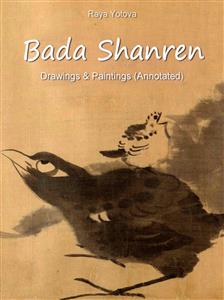
Bada Shanren was born in Zhu Da, China, around 1626. He was an artist who painted mostly with ink and also calligraphy. Bada Shanren was of royal descent, a direct descendant of Prince Zhu Quan of the Ming Dynasty, who had a feudal possession in Nanchang. The noble title of Zhu Quan was taken away after an uprising in which he took part in 1521, but the rest of his genealogy was allowed to retain his status in Jiangxi. Art historians define Bada Shanren as a "brilliant artist" for his time. He is supposed to have been a wonder-child in his early childhood, who started to paint and write poetry in the first years of his life. The legends tell us that he screamed and made strange sounds while he was painting. The stylized vertical spelling of his nickname Bada Shanren resembles a hieroglyph that labeled "laughter and weeping." With this hieroglyph, the artist signed his paintings and thus expressed his confusion and his sense of sorrow for the fate of his country and his home. His paintings show sharp brush strokes, which are attributed by some art historians to the way he kept his brush while he was painting. In his best works, there is a striving for perfection and a lot of Zen philosophy.
Das E-Book können Sie in Legimi-Apps oder einer beliebigen App lesen, die das folgende Format unterstützen:
Veröffentlichungsjahr: 2019
Ähnliche

Bada Shanren
Drawings & Paintings (Annotated)
Annotated by Raya Yotova
––––––––
First Edition
*****
Copyright © 2019 by Raya Yotova
Table of Contents
Title Page
Copyright Page
Foreword
Paintings and Drawings
Foreword
Bada Shanren was born in Zhu Da, China, around 1626. He was an artist who painted mostly with ink and also calligraphy.
Bada Shanren was of royal descent, a direct descendant of Prince Zhu Quan of the Ming Dynasty, who had a feudal possession in Nanchang. The noble title of Zhu Quan was taken away after an uprising in which he took part in 1521, but the rest of his genealogy was allowed to retain his status in Jiangxi.
Art historians define Bada Shanren as a "brilliant artist" for his time. He is supposed to have been a wonder-child in his early childhood, who started to paint and write poetry in the first years of his life.
About 1644, when Emperor Ming committed suicide, and the Manchurian army from north attacked Beijing, the young Chinese artist and nobleman sought refuge from the dangers of turbulent times. Since he was Prince of the Ming Dynasty, the dynastic cataclysm created considerable uncertainty about his position in society. That is why he went to a monastery as a monk and separated himself from secular life.
With the passage of the years and the establishment of the Manchurian government, it is becoming less and less likely that the old Chinese noble families would regain power through an uprising. The rulers of the Manchurian court felt more stable and did not pursue their opponents and contenders for power.
Then, after spending 40 years in a monastery, Bada Shanren agreed to leave the monastery and return to everyday life in society.
After a severe nervous breakdown that may have been caused by his fears of retaliation for his family background, Zhu Da (his worldly name) abandoned his monastic life and developed a career as a professional artist, adopting a series of descriptive pseudonyms; most famous of them was Bada Shanren, with whom he is most commonly known today.
The legends tell us that he screamed and made strange sounds while he was painting. The stylized vertical spelling of his nickname Bada Shanren resembles a hieroglyph that labeled "laughter and weeping." With this hieroglyph, the artist signed his paintings and thus expressed his confusion and his sense of sorrow for the fate of his country and his home.
His paintings show sharp brush strokes, which are attributed by some art historians to the way he kept his brush while he was painting. In his best works, there is a striving for perfection and a lot of Zen philosophy.
Paintings and Drawings
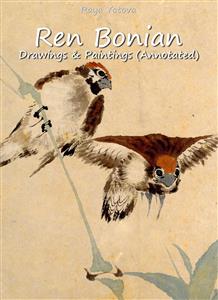
Two Birds, 1650-90, Ink and colors on silk, 31.7 x 26.3 cm
Peonies, 1659, Ink and colors on paper, 24.6 × 31.5 cm




