


1,99 €
Mehr erfahren.
- Herausgeber: Publisher s13381
- Kategorie: Geisteswissenschaft
- Sprache: Englisch
The example of Anguissola, as well as her work, had a lasting impact on the next generation of artists and her high success opened the way for more women to pursue serious careers as artists. Anguissola's education and training have had different consequences from men's, as men and women have worked in separate spheres. Her training did not help her much in a profession where she had to compete for male artists but was expecting her to be just a good wife, mate, and mother. Although Anguissola enjoyed much greater encouragement and support than the average woman of her age, her social class did not allow her to exceed her sex restrictions. Without the opportunity of studying anatomy or drawing from life (considered unacceptable for the lady to see naked bodies), she could not undertake the complex multi-figurative compositions necessary for large-scale religious or historical paintings. Instead, she experimented with new portrait styles, placing the other topics unofficially. Self-portraits and family members were its most common themes. The self-portraits of Anguissola also offer evidence of what she thought was her place as a female artist. Typically, men were perceived as creative actors and women as passive objects, but in its 1556 self-portrait, Anguissola portrayed herself as an artist, separating herself from the role of the object to be painted. Other her paintings show how she revolted against the notion that women are objects, primarily an instrument that men in her age can play. The work of Sofonisba Anguissola has had a lasting impact on the next generation of artists. Her portrait of Queen Elisabeth of Valois was widely copied by many of the best artists of that time, such as Peter Paul Rubens. Anguissola is an essential figure for feminist's art historians. Her great success in fine art has found the way for more women to pursue serious careers as artists; some of her more famous heirs are Lavinia Fontana, Barbara Longhi, Fede Galizia, and Artemisia Gentileschi.
Das E-Book können Sie in Legimi-Apps oder einer beliebigen App lesen, die das folgende Format unterstützen:
Veröffentlichungsjahr: 2019
Ähnliche

Sofonisba Anguissola
Drawings & Paintings (Annotated)
Annotated by Raya Yotova
––––––––
First Edition
*****
Copyright © 2019 Annotated by Raya Yotova
Table of Contents
Title Page
Copyright Page
Foreword
Paintings and Drawings
Foreword
Sofonisba Anguissola was born in Cremona in a relatively low-income family of nobles. She received a good education involving fine arts, and apprenticeship with local artists created a precedent for a woman to be an art student.
As a young, Anguissola traveled to Rome where she was acquainted with Michelangelo, who immediately recognized her talent and lived in Milan for some time, where she painted the Duke of Alba. The Spanish queen, Elizabeth of Valois, was an amateur artist and in 1559 Anguissola was assigned to go to Madrid as her teacher.
Later, she became Royal Court painter in Philip II's Court and adapted her style to the more formal requirements of the official portraits of the Spanish Royal Court. After the death of the Queen, King Philip helped organize an aristocratic marriage for her. She moved to Sicily, and later to Pisa and Genoa, where she continued to work as an essential painter.
Her most distinctive and attractive works are her portraits of herself and her family, which she had painted before she moved to the Spanish royal court. In particular, her images of children who were fresh and carefully watched by nature. In the Spanish court, she painted official state portraits in the popular formal style. Later in her life, Anguissola also painted religious paintings, although many of her religious paintings were lost. In 1625 she died at ninety-three years in Palermo.
The example of Anguissola, as well as her work, had a lasting impact on the next generation of artists and her high success opened the way for more women to pursue serious careers as artists.
Anguissola's education and training have had different consequences from men's, as men and women have worked in separate spheres. Her training did not help her much in a profession where she had to compete for male artists but was expecting her to be just a good wife, mate, and mother. Although Anguissola enjoyed much greater encouragement and support than the average woman of her age, her social class did not allow her to exceed her sex restrictions. Without the opportunity of studying anatomy or drawing from life (considered unacceptable for the lady to see naked bodies), she could not undertake the complex multi-figurative compositions necessary for large-scale religious or historical paintings.
Instead, she experimented with new portrait styles, placing the other topics unofficially. Self-portraits and family members were its most common themes.
The self-portraits of Anguissola also offer evidence of what she thought was her place as a female artist. Typically, men were perceived as creative actors and women as passive objects, but in its 1556 self-portrait, Anguissola portrayed herself as an artist, separating herself from the role of the object to be painted. Other her paintings show how she revolted against the notion that women are objects, primarily an instrument that men in her age can play.
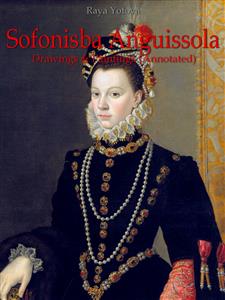
The work of Sofonisba Anguissola has had a lasting impact on the next generation of artists. Her portrait of Queen Elisabeth of Valois was widely copied by many of the best artists of that time, such as Peter Paul Rubens.
Anguissola is an essential figure for feminist's art historians. Her great success in fine art has found the way for more women to pursue serious careers as artists; some of her more famous heirs are Lavinia Fontana, Barbara Longhi, Fede Galizia, and Artemisia Gentileschi.




