


1,99 €
Mehr erfahren.
- Herausgeber: Publisher s13381
- Kategorie: Geisteswissenschaft
- Sprache: Englisch
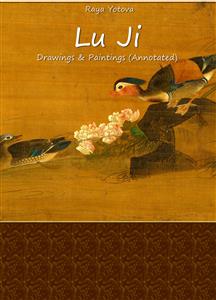
Like many of the great Chinese artists, Lu Ji also copied paintings by ancient masters from the Tang and Sun, who had the opportunity to study in the Emperor's collection. He studied the art of imaging birds of his contemporaries, Bian Jinghao, and Lin Liang. The Flowers and Birds pictures created by Lu Ji can be divided into two categories - the first includes works performed in art style with a clean spiral of contour and shades. He learned this from Bian Jinghao. Liu Ji's paintings of this type also have a profound influence on the Southern Masters School, both in the general order of the composition and in the images of the rocks and trees in the background. Gradually, he developed his style, which had a significant influence on the whole picture of the flower-bird genre, both among the courtier painters in the Courtyard of the Emperor, and among the artists outside the Court. This style is usually labeled as "academic," but there is nothing academic in it, more precisely, it can be defined as an art style accentuating the contour, or the "hands-free" style used in monochrome works. Characteristic of this style is the image on silk of a white heron, eagle and falling lotus flowers. This way of displaying a scene with animals and plants was dating back to the time of the Chinese North School of Arts and artists like Cui Bo. The genre of colorful birds as a whole in Chinese painting is full of hidden symbolism. In almost every section of images, there is a second, additional and symbolic meaning. For example, Lu Ji's autumn herons in one of his paintings portray three herons, but the Chinese heron's hieroglyph has a second meaning - "to think." The three herons depicted are an invitation to "think three times," to think of something with great care and depth. Lu Gui is considered by art historians to be the most significant "flower-bird" artist who can synthesize and summarize all the creative work of his predecessors. His work has influenced not only the paintings of Chinese Ming's dynasty artists but also the work of Japanese artists.
Das E-Book können Sie in Legimi-Apps oder einer beliebigen App lesen, die das folgende Format unterstützen:
Veröffentlichungsjahr: 2019
Ähnliche

Lu Ji
Drawings & Paintings (Annotated)
Annotated by Raya Yotova
––––––––
First Edition
*****
Copyright © 2019 by Raya Yotova
Table of Contents
Title Page
Copyright Page
Foreword
Paintings and Drawings
Foreword
Lu Ji was born in Ningbo, Zhejiang province. However, as in the case of many Ming-era courtier painters, the dates of his birth and death were not specified. He initially gained recognition in his city as a master of painting colorful birds and pavilions (i.e., an image of architecture). Later Lu Lu served at the Imperial Palace, whereas an artist he was paid for the post of guardian of the Emperor's Wardrobe. He created his works in the Hall of Favors and Wisdom. Because of his great merits, he was promoted to the rank of Imperial Guard Commander. Historical records indicate that Lu Ji received many orders personally from the Emperor and the courtiers; especially for him in the Imperial Palace was created a studio where he worked with his assistants. The story has retained evidence that the artist has vigorously observed all the rules and rituals of the Imperial Court, thanks to which he has achieved good relations with the court bureaucracy. He enjoyed special patronage from the Emperor.
Like many of the great Chinese artists, Lu Ji also copied paintings by ancient masters from the Tang and Sun, who had the opportunity to study in the Emperor's collection.
He studied the art of imaging birds of his contemporaries, Bian Jinghao, and Lin Liang. The Flowers and Birds pictures created by Lu Ji can be divided into two categories - the first includes works performed in art style with a clean spiral of contour and shades. He learned this from Bian Jinghao. Liu Ji's paintings of this type also have a profound influence on the Southern Masters School, both in the general order of the composition and in the images of the rocks and trees in the background.
Gradually, he developed his style, which had a significant influence on the whole picture of the flower-bird genre, both among the courtier painters in the Courtyard of the Emperor, and among the artists outside the Court. This style is usually labeled as "academic," but there is nothing academic in it, more precisely, it can be defined as an art style accentuating the contour, or the "hands-free" style used in monochrome works. Characteristic of this style is the image on silk of a white heron, eagle and falling lotus flowers. This way of displaying a scene with animals and plants was dating back to the time of the Chinese North School of Arts and artists like Cui Bo.
The genre of colorful birds as a whole in Chinese painting is full of hidden symbolism. In almost every section of images, there is a second, additional and symbolic meaning. For example, Lu Ji's autumn herons in one of his paintings portray three herons, but the Chinese heron's hieroglyph has a second meaning - "to think." The three herons depicted are an invitation to "think three times," to think of something with great care and depth.
Lu Gui is considered by art historians to be the most significant "flower-bird" artist who can synthesize and summarize all the creative work of his predecessors. His work has influenced not only the paintings of Chinese Ming's dynasty artists but also the work of Japanese artists.




