


1,99 €
Mehr erfahren.
- Herausgeber: Publisher s13381
- Kategorie: Geisteswissenschaft
- Sprache: Englisch
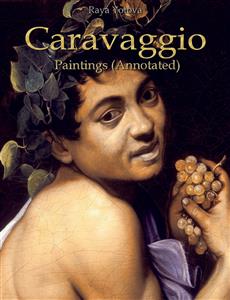
Caravaggio clearly expressed dramatic moments and scenes, often with violence, torture, and death. He worked quickly, with live models, preferred not to use preliminary drawings and work directly on the canvas. His influence on the new Baroque style, derived from Mannerism is profound. This influence can be seen clearly or indirectly in the paintings of Rubens, Jusepe de Ribera, Gian Lorenzo Bernini, and Rembrandt, and also among the next-generation artists. These artists, who were heavily under his influence, are called "Caravaggisti" or "Caravagesques," as well as tenebrists or tenebrosi ("shadowists"). Style has evolved, and fashion has changed, and Caravaggio has fallen into disgrace. In the 20th century, the interest for his creativity was revived again, and his significance for the development of Western art was revalued. There is disagreement about the exact size of Caravaggio's work, with the number of his paintings varies from 40 to 80, according to various evaluators. The reason few paintings of Caravaggio have survived is because he preferred to work directly on the canvas. His approach was anathema to the experienced artists of his epoch and because they condemned his refusal to work from pre-painting drawings and to idealize his figures.
Das E-Book können Sie in Legimi-Apps oder einer beliebigen App lesen, die das folgende Format unterstützen:
Veröffentlichungsjahr: 2019
Ähnliche

Caravaggio
Paintings (Annotated)
Annotated by Raya Yotova
––––––––
First Edition
*****
Copyright © 2019 Foreword by Raya Yotova
Table of Contents
Title Page
Copyright Page
Foreword
Paintings
Foreword
Michelangelo Merisi da Caravaggio trained as an artist in Milan before moving to his twenties in Rome. He has created a significant name as an artist, but according to his contemporaries, he was also a violent, hot-headed, sensitive and provocative man.
One of his conflicts and fights won him a death sentence for murder and forced him to flee to Naples. There he established himself again as one of the most famous Italian artists of his generation. He traveled in 1607 in Malta and Sicily and wished papal approval for his amnesty.
In 1609, he once again returned to Naples, where he again engaged in a violent collision; his face was mutilated, and the rumors of his death spread. Questions about his mental state arise from his inconsistent and strange behavior.
He died in 1610 under dubious circumstances while on his way from Naples to Rome. According to some reports, he has died of fever, but he has been suspected of being killed or having died of poisoning with lead.
Caravaggio has used close physical observation with the dramatic use of chiaroscuro, which later became famous with termin "tenebrism". Caravaggio made the technique a dominant stylistic element, darkening shadows and piercing objects in bright lights.
Caravaggio clearly expressed dramatic moments and scenes, often with violence, torture, and death. He worked quickly, with live models, preferred not to use preliminary drawings and work directly on the canvas.
His influence on the new Baroque style, derived from Mannerism is profound. This influence can be seen clearly or indirectly in the paintings of Rubens, Jusepe de Ribera, Gian Lorenzo Bernini, and Rembrandt, and also among the next-generation artists. These artists, who were heavily under his influence, are called "Caravaggisti" or "Caravagesques," as well as tenebrists or tenebrosi ("shadowists").
Style has evolved, and fashion has changed, and Caravaggio has fallen into disgrace.
In the 20th century, the interest for his creativity was revived again, and his significance for the development of Western art was revalued.
There is disagreement about the exact size of Caravaggio's work, with the number of his paintings varies from 40 to 80, according to various evaluators. The reason few paintings of Caravaggio have survived is because he preferred to work directly on the canvas. His approach was anathema to the experienced artists of his epoch and because they condemned his refusal to work from pre-painting drawings and to idealize his figures.
Paintings
Self-portrait as the Sick Bacchus, 1593, Oil on canvas, 67 x 53 cm
Detail
Good Luck, 1594-95, Oil on canvas, 115 x 150 cm




