


Erhalten Sie Zugang zu diesem und mehr als 300000 Büchern ab EUR 5,99 monatlich.
- Herausgeber: The History Press
- Kategorie: Sachliteratur, Reportagen, Biografien
- Sprache: Englisch
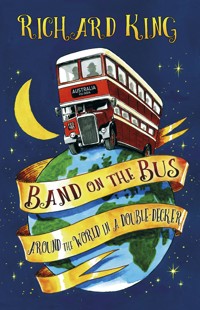
When nine friends set out from England in 1969 to travel the world in a double-decker bus called 'Hairy Pillock', little did they know that they would become honorary citizens of Texas, hold the keys to New York, release a record in Australia, perform for the Shah and Empress of Iran, and appear on countless television and radio shows around the world. Their epic three-year journey, which began as a bet with the landlord of their local pub, took them across perilous roads through Europe to Iran and Afghanistan, through the Khyber Pass to Pakistan and India, then to Australia and, finally, the United States and Canada. Initially planning on getting work as export salesmen, they soon had to supplement their meagre funds by performing the folk songs they sang in the pubs back home, after which they achieved minor stardom as The Philanderers throughout Australia and the US. This light-hearted account follows the group on their trip across deserts and mountains, as they undertook an incredible expedition that would be impossible today.
Sie lesen das E-Book in den Legimi-Apps auf:
Seitenzahl: 602
Veröffentlichungsjahr: 2017
Das E-Book (TTS) können Sie hören im Abo „Legimi Premium” in Legimi-Apps auf:
Ähnliche


















Front cover: Artwork by Adrian Teal.
Back cover: Author’s collection.
First published in 2017
The History Press
The Mill, Brimscombe Port
Stroud, Gloucestershire, GL5 2QG
www.thehistorypress.co.uk
This ebook edition first published in 2017
All rights reserved
© Richard King, 2017
The right of Richard King to be identified as the Author of this work has been asserted in accordance with the Copyright, Designs and Patents Act 1988.
This ebook is copyright material and must not be copied, reproduced, transferred, distributed, leased, licensed or publicly performed or used in any way except as specifically permitted in writing by the publishers, as allowed under the terms and conditions under which it was purchased or as strictly permitted by applicable copyright law. Any unauthorised distribution or use of this text may be a direct infringement of the author’s and publisher’s rights, and those responsible may be liable in law accordingly.
EPUB ISBN 978 0 7509 8454 6
Original typesetting by The History Press
eBook converted by Geethik Technologies
Contents
1 I Arrive in New York
2 How it all Started: An Aeroplane and ‘Hairy Pillock’
3 What Happened Next: The Die is Cast
4 The ‘Round-The-World Bus Sell’: How We All Become Directors
5 We Set Off: Into the Unknown
6 Golden October: Austrian Days and Viennese Nights
7 Yugoslavian Interlude
8 Athens: The Slough of Despond
9 Travels Through Turkey
10 Teheran: Enter ‘The Philanderers’
11 The Road to Kabul: The Freezing International Highway
12 Kabul: The Secret of Our Success
13 Pakistan
14 Famous Penny
15 India: Philandering in Delhi
16 Tourists
17 Bombay Bombshell: The End of an Idyll
18 Down and Out Down Under
19 ‘Buy One – Get One Free!’
20 On the Road Again
21 Making it in Melbourne
22 Swanning Around in Sydney
23 Home for Christmas
24 New York, New York!
25 Abroad in Australia
26 ‘We’ll Take Good Care of You’
27 Five Thousand Miles in Five and a Half Weeks
28 Keeping Afloat
29 Farewell Australia Fair
30 Go West Young Man: California Here I Come!
31 Into the American South-West
32 Freezing in America: From Tailors in Texas to a Pawnshop in Pittsburgh
33 The American Tour: The Mid-West in March and the Auto Show in April
34 Travels Without the Bus
35 Back Home Again: ‘A Busload of Banjos in Downing Street’
Epilogue – Or What Became of Us All
Acknowledgements
Appendix
1
I Arrive in New York
The Vickers VC10 banked gently over the wintery salt marshes, lining up for its final approach to New York’s JFK Airport. It had gradually been losing height on its journey south along the snowy New England coast. The long line of Manhattan skyscrapers that had been visible in the distance through the window sank behind the horizon, and we landed with a screech as the plane’s tyres touched the tarmac. BOAC flight BA 501 from Heathrow had arrived in America.
I’d never visited the United States before, although I was sure that there would be a familiarity about it all from years of watching American TV programmes and Hollywood films. ‘Business?’ the immigration official asked as he glanced at the multiple entry business visa that had been stamped in my passport eighteen months before. ‘Yes,’ I replied. Then he looked at me. I was wearing my smart new business suit with matching tie and handkerchief and carrying my coat and hand baggage. ‘How long will you be staying?’ he asked. I wasn’t sure, but my business shouldn’t take more than a couple of weeks, I thought. The truth was that I had no idea. I was here until my money ran out. ‘Welcome to America,’ he said, swiftly stamping my passport. ‘Enjoy your stay.’
I was in! I waited by the luggage carousel for my suitcases. There were two large ones, a smaller overnight case and some other bags. The bigger one I could hardly lift. It was so heavy I’d had to pay an excess baggage fee when I’d checked in. I put them on a trolley, wheeled them through customs and headed for the bus that would take me to the East Side Airlines Terminal. It was cold outside, with heaps of snow everywhere. Little flurries were picked up by the wind as my bags were loaded under the floor of the Carey airport bus. I bagged a window seat and we pulled away. The ride was soft and spongy as the bus swung into the stream of traffic heading away from the airport along the expressway. It was a dull, grey afternoon and the four-lane highway was full of traffic. We passed a large, colourless cemetery, the extravagant tombstones all shades of grey as if in a black-and-white movie. Then the skyscrapers I’d seen from the plane came into view. They made an impressive sight, their lights twinkling in the twilight.
We dived into the Midtown Tunnel and surfaced right next to the East Side Airlines Terminal building at 38th Street and 1st Avenue, inside which the airport bus abruptly ended its journey. I collected my bags and headed towards the exit. I checked the map I’d picked up when it suddenly struck me that I had a problem. I couldn’t carry all my luggage in one go. It was fine with an airport trolley, but now I was on the street and had to cross 1st Avenue to a bus stop. I was so broke I couldn’t afford a cab, so I heaved up the suitcases and other bags and with a great effort shuffled with them all across the road. I got to the bus stop and along came a bus. It took me a while to get the cases up the bus steps. I said to the driver that I wanted to get to East 64th Street. He told me to put 30 cents into the machine. I found the change I’d got at the airport and did what he said. The machine clicked and whirred, gobbling up my money. The door closed and the bus took off with the engine screaming as the automatic clutch slipped through the gears and we bounced along the potholed one-way avenue.
The bus stopped just down the road from East 64th Street. Once I’d struggled to offload the cases the bus pulled away, roaring off in a cloud of exhaust fumes into the gloom. I just couldn’t manage all this luggage in one go, so I first carried the heaviest suitcase a few paces up the street, left it there, ran back to the remaining heap, lugged everything else past the first case, dumped them down a few yards further along the sidewalk, returned to move the first case again and continued like this until I reached the lights at the junction. I wasn’t going to get very far like this. Fortunately, my destination, 340 E 64th Street, was on the corner of the street just across 1st Avenue.
340 E 64th Street turned out to be a modern thirty-four-storey condominium. Standing at the glass doors, a few steps down from the pavement, was a handsome young black man in a full-length bottle green coat with bright buttons and wearing gloves and a top hat. ‘I’m visiting Mr Smith,’ I said. ‘Suite 17 S.’ ‘Mr Smith is out at the moment, sir,’ he replied, ‘but he is expected back within the hour. Do you have an appointment?’ ‘I’ve just arrived from London, but I’m sure he’s expecting me,’ I lied. I’d no idea if Joe Smith was expecting me or not. ‘Can I leave these bags here?’ ‘Sure,’ he said, and he helped me move them off the pavement into a storage room off the broad, stylish lobby. ‘My name is Richard King,’ I told him. ‘I’ll come back in half an hour.’
I stepped into the street and walked round the block. It was an upmarket, attractive neighbourhood, but it was cold, with the sky dark and overcast. My clothes were no match for the biting wind and I soon returned to the warmth of the lobby. ‘Mr Smith has returned, sir,’ I was told. ‘He asked if you would go up.’
The lift took me to the 17th floor, and I walked along the deep pile carpet of the broad corridor to Suite 17 S and rang the bell. The door opened and there was Joe Smith, not as tall as I’d imagined, wearing smartly pressed slacks, a blazer and tie with a silk handkerchief prominent in the breast pocket. ‘Mr Smith?’ I said, ‘I’m Richard King, a friend of the Houghs in England. I believe they’ve written to you about me.’ With a warmth towards me that I didn’t deserve, the impeccably mannered Joe Smith replied, ‘Well come IN. Let me take your coat.’ He led me through a wide hallway and into a very large L-shaped room, beautifully furnished with highly polished antiques. The view through the plate glass windows lining the side of the room was breathtaking. There in front of me was the whole of mid-town Manhattan, the skyscrapers alive with lights. ‘This is Marie Bernolfo,’ he said, introducing me to a tall, elegant woman in her mid-40s who stood up and shook my hand. ‘We’ve just been to Bloomingdale’s,’ Joe said. ‘Can I offer you a kir?’ I’d no idea what a kir was. I was about to find out. ‘Thank you,’ I replied.
He disappeared into a well-equipped galley kitchen and returned with a large and expensive thin-stemmed wine glass filled with chilled, pink-tinged, white wine. ‘How long have you been in New York?’ they asked as we sat down on the broad, white sofas. I sank deep into the cushions. I explained that I’d just arrived that afternoon from London and that I was a friend of the Houghs’ son, Tony. He and I with some other friends were travelling the world and I had come to New York to find sponsorship for our trip across America. They asked where I was staying. I said I didn’t know, I had hoped that someone would put me up for a few days until I found my feet, as I hadn’t much money. My bags were downstairs in the lobby. I was sure that Tony’s mother would have put this in her letter. ‘Well, Richard, I’ve not heard from Val since her Christmas card. But I do know about your travels with Tony.’ My heart sank. What was coming next? ‘WELL …’ he said, ‘I guess you’d better stay here the night.’
Inwardly I heaved a massive sigh of relief. I was exhausted and very nervous about what lay ahead of me. I thanked him very much indeed. At least I now had a bed for the night. ‘We’ll get your luggage brought up from the lobby,’ he said. Marie had a dinner engagement, said goodbye, and hoped we would meet again. Joe escorted her to the door. Then he showed me into the television room. There was a large sofa, which converted into a good-sized double bed, above which was a large mid-Victorian oil painting which took up most of the wall. It was a pastoral landscape showing a well-to-do American family – mother, father and several chubby little children with hoops and parasols with a colonial style house in the background. ‘Relatives of yours?’ I asked. ‘I bought it in a sale. It fills the space on the wall quite nicely, doesn’t it? This will be your room,’ he said, as he unfolded and made up the bed.
He asked me if I would like a steak for supper and, in the meantime, how about another kir? We then sat down to eat. It was one of the best steaks I’d ever tasted, washed down with glasses of rich red wine. As we started eating, Joe said, ‘Now you have to tell me EVERYTHING about your travels. I want to know ALL about it, right from the beginning,’ and so I began telling Joe our story. It grew late and I was tired. Joe had his own bedroom with an antique four-poster bed and en-suite bathroom and dressing room, to which he retired. I climbed into bed. It was soft and comfortable. Outside it was snowing, but I was cozy and warm. Never in my wildest dreams could I have imagined my first night in New York would be like this, and I quickly fell asleep.
Over the next few days, I filled in the details of the story of our adventure, starting at the very beginning. What follows is what I told Joe, more or less, starting with how it all began.
2
How it all Started: An Aeroplane and ‘Hairy Pillock’
The chances to meet girls in our village were rather limited. Mostly we met them on our way to and from school on the bus, but opportunities to socialise were few. In the 1950s, the Young Conservatives, known as YCs, had a reputation of being a marriage bureau and, although none of our gang in the Longmoor Road had any intention of getting married, the local YCs seemed as good a place to hang out as any. During the 1960s in Liphook, Hampshire, the place where I was born, the YCs was a highly successful youth organisation, run by its members. They met every Thursday evening in Liphook’s Methodist Church Hall and each week we listened to talks, watched slides and films, held discussions and debates, took part in quizzes and mock trials or grappled awkwardly with ballroom dancing lessons, as well as putting on variety shows, organising donkey derbies, tennis competitions, dances and box cart races, making films and, very occasionally, getting involved in local politics. Oh, and we sometimes sang in pubs!
Our meetings ended with coffee, following which those who were lucky enough to own an old car or to borrow their father’s, drove the rest of the gang to the pub. Originally this was The Plough at Redford, 5 miles over the border in Sussex, partly because the landlord, Wing Commander Jackson, had an attractive daughter, Natalie, who was a well-liked YC, but more probably because of the Sussex opening hours. Pubs in Hampshire closed at 10.30 p.m., while Sussex pubs stopped serving at 11 p.m. In 1963 Natalie married another YC, Brinsley Smith, and the gang transferred their allegiance to the Deers Hut, just outside Liphook down the Longmoor Road. The landlord, Bert Oram, took a paternal interest in our activities, and his wife Queenie soon thought of us as ‘her boys’. Bert’s opening hours were somewhat flexible, too!
The big social event of our year was the annual Liphook Carnival at the end of October. It involved the crowning of a Carnival Queen, a procession with dozens of floats entered by local clubs, pubs, businesses, families and friends, followed by a bonfire and firework display. Some of us had taken part since we were children, so it was only natural that each year the YCs entered a float. In 1967 we decided to do something really ambitious in an attempt to win the prize for the best float, and built an aeroplane. It was 20ft long, had a 15ft wingspan, a big twin-bladed propeller and a mock sixteen-cylinder radial engine. The frame, welded together from old gas piping, was covered with hardboard and sprayed silver. We called it the ‘Discord’. Everyone dressed like aviators or first-class passengers. But our optimism was shattered when the League of Friends of King George’s Hospital won the cup for the best float with ‘St George and the Dragon’.
We were inconsolable. ‘What are you going to do with your aeroplane now?’ someone in the pub asked. ‘You ought to enter it in a carnival somewhere else. There’s one at Titchfield, a week on Monday. It’s the biggest in the South of England. You might win a prize there.’ We decided to take it to Titchfield. ‘And how will you get it there?’ said one of the pub’s greatest cynics. We thought for a minute. ‘We’ll pull it there by hand and collect money for charity on the way!’ At this point someone got out their wallet, took out a pound note and slapped it down on the counter. ‘Here’s a pound that says you can’t pull your aeroplane to Titchfield in a day!’ We took the bet. It was only then that we learned that Titchfield was 34 miles away!
To cut a long story short, we pulled the aeroplane to Titchfield in a day, won our bet, and also won the first prize. We brought it home a week later on the back of a lorry. Stopping at a pub for a bite to eat, we wondered what else we could do with our aeroplane. ‘How about taking it on holiday? We could pull it round the lanes of Devon and raise money for charity?’ someone suggested. ‘You’re mad,’ was the response. ‘We had enough problems pulling it to Titchfield.’ ‘All right, then,’ said someone else, ‘how about putting a real engine in it, strengthening the wings, taking it to Dover and flying the English Channel!’ That didn’t go down too well either. At this point I made a suggestion. ‘Forget the aeroplane. Why don’t we do what Cliff Richard did in that film and buy an old bus, kit it out with bunks, a cooker and kitchen sink and take it to Europe for a fortnight’s holiday?’ There was a stunned silence. Someone said: ‘Why not?’
I’d always wanted to drive a double-decker bus. Here was a chance for me to drive a real bus, so I volunteered to find one. We bought a 20-year-old Leyland double-decker from Portsmouth Corporation. It cost us £70. My family’s business, run by my uncle Arthur and my grandfather, was a haulage company, Three Counties Supplies and Transport Ltd, so one of the mechanics, Ernie Smithers, collected the bus and drove it back to Liphook, where we parked it on a hard-standing area we’d made for it on Andrew Luff’s farm. Andrew was a YC and childhood friend. He and his mother ran a large market garden on the opposite side of the Longmoor Road to where we lived and where our family business was situated.
We converted the bus, with nine bunks and eight seats at the front upstairs, worktops, cupboards, a kitchen sink, gas cooker, and tables for twelve and sixteen seats downstairs. We even had a radio and record player. There were carpets on the floors, curtains at the windows and running water at the sink. The driver could talk to the navigator on the upper deck using an intercom. Our film group recorded all this activity, which took place every weekend and on several weekday evenings, and the whole team gradually bonded together. We christened the bus ‘Hairy Pillock’. By mid-June it was ready and in July twelve of us took it to Spain for a two-week holiday.
With us went our musical instruments, and we enjoyed singing to the other holidaymakers at the campsite we’d found on Spain’s Mediterranean coast. Peter Windibank, another childhood friend from the Longmoor Road, played guitar, as did Roland Hutchings, while Clive Hughes played guitar and banjo, and his brother Alan the accordion. Peter’s friend from college, Wally Walsh, also played the accordion and guitar. I took my old double bass. Dick Hayes and John Wilson looked after the catering. John was the original ‘Hairy Pillock’, a nickname acquired when he was painting the ‘Discord’ and sprayed every car in the Deers Hut car park silver by mistake. Peter, Bob Hall and I shared the driving, and Adrian Bird, John Carver and Tim Palmer made up the rest of the crew. We felt that the world was our oyster, and returned home triumphant. And that, most of us thought, was that. But it wasn’t.
3
What Happened Next: The Die is Cast
The autumn of 1968 was dreary, damp and miserable and our summer holiday in the bus seemed a distant memory. For the 1968 carnival we built a replica of a Roman stone-throwing machine, which we mistakenly called a ‘ballista’, which won the prize for the best float at both Liphook and Titchfield. The bus ventured out for the evening on most weekends, and when we were invited to play at nearby pubs, clubs and folk clubs, and we always took a busload of YCs with us. Some places gave us money for the charities we supported and, when we passed the hat round, it always came back full. We’d called ourselves ‘The Procal Turdum’, a name nicked from Private Eye.
While editing the film of our Spanish adventure, I daydreamed about taking our bus to other sunnier climes. Down at the pub, I sensed that many of the others felt the same. Most of us were fed up with our jobs and couldn’t wait for work to end and to be in each other’s company again. ‘Next year we could drive the bus all over Europe’ we said, thinking we should never have come back. Then, one dull winter’s evening, we became even more expansive. ‘We could even take it right around the world!’ we thought. At this point Bert Oram, our cheery but somewhat eccentric landlord, leant over the bar, wagged his finger at us and said, ‘If you lot can drive a double-decker bus around the world, I’ll give each of you a free pint of beer!’ And that was really how it all started.
‘Well, who would be up for it?’ I asked. ‘I’m willing to chuck everything up for a couple of years and go travelling if the rest of you are prepared to.’ ‘What have we got to lose? I’d do it,’ someone said. ‘You can count me out,’ said someone else. ‘A couple of weeks’ holiday is fine, but I’ve got a good job and the thought of spending a year or two cooped up in an old bus with you lot isn’t my idea of a good time.’ ‘Stuff the job,’ said Tim, ‘it would be the opportunity of a lifetime – how could you possibly pass it up?’ Yet another said, ‘I don’t know. Do you really think we could do it?’ ‘Sure,’ I replied with a new-found confidence, ‘it’s certainly worth giving it a go.’ ‘But how would we pay for it, then?’ someone asked. Nobody spoke. We had another drink, then another, and by closing time the majority of us agreed that we should give it a try. ‘Well, Bert, you’ve got a bet,’ we said to him as we left, little knowing just what we had let ourselves in for. My mother was still up when I let myself in through our front door. ‘Ma,’ I said with a flourish, ‘we’re going to drive around the world in a double-decker bus!’ ‘Very nice, dear,’ she replied, ‘now go on upstairs and go to bed.’
In the weeks that followed, we spent our evenings discussing it. Of the twelve who went on the trip to Spain five were keen, four were not too sure and the remaining three not really interested. The first thing we had to address was how we would pay for it all. We might be able to sell advertising on the side of the bus and seek sponsorship. If we could afford to get to India and sail to Australia we could earn enough money there to pay for crossing the Pacific, driving from Panama to the USA, and back home to England. We guessed it would take us around two years to complete the trip. The bus was owned by nine of us, but some of the owners were lukewarm. Besides, it was a Leyland PD1. The PD1 was built as a post-war stop-gap and was powered by the pre-war Leyland E181 7.4-litre diesel engine, for which spares would be hard to find. Also, the interior would have to be completely re-designed to include more storage space and better living accommodation for a lengthy overland journey. What we really needed was the Leyland PD2. This had the post-war 9.7-litre Leyland 600 engine, still in production in 1968 with spares available worldwide. Variants of PD2s and the 600 engine were used in many of the countries that we might visit.
Meanwhile, I’d finished the film, and we decided to hold a premiere. Parents and friends were invited to Pillock Rides Out, the story of our journey to Spain, in the old cinema in the upstairs room at the Railway Hotel. At the end of the evening I stood up, surrounded by the other boys, and announced that our next adventure would be to buy another double-decker bus and drive it around the world. This was reported in the local papers, but I don’t think anyone really took us seriously.
The first thing to do was to find another bus. I got on the phone to Portsmouth Corporation, but they had none available. Ian Allen published a series of booklets entitled ‘British Bus Fleets’, costing 4s 6d each. Between them they listed the complete fleets of all the bus operators in the country. I started with No. 1, ‘South Eastern’, and worked my way northwards. In the space of eight weeks I must have contacted over a hundred bus companies, none of whom had any PD2s for disposal. I was at the end of Volume 6, ‘Lancashire Municipal Operators’, when I spoke to the general manager of Warrington Corporation’s Passenger Transport Department, Fred Mantle. ‘Well, yes,’ he said, ‘as a matter of fact we do have a Leyland PD2 we’re thinking of getting rid of. It’s 20 years old, it has over 700,000 miles on the clock, and it’s on its third engine.’ He wanted £100 for it.
I reported back to the group. We called ourselves ‘The Hairy Pillock Organisation’, and had been making money from bus trips around the South of England full of Liphook YCs. There was enough in the kitty to buy and start work on a new bus. Adrian, Andrew and I drove up to Warrington. FED 795, the bus for sale, was No. 10 in the Warrington fleet. We put it on their inspection pit. The running gear looked OK, so I gave Mr Mantle £100 in cash and he handed over the logbook. Using Three Counties’ trade plates I drove it back to Liphook, where we parked it on Andrew’s farm next to the Portsmouth bus and started work. We named it ‘Hairy Pillock 2’.
We needed more funds, but most of us had very little money. We decided we should each put in the same amount, and that for the duration of the trip everything we earned would be paid into a central kitty, out of which all our costs and expenses would be taken. It was a system that was to work well for the entire trip. What we paid in initially would be determined by what the person with the least amount of money could afford. This was Clive Hughes, who had very little savings, but did have a Triumph Herald, which he eventually sold for £150, so each of us contributed £150, to be paid in instalments. As there were to be nine of us, this meant that our total resources would be £1,350.
The cynics and detractors began to have a field day. We were being foolish and unrealistic, they said. Why didn’t we just accept our lot and settle down and get married? My uncle Arthur bet us a fiver that we would be back by Christmas. Others told us that nobody would back us and we couldn’t afford to do it on our own. Anyway, the bus would surely break down as it was years old and worn out. One of my mother’s cousins, a big wheel in the oil industry, told me that we would never be allowed into the US. ‘You’ve no money and they’ll never give you a visa,’ he said. ‘And have you any idea of the cost of shipping something as big as a bus across the Indian Ocean, the Pacific and the Atlantic? You’ll never find the money to do it.’
Blissfully confident in our ability to overcome these problems, we set to and got on with converting the Warrington bus for our world trip. Upstairs there would be nine bunks arranged in tiers of three, with six on the nearside and three on the offside, each with its own light, individual lockers and shelves, and curtained off from the gangway. The gap between the top of the mattress and the bunk above was 18in. We only ever sat up in bed once! At the top of the stairs was a boxed-in 85-gallon water storage tank which fed the taps of the sink downstairs. It had a funnel through which water purification tablets could be added, and a gauge to indicate the water level. A tap allowed the tank to drain outside the bus and an attachment was devised to turn this into an external cold shower if we found it necessary. We never did. Above the tank there were lockers for nine. Towards the front on the left was a wardrobe, underneath which was a long storage cupboard. A curtain separated the sleeping quarters from the forward cabin, where there was a large cushioned seat on the left, with a desk opposite, the lid of which lifted to reveal a washbasin. There was also a filing drawer and a safe. The front seats, boxed in for additional storage, came from a scrapped coach. Above the front window was a bookshelf, and under it was the navigation table with a telephone handset connected to a telephonist’s headset worn by the driver. Through this the navigator gave directions, and told the driver if the bus was likely to smash into the low bridge ahead. The emergency window at the back was altered so that when opened it formed a platform on which someone could kneel and look along the roof. A grab handle was added outside, and a jack socket connected another telephone handset to the driver and navigator.
The bus had an open platform, so Bob devised a sliding door using a roller shutter door from an old British Road Services delivery van from Three Counties’ yard. It ran in channels in the platform floor and above the opening inside. Initially secured by a padlock, this was eventually replaced by a neater Yale lock. It was very efficient and didn’t spoil the lines of the bus at all.
Downstairs were our living quarters. A Formica worktop on the nearside ran two-thirds of the length of the lower deck, with a large cupboard underneath and a hinged section which opened up to reveal a gas cooker with four burners, a grill and an oven. Next to the cooker was a gas-powered refrigerator. Above were cupboards with sliding doors and lights underneath. Opposite was a large floor-to-ceiling storage cupboard, next to which was an old double drainer aluminium sink unit. This had come from the bar at the Deers Hut, which Bert was refurbishing. It had hot and cold running water, the hot water being provided by a small gas heater. To the front, two seats faced the scrapped coach’s five-seater back seat, and between them were two removable tables. The front seat was hinged so that the tables could be stowed behind it. Between the front seat and the bulkhead was another Formica top, this time with three hinged sections. The centre section lifted to reveal a record player and radio. To the right, behind a sliding window to the driver’s cab, was space for our LP collection, whilst behind the window overlooking the bonnet was our cocktail cupboard. There were carpets on the floor, curtains at the windows, red lampshades with gold trim above the tables – and it was all rather reminiscent of a corner of the Deers Hut bar, so we felt very much at home. There was no toilet, as none of us felt up to the task of cleaning it!
Following some unfortunate incidents after eating out during our Spanish trip – which we sometimes referred to as ‘le crapeau noir’ – we decided it would be better, and cheaper, to take our own food with us, which we bought from the local cash and carry. Dick Hayes produced a lengthy shopping list of six months’ supplies for nine. The main meals were dehydrated catering packs and came in five varieties: Farmhouse Stew, Bolognese Sauce, Savoury Mince and Beef and Chicken Curry. The packets, similar to a bag of flour, contained what looked like dried dog food, which you tipped into a large saucepan of boiling water, stirred well and simmered for forty minutes. This ended up looking like hot, wet dog food. After a few weeks it all began to taste the same. We tried mixing things with it, including some of the large quantities of catering-size packet soups we’d bought. When making soup the powder regularly congealed into lumps. As well as loads of dried foods we carried with us hundreds of tins, everything from vegetables, sausages, baked beans and kippers to fruit salad, prunes, peaches and pears – and inexplicably vast quantities of spam. Most of these had paper labels and we stowed them under the front seat downstairs, moving a few at a time to the larder cupboard as we needed them. The floor at the front of the bus wasn’t watertight and after driving on wet roads and through puddles and fords, we found that water had soaked into the paper labels and turned them into a gooey mush. After it was wiped off there was nothing to show what the tins contained. The bus was eventually fully stocked with everything we would need for our six-month journey to India, from food to pan scourers, toothbrushes and toilet rolls. Provisioning cost over £250. We had everything now except money, and we were beginning to run out of cash!
4
The ‘Round-The-World Bus Sell’: How We All Become Directors
Eight of the twelve who had travelled to Spain in 1968 were committed to the world journey. We were a disparate bunch. The most enthusiastic of all were Alan Hughes and Tim Palmer. Alan, 23, was a technician at Pyestock, the government’s National Gas Turbine Research Establishment near Farnborough, and had studied engineering. On the Spanish trip it became obvious that he wasn’t the tidiest of people, and his rewiring of the Portsmouth bus left something to be desired. He certainly wasn’t a committed Conservative, but was happy in the company he found in the YCs and enjoyed questioning everyone’s political beliefs.
To Tim, 26, it was ‘the opportunity of a lifetime’. He was an electronics engineer who would rather have been a writer and journalist. He was the Liphook YCs’ scribe, writing the weekly scandal sheet and diary of events, his press releases being regularly published in the Haslemere Herald. His chronicle of our Spanish trip filled the paper for a couple of weeks the previous summer. He’d had a bad accident in the early 1960s when his moped was hit by a car at speed, following which he’d spent several weeks in hospital with broken arms and legs, which now had metal plates and pins in them, and we all made cracks about his ‘bionic’ legs. He displayed some strange eccentricities, but was bright, intelligent and always full of ideas. One evening at the pub a few months after leaving hospital, he hooked his wooden walking stick over the sprinkler pipe while using the gents’ toilets and we all peed on it. He never used a stick again. His stick stayed hanging in the gents’ for months.
I was the third enthusiast. I was also 26, and was becoming increasingly disillusioned working as an estate agent for Shaw & Byrne, an independent agency in Haslemere. I believed that I was good at my job, but Tony Byrne, the senior partner, and I didn’t see eye to eye, and he was happy for me to submit my resignation. This enabled me to spend all my time sorting out the world trip, in between casual jobs including driving a lorry for my uncle, working for a local removal company, helping Andrew on his farm, and acting as a holiday relief manager for local estate agencies and Andrew’s do-it-yourself shop. I’d studied business management and thought I knew a lot about it – I didn’t – and was also a committed, though slightly disillusioned, Young Conservative who had been Branch and Constituency Chairman, Treasurer and Vice Chairman of the regional YCs and a member of the National Executive. Alan took every opportunity to challenge my political convictions and leadership skills.
Dick Hayes, 23, was also keen to be involved. He worked as a printer but had always wanted to run a pub and worked part-time behind the bar at The Duke of Cumberland, where we sang on winter Sunday evenings with a large and cheery singer called Cliff Giles. Living in Camelsdale in Sussex, just south of Haslemere, Dick was a peripheral member of the YC clan and had come on the scene more recently. With swarthy good looks, he was the only one of us who was regularly mistaken for a local in every country we visited.
John Wilson, 21, also wanted to go. Working in a builder’s merchant’s showroom in Guildford, he had recently been promoted to a heating and plumbing estimator. He was a skilled plumber and installed the bus water and gas systems. He was slight and wiry, the smallest of the group, and a good friend of Alan’s younger brother Clive. We sometimes referred to him as ‘Blidge’ in recognition of John’s habit of aggressively wagging his finger at people to reinforce his arguments.
The others were less sure. Adrian Bird, 23, was studying architecture at Cambridge and could only commit for a year, following which he would have to return for a post-graduate course. He was due to graduate in the summer, after which he could work full-time on getting the bus ready. His father worked in the City and they lived in Rectory Lane, Bramshott, traditionally the upmarket part of the parish. Adrian didn’t find money as much of a problem as some, and was better educated and better connected than most of us. His easy-going personality concealed a stubborn streak, and he had a habit of doing his own thing in a laid-back sort of way, but he would prove to be a useful conciliator and creative member of the team.
Alan’s brother Clive, 22, took some persuading. Grammar School educated, unlike his brother, Clive valued his job as an assistant engineer with the Farnborough Urban District Council, even if he didn’t like it that much, and was sceptical about our likely success. He got on well with the girls and enjoyed driving around in his open Triumph Herald and playing his guitar. If we were going to sing songs, we needed Clive’s guitar and banjo playing.
At 27, Bob Hall had been the oldest person on the Spanish holiday, and we badly wanted him on board. He was powerfully built, the strongest and most energetic, with the widest range of practical skills of all of us. Good-hearted, even-tempered, sometimes unpredictable, and with the ability to get on with most people, he preferred to avoid confrontation. He had been brought up with three brothers and a sister near Milland, in Sussex, and had worked in Durham for a family member in the mining business. There he’d married, and moved back south with his wife and children in the mid-1960s. To the rest of us it appeared that married life didn’t seem to suit Bob at all. He played a leading part in the ‘Discord’ adventure and became one of the central figures around whom our group revolved. Should the bus break down, we felt sure that Bob would be able to fix it. We worked hard to persuade him to come and, in the end, he agreed, but we had to accept that he was unlikely to find all of the £150 the rest of us had already coughed up.
None of the others who went to Spain were interested. The leading guitar player of The Procal Turdum, Peter Windibank, wanted to marry his girlfriend, Alison. He enjoyed home comforts and couldn’t understand why anybody would want to drive an old bus around the world. Easy-going John Carver, a talented professional carpenter, just couldn’t be bothered – he liked his life at home too much. They were two old childhood friends whom I had known since they were in their prams. Wally Walsh and Roland Hutchings both had good career prospects which neither of them wanted to jeopardise. Then there was Andrew Luff, on whose land the buses lived. His farm work had prevented him from coming to Spain and he couldn’t leave the farm he’d inherited. So that made eight so far. We still needed to fill the ninth bunk, if only to find another £150 towards our spiralling costs.
About this time a young man started knocking on my door. ‘You must take me with you,’ he pleaded, ‘I’ll do anything – please!’ His name was Tony Hough. He came from Essex, and his family owned a local company, Temple Building Products Ltd. He’d recently arrived in Liphook to work at their factory in nearby Passfield. He lodged in the village and threw himself enthusiastically into our local YC life. John Wilson’s father had worked for Tony’s family setting up the factory and, until his death some years before, was general manager there. Tall, well-built with tousled hair and glasses, Tony had left school at 16 and joined the Royal Tank Regiment. His minor public school and army experience caused him to refer to himself as ‘the incredibly tough Hough’. He wasn’t, though – he was too good-natured – and army life didn’t suit him, so he eventually joined the family firm as a management trainee. However, it seemed that Tony felt that working in Passfield was like being sent to Siberia. His great advantage, apart from being good company, was that his family were well off, his grandfather, Sir Patrick Hennessy, being Chairman of the British Ford Motor Company. Tony was 20, well-spoken and personable, had a somewhat aristocratic demeanour, mixed well, and was well connected. He seemed capable and reliable and we liked him, so we decided that, even though we didn’t know him very well, if Tony could help us find some sponsorship and pay his £150 contribution, he should come with us.
We sat in the bar and mulled over how we could find some more money. ‘You can’t just write to ICI or BP and say, “My friends and I are going on a two-year holiday of a lifetime. We’re going to enjoy ourselves, pull the birds and have a wonderful time, and we’re writing to you to ask you to pay for it.” We’ve got to think of something different, something unusual.’ I’d come up with an idea. As bright young Englishmen, couldn’t we become travelling salesmen and take samples of British-made products with us in our bus? We could meet importers in different countries, get orders for our products, sign them up as local agents and earn a commission on their sales, giving us an ongoing income to pay for the trip. Their retainers would pay for advertising on the side of the bus and help get the show on the road. As an overseas trade mission, British Embassies would assist us. We could wear pinstripe suits and bowler hats and carry briefcases and rolled umbrellas, which would also get us loads of publicity.
This got a mixed reception from the others. Tim thought it was brilliant, while Alan totally disagreed. ‘I’m no salesman,’ he grumbled, ‘I’m a mechanic. You’d be taking money under false pretences. Just because you think you’re good at selling things doesn’t mean that the rest of us are. If we get short of money, then we should all go out to work. At least that’s honest!’ ‘Hold on, maybe Richard’s got something here,’ said Bob. ‘Even if it just got us some money for adverts it would help,’ said someone else. Alan was adamant. ‘It’s just not honest,’ he repeated. The debate went on for days but eventually the sceptics were worn down and we agreed to give it a go. All the major decisions we subsequently took were made in the same way, and when things didn’t turn out quite as the enthusiasts had planned, the doubters took great delight in being able to say, ‘I told you so!’
We became a limited company, with all nine of us as directors, each having an equal shareholding. Late one evening in the pub we decided on the company name. ‘Pillock Limited’ seemed rather appropriate.
Pillock Ltd wrote to over 700 manufacturers. Around 680 of them did not reply. But we signed contracts with ten of those that did, who paid us retainers and bought advertisements on the bus. Altogether, including the odd donation, this income amounted to just under £1,000. The products we represented were a bizarre collection of oscilloscope trolleys, sausage grilling machines, gramophone styli, stainless steel tableware, plastic ‘pillow tanks’, telephones and tartan-trousered teddy bears. We were also given razor blades and fire extinguishers, mountains of Tupperware and a collection of high-quality copper-bottomed cooking pans.
There were other advantages to having our own company. It limited our liability and gave us a corporate identity and a degree of respectability which was useful in opening doors which might otherwise remain closed. Our discussions with the Board of Trade ended with them actually recognising us as an ‘overseas trade mission’ and through them we were offered help by all the embassies and high commissions on our route. Because of this, the American Embassy, after a lengthy interview, gave all the directors of Pillock Ltd multiple entry business visas that were valid until September 1973, enabling us to visit the US whenever we liked. Adrian’s father helpfully sorted out insurances and mail collection arrangements through his firm’s overseas contacts. The national press began to take a serious interest. ‘Hold tight, it’s the round the world bus sell,’ ran the headline in the Daily Express.
Nine sporting bachelors … plan to back Britain with a two-year round-the-world ‘Bus Sell’ … They gathered sales commissions and trade samples from several British firms and next month set out on the 50,000-mile trip. The Board of Trade has backed the venture and Government commercial counsellors abroad have been alerted to help the mission.
While I was organising all this, with help from Tony and Tim, the others were working away on the bus, but time was passing and we were still nowhere near ready. Two tall gas cylinders were installed under the stairs, and an additional 25-gallon fuel tank fitted underneath the bus, increasing its range to 500 miles. There were one or two setbacks, of course. When welding the brackets to hold the extra fuel tank, twenty years’ worth of grime and grease under the bus caught alight and nearly brought the whole enterprise to an end. Before Bob could put it out, the fire had burned one of the body panels, which had to be repainted. Mr Mantle kindly sent us replacement Warrington Corporation crest transfers and lettering. We also had problems with the fuel pump, which we had rebuilt. Tony’s grandfather arranged for the bus to be checked and overhauled at the AEC works at Southall, which was another expense.
Although plans for the start of our journey were firming up, people were beginning to wonder if we were ever going to leave. Originally we had intended to have another holiday in Spain, this time taking both buses. The Portsmouth bus would then return to England, while Pillock 2 would turn eastwards and continue on towards India. We planned to leave Liphook at the end of August, Andrew and our trusted friend David Fletcher driving Hairy Pillock 1, taking with them Uncle Arthur’s sons, my young cousins Peter and Paul Johnson, along with Peter Harris, Rodick Mitchel – who’d answered an advert in the local paper – Trevor Meech and Wally Walsh – who had been on the first trip. In mid-August, hundreds of our friends turned up to a ‘Mammoth Farewell Party’ with a barbecue, jazz band and farewell performance by The Procal Turdum, in the paddock behind the Deers Hut. This proved somewhat premature.
As the end of August approached, it was obvious that we were not ready. We were still tying up loose ends with potential advertisers, waiting for visas and insurances, and various medical inoculations. Every day we were becoming increasingly frustrated as something else completely unexpected delayed us. Bob insisted that we take what was virtually a complete workshop, including oxyacetylene welding equipment, ropes, chains and winches, a generator, electric drills, a comprehensive tool kit, and a full set of spare parts, including four spare wheels, but we had nowhere left on board to put any of this. We also had all the sales samples, including two oscilloscope trolleys and some big display units. Bob’s solution was to tow a trailer, but it would have to collapse and be stowed away when the bus was shipped to Australia. He and Alan set to work designing and building a magnificent trailer that was capable of doing all this and holding securely everything which we would be taking with us. The bus had to be fitted with a tow bar, causing even more delays. With 29 August, the day we were due to leave, looming we were forced to postpone our departure by a month. This meant losing our Spanish holiday with the others. There would be no sun, sea and sand for us, and so they set off without us, leaving behind nine frustrated young men who were beginning to wonder if those who had predicted that we would never leave England were going to be proved right after all.
5
We Set Off: Into the Unknown
After weeks of delay we finally re-booked the ferry for the morning of Wednesday 1 October, on the basis that if we didn’t go then we never would.
We’d been working on the bus right up to the end and, in the last four weeks, time for everything had run out. It had taken two days to load everything on board. Upstairs we filled the lockers and wardrobe with our clothes and made up our beds. All the food, the melamine plates, bowls and cups we’d bought – more sensible than china as they wouldn’t break – cutlery and kitchen utensils, favourite records, glasses (mostly pinched from the pub), washing powder, toothbrushes, tea towels, toilet rolls, medical supplies, musical instruments, Tim’s typewriter, reams of paper, files, maps, permits, carnets and books were stowed in their allotted places. Our trailer groaned under the weight of all the tools, spares and samples we were taking with us.
On the evening of Tuesday 30 September the two buses were parked outside the Deers Hut and last drinks were taken in the pub. Hundreds of relatives, friends and well-wishers had come to see us off. Andrew Harvey, from BBC TV South, had interviewed us and filmed the bus leaving the farm for the last time. Pictures were taken and stories written by the press. Pillock 1 had limped home with a blown head gasket following a successful trip to Spain and Andrew now presented us with a visitors’ book which everybody was busy signing. The Petworth Silver Band played from the top deck of the old Isle of Wight open-top bus that Adrian and I had acquired with my Uncle Arthur and David Fletcher. By 9.15 p.m. we had said our final farewells, with the cynics, led by my Uncle Arthur, telling us we would be back before Christmas, and pulled away down the crowded drive. As we set out for Dover with Bob at the wheel, the milometer read 23,327. He and I shared the driving between us, being the only ones over 25 – apart from Tim, who didn’t drive – as our insurance only covered drivers over 25. Suddenly, after the melee at the pub, it was very quiet on board. Most of us were taken up with our own private thoughts about leaving home. With glass in hand, John announced to those who were listening that he’d had the last shave he would take on the trip.
At 2.30 a.m., we rolled to a halt on the seafront at Dover. Unexpectedly, Esme Grimes and some other friends had followed us, and sat up talking with us for most of the night. Then it really was goodbye and, as we drove towards the Eastern Docks, John took the very first shots for the film we intended to make of our travels. Ten days before, Tony’s father had surprised us by loaning us a professional Bell & Howell 16mm cine camera, and this was the first time we’d used it. Delivered to us at the docks to avoid the purchase tax were thirty spools of Kodachrome II film – all we could afford – which we would use to make a record of our journey. We boarded the 10.30 a.m. ferry. After months of planning and getting the bus ready, we were at last on our way. Although none of us were really aware of it yet, our differing expectations about living together in a confined space and how we should pay for what lay ahead of us would eventually be the cause of friction between some of us. If we were to keep the show on the road, it was something we would all ultimately have to confront and come to terms with.
Due to the height of the bus we were last on the ferry. I had to reverse the bus down the narrow loading ramp, the trailer having already been manhandled on board. Although we were first off at Calais, there was still a lengthy customs inspection before we were allowed into France. It was early afternoon when we headed up the coast towards Dunkirk, the destination blind, made for us by my sister Mary, boldly proclaiming ‘Vienna’, which we aimed to reach in mid-October for a British Week there. The sun shone as we crossed into Belgium, their customs officers failing to notice that the bus was 2ft 6in above the country’s legal height limit. We stopped for the night at the gates of a campsite on the outskirts of Bruges.
The next afternoon found Bob driving the bus around the centre of Brussels looking for somewhere to park. We turned into Avenue de la Liberté and after a few yards drove onto the wide, sandy central reservation and stopped. It was an odd place for us to park but at the time it seemed the natural thing to do. Now was the time to start honing our skills as salesmen, and so Tim, Tony, Adrian and I changed into our suits, donned our bowler hats and set off on a tram clutching a tartan teddy bear and a bag containing a loud-speaking telephone, leaving Dick and Clive to find fresh provisions and Bob, Alan and John to sort out some minor problems with the bus. Tony and Tim took the telephone to the Belgian equivalent of the GPO, but arrived at their city centre headquarters at the end of the afternoon and were almost flattened as several hundred telephone engineers surged through the main doors on their way home. Speaking to a receptionist, they promised to return the next morning. It was the rush hour and as Tim squeezed into a tram the door closed, leaving Tony on the pavement. Climbing onto the next tram, Tony found himself with no Belgian currency, offered the rather stern conductor a £10 note and was swiftly ordered off. Tony arrived back at the bus over an hour later, having walked the length of Boulevard Leopold feeling very conspicuous in his bowler hat. Meanwhile, Adrian and I were told at Bon Marché that our teddy bear was rather nice and, if the manufacturers would like to send them a sample next February, they would consider ordering some.
Back at the bus we found the others downing our whisky with an Englishman, Guy Hamilton, an employee of British Oxygen who lived across the street. Amazed to see a British double-decker bus parked outside his flat, he rashly offered us the use of his bathroom. Throughout the evening, while he and his wife entertained us, one by one we took advantage of his facilities.
Early the next afternoon, having seen nothing of Brussels and achieving little as export salesmen, we prepared to leave. At this point several problems surfaced. The sink drained out underneath the bus, and a great puddle had formed in the sandy soil, into which the back wheels had slowly sunk. We eventually overcame this by purchasing a flexible rubber pipe to carry the waste water further away, but that day it was a problem. We’d also flattened the batteries by using our internal lights the previous evening, and now there wasn’t enough power to turn the starter motor. Everyone had to get round the back and, with a little effort – John having dug out the wheels first – we pushed the bus out of the mud we’d created and bump started it.
We followed the N3 through drab and dismal suburbs into Belgium’s industrial heartland, past decaying steel plants and old factories. We drove along the cobbled streets of Liège, returning the cheery waves of a few people as we scraped under the local trolley bus wires, finally stopping for the night next to a derelict marshalling yard through a town called Hervé. Next morning we were driving in the countryside, with hedges, trees and open farmland, and by midday reached the border with Germany.
With Teutonic thoroughness, the German border officials insisted on seeing all our papers. We produced the ‘Carnet de Passages en Douane’, the ‘Carnet de Declarations’, the International Green Card, the Certificate of Motor Insurance, the Travel Insurance Certificate and various other official-looking documents, but they were not satisfied with anything we gave them and, as none of them spoke English and only Tim and Clive had a smattering of schoolboy German, it took some time to discover that they wanted to see an overheight vehicle permit from the West German Transport Ministry. Eventually a special ‘Transit Document’ was prepared which allowed us nine days to cross Germany and cost us 81 marks. An hour later we set off to spend the weekend in Cologne.




