


9,95 €
Mehr erfahren.
- Herausgeber: Bookmundo
- Kategorie: Sachliteratur, Reportagen, Biografien
- Sprache: Englisch
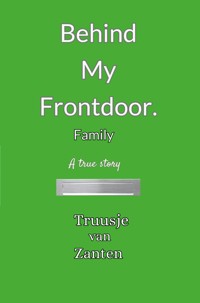
Truusje has a mission. More than nineteen years ago, Truusje fled an abusive relationship with her children. In her first book, Truusje shared how she and her children became victims of domestic violence, how she escaped this and how she fights for her children. In her second book, Truusje shared how her traumas from then can have an impact on the present and how things can go terribly wrong in the jungle of professional care if cooperation between parents and professionals falters. Everything comes together in this final book. Truusje shares how she continues her own life and in it she goes back to the beginning: Her own youth. In a very candid way that is typical of Truusje. she talks about blockages, traumas and patterns. She literally accelerates by standing still every now and then, and she converts her experience into something positive: starting her own company and helping other parents.
Das E-Book können Sie in Legimi-Apps oder einer beliebigen App lesen, die das folgende Format unterstützen:
Seitenzahl: 301
Veröffentlichungsjahr: 2025
Ähnliche



















Truusje van Zanten
Behind my Front door
Family
BEHIND MY FRONT DOOR - Family
© 2024 Truusje van Zanten
Photo author cover: K. van Zanten
Biography
Translation PurperhartVertalingen
ISBN 9789403787275
No part of this publication may be reproduced, using printing, photocopying, automated data files, or in any other way without the prior written permission of the publisher.
Inhoud
An escalation - the year has just begun
Working
The old man and woman
A divorce in the family
Heart examination
The beautiful little girl
Loes
The same name
The baby
Parental Alienation
Stitching
A very thick layer of snow
The gentleman in the obesity refrigeration
Heart racing
General practitioner
Loes
My manager
Martijn and Karlijn
On the waitlist
The new kitchen does not arrive without a hitch
Martine and Ellen
Loes
Martijn and Karlijn
The intake
Pickling and working in the fields
Parents helping parents
Theater show
The first-time therapy at Marieke
Ouderpeil.nl
Martijn and Karlijn, own company
Child protection that really doesn't get it
Theater lessons
EMDR
Presenting a brochure
Martijn has a car accident and garage Harry moves
Doing a theater show for the first time
Loes and the mistreatments
Many more parents and my own business
Therapy: EMDR every week for five months
Less groceries and care products
Saving fish: again and this time a TV crew is coming
Official complaints procedure
Cleaning cars
Chronic Tennis Elbow
New pictures during the EMDR
Martijn
An out-of-home placement with Loes
The bottom of the bucket
Theatre lecture
Martijn and Karlijn
Refurbish the house and have it appraised
It's Joris's birthday
Also lost the youngest child
Aunt Annie's birthday
Lost racing engine.
Two funerals
On TV and a podcast
Panzertje
Cmex
Joris and his new work car
Still struggling with groceries
Stupid plans or not
A place I don't want to be
Disciplinary Board
When your daughter-in-law calls
Last therapy
To America
Epilog
An escalation - the year has just begun
It's Sunday, and Martijn and Karlijn are at home. Today, I'm on call, which means if things get really hectic at work, I could get a call to come in and help my colleagues. I usually dread these shifts because you can’t do anything—at any moment, the phone could ring, and I find that really stressful.
There's some tension between my children today; they keep bickering and picking on each other. As I’ve done for years, I step in like a peacekeeper, trying to keep things under control. I never imagined it would escalate into the worst fight I’ve ever witnessed between them.
I manage to get to Karlijn to go to the kitchen. I tell her, “Get a cigarette for us, and we’ll go outside to the veranda to smoke.” Martijn is slouched in a chair in the living room, his face filled with anger. This separates them for now, and I hope it’ll help them calm down. But Karlijn can’t hold back and hurls another nasty comment at Martijn.
Before I can react, Martijn rushes past me, grabs Karlijn by her ponytail, pulls her head back, and slams it violently against the kitchen cabinet.
Karlijn screams and crumples to the floor. I grab Martijn by the arms and snap at him that there’s no fighting allowed in my house. He’s already taller than me, but I still think he respects me—at least, I hope he does.
He pushes past me and starts kicking Karlijn. I leap at him again, yelling for him to get outside. He looks at me, wild-eyed, then bolts toward the door. BAM—the front door slams shut. I sit beside Karlijn, checking her head and body for injuries. All I can hear is her wailing because, in her mind, she’s on the verge of death.
She cries, insisting that her brother is a jerk and can’t get away with this, claiming she did nothing wrong. As calm as I can be, I remind her that I’ve told her many times to keep her mouth shut and not react to everything. I don’t condone Martijn’s behavior in the least, but she can’t just blame him—she needs to take responsibility for her own actions too.
Self-reflection is something both of my teenagers struggle with. Blaming others has become second nature to them. They just can’t see their part in things. No matter what happens, it’s always someone else’s fault.
Meanwhile, Martijn calls Bianca because he knows he messed up.
Shortly after, Bianca calls me, asking how I’m doing. What does she think?
We decide I’ll take Martijn to the station so he can take the train home, and later I’ll bring Karlijn home. I don’t want her to travel alone on the train just yet, even though she’s sixteen.
On the way back, I’m on the phone with Bianca, and I can’t help but cry uncontrollably over what just happened. I’m reminded of my past with Ricardo, seeing traces of him in Martijn, and it fills me with overwhelming sadness. Suddenly, I’m back in time, flooded with painful flashbacks.
I’m thankful I wasn’t called in to work today.
Working
Of course, with the ongoing COVID-19 situation, it’s no surprise that work is particularly hectic. I want to be as supportive as I can to my colleagues, so I make sure to send my supervisor a message every day, letting them know I’m available to be on standby. From what I gather, my willingness to help is really appreciated, especially during such a difficult time with so many deaths.
I’m learning quickly and intensely. We work with a dispatch center that directs everything to the right team. Once I get a call, I know which mortuary I need to go to. Our team is responsible for four mortuaries, so we spend a lot of time driving from one to the next.
I’m fortunate to be shadowing a colleague, but that won’t last long. Eventually, I’ll be expected to handle the mortuaries on my own. You’re pretty much on your own unless the workload becomes overwhelming, and you need to reach out for help.
I have some reservations about having to handle this job solo. There’s no support, no assistance, nothing. You’re entirely on your own, responsible for caring for a deceased person, placing them on a clean sheet. I won’t go into all the details, but honestly, doing it all alone just doesn’t feel right. Sometimes, we encounter situations where working together would be far more efficient.
And sometimes, the deceased can be quite heavy. Even in those cases, they still need to be turned and cared for, and having an extra set of hands makes all the difference.
The old man and woman
At the beginning of my shift, I receive a notification:I’m needed to be on the top floor of the large hospital to pick up a deceased person. With the necessary paperwork for the department and the stretcher in hand, I walk through the hospital corridors with my colleague. On the one hand, I feel a sense of power, yet at the same time, I feel so small. Everyone who sees us coming with the special stretcher understands exactly why we’re there we only come when someone has passed. People step aside respectfully to let us pass or allow us to go first in the elevator. The respect of the hospital staff is palpable.
When we arrive at the department, we check in and wait for the nurse who will escort us to the room. It turns out to be the COVID ward, so both the nurse and we need to put on full protective suits, goggles, and masks. Every time we suit up like this, I feel a certain distance between us and both the family and the deceased. We look almost alien, hidden behind suits and masks.
As we walk to the room, we encounter the husband of the deceased woman. He’s an elderly man, struggling to walk. A nurse is already with him, and then my colleague and I enter with another nurse. Together, we stand in the small room, preparing the man for what comes next. Since his wife passed away from COVID, we must place her in a body bag necessity, though we all find it deeply unfortunate.
After explaining the next steps to the man, we give him a moment alone with his wife. He slowly walks over, caresses her cheek, and whispers, “Our story ends here, my love, but soon, up above, our story will continue.” He gently kisses her and tenderly strokes her face.
We stand at a respectable distance, our heads lowered, hands folded. It’s hard for all of us to witness this moment. That poor man, who had been by his wife’s side for days, watching over her, now missing her final breath. His grief is overwhelming.
The nurse quietly leads him out of the room so my colleague and I can begin our work.
We proceed with the first care procedures: carefully washing her face, adjusting her hair, placing the eye caps, removing the IV, and sealing any wounds with special glue and dressings.
We always try to treat the deceased with the utmost respect, so that once we reach the morgue, no further care is needed. Not because we don’t want to, but because she passed away from COVID. We aim to minimize all risks in the most respectable manner.
Once she’s fully prepared and placed in the body bag, we gently move her onto the stretcher. Together, we drape the special deep red cloth over her, making sure there are no wrinkles, and everything looks neat. Now, we’re ready. Slowly, we move toward the door, the nurse was already waiting outside.
The husband watches us from a distance, quietly crying as we take his wife away.
As we reach the department’s door, my colleague steps out first, quickly removes all the protective gear, and disposes of it in the designated containers. Then, I gently push the stretcher through the door and step outside myself. My colleague stays with the body while I remove my protective suit.
We walk to the elevator together and take her downstairs. We enter all the required details into the system, and less than four hours later, the funeral director arrives to take her.
A divorce in the family
As I do every day, I call my sister Dineke. She’s mentioned a few times now that one of our cousins has separated from his wife—well, actually, she left him. Dineke keeps updating me on how things aren’t going well, and there’s a lot of drama surrounding the divorce settlement. With my sixth sense for sensing when things are off, I can already feel my neck hairs standing on end. I’ve told Dineke more than once: “Let her call me, maybe I can help her.”
Let me make one thing clear—I really don’t care about most of my family, including my cousin.
I haven’t spoken to or seen him in years, and I have zero interest in doing so. I just can’t deal with spoiled people who think they’re better than everyone else, and I have no patience for those who pass judgment without knowing the full story. I’ll get into the family dynamics later.
I search for his ex-wife on Facebook and send her a message.
I tell her I’ve heard bits and pieces from Dineke, and I want her to know I’m here for her.
The stories I’ve heard about the divorce already tell me this is going to be a complete disaster. And you know what? The mess itself isn’t even the worst part. I just hope, with everything I have, that the children won’t suffer too much and won’t become the real victims of all of this.
It takes a while for her to respond, even though Dineke had already messaged her to let her know I’d be reaching out. Soon enough, I discover why she was hesitant to talk to me at first. The moment she tells me that my cousin and his parents have spent the last 18 years badmouthing me, brainwashing her into thinking I’m a drug dealer and a terrible person, I know it for sure. Yup, my family’s a mess. Well, except for a few of us.
Getting through to Loes takes real effort, but eventually, I manage. And before long, I uncover the full extent of the chaos in this divorce. We exchange numbers, and before I know it, we’re texting for hours. The more she tells me, the angrier I get!
I promise her I’ll do everything I can to help. I already knew some of my family wasn’t right in the head, but now I’m absolutely sure of it. They all know our story—how Ricardo abused me and my children for years. And now, this is happening. How is that even possible?
Heart examination
Last year, I underwent a series of heart tests. This came after we found our mother’s journals following the passing of our parents. What we read was shocking and disturbing. Our mother had essentially lied about everything. We had known for years that Dineke was a surviving twin, but we were always told that Anneke had died from sudden infant death syndrome. The journals revealed that our mother had been drinking and taking pills during her pregnancies. We don’t know what kind of pills they were; that wasn’t mentioned.
Dineke decided to request her medical records from the hospital, as well as Anneke’s, last year.
What we had been told for years turned out to be one big lie—none of it was true. Anneke didn’t die from sudden infant death syndrome, but from heart failure. Both Dineke and Anneke were born underweight and had various defects, about which we were never informed.
I’ve always been told that I was just a "band-aid" for the wound our mother had after Anneke’s death. From the journals, I learned that I was only born as a way to fill the emptiness caused by Anneke’s passing.
If Anneke hadn’t died, I wouldn’t have been born. Only now do Dineke and I understand why our mother always treated me so strangely, hugging me and affectionately calling me "mom’s band-aid."
Since we no longer trust anything, and my medical records have disappeared due to expiration, I’ve had a series of tests to see if something was wrong with my heart.
My heart often beats irregularly, sometimes feeling like it’s about to jump out of my chest. It’s an awful feeling.
After the tests, I was told it’s something with which I can live. Apparently, my heart just decides to "bounce" on its own. I’ve been prescribed medication to take when it happens too often, like during stressful times.
I need to get used to it and learn to manage it. It’s true—under stress, my heart acts up more frequently. So, it is medication.
Fortunately, I can continue working and doing everything I enjoy, just with the help of a pill.
At work, I feel at home. My job gives me so much energy, and I do it with love and dedication. I even have whole conversations with the deceased, caring for them with love.
But my colleagues… where do I even start? The team I’m stuck with is like a venomous pit of lies and deceit.
They steal things like face masks and gloves and gossip about each other constantly. And they lie straight to the manager, who’s so oblivious, they believe it all.
I’m still learning and doing my best, but I can’t stand the dishonesty. It’s really starting to get to me. Then a colleague calls me, yelling at me from here to Tokyo, completely putting me down.
Apparently, I hadn’t dried the floor and didn’t clean up properly. I tried to explain that I did, and I’m sorry if it wasn’t up to her standards, but I also had four reports to finish, so I was in a rush. She didn’t care at all—she was furious and hung up on me.
Then, I hear from my manager that this job is too much for me.
More terrible comments follow, and I recognize them instantly!
They’re all lies from one of my colleagues. I know exactly who’s behind it, and I feel so small. In my head, I hear a voice screaming, "You’re nothing, you’ll never achieve anything in life."
Dineke and I heard these words constantly throughout our childhood from our father. I also hear him scream, "You’re too stupid to even dance for the devil!"
We’ve heard this our whole lives, and now it’s echoing again. I get in my car and drive home, my heart pounding harder and harder.
I feel terrible. I roll down the car window, letting the cold wind blow in my face, as tears stream down my cheeks. I just don’t understand why. This isn’t new, right? I’m used to being told I’m worthless.
I arrive home pale, and Joris immediately notices something’s wrong.
I pretend everything is fine and start preparing dinner. Afterward, I clean up and take a hot shower, hoping to calm my heart, but nothing works.
All I can do is take a pill.
The beautiful little girl
With a heavy heart, I head to work, finding it increasingly difficult to deal with the toxic people around me.
We have a new colleague, and even though I haven't met or spoken to her, I've already heard all sorts of rumors: that she's terrible at the job, that she sneaks her boyfriend in during night shifts, and countless other awful things.
If I were to believe everything I hear, she’d practically be the devil.
I decide to try and ignore it for now. I’ll meet her eventually and make my own judgment.
I proceed as usual to the cold storage rooms and take a look.
The papers on the doors indicate the names and birth dates of the deceased, so I know exactly who is inside. As I read the names, one catches my eye.
When I reach the last storage unit, I freeze. I remove my glasses and put them back on. Am I seeing this correctly? Two years old.
I slowly open the heavy door. Inside the room, the cold metal plate where the deceased lies is two meters long and one meter wide. At the far end of the cooling room, on this large plate, is a small bundle wrapped in a sheet.
So tiny, so fragile. I stand there for a moment, just looking. I can’t see the face, can’t see anything except the bundle.
Suddenly, my phone rings. It’s the dispatch center.
"You have a call," they say. It’s the hospital. Relief washes over me because that means I don’t have to go to another mortuary.
I grab the necessary equipment and stretcher and head to the designated department.
Once there, I help the family lay the deceased in a beautiful red sheet for the final care. Before I leave, two people rush over to thank me, hugging me tightly. They are so incredibly grateful. At that moment, I’m not concerned about COVID. I hug them back, reassuring them that I’ll take good care of their loved one, then solemnly walk down the hall towards the elevators.
As I step into the elevator, my phone rings again. It’s the dispatch center.
They need me to forward the information to the funeral director.
I can barely understand the man, but I gather he plans to come at 2:00 p.m. to pick up the little child. I check my watch and realize I have enough time.
Once I’m back in the mortuary, I haven’t even had a chance to catch my breath before the next call comes in. I quickly place the deceased in the cooler, prepare the stretcher, and head to collect the next body.
This time, I’m lucky. The body is on the bottom floor in a special department, securely locked. The bell rings, I press it, and soon enough I’m let in and shown the room where the deceased is lying.
Well, sitting, actually. I’m confused—has this man really passed away?
I check the papers: he passed away at 7:00 a.m. this morning, and it’s now 11:30 a.m. Two nurses approach me, asking how I’m doing.
“I’m fine, thank you,” I reply, but internally, I’m thinking, what’s going on here?
Then one asks, "Has the girl been picked up already?" I must look confused because they quickly explain: "Yesterday, a little girl was brought in by trauma helicopter. The doctors tried everything, but there was nothing they could do." I’m stunned. What does this have to do with me?
I soon realize why: apparently, the whole hospital knows it wasn’t a natural death, and everyone wants to know what caused it.
The best way to find out is to ask someone in the mortuary.
I politely tell them that it’s irrelevant. What matters is that this little girl goes back to her family for a decent funeral.
Frustrated, I ask the nurse why I was only notified now.
Why hadn’t anyone at least laid the man down properly? I’m even more upset when I ask how I’m supposed to move him on my stretcher. She tells me they’ve been busy and quickly passed on the message.
Then, with a quiet question: "How are you going to move him?"
I look closely at the deceased and realize that this man has no family, and this will be a municipal funeral. I also understand that he chose to donate his corneas, which means his eye tissue will be given to someone else.
I think to myself, great, how am I supposed to deal with this on my own?
I ask her if she could help me.
That was the wrong question. Before I know it, she stammers that she’ll get someone else and rushes off. I smile at the man and say, “Well, that’s very kind of her, don’t you think?”
Just then, the door opens and a cheerful young lady walks in.
“I need to help you get this man on the stretcher; he’s too heavy.”
She says. “Uh, no.”
I respond, “But no one thought to lay the man flat after he passed away. Now he’s sitting, completely stiff since he’s been dead for a while. We’ll have to straighten him up so I can move him. I’ll handle the rest, but for now, he needs to come with me.”
She looks pale and says, “I’m afraid to break anything. I’ll go get someone else.” Now, I’m really getting frustrated and snap, “You’re not going anywhere, and we’re not breaking anything!”
I patiently explain the process and how we’ll do it. As I pull the covers off the man, I see that they had forgotten to remove them.
The legs and feet exposed are horrifying to look at.
The nurse tells me that they had already removed his toes and that he had been ill, which is why his legs look so strange.
With great effort, we manage to get him onto the stretcher. It’s awkward and far from flat, but at least I can move him. He lies with bent legs, a crooked head, and stiff arms.
As soon as we’re back in the mortuary, the doorbell rings.
It’s the donation team. Since I began working here, I’ve learned that the donation team comes to remove eyes or other tissue from the deceased.
They ensure it gets to the right place. Two big, strong men walk in cheerfully. “Good afternoon, Truusje, how’s it going? Busy, I suppose?”
I laugh and point to the coolers. “What do you think? You’re here for this man; I just brought him in. Want to help me put him on the table?”
Together, they step forward and help me remove the sheet from the man. Simultaneously, they say, “Who forgot to lay this man flat? This is ridiculous!” “Yes, I’ve already said something about that. Don’t worry. Let’s get him sorted out.”
In the blink of an eye, the man is neatly positioned on the table, his legs straight and his arms by his sides. I’m right up close. I’m fascinated by how the donation process works, and the person performing the procedure explains each step as he goes.
Once the man’s eyes are removed and placed carefully in a special solution, we prepare them for reattachment. Now I understand the two little glass eyes placed nearby. Gently, the team member places them in the man’s eye sockets and closes his eyelids. There’s no sign of the donation left, and the man is ready to be taken care of by the municipal funeral service.
I spend about an hour preparing him, making him as presentable as I can.
This is the only thing I can do for him. I think about how someone could die so alone, without any family by their side, and how no one will be there for his final journey. I reflect quietly and close the cooler door.
When I check my watch, I’m a little shocked. I’ve been at this for quite a while. I still need to clean up, and the funeral director is coming for the little girl. Ding! The bell rings, and I’m startled. Until now, I haven’t even looked at the little girl, but now I have no choice. I let the funeral director in, and in broken Dutch, he asks me several questions. He shows me papers I don’t understand, and I immediately decide to call my supervisor for help. She answers cheerfully, “Hey Truusje, what’s up?” “This is my first time handling a non-natural death. The man has questions and papers. Can you please talk me through this?” “Oh yeah, no problem, just hand the papers to him.” Not long after, I get my supervisor back on the line. “Truusje, just let the little girl go with him, and leave all the papers in the office. The afternoon shift will explain to you how to fill them out in the system.” “Okay, thanks! I’ll do that!” “Truusje, I see five more notifications for you. Do you think you’ll manage?” “Yes, I’ll finish this up and head out to pick up the next one.”
When the large door of the cooler opens, the funeral director and I both fall silent. It’s a difficult situation— a little child. Together, we take the tray with the girl out of the cooler and place it on the lifting table. We look at each other, knowing that this isn’t going to be easy. Slowly, I remove the sheet from the little girl. Now, I’m going to look at her for the first time. As soon as I pull the sheet away, I immediately notice that there is still blood coming from her mouth, and the funeral director immediately turns away. He’s shocked. For a moment, I hesitate, stop, and think: this can’t be. I quickly grab a washcloth and a towel. I clean her little face, making it look nice, and take a good look at her. What a beautiful little girl, with the most beautiful, longest eyelashes I’ve ever seen. She has full, dark hair that’s already quite long. The funeral director has tears in his eyes and tells me that their god needs her and that she must go. He says the family is very sad but wants to bring her home for a few days. At the same time, he rolls his stretcher up to the large table. Normally, you would slide the deceased onto the stretcher together. We look at each other, and I immediately decide: no, I’m not going to do this, I don’t want to, I won’t. I push my table away and, with the utmost respect, lift this little girl into my arms. I walk over to the stretcher of the man, who is now crying. I place her on it and gently cover her. “Goodbye, beautiful little girl. I hope you have a beautiful journey.” The funeral director is incredibly grateful that I’m doing it this way and promises me that he will tell the parents. I say that it’s not necessary that I have respect and love for every deceased person, and I act this way every time. Slowly, we walk to the exit, and I help the girl into the car. As he drives away, I watch until I can no longer see him.
Loes
sEvery day, all day long, Loes and I text and call. She tells me stories that make my blood boil. That’s how I find out she’s been mentally abused for years and is still dealing with the consequences. I’ve heard from several family members how she was treated by her former husband. I never attend the cousins' day because more than half of my family I still truly despise. It happens regularly that Loes is mentally torn down by her husband. Loes wants to pursue a career in healthcare, and he responds to the rest of the cousins by saying she’s too stupid for that. He claims it’s a waste of money. When it’s time to eat, he tells her she shouldn’t eat so much with that fat ass of hers, followed by a hearty laugh. Several family members have already told him to behave towards his wife, the mother of his children. But he doesn’t care at all. He continues to humiliate his wife and instill an inferiority complex in her. He doesn’t hesitate to make such cruel remarks in front of their children. They don’t know any better; dad talks to mom like that.
At turbo speed, I’ve taught Loes everything I know about gathering evidence. I also tell her firmly that she is being abused and that he is now emotionally abusing the children. It’s clear that he is emotionally burdening the children day in and day out with information they shouldn’t even be hearing. Loes cries her eyes out. I feel guilty for being so harsh. I don’t beat around the bush, and I quickly realize that this is sometimes quite difficult for people. I promise her I’ll help her wherever and however I can. I’m not afraid of that drunken idiot of a cousin of mine. We soon find out that he is scared of me. Loes feels very bad about everything happening with her children. Every week, when they’re with her, something happens. Her daughter says things that make your hair stand on end. She is becoming more and more angry with her mom. Often, very often, I can listen in live, and I’m only able to jump in my car and go help my new friend. Loes is still very scared to meet me in person. She’s just afraid and nervous about what might happen if my family finds out she’s in contact with me. What turns out is that my cousin has forbidden her from having contact with anyone in the family. It’s even so bad that he starts sending threatening messages to other family members, forbidding them from contacting Loes. I’ve often hoped he would have the guts to send me a message and say this to my face. But his fear of me is too great.
The same name
It’s incredibly busy at work, and it’s almost impossible to keep up. During one of my shifts, I get six calls within fifteen minutes, luckily all from the same hospital. But I know this is going to be a lot of work, and I hope the other three hospitals don’t push any calls through; otherwise, I’ll have to start calling colleagues. And that’s exactly something I don’t want to do; I don’t really get along with my colleagues.
While I’m taking care of a deceased person on a ward with the family, my phone keeps ringing. I can’t really answer because I’m fully geared up in corona protective equipment. The family tells me, “Go ahead, answer it, it’s not like she’s going to run away.” I apologize a thousand times for my phone constantly ringing. I really have no choice but to answer.
“This is the control room, we’ve called you four times, Truusje.”
“Sorry,” I stammer, “I’m in the corona ward, and I’m not supposed to answer right now.”
“We’ve got Ricardo on the line for you, we’ll transfer him.”
I’m absolutely startled and go pale. One of the family members even asks, “Are you okay?” I look at them with wide eyes. I stammer to the operator, “Who do you have on the line?”
“Ricardo, wait, I’ll transfer him, bye.”
Followed by: “Hey Truusje, don’t be shocked, but I’m downstairs in the morgue.”
I stammer, “Who are you?”
“Oh, sorry Truusje, didn’t your manager call you?”
“No, she didn’t, but okay, I don’t have time right now, I’m with the family. I’ll see you downstairs.” And I immediately hang up.
Feeling sick and full of tension, I think about Ricardo, my ex. How is it possible that this affects me so much right now? I apologize once more and finish what I’ve started with the family.
With a racing heart, I walk the deceased back to the morgue and go inside. There, I meet a very cheerful man who strides toward me, hand extended to greet me. The heaviest weight ever lifts off my shoulders. It’s thankfully not my ex.
“Truusje, it’s crazy busy. I had to take care of a few things here today, but I’ve already called your manager and told her I’m going to help you. This is ridiculous. Here, take a look at how many calls you have already!”
The manager has already sent other people to the other hospitals, so you can stay here.
Like I’m seeing water burn, I look at him, and Ricardo starts laughing. “Haha, haven’t you checked the system in a while, Truusje?”
“No, of course not. How could I? I’m on a corona ward. Tell me, how many calls do we have now?”
“Already eight, but I’ve also had two funeral directors on the phone. They’re coming here. The deceased haven’t even arrived yet. But we have no choice. We have to keep going, we can’t fit all the deceased in the fridge.”
We make a plan together. I’ll pick up the deceased as quickly as I can, check on them on the slab so I can return immediately to get another one. Ricardo will take care of them and put them in the fridge. In three hours, we’ve brought all the deceased down, and four have already been picked up, on their way back to their families.
When we finally have a moment of rest and sit down for a drink, we chat a bit. Ricardo tells me he thinks it’s impressive that I can do so much on my own in such a short time. We get to know each other a bit more, and out of nowhere, we get four calls at once.
By the end of my shift, I’m extremely tired. I get into my car and head home for a well-deserved shower. While driving, I call Dineke, as I always do, and tell her about what happened when I got the call, and that Ricardo was downstairs in the morgue. Dineke also asks twice, “Wait, what? You’re kidding, your heart must’ve stopped when that happened.”
“Wow, you’re super busy with work, and then you get something like that in the middle of it all. But yeah, they didn’t know who, what, where, and how, and they couldn’t have known what kind of impact that name has on you.”
Laughing, I drive home, singing along with the music. I’ve managed to handle everything today. What a day this was.
The baby
When my shift begins in the afternoon, I quickly discover that there’s a full-term baby lying in the cooler. I immediately go to greet the little one. What a beautiful boy. My colleague stands beside me and informs me that the funeral director will pick him up in two hours, as she has already arranged to. “No problem, we’ll take care of it. I’ll handle it. I’ll see you tomorrow, have a good evening!” I say as I bid farewell to her. I don’t really like her, and we don’t get along well. Last week, when the little girl was picked up, she was on the afternoon shift and had to explain the paperwork to me, as instructed by the supervisor.
I stood beside her while she sat at the desk. I quietly told her that the supervisor had asked her to explain how this worked. At that moment, I was still a bit shaken by the little girl, as it was my first time dealing with something like that. I had never handled a deceased child who died unnaturally before. But instead of showing a bit of empathy and responding decently, she snapped at me as if I were worthless. I should have just looked it up in the system! I kept quiet, turned around, and went on with my work, taking care of the deceased. I couldn’t understand how someone could react that way, with no regard for another person’s feelings. She too must have started somewhere, surely seeing things for the first time and struggling with them. Was she treated that way by her colleagues back then? I wonder if I should try to find an excuse for her behavior, but I can’t.




