


Erhalten Sie Zugang zu diesem und mehr als 300000 Büchern ab EUR 5,99 monatlich.
- Herausgeber: The History Press
- Kategorie: Sachliteratur, Reportagen, Biografien
- Sprache: Englisch
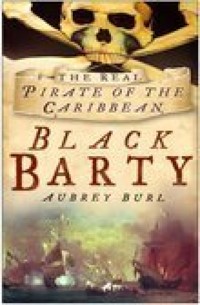
Aubrey Burl provides a fascinating insight into the life and times of Bartholomew Roberts, also known as Black Bart, who was easily one of the most successful and deadly pirates in all of history.
Sie lesen das E-Book in den Legimi-Apps auf:
Seitenzahl: 471
Veröffentlichungsjahr: 2006
Das E-Book (TTS) können Sie hören im Abo „Legimi Premium” in Legimi-Apps auf:
Ähnliche



















BLACK
BARTY
BLACK
BARTY
BARTHOLOMEW ROBERTSAND HIS PIRATE CREW1718–1723
AUBREY BURL
This book was first published in 1997 by Alun Books
This new edition first published in 2006
The History PressThe Mill, Brimscombe PortStroud, Gloucestershire, GL5 2QGwww.thehistorypress.co.uk
This ebook edition first published in 2013
All rights reserved© Aubrey Burl, 2006, 2013
The right of Aubrey Burl to be identified as the Author of this work has been asserted in accordance with the Copyrights, Designs and Patents Act 1988.
This ebook is copyright material and must not be copied, reproduced, transferred, distributed, leased, licensed or publicly performed or used in any way except as specifically permitted in writing by the publishers, as allowed under the terms and conditions under which it was purchased or as strictly permitted by applicable copyright law. Any unauthorised distribution or use of this text may be a direct infringement of the author’s and publisher’s rights, and those responsible may be liable in law accordingly.
EPUB ISBN 978 0 7524 9597 2
Original typesetting by The History Press
Contents
List of Plates
Introduction
Part One: The Early Days of the Pirates
1 Captain Howel Davis, July 1718–February 1719
2 The raid at Sierra Leone, March 1719
3 The Capture of Captain Snelgrave, March–June 1719
Part Two: The Great Days of the Pirates
4 Captain Bartholomew Roberts, June 6–August 1719
5 The Treasure-Ship of Bahia, August–December 1719
6 Trials in Virginia, Edinburgh and London, December, 1719–July 1721
7 The Articles of the Pirates, December 1719–February 1729
8 A Fight at Sea, February 26–June, 1720
9 Pickings in Newfoundland, June–July 1720
10 Fortunes in the West Indies, August–November 1720
11 Misfortunes for the Navy, November, 1720–April 1721
12 Deserters and Disasters, April, 1721–May 1724
13 Pleasures in Africa, April 1721–January 1722
14 The Swallow meets the Royal Fortune, October 1721–February 1722.
Part Three The Last Days of the Pirates
15 Cape Coast Castle, February 1722–June 1723
Appendix A: Pirates at Cape Coast Castle
Appendix B: Captain Charles Johnson and the General History. . . .
Notes
Abbreviations
Public Records Office. References.
Bibliography
Barti Ddu o Gas Newy’Bach
Black Barty of Little Newcastle
Y morwr tal a’r Chwerthiniad iach
The tall seaman of the hearty laugh,
Efo fydd y llyw
He guides the rudder
Ar y llong a’r criw –
Over the ship and the crew –
Bartu Ddu o Gas Newy’Bach.
Black Barty of Little Newcastle.
from ‘Barti Ddu’,
I.D. Hooson (1880–1948)
At the pleasant village of Little Newcastle, Dyfed, five miles south of Fishguard, a gaunt and slender stone stands on the green in front of the church. On it is a metal sign:
CAS NEWYDD BACH
LITTLE NEW CASTLE
yn y pentref yma y ganed
in this village was born
BARTI DDU
BLACK BARTY
y mör-leidr enwog
the famous pirate
(1682–1722)
(1682–1722)
‘In an honest service there is thin commons, low wages, and hard labour. In this, plenty and satiety, pleasure and ease, liberty and power. And who would not balance creditor on this side, when all the hazard that is run for it, at worst, is only a sour look or two at choking? No, a merry life and a short one shall be my motto.
Damnation to him who ever lived to wear a halter’.
Bartholomew Roberts.
List of Plates
1 Title page of the General History . . .
2 Howel Davis
3 Blackbeard
4 Blackbeard’s head
5 Ann Bonney and Mary Read
6 ‘Calico Jack’ Rackam
7 Mary Read
8 Bartholomew Roberts
9 Portuguese fleet at Bahia
10 A Boarding-party
11 Blackbeard
12 Execution of Stede Bonnet
13 Execution of Kennedy
14 Captain George Lowther
15 Roberts’ Flag
16 Newfoundland Fishery
17 Ann Bonney
18 Pamphlet of Rackam’s trial
19 Pirates carousing
20 3rd-rate man-of-war
21 Captain Bartholomew Roberts
22 Captain Chaloner Ogle
23 Death warrant of pirates
24 Flag at Ouidah
Introduction
This is the true story, recovered from original sources, of a band of pirates who from 1718 until 1723 terrorised the seas off the African coast, in the West Indies, and in the American colonies. It begins with the suppression of a pirate base on New Providence and ends near the cold shores of Newfoundland.
During those years the pirates had four captains: Howel Davis, the imaginative Welshman; Thomas Anstis, the deserter; John Phillips, the murderer. But it is with the fourth that this book is chiefly concerned because he was the greatest pirate of the age, a tea-drinking marauder of astonishing audacity. His name was Bartholomew Roberts.
He lived at a vintage time for rogues, an age of criminals whose names are household: Captain Kidd, privateer turned pirate, hanged at Execution Dock in 1701; the infamous Blackbeard, Edward Teach the pirate, who was killed in 1718, the year in which this story begins; the pirate women, Anne Bonny and Mary Read at whose trial in 1720 they ‘pleaded their bellies’, confounding the court who did not expect pregnancy in pirates; Jack Sheppard, pickpocket and locksmith, admired for his ingenious escapes from prisons, arduously breaking through padlocked door after door and thick wall after wall at Newgate. He was hanged at Tyburn in 1724.
There was Dick Turpin in 1739, arrested for the unprovoked shooting of his landlord’s gamecock, and who courageously leapt neck-snappingly off the gallows steps to avoid a more lingering death by slow strangulation. Others were almost as well known: Jonathan Wild the thief-taker, Claude Duval, courteous highwayman. But of all of them Bartholomew Roberts was outstanding for his daring, effrontery, and success.
Pirates must be seen against their historical background. The laws of Britain, the state of the American colonies, the self-seeking captains of the Royal Navy, unemployment amongst sailors, all of them contributed to piracy. Although the majority of Britons deplored Roberts they also helped to make him.
Pirates are not to be confused with buccaneers, privateers or corsairs, all of whom were more or less honest. Buccaneers, the Brethren of the Coast, were in the beginning only involved with profitable recriminations against the restrictive trading practices of Spain. Privateers and corsairs were a kind of civil navy with governmental permission to attack their country’s enemies. Loot was an added incentive for patriotism.
Pirates were the enemies of all who sailed the sea. Plunder was their only object, intimidation their chief weapon, corrupt shore officials and trade embargoes their secret allies. Their calling is no more to be defended than that of housebreakers, footpads and highwaymen. Yet no apology is required for this book. Biographies of pirates are rare. Books have been written about piracy in general, usually relishing the atrocities, but until recently most were plagiarisms of earlier works and in them the pirates were puppets. The element that set these criminals apart, the sea, was rarely mentioned. Their ships and the conditions in them were ignored. Content with reporting corpse after corpse such books could as well have been written about Bluebeard the child-murderer as Blackbeard the pirate.
Commendable exceptions to this criticism are the books by David Cordingly, formerly of the National Maritime Museum, Greenwich. His Life Among the Pirates is a masterly historical review of the facts and fictions that colour the images of the ruffians and blackguards called pirates.
The present book describes how pirates lived and I have chosen to write about one man because his history includes the squalor, the temptations, the fear, the triumphs and the debaucheries that pirates knew. He was also brave, ambitious and successful.
Most pirate books are embellishments of Captain Charles Johnson’s classic, A General History . . . of the Most Notorious Pyrates . . . first published in 1724. Its details and current knowledge make it the foundation stone for any new work. That it is also very readable is unsurprising because ‘Captain Johnson’ was possibly Daniel Defoe who had already written two novels about pirates, The King of the Pirates, 1719, and Captain Singleton, 1720. Johnson’s History . . . is generally accurate but it does contain errors and omissions that contemporary documents and records of trials expand and rectify.1
‘Johnson’ is more reliable about Bartholomew Roberts than of other pirates and better about the end of Roberts’ career than its beginning because he had spoken with naval officers who were at the final trial, one of his informants being the surgeon of the warship, Swallow, John Atkins, who recorded the proceedings at Cape Coast Castle.
The attacks, plunderings, violence described here did happen. There are, perhaps, a dozen minor incidents which are uncorroborated although these are probable. They are identified as such in the Notes. Where a speech is quoted it comes from Johnson and is therefore fictitious but it gives the vocabulary and syntax of the day. What it must lack are the local dialects, regional Welsh, lowland Scottish, Cockney, the rich diversity of pronunciations of those pronouncedly parochial days.
Many events are attested in manuscript in the Public Records Office: the letters of colonial governors; the Calendar of State Papers (Colonial Series); or were admitted by pirates at their various trials. Lurid accounts of brutalities were reported in broad-sheets such as The Original Weekly Journal and others whose copies survive in the Burney Collection of the British Museum’s Reading Room. These bulletins are often the only source for such distant and ephemeral occurrences, the writers obtaining their copy from the returning captains and seamen who had suffered from piracy. References to them are provided in the Notes.
There is a coincidence. Fate brought together two men who by chance were associated with the events in this book, one with their beginning, the other with the end. In 1719 Daniel Defoe wrote Robinson Crusoe, a novel based on the desert island castaway, Alexander Selkirk, who had been rescued by Captain Woodes Rogers in 1709. Selkirk was in the naval warship, Weymouth, as it prepared to attack Bartholomew Roberts.
There are thanks to be offered: to Patrick Pringle for his stirring and exciting book, Jolly Roger, that stimulated my own interest in piracy and for his encouragement; to the Revd W. Lewis, rector of Little Newcastle; to Professor P.N. Furbank for his advice about the authorship of Daniel Defoe; to the staff of the Science Museum, London, who advised me on the technicalities of 18th century ship design; the Public Records Office; the Scottish Records Office; the British Museum Reading Room; the Bodleian Library, Oxford; the pirate library of the National Maritime Museum, Greenwich; the Guildhall Library, London; the National Library of Scotland; the National Library of Wales; the libraries of Hull College of Higher Education, the University of Birmingham, and the Society of Antiquaries of London.
I am most grateful to Sally Jones of Alun Books, Port Talbot, for having the initiative to publish the story of just one pirate, albeit Welsh, however successful he was. Equally I am delighted at the enthusiasm of Sarah Flight of Sutton Publishing, Stroud, who has reincarnated that tea-drinking, Sabbath-observing, richly-apparelled scoundrel.
Finally, to the many friends and colleagues whose help and interest has saved this book from fading into a bloodthirsty dream.
1
Captain Howel Davis
1718–1719
‘The pyrates off the coast of Guinea in Africa have taken goods to the value of £204,000’.
The Weekly Journal or British Gazetteer, 9 April 1720
Early in January, 1709 the winter in England was so bitter that the Thames turned to ice and Dean Swift, author of Gulliver’s Travels, ate gingerbread at one of the fairground stalls set up on the frozen river. A few weeks later but eight thousand miles away Robinson Crusoe was rescued.
‘Crusoe’ was not his real name. It was invented by Daniel Defoe ten years later when he wrote his first novel after forty impoverished years as a pamphleteer. ‘Robinson Crusoe’ was Alexander Selkirk and his rescuer was Captain Woodes Rogers, a privateer famous for his raids on the American possessions of England’s enemy, Spain. It is a minor irony of history that it was Rogers who saw the start of the greatest reign of piracy the seas had known and it was Selkirk who almost saw its end which came only two months after his death on board a man-of-war pursuing Bartholomew Roberts.
Defoe had read Rogers’ account of his privateering expedition, A Cruising Voyage Round the World, 1712, as the similarity of extracts from the two books show. Rogers, an experienced seaman and navigator had been commissioned by Bristol merchants to attack and plunder Spanish territories in the Pacific in retaliation for Spain’s unremitting harrassment of British shipping. Despite mutiny, near-starvation and battles at sea in which he was twice wounded Rogers returned in 1711 with a rich cargo of some £170,000, a huge sum when a soldier maimed in the wars might receive a pension of £18 a year. Rogers also brought back Selkirk who had been marooned in 1704 for more than four years on Màs-a-Tierra, now renamed Isla Robinson Crusoe, the largest of the Juan Fernandez islands off the coast of Chile, after refusing to sail in an unseaworthy vessel. He was discovered only by accident when Woodes Rogers sent a boat ashore for fresh water.1
Rogers had been so successful that on his return to England he was rich enough to rent the West Indian islands of the Bahamas, with the appointment as governor, for twenty-one years. But there was a problem. Piracy flourished there. It was a perfect time for pirates. Cargoes were plentiful, merchant ships were poorly armed, naval protection was slight and there was little chance of capture. Wherever there was trade whether on the American coast, in the West Indies or off Africa pirates lurked.
Although the war with Spain was officially over in 1713 skirmishes continued and the British Navy was occupied in the Mediterranean with few ships available for duties elsewhere. Yet trade was expanding. Chartered companies, The East India Company, the Hudson’s Bay Company, the Royal African Company and scores of others prospered from the riches of virgin territories. New lands were acquired, new settlements established. Trading sloops and sailing galleys with auxiliary oars for calm weather travelled the long triangular route from Britain with cloth, hardware and weapons to Africa; from Africa across the Atlantic with slaves for the Americas; from America back to Britain with spices, rum, tea and, above all, money. Unprotected by the navy but bringing wealth to their employers the merchant captains, relied on the vastness of the oceans to save them from pirates. In vessels with inadequate armament and with unenthusiastic crews they were defenceless. Pirates thrived on such easy pickings. As the colonies and commerce increased so did piracy. To the aphorism, ‘Trade follows the flag’ can be added, ‘and piracy follows trade’.
In the colonies defence was often left to the private owner who had little incentive to resist pirates. To the contrary it was easier, safer and more profitable to trade with them. Life was hard, income was low and piratical goods were cheap. It was a time for the rich man and the business man but not for the poor.
In Britain there was wealth and luxury. The first English banknotes were issued in 1718. The streets of London offered the best shopping in Europe and everywhere tradesmen’s signs hung, elaborate and brightly coloured. After the Great Fire of 1666 the heart of the city was being rebuilt. The elegant squares, Cavendish, Grosvenor, Hanover, were rising. The church of St Mary-le-Strand was finished in 1717. The nobility gamed for fortunes, duelled in their fashionable grey-powdered wigs, lace cravats, satin waistcoats and breeches. Merchants met in aromatic coffee-houses. The South Sea Company would soon tempt investors with its promise of swift gains.
But the times were uneasy. The king, George I from Germany, speaking no English, had been on the throne only since 1714, there had been a Jacobite rising the next year and there was a persistent dread of a second invasion.
For those without money there were greater fears. In London the poor existed within a few yards of prosperity but were a lifetime of deprivation from it. Unemployment brought starvation but with the naval war over there were hundreds of seamen without ships. Laws were harsh, prisons were pits of corruption and fever, there was a gallows near every town. No job meant the misery of the workhouse or, worse, transportation. The colonies needed labour and many penniless men, women and children were condemned to near-slavery on the plantations.
Poverty meant degradation, even death. Despite the risks many sailors were lured by the pleasures of piracy. It offered easy money. Instead of hard labour there were the sirens of drink, idleness, wealth and women. Woodes Rogers was warned that in the Bahamas he might find hundreds of pirates.
In April, 1718, he sailed from England in the Delicia, a thirty-gun, 460-ton merchantman that he had used on an earlier trip to Madagascar. With him was the Willing Mind of twenty guns, and two 20-metre long trading sloops, the Buck and the Samuel, two-masted vessels of 100 tons, fore-and-aft rigged, each with six guns on their upper decks. There was also a strong though temporary naval escort, the Milford, a 5th-rate man-of-war of 32 guns, and a pair of naval sloops, bigger and more heavily-armed than their civilian counterparts, the Rose and the Shark.2 With him Rogers carried a General Pardon for those pirates who cared to accept it.
. . . and we do hereby promise and declare that in case of any of the said Pirates shall, on or before 5 September, in the year of our Lord, 1718, surrender him or themselves, to one of our principal Secretaries of State in Great Britain or Ireland, or to any Governor or Deputy Governor of any of our Plantations beyond the seas; every such Pirate or Pirates so surrendering him or themselves, as aforesaid, shall have our gracious Pardon of and for such, his or their piracy or piracies, by him or them committed before the 5 of January next ensuing.
Rewards for taking:
pirate captain, £100
Lt, master, boatswain, carpenter, gunner, £40
inferior officer, £30
private man, £20
A pirate turning renegade and capturing or causing to be captured a pirate to receive £200.
Lord Treasurer or Commissioner of Treasury to pay accordingly.
Hampton Court, 5.9.17
The World of Bartholomew Roberts. Triumphs and Disasters
Early in July Rogers reached New Providence. Over six hundred pirates loitered there, indifferent to his arrival. So content were they with their life, so profligate with their riches, that once when they had captured a merchantman laden with fine brocades they casually tore the fine cloths into strips to tie to the horns of goats to distinguish between the herds of different settlements.3 Rogers seemed no threat. They had already ignored one appeal and the new governor could not anticipate any better response to this. Events proved him right.
For a day his little fleet lay in the harbour at whose mouth an island created two entrances making any blockade difficult. Then a launch rowed by a motley of pirates whose silks went ill with their rough hands and unwholesome bodies came out with a message from the worst of the pirates, Charles Vane.
To His Excellency, the Governor of New Providence.
Your Excellency may please to understand that we are willing to accept His Majesty’s most gracious Pardon on the following terms, viz:
That you suffer us to dispose of all our Goods now in our Possession. Likewise to act as we see fit with every Thing belonging to us, as His Majesty’s Act of Grace specifies.
If your Excellency shall please to comply with this, we shall, with all Readiness, accept His Majesty’s Act of Grace. If not, we are obliged to stand on our Defence. So conclude,
Your humble Servants,Charles Vane, and Company.P.S. We wait a speedy answer.4
At this impertinence Rogers ordered the Rose and the Milford to block the harbour. The Rose’s captain, Whitney, sent a lieutenant under a flag of true to talk with Vane. The officer reported that the pirates were drunk and were threatening to kill Rogers and all his force rather than give in. There was little to do except to attempt a blockade.
It was cannonfire from the burning ship that roused the fleet next night. She came flaming out of the darkness with guns firing erratically like a sputtering grenade, slicing into the rigging of the Rose. The naval vessels cut their cables and ran to sea pursued by mocking, undirected shots. Rogers watched helplessly. Flames lit the harbour and by their light he could see Vane’s vessel, black flag at the mizzen, sailing out through the dangerous narrows of the eastern channel. Then, as the fire reached her magazine, the fireship exploded in a blast that flared across the New Providence and left the Delicia rocking and tossing at her anchorage.
Vane had escaped accompanied by rebellious pirates including ‘Calico Jack’ Rackam, who was later to depose him. Only a drift of smoke remained of his fireship. Rogers sent the Buck and Samuel after him but the pirate eluded them only to be shipwrecked later, saved, recognised and sentenced to death on Jamaica in 1719. Johnson recorded that he ‘betray’d the Coward when at the Gallows, and died in Agonies equal to his Villainies’.5
With Vane gone Rogers acted decisively. He sent a second copy of the Pardon ashore hoping that the pirate had taken all the irredeemable criminals with him. It was a hope that seemed justified when he landed next day. He was met by men who said they would accept the Pardon. Most of them had pistols or curving cutlasses, they were filthy and the town of Nassau behind them was no more prepossessing with its rough shacks, tents and taverns. Raw hides rotted and stank at the waterside. Sailors said that when the wind blew offshore ships could smell New Providence before it came into view. Rogers had the Pardon read out and chose a dwelling larger and less dirty than the rest for his headquarters.
The Milford left for duties on the North American coast. Whitney of the Rose also was impatient to depart. So was the Shark but Rogers could not spare them until his worst problems were solved. Law had to be established on the island and the fortifications had to be strengthened in case the pirates returned. Vane was still free but Whitney refused to pursue him. The perversity of naval captains in foreign places where they could make money was widespread and of them Whitney was to become notorious. Only a few months later in January 1719 Rogers was to write to his friend Sir Richard Steele, dramatist and editor of the Spectator, complaining about the captain.
‘Captain Whitney, Commander of H.M. Ship, the Rose man of war, being one of the three that saw me into this place, and left me in an utmost danger so long ago - he also pretends to have a knowledge of you, and several of my friends in London; but he has behaved so ill that I design to forget him as much as I can; and if he is acquainted with you, and sees you in London before me, I desire he might know his character from the several accounts I have sent hence, with what gives from other parts, may serve to convince all his friends that he is not the man he may appear to be at home’.
Whitney continued to follow his own interests.6
Rogers’ third problem was his greatest. There was Spanish territory all around him and Spain allowed no country to trade with her colonies. To prevent smuggling there were coastguard vessels, costagardas, whose suspicions were intense and whose methods unpleasant. Paradoxically, it was a system that encouraged piracy. Spanish merchants with their monopoly charged high prices. To the colonists pirates who sold stolen goods cheaply were welcome guests. Pirates and costagardas fought each other ferociously but both were menaces to honest British, French or Dutch trading ships.
By September Woodes Rogers was worried. Provisions were scarce and money scarcer. Only a trading expedition could obtain supplies but the nearest island, Hispaniola, was Spanish. There was no choice. Two ships had to be sent and if they met a costagarda they would have to fight. Lacking honest men Rogers manned the Buck and the Samuel with ex-pirates, filled the holds with goods for barter and hoped that the gamble would succeed. Captain Brisk of the Buck was pessimistic. In seaworthy vessels with few law-abiding seamen to oppose them he predicted that the crews would mutiny.
Yet as they sailed from New Providence, setting their sails southwards towards Hispaniola, there was no unease. In those peaceable waters with light winds and a clear sky it was good to be at sea, passing little islands, most of them barren with rock-littered hills but some brightly green, thickly wooded above the bleachingly white beaches that encircled them. With breezes against them the hands were busy and the ships reached Hispaniola safely, anchoring offshore, unloading the cargo, waiting for the inhabitants to creep down to the trees where the goods were hidden. While some of the men hurried casks and bundles across the sand others pretended to be filling water-barrels to fool any costagarda that might appear before nightfall. But it was not the Spaniards that ruined the enterprise.
Led by Howel Davis, Walter Kennedy, William Magness and Christopher Moody, the pirates waited until Brisk and his men were asleep and then overpowered them. There was no struggle, no killing, just a change of command that gave the mutineers two fine sloops. After some half-hearted threats to murder Brisk the pirates settled down to enjoy their regained freedom.7
Most were English or Welsh. It was said that there were British, French and Spanish pirates but never a Dutchman because Holland supplied fisheries where unemployed men could work whereas in England men begged. It was a fact that pirates were always reluctant to attack a Dutch ship because of their reputation for fierce and prolonged resistance.
Next day the sloops followed the coast, close to the shore, until they came upon a creek in which a ship, French from her lines, lay at anchor. The pirates fired a shot across her and as the sloops closed on her the crew scrambled into a jolly-boat and rowed frantically to the beach. It was a relief. With only six light guns the pirates could fight no large merchantman but this vessel, taken so simply, was an ideal capture. Soon a working-party was aboard and the three ships were under way, hugging the northern shore.
Only the southern side of Hispaniola had settlements. The north had nothing but forbidding forests and wild cattle, an excellent, uninhabited coastline for pirates. Nearby was the Windward Passage between the island and Cuba. Through it ships passed using the prevailing winds to Jamaica, returning the same way, battling against the contrary winds on the journey to the American colonies and Britain. A pirate could lie in wait, picking off vessels as he chose with only the peril of a costagarda to deter him.
The ships sailed in to Privateer Bay, named from the tortuous channel that led to a concealed anchorage behind the hills, almost invisible from the sea and a traditional hiding place for pirates. In its protection the mutineers looted their prize. Putting guards over their prisoners they lolled on the decks with bottles and flagons. It was time to elect a captain.
They wanted a man who, in their own words, was pistol-proof and not afraid to look a cannon in the mouth, one who knew the sea, not boastful or vainglorious, who would keep his promises and, most important of all, one who was lucky. In Howel Davis, a short, dark-haired Welshman, they had their man, already respected for his daring and his cunning. Without dissent he was declared their leader.
Captain Brisk, his two mates, the boatswain of the Buck and two unfit seamen were put into Captain Porter’s Samuel sloop. Porter who appeared to be a truly reformed pirate was also released. But of his crew of thirty-six only seventeen with families in New Providence were freed. The rest were compelled to stay. Men were needed to sail the ships. Amongst them was Archibald Murray, a young surgeon.
Surgeons were always wanted. Although it was rare for such men to be trained doctors they could set bones, staunch wounds, extract bullets, treat venereal disease. So valued were they that they were given larger shares of plunder. Some were actually paid for each voyage that a ship made.
The Samuel departed. Those left behind could only hope that Brisk would remember their names and that they had been forced to join the pirates. If they were captured only his testimony would save them. Every pirate on trial for his life swore that he had been forced, that he had never volunteered. Cynical judges demanded proof.
Davis steered to Cuba where they took a vessel from Philadelphia before cruising back to Hispaniola, lingering around Cape Franbarway where it was usual for many traders to pass.8 This time only a few ships were captured. From one of them came Richard Jones, a seaman who was loth to quit an honest life. Tiring of his repeated refusals the pirate gunner slashed Jones’ leg with his cutlass. Then with a rope tied around his waist he was slung into the sea and hauled into the Buck by jeering pirates.9
Day by day there were grumbles at the lack of prizes and Davis decided to try his luck on the African coast. An unlucky captain could be as swiftly deposed as he had been elected. Indeed, Charles Vane was replaced by Jack Rackam, his quartermaster, because of the captain’s sensible refusal to attack a strongly-armed French man-of-war. The following March he was arrested and hanged at Port Royal. Davis needed to be more fortunate.10
Before setting across the Atlantic he had the ship careened, its bottom cleaned of marine life. In those warm waters teredo worms burrowed into the timbers. molluscs laying countless eggs, growing to a voracious six inches (15 cm) in length. Without regular treatment planking became riddled, rotten and leaky and the vessel sailed sluggishly as its keel accumulated trailing weeds and encrustations of shells. Careening was usually a simple, quite pleasant task but this time, lacking a proper carpenter, a trained craftsman responsible for the maintenance of the hull, it was a labour that no one welcomed.
Finding a bay where trees came down to the water’s edge tackles and ropes were passed from their trunks and around the mast so that the sloop could be hauled onto her side. Below the waterline she was thickly matted with shellfish, tangles of oily undergrowth and pitted with wormholes. Jones and other forced men scraped off the accretions. Others daubed the bottom with sulphur and brimstone to kill the worms, smearing on protective tallow before the Buck was tilted onto her other side. Leafy shelters were put up on shore as an escape from the ship which already had a stench that was never to leave it. Built for fifteen men she was now carrying over sixty.
Food was prepared for the long voyage. Strips of raw meat from wild cattle were hung on a wooden frame above a fire until they were tough as leather but well-preserved, something learned from the native Caribs who called the frame a ‘boucan’. It was from this that the term ‘boucanier’ came, given to those European sailors who, because they fought against the Spanish, dared not approach a port for fresh supplies.
In the evenings, away from the reek of the sloop and the sulphur, behind crude earthworks, the pirates relaxed, betting on lizard races, singing, telling stories of the sea, drinking in the somnolence of night, taking food without restraint. ‘They eat in a very disorderly manner, more like a kennel of hounds than like men, snatching and catching the victuals from one another . . . It seemed one of their chief diversions and, they said, looked martial-like.’
Eventually they left, tacking through the Windward Passage, keeping a lookout for prizes and costagardas, sailing along the coast of Florida until, in the latitude of the Bermudas, they turned eastwards. It was a long, tedious journey. In the evenings pirates came to the captain’s cabin for conversation, discussing plans, dreaming of rich takings. With Davis were his ‘Lords’, men of courage and steadfastness, John Taylor the quartermaster, Walter Kennedy, cruel, conceited but light-hearted, Henry Dennis the gunner, quick-tempered but able. These were long-experienced pirates, feared for their bravery and arrogance, men who counselled the captain and who were allowed privileges such as being allowed on the quarterdeck and free to go ashore as they pleased. It was these men who decided to make for the Cape Verde islands off the West African coast, Portuguese possessions whose easy-going inhabitants welcomed all ships.
They anchored at Sao Nicolau, one of the westward isles, where a town stood above a small and ruinous fort of twelve guns. The pirates knew that they could get fresh food and water from the tiny native huts and cabins and Davis decided to visit the governor taking a few men as a bodyguard. In the boat pulling away from the dingy sloop sat Davis in a maroon coat of velvet, a lace cravat, silver-buckled shoes, his companions in more sober dress but of good cloth and cut. It was an impressive boatload of dandies whose garments were the takings from a dozen ships.
The governor gave them permission to land men for provisions and trade. There was a cloth factory on the island producing a blue and white striped material very popular with the natives of Guinea but it did not interest the pirates. At sea they could get all the cloth they wanted.
His leg now recovered Richard Jones attempted to get away. Sent ashore to fetch water he rushed into the coconut groves around the spring, not knowing where to go but hoping to hide until the Buck sailed. Unluckily he was seen by one of the ‘Lords’, Taylor, whose rôle as quartermaster was to be the go-between between captain and crew.
Despite the dense undergrowth and the palms Taylor did not lose Jones. He had a smattering of Portuguese and whenever the fugitive disappeared Taylor obtained directions from the natives and mulattoes. After desperate hours of evasion Jones was caught, hustled back to the sloop, hands bound behind his back.
One of the governor’s officers saw the pair. It did not help Jones. Davis had already lied that they were a man-of-war searching for pirates and Taylor glibly explained why his captive’s hands were tied. The wretch was one of the soldiers being taken to Guinea to man the forts there but who had deserted. Now he would be returned to the ship,11 Speaking no Portuguese Jones was helpless. His treatment was predictable. Pirates dreaded betrayal. Jones was strapped to the mast, his shirt ripped from his back and he was whip-lashed by every man of the crew.
Having provisioned the pirates left quickly. Davis had been told that there were many vessels at the nearby Isle of May and he was hoping for some profitable gains.
Until now the Buck had known only small ships whose captains and crews dared not resist. The mate of the first vessel taken at the island was different. It was early in February, 1719, that the Loyal Merchant was sighted half a league away. The pirates were at anchor but soon they were off the bows of the merchantman, black flag at the masthead, threats shouted, guns sending chainshot whirling and slicing into the rigging, sails, wounding men, crippling the ship. Her mate was ordered to come aboard. Kennedy questioned him about the sailing qualities of his ship. With so many men the Buck was too small and had become slow. A better vessel was needed.
Foolishly the man refused to answer. He was dragged back to the Loyal Merchant bleeding from cuts in his shoulder and thigh, his face bruised, the fingers of his left hand blackened and bloody where Kennedy had stamped on them. Then, when he had told them all they wished to know, the pirates took his silver watch. This was not enough for them. After the ship was ransacked of money, clothes and goods they returned to the half-conscious mate. Putting a noose around his neck the end of the rope was thrown over the yardarm and he was yanked up, feet off the deck, left hanging, dancing the gallows’ dance, fingers scrabbling feebly at his throat until, contemptuously, the rope was released and he crashed down.
Even this cruelty did not content the pirates. Men such as Kennedy and Dennis felt no pity for someone who had defied them. A loop of thin cord was wound round the mate’s head above the eyebrows and twisted tighter and tighter, pirates laughing at his screams, and it was not until he fainted that he was thrown onto the Buck where he would be forced to stay and work once he had recovered.12
Over the next month more ships were taken. One had chests of firearms, bales of India goods, welcome casks of rum, the sailor’s favoured drink, and eight heavy guns for the already overladen sloop. Davis took them because he intended to change vessels and he chanced upon one from Liverpool, large enough to mount twenty-six cannon, a versatile two-masted brigantine that sailed well because its fore-and-aft and square rigging could be changed about according to the winds.13 The filthy Buck was given in exchange.
Davis felt secure. He looked along the length of the maindeck to the bows and the bowsprit that pitched and tossed as they sailed towards the African coast. The craft was named the Royal James.
By February 23 they were in Gambia off a port known in turn as Gallassee then Bathurst and today Banjul, a harbour built so uneasily on two low sandbanks that it suffered yearly floods and was to be described as ‘a waterlogged sponge, floating in a sea of its own excreta’. Davis had already proved himself successful. Gallassee was to prove the beginning of a period of outstanding piracy that endured for four triumphant years.
With merchant flags at the mastheads to deceive the traders at the Royal African Company’s fort they went up the Gambia river. The Company had many forts along the coast, some strong, others tumbledown places that one cannonball would reduce. The Company had received a charter to trade in Africa but found French and Portuguese competition so intense that it built the forts for protection only to suffer the folly of its short-sighted, avaricious shareholders who withheld adequate funds for their upkeep. The forts cost £20,000 a year to maintain but with dividends of some seven per cent most of the Company’s stockholders were not willing to forego a penny of their interest. The forts were neglected.14 The mistake was expensive. At Gallassee, however, there was an active agent who was having the fort rebuilt. During the reconstruction he and his staff conducted their business from a ship, the Royal Ann. A second vessel lay nearby.
Davis went to see the agent, Orfeur, introducing himself as a trader who had run into a storm and now required wood and water. Orfeur said little, eyeing Davis’ resplendent clothes, wondering how it was that a common merchant captain could dress like a gentleman. Davis looked about him, nothing the Royal Ann’s armament and men, the condition of the nearby fort.
That night the pirates made ready. Below decks the gunner and his mate went about checking pistols, testing the sharpness of the daggers and cutlasses, inspecting the great guns aligned upon the fort. Boats were quietly lowered.
They did not surprise Orfeur. Having served on a man-of-war he knew what arrangements to make against attack. As the pirates approached they rowed into crossfire from darkened portholes. For a while the shooting continued but the sixty pirates Davis had with him and the broadsides from his cannon were too much. Orfeur surrendered. Some of his men were upriver trading and when the agent was hit and fell those with him laid down their arms.
By morning the fort was ablaze, the Royal Ann plundered, the other ship taken, all at the expense of two pirates injured.15 The loot was carried to the Royal James. For two joyous nights the pirates drank and celebrated in the ruins of the fort.
One morning a sloop came up the river, moving slowly through the misty waters towards the Royal James, promising more unresisting booty. The pirates had abundant arms. Even Jones had a cutlass. Since the destruction of the fort he had shared in the plunder and was now a willing pirate.
Nearer and nearer came the sloop, her mast puzzlingly lacking flag or pennant. Davis readied his gunners to send a shot across the sloop. But, suddenly, unexpectedly, the sloop fired on them and raised a black flag. Startled, Davis had his own hoisted.
The sight of the Jolly Roger with its ominous skull brought cheers from the sloop. She was commanded by a French pirate, Olivier le Vasseur, also known as la Bouche or la Buse, ‘the buzzard’, who laughingly apologised.16 Together the two vessels lingered in the river for over a week but no ships arrived. It was time to leave.
Not all the African Company’s servants were as loyal as Orfeur who lay bedridden in the Royal Ann. Of his fourteen men half volunteered to become pirates. It was not unusual. The Company treated its ‘servants’ almost as slaves, providing them with poor shelter, thin food and thinner wages. Most would die of malnutrition or tropical disease long before their employment was due to end. With the pirates they could expect danger, perhaps execution, but also money, luxuries and pleasures that otherwise they would never know.
On March 7 the ships went down river taking the merchant vessel’s captain to guide them through the channels.17 Behind came his own ship manned by pirates. La Bouche’s sloop followed.
Next morning there was haze at the river’s mouth. Warned by their experience with la Bouche a keen lookout was kept and the incoming brig with its black flag did not alarm them. It belonged to Edward England, a pirate who had scavenged the West African shores for some months and would later become notorious for his exploits around Madagascar. Unlike la Bouche he declined any form of partnership and sailed on. Too many allies reduced a man’s share. Yet a year later la Bouche was to join him.
That was in the future. For the present the French pirate wanted a better ship. The captured merchant vessel was big and stoutly built but she was slow and clumsy. A pirate should have either a small, swift craft that could wriggle through narrows or a proud ship like the Royal James, fitted with guns, swivels and mortars so powerful that honest captains shuddered to see her. La Bouche’s sloop had been agile but was sluggish now and leaky.
The pirates released the merchantman and its captain but deprived him of his second mate, his carpenter, his boatswain and five men, some happy to be taken, others resentful. Two tried to get away, believing that by hiding in the forests they could eventually return to the fort where some incoming ship could take them home. They had no understanding of the dangers of wild animals or wilder natives. Nor did they realise that the next vessel to arrive would belong to Edward England.
None of this mattered. Taylor bribed some negroes to find the runaways who were brutally treated when found, cut and beaten by the quartermaster, whipped on the Royal James by mocking pirates and locked in the stinking darkness of the hold until, if ever, they were well enough to work. Almost at the same time as these events but far across the Atlantic another pirate had died. And in England ‘Robinson Crusoe’ joined the Navy.
In North America Edward Teach, or possibly Edward Drummond of Bristol, the infamous Blackbeard, strong-bodied, of maniacal appearance with his long braid-and-tasselled beard, was killed on 22 November 1718, in a skirmish at Ocracoke Bay, North Carolina.18 To prove his death his head was taken back to Virginia and centuries later in 1949, the skull, lined with silver, was sold to a private bidder.
This ‘courageous Brute’ is best remembered for the legend of his buried treasure, hidden, so it is said, somewhere in the Isles of Shoals north of Boston. ‘No Body but himself’, bragged Teach, ‘and the Devil, know where it was, and the longest Liver should take all’. But like the popular illusion that pirates made their victims walk the plank the ‘fortune’ is probably no more fool’s gold.19
He is also reputed to be the source of Robert Louis Stevenson’s verse in Treasure Island,
‘Fifteen men on the dead man’s chest,Yo-ho-ho and a bottle of rum!Drink and the Devil had done for the rest,Yo-ho-ho and a bottle of rum!’.
Finding some of his crew mutinous he marooned them on a tiny and barren rock off Tortola in the Virgin Islands. It was known as the Dead Man’s Chest because of its utter sterility and its swarms of lizards, mosquitoes and snakes. He gave each man a cutlass and a bottle of rum hoping that they would kill each other but when he returned next month fifteen were still alive.
His was a raving, despotic, hellbent life. ‘Such a day, rum all out’, he wrote in his journal, ‘our company somewhat sober, a damned confusion amongst us; rogues a-plotting . . . so I look’d sharp for a prize’. Fearless but sadistic, he was also sexually perverted. Married to a young girl, his fourteenth wife so Johnson recorded, ‘with whom after he had lain all Night, it was his Custom to invite five or six of his brutish Companions to come ashore, and he would force her to prostitute herself to them all, one after another, before his Face’. Johnson thought ‘His Behaviour in this State, was something extraordinary’.20
In 1999 underwater archaeology located the remains of a former vessel of his, the awesome 40-gun Queen Anne’s Revenge, once the French slave-ship Concorde. In his captured ship on 10 June, 1718, Blackbeard had run aground on a shallow sandbank at the mouth of Beaufort Islet, North Carolina. Attempts to re-float it through the use of ropes and a kedge anchor failed and Blackbeard stripped it of vegetables and departed in a smaller vessel.
Almost three centuries later after several frustrating years the wreckage was found in an extensive survey of the sea-bed. Work was slow. A succession of hurricanes had covered everything under layers of sand. Once disturbed the silt eliminated visibility.
Despite this the search was successful. Every article found could be dated to near but never later than 1718: early eighteenth century pewter platters; a lead syringe for injecting mercury to cure VD; a Spanish bell of 1709; a glass wine bottle of c. 1712; some grains of gold. The Concorde had carried 20lbs of gold dust.
Most convincing of all was the armament, cannons of varying sizes and power, plundered from ships. One stamped IEC came from a late seventeenth century Swedish cannonry. the trunnion of a light culverin was dated 1713. They had all belonged to Blackbeard’s Queen Anne’s Revenge.
A few days after the end of the excavation ended, a fourth hurricane in that notorious ‘graveyard of the Atlantic’ howled across the waters as though the sea was resisting any attempt to reveal its piratical secrets.21
There was little romantic or attractive about pirates whether Blackbeard’s or Howel Davis’ men. Philip Ashton, a seaman who was captured by the pirate Edward Low in 1722, was sickened by the uncouth manners, having to live ‘with such a vile crew of miscreants, to whom it was a sport to do mischief, where prodigious drinking, monstrous cursing and swearing, hideous blasphemies, and open defiance of Heaven, and contempt of Hell itself, was the constant employment, unless when sleep something abated the noise and revelling’.
Far from Blackbeard’s villainies and debaucheries and just as far from Howel Davis Alexander Selkirk was working in H.M.S. Enterprise. Having returned to England with Woodes Rogers in 1711 he was awarded a considerable share or prize money but was already missing the isolated pleasures of his marooned island. ‘I am now worth eight hundred pounds’, he told Sir Richard Steele, ‘but shall never be so happy as when I was not worth a farthing’.
He was discontented, easily provoked. In 1713 he was accused of assaulting a shipwright in Bristol. In 1714 he went back to his family home in Largo, Fifeshire, but even there lived as a recluse, choosing to occupy a makeshift ‘cave’ at the end of the garden. He fought with his brothers. Then he eloped to London with a local girl, Sophia Bruce. In 1717 he made a will bequeathing everything to her. But almost immediately he abandoned her to enlist in the Navy. In 1718 he went back to Sophia only to desert her again, preferring the humdrum sea business of carrying navy stores to ports along the English Channel. It was an unromantic occupation for one who was to become a celebrity the following year with the publication of Robinson Crusoe. The tedium of naval peace was not to last however. On 7 December 1718, England declared war on Spain for the second time in the century. Men-of-war would be needed in the Mediterranean.22
None of this was known to Howel Davis as he headed southwards on the five hundred mile voyage to the Royal African Company’s fort at Sierra Leone. With luck there would be a fortune of ships at that busy and lucrative place. Then there would be plunder and wealth when the accumulated luxuries of diamonds, dollars, daggers of Toledo steel, gold-dust, lace-embroidered doublets and other delicacies of clothing, everything valuable, would be shared out, stored and locked in personal sea-chests to be taken out by their owners, gloated over, gambled with, wasted and enjoyed at every sanctuary they reached.
For his fresh eagerness and because of his understanding of the intricacies of a ship’s rigging Richard Jones was elected boatswain.23
2
The Raid at Sierra Leone
March 1719
‘The pirates have met with such recognition there in Africa that it is become a place of rendezvous there being so many rascals on shore that assist them with boats and canoes to bring their goods on shore’.
Letters sent from Africa, 1714–1719. (PRO T70/6)
March, 1719. There was no mistaking ‘Lion Mountain’, Sierra Leone. Amongst the forested highlands behind the settlement was a tree much larger than the rest. In the wide estuary, its banks broken and jagged with creeks and inlets, the pirates could hear the roaring of the waterfalls thundering amongst the wooded ravines. Some said the place was called Sierra Leone because the landscaped looked like a lion squatting behind the town, others that the grumbling waters sounded like the growling of the jungle king. The pirates were more interested in the warmth and the plunder.
Men who had been lounging about the deck, half-naked in the sun, now attended to their weapons, sharpening cutlasses, cleaning pistols, taking their places beside the guns. La Bouche’s sloop lay alongside. Easy pickings were expected. Well-stocked trading ships came here for slaves and ivory and the only fort was small and weakly defended.
It was no pleasure to find another pirate already there with two captured vessels, a black flag hanging at his masthead. The commander of the Mourroon galley was Thomas Cocklyn who had once sailed in the same ship as la Bouche.1 When he learned that la Bouche was with Davis he at once invited both of them aboard. Hardly had Davis arrived than a seaman rushed up begging him to save innocent men from being murdered as William Hall had been.
Hall had been in the Edward and Steed taken the day before by Cocklyn. After the ship had been plundered its mate was ordered by the pirate boatswain to send a sailor up into the shrouds to release the foretop-sailsheet, a sail high above the forecastle. Being by nature a slow-moving man Hall had taken too long for the pirate’s liking. Thinking that he was being insolent the boatswain shot at Hall with a carbine. Though hit Hall was not killed. The boatswain clambered into the shrouds after the wounded man, not to help him but to hack him to death with a cutlass, letting the body drop into the sea. Since then the crew of the Edward and Steed feared that they too might be slaughtered at the casual whim of some pirate.2
Davis swore. He damned Cocklyn for a fool and as he shouted for the rest of his men edged around the two. Cocklyn’s men stood nearby fingering weapons. The forced men also watched, some hopeful, most indifferent because whichever pirate won there was no hope of release. They would remain prisoners.
Davis harshly reminded Cocklyn of the difference between punishing those who would not surrender and those who gave in without a struggle. So bitingly did he accuse the pirate and his ruffians of stupidity and cowardice that there would have been a fight had not la Bouche intervened. Chattering gaily, arms around their shoulders, he led them to Cocklyn’s cabin. Soon all three were laughing. They agreed to attack the fort upriver where half a dozen ships had fled from Cocklyn.
La Bouche and Cocklyn had once been in a ship commanded by Christopher Moody, whose red flag, the ‘jolie rouge’ or ‘Jolly Roger’, bore an hourglass and a hand brandishing a cutlass over a skull and crossbones. Moody sickened of Cocklyn’s senseless brutality. Suspecting a plot to depose him he put Cocklyn and other discontents in a leaky galley, the Rising Sun, expecting that it would capsize.3 Cocklyn renamed the vessel the Mourroon and in it he reached Sierra Leone. Meanwhile Moody’s remaining crew, finding that he was cheating them of their shares, marooned him and elected la Bouche as their leader. Moody eventually reached New Providence where he joined Davis’ mutiny in the Buck. Now Cocklyn, la Bouche and Moody were reunited, partners in suspicion, in a strong company of pirates.
The Guinea Coast of West Africa
Cocklyn suggested that Davis and la Bouche should blockade the trading ships at the fort while he took the second of his prizes, the Two Friends, to sea to find whether she sailed better than his present ship.4 At the fort the six merchantmen huddled together at anchor but at the sight of the pirates they slipped their cables hoping to escape. Davis did not hurry. Broad though the river was it narrowed rapidly a few miles upstream. No ship could sail far. He lay just out of range of the fort’s guns, calmly waiting for Cocklyn’s return. Suddenly two cannon shots exploded.
A pirate chuckled in relief. Their ‘attacker’ was an old man, John Leadstine, a character known as ‘Crackers’, a private trader who saluted every pirate that came in knowing that they would bring him cheap goods.5 Other traders waved from the shore. In the sullen heat the merchant captains watched helplessly. Yardarms creaked as men furled the sails. Wooden blocks clattered together as a breeze caught the rigging. A smell of tar came from the deck. The sun was almost overhead.




