


11,49 €
Mehr erfahren.
- Herausgeber: Atlantic Books
- Kategorie: Sachliteratur, Reportagen, Biografien
- Sprache: Englisch
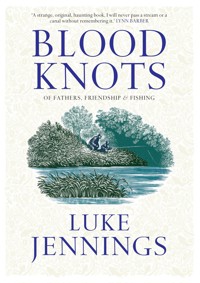
SHORTLISTED FOR THE 2010 BBC SAMUEL JOHNSON PRIZE SHORTLISTED FOR THE 2010 WILLIAM HILL SPORTS BOOK OF YEAR As a child in the 1960s, Luke Jennings was fascinated by the rivers and lakes around his Sussex home. Beneath their surfaces, it seemed to him, waited alien and mysterious worlds. With library books as his guide, he applied himself to the task of learning to fish. His progress was slow, and for years he caught nothing. But then a series of teachers presented themselves, including an inspirational young intelligence officer, from whom he learnt stealth, deception and the art of the dry fly. So began an enlightening but often dark-shadowed journey of discovery. It would lead to bright streams and wild country, but would end with his mentor's capture, torture and execution by the IRA. Blood Knots is about angling, about great fish caught and lost, but it is also about friendship, honour and coming of age. As an adult Jennings has sought out lost and secretive waterways, probing waters 'as deep as England' at dead of night in search of giant pike. The quest, as always, is for more than the living quarry. For only by searching far beneath the surface, Jennings suggests in this most moving and thought-provoking of memoirs, can you connect with your own deep history.
Das E-Book können Sie in Legimi-Apps oder einer beliebigen App lesen, die das folgende Format unterstützen:
Veröffentlichungsjahr: 2010
Ähnliche


















Copyright
First published in hardback and export and airside trade paperback in Great Britain in 2010 by Atlantic Books, an imprint of Grove Atlantic Ltd.
Copyright © Luke Jennings 2010
The moral right of Luke Jennings to be identified as the author of this work has been asserted by him in accordance with the Copyright,Designs and Patents Act of 1988.
All rights reserved. No part of this publication may be reproduced, stored in a retrieval system, or transmitted in any form or by any means, electronic, mechanical, photocopying, recording, or otherwise, without the prior permission of both the copyright owner and the above publisher of this book.
The author and publisher would gratefully like to acknowledge the following for permission to quote from copyrighted material: ‘Burnt Norton’ from ‘Four Quartets’ in Collected Poems 1909–1962 by T.S. Eliot, T.S. Eliot ©1944, reproduced by permission of Faber & Faber for the author; ‘The Pike’ in Collected Poems of Ted Hughes by Ted Hughes, Ted Hughes ©1960, reproduced by permission of Faber & Faber for the author; A River Runs Through It by Norman McLean, ©1976 by The University of Chicago, reproduced by permission of The University of Chicago Press.
Every effort has been made to trace or contact all copyright holders. The publishers will be pleased to make good any omissions or rectify any mistakes brought to their attention at the earliest opportunity.
Atlantic Books
An imprint of Grove Atlantic Ltd
Ormond House
26–27 Boswell Street
London
WC1N 3JZ
www.atlantic-books.co.uk
First eBook Edition: January 2010
ISBN: 978-1-848-87748-1
Contents
Cover
Copyright
Chapter One
Chapter Two
Chapter Three
Chapter Four
Chapter Five
Chapter Six
Chapter Seven
Chapter Eight
Chapter Nine
Chapter Ten
Chapter Eleven
Chapter Twelve
Chapter Thirteen
Chapter Fourteen
Chapter Fifteen
Chapter Sixteen
Chapter Seventeen
Chapter Eighteen
Chapter Nineteen
Chapter Twenty
Acknowledgements
To Nicky, Basil, Rafe and Laura, as always
ONE
BY CLOSING TIME THERE’S NOT MUCH TRAFFIC GOING PAST the King’s Cross goods yards; perhaps it’s too late at night, or too close to Christmas. You can hear the distant rumble of the cars on the Euston Road, but in the yards it’s quiet. And very cold.
To get to the canal you have to duck underneath an advertising hoarding and push open an iron gate; although this used to be padlocked, someone’s taken a pair of bolt-cutters to it and now it just needs a good shove. Beyond it there’s a railway maintenance supply area piled with concrete railway sleepers, rusted steel reinforcing rods and rectangles of welded wire mesh. Overlooking this are two low sheds. A pyramid of ceramic powerline insulators stands outside one of these and beside it a couple of figures are bowed over a flickering lighter. The tiny flame dies as I pass and then rekindles. There may be other people that I can’t see. Some of the yard is lit by the sodium glare of the lights on Goods Way, whilst most of it is black shadow.
At the top of the yard there’s the sharp smell of fox shit. The second gate’s hard to see, concealed behind ragged bushes of sycamore and wild lilac, but I know it’s there, just as I know to avoid the razor wire that loops above it. The gate swings open. In front of me, flat and metallic, is the canal, reflecting the Mars-red glow of the city. I stare at it for a moment, my breath vaporizing, and wonder whether to fish right here. It’s deep at this point, a great tank of water held between banks of Victorian brick. Opposite me, on the far bank, is the dark mass of a disused warehouse, rusted bars guarding its long-broken windows. At its base, as if awaiting collection from the towpath, stands an old spin-dryer. Everything about the place suggests neglect. And big pike thrive on neglect.
However, it’s not where I’ve come to fish. I’ve come to fish downstream of here, in a place I’ve been tipped off about. My source is Dejohn. Most fishermen will tell you anything, just for the hell and the geniality of it, but Dejohn’s information is usually good. Aged fourteen and a habitual truant, he knows every inch of this stretch. We’re not friends, exactly, but we talk.
I saw him a week ago at the Vale of Health Pond on Hampstead Heath. It was a Saturday afternoon, and the light was going. Dejohn had caught a small rudd and was using it as live-bait, illegally but excitingly drifting it across the pond beneath a fluorescent yellow float in the hope of enticing a pike. We swapped stories as usual and I told him that I’d heard that someone had landed half a dozen jack-pike weighing up to six pounds from a barge on the Kingsland Basin in de Beauvoir Town. Dejohn mused on this for a moment and then said that he’d heard – second-hand, but he trusted the source – about some bloke who’d been drinking in the Pentonville Road and at closing time, well pissed up, had decided to go fishing. So he’d hauled his gear out of the van, dragged it to the canal, set himself up with a dead-bait rig, and gone to sleep in his chair. At 3 a.m. he’d woken up to find line running off his reel, and had struck into a big fish. When he felt the weight of it, Dejohn said – and the dead, dour resistance of a really big pike is nothing like the angry jagging of a middleweight fish – the hairs had gone up on the back of his neck. After a minute or so, during which the pike moved unstoppably upstream, the wire trace gave way and the guy was left there on the towpath, shaking like a leaf.
Now of course this story has all the elements of the classic pike myth. It’s hearsay, it’s uncheckable, and it involves a monster. But to me it has the ring of possibility, being chaotic and unheroic, as these things often are. And Dejohn has been specific as to the location. Specific to the nearest yard. I move carefully downstream, watching my step in the near-darkness, past dim clumps of dead nettles and through a piss-smelling underpass. Distantly, there’s the whisper of a sluice and the sound of swearing. It’s a girl’s voice, probably one of the teenage prostitutes who bring their punters down to the towpath – a cheaper if colder place to turn a trick than the local hotels.
I’m out of the underpass now. Above me, against the dull red of the sky, stand the skeletal outlines of the St Pancras gasworks. Soon, my rod and tackle bags bumping against me as I walk, I come to a low bridge and push through trailing brambles into the tunnel. I can see nothing in the darkness except the faint red semi-circle of the exit, but there’s an echoing drip and the stone slabs are greasy beneath my feet. When a truck passes overhead with a booming shudder the drips fall faster.
At the far end, as I step out into the ambient light, the towpath and the canal widen. At my back, behind galvanized-steel security fencing and a ragged thicket of wild buddleia, is some kind of electrical installation. A steel sign on the fencing warns of power-grid cables beneath the towpath. In front of me is a long oblong of water, perhaps twenty feet across. Its surface rocks like molten copper. There is no far bank, just a high wall of mossy brick, weeping with damp. As I lower my gear to the paving stones, the cold immediately begins to fold around me. This is the place.
I set up quickly, keen to get my hands back into my gloves. I’m using an old fibreglass spinning-rod by Rudge of Redditch, heavy by today’s standards but pretty much unbreakable. The reel, battered but well balanced, is an Aerial-style centre-pin. The baits are frozen sprats, mounted by a single treble-hook to wire traces. Pen-torch in mouth, I knot a trace to the fifteen-pound breaking-strain monofilament. A small coffin-lead goes between line and trace, to hold the bait to the bottom. It’s the most straightforward rig possible. You don’t want to get elaborate in the dark.
A final check. The red bulb of the pen-torch is bright enough to inspect the knots and swivels, but doesn’t knock out my night vision. The landing net stands within reach against the bridge. The rod-rest is jammed securely into a crack between the glazed bricks at the towpath’s edge. Stripping half a dozen yards of line from the reel, I send the sprat looping into the darkness. There is the faintest of splashes and I sense the coffin-lead sinking deeper and deeper, before, with a tiny slackening, it touches bottom. I reel in until the line is tight, engage the ratchet, lay the rod in the rest and sit down on my folding stool. Incline my back against the cold brickwork of the bridge. Wait.
To begin with, as always, I imagine how it will be. The twitch of the line at my index finger, the slow tick of the centre-pin’s ratchet, the shudder of the rod as the fish runs. If it’s big, I’ll have a problem. The bottom of the canal is a catacomb of old bikes, shopping trolleys and other detritus. The pike will know every twist and turn, and if given an inch of line will bore down into the maze and smash up my tackle. I’ll never even see it. And at the very least I’ll want to see it, because there’s something elemental in the first sight of a pike.
One overcast autumn morning I hooked one on the pond called Red Arches, on Hampstead Heath. A boy walking a dog saw the rod bucking in my hands and wandered up to watch. The fish kicked deep, going for the weed roots, but finally I brought it up. The water was coloured from the rain, so at first all that was visible was a dark shadow, but gradually you could make out the long back, the rapacious jaw, the slow fanning of the pectoral fins. When I had landed and unhooked it I held it up for a moment. River pike are olive-green, the colour of stones flecked with sunlight, but this was a deep-water fish, as dark and grim as old armour. Eyeing its teeth, meeting its unflinching gaze, the boy backed away.
‘Jesus,’ he breathed. ‘What is that?’
I told him. And as I slid it back into the water I added that it wasn’t particularly big, as they went. That there were pike there three times its size.
‘Jesus,’ he repeated, looking around him as if seeing the city for the first time.
As to the shape and proportion of this great devourer, the figure of his body is very long, his back broad, and almost square, equal to the lowest fins: his head is lean and very bony, which bones in his head, some have resembled to things of mysterious consequence; one of which they commonly compare to the cross, another to the spear, three others to the bloody nails which were the instruments of our Saviour’s passions. (Robert Nobbes, The Complete Troller, 1682)
The cold hardens, and the first currents of wind come nosing down the canal from the east, burring the water’s surface like an iron file. A few yards away, on the bridge, an occasional car passes, as if in another dimension. My world has contracted to a box of darkness: to the walls, the towpath and the black of the water. As always, there’s the temptation to wind in the bait a little, to check that it’s OK, but that way madness lies, because you’ll never really know what’s happening down there.
Nor would you want to, because in an over-illuminated world, a world whose dark corners are in constant retreat from the remorseless, banal march of progress, this not knowing is a thing to be valued and enjoyed. It may be that your hooks are caught in the rusting spokes of a bicycle wheel, that your bait has already been stripped from the hook by Chinese mitten-crabs, but this is the nature of fishing. The odds are almost overwhelmingly against you and that is how you like it. All that you can do is offer your bait to the water, empty your mind, and reach for your thermos, your hip flask and whatever other comforting poisons you’ve brought with you.
In other words, you must acknowledge the ritual nature of what you’re doing. If a butterfly beats its wings in the Caribbean, they say, this can set in train a series of events culminating in a hurricane in the Pacific. Students of a post-modern form of occultism known as Chaos Magic take the idea further, suggesting that, under the proper conditions, this Butterfly Effect can be harnessed for wish-fulfilment. The technique involves a ritual consignment of the wish to the elements and an intense visualization of the required outcome. The dynamics of chaos will do the rest.
In the past, these ritual actions were often accompanied by invocations. One thought to be particularly effective was devised by the Elizabethan mage John Dee. It’s written in the Enochian language, which, Dee claimed, was revealed to him by angels, with whom he and his fellow magician Edward Kelley regularly conversed. Usefully, Dee kept records of these exchanges, and a century later, in 1659, Meric Casaubon collected and published them under the title A True and Faithful Relation of What Passed for Many Years between Dr John Dee and Some Spirits. The book is in the British Library, a few hundred yards from where I’m fishing, and was the basis for the system of high ritual magic developed by the twentieth-century occultist Aleister Crowley for the Order of the Golden Dawn, the secret hermetic society of which he was a member. John Dee’s invocation for wish-fulfilment ended with the following words:
SA CHAOS ANGELARD HARG AZIAGIAR.
OD IONAS.
(Into chaos the wish is cast. May it be harvested.)
You could try this when fishing: it certainly echoes every angler’s intention. Some occultists favour adding to the invocation the mantra, Zarzas Zarzas Nastana Zarzas. These words, which are beyond translation, are said to summon Choronzon, the baleful Watcher of the Abyss. Crowley, who claimed to have raised Choronzon in the Algerian desert in 1909 (and to have terrified himself and his companion half witless in the process), advises against this. The wise angler will heed his counsel. Specimen coarse fish are one thing, the Dark Lord of Entropy quite another.
As it happens, there’s a tenuous connection between Crowley and my family. In 1903, having met her just twenty-four hours earlier at a Scottish spa, Crowley absconded with Rose Kelly, the sister of the painter Gerald Kelly, and married her the same day. Furious, Kelly determined that the marriage be annulled. He knew Crowley well; the two men had met at Cambridge a few years earlier and were both marauding sexual adventurers. They had probably shared lovers in Paris the year before and may even have been lovers themselves (in letters to Kelly, Crowley sometimes signed himself Maud, although this in itself doesn’t prove anything. Rod Stewart and Elton John used to call each other Sharon and Phyllis).
It didn’t take a genius to guess that the Crowleys’ marriage wasn’t going to survive. The couple were divorced six years later in the wake of Crowley’s persistent infidelity and cruelty, and Rose would eventually die an alcoholic. During these upsetting times Kelly was befriended and counselled by Harnett Ellison Jennings, my great-grandfather, then the vicar of Dulwich. Perhaps it was out of gratitude that Kelly painted a fine, sombre, life-sized portrait of the Reverend Harnett robed as a Doctor of Divinity. We have it still.
In fact, Rose and Crowley were not completely incompatible. On their honeymoon they went to Ceylon, as it was then named, where Crowley took up shooting. Having discovered that the island’s giant fruit bats were renowned for their soft belly fur, he decided to try and kill enough of them to make himself a waistcoat and Rose a hat. With his first shot, taken from a lakeside punt, a wounded bat fell on Rose. The experience had a profound effect on her and that night Crowley was awakened by a high-pitched squeaking. Lighting a candle, he found his wife hanging naked from the frame of the mosquito net. No one could accuse her of failing to get into the spirit of things.
We’re drifting here, as you often do when fishing. Half of you is tensely expectant, while half of you enters a zone of no time at all. The question is: what does the angler wish for when he casts? What, as the chaos people might put it, is the willed endpoint of the working? On the surface, the answer appears simple: to catch a fish. You want to deceive a wild creature, take it from its element, marvel over it and return it to the wild. But that’s only part of it – what you might call the ego element. The living, wriggling proof of your skill and cunning. Proof that, in the right circumstances, you can get one over the natural world.
For a time, that’s what I thought it was all about. Success or failure. Statistics. The numbers game. The late Bernard Venables, author of the classic Mr Crabtree fishing books, used to say that there are three stages to the angler’s evolution. To begin with, as a child, you just want to catch fish – any fish. Then you move to the stage where you want to catch big fish. And finally, with nothing left to prove, you reach a place where it’s the manner of the catch that counts, the rigour and challenge of it, at which point the whole thing takes on an intellectual and perhaps even a philosophical cast. I tried out this theory on a pike-angling friend of mine, the rock guitarist René Berg. ‘It’s like with women, then?’ he said thoughtfully.
We agreed that there was truth in the three-stage theory, but not the whole truth. The ego thing is certainly important. When I was a boy, and you stayed in a pub or hotel that had trout fishing attached to it, it was conventional to display the day’s catch on a salver in the hall. It would have taken the Dalai Lama to ignore the competitive undercurrent. No one went so far as to add his name, but by dinnertime everyone knew who had caught what, and if you had laid out a decent fish you could expect a quiet ‘Well done, old boy!’ from the major as you sat down to the Brown Windsor soup.
Of course, most fishermen soon progress beyond the need to prove themselves and the desire to compile lists of statistics. Most soon realize that there are ‘easy’ fish, like small roach and perch, and subtle, challenging fish like carp or barbel. However, there is something fundamental beyond which the lifelong angler never quite progresses. Something for which the three-stage theory makes no allowances (although Venables himself, as his writing indirectly makes clear, was well aware of it). And that’s what happens when you hook a big fish. A pike, especially.
The best big pike waters have a numinous, forbidding air. Cold, reed-fringed East Anglian meres. Desolate Irish loughs. Dark, secretive waters ‘as deep as England’, as Ted Hughes puts it. You feel that you’re trespassing, that you’re violating some natural law just by being there. Certain stretches of London waterways like the Regent’s Canal and the River Lea fall into this category. These silent conduits barely figure in most local people’s lives. As the years have passed they’ve become invisible, walled off from residential areas and the footpaths of commerce as if they present a danger. And perhaps they do: what could be more fatal to the garishly hyped-up business of consumption than, like a memento mori, a sudden glimpse of black water, sliding past as silent as the Styx? I will be here when your lifestyle accessories are landfill, such a vision promises. I will be here when the music ends.
For the fisherman, it’s otherwise. For the fisherman, slipping behind the hoardings and picking his way over the vehicle scrap to the water’s edge, it’s like stepping into another world, at once familiar and resonantly strange. The notion of death is not absent there – anywhere you can cast a line, you can hear the whisper of Poussin’s Et in Arcadia Ego – but then there’s more than a touch of the gothic in most urban anglers, an appreciation that certain things are best illuminated by darkness.
Hidden from the public gaze, transfigured by changing circumstance, London’s waterways have been absorbed into an alternate, morbid geography. An interzone where past and present have become compacted, and the wild and the man-made have assumed a new relationship. That some people are drawn to these places and that others are deeply wary of them is understandable. Since 1953, the year of my birth, there have been more than a dozen officially recorded murders on London towpaths. At night, with their dank concrete and rusting ironwork, they’re the domain of fly-tippers, graffiti taggers, drug dealers, pimps and drunks. If you’re fishing there, you have to watch yourself.
Even so, it’s worth it. Take nocturnal possession of fifty feet of canal, tackle up for pike and sooner or later – not on your first visit, perhaps, or your second, but eventually – it will happen. The line will start to trickle, inch by cautious inch, from your reel. If you’ve got it set to ratchet, you will hear a click, and then another and another, and as you feel the line creep over the back of your hand, a kind of dread will rise through your body. Somewhere out there, deep down, something is moving.
You sweep up the rod and strike, there’s a hard, angry swirl, and you’re connected. Not to a fish, at that moment, but to something much less resolved. To nature itself. Nature as the source of the crocodile grin, the bloody cycle, the pitiless will to power. The experience, in those first brief moments, is demonic. The heart pounds and you feel an icy vacuum expanding inside you. And then, with a fierce thrill, you see the fish in the torchlight – the long flank and jaw, the cold flash of the eye, the furious working of the fins – and what follows is the physical, practical business of landing it. There’s satisfaction in these later stages, of course, but it’s those first heart-in-mouth seconds that you keep going back for. For the moment when anything is possible. When it might not be a fish at all.
The cold hardens. And staring into the dark water, its surface now the faint sodium orange of the sky, I imagine lean, predatory shadows moving between the brickwork walls as if patrolling a silent enfilade of rooms. Beneath them, a carpet of silt softens the forms of discarded household appliances, ranged like the prizes on some half-remembered TV quiz show. The image connects with a dream I’ve had, at intervals, ever since I was a child, in which I’m walking the streets of a deserted, once-grand city. As so often in dreams, it’s night and day at the same time, and climbing the steps to one of the mansions at the roadside I find myself proceeding through a succession of halls dominated by enigmatic monuments. In steel, or perhaps black marble, these have a futuristic, fascistic appearance. Eventually, and with an overpowering sense of desolation, I arrive at a flight of stone steps lapped by waves. Before me is a vast inland sea, its waters extending to the limits of my vision.
It was with a strong sense of recognition that I first read James Thomson’s poem ‘The City of Dreadful Night’, in which the narrator walks the streets of a necropolis – a ‘Venice of the Black Sea’ – past ‘ranged mansions dark and still as tombs’.
The city is not ruinous, although
Great ruins of an unremembered past,
With others of a few short years ago
More sad, are found within its precincts vast…
There are places, invariably near bodies of water, where that sense of an unremembered past is particularly strong. Where you turn a corner and know for certain that you’ve been there before. Fishing, at such times, is an almost wholly symbolic activity, and to see the pluck and twitch of your line in the current is to know a very particular anticipation. That somehow, in the connection with the invisible forms below, you’ll connect with your own deep history.




