


Erhalten Sie Zugang zu diesem und mehr als 300000 Büchern ab EUR 5,99 monatlich.
- Herausgeber: Parthian Books
- Kategorie: Sachliteratur, Reportagen, Biografien
- Sprache: Englisch
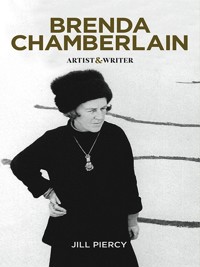
The first full-length biography of Brenda Chamberlain chronicles the life of an artist and writer whose work was strongly affected by the places she lived, most famously Bardsey Island and the Greek island of Hydra. Brenda Chamberlain lived a life of artistic engagement with the world. She published a compelling body of literary work and held solo exhibitions in London and Wales, while her work was shown in over thirty group shows. Her brilliance was mirrored by the journey of her personal life, including marriage to fellow artist and Royal Academy student John Petts, the long relationship with the Frenchman Jean Van der Bijl, the life-long friendship with the German aristocrat Karl von Laer and her eventual journey to Hydra where she lived for many years before returning to Bangor, Wales. Jill Piercy draws upon extensive research gathered from public and private collections and from interviews with Chamberlain's friends in Britain, Germany and Greece.
Sie lesen das E-Book in den Legimi-Apps auf:
Seitenzahl: 476
Veröffentlichungsjahr: 2014
Das E-Book (TTS) können Sie hören im Abo „Legimi Premium” in Legimi-Apps auf:
Ähnliche



















Contents
Title Page
Preface
Introduction
1. The Anchorage 1912-29
2. Art and Art 1930-34
3. The House on the Mountain, Tŷ’r Mynydd 1935-38
4. The Caseg Press 1939-44
5. Across Deep Water 1944-47
6. The Prolific Years 1947-52
7. The German Waves and the Green Heart 1952-58
8. The Eye of the Sea 1959-62
9. The Sound of the Ocean Follows Me 1963-64
10. This Island Burns Me 1964-65
11. Love in a Private Garden 1965-67
12. The Tide Turns 1967-68
13. Alone she faces darkness 1968-69
14. Waiting for the Wingbeat 1970-71
Select Bibliography
Acknowledgements
Illustrations
Copyright
Brenda Chamberlain
ARTIST AND WRITER
Jill Piercy
Preface
Although I never met her, Brenda Chamberlain has been a part of my life for a long time. It was 1972 when I first came across her work while I was searching for a topic for my final year thesis at Aberystwyth University. Shelagh Hourahane, my Fine Art History tutor suggested I do some original research and select a Wales based artist. She gave me a box full of exhibition catalogues to go through and I was immediately drawn by Brenda Chamberlain’s ‘Self Portrait on Garnedd Dafydd’ from the touring exhibition ‘Two Painters – Brenda Chamberlain and Ernest Zobole’ in 1963.
Over the following years, I found myself continually meeting friends of hers and recognising her paintings in people’s houses. The more I discovered about her, the more I became intrigued about her life and work and decided that there was a fascinating story needing to be gathered and shared with others.
In search of the facts, I have found myself in some strange and wonderful places and have met some warm and fascinating people, all of whom in their different ways have willingly shared their memories of Brenda with me. I have travelled to Bardsey Island, Bangor and Llanllechid, all over England and Wales, Germany, Scotland and the Greek island of Ydra. I have based this biography on a vast amount of handwritten material (letters and notebooks), in both public and private hands, on material published and interviews with friends and family.
While some of the chapter headings are descriptive, the rest are taken from Brenda Chamberlain’s own writings.
Key to my research has been the archive of her work at the National Library of Wales, Aberystwyth where many of her manuscripts, sketchbooks, paintings and drawings have been deposited by friends and family. For anyone wishing to explore her work further, this is the best place to begin.
Sadly many of the people I interviewed are no longer with us but I would like to publicly thank all the many individuals and institutions who have helped me along my way especially the following:
Gwynne Brown of the Tegfryn Art Gallery, The Revd William Burman, Alan Clodd, Anthony Conran, Maurice and Anne Cooke, The Daniel family, Mr & Mrs Frank Dahn, Halim El-Dabh and David Badagnani, Hywel Ellis, Lindsey Evans, Ernest & Christine Evans, Nellie Evans, Olwen Foreman, Kaye Gimpel of Gimpel Fils Gallery, Mary Grierson, Elis Gwyn Jones, Peter Jones, Kitty Idwal Jones, Richard Griffiths, Raymond Garlick, Margaret Body of Hodder & Stoughton, Douglas B. Hague, Kate Holman, Shelagh Hourahane, Jonah Jones and Judith Maro, Dr Glyn Jones, Mary Elen Jones, Anna Elwyn-Jones, Esmé Kirby, Eileen and Ravinder Jasser, Dr Karl von Laer & Grita Maria, Otto Justus von Laer, Varvara & Popi Lembessi, Peter Lockyer, Marios Loizides, Peter Lord, Gavrick Losey, Dick Loxton, David Lyn, Gweno Lewis, Roland Matthias, Alan McPherson, Roger Maybank, Prof. Clement & Sheila Mundle, Donald Moore, Susan Mackay, Aidan McFarlane, John Petts, Vasilis Politis, I.D. Powell, Alan Proctor, Janette Read, Joan Rees, Dr. Martin Richards, Dr Michael Senior, Barbara Stafford, Harold Taylor, Jeremy Theopholus, Dafydd Thomas, Dorothy Tutin, Jean Ware, John Webster, Huw Wheldon, Nerys Wheldon, Kyffin Williams, Mr & Mrs Ieuan Williams Hughes.
With especial thanks to the staff of the National Library of Wales, British Library, Bangor University, Gwynedd Archives & Museum Service, the Estate of Brenda Chamberlain, Dr Ceridwen Lloyd Morgan for her encouragement and attention to detail and the staff and editors at Parthian. The author wishes to acknowledge the award of a Writers Bursery from Literature Wales for the purpose of completing this book.
Every effort has been made to trace copyright holders and to obtain permission to reproduce images and text contained in this book. Any oversights will be amended in subsequent editions.
Introduction
ForBrenda Chamberlain, life was an adventure that she felt impelled to record in minute detail in words and images in a wide variety of styles. She was primarily a writer of prose and poetry, a painter, journal writer and prolific writer of letters. She enjoyed collaborating with others and worked with a dancer, a musician, other poets and performers to produce multimedia work at different times in her life.
Although acknowledged as a successful artist and writer during her lifetime, Brenda Chamberlain’s talent has been relatively unrecognised since her death in 1971. Most of her work is now unknown as the majority of her art work is in private collections and much of her written work is still unpublished.
She was born in Bangor, north Wales in 1912 and had a secure and happy childhood. From her mother, she gained the confidence to succeed as a female in a man’s world and from her father, the love to explore and travel. Her mother, Elsie, was a dominant force in the household as her husband, Francis, was often abroad with his work – initially importing wood to Britain and later as an inspector of bridges for the railway. Elsie was a committee person, a public speaker and later Mayor of Bangor who encouraged Brenda and her younger brother, Neville, to follow their dreams.
By the age of six, Brenda Chamberlain had decided she wanted to be an artist and a writer and like many strong minded individuals, nothing could dissuade her from her ambition. Aged fifteen, while still at school, she was invited to join three of her friends to work on a hand-written magazine they had been producing. Initially drawn together by a love of hill-walking, the girls took turns in editing the magazine which included accounts of their walks, prose, poetry, handy hints and drawings. It was the first time Brenda had considered combining her interest in writing and drawing together and it was to become a form she explored throughout her life.
At times she kept her writing and visual images separate but she was always seeking to find different ways to combine her words and images together and in three of her books she managed to give the two creative forms equal importance but it was often a struggle:
Emotionally, I was always tempted to drop the writing and concentrate on the painting, because, for some unknown reason, writing has always been for me an unhappy activity; while painting almost invariably makes me happy. But however hard I tried to discipline myself, sooner or later the other form would take over, dominate entirely for a time, and then swing back again.1
Although she travelled widely and lived in many places, Brenda’s life began and ended in Bangor. It was the centre from which she escaped and the safe anchorage to which she often returned. It meant a great deal to her but she rarely wrote about it or painted it. Her mother and her friends gave her support by buying her work and giving her places to stay when she returned home and she kept in touch with them with frequent conversational letters.
Brenda was always an adventurer and an explorer. She would not hesitate to climb a mountain in plimsoll shoes or walk ten miles to visit a friend and she would leap at opportunities which arose without a second thought. Having decided to apply to study art at the Royal Academy Schools in London, she travelled to Copenhagen where she stayed with a family for six months. There she discovered the work of Gauguin whose paintings would inspire her for many years.
She found the discipline of the Royal Academy stifling but it served her well as she became an excellent draughtsperson and her drawings have a spontaneity that is sometimes lost in her paintings. While in London, she met fellow artist John Petts. Together, they dreamt of an idyllic and romantic life living by their art and, after college, they moved to a cottage in Llanllechid in north Wales. Unusually for the 1930s, they lived together for a few years, before marrying in 1935. Locally they were known as ‘Joseph and Mary’ as often John would lead the pony with Brenda in the saddle.
Although their relationship ended after the Second World War, many more adventures were to follow. Brenda lived for over fifteen years on Bardsey Island off the Llŷn peninsula in north Wales and for five years on the Greek island of Hydra. She retained a lifelong relationship with her German friend, Karl von Laer who inspired a volume of poetry,The Green Heart, and she frequently visited Germany and France to see her friends and create new paintings and writing.
Brenda was continually reinventing herself and her work and would frequently recycle her poems and prose by changing words and titles so she could sell them to different publications. She was often inspired by news cuttings and photographs and would happily base a series of her paintings upon their images. She also took ideas from all manner of literary and visual material and frequently changed the style she worked from figurative to abstract and colourful to monochrome. There was no limit to what would inspire her.
It was a secret joke, never spoken of, that sometime I would write my autobiography, but it should be invented. The opening sentence had been in my mind for years. ‘I come from a long line of ladies’ maids.’
No, a better construction would be,
‘Coming as I do from a long line of ladies’ maids it is not surprising that…’ What a marvellous springboard onto a fictional life.2
This is of course not true as can be seen from her hand-written notes about her family3but this sums up Brenda Chamberlain’s way of portraying her life in a semi-fictional way. Although she wrote journals, she could not really be described as a keeper of diaries because she rarely kept consistent dated entries. Often she would begin writing one year and go back to the same journal many years later and make more undated entries and corrections. In addition, she used initials for people’s names, added fictional accounts to factual ones and left a confused trail of what may or may not have happened.
Sadly, when she returned to Bangor, after the Colonels’ Coup in Greece, she found it increasingly difficult to find new inspiration. She returned to earlier journals, writings and drawings and tried to reinvent them in the same fashion she had done throughout her life but she was unable to connect with any passion, became depressed and had a breakdown. Her line drawings in her last series clearly show her despair – figures trapped in jugs, bandaged heads and a woman’s head held down by pebbles. In the last few years of her life Brenda’s painting had gradually been stripped of colour and her poetry had become sparse and minimal. It was a sad but perhaps a natural end to a life which had overflowed with creativity and brought joy to many people.
1NLW MS 21501E, f.56.
2Rope of Vinesp. 56.
3Private collection; see pp. 6-7.
Chapter 1
The Anchorage 1912-29
On 17 March 1912, Brenda Irene Chamberlain was born in Bangor in the old county of Caernarvonshire (now part of Gwynedd) in north Wales. For centuries, Bangor had been a fairly quiet cathedral city. It remained a comparatively insular community until the end of the eighteenth century, when tours became popular with the English gentry and the wars with France precluded Continental travel. In the nineteenth century Thomas Telford’s improved road system along the north Wales coast from London to Holyhead was a major factor in opening up the area. There was a certain amount of industrial growth locally, especially in the commercial quarrying of slate from the hills south of Bangor, and in 1826, the opening of the Menai Suspension Bridge designed by Telford and the subsequent railway link in 1848 from Chester through Bangor to Holyhead allowed much easier access to the region, and much easier communication within it.
Apart from improving the transport of commercial goods to, from and within the area, the railway brought more visitors and tourists to the north Wales coast and the mountains of Snowdonia. Bangor began to gain a reputation as a holiday resort and the richer classes came to spend their summer months by the sea. New hotels were built to encourage them to stay and the newly formed Municipal Borough Council made the decision to construct a pier at Garth Point, sea-water baths and bathing huts, and also to improve the landing facilities at Garth to accommodate the passenger steamers which journeyed along the north Wales coast.
As well as developing its potential as a holiday resort, Bangor was establishing itself as a centre for education as it had been from the Middle Ages onwards. In 1862 Bangor Normal College was set up to train teachers and in 1884 a University College was established. By 1911, specially designed hostels were opened in the Upper Bangor area to house the growing number of students.
Brenda Chamberlain’s younger brother, Neville, once described the city of Bangor as ‘a snobby place – either you were college or you weren’t.’1The Chamberlains weren’t. It was the railway that had brought Brenda and Neville Chamberlain’s grandfather, Caesar Corlett Cooil to the area. He was a Permanent Way Inspector on the railways and had moved to Bangor from Liverpool when his daughter, Elsie, was five years old. Elsie was sent to Glanadda School, then on to Cae Top School and Cynffig Davies School in Menai Bridge. She later gained her teaching certificate at the Pupil Teachers’ Centre and taught at Vaynol and Cae Top primary schools. Her father became a member of Bangor Borough Council and Elsie began to take a lively interest in his work with the Council. As a teenager, her ambition was to see her father become Mayor of the city. Sadly this was not to be, as he retired from the council after ten years’ service in 1919, shortly after his two sons, Captain C.A. Cooil, a graduate of the University College in Bangor, and Jack, who was in the South Wales Borderers, both tragically died in the Great War.
Although her father’s involvement in local government ceased, Elsie’s interest grew and from the age of sixteen she began to help with various groups in Bangor. One of the greatest encouragements she had was from Mrs Price-White of a prominent family in Bangor, who told her, ‘You have the ability to do public work and it is your duty to serve the citizens of Bangor’. Elsie took this advice to heart and began to help with more committees and groups in the town, becoming a Sunday school teacher and a member of the choir at St. David’s church.2
In 1910 she married Francis Thomas Chamberlain at St. David’s Church, Bangor. He had been born at Hill Ridware near Lichfield on 7 June 1877, one of two sons. His father, Thomas, was a native of that area while his mother, Elizabeth, came from Ireland. Both Francis and his older brother, Richard, were proficient carpenters and experts in wood turning. During the early years of his marriage to Elsie Cooil, Francis spent a lot of time travelling abroad – to South Africa, the United States and Canada, arranging the import of wood to Britain. By all accounts, Francis Chamberlain was a quiet, intelligent man who enjoyed travelling and a challenging occupation.
The Chamberlains were living in Caernarvon Road, when, after two years of marriage, Brenda was born. Four years later, in 1916, their son Caesar Neville was born. Francis Chamberlain was in the United States when his son was born and on his return he decided to find work which would be based closer to home. He was encouraged by his father-in-law to work for the railways and in fact both Francis and his brother, Richard, became engineers, Richard at Crewe and Francis at Bangor. Although his work was now in Britain, Francis Chamberlain’s job still took him away from home a great deal and the dominant force in the children’s early life was their mother. As the children grew up they became ‘railway children’, joining their father on occasional Sundays for examination runs, special journeys and mysterious expeditions to faraway places. But for Brenda, trains were not really necessary; she had found a much easier way to travel – in her imagination. Africa was at the bottom of the garden, in a smelly water tank floating with scum. She boasted to her younger brother and
…lied and lied, about the heat, crocodiles, swamps. Alligators turned in strong smooth waters. My brother was sick with envy and admiration.3
At an early age, Brenda had discovered how much she enjoyed an audience. Perhaps this trait was inherited from her mother who had become very proficient as a public speaker. As the children grew up, Elsie Chamberlain became more involved with the WVS and was appointed vice-chairman for Wales of the women’s section of the British Legion, Secretary of the Citizens Advice Bureau, and also sat on numerous committees. She was developing into a woman of considerable power and energy in Bangor. She was strong and well-built, with a formidable though friendly nature. Although her husband, Francis, was quieter and more reserved, he too was a strong character and had great enthusiasm for his work and his interests in gardening and carpentry. He kept bees in the garden and from the honey Elsie made mead. It was a secure and happy childhood for Brenda and Neville. The stone and brick house in Caernarvon Road where they lived was the end of a terrace and the rear garden backed onto a bracken-covered hillside. As well as bees, they kept rabbits in the garden and they provided endless amusement for the children. Dolls held a transient interest for the young Brenda and soon the rabbits were dressed in the dolls’ clothes and taken for walks in the dolls’ pram. It was in the garden that Brenda first discovered her enjoyment of drawing. She used fragments of stone and chalk to scratch patterns on the slate fence which enclosed their garden, revelling in the different textures and shapes that she could create. Her mother encouraged her interest as she herself enjoyed drawing and was adept at embroidery and tapestry. Another of the children’s favourite occupations was to play with a toy theatre and they looked forward to the summer holidays when they could go and see plays by Shakespeare at the Memorial Theatre in Stratford-upon-Avon. Their mother’s sister, Margaret, lived in the town and the children usually spent a few weeks with her in the summer holidays.
Brenda’s first school was, she later wrote
kindergarten under the mothering eye of Bangor University College, where there was freedom to think, and try out one’s capacities… From those days, I remember no restraints at all, only encouragement to dress up, dance (it was the time of Rhythmic Movements), paint pictures on a real easel, write essays and poems.4
Brenda enjoyed these activities so much so that by the age of six she had decided to be a painter and writer when she grew up.
She was a lively, likeable child with a vivid imagination and loved to dream of faraway lands and people. Even as a child she desperately wanted to be recognised as an individual and she sought attention not by her academic achievements but by her appearance. She took to wearing her long hair with a band around the forehead – an unusual style amongst little girls in the early 1920s. When asked by her school friend, Jean Jones, why she wore it that way, Brenda said that she liked to imagine herself to be a Norwegian princess. Out of doors she begged her father to let her wear his old trilby which she pulled down over her ears. She loved dressing up and enjoyed the extra attention she received when she wore something just a little unusual. But in fact it was her size that really distinguished Brenda easily from her friends. She was not growing as fast as her contemporaries and sometimes this had its drawbacks, as she herself recalled:
There was a dangerous see-saw in the garden [at the school]. I was so much smaller and lighter than my friends that it was inevitable that I should be thrown from this. My arm was broken, and my comrades carried me indoors in an interesting faint. With a sense of high drama they did not speak but presented my body to a mistress while black and white spots swam before my eyes on a fading world.5
When Brenda moved on to what she referred to as Miss Mason’s School for girls (the local grammar school for girls), she found the discipline much firmer and her idiosyncratic taste in hairstyle and dress was not tolerated.
I suffered as amadchen[sic] in uniform: drill, prayers, ‘shirts must be buttoned to the neck on all occasions’, prayers, drill. I hated my shiny gym slip, the seat rubbed mirror-smooth from impatient shuffling. I suffered the indignity of being the most unteachable pupil in mathematics the school had ever known. Latin was an agony, since I longed in vain to be able to read Virgil with ease. Eventually the headmistress capitulated, allowing me to have my own timetable for the last year, English Literature, Art, French, English Language, Latin. The rest of my time was spent in the school library, where I was at peace with books, a thick carpet, and silence.6
Despite her application to her work and the help and coaching of her three schoolgirl friends, Jean Jones, Joy Witton Davies and Mary Grierson, Brenda passed only two subjects, Art and English, in the School Leaving Certificate exams.
These four girls were drawn together initially by their interest in fell-walking and they explored the local mountains on Saturdays and in the school holidays. When she was fifteen, Brenda was invited to join Jean, Joy and Mary in their magazine ventureTriod, which they had begun eight months earlier in April 1927. Jean Jones was the initiator of the magazine. She used to help her father, E.H. Jones, file contributions forThe Welsh Outlookwhich he edited, and was inspired to try her own hand as editor of a schoolgirl magazine. The entries were handwritten in covered exercise books and each girl took a turn to edit the magazine and copy out the articles in a neat hand. Amongst the fashion notes, gardening and household hints, puzzle pages, ‘Personals’, ‘Funny paragraphs’ and ‘Etiquette’ there was scope for a serial called ‘The Modern Girl’, for poems, short stories and drawings. In the third number ofTriod(Christmas, 1927) the editorial announced:
The Trefoyle has decided to admit another member into its magazine, by name, Brenda Chamberlain. This has of course upset the name of our magazine which is now calledThe Tetralogue. The contributions to this number of the oldTriod, are most of them very good, and next number we hope to have more illustrations than ever, and we are much obliged to our new member for her excellent drawings.
In a later section of this issue Brenda was described as ’a budding Royal Academist’. She contributed to the regular features, wrote poems and short stories and illustrated the magazines with coloured line drawings. The authors chose to be identified not by names but by initials: Jean was known as R.H.J.K., Joy as R.L.D., Mary as F.A. and Brenda as A.S.M.J. which stood for Anglo-Saxon-Mary-Jane, for no particular reason except that she liked the way it ran off the tongue.
InTetralogue3, Brenda wrote a poem called ‘The Old Witch in the Woods’ and an illustrated story called ‘The Feast of Wolves’. Her illustrations were well drawn and coloured with fine detail while her writing showed a youthful interest in myths and fairy stories, and although she was three years older than her fellow contributors, there was no obvious difference in maturity in her work at this stage. Brenda was editor of the fourth number ofTetralogue, written early in 1928, and again she contributed a poem and some prose. ‘The Birth of Song’ was a short story about a maiden singing in response to seeing the Sun-god, and her poem, ‘The Spirit of Shakespeare’ reflected on his presence in the town of Stratford ‘where’, wrote Brenda, ‘I love to read his plays/In the faint atmosphere of other days’.
The holidays which Brenda and her brother spent in Stratford-upon-Avon with their aunt and uncle were always very special and, as they grew up, they both developed a love of Shakespeare’s work. In a later notebook Brenda recalled one of their visits:
Idyllic afternoons in the backwaters among angry swans and inept punters on the Avon. My aunt walked up and down the punt fore-deck, in a cool lime-green silk and shady straw hat and pipe-clayed plimsoles [sic]. She dropped her pole in at exactly the right angle so as not to get water down her sleeve, so as not to over-run the pole: while we children sat paddling the turgid river, lost half in a haze of Midsummer Night’s Dream, half in anticipation of the picnic hamper to be opened on the bank beside a quiet pool of bulrushes and water hens. Home-made scones with home-made butter, cucumber sandwiches, the mouldy smell of the cushions. Brown, thin, damp triangular sandwiches. Anticipation of tennis in the evening on the side of the lawn, the humpy paddock, turkeys, over-emotional dogs.7
In her schoolgirl poem inTetralogue4, Brenda had tried to recapture this dreamlike feeling as she wrote about Shakespeare:
He haunts the shady lanes of Warwickshire
For that is where his spirit is most clear.
He loved these shady paths and stately trees
Waving their leafy branches in the breeze.
InTetralogue6 she wrote a poem, ‘Day’s End’ and a lively essay, ‘Modern Art and its Reception’ which advocated a fresh approach and an open mind when viewing Modern Art:
When we study a picture of the Modern School we must not only look at the object which the artist has painted, but also attempt to understand what he wishes to express.
It is a well-presented argument which is much more mature and sophisticated than any of her earlier contributions to the magazine. She concludes the article with the statement:
I suppose the Modern Artists will continue to be persecuted until many people with old-fashioned ideas cease to consider that everything old is good and everything new is bad.
This sixth and last of theTetraloguemagazines was completed in the summer holidays of 1928. There is no further written account of the girls’ activities until January 1930 when Mary Grierson decided to keep a record of their walks and explorations. Joy, Jean, Mary and Brenda still spent a lot of their time together at weekends and, in the holidays, exploring the local beauty spots. Brenda had still not grown very much and remained much smaller than her younger friends. As Jean Jones (later Jean Ware) recalled,
In our teens, I fear we all patronised her somewhat and teased her quite a lot, though as one would tease a little sister. She always seemed younger than us although she was the oldest of the group that went mountain climbing. Her nickname was ‘Piglet’, as to us she resembled that character inWinnie the Pooh. She had very short legs in relation to her long torso and had almost to run to keep up with the rest of us when walking as we were long-legged, but she was a splendid climber.8
Mary entitled her notebook ‘The Diary of Tramps’, and her first entry, on Friday, 10 January 1930 briefly described a short bicycle ride that Mary had taken with her friend, Marie Rowlands. On Saturday, 1 February, the first long walk was recorded, when Jean, Joy, Brenda and Mary went up the Nant Ffrancon Pass. The diary describes twenty walks undertaken between January and July of that year. The walks took the girls deep into Snowdonia and north onto the island of Anglesey. Sometimes choosing a combination of walking and travelling by bus or bicycle, they would travel up to thirty miles a day. Their treks were ambitious, often climbing up to the mountain peaks, and always seemed to incorporate the treat of a picnic lunch. Rain, ice or windy weather did not seem to deter them and Mary’s diary gives a delightful account of the girls’ love for Snowdonia.
The pattern of Brenda’s life was beginning to unfold: her love of walking in the mountains was now well established and already she was taking a serious interest in writing and drawing. She had decided to apply to the Royal Academy Schools to study art and she was drawing and painting as much as she could in order to improve her standard and prepare a portfolio of work. Although Brenda tried her hand at painting landscapes, she much preferred to draw and paint people. Jean Jones’s father was the first person Brenda attempted to draw ‘in depth’, as Jean later recalled:
She sat opposite him while he was writing an article and produced a good pencil likeness – she would be about fifteen. I was her first nude model, just before Brenda left school. I would be about fifteen and she about eighteen. I think she asked me as I was the only one of her close friends who had begun to grow bosoms. Her mother made her bedroom warm for me with an oil stove and I sat for her several times.9
Although Brenda’s parents had encouraged both their children to be creative, Brenda’s father was not happy to discover that his daughter was showing so much interest in art. He could foresee little prospect of it leading to a secure future career and tried his best to discourage her from applying to go to college to study art further. On the other hand, Brenda’s mother gave her every possible encouragement and often sat as a model for Brenda to paint. She was of the opinion that women had the right to follow any career they wished, as she had proved in her own choice of work. Following the success of the women’s suffrage movement in the first decade of the twentieth century and new opportunities brought by the Great War, women were now slowly being accepted into previously all-male spheres. Women really had to prove their worth in the male-dominated professions, and Mrs Chamberlain was no exception. When she took her seat on the Bangor Borough Council in 1930 she was only the second woman to have ever been elected. She represented the West Ward, was a staunch Socialist and showed great skills and enthusiasm in her commitment to improving health and living conditions in the area, particularly for those of the poorer classes.
Mrs Chamberlain tried to encourage Brenda to be as determined and single-minded about her own choice of career as she was herself and she was a great source of strength and encouragement to Brenda in these formative years. Brenda was intent on studying art but often Mrs Chamberlain worried how her dreamy and imaginative daughter would cope with the practicalities of life in a city as large as London. Having been brought up in a very secure home, Brenda had never had to fend for herself and had always relied heavily on her mother and friends for support and guidance. Brenda’s mother and indeed Bangor were to be her security, the safe anchorage where she sought shelter and support at frequent intervals throughout her life.
1In conversation with the author, 3 Sept. 1983.
2North Wales Chronicle, 14 Nov. 1941, p. 4.
3Brenda Chamberlain in Meic Stephens (ed.),Artists in Wales(Llandysul: Gomer, 1971), p. 45. [HenceforthAW].
4AW, p. 44.
5AW, pp. 44-5.
6AW, p. 45.
7Aberystwyth, National Library of Wales, NLW MS 21500E, f. 50.
8Jean Ware (néeJones, Mrs E.A. Hunt), letter to the author, 16 July 1984.
9Ibid.
Chapter 2
Art and Art 1930-34
Brenda’s schooldays ended on 30 July 1930. She was given her School Leaving Certificate and left Miss Mason’s School for Girls in Bangor. As her close friends were much younger than her, they stayed on, but her sadness at leaving them behind soon gave way to excitement when she heard that she could spend some months abroad before she applied for the Royal Academy Schools. Through a family friend, it was arranged for Brenda to live with a family in Copenhagen for six months. She was thrilled:
It was marvellous to be for the first time alone in a foreign land. I had so far never visited London. The smell of the sea lured me to the quaysides, where I wandered, sketchbook in hand, among tall wooden warehouses.1
Copenhagen provided a great contrast to Bangor architecturally and Brenda found it elegant and stylish. She stayed with two unmarried sisters, whom she would recall vividly forty years later:
The sisters had a brother, Captain Gabe, a sea captain, a sister-in-law who smoked cheroots, and several nephews. They lived at the other end of the town, in a fine house, where they gave majestic dinner parties. At this stretch of time, the dining-room seems to have been endless. It was formally decorated with flowers and silver vases, and Royal Copenhagen porcelain figures. It felt like dining on the high seas, with the bearded captain presiding at the head of the table. The snow and ice of a northern winter was [sic] remote behind the double windows. We sat in thin muslins, after dinner, feet on grospoint footstools, the hands of the ladies busy with fine embroidery.2
Copenhagen was by far the biggest town that Brenda had visited and she was excited by its open-air theatres, the Charlottenburg Palace and the splendid National-Romantic style Raadhus in the Town Hall Square. But the place that affected her the most was Glyptotek Ny Carlsberg Museum. It was the first modern museum she had visited and the first time she has seen so many twentieth-century paintings. In Wales, there were few public places to see paintings at all, and although exhibitions were occasionally held in one of the University halls, there was no permanent gallery in Bangor.
It was the work of Gauguin that particularly stimulated Brenda: ‘I knelt bemused at the feet of Gauguin’, she wrote.3She was amazed by the colour and vibrancy of his work painted on the roughest of sacking. Gauguin’s early work had been inspired by Pissarro and later by Émile Bernard’s technique of cloisonnism. This consisted of painting in flat areas of clear, bright colours as used in Japanese prints. These coloured forms were outlined in darker strong colours to intensify the shapes. The paintings affected her deeply and were to influence her work for the following twenty years.
When Brenda returned to Wales after her visit, she gathered the drawings and watercolours she had made in Copenhagen into a portfolio which she submitted to the Royal Academy Schools in Piccadilly. Much to her delight, in June 1931 she was accepted as a probationer for a three-month period. She moved to London in October of that year, living in a bed-sitting room in South Kensington.
Life as a probationer was difficult and insecure, second and third year students were autocratic, and one was nervous about making relationships which might have to be broken at the end of the three month period.4
To be able to draw all day and every day was a novelty to Brenda and she worked diligently throughout her three-month probation. To her great relief she was accepted as a student and was now able to study at the Royal Academy Schools for the next five years under the tuition of Sir Walter Russell, then Keeper of the Schools, and W.T. Monnington. Living in London in the early 1930s changed Brenda’s ideas about art. While the Royal Academy still clung to the classical traditions of Greece and Rome, the more adventurous of the London galleries were exhibiting contemporary painters from all over Europe. Since the First World War, the representational approach to art had been radically shaken up by the vibrant energy of Fauves, Cubists, German Expressionists and many other innovative groups of artists. Brenda found these new movements invigorating and stimulating. In contrast, she was finding the discipline of the formal training at the Royal Academy ‘academic to the ninth degree’.5Although a serious-minded student, Brenda was extremely unwilling to relinquish her individuality and sometimes her resistance to academic disciplines and teaching made her tutors despair. It was as ‘a melting pot for ideas and rebellion against the doctrines of the master’ that Brenda would remember the real value of her time at the Royal Academy.
During this period, Brenda’s work was being pulled in two directions: under the influence of her Royal Academy training, her current drawing echoed the draughtsmanship of Michelangelo, Leonardo and El Greco, but in spirit, it was Van Gogh and Gauguin who moved her deeply and whose influence was to be lasting. Brenda was also affected by the resurgence of the Neo-Romanticism which was prevalent in the early 1930s. Many artists were beginning to reject the complexity and sophistication of the urban, industrial developments and turn to the less populated countryside in order to lead a more simple and natural life. This philosophy suited Brenda well. At twenty years old, the tiny long-haired provincial girl felt rather overwhelmed by the bustle and competitive energy of London. Although she enjoyed the idea of the stimulus of the city, in reality she was lost in its manner and sophistication, and, like many of her contemporaries, Brenda felt the need to simplify her own living circumstances and return to her roots in Wales. At the end of her first year in London, Brenda looked forward eagerly to the long summer break when she would be able to walk amongst the mountains and see her friends once more.
Her friends, Mary, Jean and Joy, were still in Bangor, spending time between school and college, and so all four had time to meet and walk in the mountains together. However, in the summer of 1932, Brenda met Karl von Laer, a German boy of her own age, and she neglected her friends to spend time in his company. Karl was staying in Bangor for the summer with Jean’s family. Her father had arranged an exchange through the German Academic Bureau and Jean was going to stay with Karl’s family in Germany the following summer. Karl von Laer was a tall blond boy with bright blue eyes and was a law student at Königsberg. His family home was a small Baroque castle called Schlotheim in Thüringen, East Prussia.
Brenda and Karl instantly became friends. They had a mutual interest in painting and both loved poetry and walking in the mountains. Brenda was fascinated to hear about life in Germany and the other places that Karl had visited, and learned that Karl was ‘verloben’ – that a betrothal had been arranged with another girl of aristocratic birth. They enjoyed each other’s company enormously and soon became inseparable. Standing next to the tall German boy, Brenda, at four feet eleven inches, looked doll-like, which led to a lot of laughter and good-natured teasing from her friends. Brenda did not care at all. She felt as though she had found an older brother, a special friend with whom to share her love of Snowdonia. There was plenty of opportunity for Karl to see the mountains and on most days a group of the young people would go walking or climbing.
Twenty years later, Brenda wrote down her memories of the first of her many walks on the mountains with Karl. They were in a large group of school friends but soon Brenda and Karl were walking ahead engrossed in conversation.
Of what we were speaking I cannot now recall, only that we were absorbed by an exchange of ideas … we had just climbed a peak covered with huge pillars of rock. Where we now walked, the ground was level and covered with a resilient turf. K and I were brought to a standstill by a shout from the girls. ‘Look where you are walking. What a smell! Can’t you smell carrion?’ Our feet were among the half-rotted bones of a large skull: in places, the bones were white-bleached, the eye sockets were clean and empty, but traces of sun-baked flesh clung along the jaws.6
On many of their later walks the two were equally oblivious to all else around them. Brenda’s friend Jean recalled that Brenda and Karl
… often preferred to stay in a sheltered corner with their easels than go mountain climbing with the crowd of us with our brothers and friends. Once she invited him to go along with her up the mountains as she wanted to show him various things but they were not back till long after dark and my father had to tell her that she must not do that to him again as the German boy was his responsibility – she must be home by dark. He would not accept her excuse that she could see in the dark. Brenda could seldom see other people’s points of view if they did not coincide with her own, and she could not understand why he should worry.7
Brenda’s own memory of that walk with Karl was quite different:
There was one wonderful day when we escaped the others and went for a long walk to a mountain lake. I saw that day one of the most memorable sunsets of my life. Ah, it comes back to me slowly, the sunset over the lake. The memory is fresh and beautiful as if it had been taken out of tissue paper. We had looked at it upside down to get its full effect.8
She remembered nothing of upsetting Jean’s father or causing her own family worry. Although a kind person, Brenda could often be self-centred and oblivious to other people’s feelings. Frequently that summer, Brenda spent her evenings at Jean’s house where she would talk and read poetry out loud to Karl:
And every evening he always took me home, walking slowly… As we strolled, he talked of student life in East Prussia, of beer drinking, singing, duels. He had a duel to fight as soon as he got back to University. He would let me know the outcome. He told me of foreign countries, described the sensation of looking down into the crater of Etna …9
At the end of the summer Brenda had to return to London to continue her studies. Karl did not have to go back to Germany for another few weeks and promised to visit Brenda in London on his way home. One morning a few weeks later he arrived unexpectedly and they spent the day sightseeing and visiting galleries. In the evening they went to see a play at the Old Vic and afterwards, Brenda recalled, ‘we walked through half the night … we walked to prolong the time together. Next morning, we visited the Tower before going to Red Lion Wharf.’10
Karl was sailing to Amsterdam on a small Dutch cargo ship. It was a sad parting although Brenda remembered that they were shy with one another and neither of them showed any emotion. She stayed on the wharf until the ship started down river and passed under London Bridge. A week later, the first of many letters arrived from Karl von Laer. ‘It was only after he had gone back to Germany, in his first letter, that he had shown anything of what he had come to feel for me during the days of that student summer’, wrote Brenda in retrospect.11
After an exhilarating and happy summer, Brenda had to settle back into her studies at the Royal Academy. She enjoyed drawing and soon became immersed in her work. Many months were spent in dusty overheated life-drawing rooms and many more were spent drawing in the academic traditions from the casts of classical busts and statues. Apart from her studies, Brenda had a full social life in London, made regular visits to museums and art galleries and went to the theatre as often as she could afford. Money was scarce, though, and much of her spare time was spent in long discussions with her contemporaries, who came from all walks of life and included an ex-miner from the Durham coalfield and the debutante niece of a Prime Minister. Amongst her fellow students were William Scott, Mervyn Peake and Peter Scott.
During her time in the painting Schools Brenda met another fellow student, John Petts. He was two years younger than Brenda and had already studied at Hornsey College of Art and the Central School of Arts and Crafts before becoming a student at the Royal Academy Schools. Although born and brought up in North London, he had developed a love for Wales after his first visit as a twelve-year-old to a Boy Scout camp at Manorbier near Tenby. On that trip he had found the contrast to London quite startling, as he later recalled:
Here was land to rejoice in: castles reared on high mounds, mighty cliffs with the Atlantic rollers all a-thunder at their feet, St. Govan’s tiny prayer-cell wedged between the rocks, deep caves to explore, the cliff-top Hunter’s Leap to ogle at, the rock bastion of the Bridge of Wales, that mighty buttress rising from the depths of the frothing sea, and always the beauty of the many-tinted, tide-rolled stones smooth on the beaches, a harmony of soft colours never to be forgotten, and everywhere the majesty of rock.12
Perhaps coloured by his strong feelings for Wales, John found himself drawn to its countrymen too. Already at the Royal Academy he had made friends with a lively group from Wales:
There was tall Fred Janes from Swansea, his head full of theories. Bromfield Rees, his lean and studious friend from Llanelli, trying to paint like Braque, and the ubiquitous South Wales bonhomie was heightened by the frequent calling of black-bearded Mervyn Levy from the Royal College of Art, and a podgy, fag-ended young journalist in a cocky pork-pie hat and a dyed green shirt whose name was Dylan Thomas.13
But it was Brenda Chamberlain who really captured John’s attention.
I first became aware of Brenda as a rare and special person in the autumn of 1933, when I first became a student in the Painting School of the Royal Academy Schools. Down the long, dark corridor, under the galleries of Burlington House, peopled by lines of dusty ‘antiques’ – busts of classical sculpture – she walked lightly, like a small angel in a dream. In that murk she seemed to carry her own delicate light, a smile on her long face, her hair parted each side of the high forehead, falling in long fair waves to shoulder length. Hardly more than five feet high, she was also slight in build. Wearing a long white smock, belted at the waist, with a deep cape-collar, and walking softly in sandals along the stone flags of the corridor outside the studios, she seemed a special sort of dedicated nun.14
Their friendship quickly blossomed. In the summer of 1934 John and Brenda decided to spend their summer holidays together in north Wales and they rented a tiny shepherd’s cottage above Abergwyngregyn, about five miles from Bangor, in the mountains of Snowdonia. At the time, it was unheard of for an unmarried couple to live together openly and it was frowned upon by both the local community and Chamberlain’s family. Although Brenda’s father was totally against it, however, her mother helped her to make the arrangements to rent the cottage.
The cottage was called Hafod-y-Gelyn – ‘Summer Shelter from the Enemy’ – a name they both found full of portents. Brenda travelled on ahead and John joined her from London a few days later. His impressions of north Wales were vivid:
Truly, I shall never forget the first impact of that landscape. The train from Euston dropped me at Aber station, on the flatlands by the sea. Across the water rested the whaleback of Puffin Island, off the point of the wide Isle of Anglesey… The road led up into the hills above the wooded valley through which the river tumbled from the silver falls. Steadily I climbed up a steep side-track, leaving the trees behind, climbing to the open mountain with its tussocks of gorse and fine, sheep-bitten turf. The hills unfolded beyond: all was magically soaked in subtle greens and duns, patterned with grey rocks and screes, and all sang with the splendour of the clear light, and its voice was the cry of the distant sheep and the fall of water. My city eyes were astounded, and my heart was singing. Along the hill and there was the cottage, tucked under the slope like a lamb under her dam. Above it spread a wide poplar tree, surprising to see in such a tree-less place and there was Brenda smiling at the door. ‘The kettle’s boiling…’ she said. Sharing life with her was participating in a special sacrament.15
Life in the tiny shepherd’s cottage could not have been simpler: they slept on hay and cooked simple food on a fire fed by gorse twigs collected from the mountain hills. By day they walked the mountain ridges, sketching and painting and swimming in the rivers and lakes, completely absorbed in the land, in all the stones, rocks and crags. Through their art they struggled to express this vigour of the mountains. They walked so much on the mountain turf that it felt strange to them if their hobnailed boots touched the unyielding surface of the tarmac roads. That summer, life at Hafod-y-Gelyn was so very far removed from the glittering and complex world of the Bond Street galleries. For them both it was an idyll.
‘As I grew to know her’, wrote John, ‘it seemed that her whole small being was lit with pure delight, delight in the beauty and mystery of those aspects of the created world she loved, most especially the mountains of Eryri, the dramatic landscape of Snowdonia …’16Brenda was in the landscape she had known and loved since childhood, while for John it was a totally new experience. Unlike Brenda, he had spent much of his childhood indoors or in the environment of London and for the most part without the companionship of his contemporaries. As a child, he had a distorted spine and spent his early years lying flat either in bed or with his back strapped in the steel and leather of a spinal carriage. His body had strengthened by his teens, but by then he was used to his own company and spent a lot of time alone. Now, he found a great deal of pleasure in being out in the fresh mountain air, feeling fit and healthy, being able to paint and share his days in Brenda’s company.
John’s younger brother, Peter, came to stay with them while they were at Hafod-y-Gelyn. He was only eight, a late fourth child, small for his age and rather lonely. Like Brenda and John he was delighted to spend his holiday there and ran wild in the hillsides. He would happily disappear for hours exploring his secret worlds and favourite places. Often dressed only in a ceremonial loin cloth hung with tassels, he would run around the fields on his hands and knees, whistling and barking as he rounded up the sheep. He was full of wonder at all forms of nature: how plants grew, how animals moved, the way the sunlight fell on the mountains and he would stay silent, listen and observe. Brenda often sat with him. She found it easy to identify with children, as there was a part of her that did not want to grow up and face the harsher realities of the world. She yearned to have a child but according to her friends and John she was infertile and unable to have any of her own. Instead, she would always be delighted to have other people’s children to stay with her during holidays, although sad when they inevitably returned home. Brenda was a dreamer, a weaver of images inside her head. Although a happy, smiling person, enjoying laughter and life, she, like many artists, would withdraw to an inner world for a great part of her life, to draw upon her imagination, upon myths, memories and symbols for inspiration.
Brenda described Peter as ‘a strange child, quiet, unnaturally thin, intensely imaginative, and with beautiful eyes. They were so large, that one felt that he must be all eyes behind the flesh of his face’. It is conceivable that it was from her close observation of him that summer that she drew two of the characteristic features which were to recur in all the portrait painting she ever did. They were the dark almond-shaped eyes and the still, quiescent figure. The large dark eyes haunted Brenda long beyond Peter’s lifetime and were to appear over and over again in her portraits of both children and adults. Peter’s ability to be still and contemplative also moved Brenda deeply and her paintings and drawings try to express this mood. It was a theme that would run throughout her work. None of Brenda’s characters smile; they have a timeless, almost sad look, and are always composed in their surrounding and almost statuesque in their posture. It is their inner lives that she wants us to glimpse: the land of dreams and contemplation.
Later in that summer, a fellow student from London, Elizabeth Ouston, known as Betsan, also came to stay. Together they all enjoyed an idyllic summer, sleeping outdoors, bathing in the river and walking in the hills. Brenda was reluctant to leave, and as she needed to work on her entries to a number of competitions, she decided to stay on when John and Betsan returned to London in September. As winter approached and she had little money, she was forced to move back to her parents’ house in Bangor. She wrote frequently to ‘Johnny’ signing her letters ‘Swci’. She was not very happy there as she found it difficult to be in the same house as her father who hardly spoke to her.
Mother is a martyr. I would have simply walked out one afternoon and never come back. I could not say in the same house as a man who did not SEE me. He wants shaking & ducking and kicking in the pants.
I asked Mother the other day when she was posing for me, didn’t Daddy ever say she had lovely hair even when they were young? Good Heavens no, she said, he never said anything like that – But he did tell her a year after they were married that he had only married her to have someone look after his Mother.17
By the middle of October her paintings were crated up and sent on to London and Brenda travelled down soon after.
1AW, p. 45.
2AW, pp. 45-6.
3AW, p. 45.
4AW, p. 46.
5AW, p. 46.
6NLW MS 22493C, f. 213.
7Jean Ware, letter to the author, 16 July 1984.
8NLW MS 22493C, f. 214.
9Ibid., f. 213.
10Ibid., f. 215.
11Brenda Chamberlain,The Water Castle(London: Hodder & Stoughton, 1964), p. 15. [HenceforthWC].
12John Petts,Welsh Horizons(1983 Radio Wales Lecture,London: BBC Publications, 1984), p. 5.
13Petts,Welsh Horizons, p. 5.
14John Petts, letter to the author, Sept. 1983.
15Petts,Welsh Horizons, pp. 6-7.
16John Petts, letter to the author, Sept. 1983.
17Letter, Tues., 16 Oct. 1934, from Brenda Chamberlain to John Petts, NLW MS 23207F, f. 21.
Chapter 3
The House on the Mountain, Tŷ’r Mynydd 1935-38




