


Erhalten Sie Zugang zu diesem und mehr als 300000 Büchern ab EUR 5,99 monatlich.
- Herausgeber: The History Press
- Kategorie: Sachliteratur, Reportagen, Biografien
- Sprache: Englisch
Haworth and its moors are for ever linked with the name of Bronte, but they also have a fascination in their own right. Peggy Hewitt tells the story of the moors and of the people who have lived and worked there - people who are as much a product of their environment as the drystone walls and heather.
Sie lesen das E-Book in den Legimi-Apps auf:
Seitenzahl: 253
Veröffentlichungsjahr: 2004
Das E-Book (TTS) können Sie hören im Abo „Legimi Premium” in Legimi-Apps auf:
Ähnliche



















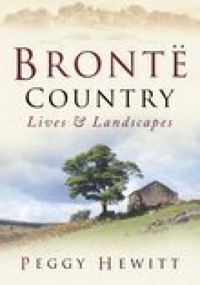
BRONTË
COUNTRY
Upper Ponden and the heights of Oakworth Moor seen from Delph Hill near the Alcomden Stones – a vast sweep of the Brontë Moors.
BRONTË
COUNTRY
Lives & Landscapes
PEGGY HEWITT
Foreword by Juliet Barker
with Photographs by Simon Warner
First published in 1985 under the title These Lonely Mountains by Springfield Books Ltd
This revised edition first published in 2004 by Sutton Publishing Limited
The History Press
The Mill, Brimscombe Port
Stroud, Gloucestershire, GL5 2QG
www.thehistorypress.co.uk
This ebook edition first published in 2013
All rights reserved
Copyright © Peggy Hewitt, 1985, 2004, 2013
Foreword © Juliet Barker, 2004, 2013
The right of Peggy Hewitt to be identified as the Author of this work has been asserted in accordance with the Copyright, Designs and Patents Act 1988.
This ebook is copyright material and must not be copied, reproduced, transferred, distributed, leased, licensed or publicly performed or used in any way except as specifically permitted in writing by the publishers, as allowed under the terms and conditions under which it was purchased or as strictly permitted by applicable copyright law. Any unauthorised distribution or use of this text may be a direct infringement of the author’s and publisher’s rights, and those responsible may be liable in law accordingly.
EPUB ISBN 978 0 7509 5425 9
Original typesetting by The History Press
Contents
Foreword by Juliet Barker
Acknowledgements
Introduction
1. Uproar in Haworth
2. Martha, the Professor and t’Free Schooil
3. Glory and Grief on the Brontë Moors
4. Lily Cove – Tragic Balloonist and Liberated Lady
5. Way of the Worth
6. Lament for the Brontë Bus
7. A Windmill at Newsholme
8. Coppin’-on at Ponden
9. Facts of Life and Death
10. Of Moles and Men
11. Old Timmy – Weaver and Legend (or When Tilda Returned Timmy’s Love Piece)
12. Quarries and Violins
13. Rahnd an’ Rahnd with Arthur
14. Portrait of Patrick
15. Wycoller
16. Incumbents and Trustees
17. Nature’s Gentleman
18. Stanbury and the School under the Sky
19. The Many Sides of Sir Isaac
20. Steam Up in the Worth Valley
21. Cool, Calm and Collected
22. Ponden People
23. Methodism in his Madness
24. The Company of Ghosts
‘Wuthering Heights’ – the old farmhouse of Top Withens, 1977.
I’ll walk where my own nature would be leading:
It vexes me to choose another guide:
Where the gray flocks in ferny glens are feeding;
Where the wild wind blows on the mountain side.
What have these lonely mountains worth revealing?
More glory and more grief than I can tell:
The earth that wakes one human heart to feeling
Can centre both the worlds of Heaven and Hell.
Emily Brontë
Foreword
When Charlotte Brontë wrote an introduction to her sister Emily’s novel, Wuthering Heights, she felt obliged to apologise to the readers. ‘The wild moors of the north of England can have for them no interest;’ she wrote, ‘the language, the manners, the very dwellings and household customs of the scattered inhabitants of those districts, must be to such readers in a great measure unintelligible, and – where intelligible – repulsive.’
I feel no need to make such an apology in introducing this book. The Brontë moors, as we now call the South Pennines, are known and loved throughout the world, precisely because the Brontës have made them famous. The bleak and beautiful wilderness of the moorland round Haworth was a source of daily inspiration to the Brontë sisters in their lives, in their novels and in their poetry. Without them, we would have had no Wuthering Heights, no Jane Eyre and no Tenant of Wildfell Hall; nor would we have the ‘peculiar music – wild, melancholy, and elevating’ of Emily’s sublime poetry. The moors are the key to understanding the Brontës, yet the sense of permanence and immutability which they create is an illusion. This unique haven for wildlife and precious place of solitude in a heavily industrialised West Riding is under constant threat of development, from roads and reservoirs to telegraph poles and wind turbines.
The people who live here are changing too, as the traditional hill-farming, which sustained the area for hundreds of years, disappears under the weight of economic pressure and bureaucratic red tape. Even as late as the 1980s, when this book first appeared, it was still possible to meet people from Haworth and the surrounding villages who might have walked straight out of the pages of Wuthering Heights. That is why Brontë Country is such a valuable book. It is a celebration of a way of life which has, by and large, vanished like the early morning mists on the moors. Unlike them, that way of life will not return.
It would be wrong to create the impression that this book is some sort of melancholic funeral oration. Peggy Hewitt’s lively and affectionate description of ‘the language, the manners, the very dwellings and household customs of the scattered inhabitants of those districts’ is full of humour, wit, eccentricity and colour. As such, it is a fitting tribute to the people of this inspirational corner of Yorkshire.
Juliet Barker
Vince Whitaker, lately of Rush Isles Farm, Ponden, provided a necessary service as carter of goods in the Stanbury area.
Acknowledgements
My first thanks must be to the Worth Valley itself; for the down-to-earth kindly people I knew in my childhood, for the feeling of homeliness I remember and where I learned to enjoy the freedom of fields and streams and moors.
To appreciate the ‘today’ of a place it is essential to know about its past, and I am grateful to Ian Dewhirst, former Reference Librarian at Keighley Library, for making available to me archives and works of reference, and also to Juliet Barker for the engrossing hours I spent in the Brontë Parsonage Library when she was Librarian and Curator there. One of my happiest memories while writing this book (and every little boy’s dream) is riding on the footplate of a steam train between Haworth and Oxenhope one cold and frosty winter morning (not to mention sitting by the warm fire in the waiting room at Oxenhope Station afterwards) – and for this I am grateful for the co-operation of the dedicated folk of the Keighley & Worth Valley Railway.
I have been privileged to share the memories and the knowledge of many people who became friends in and around the Worth Valley; without them this book would not have been written . . . particularly Keith Houlker, formerly of Wycoller, Keith Spencer of Ponden, Peter Snaith of Haworth, and also the late Martha Heaton whom I remember with great fondness. There are many others who sadly are no longer with us but their stories are captured within these pages and their voices come freshly to us today.
Last but by no means least my thanks go to Simon Warner for the pleasure of working with him, and to my husband Tom for his continual patience and support and for his lovely vignette drawings which enhance the book.
Peggy Hewitt
Spring 2004
For Maurice Colbeck, former Editor of Yorkshire Life magazine, in gratitude for his guidance and patient encouragement of my early literary efforts.
Introduction
Emily Brontë was right in her poem to describe the Brontë moors as ‘mountains’ even though they are a mere 1,500 feet in height at Wuthering Heights and Crow Hill. John Wesley, a frequent visitor to Haworth with his brother Charles, also referred to them as mountains in his Journals and James Mitchell, the ‘Old Gentleman’ mentioned later in this book, writes in his Dendrologia, ‘And now, Moses-like, after forty years wandering, I have retired . . . to the Mountains in the West of Yorkshire to enjoy the reward of temperance and industry’. The Brontë moors obviously had the same effect on these three very disparate people. Hard and unyielding in some respects they might be, yet they have all the grandeur and mystical qualities of much loftier places, and when you have come to terms with their nature you have discovered a little bit more about yourself.
In any weather the moors are beautiful. When the mist swirls in the valleys the crests of the hills sail like ships on a silent sea; then it creeps up to engulf even these and the outlines of old farms are like fading monotone photographs of long ago. And through the mist, in soft echoes, drift the hopes, the passions and the fears of the folk who have lived and worked and died there. Many of these farms have long been empty, their floors are deep in the dung of the moorland sheep that shelter there through the worst of the weather. In some, discoloured wallpaper, once carefully chosen, hangs in pathetic ribbons from the walls like wisps of hair clinging to a skull. The stone hearths are cold and bare, where children sat and wriggled their toes out of clogs to warm them at the blaze, and the wind eddies the mist as it creeps through sockets of empty doors and windows. Slowly these farms sag into the landscape, some disappear altogether, but at last there is a gleam of hope. Yorkshire Water, which owns most of them and the land around, for many years refused to re-tenant them because of ‘possible sewerage seepage’ to the reservoirs. We tried to buy an old and decaying and lovely farmhouse above Sladen Reservoir about thirty years ago but without success. Now, comparatively recently, this farm building has been sold and renovated as a private residence. Life has returned to it and it will stand firm through the changing seasons as it has done for hundreds of years.
Summer is a passing thing, gone like a dream, abdicating in royal robes of heather to golden autumn and the turning bracken. The moors spread beneath an infinite blue sky and by the streams the little valleys are generous with blackberries and the orange fruit of rowan and wild rose. Purple shadows invade the gullies in the evening and the plaintive cry of the curlew hangs in the still air.
Winter on the Brontë moors.
When winter grips the moors the snow lies deep, piled against the walls and filling the ravines, and narrow sheep tracks stand out like veins on the white hillsides. Waterfalls and springs are captured with icicles, the bogs give a firm footing, and wisps of snow lie in the crevices even until April.
Then suddenly the starlings gather and clamour down by the reservoir and the fields are full of cheeky black-faced lambs with wide dark ears. The valleys are white again, this time with May blossom, the song of the skylark ‘lifts earth to heaven’ and the sweet smell of frost-freed heather roots hangs in the air. The wind is fresh, blowing from the west, born in a gully by Penistone Crag; that same wind that plucked at the cloaks of genius over a hundred and fifty years ago. Seagulls hover and glide along the valley, bound for the high moors above Wuthering Heights, and the dreams and the spirit of a gifted girl are there, riding on their wings, and her laughter mingles with the music of running water as they hover over Wuthering Heights, tumbling her and her dreams to earth.
‘I was only going to say that heaven did not seem to be my home; and I broke my heart with weeping to come back to earth, and the angels were so angry that they flung me out into the middle of the heath on the top of Wuthering Heights, where I woke sobbing for joy.’ Emily speaks to us from the pages of Wuthering Heights.
On the Brontë moors past and present, fact and fiction, are curiously mingled, interdependent, and it is almost impossible to separate them. Many years ago, while I was thinking about writing this book, I was walking over the moors one late spring evening towards Stanbury. The setting sun picked out every dip in the landscape and the unfurling bracken fronds were an iridescent green. The drystone walls and forgotten farms stood stark among the sheep-cropped turf and a skylark hovered and sang just about where the sky merged from steely blue to pearl. ‘Wuthering Heights’ was a dark blur below the horizon, and above it hung a sliver of new moon, trailing the evening star in its wake. A gentle wind breathed through the translucent tufts of cotton grass, and moths fluttered softly among the young heather and harebells . . . an evening that inspired Emily Brontë as she wrote the last paragraph of her novel.
Gradually I overtook a stout little figure, in sensible brogues, with a book clutched in one hand. Wuthering Heights, of course. I slowed down to walk with her and we chatted. Then . . . ‘It’s wonderful to think’, she said, ‘that Heathcliff walked along this very path.’ I looked once again at the flickering moths and breathed in the smell of peat released by the cooling earth. The shadows were creeping out of the gullys now and stealing across the moors, and the moon was bright in a deepening sky. ‘Oh, but you’re wrong,’ I thought. ‘Heathcliff is even now walking along this path, searching, and Cathy is hiding from him in that small hollow over there.’
Several years ago an unusual visitor came to Haworth. She was Mary Dunjeva, a Russian Jew, and she was an actress and a poet. While she was living in a kibbutz in Israel she had read Wuthering Heights and since then her dream had been to give a short presentation of it in Haworth. So she came, and gave her presentation, and we walked on the moors. ‘In Russia’, she said, ‘you have open spaces with isolation – on Haworth moors you have solitude.’
Charlotte Brontë would have agreed with her, although she herself was not completely at one with the moors. To achieve that, she wrote, one must be a ‘solitude-loving raven – no gentle dove . . . because from the hill-lover’s self comes half its charm’. And yet, in a loving tribute to Emily after her death, Charlotte binds the spirit of Emily forever with the moors.
‘My sister Emily loved the moors. Flowers brighter than the rose bloomed in the blackest of the heath for her; out of a sullen hollow in a livid hillside her mind could make an Eden. She found in the bleak solitude many and dear delights, and not the least and best loved was – liberty.’
Peggy Hewitt, Spring 2004
1
Uproar in Haworth
Visitors in their thousands, from all over the world, push themselves through the too-narrow north door of Haworth Church, firmly believing that they are entering the building where the Brontë sisters worshipped and where their father, the Revd Patrick Brontë, was curate for forty-one years.
Haworth Old Church as the Brontës knew it. It was demolished in 1879. On the left is the house of John Brown, the Sexton and friend of Branwell Brontë. On the far left is the school built by Patrick Brontë. Notice the absence of trees in the churchyard.
In fact, the Brontë Church was demolished in 1879 at the instigation of the Rector, the Revd John Wade, and great was the public uproar – although most of the protest seemed to come from outside the village – and even the national newspapers took up the story. The people of Haworth themselves were curiously unmoved by the whole affair, appearing if anything to support Mr Wade’s proposal, but they could have been swayed by the fact that Mr Michael Merrall, an influential millowner and employer in Haworth, was prepared to donate £5,000 towards a new building. Many also regarded the Merralls as being synonymous with Haworth Church – they were generous both with their money and their time, and the position of churchwarden seemed to be a Merrall monopoly.
A ‘very lively’ public meeting was held to discuss Wade’s proposition on 28 May 1879, and among those opposing it were the Lord of the Manor, Mr W.B. Ferrand, Mr Isaac Holden from across the valley in Oakworth, and Mr T.T. Empsall, representing the Bradford Historical Society. On the other hand, Mr G.S. Taylor of Stanbury, whose family claimed to have connections with Haworth Church for ‘longer than any other family in the township’, backed Wade, as did the local schoolmaster who described Haworth Church as ‘perhaps one of the most ugly and hideous buildings in the country’. He could just have been right. With its light-restricting gallery and high box pews, its enormous pillars and three-decker pulpit inconveniently situated half-way along a side wall, the Daily Telegraph (joining in the row) said of it, ‘There is not much beauty in Haworth Church that it should be desired.’ Nevertheless, that paper did suggest that it should be left standing as a Brontë memorial and that a new one be built elsewhere.
The church as it existed then had stood only for a century and a quarter, although there had been several buildings on the same site. There is evidence of a ‘field kirk’ there as early as 1317, but none of them had the colourful history of the building it was proposed to demolish. It was from here that William Grimshaw thundered forth his word of God to packed congregations, and the church saw stirring times during the Methodist Revival when men such as John Wesley and George Whitefield preached to thousands who thronged the churchyard to hear them. And then, of course, there were the Brontës.
By this time Haworth had been described as a ‘shrine’ to that family, no doubt causing pangs of irritation to ruffle the clerical calm of Mr Wade, Brontë’s successor, and Wade’s critics had accused him of trying to stamp out the Brontë image and of perpetrating an ‘act of vandalism’. It is true that the Brontë pew had already been removed from the church some years previously for no apparent reason, and this latest proposition was described in a leading article in the Standard as an ‘outrage upon public feeling’. What probably added fuel to Brontë fire was the fact that although Patrick had laboured long and faithfully in Haworth and had repeatedly requested that it should become a separate parish from Bradford, this had not been granted in his lifetime, and poor Patrick remained ‘Curate’ to the end of his days. The separation of the parishes did in fact take place in 1864, three years after Patrick’s death, and in 1867 the Revd John Wade was given the status of Rector, thus becoming the first Haworth incumbent to hold that title.
Wade defended his proposition to pull down the church by saying that it was unhealthy and did, in fact, smell, and documents which came to light again comparatively recently after being lost for many years would seem to substantiate this. They include plans of the old church which show the actual positioning of many old graves and two vaults, and the grim fact is that some of these graves were actually underneath the stone floor. One of the vaults is that of the Brontës, the other remains a mystery.
The Revd John Wade, successor to Patrick Brontë. He was the first Rector of Haworth and instigated the pulling down of the Brontë Church.
The argument swayed backwards and forwards but at last Wade had his way and on 14 September 1879, ‘before a stone was removed’, the final services were conducted in the Brontë Church, and thousands attended to pay their last respects to the historic building.
It was demolished at great speed, except for the tower; this forms the greater part of the present tower in the south-west corner of the building and is the only bit of the Brontë Church to remain. The old box pews, inscribed with the names of Haworth families who have lived there for generations, were removed – ‘most of the oak of which they were constructed being carried away as relics or made into articles to serve as ornaments on sideboards’. The occupants of the offending graves were also removed and more hygienic resting-places found for them, but the Brontë vault, containing all the members of the Brontë family except Anne, who is buried in Scarborough churchyard, remained untouched. It is to the right of the chancel steps in the present building, marked by a bronze plaque on the floor, and when the heather blooms on the moors there is usually a sprig placed close by.
On Christmas Day 1879 Mr Michael Merrall laid the corner-stone of the new building, using a silver trowel presented to him by Mr Wade, and in a cavity below it was placed a phial containing a history of Haworth Church, written on parchment, and some coins and a newspaper of the time.
For over a year church services were held in the old Sunday School where Charlotte Brontë had taught, and where she carefully examined the needlework and knitting of the day pupils, until on 22 February 1881, on a typically cold and snowy day, the new church was consecrated by Bishop Ryan of Bournemouth, deputising for the Bishop of Ripon who was indisposed. (There was no diocese of Bradford at that time and Bradford parish was under the authority of the Bishop of Ripon.)
The new church was built slightly to the north of where the old building had stood, possibly because of the close proximity of graves in the churchyard, and this could account for the cramped position of the north door and also for the fact that the tower is now at the end of the south aisle instead of the nave.
The church was built of local stone, and gifts for it poured in, probably one of the most beautiful being the alabaster reredos which stands behind the Lord’s Table. It depicts Leonardo’s Last Supper and was given by Mrs Wade. The pulpit, a single decker this time, is also in alabaster, beautifully carved with tracery panels, the central one portraying The Walk to Emmaus, and was the gift of Mr George Firth of Bradford. A fine alabaster font with marble columns was given by Mrs George Merrall. Beautiful stained-glass windows and an oak table were donated by people for whom Haworth Church was a special place, and many smaller gifts were sent from people with Haworth connections. There was also the initially promised gift of £5,000 from Mr Michael Merrall and a surprise contribution of £700 which had been collected, unsolicited, by the not-very-affluent parishioners. The total cost of the whole work was estimated to be £7,000. Unfortunately, Michael Merrall lived only a few months after the new church was consecrated, but the Merrall family continued to play a big part in the life of the church in its new building.
Strangely enough, considering the loud protests by Brontë enthusiasts at the pulling down of the old church, it took eighty-five years for a fitting memorial to be raised to the Brontë family in the new church, in addition to the simple plaque which was transferred to the new building. There had been rumours that Arthur Bell Nicholls, Charlotte’s widower, had plans to erect a memorial to his late wife, but nothing came of it. He had stayed with Patrick Brontë as assistant curate until the old man died and had hoped that the living of Haworth would be offered to him. When it was not, he was bitterly disappointed and came out of the ministry, returning to Ireland where he took up farming and eventually married his cousin.
The present Church of St Michael and All Angels, Haworth, consecrated in February 1881.The lower two-thirds of the tower are all that remains of the Brontë Church. On the left the Brontë Parsonage Museum can just be seen.
The Brontë memorial plaque, now in the Brontë Chapel in Haworth Church.
It was not until 4 July 1964 that the Brontë Chapel, gift of Sir Tresham Lever, was dedicated by the Bishop of Bradford (by this time Bradford had become a diocese) and some of the furnishings from the old church came home. These included Grimshaw’s seventeenth-century Communion Table (before which Charlotte and Arthur Bell Nicholls made their marriage vows – it is a poignant reminder of their short-lived happiness), and also his inscribed candelabra, and the original Brontë plaque adorns one wall. The chapel was constructed entirely by local craftsmen, many of whom were church members.
In 1928 the new Rectory on West Lane was blessed by the first Bishop of Bradford, Bishop Perowne, and the old Parsonage was bought by the industrialist Sir James Roberts, local boy made good, and presented to the Brontë Society. It became a busy museum, a place of pilgrimage – the Brontës were in possession of their old home, if not their old church.
The building in the centre, at the top of Haworth Main Street, was formerly the Yorkshire Penny Bank, and the Brontë Society used the upstairs rooms as offices and museum. In 1928 Sir James Roberts bought the old Brontë Parsonage and presented it to the Brontë Society, which moved from its rather cramped quarters at the bank to its present worthy position.
But a family such as this cannot be confined by stones and mortar – their spirit lives on in the very air that is Haworth, and on the open moors that nourished their genius and inspired them to write the books and poems that are world-famous.
2
Martha, the Professor and t’Free Schooil
The little Japanese gentleman bowed low over the bowl of yellow chrysanthemums he was holding and the early autumn breeze, fresh from the Brontë moors, gently ruffled the petals of the flowers. ‘These are for you – you are so kind to me, a stranger,’ he said, as Martha Heaton opened the door of her cottage in answer to his knock.
Yoshimasa Kiyohara, Professor of English at Kobe University, was visiting Leeds University in September 1977 principally to study the writings of the Brontë sisters. The English he could cope with, but the Yorkshire dialect in Wuthering Heights, as spoken by Joseph, the Earnshaws’ retainer, was too much for him, and on a visit to Haworth he had gone to the Tourist Information Centre for help. They had pointed him to Martha Heaton, expert on the local dialect, a visit had been arranged, and he duly presented himself, unofficially accompanied on his walk from Haworth by a Brontë dog.
Martha and Yoshimasa got their heads together over Wuthering Heights until a word in the professor’s copy had even Martha stumped. So confident was she in her knowledge that she decided it must be a misprint – and sure enough, reference to another copy proved her right.
‘Maister, coom hither! Miss Cathy’s riven th’back off “Th’Helmet uh Salvation” un’ Heathcliff’s pawsed his fit intuh t’first part uh “T’Brooad Way to Destruction”. It’s fair flaysome ut yah let ’em goa on this gait.’ You can see Yoshimasa’s dilemma. There had to be a playful demonstration of the word ‘pawsed’ (kicked) before he could understand what it meant, and Martha also had to explain how to make porridge Haworth-style so that Yoshimasa could follow some of Joseph’s actions.
‘He came on a Tuesday – we were having stew so he had some with us,’ and this visit proved to be the beginning of a long friendship between the two of them. Yoshimasa returned to Japan after his English studies and compiled a simple guide book in Japanese of the Brontë country; he visited Martha several times and they corresponded regularly.
Baking day for Martha Heaton at Hawksbridge.
Martha, who lived at Hawksbridge, was a moorland legend, a member of the illustrious Heaton family who first came to the area in the fourteenth century. One branch of the family built Ponden Hall and later became friends of the Brontës, and Martha was an expert on both family and local history. It helped that she inherited the prodigious Heaton memory and also their love of books, but she was sad that she missed their lovely auburn hair.
One of her earliest recollections was a visit to Uncle Dobson at the age of two. ‘Father took us from Westfield Farm to Hebden Bridge in a pony and trap and then we got on a train for Accrington. A lady gave me a jelly sweet on the train – I shall never forget that jelly sweet.’ Sweets must have been a rare treat for Martha. Uncle Dobson had been an engine driver, but one day he was going to fill an oil can when a ‘silent engine’ ran into him. He lost both legs as a result but got no compensation – except one free train journey a year. Yet when he came to stay with them it was always a red-letter day.
Martha started Oxenhope School at the age of four, although she could read before that, and was under the tuition of a Miss Asenath Hill. ‘I wore a cloth dress woven at the local mill, a frilly white needlework pinny – we were only allowed two pinnies a week – black hand-knitted stockings held up with black elastic and a large woollen shawl draped over my head and fastened with a big pin. It was a good day when shawls went out of fashion and shoulder capes came in – all the girls had long hair and lice tended to breed in the shawls. The boys wore knee-length corduroy trousers and Norfolk jackets; sometimes they were made of fustian which had a funny smell. Their white celluloid collars were wiped over with a soapy cloth every morning and of course we all wore clogs. We took dinner in a tin box and a lady at a nearby house made tea for us to drink.’ Martha was at school during the Boer War and clearly remembered needlework lessons when she sewed handkerchiefs with pictures of Lord Roberts and other generals printed on them.




