


Erhalten Sie Zugang zu diesem und mehr als 300000 Büchern ab EUR 5,99 monatlich.
- Herausgeber: epubli
- Kategorie: Geisteswissenschaft
- Sprache: Englisch
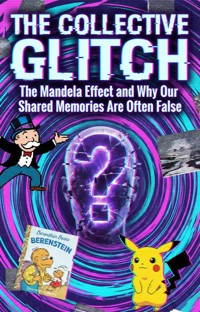
Why do millions of people around the world share the distinct, vivid memory of Nelson Mandela dying in prison in the 1980s, even though he lived until 2013? Why are we convinced the Monopoly man wears a monocle, or that Pikachu has a black-tipped tail? This phenomenon, dubbed the "Mandela Effect," has spawned wild theories about parallel universes, timeline shifts, and matrix glitches. "The Collective Glitch" cuts through the sci-fi speculation to reveal the even more fascinating psychological reality. Sarah Jenkins explores the science of "confabulation" and the malleability of human memory. Our brains are not video recorders; they are active reconstructors that edit the past to fit current beliefs. The book analyzes how social reinforcement and the internet create feedback loops where a false detail, once suggested, overwrites the actual memory for millions of people simultaneously. From the "Berenstain Bears" spelling controversy to famous movie lines that were never actually spoken ("Luke, I am your father"), this book is a tour through the fallibility of the human mind. It challenges us to question the one thing we trust most: our own recollection of reality. It is an essential guide to understanding how we collectively build a past that never happened.
Sie lesen das E-Book in den Legimi-Apps auf:
Seitenzahl: 206
Veröffentlichungsjahr: 2026
Das E-Book (TTS) können Sie hören im Abo „Legimi Premium” in Legimi-Apps auf:
Ähnliche

















Table of Contents
Chapter 1: Understanding the Mandela Effect
The Origins of the Mandela Effect
Cognitive Science Behind False Memories
Social Reinforcement and Memory
The Role of Internet Culture
Pop Culture Examples of the Mandela Effect
Implications of the Mandela Effect
Chapter 2: The Science of Memory
Understanding Memory Formation
The Nature of False Memories
The Influence of Social Reinforcement
Cognitive Biases and Memory
The Role of the Brain in Memory Processing
The Impact of Technology on Memory
Chapter 3: Confabulation and Its Role in Memory
Understanding Confabulation
The Science Behind Memory Formation
Confabulation and the Mandela Effect
The Cognitive Bias Factor
Chapter 4: The Power of Suggestion
Understanding Suggestion in Memory
The Role of Social Media
Group Dynamics and Memory
Distinguishing Between Reality and Misinformation
Chapter 5: Cognitive Bias and Memory Distortion
Understanding Cognitive Bias
Confirmation Bias: Searching for Evidence
Hindsight Bias: 'I Knew It All Along'
The Impact of Social Media on Memory
Chapter 6: The Role of the Internet in Memory Formation
Introduction to Internet Memory Formation
Social Media and Collective Memory
Memes as Memory Tools
Online Communities and Memory Reinforcement
The Science Behind Memory Malleability
Conclusion: Navigating the Online Memory Landscape
Chapter 7: Collective Memory and Its Impact on Society
Understanding Collective Memory
The Role of Nostalgia in Memory
Collective Memory and Identity
Danger of Misinformation
Chapter 8: Pop Culture References and the Mandela Effect
The Power of Misquotes in Film
Altered Song Lyrics and the Collective Memory
Iconic Characters: Misremembered Traits
Nostalgia and the Mandela Effect
Chapter 9: Aspects of Memory in Conspiracy Theories
Understanding the Mandela Effect
The Psychology Behind Conspiracy Theories
Mass Psychology and Social Reinforcement
Cognitive Bias and Memory Distortion
The Role of Emotion in Memory
Addressing Misinformation and Rebuilding Memory
Chapter 10: The Psychology Behind False Memories
Understanding Memory Structure
The Misinformation Effect
Suggestibility and Memory
The Role of Culture in Memory Formation
Chapter 11: The Berenstain Bears vs. The Berenstein Bears
The Origins of Berenstain vs. Berenstein
The Mechanics of False Memory
The Role of Social Media
The Impact of Nostalgia
Chapter 12: Memory Recovery and the Ethics of Remembering
The Science of Memory Recovery
Ethical Considerations in Memory Recovery
Memory Recovery Techniques
The Role of Social Influence in Memory
Chapter 13: The Future of Memory Understanding
Advancements in Memory Research
Implications for Eyewitness Testimonies
Collective Memory in the Digital Age
Education and Memory Techniques
Chapter 14: Learning from Our Mistakes
The Nature of Memory
Recognizing False Memories
The Importance of Skepticism
Strategies for Improving Memory Accuracy
The Role of Community in Memory
Learning from Our Mistakes
Chapter 15: Acknowledging Collective Fallibility
The Nature of Memory
Social Influence on Memory
Implications for Public Discourse
The Role of Education
Bringing It All Together: Embracing Memory's Complexity
Chapter 1: Understanding the Mandela Effect
The Mandela Effect refers to a fascinating phenomenon where a large group of people share the same false memory. This chapter explores its origins, spotlighting the widespread memory of Nelson Mandela’s supposed death in the 1980s. We will uncover how this collective memory surfaced and why it has garnered attention as a significant psychological occurrence.
The Origins of the Mandela Effect
The Mandela Effect finds its name from the widespread belief that Nelson Mandela died in prison during the 1980s. This section examines how this phenomenon started and why it resonates with so many people across different cultures.
The naming of the effect stems from a collective false memory.
The term "Mandela Effect" was coined by Fiona Broome in 2009, after she discovered that she and many others shared a vivid yet incorrect memory of Nelson Mandela's death occurring in prison during the 1980s. This phenomenon highlights how collective false memories can emerge when groups of people recall events that did not happen. Broome realized that this shared misconception was not isolated to individuals, but rather a widespread occurrence across various demographics and cultures.
This naming encapsulates the essence of how collective memory can diverge from documented history. It serves as a compelling example of cognitive dissonance, where personal beliefs and communal recollections clash with factual accounts. The shared misremembrance of events brings forth questions about the nature of memory itself and the ways in which it can be manipulated by social interactions and media. Overall, the Mandela Effect invites us to explore the dynamics of memory formation and the intriguing ways in which the collective consciousness operates.
Many people vividly remember Nelson Mandela's death in the '80s despite his actual passing in 2013.
A striking aspect of the Mandela Effect is the persistent recollection that Nelson Mandela died in prison while fighting against apartheid. Despite the fact that he was released in 1990 and went on to become South Africa's first black president, millions are convinced of an alternate reality where his death occurred in the '80s. This belief has been reported by individuals from various backgrounds and regions, emphasizing the universality of this false memory.
Interestingly, the vividness of these memories can often feel as genuine as factual events. Neuroscience suggests that emotional engagement and storytelling can enhance memory recall, leading to the false recollection of events. Personal narratives or pieces of misinformation can intertwine, creating a false narrative that feels historically accurate. This illustrates how individual memories can be influenced by broader societal factors, thereby leading to a collective misremembering that spans global cultures.
The shared memory often includes fabricated details about his life and events.
Alongside the mistaken belief of Mandela's death, there are myriad fabricated details that enhance the phenomenon of the Mandela Effect. Many people recall intricate aspects of his life, such as the supposed mourning that took place worldwide upon his false death. These recollections often include fictional events, such as funeral services attended by notable leaders or widespread public protests, all of which never actually occurred.
This embellishment of memories demonstrates how shared narratives can evolve, leading to a richly constructed yet entirely fictional perspective of historical events. Such details are reinforced through social conversations and online discussions, where individuals validate one another's memories. These interactions reinforce the collective false memory, shaping a reality that diverges from actual historical accounts and leading to further confusion over what is fact versus common belief.
The phenomenon illustrates the power of social memory and its influence on individual recall.
The Mandela Effect serves as a compelling example of social memory—how memories can be shaped and distorted through collective societal beliefs and shared experiences. This illustrates that human memory is not a solitary trait; rather, it is profoundly influenced by social contexts and communal narratives. When an individual encounters others expressing the same false memory, their own recollection can be altered to fit this collective consciousness, leading to an even stronger acceptance of an inaccuracy.
Furthermore, the rise of the internet has amplified this effect. Social media acts as a powerful tool for dissemination and reinforcement of collective false memories, enabling rapid sharing and validation among large groups. As discussions about popular misconceptions proliferate online, the potential for individual recall to shift is heightened, fostering an environment where inaccuracies persist and grow. Ultimately, this phenomenon challenges our understanding of memory, emphasizing the necessity to approach collective recollections with a critical eye.
Cognitive Science Behind False Memories
This section explores how our brains create and alter memories, leading to false recollections like the Mandela Effect. Understanding the cognitive processes involved gives us insight into why we remember things inaccurately.
Memory is reconstructive, not reproductive; our brains remake memories rather than store them like videos.
Human memory operates more like a dynamic, living document than a static video recording. This means that our recollections are not exact replicas of past events but rather reconstructions influenced by various cognitive processes. Each time we access a memory, it may be altered slightly, incorporating new information or emotional context. The brain retrieves pieces of the memory, fills in the gaps, and ultimately reshapes it to fit our current understanding of reality.
This reconstructive nature of memory is pivotal in understanding the Mandela Effect. When a significant number of people misremember an event, like Nelson Mandela’s death, it suggests that their memories have been synthesized from similar sources, experiences, or discussions. Thus, our memories are not isolated; they are influenced by social interaction and cultural context, which can lead to widespread collective false memories.
Factors like suggestion, stress, and misinformation can distort our memories.
Our memories are incredibly susceptible to external influences such as suggestion and stress. When individuals hear information presented in a particular way, they may unconsciously adopt that version of events into their own recollections. This is particularly relevant in situations where memory is challenged, such as during witness testimonies or media portrayals of events.
Misinformation plays a critical role, especially in the internet age, where incorrect details can spread rapidly across forums and social media. Stressful experiences can further amplify this distortion, creating heightened emotions that intertwine with the memory, leading to significant alterations in how a person recalls the event. These factors coalesce to create a fertile ground for the emergence of false memories shared by large groups.
False memories can feel very real, causing confusion about what actually occurred.
The psychological phenomenon of false memories often results in experiences that feel authentic and credible to those who hold them. This can lead to confusion and self-doubt, as individuals grapple with the stark contrast between their memories and factual reality. When many people remember an event similarly yet incorrectly, it reinforces the authenticity of their feelings rather than challenging their validity.
This confusion is a hallmark of the Mandela Effect, where large groups insist on shared false memories, such as misremembering iconic phrases or events. The emotional resonance of these recollections further complicates the understanding of personal and collective experiences, as individuals find it hard to reconcile their confident memories with the objective reality presented to them.
The science of confabulation highlights how we fill in memory gaps with information that seems plausible.
Confabulation refers to the cognitive process where individuals fabricate or distort memories without any malicious intent. Rather than recognizing a memory gap, the brain fills it with plausible information. This can occur when we attempt to recall specific details about events, leading us to inadvertently create false narratives that feel legitimate.
In the context of the Mandela Effect, confabulation illustrates how shared cultural narratives can influence personal memories. When people collectively discuss certain events or details, individuals may embellish their own memories to align with these narratives. This widespread confabulation leads to a collective belief in inaccuracies, demonstrating the fascinating interplay between memory, perception, and social influence.
Social Reinforcement and Memory
Social interactions play a crucial role in shaping our memories. This section discusses how our beliefs and collective conversations influence what we remember.
Discussions within social groups can solidify false memories, creating a shared sense of reality.
When individuals share their memories in social situations, the narratives often intertwine and strengthen each other. This process can lead to a phenomenon known as "memory conformity," where people adapt their recollections to align with those of others. For instance, if a group consistently discusses a particular event in a specific way, those not present may later remember it as described by the group, even if their original memory was different. This collective reinforcement creates a potent shared reality, effectively altering what individuals believe they experienced.
Moreover, the psychological comfort that comes from agreeing with peers can make individuals more susceptible to adopting these false memories. Social dynamics, such as the desire for acceptance and the influence of charismatic leaders or dominant voices in a group, further contribute to this phenomenon. Consequently, what begins as an unintentional misremembering can transform into a widely held misconception, illustrating the power of social influence on our personal narratives.
The role of social media in spreading and reinforcing these memories has become increasingly significant.
In the digital age, social media platforms serve as powerful amplifiers of shared experiences and memories. Posts, tweets, and comments can quickly disseminate collective beliefs, including false memories, to vast audiences. This instantaneous sharing of information allows inaccurate details to spread rapidly, often outpacing efforts to correct them. For example, when a viral meme inaccurately depicts a well-known quote or event from pop culture, countless people may adopt that version as their own reality.
Furthermore, algorithms on these platforms tend to prioritize content that resonates with users emotionally, thereby reinforcing existing beliefs. This can create feedback loops, where incorrect memories are continually validated by likes, shares, and comments, making it challenging for individuals to separate fact from fiction. As a result, social media plays a crucial role in the proliferation and entrenchment of the Mandela Effect within our collective memory.
People often trust group memory over individual recall, prioritizing consensus.
Human beings have a natural tendency to seek validation from their social circles, especially when it comes to memories. When discussing events, individuals may find solace in majority opinions or group recollections rather than standing by their individual memories. This inclination to prioritize consensus over personal recall can lead to distorted shared memories that feel more authentic simply because they are widely accepted.
In group settings, people are often swayed by authoritative figures or dominant group members, leading them to doubt their own memories. The impact of social validation becomes evident when individuals find their personal recollections challenged by others. As such, the impulse to conform can reshape their memories, making inaccurate details ingrained truths that are collectively recognized — a prime example of how communal dynamics can hijack the accuracy of personal memory.
Echo chambers can amplify false memories, making them harder to dislodge.
In modern society, echo chambers — environments where beliefs are amplified and reinforced by like-minded individuals — have emerged, significantly impacting how memories are shared and perpetuated. Within these spaces, conflicting information is often dismissed, creating an insular context where false memories can thrive unchallenged. Participants in echo chambers may repeatedly encounter the same erroneous details that are reflected back at them, further solidifying these inaccuracies.
This phenomenon can lead to a heightened sense of certainty regarding distorted memories, as individuals feel supported by their peers in these closed-off environments. The relentless repetition of shared false memories within echo chambers makes it increasingly difficult for individuals to reconcile their beliefs with factual evidence. As a result, the persistence of these false memories becomes a powerful testament to the malleability of human recollection, illustrating how collective belief systems can overshadow individual truths.
The Role of Internet Culture
With the rise of the internet, the spread of the Mandela Effect has accelerated. This section analyzes how online communities contribute to the phenomenon.
Online forums and social platforms enable rapid sharing of memories, regardless of their accuracy.
The advent of the internet has revolutionized how information, both true and false, spreads across the globe. Online forums and social media platforms provide a space where users can gather and share memories, often without verification. When someone recounts a vivid memory, it can resonate deeply with others, amplifying its perceived validity. This collective sharing creates an echo chamber where false memories can proliferate rapidly.
Many users find comfort and connection in shared recollections, making it easier for inaccuracies to gain traction. As users post their memories, the validation they receive from others often cements these erroneous recollections, fostering an environment where even the most implausible memories can seem legitimate. The rapid replication of these memories creates a powerful illusion of truth, demonstrating how easily the digital landscape can distort our sense of reality.
Memes and viral posts can quickly propagate false details to millions, creating a shared but inaccurate reality.
In the digital age, memes serve as one of the most effective means of communication, capable of conveying complex ideas through simple visuals and catchy phrases. When it comes to the Mandela Effect, memes can act as catalysts for spreading false details about shared memories. A well-designed meme that claims to highlight a flawed memory can go viral, often leading millions to accept that false narrative as true.
The humor or shock value of these posts encourages users to share them further, amplifying their reach and influence. As people encounter these viral narratives, they may become convinced of their authenticity, leading them to alter or even fabricate their memories to align with the popularized version. This phenomenon illustrates how internet culture can simultaneously entertain and deceive, transforming fiction into a collective illusion.
The internet creates feedback loops that reinforce existing misconceptions.
The design of social media platforms encourages users to interact with content that confirms their pre-existing beliefs, creating feedback loops that amplify misconceptions. When users engage with posts that contain false memories—whether through likes, shares, or comments—they contribute to the content's visibility. This validation can lead others to discover and engage with similar false information, creating a cycle of reinforcement.
As these loops continue to operate, the original false memory becomes more entrenched within the collective consciousness. What began as a simple misremembering evolves into a widely accepted belief, capable of influencing the way people perceive reality. These feedback loops demonstrate not just how memories can be distorted but how collective belief can reshape individual recollections across vast populations.
Accessibility of information can blur the lines between fact and fiction in our memories.
The internet has made vast quantities of information accessible at our fingertips, but this abundance can cause confusion regarding what is factual versus fictional. Many individuals turn to online sources in search of confirmation for their memories, but not all information found is credible. This phenomenon can lead to the blending of accurate facts with inaccurate or misleading details.
As people seek validation for their memories, they may find themselves confronted with conflicting accounts, which can solidify false memories instead of dispelling them. The ease of access to various interpretations alters our understanding of past events, causing some to question their own memory. Consequently, the lines between reality and fabrication blur, creating a fertile ground for the Mandela Effect to thrive within our shared consciousness.
Pop Culture Examples of the Mandela Effect
The Mandela Effect is not confined to political figures; it extends into movies, books, and brands. This section highlights some popular examples that illustrate the phenomenon.
Common examples include the belief that the Monopoly man wears a monocle or that Pikachu has a black-tipped tail.
The Mandela Effect presents a peculiar aspect of our collective memory, especially evident in pop culture. A notable example is the commonly held belief that the Monopoly man, the mascot of the popular board game, sports a monocle. In reality, he does not wear one, yet many can vividly picture him with it. This misremembering could stem from the similar imagery found in various cultural references where monocles signify wealth or sophistication.
Another classic instance involves the beloved Pokémon character, Pikachu, often misremembered as having a black-tipped tail. In actuality, Pikachu's tail is entirely yellow, with a distinctive shape but no black marking. Such discrepancies compel us to examine how visual stimuli and cultural representations influence our memories. Both examples highlight the remarkable capacity for human memory to be altered by social reinforcement and shared experiences, leading to collective inaccuracies that many confidently claim as fact.
Popular movie quotes often misremembered, such as 'Luke, I am your father,' show how collective memory can diverge from reality.
Film quotes are another fertile ground for the Mandela Effect. A quintessential example is the oft-quoted line "Luke, I am your father" from the iconic movie *Star Wars: The Empire Strikes Back*. In actuality, the line is, "No, I am your father." This misquote has permeated popular culture, leading many to believe the incorrect version is the authentic one.
The power of repetition in media, parody, and casual conversation can solidify these inaccuracies. The false memories become so entrenched that even when confronted with the truth, individuals cling to the misquoted version. This phenomenon underscores the importance of examining the sources of our 'memories' and realizing how easily the mind can reshape dialogue based on external influences. It illustrates the blurred line between collective memory and factual recall in our shared culture.
Misunderstandings of brand logos, like the 'Berenstain Bears,' reflect our tendency to recall things incorrectly.
Brand logos often serve as another prime example of the Mandela Effect. A popular case involves the children's book series *Berenstain Bears*, which many recall as *Berenstein Bears*, with an 'e' rather than an 'a.' This spelling discrepancy has led to a widespread belief that the series underwent a name change over the years, despite its consistent branding since its inception.
This misunderstanding is symptomatic of a cognitive bias known as "confirmation bias," where existing beliefs influence recollection. Many individuals who remember the 'Berenstein' version may do so due to the prevalence of 'stein' in various cultural elements, thus influencing their expectations and thoughts. This phenomenon serves as a compelling reminder of how easily misinformation can spread and take root in our collective consciousness, highlighting the fragility of memory in the face of popular culture.
These instances reveal how culture can shape collective memory in surprising ways.
The Mandela Effect demonstrates that our memories are not just personal but profoundly affected by cultural context. Instances like the misremembrance of famous quotes, logos, or characters illustrate how collective experiences and media representations shape our understanding of reality. Cultural references permeate social interactions, leading to shared experiences that can reinforce false memories.
These shared experiences often create feedback loops, where individuals confirm and validate each other’s inaccuracies, further entrenching these misconceptions in the collective memory. The interconnectivity of the internet amplifies this effect, allowing ideas and false memories to spread rapidly, creating a widespread belief system that diverges from objective reality. Understanding these phenomena sheds light on the malleability of memory, paving the way for deeper insights into psychology and the human experience.
Implications of the Mandela Effect
The Mandela Effect raises important questions about the reliability of memory and the nature of reality. This section examines the implications of shared false memories on society.
Questions about the accuracy of our memories challenge our understanding of personal and collective history.
The Mandela Effect brings to light critical questions regarding the reliability of our memories. When large groups of people remember an event or detail differently from reality, it indicates a fundamental flaw in our understanding of memory itself. Such discrepancies challenge the notion that our memories are accurate reflections of past experiences.
In exploring the Mandela Effect, we come to realize that memory is not a static entity. Instead, it's dynamic and subject to various influences, such as culture, context, and shared experiences. This realization prompts a reassessment of both personal and collective histories, highlighting how easily they can be reshaped.
Consequently, we must confront difficult questions: If our memories are fallible, how do we construct our identities and sense of history? This enlightening paradox compels us to consider the narratives we accept and question the authenticity of our collective memory.
Awareness of the Mandela Effect can promote critical thinking and skepticism about our mental processes.
Recognizing the Mandela Effect encourages individuals to approach their memories with a healthy dose of skepticism. By understanding that our recollections can be influenced by external factors and cognitive biases, we can cultivate critical thinking regarding our cognitive processes.
Awareness of this phenomenon serves as a reminder that just because many people share a specific recollection does not guarantee its accuracy. This realization promotes a culture of inquiry where people are motivated to verify information rather than accept it at face value.
Moreover, fostering such critical thought can empower individuals to explore their memories in a more analytical manner. It leads to healthier dialogues about authenticity, accuracy, and the constructs of memory, encouraging everyone to seek truth amidst the fog of collective misremembrance.
Collective memory shapes cultural narratives and influences societal beliefs.
Collective memory plays a significant role in shaping cultural narratives and societal beliefs. The Mandela Effect illustrates how shared false memories can influence narratives around events, figures, and popular culture. When groups collectively misremember a detail, it can alter how history is perceived and taught.
These altered narratives can perpetuate misconceptions, contributing to cultural myths and affecting public discourse. For instance, the misremembering of iconic movie quotes or historical events not only distorts individual perceptions but can also shape broader cultural understandings.
This phenomenon highlights the power of collective memory in forming societal beliefs. As groups build shared experiences and recollections, they forge identities that may not align with actual events, thus complicating our relationship with history and truth.
Understanding false memories leads to better communications and education about how memory works.
Delving into the complexities of false memories fosters better communication and educational practices. By acknowledging the prevalence of the Mandela Effect, educators and communicators can help individuals navigate the intricacies of memory.
This understanding encourages a more nuanced conversation about the nature of recollection and the importance of critical evaluation in everyday life. By promoting knowledge about how memory can be constructed and reconstructed, we empower people to discern fact from fiction more effectively.




