


Erhalten Sie Zugang zu diesem und mehr als 300000 Büchern ab EUR 5,99 monatlich.
- Herausgeber: The Lilliput Press
- Kategorie: Sachliteratur, Reportagen, Biografien
- Sprache: Englisch
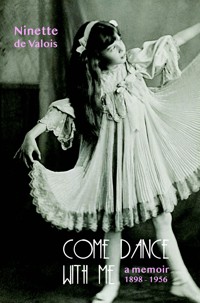
In this compelling memoir, first published in 1957 and now appearing in this updated paperback edition, prima ballerina Ninette de Valois writes about her extraordinary career: the vivid memories of her home in Ireland; her first London engagement at the Lyceum pantomime in 1914; her tour of the Continent with Diaghilev and the Ballets Russes in 1923; her time with the Abbey Theatre in the late 1920s, and the Old Vic and Sadler's Wells in the 1930s; her travels in Yugoslavia and Turkey, where she established a ballet school in 1947 and her founding of The Royal Ballet in 1956. This story of de Valois' mythic rise to fame as dancer, choreo-grapher and director is illustrated with over fifty photographs and brought to life by sketches of Yeats, Lennox Robinson, Oliver St John Gogarty, Tyrone Guthrie, Lilian Baylis, Margot Fonteyn, Lydia Lopokova, Frederick Ashton and Constant Lambert, among others. It is a powerful testament to her enduring influence on the world of dance.
Sie lesen das E-Book in den Legimi-Apps auf:
Seitenzahl: 417
Veröffentlichungsjahr: 2018
Das E-Book (TTS) können Sie hören im Abo „Legimi Premium” in Legimi-Apps auf:
Ähnliche



















I am of Ireland,
And the Holy Land of Ireland,
“And time runs on,” cried she.
“Come out of charity,
“Come dance with me in Ireland.”
W. B. YEATS
COME DANCE WITH ME
A MEMOIR1898–1956
BY NINETTE DE VALOIS
ILLUSTRATED
THE LILLIPUT PRESS
DUBLIN
FOR
DAME MARGOT FONTEYN
AND
FREDERICK ASHTON C.B.E
WITH THE AUTHOR’S GRATITUDE
CONTENTS
Epigraph
Title Page
Dedication
List of Illustrations
Foreword to the Lilliput Edition
Introduction
I An Irish Jig
II The Longest Way
III The Extended Circle
IV Both Sides of the River
V The Wind in the Clock
VI One Side of the Market
VII Birthday Offering
Appendix Notes on the Ancestry of Dame Ninette de Valois
Index
Copyright
LIST OF ILLUSTRATIONS
The Author’s Mother with Thelma16
The Author’s Mother with her four children16
The Author’s Grandmother17
The Author’s Father17
The Old Bridge leading to Baltiboys32
Baltiboys from the air32
Baltiboys Yard Bell33
Dame Adeline Genée48
Phyllis Bedells48
Mrs. Wordsworth49
The Dying Swan49
The Lila Field Academy49
The Author aged 1664
Aged 1764
Mme Rosa64
Lydia Lopokova65
Lennox Robinson80
William Butler Yeats80
Oliver St. John Gogarty’s Garden Party81
The Massine-Lopokova Company96
The Author as ‘Cupid’96
Russian Ballet Roles97
Two Studies from Les Noces112
Lilian Baylis, C.H., returning from a picnic113
The Author in 1931128
Mme Zanfretta128
Sadler’s Wells Roles in the ’Thirties129
Sadler’s Wells Roles in the ’Thirties144
Brussels and Paris, 1945145
Robert Helpmann, Moyra Fraser and Leslie Edwards160
Alec Sherman and Joy Newton160
The Author in 1945161
French and English Artists, Paris161
Alicia Markova176
Anton Dolin176
Pearl Argyle177
Sophie Fedorovitch177
Dame Margot Fonteyn, D.B.E.192
Frederick Ashton, C.B.E.192
Oliver Messel193
First performance of The Sleeping Beauty193
Constant Lambert
Two Studies of Robert Helpmann
Pamela May, Moira Shearer, Beryl Grey, Ursula Moreton with their children
Margot Fonteyn’s Wedding Party
Sadler’s Wells Theatre Ballet, 1951
The Royal Ballet Staff
Turkish Students at the Conservatoire, Ankara
Arnold Haskell with students of the Royal Ballet School
‘Birthday Offering’, May 1956
The Sadler’s Wells Theatre Ballet in their 10th anniversary year220
Birthday Portrait of the Author221
FOREWORD TO THE LILLIPUT EDITION
IT IS a very real delight for me to reflect on the fact that Dublin has come forward to republish this book. So much of the early part is devoted to memories of a very happy childhood in the midst of the famous and lovely Wicklow hills, with its ‘Wicklow weather’, foxhunts and vivid recollection of a real Irish village.
The execution of an Irish jig at a children’s party really set things going. The performance was a demand on my part as I did not approve of the ‘skirt dance’ executed by another young guest. I am afraid that I was right. My jig was authentic, the work of an Irish countryman bent on me executing it in an Irish farmhouse kitchen. It started my life of dancing and was definitely my first stage performance. The children’s party was held at the de Robeck’s country house—my host simply said to my mother when I had finished: ‘Train her.’ I draw attention to this aspect of the book to show the early influence of Ireland in the original inspiration offered me by that jig.
May another generation honour me by reading and enjoying this new edition, and once more I express my happiness that it is Dublin who wants me to dance again through its pages.
INTRODUCTION
MANY friends suggested that I should take four months’ leave of absence to write this book. That would have been very pleasant; the book, though, would never have been written. It has been said that I am an indefatigable collector of discomfort and difficulty; certainly my mind prefers adversity and complexity to any state of smooth living. Thus, time and again, the throb and upheaval of my travels by every form of locomotion on land, sea and in the air, has been for me the perfect background music.
I would emphasise that these writings are, in effect, just an attempt to tell a story. The story, however, is not concerned with somebody’s private life: it is just a glimpse of the private side of someone’s public life.
The manuscript has travelled far and wide when in the making. It has taken shape in trains, ’planes and boats—on journeys stretching as far afield as Moscow and the Middle West of the United States. It has developed during quiet week-ends in the country; it has unravelled itself on a French cargo boat, when holidaying off the coast of North Africa. It has made staccato progress on non-pressurized aeroplanes over Eastern Europe, going to and from Moscow. At times it has made quite rapid progress on a 12,000-mile lecture tour of Canada and the United States, though it experienced neglect on the Observation Car of an American Zephyr train, with the surrounding country embraced by an awe-inspiring sunset. The neglect was heightened by the vision of a seemingly long silver cobra, winding its way ahead of the observation car—then the sudden intriguing realization that we ourselves were being towed by the silver cobra … abruptly the daylight faded, and under the glow of electric light the manuscript once more came into its own.
I am going to miss my companion of the last fifteen months’ shared adventures, for a manuscript, I have discovered, is the ideal friend—silent and accommodating. It remains unresentful when mislaid, or when it is overworked by an attack of zeal and spare time on the part of the writer. It will stay submissive when erased, corrected and blue-pencilled to pieces. It exudes passive friendliness when you discard it after midnight, with a glow of content concerning your thoughts just expressed on its white surface. It turns the other cheek next morning, when, on re-reading your literary carryings-on of the night before, you are aghast: you forthwith erase rudely and scratch hysterically at the surface of your patient friend—and who knows if its passivity might not reflect the fact that it could have told you all this last night?
The manuscript is, above all, your kindest editor—for it does not condemn or argue: silently it shows you the insufferable depths of your grammatical errors—crashing clichés and befogged thinking.
I am going to miss exercising my mind with the vivid business of remembering things forgotten—delving backwards into time towards some incident glowing clearly, in a lost world that has made the correct year, day and date of the picture under survey of secondary importance. Such research spells tedium, and, as always, the amateur loses patience over matters that are concerned with dry precise reckoning.
Working over the last fifteen months, with the mental machine in full swing, I realize that I must always have wanted to have the companionship of a manuscript: for I recollect that there is one day in every week of my childhood that stands out with a persistent clarity of memory—I can still recall that it was on Wednesday that my governess demanded the writing of the schoolroom weekly essay. I also recollect that Tuesday was devoted to considerable anxiety on my part—for would she give me a subject next day that I would consider interesting? Would grown-ups never, never let me choose my own subjects?
• • •
During these present writings, something has emerged in the form of a sobering truth: I am convinced that we shape no event as forcibly as events shape us.
To pen an autobiography is to force to the front of your powers of observation the startling proof of your own lack of any real capacity to plan life. We are all aware of living life to the full on specific occasions—and with intense deliberation. If, though, these occasions are carefully scrutinized, it becomes clear that no carefully arranged basic plan brought them about: it is nearer the truth to admit that, at such times, we submit to the event, whose future shape and significance is unknown to us …
How many deep impressions we receive that bear no relation to the aims that we set out to achieve: the journey is taken for some particular objective, but it is not necessarily the fulfilment of the objective that stays with us through time—this is often quickly forgotten, and often changed by circumstances so as to be beyond recognition. What stays with us are sights, sounds, friendships, books, pictures; the meal eaten that owes its distinction to the surrounding landscape, or a curious turn of phrase in conversation; the memory of a new land seen at sunrise and at sunset remains with us when the life’s purpose on that day has completely faded.
We carry within ourselves a curious medley of matter. We are unconscious hoarders: the range of the store is varied, the choice unrestrained, the result strangely intimate—unconcerned with our surroundings and their inhabitants. These inner realities cannot be shared with others, not even those dear to us. We hoard to nourish and sustain our individual solitude: that business of being alone, as we always must be, even in the largest of crowds. No one can elude his personal solitude (although he may waste it and ignore its importance). To elude it, however, would be to lose oneself, for to move away from the inner sense of reality is to develop a sickness—to become unaware of the meaning of one’s individual entity in the whole.
Such experiences are perceived and understood quite differently by each one. Art and the artist succeed when they show us anew things that we know already; when they conjure up a vision that sows a seed to be reborn, in some other form, within ourselves.
It would seem that nothing belongs to any of us exclusively; everything is for all to see and interpret in a million different ways, and the sum total is life, in its infinite variety of individual living.
I
AN IRISH JIG
… ‘What does it feel like to be old?’ said the boy.
‘It feels stiff like,’ said the Philosopher.
‘Is that all?’ said the boy.
‘I don’t know,’ the Philosopher replied after a few moments’ silence. ‘Can you tell me what it looks like to be young?’
‘Why not?’ said the boy, and then a slight look of perplexity crossed his face, and he continued, ‘I don’t think I can.’
‘Young people,’ said the Philosopher, ‘do not know what age is, and old people forget what youth was. When you begin to grow old always think deeply of your youth, for an old man without memories is a wasted life, and nothing is worth remembering but our childhood. …’
JAMES STEPHENS, The Crock of Gold
WHEN the adult mind would stir up childhood memories it sets itself a task, for it concerns itself with a time that contained the truth and significance of the passing moment, each hour of childhood being lived in full, and that is a rare event in later life. In the storeroom of a child’s mind impressions wear clear bright colours, for they are imprinted on a virgin soil, a soil that is exceptionally receptive yet markedly selective. Very soon, however, the natural discernment of the young is replaced by ideas on growing up that are sown by adult minds; the new learning is mechanical and holds none of the wonderment of discovery. On such a day youth’s first-born knowledge (in that small world once built up to live in apart) becomes as a dream and must go the way of outgrown toys. In the process of growing up a child soon ceases to be himself, for he is an atom that the world soon splits asunder.
When I was small I had a secret pastime; I would seek out one moment in the day when I would outflank (and with surprising skill) the watchful adult world and be alone. This process was known to me as ‘a think’; it never went by any other name and was a very strictly disciplined recreation. I might resolutely fix my eyes on some near or distant object, a chair, a flower or a picture, and a story would be woven reaching from the birth to the death of the object. Sometimes I would decide on a personal transformation and I might choose to become a bird. That meant sitting under a tree and spotting the most suitable place to build my nest and there would follow great concentration, for the size and proportion of everything had to change; I became the exact size of a small bird and the tree as big as the surrounding country. If I took flight to another tree, I had left on a voyage; if I was lucky enough to find my two trees placed on each side of a brook, why there was the sea that I crossed in my flight; henceforth I was preoccupied with the joys and sorrows of myself in bird form.
I told no one of this pastime save my sister. She, with the inborn sense of a child’s loyalty and understanding, left me respectfully unmolested; nor did she inform an adult of my flight into the world of imagery that even she was excluded from sharing.
But there was never very much time; I was acutely aware that my ‘think’ was limited, and round the corner was waiting that busy ordered world that I had managed to escape from for a brief magic moment.
• • •
Ireland in the first years of this century can only be portrayed if the reader will accept the youthful mind as I shall endeavour to recall it. A child has his own values, and his preoccupation with matters of trivial importance may play a part in the creating of an impression or the weaving of a pattern.
How can I record that time spent under the Wicklow Hills? Trivial indeed my pictures may seem to others, yet for me these pictures are intensely real; a great deal nearer to reality than much of my later life spent in the theatre.
I was born on 6 June 1898 and christened Edris (my family name is Stannus). My home, Baltiboys, a country house situated some two miles from the village of Blessington in County Wicklow, stood in the middle of a beautiful stretch of country at the foot of the Wicklow Hills. The original house was burnt in the rising of 1798; the house was nowa long two-storied building with a spacious network of basement rooms. It was a typical Irish country house of about 1820–30, late Georgian in part, consisting of one main wing and two smaller ones.
As the firstborn of the family my elder sister was acclaimed by the ringing of the big yard bell and the lighting of a bonfire high up on the fox covert which could be seen for miles around. After her birth it was decided that all such festivities in the future should be curtailed, except in relation to the arrival of a son and heir. To the chagrin of all I was the next to enter the world, and so the bell did not ring and the prepared bonfire had to be hastily dismantled.
It was not until my ninth birthday that I heard the story and was deeply hurt. Later, when reprimanded for some misdeed, I announced that one day I might light my own bonfire.
My childhood, though, was quiet, and far removed from fulfilling ambitious dreams inspired by a sense of humiliation. I was intensely reserved and as obstinate as a mule—capable of ‘the sulks’ (as the nursery would say) brought to a fine art. If the situation, to my mind, warranted any extra stress, I was not above staging a hunger strike—noting with satisfaction the look of nervous apprehension in the adult eye: I was a delicate, undersized child, and this physical fact, I soon discovered, helped to heighten the dramatic impact of my action. I can only remember indulging in scrapes that risked no possibility of discovery, for to do anything that might result in detection and punishment struck me as a complete waste of time. My sister had quite a different philosophy; for her the game was always worth the candle, and consequently she was regarded as headstrong and her smaller sister as deceitful.
I have an early impression of an occasional savage contempt for adult reasoning and habits, and of controlling a surge of temper over correction or dictatorial reasoning. I can also recollect a fastidious reaction to grown-up speech and accents. At one time I suffered a nightly rage directed towards a kindly English nurse; to this harmless being I had to say my prayers. The anger was caused because she would say ‘Please Gawd’; I could not stand this mispronunciation, and there I knelt, hands together, eyes closed, longing to hit her; in despair one night I murmured: ‘Oh God, get rid of her.’
As a nervous child, an accusation first frightened me, and as a reserved child it then humiliated me; finally my obstinacy developed a false pride, with the result that I went through an untruthful stage; oddly enough I can remember that this upset me in relation to myself, as much as it worried those in charge of me. But slowly temper would rise at the inquisitions of nurses and governesses; I lied, and without a prick of conscience; the reaction of a young mind that felt the indignity and humiliation of the whole proceedings.
My mind’s eye can clearly see the curved Regency staircase leading to the upper story of the house. Next there comes to my memory the library, in which my grandmother read aloud to my sister and myself every evening after tea. I can still feel the excitement of winding my way down to the library to listen to my grandmother reading aloud the history of The Swiss Family Robinson, and my distress at the picture of the donkey caught in the coils of the snake. It was a very quiet room with books reaching from floor to ceiling; there were three long elegant windows, two looking on to the avenue and one on to the side of the house, from which could be seen the wooded grounds sloping down to the river Liffey, winding its way through the fields beyond the gardens.
I ask memory to take me up the staircase to the second floor of this rambling house. Built as three houses in one, there was a long passage that ran the length of the building; owing to the architectural structure of the house, this passage was broken by two small flights of stairs, one with four steps and one with only two. I can still feel myself running, and with. an excited gasp hurling my body in the air to clear these stairs so as to continue the race at top speed.
Our schoolroom and nurseries were situated over the stables. They were low rooms, with windows small enough to be frowned on today, but the views were magnificent. One tiny window looked on to a courtyard, formed by the nursery part of the house, the stables, outbuildings and a high stone wall that had been built in the seventeenth century. This courtyard was entered through an arched gateway cut in the wall and the gateway was surmounted by a bell made of solid lead. The bell was always rung at midday, and it was the same bell which had remained silent when I entered the world.
Our courtyard was the occasional scene of a meet of the Kildare Hunt. I can remember watching the meet from that small nursery window and later crossing the schoolroom to keep vigil at a window looking across the gardens; then away at the top of the fox hill one could see the hunt coming down the hillside in the sharp clear winter day, down towards the river still winding in the distance—and resembling in its wanderings a strip of metallic silver ribbon.
My memory now takes me indoors again and I return downstairs. When we reached the age of about five we were promoted to the dining-room for breakfast, and how cold this large room was in the winter! My father was often to be seen in a pink hunting coat, when an early breakfast would be eaten in a silence suggestive of speed and immediate action. The drawing-room seemed vast to me and we hardly ever entered it; it was the little morning-room that captured my imagination. Known as my mother’s boudoir it opened on to the gardens through a french window and had delicate white furniture that my mother had decorated herself with coloured glass beads resembling giant-sized hundreds and thousands; it was a room full of light and family photographs and I loved it dearly.
Below stairs was the usual outlay of such country houses, for the kitchen world ran the entire length of the building. Endless whitewashed rooms with stone flooring, in many places cold as a morgue. Kitchen, sculleries, pantry, still room, lamp room, meat room, laundry room, boot room, gun room, boiler room, servants’ hall and servants’ bedrooms. I see most clearly the lamp room, with its fantastic bulbous lamps of all shapes and sizes neatly arranged on shelves awaiting cleaning, trimming, and the polishing of intricate brass ornamentation. In those days, Irish country houses, even when they were situated a few miles from a well stocked village, had to be self-contained. Yet Baltiboys possessed only one bathroom, added at some earlier date, perhaps for fashion’s sake. Tucked away in a corner in the main part of the house, it was fed by groaning pipes, and they in their turn were at the mercy of a temperamental boiler. In the hunting season, the children’s bath-time was constantly in danger of interfering with the Captain’s return from a day spent in the saddle. It was obvious that Paddy, the footman-valet, had his work cut out; when very small we were flung into this huge bath like so many sprats and occasionally we were aware of something resembling a mild earthquake in the walls. This brought Paddy flying up from his underground haunts; regardless of comfort or dignity a tap was turned full blast on the sprats, and all was briefly summarized as ‘the water’s boilin’.’ Paddy, however, earned his Utopia, for he was later to emigrate and become a butler in far-off New York where he was to prosper surrounded by streamlined heating systems.
In the grounds we children lived long happy days. Though deeply attached to many spots, my sister and I favoured in particular the rookery. It was a large green slope on the extreme left of the garden and had many great trees full of rooks, and a high deep shrubbery shaped like a horseshoe. We played there for preference, right through the four seasons of each year. It was here that the solemn ritual of the burial of the dead robins took place; in the early spring of the year we would bury these birds that could be found frozen to death on lawn, paths and shrubbery. Japonica was plucked from the house wall, three blossoms to each little grave. The mound was shaped, and with the blossoms stuck in the earth, the result resembled little red buttons in a neat row. A tear or two might be shed for frozen robins in general, and then all was forgotten of the long bitter winter.
From the front of the house a long avenue wound down to the lodge at the gates; it had a park on one side and a wood of birch trees on the other sloping down to the river bank. There was also a walled kitchen garden, richly stocked. The wall was an old stone one, rounded at the four corners and covered with fruit trees. I always imagined that it was the most secret and sheltered spot in the world, and as a child later in England, when I read The Secret Garden, I visualized it as resembling the walled garden at Baltiboys. Beard, the head gardener, always seemed to be at work here, either in the greenhouses or bent double over the soil that produced a profusion of perfect vegetables. We children were frightened of Beard; the poor man was at times extremely tried by us and had more cause to frown than to smile when we came in view.
I remember the awful day when my sister and I decided to strip a bed of hyacinths as an offering to a new governess from England, no doubt with the intention of winning her over to our side at the first instant. We were aware that a house party for the Punchestown Races was also due, but the importance of these guests in comparison to starting off on the right side of one of those English governesses seemed of no account. We were not aware of Beard though, charging down on us like an infuriated bull. He lost no time in dragging my poor father into the hubbub. We were both struck dumb rather more with surprise than remorse. My kind, wise father took everyone’s side at once; he sympathized strongly with Beard and yet managed to convey to us that the roars still coming from his angry and painstaking gardener were tempered with a certain misunderstanding of our motives. It was enough for him to know that we had not picked the flowers for ourselves, or just to annoy Beard, and therefore were not being deliberately naughty. I stood by and watched his gentle understanding unfold; to this day I can recall how my heart bounded with relief at an example of that quietude that he always bestowed on us.
This affray, however, had its sequel a few nights later. I dreamt that the skies opened to reveal God. He proved to be Beard, not in a very good temper; he peeped at me through fluffy clouds, complete with bowler hat, walrus moustache and the usual patched corduroy trousers. But it did much to increase my awe of our gardener, for I never doubted the authenticity of my dream. I considered that I had had a revelation and that I should treat the whole matter with the secrecy that such a discovery deserved. As far as I was concerned all flower beds were left unmolested from that day.
Our daily walk very often took us across the fields to visit the home farm about a mile distant from the house. Here the herdsman, Finnigan, lived with his wife Kate; she was once my mother’s nurse and later, when a widow, cook in our London home. Kate came into the family at nineteen and left it to die in retirement in her late seventies. She had two stepsons, John and Batch; the younger one was quite a hero in my eyes, for he would go down to the river and bring in the cows in the early evening. Once I was permitted to accompany him, leaving my governess and sister behind in the farmhouse. I fell into the river and returned with my dress wet and muddy. The dress was removed, but my pinafore, which somehow had not come to grief, was put on again over my petticoat. I had bare arms and well can I remember my naked shame, crossing those wide fields, showing a pair of skinny arms and pursued by the scoldings of an Edwardian governess, who did not hesitate to express her indignation that one of her charges had to walk abroad in such an improper state of clothing.
The farmhouse, with its great open hearth, had other memories for me. On arrival Kate would present us with. large slices of newly baked soda bread smothered in rich home-churned butter. This ‘tea’ we were bidden to consume outside. I always hated my large slice and I can remember once burying it in the cabbage patch and wondering if it would give me away by growing up into a special sort of cabbage.
In that quiet country existence we were cut off from all communal interests and school life. Memory does not clarify why Kate singled me out and taught me how to execute an authentic Irish jig on the stone floor of that kitchen. If she had not done so, as this book will show, I might never have become a dancer. I adored my jig, for it was my first experience of any self expression.
Our lives were very sheltered: four small children with nurses and later nursery governesses. We had a steady flow of the latter, who all came from England and they did not stay very long. My sister and I regarded them almost as foreigners; strange, starched ladies with elegant mutton-sleeves, pork pie hats or boaters, and haughty English accents—for one of their main tasks was to rectify our brogues. We found them either fussy or silly about country matters. One of them was assuredly the latter, for she wanted to see how the bull would react if she dressed herself in red. I can still see her as she stood on the gate wearing a red blouse and carrying a ridiculous red parasol which she waved excitedly at the bull. My sister and I stood in the rear filled with contempt tempered by a certain uneasiness. That day, however, the bull was as uninterested in red as he was in English governesses. We did not keep this story to ourselves and in no time the poor lady was on her way back to England.
Our Irish forms of transport in the first five years of this century belonged to another age. There was a curious affair called the steam tram, just a tram with a long funnelled engine drawing it. This ran through Blessington village to Dublin, a distance of twenty miles, but the journey took one and a half hours or longer. The lines ran by the side of the country road unlit by any form of lamps. All along the line at intervals there were to be found little white stone crosses; thus were marked the spots where inebriated Irishmen lay down to sleep on the rails after fairs or wakes and were not spotted by the tram driver. Cows also had a way of blocking progress by resting on the lines and causing the tram to be late.
Our own domestic transport was complicated. Today a serviceable family car would suffice, but not so in those days. The most prominent vehicle in our nursery lives was the governess cart, a low rotund little carriage drawn by donkey or small pony, the whole haphazardly controlled by the governess. We just rolled about inside, but in easy reach of the restraining hand of the nurse. The torture of the winter drives is still fresh in my mind. Unless held up by really heavy snow we made one pilgrimage a day into Blessington in the early afternoon to fetch the English mail; I now strongly suspect that our homesick English governesses volunteered to do this, rather than trust to the groom finding time to ride in. I have vivid recollections of whimpering over the pain of my frozen hands and feet as I staggered up the stairs and down the long passage; there was only one thought in my mind and that was to seek out the nursery fire.
On Sundays, we were elevated to the Irish sidecar. Accompanied by grown-ups, who clutched us almost as firmly as we clutched our Sunday hats, we would be driven in to church by the groom. In church we were shut up in one of three family pews suspended at the back over the heads of the ordinary church pews. It was a square box-like affair with a little door into it, and my head just appeared over the top. My dearest ambition was to sit in one of the long pews down below, for these pews appeared to me to hold a great number of exciting people.
My father had a dogcart, and there was also a brake and a brougham. I dreaded the brougham, for once I sank into its gloomy depths, which smelt of harness polish and cracked old leather, I was promptly sick. It held the further menace of being the form of winter transport to children’s parties in other country houses and it was customary to drive several miles to these affairs. I was intensely shy and suffered tortures. Wisely, no one took any notice; I went, was sick, cried and came home again, while my sister was in a constant frenzy of delight, and her pleasure made me feel more out of things than ever. The brake conjures up house parties setting off for race meetings, and the family luggage embarking on the yearly pilgrimage to Folkestone for one month in the summer. Punchestown Races and the spring were just one and the same thing. Visitors filled the house; I can remember standing on the steps with my sister watching them pile into the brake, the women with their bonnets and hats tied on with flowing veils.
One of our other forms of daily exercise consisted of bowling our hoops in the grounds and we must have covered miles racing up and down paths. We were often tempted to stop and hunt for birds’ nests, a pastime strictly forbidden. I can see one beautiful little nest full of eggs: fascinated by the beauty of the small eggs, I picked one up, but its delicate shell broke and stained the hem of my pinafore. Back in the schoolroom, standing in front of my governess saying my tables, I saw her eyes travel to the tell-tale stain. We were both informed that little girls who killed little birds would probably have their eyes pecked out by the mother bird. My sister was unmoved, for she was two years my senior and anyway far more adventurous and courageous. I felt that this particular form of an eye for an eye was terrible but not unreasonable; it struck my imagination that the death of the bird could be expected to end in the death of my eyes. Thus there were no tears or loud protests when, having wholly forgotten their prophecy, unthinking nursery guardians ordered me once more into the garden for exercise. I obeyed, sick at heart and faint with fear; for about three days I managed to bowl my hoop along those well-known paths with my eyes tight shut, opening them for a second when driven to do so, At the end of that time I pondered on the possibility of grown-up fallibility or the shortness of a mother-bird’s memory; suddenly my sin became a thing of the past and fear faded away.
The mind of the child holds on to specific highlights, and certain world events stand out clearly through some link with the intimate life of the home. For me, one of the most vivid is the Russo-Japanese war, and I recall a conversation on this matter between my grandmother and father in the sidecar when returning from church. The news from Russia had been grave and I was puzzled, for Russia conjured up a picture of a strange race vaguely known as Cossacks, and I thought of them as fierce giants with enormous beards. The Jap I imagined to be about the size of a Leprechaun. I saw it all as a war of giants and pygmies, and I felt that my prayers must be for the pygmies.
• • •
I find myself on the top of the fox hill, clinging to the hand of my nurse. There is a huge bonfire erected; it seems to me to reach up into the skies and to bear the shape of a wigwam. I do not know what time of day it was, but I fancy that it must have been very early evening. I can remember crouching on the grass to see, underneath, a tiny glow of fire. Around me it was said that the Captain was returning, and his return seemed to have some connection with a faraway calamity called the Boer War. I am next sitting up in bed in the nursery, the door opens and a soldier comes in wearing a forage cap. It is my father. That is all that I know of that long passage of time since he sailed away with his regiment, was wounded and made prisoner, and returned to Ireland to be greeted by the glow of a bonfire, his two astonished little daughters, and the son who had been born in his absence.
The landscape is illuminated by remembered visits to cottagers living on the estate. Some of the old women were like witches, and many a story did my imagination weave around them in such a guise. We would bring them small gifts, and stand by in awe as our governess made conversation with the owners of these deeply furrowed faces; a knotted hand might be holding the clay pipe, while their bare feet rested on the hearth and their faces were sharply outlined by the large black shawls covering their heads and most of their bodies. Small animals from the farmyard came and went—in and out of these kitchens at will. Upon our exit these old women’s strange blessings would follow us down the muddy little front paths. Other cottages might swarm with children reared on a diet of potatoes, porridge and an occasional piece of bacon. The acceptance of poverty had a more nonchalant than stoic quality about it and there was a great deal of tuberculosis; these peasants had large families and there was the superstition that the seventh son in any family had the power of ‘the cure’ or what we call the gift of healing.
It is the Irish tinkers that stand out as the most frightening of human spectacles; they resembled Romany gipsies disguised as bedraggled ravens and could be guaranteed to frighten any child; I may add that this attitude of fear was encouraged by the constant threats of Irish nurses that naughtiness might end in the tinkers getting you one day. I also dreaded a ‘wake’, or rather the promoters returning from one; once I witnessed a coffin rolling off a cart into the ditch, and that macabre accident was due to the state of those in charge of the burial after the ‘wake’.
One must allow for the passage of time and the vivid exaggeration that fear can implant in the mind of a child. Fear concerning drunkards is with me, though, to this day, and Blessington Fair is partly responsible for my reaction. Fifty years ago it was a morbid source of entertainment to those in charge of us—for what to me was a hideous spectacle, both nurse and governess appeared to enjoy. Our village had four public houses and on fair days trade was very brisk. We were driven in to witness the fun; seated in the small governess cart I became acutely aware that the vehicle was small and defenceless, and I would sit frozen with panic at the drunken fights. Once I saw a child flung into the air as one might toss a football and that reduced me to shrieks as loud as any of those surrounding me. Even when driving home through the lanes it always took time to rid ourselves of the fair; we would have to pass reeling argumentative tinkers, stray carts partly overturned in ditches, tramps and peasant farmers straggling across the road.
We travelled but little: only to make the annual pilgrimage to Folkestone and the occasional ceremonial visit to my paternal grandfather who lived in Portarlington. By the constant selling of land my grandfather managed to live on a dwindling income. He met the changing times quietly, without any attempt at a solution, There had to be the daily carriage drive that he could ill afford; it was made possible by disguising the gardener as groom. Half the old family livery—the upper half—was intact, but the trousers were missing, for they had fallen to pieces and new ones represented a great extravagance. So the gardener wore his gardening trousers; he was placed on the box heavily encased in a large rug and forbidden to move under any circumstances. I remember little of my grandfather beyond kind humorous eyes, gentle grumblings and genteel carriage drives.
• • •
Did I ever, during those seven formative years, get a glimpse of the life that was to be mine in the years to come? Perhaps I had two small symbolicmoments. The clear-cut joy of my first theatre visit—this was to the Gaiety Theatre in Dublin. Prophetically it was the pantomime of The Sleeping Beauty. I can see the enraged Carabosse in the form of a witch with demon king attendant, setting off in a sleigh that seemed to fly across the stage, filling me with an anxiety as to its progress when out of sight. I can further conjure up the Princess on her birthday. The stage was a great garden of outsized roses and she a slim girl with a Rossetti-like face and hair; I can see her so clearly, in a curious pre-Raphaelite tawny-coloured gown as she ran down the stage exclaiming on the beauty of the day. With that vision everything fades, except that I remember her as most wondrously beautiful.
The other was a more curious experience. I have already recorded the fact that in that remote country place I was taught my first dance, an Irish jig, and I have spoken of my misery at children’s parties. I was attending one party and as usual spent the time clinging to my nurse’s skirts. To distract me, my mother stood me on a chair to witness a dance by a Miss Leggatt Byrne (I think that she was either the daughter or niece of the well-known teacher of that name in Dublin). Something within me underwent a complete change. I forgot the awful party and the crowd of people; a curious critical faculty suddenly arose within me and I found myself consumed with interest, but not overcome with admiration. She wore a wide accordion-pleated dress edged with lace and my mother informed me that she was executing a skirt dance. I did not feel like the little girl who had watched the pantomime, where all had aroused sheer uncritical delight: in this case I watched something that aroused my deepest interest, but without any of the whole-hearted pleasure that it was bestowing on my mother and others. Suddenly I found that my interest had wholly switched to the lady at the piano, for I saw that she watched the dancer very closely. I was charged with a fierce longing; I desperately wanted her to play for my own precious dance, for I knew the tune as Kate had often hummed it to me. I decided that mine was by far the better dance, in fact I found this one silly by comparison. I then electrified my mother by saying that I would like to do my Irish jig if the lady at the piano would play the tune.
I experienced no fears; I had no thought for the people surrounding me when I stood in the middle of the room waiting to start, though I had a real anxiety that the conversation at the piano might not result in the lady understanding about the tune. I can remember very distinctly hoping—as a fully-fledged professional might—that she would get things right and that she would understand what I wanted. Of course, when it was over, I was as before, hiding behind my nurse and refusing to plunge my hand in the dreaded bran pie.
• • •
THE AUTHOR’S MOTHER WITH THELMA (1900)
THE AUTHOR’S MOTHER WITH HER FOUR CHILDREN—THELMA, EDRIS, TREVOR AND GORDON (1904)
THE AUTHOR’S GRANDMOTHER (1900)
THE AUTHOR’S FATHER (1916)
As a ripple on a quiet stream, we children began to realize that life was preparing a big change for us. Our parents and grandmother spoke more often of England; we began to hear something of the needs of big houses, and the necessity of only rich people living in them. Servants threw out hints, the younger ones spoke of emigration and the older ones were seen to weep.
A day arrived one very early spring when the last trunks were strapped and we were bidden to say our special good-byes. We were taken down the avenue to visit Mrs. Roberts, the lodge keeper’s wife; she followed us as we returned to the house, crying as if her heart would break and raising her white apron to cover her face; for her grief was pagan in its stark simplicity and too immense for the duties of a pocket handkerchief.
I have one more clear-cut vision to recall of that strange day. I can recall it with all its undiminished and astonished sadness, for children can be astonished to find themselves sad. Change, with all its confusing upheaval, is thrust on them and in such events they play no particular part.
I was left standing midst the bustle of departure, at the window of our old nursery. My eyes looked on the lawns and paths of those gardens that I would play in no more. On that early gentle day in spring the sun was already making long shadows. A gardener was cutting a long strip of turf near the top of the centre lawn; slowly and quietly it was rolled. I watched, weighed down with an unhappiness that I could not analyse; I found myself thinking that the turf resembled nothing more than a gigantic green Swiss roll. I knew suddenly that never again, when such things happened to change the visual outlook of the gardens, would I be able to await the why and wherefore of it all, for the great sea was to come between us and the end of the Swiss roll would be someone else’s concern.
I did not cry, nor did I ask any questions as to when we might be coming back; I knew the truth and I wanted no comforting grown-up lies. There and then I deliberately tore my heart out and left it, as it were, on the nursery window-sill. I remember nothing of the journey, for Ireland had faded—Ireland with its sights and sounds, its soft air and smell of burning peat. Yet there has always been the secret fantasy picture of a gigantic green Swiss roll, whose ultimate fate was never known to me.
It is thus that impressions become woven into the life pattern. They cause us to remember the thoughts of Ireland’s great poet:
“Ihave spread my dreams under your feet
Tread softly because you tread on my dreams”
II
THE LONGEST WAY
‘There isn’t a drop of Balzac blood in him, I said to myself; he is pure Turgenev, and perhaps Ireland is a little Russia in which the longest way round is always the shortest way home and the means more important than the end. …’
GEORGE MOORE, Hail and Farewell
CHILDHOOD in England began for me within twenty-four hours of my parting with the green Swiss roll. It commenced in an atmosphere of late Victorian peace and order, for our grandmother took us to live with her at the seaside; our home was to be in Walmer—a small seaside town adjoining Deal.
Within a few months everything changed. The rowdy, sinister tinkers of the Blessington Fair were replaced by happy, well-clothed human beings, scornfully alluded to as trippers. They invaded the Deal end in the summer, and were considered to be a great annoyance to the residents. They appeared to do all those things that my grandmother regarded as vulgar, but I decided that such pastimes made life worth living in this strange and formal England. I longed to grow up and become a tripper in my own right; to go out to sea in a small boat with a concertina and buns in a bag; to bathe with a crowd of people in the middle of the day, and not before breakfast because the beach was empty; to pay twopence and go to all the pierrot shows on the beach; to ride donkeys; to listen to the band in the evenings instead of going to bed; to live in those mysterious small houses, with bow windows sticking out over the pavements and cards in the windows on which was written ‘Apartments’; to partake of a tripper tea which always seemed to include things called shrimps. During my first lonely summer of adaptation to a changed order of living my lively trippers appeared carefree, noisy and happy, just as I was (momentarily) carefilled, quiet and unhappy.
My grandmother’s house (small as it seemed after Baltiboys) with its quarter acre of garden looking on to the sea front, nevertheless had its own individuality. A house of the late ’seventies, it had the period comfort to make up for its lack of any architectural interest.




