


Erhalten Sie Zugang zu diesem und mehr als 300000 Büchern ab EUR 5,99 monatlich.
- Herausgeber: Editora Estética Torta
- Kategorie: Sachliteratur, Reportagen, Biografien
- Sprache: Englisch
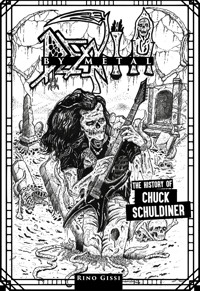
United States, mid-80s. Following the rise of thrash metal, another revolution disturbs the heavy metal scene: the birth of a major monster, death metal. And right in the heart of this storm, one group stands out to the point of practically naming the genre as a whole – Death, guided by the tenacity and perseverance of a boy who would not give up on his dreams easily. His name is Chuck Schuldiner. Thanks to Chuck, over the years Death became a complex war machine. Far from the stereotypes and clichés of the musical currents that the band helped create, the group elevated the idea of heavy metal to a level that few dared to play. Tracing the most important events in Chuck's life and career, extracting details from those who knew him closely, and examining all his albums from a musical and lyrical point of view, this book celebrates the life and work of a great artist, whose contribution is seminal to the history of heavy metal. A boy who always liked to think independently and who lived for the music, whose dream was prematurely interrupted, at the age of thirty-four, by a cruel illness that took his life.
Sie lesen das E-Book in den Legimi-Apps auf:
Seitenzahl: 340
Veröffentlichungsjahr: 2023
Das E-Book (TTS) können Sie hören im Abo „Legimi Premium” in Legimi-Apps auf:
Ähnliche



















Death By Metal: The History of Chuck Schuldiner
Rino Gissi
First published in Italy by Tsunami Edizioni © 2013
English edition copyright by Estética Torta © 2021
All rights reserved. Except for brief quotations in critical articles or reviews, no part of this book may be reproduced in any manner without prior written permission from the publisher.
Editor: Lívia Martins
Translator: Tavos Mata Machado
Proofreader: Amanda Pavani
Interiors: Ale Santos
Cover Ilustration: Alejandro Ariza Rosales
Cover Design: Ale Santos
ISBN: 9786589087915
A very limited edition of this book has been printed in hardback.
If you are interested in a copy, email us the publisher at [email protected].
We ship worldwide from Brazil.
www.esteticatorta.com.br
NOTE ON THE ENGLISH TRANSLATION
Death by Metal is the result of an extensive labor of research and dedication by Italian author and metalhead Rino Gissi. It was originally published in Italy in 2013, filling a gap in the existing bibliography on extreme metal and offering a thorough and passionate account on the life and times of one Chuck Schuldiner, singer, guitarist, leader and mastermind behind the death metal behemoth Death. That book was initially translated from Italian into Portuguese by Guilherme Maionchi and published in Brazil in 2020. The English translation we offer here is based on the Brazilian edition, and not on the original Italian text (though the original was consulted on occasion). This was an editorial decision taken by common agreement between the publisher and the author; we trust the final text we present to you now is up to standard and to the quality of the original Italian edition. However, since this is a “translation of a translation,” there will be no escaping minor incongruencies, inevitable consequences of the very act of translation. Particularly notable, here, are the quotes: several statements included in this book were uttered by American people, in English, during the 1980s, 1990s and 2000s, and then translated into Italian to be included in the original edition of this book. The translation team for that American edition did not have access to the original quotes – therefore, we had to rely mainly on Brazilian translations from the Italian edition in order to convey the meaning of these utterances. Whenever the original quote in English could be found on the internet, it was transcribed verbatim – unfortunately, that was not the case for most quotes. We believe the spirit and intention of the original utterances were preserved in this text, but there might be some variation in wording – we apologize for that, but we are certain it will not hinder the reading experience or the enjoyment of this very fine metal biography.
The translator would like to thank Dan Levy and Clayton Lovett for several suggestions on phrasing and vocabulary, Ron Ouwehand for his help on vinyl-collecting-related lexicon, and an anonymous internet benefactor who kindly provided us with copies of the album’s booklets.
Tavos Mata Machado
PREFACE
By Angelo Mora
Life is also made up of remorse and regret. There’s still an open debate about which of these feelings is “less bad”. Some people claim to have no regrets in life. Lucky them.
As a rock’n’roll enthusiast, the person who now writes to you holds an enormous remorse: in 1996, some friends from school hit the road to watch the Ramones concert in Milan during their farewell tour. I didn’t think too much of the opportunity then: short on cash and intimately convinced that those New York dudes would eventually return to the stage, I decided not to go. That was an ill-fated decision.
When speaking of “regrets,” the image of Death’s Chuck Schuldiner is the first that comes to my mind. It was 1998, and my obsession over heavy metal, hard rock, and punk had become somewhat of a profession to me. At the same time I fulfilled my duties towards the State, I was starting my career in journalism. Truth is I breathed, ate, and defecated heavy music. Goddamn!
During that summer, I received a promotional CD preview edition of The Sound of Perseverance. I felt feverish apprehension: aside from the sacred beasts of Black Sabbath, Death was then my favorite band, and Schuldiner my idol. The editor-in-chief for Psycho! assigned me the task of writing an album review and doing an interview with the guy. On a September evening at the scheduled hour, I waited a long time for Chuck’s call. I gave up after three hours because I had an important appointment that night: a Moonspell and Therion concert.
On the next day, my roommate told me, “An American guy called last night looking for you…” Holy shit! There had obviously been some scheduling miscommunication between the Italian agency and the German label – a classic situation in that line of work, as I’d come to find out in the future. Tough luck for me, who missed my chance to talk to Schuldiner. The opportunity never came again: not a month later, when Death played in Italy, not in the following years, much less after Chuck’s disease was diagnosed.
On October 20th, 1998, it was a warm afternoon in Milan. The internet was rapidly gaining popularity; almost everyone had a cellphone, and metal was serious business. People still used to show up for the concert hours and hours early, before lunch, to perform the rather manly ritual of metallic brotherhood. It was a simple and delicious recipe: talking about music to exhaustion, drinking cheap beer, maybe eating radioactive French fries and nasty snacks, laughing, and talking shit. Those most fearless would smoke a joint and mock bystanders, either on foot or in cars. As it was somewhat unfavorably located in a rundown neighborhood, to my capital-dwelling eyes, the Rainbow Club on Besenzanica Street was the ideal venue for that sort of harmless pastime. The place no longer exists; with its demolition, the spirit of those times also broke down. Maybe today’s 2.0 metalheads are prettier, cleaner, politically correct, and only do stuff on their computers between videogame matches and something on Facebook. Or, who knows, maybe not.
Either way, the atmosphere at the Rainbow on that Tuesday was more electric than usual, despite its typical equatorial weather. Saying that Death was eagerly expected, three years after their last concert at that venue, was an understatement. Chuck had split the band and then put it back together for The Sound of Perseverance. The American group had become the flagbearers for a very specific type of heavy metal: violent on one side; driven and very intense on the other; bright and sophisticated as few others.
I keep many memories of that day, big and small folkloric memories that go way beyond Death’s concert itself, which was good, but hindered by the terrible acoustics of the venue. For example: there were those two dudes who, even though they’d never met before, after a few minutes were singing “Flattening of Emotions” together with the same ease your barber whistles “Fly Me To The Moon” by Frank Sinatra.1
The concert had finished, but the cult of the true fanatics was only beginning. The full liturgy entailed a peaceful assault on the tour bus in an attempt to take pictures, exchange a few words, or get autographs. When it was my turn, I handed Schuldiner the CD booklets so he could sign them. When he gave them back, I thanked him in my shaky English: “Let the metal flow!”, a slogan coined by Death’s leader a few years before. I thought those words, in their own way, summed up the overflowing energy released by those albums.
Chuck looked at me in slight surprise and gave me a thumbs up with his left hand. That’s how I was blessed by the pope of death metal.
That is the exact image of Schuldiner I remember: smiling, grateful, unaware of his disease, a disease that would defeat him about three years later. It was the same expression of serenity we see in his face on the cover of this book – the commitment of the author is exemplary. Rino Gissi is way too young to have lived Death’s odyssey in real time. However, Schuldiner’s work was sewn onto him like a second skin, compelling him to write a piece that, by thoroughly reconstructing the group’s complex history, fills a gap in the bibliography of worldwide hard’n’heavy.
Who was Chuck, really? Was he the neurotic despot who constantly fired and replaced musicians in his band, cancelled concerts and tours at his own whim and was constantly struggling against the music business and the specialized press? Or was he the genius paladin of metal, perfectionist and fearless, the naïve long-haired man who loved his family, his pets, barbecue, donuts, and nature?
Chuck was, and forgive my platitude, one of us. He loved heavy metal to his core, even before he was that musician of extraordinary talent and considerable ambition. He was a simple kid, friendly and kind, sensible, and often vulnerable. At the same time, he was an upstanding professional, uninterested in fleeting fame, determined and steadfast to the point of arguing with anyone who interfered with his vision. He was someone who demanded a lot, maybe too much, of himself and of others in the name of artistic evolution, with almost ascetic undertones. He was a complex and fascinating personality, unique in many aspects, who also had a dark side, with obsessive nuance. Human, all too human: unsurprisingly, Human is the name of one of his masterpieces.
Enough for now. Before I bore you with my excessive and superfluous writing, I can only bid you goodbye in the end credits and wish you a good read of this book that REALLY supports (metal) music, not rumors.
CHAPTER 1
Atragic and fatal accident: there was nothing that could be done for Frank Schuldiner. There was the young man’s deceased corpse, leaving behind a soul-crushing void in his family.2 Later, standing by his coffin, Malcolm and Jane Schuldiner called their other two kids to come closer; Bethann, and their youngest child, Charles, whom they called Chuck. Mr. Schuldiner, who came from an Austrian family of Jewish background, was a teacher, as was his wife. Her maiden name was Burnette. After losing their sixteen-year-old son, their eldest, the Schuldiners had to comfort their two remaining children while hiding their own sorrow at the same time.
At the age of nine, Charles Michael Schuldiner had to understand his situation, grow up, and face the harsh reality of life. His beloved big brother, with whom he had been playing in the backyard the day before, up in the tree house or in the woods with his sister Beth, was no longer there. His lifeline would become rock and roll music, hard rock and heavy metal in particular. A while later, his mother, trying ease her son’s pain, went to a thrift store and got him an electric guitar (she forgot the amp, which she picked up later on the same day).3 Chuck began familiarizing himself with the instrument while trying to cope with the loss as reasonably as he could. “Chuck was a good boy, loving and sweet. He played baseball and soccer at school, his favorite sports; his grades were good, and he was very well-behaved. I always tried to caution him, because he was innocent and thought everyone was friends with him,” Mrs. Jane said. His parents did all they could to make Chuck’s Beth’s lives as peaceful as possible. He loved walking in nature and fishing. He was an active kid with a positive attitude, curious and always interested in discovering new things.
About eight years after Frank’s death, the Schuldiners moved to Altamore Springs, a suburban neighborhood surrounded by trees in Orlando, Florida, leaving behind their house in Long Island, New York, where Chuck had been born on May 13th, 1967. “I had visited the Orlando area a few years prior and I’ve never forgotten all its beauty. The warm weather they get around the year was something else that weighed in our decision to move there. Malcolm loved playing tennis and sailing, so it wasn’t hard to talk him into it. That’s how we moved to Florida: seeking warmer climates, cheaper houses, and better opportunities overall. Chuck’s childhood was peaceful and filled with love, like in Leave it to Beaver”, his mother would say.
The kid spent his early teens going to school and enjoying his free time with outdoor activities and practicing music. Chuck had taken lessons before he got his guitar, during which the teacher tried to teach him “Mary Had a Little Lamb.” However, the boy’s strong aversion to written rules and external guidance soon became evident. Chuck had always preferred to learn by himself – a sign of a strong personality, self-confidence and a will to grow, regardless of the world and the people around him. That attitude would shape his entire life. Jane says, “We can safely say he was self-taught. Kiss was his favorite band for years, and they were a huge influence. Chuck was also amazed by Jimi Hendrix and loved The Doors. When he was thirteen, I took him to his first Kiss concert.” As evidence of his love for the New York group, there are photos of a young Chuck wearing Starchild’s clothes and makeup, the character “played” by Kiss’s singer and guitar player Paul Stanley (though it was clear his main influence was the other guitarist, Ace Frehley).
Chuck did not approach hard rock and heavy metal as a mere listener, and soon the family’s mailbox was crammed full of things he would order from all around the world through newspapers, fanzines, catalogues, etc., not to mention letters he exchanged, first as a fan and later as a musician himself. Thanks to a natural predisposition, he first attempted to copy his heroes.4 From there, the next logical step was to put songs by other people aside and start writing new ones. As Chuck later said, “I tried learning the riffs in Exciter’s Heavy Metal Maniac, but they didn’t sound right, so I started writing my own songs.”
Meanwhile, Chuck’s mother never, not even for a moment, tried to get in the way of her son’s passion. Jane Schuldiner is certainly not intolerant. “Chuck was never a problematic child; I accepted his music because I didn’t see anything wrong with it. His father and I always listened to contemporary music, but we also listened to a lot of Elvis Presley (who Chuck also liked). He also loved animals and cooking; once he told me that, if he hadn’t become a musician, he’d have been a cook or a vet.”
Under the sunny skies of Florida, seasons went by peacefully. Chuck loved to lock himself up in the garage alone with his guitar, to rehearse and write music. Every day, for about three hours, he continually practiced notes, riffs, and chords, dedicating his whole weekend to the manic activity. At fifteen, he played his first live concert with a friend in a park not far from his home, while Jane proudly watched from the audience.
School soon became an obstacle for his plans, so Schuldiner quit his studies in 1983 to dedicate himself full-time to the seven notes, alongside his friend Frederick DeLillo, whom he had met at an outdoor party in late 1982. His parents believed in him and, though they did not agree with his choice (which Chuck himself would later regret), they backed him up. “His dad and I were very strict: we explained to him that school came first and then the guitar, but there was nothing we could do, so we talked to the school principal and the staff; we told them we reckoned that Chuck took music seriously and decided he had the right to pursue his dreams. He wasn’t even eighteen yet when we gave him an ultimatum: he had one year to get a record deal, otherwise he’d have to go back to school and finish his education. In the following year he got a contract and then he never stopped,” says Jane.
The wound of Frank’s loss still ached, but in the early 1980s Chuck found his outlet in the budding extreme metal phenomenon, a subgenre that attracted him through its morbidly infused lyrics; it was a sort of therapy through which he could exorcize his brother’s death.
In the international heavy metal scene, the line between black and thrash metal was still very thin when compared to the way these labels would be perceived in the future: the founding fathers of black metal, the British guys from Venom, played a kind of raw thrash inspired by Motörhead, but were labeled “black” mainly for their blasphemous lyrics and the satanic image they projected. Likewise, the Californian band Slayer was sometimes labeled “black” (and, later on, even “death”). Schuldiner, who later made his aversion to any cut and dry labels very clear, didn’t see an issue there: he loved Venom and Slayer indiscriminately and was inspired by these bands to write increasingly brutal riffs – by the Newcastle trio in particular, who had just pioneered a new approach to metal, raw and impetuous, in which technique and melody only held a minor role. They played their songs mercilessly and barely in tempo, chanting brutal hymns to Satan and mocking moralists. They looked like dumbasses, but they were in fact trailblazers: their cruelty paved the way for extreme metal, prefiguring thrash, death and, rightly so, the black metal that would come to be.
Almost immediately, thrash became the most popular manifestation of extreme metal, thanks to, above all else, spectacular mainstay acts like Metallica and Slayer, who recaptured the tradition of classic heavy metal and, at times, dosed it with the fierceness of punk and hardcore as well as the impetuosity of Venom themselves. Albums such as Kill ‘Em All and Show No Mercy, in their turn, were pioneers that found their counterparts in the American East Coast with acts such as Anthrax and Overkill. Venom’s sound also appealed to followers in continental Europe, where German acts such as Kreator, Sodom, and Destruction reclaimed the crusade against melody and became spokespeople for an even harsher and more extreme thrash than that of their American predecessors. Among other important European pioneers were the Swedish band Bathory and the Swiss groups Hellhammer and Celtic Frost (both led by Tom Gabriel Warrior).
By the end of 1983, at the age of sixteen, “Evil” Chuck Schuldiner decided it was time for him to start his own band, one that would be stylistically in tune with his two main influences, Venom and Slayer. He then joined forces with guitarist “Rick Rozz”5 DeLillo and drummer/singer Barney Kamalani “Kam” Lee, who played in the punk rock band Invaders From Hell. Both went to the same school and had met when DeLillo/Rozz went to Lee’s classroom to ask if he could draw Eddie, Iron Maiden’s mascot (Rozz also says that he showed up to the first day of school with his face painted in the likeness of Hellhammer/Slayer; he was then advised by the principal to never do that again). The new lineup was named Mantas: it was not a coincidence that this was also the stage name used by Jeffrey Dunn, Venom’s guitarist.
Apart from a truly short stint with a guy called Dave Tett, Mantas went on without a bass player; after a couple of Slayer, Metallica, Savatage and Mötley Crüe covers, the trio soon began working on creating new music, with Schuldiner as their main songwriter. These sessions brought some unofficial recordings to life – the first of those, dubbed Emotional, features Tett’s only photo with the band, though he is not credited in the liner notes. Emotional features savage and aggressive material, in which Lee’s outrageous vocal ability is a highlight, somewhat of a precursor for the death metal growl.
In the summer of 1984, using Rozz’s Panasonic tape recorder, the group recorded five tracks in Schuldiner’s garage; thus Death By Metal,Mantas’s first official demo, was born, in which Chuck sings the bonus track “Power of Darkness”. The lyrics, written by Lee, are the result of gruesome imagery, both “sentimental” and naïve, while the cover features a picture taken by Beth of the three young men standing with their back to a wall. On top of that, Rozz was wearing a Nasty Savage (their local idols) t-shirt. The record could be bought for 4 dollars, which were to be mailed to 609 Citrus Street, Altamonte Springs – sure enough, the Schuldiners’s address.
In that same summer, Mantas played live for the first time at the Knights of Columbus Hall in Orlando as the opening act for Tempter. They climbed the stage wearing black makeup on their eyes and fake blood dripping for their mouths,6 probably in a tribute to Samhain’s aesthetic, a horror punk band led by Glenn Danzig in 1983 after he parted ways with Misfits, who were Lee’s greatest passion. Their setlist included two covers: “Poison,” by Venom, and Slayer’s “Black Magic.”
All in all, things were agreeable and paradoxical, forming a sharp contrast between the trio’s warlike intents and the peaceful environment provided by Schuldiner’s mom, who hosted Chuck’s friends at home and offered them snacks and (strictly nonalcoholic) beverages. One might say that some of the most frightening guitar solos in metal history were perhaps composed amid afternoon snacks.
The demo album did not achieve the expected results, and Mantas remained an overlooked, if not completely ignored, band in the Orlando, Tampa and general Florida scene – the area was still a long way from the future glories of death metal and did not compare to the burgeoning California scene. Rozz later said, “The death metal scene was born in San Francisco, with Possessed, while in Florida, nothing was going on. There was never a thrash scene in Florida; Savatage didn’t play thrash, nor did Nasty Savage. The producers only hired bands that played glam metal covers, so there was no room to play in proper venues. We played at a pizza parlor in Orlando and in a restaurant, close to the buffet… wherever we could.”
Another consequence of their lack of immediate results were rising tensions among the band members, which led to their first split. Few people noticed that; a few days later Schuldiner made peace with Rozz and Lee. On top of that, a genius idea came to his mind while he waited in line to get tickets for his umpteenth showing of Sam Raimi’s horror classic Evil Dead: Mantas should change names to “Death,” the ideal name, perfect and definite for an entity dedicated to extreme metal.7 At least, that is what Lee’s version suggests, as written by journalist Albert Mudrian in Choosing Death – The Improbable History Of Death Metal And Grindcore. At the time, John Gross denied the story, along with Chuck’s friend Mark Conrad, editor of Guillotine fanzine and the group’s makeshift manager, claiming that the name’s origin was a lot more prosaic (but he did not reveal anything further). The intricate and unmistakable group logo was created by Lee shortly after and not by Chuck, as some sources would later claim. “Chuck never acknowledged that I created the logo, and many fans never knew the truth!”, declared Lee in 2001.
After re-releasing Death By Metal under the name Death with a different cover art and track list – the world’s first true death metal demo, according to journalist Ian Christe –, Schuldiner dragged Rozz and Lee back to the studio to record a new project, Reign of Terror: it was a critical moment in the new band’s career. The demo was recorded in the fall of 1984, in the back of a record store whose owner had some recording gear and rented it at $80 for a five-hour period. Reign of Terror features five chaotic and frantic tracks, with titles that were eloquent in their childish extremism (“Corpse Grinder,” “Summoned To Die,” “Witch of Hell,” the title track, and “Slaughterhouse”), mixed haphazardly due to time constraints. However, the demo was promoted through a vast network of tape-trading and circulated among the fans of more violent metal strains, reaching out well beyond the group’s expectations. Tape-trading, in fact, offered a suitable alternative to buying original records. Hirax’s singer, Katon W. De Pena, spoke about being Schuldiner’s pen pal. “We got in touch around 1984. He was quite young then, but passionate about extreme music and a Hirax fan. He had all our first tapes and wrote to us all the time; he sent us some recorded rehearsals, wishing to know what we thought of his band. We liked them and encouraged him to move forward. Anyone who loves Death should look for Mantas’s early records, they’re really good: two guitars and drums, no bass… Pure raw metal.”
Meanwhile, a prestigious event awaited Schuldiner, Rozz and Lee: on December 30th, 1984, the group played live at Ruby’s Pub in Tampa; they were the opening act for the up-and-coming Nasty Savage. The concert was taped and released by Guillotine and by the band itself as a live demo titled Live at Ruby’s Pub; it is, in fact, the first live record by the band.
Winter came and went without fuss, though Schuldiner’s progress was evident. A short while later, the dissent between him and his two fellow travelers had grown so wide that he decided to look for more experienced musicians – a sign of his inordinate drive for growth and improvement. In March 1985, Death had the opportunity to record a three-track demo tape in a professional studio: it was a huge opportunity to get their much-sought record deal. Infernal Death, which Chuck already knew would be the last act of that lineup, includes the title track, “Arch Angel,”8 and “Baptized in Blood” (both featuring his vocals). Shortly thereafter, Rozz quit Death for good, and in May Schuldiner and Lee self-released the demo Rigor Mortis.
Meanwhile, Chuck had set his eyes on a young bassist from Michigan who had been recommended by Conrad and Gross: Sean McDonald, formerly of Genocide (a band that changed names to Repulsion in 1986 and released the amazing grindcore classic Horrified).9 Soon afterwards, Genocide’s guitar player, Matt Olivo, was also considered for Death.
At this point, the singer and then-current bassist from Genocide Scott Carlson came aboard as an option for the four strings. With the group’s approval, and after severing ties with poor McDonald, Olivo and Carlson did not think twice about getting into a car and driving down to Orlando, believing a fusion with Death was inevitable, as they had no drummer and no second guitar. Rehearsals happened in Schuldiner’s boiling garage, as Olivo recalls: “It must have been about 115 degrees in there, unbelievably humid. We complained all the time and had to drink lots of water, but it was intense and really fun, because we already knew the songs. We rehearsed stuff Schuldiner would never play again, such as ‘Curse of the Priest’ and ‘Legion of Doom,’” as well as covers of Celtic Frost’s “Into the Crypt of Rays,” Black Sabbath’s “Paranoid,” Sodom’s “Burst Command Til War,” Slayer’s “Black Magic,” and a Genocide song, “Armies of the Dead.” The collaboration with those two young men from the Midwest, who had been introduced to each other by Schuldiner and two managers, was good from both a musical and an interpersonal standpoint, thanks to the lighthearted environment sparked by their mutual interest in metal music, horror movies, and a demented sense of humor. “Chuck plastered snot on the wall and stuck a coin there. It stayed there for an eternity. He did it as soon as we got to his place because he wanted to impress us with something disgusting,” Carlson recalls.
Schuldiner worked in a Del Taco fast-food restaurant, although his friends from the time say that his parents had never let him want for anything, morally or economically speaking. Carlson said, “Chuck’s mom was too nice not to welcome us. She cooked us dinner every night; she was an angel. Jane was one of the best moms I’ve ever known. Chuck’s dad was also cool. They never bugged him, except for when they made him pick up the trash… But when it was about serious stuff, like his future, they never intervened, nor did they make his decisions for him.”
After some time, however, Lee also quit the band; we would soon see him again in Massacre, along Rozz himself and two other future Death members, Terry Butler and Bill Andrews, who would go on to release the classic From Beyond10in 1991. Carlson says, “In the beginning, everything was beautiful. We related a lot to Chuck and the others, but Lee was going through several personal issues and really couldn’t play with us full time. We were all so young and naïve that we labeled him a wimp and a poser, but now I can perfectly understand his position. I have nothing bad to say of him.” Lee’s version is more honest:
“It was kid stuff. Chuck and I liked the same girl. I got along with her, and Chuck didn’t – so he got pissed off at me. Also, I didn’t have a place at the time and was living on the streets. When he could, Chuck’d let me stay at his parents’ place, but I couldn’t do that forever. So, my priority shifted towards looking for a place, while the others moved on with Death.” Either way, his departure created some problems for Schuldiner, who, along with the other members, immediately began the search for a drummer. The task eventually became too hard, so much so that the rookies gave up, relaying their decision first to Mrs. Jane, after which they went back home to Flint, leaving behind a now alone and frustrated Chuck with the task of reforming the band from scratch.
Finally of age, in September 1985 the musician moved to San Francisco, where he got in touch with D.R.I.’s former drummer Eric Brecht, who was trying to start a band with guitarist Erik Meade. As Erik moved into the role of bass player, Death rehearsed in punk band MDC’s11 studio and went on to record a seven-track demo, Back From The Dead, in which Schuldiner takes over all vocals. Between October and November, several live concerts at the famous Ruthie’s Inn in Berkley were recorded and promoted; this time things did not work out, either: in December, Chuck had to go back home and return to a musical scene that did not please him at all.
Considering that, up to that point, Death’s frontman managed to start a band by himself time after time, eventually fate came to his doorstep: the Canadians from Slaughter got in touch and invited Chuck to join them as their rhythm guitarist in Toronto, where they were about to record their first album. The group managed to convince him; soon after, Chuck, who had the group’s demo Surrender or Die and liked it, took a flight to Canada to try his luck.
With Slaughter, Chuck rehearsed the material that would become Strappado, a future extreme metal classic with a coarse and fast death/thrash base, influenced by Celtic Frost and by punk rock and hardcore. However, his Canadian adventure ended after only two weeks, since Chuck could never really adapt to the country, like he admitted himself during some phone calls with Olivo; on the other hand, it is hard to imagine him taking orders from others, given his authoritarian inclinations. He decided to drop everything when Terry Sadler’s parents found out that Chuck was sleeping in their basement without their consent – in fact, no one had told the singer and bassist’s parents about the American boy being there!
Without a band and forced to start from scratch for the umpteenth time, Schuldiner returned to Florida once again and, shortly thereafter, tried his hand at the San Francisco scene again; in California, he got in touch with a sixteen-year-old drummer from Concord, Chris Reifert, who had already played in amateur acts like Guillotine and Burnt Offering, who knew Death from their previously released demos (“There was a large record store in San Francisco, The Record Vault, which sold pirated copies of all kinds of metal demos. I got my hands on three or four Death demos that way”). A friend of Reifert’s gave him Chuck’s phone number shortly before a local student’s radio broadcast featured Chuck’s ad, in which he said he was looking for musicians, so the boy got in touch immediately. They broke the ice talking about their mutual passion for Slayer, Possessed, Bathory, Artillery, and Sodom. That was the definitive turn of the wheel: in the spring of 1986, in a small studio in Lafayette, they recorded the demo Mutilation, which had three tracks (the title track, “Zombie Ritual,” and “Land of No Return”), with Chuck also playing the bass.
The tape caught the eye of Combat Records, an independent label from New York which had been active since 1983 and would be later absorbed by Relativity Records, a fundamental name in the spread of extreme metal thanks to their release of Californian Possessed’s debut, Seven Churches, in 1985. The album eventually established the genre’s name with its track “Death Metal” (Death Metal was also the name of the group’s 1984 demo, created by singer and bassist Jeff Becerra while on his desk at school during an English class). Schuldiner lived in Krystal Mahoney’s place, leader of Possessed’s fan club, as Becerra recalls. “I listened to Death for the first time at Krystal’s place, seeing Chuck play some live riffs. I had no idea who that new guy from Florida was and had never heard of Mantas. He was wearing a Possessed t-shirt and I was impressed by his talent: we were both very young, equally ambitious, and soon became good friends.” Combat had the boys sign a five-album deal, despite the band being comprised of only two people at the time. At nineteen, Schuldiner reached his first landmark: the countless efforts since the Mantas days were starting to pay off. Reifert recalls, “It was our manager who got in touch with Combat, and I really don’t think he let other people listen to those songs. Initially, we were invited to record an EP for the label’s Bootcamp series, which would be released in a camo packaging, military style, but that didn’t sound like a good idea, so we proposed a full-length album. When they agreed, we decided to close the deal.” At the time, Death did not have an actual manager, so Reifert was probably referring to music journalist and friend Don Kaye, a key figure in these events.
Chuck did not want to bite off more than he could chew and knew he had to keep his feet on the ground. He then swiftly started working on several new songs for the first album (which he wanted to call Zombie Ritual). The album had to be planned in detail, and no mistakes were allowed, but the inexperience of those two young musicians was their demise: the result of their first recording, done in Florida, was disappointing, so the label asked them do it all over again from scratch. The pair went back to working on an improved version, as Reifert recalls. “We recorded the album, but we had to discard the first version. I can’t remember the project’s name, but we thought it would work. Keep in mind that we were still teenagers, we were sure we had made a good album there. We recorded the base tracks and sent them to the label, but they replied, ‘No fucking way!’”
By the end of the year, Reifert and Schuldiner went back to California, to the Music Grinder studio in Los Angeles, under the supervision of Randy Burns, producer of the aforementioned Seven Churches and Darkness Descends albums by Possessed and Dark Angel, respectively. Chuck certainly did not hold back on the mic. This is how Randy Burns’s own sound engineer, Casey McMackin, describes the recording of a long and monstruous scream between two lines of a song: “In the third attempt, a really strong scream came out. I thought we could get an even better one, so I started the recording again, but couldn’t hear anything. I started it again, nothing still. So, we went to the room where Chuck was, to see what was going on – and we found him on the floor, passed out because of the effort from that third scream. If that’s not commitment…”
Meanwhile, Chuck and Chris became friends with a local band, Sadus. Their bass player, Steve DiGiorgio, talked about his first encounter with the kid from Florida. “He was about our age. We had just finished high school, so we had a lot of free time during the day. We talked to Chuck a lot and asked him where the guys in his band were; he said, ‘Oh, they’re coming out of school in a few hours.’ We were in shock, ‘School? Fuck! They’re young, then!’ Meanwhile, he played the Mutilation demo for us. Holy shit! We couldn’t believe what we were hearing. The ‘band’ got there soon after: it was just Chris. How could they play that way when they were just a duo? We went to Reifert’s, to the room where they rehearsed. We were appalled. We thought we didn’t know many bands in the area, and here were two kids our age, playing our kind of music – so we started to hang out a lot: we’d have some beer or smoke dope once in a while, or we’d go hiking.”
These two bands wound up rehearsing in Jon Allen’s – the drummer from Sadus – house. Reifert lent them his drum kit, a beautiful white Tama, similar to Neil Peart’s, and DiGiorgio found himself jamming with Chuck and Chris and forging a friendship that would become a cornerstone of the band’s history.
Meanwhile, Death was ready to shock the global heavy metal scene with the release of a death metal landmark: Scream Bloody Gore. In the words of Chris Reifert, they were “well-written, well played and well produced songs. Fact is, each note played in that album meant a lot to us; we literally lived for the band, and I think people noticed it. We had a lot of fun recording it, but we were very focused and took it seriously. Our goal was to release an album that could define the foundations of death metal, and we certainly didn’t want to fail.”
CHAPTER 2
After sacrificing so much, Schuldiner finally started to reap the oats he had sown with his hard work: Scream Bloody Gore, Death’s long-awaited debut album, was about to be released by Combat. The bond between Schuldiner and Christ Reifert was strong, so much so that they called themselves “metal brothers.”
When talking about the swift recording process for the album, Chuck said, “I was completely satisfied with how the album was shaping up. Randy Burns ensured us a very heavy production, and it was extremelly easy working with him in the studio. The only thing I somewhat regret is that I wasn’t there for the final mixing session, particularly regarding the rhythm guitar.”
A while afterwards, the two met the man who, according to Chuck, would be their ideal rhythm guitarist, but who did not record a single note with them in studio. “Soon after recording the album, we came upon a guitar player, John Hand, who we really liked at the time, so we brought him aboard. He was with us long enough to have a photo of him in the album sleeve, but he couldn’t play our more recent material, and for that he had to leave.” Reifert says that the group had explicitly told Combat to credit Schuldiner for the rhythm guitar, but the label either forgot or ignored his request, which made it seem like Hand had really contributed to the album. “When we realized things weren’t working out with him, it was already too late.”
Steve DiGiorgio, on the other hand, said he had been really close to recording the bass lines in Scream Bloody Gore, an idea that ultimately never came to fruition. “I asked them, ‘Okay, who played the bass?’ And Chuck replied, ‘I had to do it…’ I said, “I was supposed to play it, dude! I rehearsed the songs with you guys for weeks!’ Chuck then pat Reifert on the back and exclaimed, ‘I told you we should have asked him!’”
In May 1987, Death’s debut was released by Combat in the US and in the following month by Music for Nations in Europe, through their partner label Under One Flag. The grim cover was the result of another important partnership in the group’s history: with American illustrator Edward J. Repka, who shortly after became one of the most sought-after artists in the worldwide metal scene (particularly thrash metal), who eventually went on to author his most famous work in 1990 for Megadeth’s Rust in Peace.
The dark aesthetics of the album contrast with the cleanshaven teenage faces of the musicians in the pictures: Reifert wears a Nasty Savage t-shirt and a Sadus patch sewn on his jeans jacket, and Hand wears a KreatorPleasure to Kill t-shirt under an unlined jeans jacket. Schuldiner chose a white t-shirt featuring a friendly skeleton in a suit playing a guitar and a tight leather jacket on top; his long curly hair stretches down his forehead, nearly covering his eyes. From up close, the boy did not look so “evil.”




