


Erhalten Sie Zugang zu diesem und mehr als 300000 Büchern ab EUR 5,99 monatlich.
- Herausgeber: The History Press
- Kategorie: Sachliteratur, Reportagen, Biografien
- Sprache: Englisch
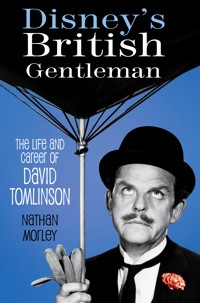
'A wonderful account of a life filled with far more ups and downs than its subject's languid demeanour ever suggested.' -Miles Jupp Even if the name doesn't ring a bell, you'd recognise David Tomlinson's face – genial and continually perplexed, he was Mr Banks in Mary Poppins, Professor Browne in Bedknobs and Broomsticks and Peter Thorndyke in The Love Bug. To many, he's the epitome of post-war British comedy. But at times his life was more tragedy than comedy. A distinguished RAF pilot in the Second World War, his first marriage was to end in horrific tragedy and his next romance ended with his lover marrying the founder of the American Nazi Party. He did find love and security in his second marriage, but drama still played its part in his life – from the uncovering of an earthshattering family secret to the fight for an autism diagnosis for his son, up against the titans of the British medical establishment. Tomlinson may have died over twenty years ago, but his star continues to shine. In Disney's British Gentleman, Nathan Morley reveals the remarkable story of one of Disney's most beloved icons for the very first time.
Sie lesen das E-Book in den Legimi-Apps auf:
Seitenzahl: 421
Veröffentlichungsjahr: 2021
Das E-Book (TTS) können Sie hören im Abo „Legimi Premium” in Legimi-Apps auf:
Ähnliche



















About the Author
Nathan Morley is a journalist and author based in Nicosia, Cyprus. He is passionate about twentieth-century European history and has written for a variety of broadcasters and publications, including Voice of America, Deutsche Welle and Vatican Radio, as well as writing the book Radio Hitler: Nazi Airwaves During the Second World War. He was the recipient of a New York Festivals Radio Award for a series of radio interviews with entertainers including Sir Norman Wisdom, Dame Vera Lynn and Eartha Kitt.
For Sari
Front cover illustration: David Tomlinson 1964. (Everett Collection Inc./Alamy Stock Photo)
First published 2021
This paperback edition first published 2022
The History Press
97 St George’s Place, Cheltenham,
Gloucestershire, GL50 3QB
www.thehistorypress.co.uk
© Nathan Morley, 2021, 2022
The right of Nathan Morley to be identified as the Author of this work has been asserted in accordance with the Copyright, Designs and Patents Act 1988.
All rights reserved. No part of this book may be reprinted or reproduced or utilised in any form or by any electronic, mechanical or other means, now known or hereafter invented, including photocopying and recording, or in any information storage or retrieval system, without the permission in writing from the Publishers.
British Library Cataloguing in Publication Data.
A catalogue record for this book is available from the British Library.
ISBN 978 0 75099 757 7
Typesetting and origination by The History Press
Printed and bound in Great Britain by TJ Books Limited, Padstow, Cornwall.
eBook converted by Geethik Technologies
CONTENTS
Acknowledgements
Introduction by David Tomlinson Jr
1 Growing Up
2 Call of the Stage
3 Dark Clouds
4 For King and Country
5 Goodbye America
6 A Way to the Stars
7 The Rank Set
8 The 1950s
9 That Funny Chap
10 Coming of Age
11 New Horizons
12 Role of a Lifetime
13 Wondrous Opportunities
14 A Busy Gentleman
15 The 1970s
16 Return to Hollywood
17 It’s a Wrap
18 Fade Out
19 Posthumous Growth in Popularity
Filmography
Bibliography
Notes
ACKNOWLEDGEMENTS
I am grateful to the exemplary cast connected with this biography. Firstly, I owe a special debt to the Tomlinson family – Audrey, David Jr, Jamie and Henry – all who have made numerous valuable contributions and suggestions to this manuscript and allowed me to quote from David Tomlinson’s memoirs. I also thank them, more generally, for their positive efforts to share the David Tomlinson legacy for new generations.
I would also like to extend special thanks to Richard Ingrams for kindly sharing his memories, along with a sizable cache of fascinating correspondence with David. Robert Sherman, the son of composer Robert B. Sherman, passed on valuable unpublished notes from his father’s autobiography that described his period working with David on Mary Poppins and Bedknobs and Broomsticks.
Among others whose help and interest have contributed to this work, I would like to single out Jill St John, Bonnie Langford, Geoffrey Boycott, Gyles Brandreth, Lawrence Douglas, Frances De La Tour, Michele Lee, Griff Rhys Jones, James Kettle, Jonathan Kydd, Simon Day, Ann Bell, Piers Haggard, Shirley Eaton, Vera Day, Mary Peach, Russell Grant, Roy Snart, Judi Spiers, Barry Fantoni, Robert Longden, Jimmy Cricket, Merete Bates, Iain Sutherland, Jess Conrad, Jeffrey Kurtti, Bernard Morley, Rosanna Ritchie at the BBC Written Archives in Caversham, Beverley Matthews, the archivist at Tonbridge School, Mark Hourahane at the Leas Pavilion archive, Jenifer Hayward at the Henley Players, Kate Lees at Adelphi Films, Ben Simon and Jérémie Noyer at Animated Views, Paul Johnson at the All Angels’ Episcopal Church in New York and Mark Beynon and Jezz Palmer at The History Press.
INTRODUCTION BY DAVID TOMLINSON JR
At the start of that iconic film 1917 set in war-ravaged northern France, I instantly spotted a special significance for my family and me. Out of 365 days, the author chose 6 April, the thirty-fourth birthday of CST – my grandfather Clarence Samuel Tomlinson – on whose seventy-first birthday I was born thirty-seven years later. That day in 1917, CST would in all likelihood have been serving in France: he was certainly there when just over a month later on 7 May my father (‘DT’) David Cecil MacAlister Tomlinson was born in Henley-on-Thames at the home of his uncle, CST’s elder brother Richard Tomlinson.
CST was a robust individual and though the carnage of the Great War would remain indelibly imprinted on his memory, he survived it for more than sixty years, displaying little outward signs of post-traumatic stress, though heavily reliant on barbiturates prescribed by his GP to help him sleep.
So, back in 1917, some weeks went by before CST got leave to come and see the third of the four sons he had with my grandmother Florence. Unhappily, any joy from this latest arrival in the growing family had already been undermined by a shocking discovery that Florence had made about CST shortly before DT was born. That she kept it secret for many years astonished DT and his brothers. ‘My mother has never been able to keep a secret,’ DT mused to his great friend, Robert Morley. ‘This is one secret, Dear, that she couldn’t reveal,’ the ever shrewd Robert observed: Robert called most people ‘Dear’.
In adulthood, DT and his three brothers had had their suspicions that their father had a skeleton in the cupboard. During the Second World War in 1942, through the RAF DT learned that his elder brother, Peter, a squadron leader who had gone missing in German-occupied Holland, was alive and as well as any POW could be. DT struggled for many hours to find CST to pass on the welcome news. Then in 1954 after my birth, believing me to be CST and Florence’s first male grandchild, about which he turned out to be only half right, DT later reflected that CST hadn’t been that excited at the time as may have been expected.
There is invariably something going on at any time in anyone’s life: DT and CST were certainly no exception. In this carefully researched book about my talented, though far from uncomplicated, father, Nathan Morley has made some further discoveries. Of course, my brothers James and Henry, and our mother have undoubtedly assisted with some details, but the end product, which we consider masterly, is Nathan’s alone. This is no slavish tribute to a flawless character. The reader may well doubt the wisdom of some of the choices DT made. He could be needlessly combative and sometimes capable of picking a fight where the circumstances barely required a diplomatic solution, or indeed any remedy at all. Marrying our mum, though, was the best decision of his life. Her own assessment that in middle age, DT became rather more like his emotionally fragile mother than his mostly unimaginative father was astute.
So, at DT’s graveside after his coffin had been lowered into the ground, I said a few words of thanks to the small gathering of family and friends, acknowledging that he was far from perfect and capable of fussing unnecessarily about silly little things that really didn’t matter. The positive was that, in the words of his brother Peter, DT was ‘always very good at the big things’. As siblings do, they had argued and hadn’t been speaking to each other when in the mid-1970s Peter had a heart attack; a chastened DT immediately contacted him and they made up. That was what prompted Peter to say what he did; DT was invariably good at the big things. Supported, of course, by my mother, his biggest thing was to gain an understanding of the autism that had made life such a struggle for my brother, William, in his early years. Doing the right thing by Will became my parents’ greatest achievement.
DT died twenty years ago, and it is thirty years since, with Margaret Morley, he produced Luckier than Most, his own memoir of the life he led, adopted by James Kettle for Miles Jupp’s solo performance about DT from the very first song the character of Mr Banks sings in Mary Poppins. We were agreeably surprised that James and Miles thought DT’s memory deserved a ‘one-man show’. I had seen Miles perform on stage and TV and noticed similarities in his understated approach to breezy, subtle comedy. It seemed natural for someone who had played the sort of parts that I could imagine my father doing in his youth to portray him in The Life I Lead.
In retirement and old age DT’s life was enriched by the friendships he made with a younger generation of comedy talent and in the literary world. Sadly the inspirational Beryl Bainbridge is no longer with us. I mention in particular Griff Rhys Jones and Richard Ingrams for the memories they have expressed and in Richard’s case for sharing some of the letters that DT wrote him in the last decade or two of his life, of which we were hitherto unaware. The contemporary memories of a wide circle of friends and acquaintances that Nathan has unearthed will enable any reader of his book to gain an insight, as have we and other close family, into the complex character who was my father.
1
GROWING UP
There were no esteemed adventurers, footballers, explorers, politicians or literary notables in the Tomlinson clan. But likewise, there weren’t any crooks, reprobates, or horse thieves. ‘Although,’ David Tomlinson once revealed, ‘I’m proud to say my aunt was married to quite a well-known Shakespearean actor of the Irving School called Lauderdale Maitland,’ a bespectacled character known for his vigorous work at the Lyceum, where he often appeared as the popular hero.1
David Cecil MacAlister Tomlinson – known as ‘DT’ in the family – opened his eyes to the light of Henley-on-Thames on Monday, 7 May 1917. Henley Registration District Office archives reveal he was a healthy, normal baby with a tuft of brown hair, fair, pink skin and strong lungs. He arrived as the First World War raged bitterly in the filth and mud of the Western Front. That same morning, the people of Henley were in a state of flux given the Daily Mirror warned of compulsory rationing in the face of ‘Germany’s plans to starve us into submitting to a premature and humiliating peace’. In the midst of this mayhem, photographers in London trained their lens on Queen Alexandra, who, clad from head to toe in black, performed her first public function at the Albert Hall since the death of King Edward.
David’s roots were purely middle-class, like many of the characters he portrayed on the screen. His father, Clarence Samuel Tomlinson – invariably referred to as ‘Clargy’ or ‘CST’ – was 34 and a true Victorian. Born in leafy Chiswick, West London, in 1883, he left school with acceptable grades and entered the legal profession, eventually becoming a solicitor of the Supreme Court, practising from a plush office at 161 New Bond Street. By all accounts, Clarence lived a life regimented by routine. He smiled in the friendliest fashion and could be charming, but was also dominating, impatient and, much to the dismay of his children, always ‘seemed to be in a hurry’. When he was not giving orders from the depth of his sitting-room chair, his deepest creative energies were invested in searching for the perfect piece of beef. ‘This was the only perfection he ever sought,’ David recalled. His mother, Florence, on the other hand, a young beauty of Scottish descent, was ‘kindly, good-natured and friendly,’ and repressed her own impulses in the belief that she had a duty to keep the peace. Born Florence Sinclair-Thomson during the twilight years of the Victorian period in Calcutta in 1890, she blossomed into a graceful woman, with impeccable dress sense and style.2 Her needlework was flawless; she played bridge and, most importantly, ran an efficient household. Family records show Clarence and Florence tied the knot at St George’s, Hanover Square, on 26 June 1913, just a year before the world plunged into its first global war. The ceremony was brief but joyous, a frugal reception and honeymoon followed. Florence’s first pregnancy began soon thereafter, with Michael, David’s eldest brother, born in 1914. Peter – his second brother – arrived two years later.
For a brief period, the family rented an apartment near Olympia in London but when Clarence found himself being called up by the Royal Army Service Corps in September 1916, Florence and the children lodged with his brother, Richard. He lived on St Andrews Road opposite the home of Hannah Scott, the mother of the celebrated explorer Robert Falcon Scott, a woman still wracked with grief after the death of her son in the Antarctic in 1912.
Clarence rose to the rank of lieutenant, serving on the Western Front but, like so many others, was forced home a year later invalided with ‘trench foot,’ a painful skin disease caused by prolonged standing in mud and water. Nobody knows what the war cost him emotionally, but his grandson David Jr can guess, ‘Having come home from the trenches with his nerves shot to pieces, for the remaining sixty years of his life, he took a massive dose of barbiturates each night to help him sleep. If he woke in the night, he’d top up the drugs with a slug of gin.’ Despite the injury, his army service continued briefly with a posting to a local camp before a medical discharge let him return to the legal profession.
David was scarcely a toddler when the family upped sticks for Folkestone, the epitome of the upscale seaside resort that boasted a racecourse, pleasure baths and cliff-top promenade. Local records show the Tomlinsons had several addresses before settling at Wellfield Road, a large property set back behind a small front garden, within shouting distance of the sea. To the outside world, they represented the model of successful upstanding Edwardian middle-class people, leading a life paced to the easy elegance of the time. Neighbours, although always treated with friendliness, were kept firmly at a safe distance. David had a comfortable childhood, and remembered that anyone who had grown up in Folkestone and gone to public school hardly knew the working classes existed:
I had no idea until I was in a barrack room with thirty-five of these chaps. There I was quite helpless and these other soldiers, all perfectly equipped to cope with life, all had to explain the simplest things to me. It opened my eyes.3
Florence was aided at Wellfield Road by four young ‘live-in’ servants – Ethel, Lena, Vi, and Louise – all sisters from nearby Hythe that looked after the burdensome household tasks. David held a special affection for Vi, who he remembered as ‘wonderful, warm and affectionate’ – the pair would often sneak off to the seaside and watch the world pass by, with their legs dangling over the pier. A sweet, bookish girl, Vi took David under her wing, becoming the closest thing he ever had to a sister. Together they observed pensioners painting gauzy landscapes where fishermen unloaded their catch and old men shading under umbrellas avoiding the stew of humidity.
‘David and his brothers would have grown up immersed in entertainment, with the inter-war years seeing another regeneration of the town that offered amenities for all,’ says local historian Mark Hourahane. The seafront was prettified with a new promenade, rotunda, swimming pool and the Marine Gardens Pavilion to cater to a world inhabited by the leisured and retired. ‘Two Victorian bandstands remained on The Leas, where the Leas Cliff Hall was built for indoor concerts and J. Grant Anderson opened a repertory theatre in the Leas Pavilion and eventually founded the Indian National Theatre.’ Also along the seafront – and across the road from the Tomlinson family home – sat the picturesque Pleasure Gardens, whose theatre was famed for hosting Kent’s first moving picture show.
Although there was plenty of music to be found in the resort, David reckoned the Tomlinsons were ‘probably the most unmusical family’ in town. He recounted:
My father’s attitude to singing was rather like dogs. He had a desire to lie down on the floor and moan. It was always funny to see him turn on the radio; he had a sort of nervous trick of doing it when he came into the room. And the moment he heard any sort of sound – music, talk or in particular male singing, he’d switch it off immediately. All you heard was a little zip of sound.4
But Clarence, it seems, wasn’t completely averse to the arts. During one memorable summer, Mrs Patrick Campbell, a one-time darling of the Victorian theatre, was invited to lunch with the Tomlinsons – an occasion cemented in family folklore, because, according to the tale, the celebrated actress perched the young David on her knee. The Tomlinsons were also friendly with another Folkestone family called Bentin, who were sufficiently well-to-do for their sons Michael and Tony to be sent to Eton. ‘Michael became a very successful comic actor, though he added an ‘e’ to his surname,’ David Jr notes:
Even as children, Michael and Tony Bentin were fascinated by the occult and the after-life. The whole family hosted a séance to which all the Tomlinsons were invited. Florence shook with laughter throughout; CST, who had witnessed quite enough death and destruction in France, was less amused and testily dismissed the whole thing as nonsense.5
How many traits David would inherit from his father is a matter of opinion. Like Clarence, he was a shrewd judge of men, never suffered fools and had a burning sense of right and wrong – but on the other hand, David could be infuriatingly stubborn and curt. It was rather from Florence that he received his salient characteristics: warmth, ambition, patience, resilience and a huge passion for life.
Given Folkestone was just about far enough away from London to make a daily commute arduous, the Tomlinson family adopted a few unusual living habits. Instead of commuting to his New Bond Street office, Clarence spent weekends with Florence and the boys, arriving on Friday evenings and departing for London on Mondays, where he resided at the sumptuous Junior Carlton Clubhouse in Pall Mall, a popular bolt hole for Members of Parliament, lawyers, and the aristocracy.
To compensate for her husband’s absence, Florence heaped love and attention on her sons and the family grew with the birth of Paul in 1921. Around that time, David was enrolled in the Feltonfleet Preparatory School for Boys, where much to his delight, drama lessons featured high on the curriculum. But soon enough, Clarence, fearful that David was going ‘soft’, decided that his young boy needed a firmer hand and packed him off to Hillcrest school, an establishment where Charles Dickens might have been hard-pressed to describe the sadism and brutality.
A surviving well-leafed curriculum shows that for an annual fee of 70 guineas, 6- to 14-year-olds received a ‘thorough all-round grounding to prepare boys for the Public Schools and the Navy’. Hillcrest’s prospectus painted a delightful picture of an institution situated amid salubrious pinewoods, enjoying a climate recommended by doctors as highly suitable for growing children:
The school building stands on gravel soil in an elevated position, with light and airy classrooms and dormitories and a well-fitted gymnasium. There is a good playing field with a garden attached, and part of each day is devoted to games under expert supervision.
‘All utter poppycock,’ David scowled in later life. Hillcrest would forever be seared into his memory as a dank, dark place where pupils were subjected to gratuitous torment. The school moved from Folkestone to Heathmere in 1922 under the watchful eye of headmistress Miss A. Brackenbury-Hall, a woman puffed up with self-importance, assisted by her beleaguered clerk J. Coleman Dixon and a gaggle of ‘visiting masters’. David reckoned Brackenbury-Hall was at her best when meeting parents, but loathed by pupils:
In the mornings we were lined up in a freezing corridor stark naked, whilst Miss Hall, dressed in black clothes seemingly from the previous century, very lean and angry looking with a pallid complexion and watery eyes, stood brandishing a cane as we were forced to jump into a freezing bath.6
Brackenbury-Hall, whose very name sounded like something out of a Victorian melodrama, presented the young David a glimpse at the rotten, corrupt side of human meanness:
The headmistress, her cronies, and her staff would sit at the top table filling their faces while the boys had porridge and our own treacle – no milk. The one strong point of the school was the blatant neglect of their charges.7
The feeling that he’d been dumped by his father both wounded David and hardened him. In his autobiography, David suggests that Florence, too, occasionally reflected her husband’s discontent at his lacklustre attitude to school. Mercifully, probably after vocal petitioning, his residence at Hillcrest was brief and followed by periods at other prep schools – all experiences he singularly hated. At St Georges, he befriended Guy Gibson, who would later find fame as the leader of the Dambusters’ pilots. Gibson, David recounted, was as a brave youngster unfailingly supportive of the more vulnerable students and quite fearless when standing up to bullies.
Difficult as it must have been to be shunted about, cricket, football and the endless adventures of a Boy Scout camping expeditions provided unforgettable pleasures. One summer scouting expedition in the Sussex countryside remained etched on his memory:
For about an hour at midday, we thawed out and sat in the sun and said to each other: ‘This is the life’. Then we got terribly, terribly damp and terribly cold again. And we stayed like that till midday the following day. Yes, and after the first fortnight, we got rather tired of a diet of sausages, bread and jam, baked beans, cupcakes, liquorice all-sorts, wine gums, and a splendid mixture of cocoa and sugar, sucked on a damp finger.8
As he grew, David’s greatest source of exhilaration – with the exception of the lido and penny arcades – could be found at the Pleasure Gardens, where endless concert parties, dramas and musical recitals delighted audiences year-round. Piggybacking on Michael’s shoulders, the pair often dashed off to this wondrous place to watch Murray King and his pantomime tumbling through Blue Bell in Fairyland, Peter Pan and Cinderella. A tall man with a craggy face and a booming voice, King showed astonishing skill clowning around in feminine apparel, sparkling hair nets and opera bonnets. Not long after, David was dishing out entertainment himself when he secured sixth place (behind his brother Paul) at the Grand Hotel fancy dress ball, impressing onlookers with a dazzling plum pudding costume, designed by Florence.
But it was at the Pleasure Gardens he became truly bitten by the acting bug after catching a matinee performance of Arnold Ridley’s thriller The Ghost Train. ‘I couldn’t believe anything could be so wonderful,’ the laughs, the characters, the sets, the plot – every moment was pure bliss. ‘I’ll never forget that night. My father wore a dinner jacket, and my mother wore a black lace frock, and I was in an evening collar. And I said to my father, “do these actors get paid for this?” and he said “Yes”. I immediately thought, that is better than working.’9 Spurred by his new passion, DT leapt into his first theatrical performance playing Tweedledee, alongside his brother Peter’s Tweedledum in the wood-panelled ballroom of the Grand Hotel, where Florence – encouraging the artistic side in her offspring – sat backstage organising costumes. Even though the Tomlinson brothers enjoyed dressing up and larking about at home, doing it in public before the critical eyes of the world was especially thrilling. In David’s own words, he became ‘a frightful show-off’, and his flair for drama was apparent from an early age. Soon after, he memorised all the lines from Alice in Wonderland for a performance at the Holy Trinity Church. ‘On each occasion,’ reported Folkestone, Hythe, Sandgate & Cheriton Herald, ‘there was a large audience, which was enchanted by the delightful entertainment.’ Clarence witnessed the performance and, typically, offered no praise. His next date involved prancing around a makeshift stage at the Town Hall in a concert in aid of the Sunshine Homes for Blind Babies. ‘Miss Ena Boughton as Laile, and Master David Tomlinson as her brother, Graham, and all the children, down to the tiniest tot, did very well indeed,’ the local theatre critic reported approvingly.
Although photographs from these performances are lost to history, one surviving childhood snap depicts David in a rigid stage pose attired as what looks like Little Lord Fauntleroy in high socks and half-mast trousers. Glaring at his leading lady, his imagination was fired up by these dramatic simulations of a grown-up world.
Throughout his early childhood, David was below average at his school lessons and barely excelled, preferring instead to save his efforts for more worthwhile causes like devouring the latest talkies at the Playhouse Cinema on Guildhall Street, where the manager ‘got so used to this solitary boy turning up that he let me in for nothing’. But his idea of heaven was at the Savoy and Odeon, or at the gleaming Central on the High Street, where, for sixpence, he could sprawl out in the front row of the upper circle and escape from home life, where, during his weekend visits, Clarence remained emotionally unavailable and occasionally spiteful.
‘My father still thought little of me and told me that I was hopeless and would never drive a car,’ David lamented. For the record, it was a miracle that Clarence was able to hold on to his own licence. A cursory glance through the regional press reveals that in 1912, he was booked for exceeding the 20mph speed limit on the Finchley Road – his fifth conviction for the same offence. A few years earlier, in June 1910, he was involved in a fatal collision with a bicycle in Epsom. The cyclist, an 18-year-old gardener called Frederick Tanker, died from the injuries received. The West Sussex Gazette noted the car was owned by a ‘Mr Seaton, Connaught House, Marble Arch, and was driven by Clarence Samuel Tomlinson, Gray’s Inn Place’. When giving evidence, the father of the deceased said he and his son were cycling to Croydon when, at the corner of Longdown Road and College Road, they heard a motor horn and saw a car approach. The Croydon Advertiser and East Surrey Reporter carried a full report on Saturday, 4 June 1910:
The witness turned his front wheel and fell off his bicycle but he did not see what became of his son. The corner there was a very bad one. Hugh Holden, a London solicitor, who was in the car, said the deceased appeared to lose his head and wobbled, came towards the car, struck it, was on the bonnet for a second or so and then fell off and the wheel went over him.10 The car, he said, was going very slowly – eight or ten miles hour, or less. A juror expressed the opinion that this was too fast in the narrow road in question. Clarence Samuel Tomlinson, a solicitor, who was driving the car, said his speed was eight to ten miles an hour and he sounded his horn repeatedly. When he got to the corner two cyclists emerged. One of them got off and the other seemed to stop pedalling and wobbled into the car. The deceased was put in the back of the car and driven a quarter of a mile. Then the petrol gave out, which showed that the car was going slowly and he was taken on to the hospital in a milk cart. The medical evidence was to the effect that death was due to tetanus, arising from infection of an extensive scalp wound. Antitoxin was used without avail. The jury returned a verdict of accidental death.11
It seems that Florence and the rest of the family were aware of Clarence’s catalogue of motoring misdemeanours, which would continue into his nineties when he was finally made to give up his licence after a further series of accidents.
In early 1931, as aviators Charles and Anne Lindbergh flew their plane Tingmissartoq to China and the Soviet leader Joseph Stalin called for rapid industrialization, 13-year-old David Tomlinson arrived at Tonbridge School for Boys, an establishment founded in 1553 to offer ‘wholesome discipline’ and make pupils ‘hold themselves and walk with a good carriage of body’. Over the years, the school turned out literary luminaries such as E.M. Forster, Frederick Forsyth and great sportsmen, including England and British Lions rugby union lock forward David Marques and cricketer Colin Cowdrey. From the outside, Tonbridge looked pastoral, but behind its stone walls it was every bit an institution, with carbolic disinfected floors, strict rules and regular bells calling a halt to lessons every thirty minutes. Thankfully for David, compared to other schools such as the infamous Repton in Derbyshire – famed for its fagging and brutality – Tonbridge was pretty liberal.
While Clarence harboured hopes his son would get some real-life training, as he had done; David was installed in School House and prayed for the experience to end quickly. He confessed:
I never passed an exam in my life. The only exams I ever passed were when I was in the service in the war. I couldn’t do arithmetic; I was only vaguely interested in English, hated Latin and all that sort of thing – I loathed school, loathed it.12
It wasn’t all a horror show, of course. With an endless supply of stodgy food and daily exercise, David sprouted upward, stretching to a full 6 foot before his fourteenth birthday. Tonbridge also, like so many English public schools, prided itself on the quality of its sporting curriculum and possessed one of the best cricket grounds in Britain, known as ‘The Head,’ a lush green lawn laid out in 1838. Tonbridge chronicler Barry Orchard recounted meeting a visitor gazing lovingly at The Head. ‘I have lived all over the world,’ she gushed, with a tear in her eye, ‘but this is the most beautiful spot on earth.’ Although not mentioned for his cricketing achievements, The Tonbridgian magazine shows David thrashed fellow student H.D. Peal at squash 9-4, 9-6, 6-9, 9-7 during a match on Saturday, 23 March 1935. Other than that, the school archivist notes, David appears to have sleepwalked through school, ‘Unfortunately, he doesn’t seem to have made a great impression in the school magazine either.’
As well as developing an abiding interest in cars and racing, there was another area where Master Tomlinson showed promise: English. His fluency in the language, both written and spoken, was faultless. He enjoyed books – especially tomes on world history and figures such as Abraham Lincoln – and was a gifted public speaker, despite retaining a faint stammer. There were happy memories of his enduring friendship with classmate Ronald Howard, son of the famed actor Leslie, affectionately known to all as ‘Wink’ – a dashing young man, softly-spoken and confident, with a strong build and handsome face. He wore his blond hair combed back and short like a military cadet, but there are snaps where a wavy fringe gave him a distinctly theatrical look. The friendship blossomed quickly. ‘We both had an aversion to getting knowledge,’ Ronald remembered modestly, despite going on to excel at Jesus College, Cambridge. ‘David used to tell how I was bottom of the class and he was next to bottom.’ It was at Tonbridge where the pair became teenagers; there they enjoyed their first glass of beer, and together they tackled – with varying degrees of success – the mystery of girls.
Just prior to David’s enrolment at Tonbridge, the Wall Street Crash brought about the Great Depression, which, somehow, seems to have bypassed the Tomlinsons. As millions of people were pitchforked into poverty, Clarence continued to reap a good living by dealing mostly with divorce cases – a practice he jokingly referred to as ‘the lushy graft’, a play on words meaning the ‘lush grass’. This good fortune was attributed to the First World War, which prompted an increase in the marriage rate from 1915. Thereafter and throughout the 1920s, there was a striking growth in separations; the number of divorces obtained in 1920 was nearly double that of the previous year. The rising tide of divorces continued throughout the decade, keeping Clarence busy.
As his schooling neared completion, David did a bit of outdoor clerking for his father, which involved sitting behind a barrister in court. Not long after, when he reached 18, Clarence had decided not only on his son’s career, but artfully managed to arrange ‘proper employment’ with Shell and British Petroleum at Shell-Mex House near the Savoy Theatre in London. ‘I never even had an interview,’ David remembered. ‘Nor any interest in being initiated into the mysteries of bookkeeping.’
The vast grey stone Shell Mex House occupied the site of the former Hotel Cecil where the Royal Air Force was born in 1918. When completed in 1932, it formed London’s largest office complex with 1,692 windows and 22 miles of corridor. ‘Only in the huge restaurant – which has a superb stainless steel kitchen alongside – will there be a break from the clean yet somewhat graceless severity of this monster building,’ a leading architecture critic scowled on inspecting the structure.
Unsurprisingly, stuck in a third-floor office with heavy gloss paint on the walls and drab grey tiles on the floor, David’s mind was barely up to the task of mundane petroleum-based chores, and his heart was elsewhere. Good friends and colleagues offset both his incompetence and incapability. ‘I was illiterate. And couldn’t add up then – and still can’t. If you’re lucky, though, you can always get someone to add up for you!’
Evenings spent in a threadbare bedsit at the top of some dimly lit stairs near Charing Cross station weren’t much better. Night after night, by the dying light of the grill fire, he lay in bed pondering his plight, kept awake by blaring tannoys and the whistles of steam engines.
2
CALL OF THE STAGE
For reasons that always remained unfathomable to his parents, David quit his dreary job at Shell in late 1935. ‘More than anything,’ he recounted, ‘I wanted to go on the stage, but my bad stammer was a fairly severe handicap. I asked my father whether, assuming that I could cure my stammer, would I be mad to try my luck.’1
‘I have heard of many things,’ said Clarence slowly, enveloping himself in a cloud of smoke as he often did to conceal his feelings. ‘But this beats them all. Use your brains, man. You’re going to be an actor? You can’t even speak.’2 Then, without another word, he glided out the room, and the case was closed. ‘He was very old fashioned about acting,’ David reflected. ‘He thought it was a very nefarious profession.’3 Needless to say, Florence also considered acting a risky endeavour and insisted the budding thespian persevere with a proper profession.
David Jr says of David and Clarence’s mutual incomprehension, ‘Theirs was pretty much always a love-hate relationship. Each thought the other totally mad.’
Despite the lack of parental endorsement, David ploughed on with dreams of stage stardom. ‘I wanted to be an actor because it seemed quite a pleasant and romantic way of earning a living without having to work very hard. But I had no idea about how to set about getting into the theatre,’ he reminisced.4
‘It was a profession that required no qualification of any kind. I never really wanted to be anything else. It is a very attractive way of spending one’s life.’ The stammer, he later maintained, ‘wasn’t anybody’s fault but my own, I don’t blame anybody for that. I got rid of it. It was cured by tenacity.’5
With money short and few prospects, he unsuccessfully haunted the West End badgering theatrical agents, producers and directors around Charing Cross, Shaftesbury Avenue and Leicester Square, while rent, and subscriptions to The Era, The Stage and the Thursday edition of the Daily Telegraph (which carried a theatre page) ate into his meagre savings. When not pursuing his artistic ambitions, the Holborn Empire provided some relief, where Max Miller cracked jokes from beneath a trilby hat. For David, it was the most enjoyable type of comedy. ‘Max sometimes parodied the popular songs of the moment, which was a constant source of amusement. He was the funniest man I had ever seen. I was amazed by his ability to hold the audience in his pocket. He was a riot and women loved him.’6
Miller, a florid, beer-swigging veteran of the First World War, had earned his fame through a long apprenticeship and was described as the Cheeky Chappie, a nickname that stuck. One popular routine saw him leaning conspiratorially toward the gallery, pulling out two little pocketbooks – his red book and his blue book – and urging the audience to decide which to use. There would be a pause, loud cries from the audience and, inevitably, the ‘blue book’ with its saucy jokes always won. ‘I went along to a nudist camp,’ ran a favourite gag. ‘When the nudes sat down it was like a round of applause.’
In later life, David and Miller – who eventually retired to the south coast – became firm friends. ‘Every moment spent with him was golden. What could be more satisfying than to make people laugh?’ David later observed, adding he didn’t think comedians and comedy actors were given fair recognition. ‘Unless you play classic roles you’re not remembered. In 100 years’ time, the names Olivier and Gielgud will be there, but not Rex Harrison’s, because he is appreciated for his comedy, not his acting.’7
In addition to lapping up Holborn Empire turns, the aspiring young actor remained attached to the cinema, where sound was still a new toy. Fred Astaire, Greta Garbo and Clark Gable were young icons, and the Warner brothers were beginning to churn out popular films about gangsters and cowboys. ‘I loved Gary Cooper – the genuine American hero. He showed everyone how to make it look easy.’8 Action pictures were far more preferable than musicals and British films, ‘Jean Arthur was my absolute favourite actress, and all American films were wonderful.’9
Although they never met, six decades later in retirement, David still considered Arthur his film icon. ‘When I first caught a glimpse of her, I was enchanted … she had elegance and humour.’10 The Pittsburgh-born actress had rocked to fame on Broadway in the 1920s before finding global stardom in Hollywood, where she became known as the quintessential comedic leading lady. However, the turning point in her film career came when Frank Capra chose her to star in Mr Deeds Goes to Town. Her relative obscurity in later life came partly from her avoiding interviews and refusing to become a part of any kind of studio-generated publicity, a rare trait in Tinseltown, which David would later share.
After two months of knocking on doors without a nibble, David’s giddying sense of control over his life was overtaken by the prospect of a humiliating return to Folkestone. ‘My funds were sinking as quickly as my spirits. I could not go home and I would not admit defeat.’11
Finally, his genteel poverty ended when he wandered unheralded into a new career:
One sunny morning – quite broke – I walked along Whitehall and joined the regular army. I discovered for the first time in my life just how quickly human beings can travel without leaving the ground … the foreign legion would have been a holiday camp compared to life in the Grenadier Guards.12
The Grenadier Guards, an elite British Army infantry regiment, can trace its prestigious lineage back to 1656 when it was raised in Bruges to protect the exiled Charles II. They became world-famous for their red tunics and bearskins, and can often be seen guarding the Royal residences.
Unsurprisingly, David’s entry into the army confirmed Clarence’s belief that his son’s acting ambitions would come to no good.
At Caterham Barracks, Regimental Sergeant Major Bill Langridge fixed a demonic eye on his new recruits, buckling them down into a tortuous life of drilling, spit and polish. The tall, statuesque soldier with a beaky nose and roaring voice taught his charges to do everything with bayonets except sit on them. That first week, David, brow pouring sweat, traipsed around the parade ground until his new boots produced blisters on the heels. He learnt to use the weapons of war, polished and polished yet again various articles and appurtenances of clothing; made his own bed, swept and scrubbed. ‘It tested human stamina to the very limit! Suddenly I had to fend for myself, all quite new to me, of course.’13
When the Grenadiers marched into Buckingham Palace courtyard they were personal protectors of King George V, who unbeknown to the British public, was on his deathbed, and would soon be succeeded by Edward VIII, who was busily cavorting with Wallis Simpson, a married American socialite.
Although many aspects of military life were difficult – far more difficult than civilian life – David accepted his fate with abject resignation, cheered by sporting opportunities that provided some small consolation. Speaking years later, Bill Langridge said his young charge didn’t easily fit into the social mould of a soldier and his saviour was laughter and cheek, ‘He was a bit of a comedian, even in the barrack-room,’ with an impulse to mimic the gaits, traits and mannerisms of his fellow soldiers.14 In his memoirs, David gave a mottled account of army life, which brought him a variety of new experiences:
I spent six months at a recruit depot at Caterham, where to say the discipline was rigid would be like saying the Equator is quite warm or that the monsoon season brings light showers to the tropics. The discipline in the Guards was spelt not only with a capital D but a capital everything else as well and usually set in italics. It was all spit, polish and drill. An order was an order. Nobody argued or even vaguely demurred. I was then posted to Wellington Barracks and what we did there was drill – and drill – and drill, apart from two weeks a year at Pirbright firing range. We were on guard duty at Buckingham Palace, St James’s, and the Magazine in Hyde Park and also at the Bank of England; each man got a new shilling when we were guarding the bank. When we weren’t marching we were polishing. But I am grateful to the Guards for one thing. They taught me how to polish shoes. I am an expert at it.
After sixteen months of spit and polish, David’s stamina wavered. Clarence duly stumped up the £35 to return the King’s Shilling and grudgingly suggested his son buckle down and resume work at Shell. ‘It was just a question of whether the army broke my heart or I broke the army’s,’ David later mused. ‘Who won? The army won at a canter.’15
Years later, David’s fourth son Henry remembered hearing a story about Clarence ‘walking past Dad, who was stationed on guard outside St James’s Palace. And Dad said, from the corner of his mouth, “You’ve got to get me out of this!” But whether it’s true or not, it’s a good story!’
The stiff sea breezes cleared David’s head on his return to the coast, where an unpaid job with the Folkestone Repertory provided the chance to play small parts and write scripts. ‘I think I have a good eye and a good ear,’ he said of those early years. ‘That’s a good deal of what acting is – listening and observation’.16 His first credit came in Outward Bound, garnering enthusiasm from the Folkestone Herald, which described David as ‘a constant source of surprise and wonderment … his easy confidence, nonchalant cynicism and expressive gestures conveyed everything necessary for the part, and he won a richly deserved triumph.’
Soon after, fortune smiled with a job in a touring troupe, secured after answering an advertisement in The Stage. ‘Or at least that was the idea,’ David lamented. His enthusiasm dampened when it turned out to be a ‘little fit-up company’ playing mining towns in Scotland. ‘I got the job right away. It was a rag-time little outfit. My salary was 30 shillings a week, plus a share, but the share was problematical.’17
It also became evident that drama was low on the list of management priorities. ‘We never seemed to rehearse,’ David laughed, as he painted a fanciful portrait of a bad experience. ‘I don’t remember ever rehearsing anything. The manager would say: “We’re doing Charlie’s Aunt, tonight.” And that was it.’18
Unsurprisingly, the engagement turned sour:
You know the sort of bad dream of making an entrance and not knowing the lines well; this was the actor’s nightmare come true. I really didn’t have the faintest idea of what was going on. We really did literally make it up as we went along.
The group toured provincial stages, learning to perform before a rough and often drunk audience. Then, late one rainy evening, David explained, the manager ‘did what you often hear of managers doing, but somehow one never imagines experiencing it oneself, he skipped with the cash and left us stranded.’19 Abandoned in Dalkeith, south-east of Edinburgh, with five other cast members, David ‘did some rather smart detective work and found out where the perisher had gone’.20 After enlisting the aid of a policeman, who heard his story, the two marched off to confront the wage-packet thief. The policeman promised to stand and listen, although he couldn’t interfere as it was a civil matter. A few minutes later, the encounter with the rogue impresario instigated a row loud enough to be heard in the next street. ‘The policeman’s presence did the trick and I went back to the company proudly clutching our week’s money. I’ve never been made quite such a fuss of since.’21
Out on the street again, David ended up sharing digs with a group of American medical students in Edinburgh. ‘I had to take a job to get enough money to get back to London,’ he explained, but thankfully managed to land a job as a ‘Pioneer Salesman engaged to expand the distribution of a well-advertised product’.22
In reality, he worked door-to-door selling vacuum cleaners. Edinburgh is beautiful during the summer months, but in winter it’s a forbidding place, with gusts that blow in straight from Russia, or so the locals claim. David had to clamber through snowdrifts and navigate icy pavements to reach his customers:
I was a fresh-faced English boy stinking with idealism. The Scottish housewives couldn’t understand me and I couldn’t understand them. The door would open and I’d say my party piece – you know, this was their great day and here, at last, was something for nothing – etc.23
However, such fast-talking door-to-door pitches had little effect:
I’m proud to say I didn’t sell a Hoover, and in view of the fact that my customers were ladies whose husbands were lucky to be earning £3 10s a week, I thought it was a very good thing I didn’t.24
Returning home to Folkestone, David obliterated Scotland from his memory on winning an apprenticeship with the Arthur Brough Players at the Leas Pavilion, an opportunity he ‘seized with a nose-to-the-grindstone’ attitude. If the army and the Scottish debacle had taught him anything, it was the gift of application, self-scrutiny and doggedness. While seasoning his craft, Brough had his young charge loading and unloading props and scenery, learning about scripting, design, sound, lighting and costumes. ‘I worked hard,’ David confessed. ‘But, I used to sit there, like all actors do, thinking that’s good, that’s bad, he’s terrible, I could do it better than that – why don’t they give it to me to do, I would do it cheaper too.’25 Working on a shoestring budget, Brough – who found fame decades later playing Mr Grainger in the sitcom Are You Being Served? – opened in Folkestone in 1929 performing The Dover Road, where he later introduced ‘tea matinees’. The venue – famed for its warm beer, uneven stage and orchestra that baulked at the idea of playing modern tunes – became a local institution. Brough remembered a hardscrabble existence:
Whatever our ups and downs, our greatest problem remained the finding of plays. Excluding new ones, which we must of necessity limit, we have to find about 40 a season, with only about six of the latest West End successes likely to be available. Inevitably we have to go back to the older ones, which the audience expects to be just as good as the new. The greatest enemy of the repertory manager is complacency. Whatever else you do, you must never relax.26
Like others after him, David opined that, although a pleasant chap and decent employer, Brough had more personality than talent. By contrast, he reserved strong praise for his actress wife Elizabeth Addyman – who thought the idea of acting was built on observation and imagination. On 5 October 1936 – the day 200 hunger marchers in Jarrow began their march to London – David made his first professional appearance on stage in J.M. Barrie’s Quality Street, a comedy in four acts. He didn’t speak; his brother Peter giggled in the audience and the family weren’t impressed. ‘But as far as I was concerned,’ said David, ‘it was a beginning’.
Over the years, many well-known personalities trod the boards of the Leas Pavilion with Brough’s repertory troupe. Alastair Sim played a butler in The Sport of Kings, while Eric Portman appeared in The Importance of Being Earnest and, like David, Cyril Luckham cut his teeth there as a student. Barbara Leake joined as a juvenile during the first season; and Noel Howlett, Michael Gough, Roma Beaumont, Charles Lloyd Pack, along with countless others, added to their experience there over the coming decades.




