


10,99 €
Mehr erfahren.
- Herausgeber: tredition
- Kategorie: Sachliteratur, Reportagen, Biografien
- Sprache: Englisch
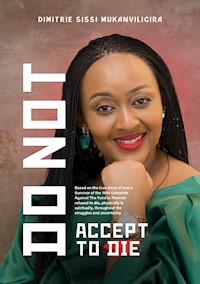
Based on my true story, my book is about my story of life starting with my childhood until now. It puts emphasis on how I survived the Genocide perpetrated against Tutsi in April - July 1994 in Rwanda and how I embraced life after the genocide. Despite the sad moments of my life, my story in this book brings motivation, joy and life to readers.
Das E-Book können Sie in Legimi-Apps oder einer beliebigen App lesen, die das folgende Format unterstützen:
Seitenzahl: 259
Veröffentlichungsjahr: 2022
Ähnliche

















“I decided to devote my life to telling the story because I felt that having survived, I owe something to the dead, and anyone who does not remember betrays them again”.
Elie Wiesel, American Novelist, Holocaust Survivor
To my beloved parents Michel Kambanda and Astherie Mukantambiye, to my beloved siblings on the other side of life; Donat Nsengiyumva, Dancilla Mujawamariya, Domina Mujawayezu and Damas Ndayisaba, you are dearly loved and very much missed. You are and will never be forgotten. You live through me every single day, giving me more strength to carry on.
Dedicated to:
My children:
Belko Ineza Nina Fidelite
Belko Gwiza Binta Chelsie
Belko Gisa Dhalil Brave
Belko Gaju Yasmine Etoile Marie-Reine
Belko Giramata Kenza Naike
And
The new Rwandan Generation
May you allow yourselves to dream big,
enjoy life and don’t accept to die.
Sissi Dimitrie
Do Not Accept To Die
In April 1994, Dimitrie Sissi Mukanyiligira, a 22-year-old joyful and happy young woman, eager to graduate from high school, marry the love of her life and leave Rwanda to start an exciting chapter of life elsewhere after a very painful childhood, saw her dreams crashed when the genocide against the Tutsi broke out, halting every hope and ambition except for just one small firm voice that called her severally “Do not accept to die”. She shares her story in this book.
Contents
It has been God since day one!
Acknowledgements
List of Acronyms
Rwanda at a Glance
PART 1: BEFORE THE GENOCIDE AGAINST THE TUTSI
A JOYFUL CHILDHOOD
Chapter 1: Prologue
Chapter 2: Back to my Roots
Chapter 3: Orphaned at a very young age
Chapter 4: Unplanned Motherhood
Chapter 5: The liberation war; a rebel accomplice
Chapter 6: Back to school amidst political tensions
Chapter 7: Belko Boureima: the man who resembles me
Chapter 8: Premature hopes and illusions for peace
PART II: DURING THE GENOCIDE AGAINST THE TUTSI
A LIFE TURNED UPSIDE DOWN LONGING FOR A DAYBREAK
Chapter 9: Muhima at Aunt Margo’s home and the eruption of violence
Chapter 10: A blood-soaked hospital
Chapter 11: Another day, a new hope
Chapter 12: Leaving the cruel hospital
Chapter 13: Waiting for death in God’s house
Chapter 14: Men of God or monsters?
Chapter 15: Back to life. Walking back to freedom.
PART III: AFTER THE GENOCIDE AGAINST THE TUTSI
A NEW LEASE OF LIFE
Chapter 16: Life after the liberation struggle
Chapter 17: A new lease of life
Chapter 18: Adjusting to a new national identity
Chapter 19: Embracing a new life
Forewords
Of all memory artefacts, of all emotional reproductions, of all attention capturing recounts, this book is the most striking testimony, the most vivid story, an everlasting monument of love, pain, resilience, and hope.
Dimitrie Sissi Mukanyiligira generously gives to our reading her inner feelings, unveils her profound grievances, shares courageously an almost physical picture of her excruciating pain. She plunges in the unfathomable dimension of family love that makes the backbone of this remarkable recount of her tribulations before, during and in the aftermath of the horrendous genocide against the Tutsi in 1994.
This is one of the most powerful and heart-breaking books I came across in the now growing literature on the genocide against the Tutsi. It is about survival and narrow escape from an assured death for someone who had literally no chance to escape the fatal execution as a young Tutsi woman amidst a bloodthirsty mob of merciless killers.
She could owe her survival on her only will and determination to live, and her youthful recklessness, not to say her unexpected luck. She survived not to live on the painful remembrance, but on her determination to fight the demons of the past, to recreate and live and spread around that love that once was at the Center of her existence.
Paraphrasing Martin Gray, the famous Franco-American author and survival of the Jews Holocaust, I concur that what a grieving and fearful soul needs mostly is not another cry of pain, but a stronger voice that is comforting and instilling courage to go forward. This book should inspire and encourage to recover the weak grieving souls, as a testimony of resilience.
Dimitrie takes us on the journey of a vivid remembrance of our loved ones mercilessly massacred. She reminds us of the inescapable duty of memory that calls us "to live as they should have lived, to resuscitate them in ourselves, to transmit their face, their voice, their message to others."
Thus, the life of the disappeared will endlessly germinate…(Martin Gray).
Dimitrie, you deserve a great thank you for this living testimony.
Ambassador Gasamagera Wellars
The United Nations decided through UN General Assembly to vote a resolution recognizing the Holocaust as Crime, horror against humanity with strong resolution of “Never Again” but years later in 1994, the same nations observed another human tragedy of the Genocide against Tutsi in Rwanda. The Never Again repeated itself with a strange echo… Genocide against Tutsi was also recognized by the United Nations General Assembly as a Crime against Humanity.
Elie Wiesel, a Holocaust survivor, in his book “Night” wrote: “Why did I write it? Did I write it so as not to go mad or on the contrary to go mad to understand the nature of madness, the immense, terrifying madness that erupted in history and in the conscience of mankind? Was it to leave behind a legacy of words, of memories, to help prevent history from repeating itself…”?
At only 22 years old, Dimitrie Sissi miraculously survived the Genocide against Tutsi in 1994. She wrote this book as a personal testimony and as a unique and powerful story. It tells us a personal story of a woman survivor who has experienced the cruelty of human emotions and felt, touched and seen death around her only for being born to the wrong group Tutsi. Fear became a part of her with hidden courage and inner voice dictating her to not dying. “Do Not Accept To Die” is a must-read book to learn the human clueless, combined with human kindness, “Ubuntu”, driven from her childhood and lovely parents and family, lessons of rebuilding herself after such a tragedy, lessons of courage and determination to survive, a courage and boldness to share her unique and powerful story, with a goal to keep motivating other, especially the young generations.
Ms MBARANGA GASARABWE
Former Assistant Secretary General for UN Safety & Security Department,
Former Deputy Special Representative of the Secretary General in Minusma
Peacekeeping Mission in Mali
It has been God since day one!
Born to devout Catholic parents, I was raised in a very religious family. From very early, my Dad taught me how to pray, encouraging me to develop a close relationship with God. “Prayer” he would say “is a way of life and God Our Father”.
Raised in this path, I have always found comfort in my relationship with God and thus throughout my book, I talk about God’s grace, His protection, and mercy upon my life.
To the reader, I repeat severally that throughout the hard times of my life, God protected me. This is not a naïve statement but rather an acknowledgement that as a frail being, my life would never have had meaning had it not been for God. As a memoir on the hardest time of my life, this book has also provided me the platform to share the religious part of my life, to remind people that it is not in vain for one to keep God close in their everyday life.
It is my conviction that this faith in God has been the strong foundation upon which I have become all that I am and the basis for the hope to achieve all that is ahead.
Isaiah 41:10 says “So do not fear, for I am with you; do not be dismayed, for I am your God. I will strengthen you and help you; I will uphold you with my righteous right hand”. This verse has consistently reminded me of God’s promise to be with us all the time and I look back to the years with a testimony that no matter how hard and dark some moments were, I still saw His hand move and His mercy abide. This is true for the moments I have shared in this book and many others that remain unsaid.
In every recited rosary, every said prayer and in each Ave Maria, God has showed me that I was never alone and never will be. Upon Him, I cast my worry aside and chose to live a hopeful life every single day. Through this book, I wish to acknowledge His presence in my life, for always being with me and renewing his promise. Despite the hard times that I went through, the awareness of God’s constant presence has daily provided hope that His plans for us are good.
Acknowledgements
The publication of this book gives me the opportunity to express my gratitude to many people who have over the years made me live my life with love, motivated, inspired, and happy.
Many thanks to all descendants of my grandfather Mzee Peter Rwabukanga for not giving up on life after the atrocities of the Genocide against the Tutsi and all the hard time and injustices experienced all the time, just because they were Tutsi. Many of you went through hell but yet you still believe in living life with a sense of gratitude and goodness. Every time we meet, I have always been reminded that we truly survived, and family is great.
Special thanks to my Sister Donatilla Mukasekuru and Dismas Niyonteze, my two surviving siblings for the unconditional love and support shared over the years. Very special thanks to Donatilla, considered as our “Deputy Parent” since the years, who sacrificed her own vocation to raise and take care of us. Until now, she continuously cares for us, despite her age and remarkable decrease in her energy.
For the warmth of family and the love unconditionally given, I would like to thank my husband Belko Boureima and children; Nina, Binta, Dhalil, Yasmine and Naike. Having you was my resurrection; you are the reason I wake up each day determined to make hold-on to the gift of life and live it fully.
Writing this story has been an uphill climb which I would not have completed without the love and encouragement of some indefatigable friends. I massively thank my friends who constitute a very long list.
In putting together my memoirs, I was fortunate to find partners and friends without whose guidance and contribution I would not have completed this project as it is now.
Thank you so much, Matthew Rwahigi, Obed Musabe Sean, Ambassador Wellars Gasamagera, Agufana Obed, Jean Paul Rwakiyanja, Faustin Nkurunziza, Barbara Umuhoza and Andreas Schäfer for helping me finalize this book, realigning ideas and dampening my emotions. You immensely helped me finally achieve this goal.
Many thanks Frida Umuhoza, Omar Ndizeye, Charles Habonimana, Caleb Uwagaba, Consolee Nishimwe, Jeanne Celestine Lakin, and Judence Kayitesi, my brothers and sisters, fellow Rwandan authors who have traveled this path before. Slowly but surely, you held my hand through the maze. Finally, many thanks to you Esther Mujawayo for your motivating hand when I was literally giving up.
To you who has chosen to read my story, thank you. May you all be blessed abundantly, and I hope you find in this book, my vote of thanks!
List of Acronyms
ACCORD: Association de Cooperation Régionale de Développement
AERG: Association des Etudiants et Elèves Rescapes du Génocide
APACOPE: Association des Parents pour la Cooperation et la Promotion de l’Education
AVEGA: Association de Veuves du Génocide d’Avril
BRD: Banque Rwandaise de Development
CDR: Coalition pour la Défense de la République
CFJ: Centre de Formation des Jeunes
CHK: Centre Hospitalier de Kigali
CHUK: Centre Hospitalier Université de Kigali
CIDA: Canadian International Development Agency
DRC: Democratic Republic of Congo
ETI: Ecole Technique Officielle
ETL: Ecole Technique Libre
ETO: Ecole Technique Officielle
GAERG: Groupe des Anciens Etudiants Rescapes du Génocide
IAMSEA: Institut Africain et Mauricien de Statistiques et d’Economie Appliquée
ICU: Intensive Care Unit
IDP: Internal Displaced Persons
MBA: Master of Business Administration
MDR: Mouvement Démocratique Républicain
MINUAR: Mission des Nations Unies pour l’Assistance au Rwanda
MRND: Mouvement Révolutionnaire National pour le Développement
ONATRACOM: Office National des Transports en Commun
PACAREM: Papiers, Cartons et Emballages
PARMEHUTU: Parti du Mouvement de l’Emancipation Hutu
PDC: Parti Démocrate-Chrétien
PL: Parti Liberal
PSD: Parti Social-Démocrate
RFI: Radio France Internationale
RPA: Rwanda Patriotic Army
SABENA: Société Anonyme Belge d'Exploitation de la Navigation Aérienne
SOPECYA: Société Pétrolière de Cyangugu
SOPETRAD: Société Pétrolière
TV: Télévision
ULK: Université Libre de Kigali
UN: United Nations
UNAMIR: United Nations Assistance Mission for Rwanda
UNDP: United Nations Development Program
Rwanda at a Glance
Rwanda is a landlocked country in the Great Lakes region of East Africa. Its 26,338 square kilometers are dominated by highlands, giving it the name “Land of A Thousand Hills”
Population: About 12.5 million people (2018)
Capital City: Kigali
Official languages: Kinyarwanda (Mother tongue), English, French and Swahili
Neighbouring countries: Democratic Republic of Congo (West), Burundi (South), Uganda (North) and Tanzania (East).
Demonym: Rwandan, Rwandese
President: Paul Kagame
Prime Minister: Dr Ngirente Edouard
Independence: From Belgium on July 1, 1962
Currency: Rwandan Franc (RWF)
Time zone: CAT (UTC + 2)
Drives on the Right
Calling code: +250
PART 1: BEFORE THE GENOCIDE AGAINST THE TUTSI
A JOYFUL CHILDHOOD
“The secret of childhood happiness is to succeed to be happy with the simplest things ever possible”
Mehmet Murat Ildan
Chapter 1: Prologue
Rwanda, my home
Rwanda has in the recent past become a center of attraction, with visitors coming from near and far. Some say, they enjoy its tropical weather, which is favorably cool all year round, and sink in its majestic sun as it pierces through the meandering hills. Some say, they love the view of the Rwandan night sky, as the stars dazzle and paint giants on sceneries of Rwanda’s rolling mountains that seem to never end.
Then there is the flora and fauna. Small as it is, Rwanda is home to a biodiversity of animals from the big five to a big number of the last population of the surviving silverback mountain gorillas. It is also home to hundreds of rare bird’s species chatter the mornings away in its deep and biodiverse rainforests and savannahs, not forgetting the reach plant life that covers the country’s lush hills and rainforests.
Over the past 27 years, a new attraction has taken shape in Rwanda; the safe and serene environment which has won its global accolades as one of the safest, cleanest, and most competitive in business globally.
This recent attraction is more inviting when one thinks about the ruins the celebrated progress has been shaped from.
Almost three decades ago starting in April of 1994, humanity collectively failed, despite the many treaties to prevent crimes against humanity and the global chorus that “genocide never again”, over a million innocent civilians whose crime was belonging to what was defined as an enemy race were brutally massacred at unprecedented speed. Except for a handful of efforts mostly by international agents on the ground, the world paid a blind eye to what was happening, signaling to the génocidaires that no one cared if they massacred their fellow countrymen and women.
Today, many of those who visit Rwanda come to witness this collective human failure to protect innocent people, instead abandoning them in their hour of greatest need. They come to pay homage to the lives killed during this carnage.
Pitched in contrast to this tragedy, people come to Rwanda to learn about the resolve and resilience of the human spirit that enabled a small army, determined to end the massacre of thousands, to fight a war that was more of a suicide mission, in which they were outnumbered by several folds and outgunned; yet they triumphed and have laid the foundation of the country anew, despite their inadequate training in public administration.
Rwanda has and is all these things wrapped into one.
However, unlike the people who visit Rwanda by choice, everything I am or will ever hope to be is Rwandan by default. It is my home, the cradle of my dreams, the source of my hopes and my aspirations. I was born in Rwanda; I have lived and been a part of its history, good and bad alike, and I am a product of everything that Rwanda is and has been. Rwanda is Me.
Very few of my compatriots have probably had the luxury to absorb the soothing effect of the morning Rwandan sun, we never had the time to romanticize the depth of its rays as they flooded the valleys of our hilly sides. Nonetheless, there has always been a warming to Rwanda in my heart, a love for this country like no other, I presume because it is my home and as they say home sweet home.
I am every inch a part of the toiling farmers of the countryside, who work sunrise to sunset, tilling very small patches of land but never lamenting or procrastinating but rather always enterprising.
I am part of the beauty that is Rwanda, the remarkable land of a thousand hills.
I was a young adult and Mom in 1994 when the worst days of our contemporary history unfolded on the otherwise calm sceneries of my country. I was very much a child as I was a Mom, with many longings and dreams, daring to hope for a great life to come.
Unfortunately, the many years of propagating ethnic hatred and hell broke loose in April 1994 when an evil plan to exterminate all Rwandan Tutsis was hatched. The country that was deeply engraved in my heart and whose music rhymed in my veins rejected me; rejected my family and rejected anybody and everybody who in any way looked like me or was classified to be my ethnic kin.
This memoir chronicles a part of my life, to tell the world about the big extended family that I had before the genocide against the Tutsi, my struggles, and experiences during the 100 days of the genocide, the pains of loss lived multiple times after it ended and the rebuilding of my spirit when Rwanda began to pick up the pieces and chart a new path.
Like many other survivors, I feigned strength on the outside while I perished on the inside, hoping against all hope to preserve whatever little was left of my dignity over several years as we dealt with the aftermath of the genocide.
Even though once rejected by my beloved Rwanda, my heart soon regained its warming to the sights and sounds of the land of a thousand hills as I began to recover. My admiration for the ethics of hard work and integrity embodied by the ordinary Rwandan people and our unique cultural heritage began to rekindle. So much blood of close family and compatriots was shed but yet still, Rwanda remains beautiful and dear to me, it is my home for as long as there is breath in my lungs, and it is the heritage I hope to give to my children and through them the generations to come. Rwanda is irreplaceable to me and I hope it remains so for the many it has brought forth.
Chapter 2: Back to my Roots
Dagayi -gracious and beautiful
Before I go any further, I would like to go back and trace my family roots.
My known family lineage begins around the second half of the 1800s with Pierre Rwabukanga, my grandfather, who is said to have left Bufumbira in southwestern Uganda, for the Rwandan kingdom in search for better land to graze his cattle and start a family. All what we know about the origins of our family is what we orally learnt, and we don’t have anything written before Rwabukanga.
Rwabukanga travelled with two same generation cousins who were his close friends: Kanyurizi and Makwandi. They found good land for grazing in Remera village and here they established themselves and soon started their respective families. In the years that followed, they expanded their lands as their families grew in size and by the early 1990s, they owned large pieces of land in Kigali –Rwanda’s present day capital city including areas such as Remera, Kimironko, Kibagabaga, Kinyinya, Mugambazi, and Rutongo. Rwabukanga was a rich man with five wives, many children, plenty of land, and cattle.
His fifth wife, Nyirabahinzi was Rwabukanga’s cousin who was given to him in marriage at the age of 16 by one of her paternal aunties.
It was said that Nyirabahinzi was born in Kiramuruzi (today’s Gatsibo district) and had close relatives in Fumbwe sector, which is today’s Rwamagana district. She did not love travelling especially traversing the Lake Muhazi which she found too daring an adventure thus, after her arranged marriage, she never visited her family ever again which is why our part of the family never went to Kiramuruzi. She also said she had had family members in Southwestern Uganda, the same land from whence Rwabukanga and his two cousins hailed from. Unfortunately, we never had enough information to reconnect with any of them. If indeed these relatives lived, we were forever detached to this part of our family, a phenomenon not new in the Great Lakes region.
Rwabukanga converted to Catholicism and with him all his wives and children were baptized, receiving Christian names. Nyirabahinzi was baptized Marie but to her children and grandchildren, she was simply Dagayi, a nickname whose roots none of us knew about. She was the best grandmother one could ask for, a perfect beauty. Very tall and slender, she was of a fair complexion with long black hair and soft spoken. Although with tender temperament, nothing went unnoticed with Dagayi. She loved her grandchildren very dearly and diligently cared for us, the same way we were told she had done in raising her own children, our fathers, and aunties. She was also of a good repute in the entire village and an expert in traditional medicine. She had great knowledge of medicinal herbs and the scores of illnesses they cured. She knew how to mix them and what dosage was required to cure which ailment. She saw patients on a daily basis, most of them with liver issues, gastronomic troubles and skin diseases. Unfortunately, no one among her children and grandchildren learnt these skills in traditional medicine. I believe we just never had the patience and courage to learn what clearly was not an easy skill. The advent and expansion of modern medicine also provided a disincentive; there was a clear scientific alternative.
Dagayi’s house was only a short distance from ours yet we still spent countless days and nights with her, including most of our school holidays. She told us many stories and fables in the evenings. She was a very fervent and devout catholic. She recited the rosary every day and made sure we said our prayers every night. Because Dagayi’s Christian name was Marie –French for Mary– Assumption Day on which Catholics celebrate the ascension of Mary Mom of Jesus the Christ to heaven every August 15, was a family festival comparable to no other. Only the Easter celebrations could come close. On Assumption Day, we woke up in the morning to an almost electrified atmosphere, quickly washed up, dressed to our best and headed off early to church. The Assumption Day mass was and still to this day is a very celebratory and although it would go on for a while usually until midday, we still enjoyed it. Home that afternoon would turn into a food and drinks joint with drinks of all kinds and heaps of rice and meat of all assortments. We called it Dagayi Day because she was warmest on this day than on any other day of the year.
Rwabukanga and Dagayi had four sons; my Dad Kambanda Michel was their first-born. He and his brother Bakame Antoine lived in Rwanda while their other brothers Rutaremara and Karega lived in Uganda. Growing up, I remember, my uncle Karega visiting once. As we grew older, we learnt that in the 1960s, ethnic tensions engulfed our community forcing the brothers to split. That is how my uncles ended up in Uganda while my Dad and uncle Bakame stayed in Rwanda.
Except this one occasion, I can hardly recall when uncle Karega visited, little was known about them and their families. It remains so to this day.
Dagayi was a family woman and a patriotic Rwandan. Throughout the internal conflicts of the 1950s, which continued to intensify in the decades that followed, her children wanted her to leave for Uganda too. She defied them and chose to stay with her two sons in Rwanda. She often talked of how she dreaded the possibility of dying and being buried in a foreign land other than Rwanda. As a child I always struggled to understand why it mattered where one was buried. After all, you are dead and do not care what happens. However, the way Dagayi spoke proudly of her country made the idea of dying and being buried in Rwanda seem like the best send off any Rwandan could wish for.
After both our parents passed away, Dagayi finally moved into our main family house. Her presence made our bereaved home regain some parental warmth. We could go to school or elsewhere with the confidence that our Dagayi was home.
On the afternoon of December 28, 1993, thousands of Rwandans, including myself and my siblings went to welcome the 600 soldiers of the Rwandan Patriotic Army (RPA) as they entered Kigali from their military base in the Northern Prefecture of Byumba to provide security to the political leaders of the Rwandan Patriotic Front (RPF), who had concluded a pact with the then ruling government in Arusha on August 4 of the same year. The pact among others was to provide grounds for the formation of a coalition government. This coalition government would permit Rwandans who were refugees in countries near and far, to return home. This pact also meant that the ethnic and divisive politics that had dominated Rwanda for close to five decades would finally be addressed. It also meant an end to the liberation war that the RPF had waged to push for these outcomes, since October 1, 1990.
As we took the long walk back home that evening, my mind wandered back to my two uncles who had fled to Uganda, of course between a teenager’s fantasy thoughts of admiration for the RPF soldiers.
We reached home in the early evening, tired and our throats sore after an afternoon of chanting. We were elated and jubilant; it had been a historical afternoon.
While I romanticized about the heroic entry of the RPF boys, my sister Domina’s sharp scream pierced through the silent evening in our Kibagabaga home.
“Dagayi is not talking, I do not know if she is okay,” she shouted, some of the words chocked by sobs.
We all rushed into the house and there she was, as peaceful as she had always been, only that this time she lay still, her body lifeless. In the same bed, sleeping peacefully like we had left her that afternoon, Dagayi had gone to be closer to the Blessed Virgin Mary. Perhaps it was around the same time we rejoiced in welcoming the gallant RPA boys that Dagayi breathed her last. New heroes arrived on stage as one in our family exited.
Dagayi died in Rwanda, as she had wished for many times and her body was put to rest in the land of milk and honey like her generation preferred to call the country.
To no one’s surprise, a big number of mourners attended Dagayi’s funeral rites despite the ethnic tensions that characterized Rwanda at the time. We were sending off a woman who had lived a life in service to her family and community. Thanks to her devotion to Christianity, several priests who knew her took turns to pray for her soul.
Unlike in present-day Rwanda where the dead are put to rest in designated cemeteries, we still buried on family land back then. Dagayi was laid down next to her son, my Dad and the customary seven days of mourning were observed.
Dagayi died a decade later after Mzee Rwabukanga’s death.
In his later life, Rwabukanga had been regularly incarcerated and brutalized by MDR-PARMEHUTU supporters and Hutu neighbors since 1963, on accusations of being an enemy of the state, the political crime every Tutsi was guilty of.
My grandfather’s fate in the 60s and 70s would become the fate of many Tutsi men throughout the early 1990s in the lead up to the abyss of the 1994 genocide. By the time of her death, Dagayi had seen three great grandchildren; Nina, Sonia, and Natacha.
Kambanda Michel, a successful farmer
My Dad, Kambanda Michel was born in Kibagabaga in the early 1930s to Rwabukanga Pierre and Nyirabahinzi Maria “Dagayi”. He married Mukantambiye Astherie sometime in 1957 and they had four girls and three boys together namely:
(i) Mukasekuru Donatilla
(ii) Nsengiyumva Donat
(iii) Mujawamariya Dancilla
(iv) Niyonteze Dismas
(v) Mujawayezu Domina
(vi) Mukanyiligira Sissi Dimitrie
(vii) Ndayisaba Damas
He grew up in Kibagabaga cell, Remera sector, Rubungo commune, the Prefecture of Kigali by then; what later became Rural Kigali when the Prefecture of Kigali City was created in 1990. That place is presently Kimironko sector, Kibagabaga Cell, Nyirabwana village, Gasabo district in the City of Kigali.
My Dad had the gentleness and wits of my grandmother Dagayi. He was also extremely kind. Thanks to a few years of schooling, he was fluent in spoken and written Kinyarwanda and could communicate in basic French. He was a leader at the sector and cell level – the equivalent of a Local Councilor in Rwanda’s present decentralized structure. He was also the “Moniteur Agricole” –Assistant Agronomist. On some days before going to school, we helped in his activities as the village agronomist, doing things like distributing seeds and pesticides, which I enjoyed very much.
My Mom, Astherie Mukantambiye was born in 1936 in Rusasa village in Mugambazi; currently Rulindo District. Her parents Appolinaire Gasazamakuba and Agnes Mukarubega had eight children; my Mom was their fourth born. Astherie never went to school but she later learnt basics of reading and writing. She was a diligent housewife who kept a decent home and run its affairs well, making sure everything and everyone from the cattle we kept, the crop farms, the children, and her husband were doing well. She was as tough as she was hardworking and organized. Looking back to the days of our childhood and at how we conduct ourselves today as adults, I see a lot of our Mom’s values in us.
There are values she never compromised on including that of hard work. She believed in earning only what one had worked for, respecting everyone regardless of age or status, self-discipline, and self-worth.




