


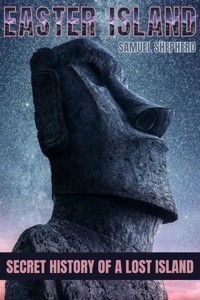
4,99 €
Mehr erfahren.
- Herausgeber: Samuel Shepherd
- Kategorie: Geisteswissenschaft
- Sprache: Englisch
🌴 **Discover the Enigmatic World of Rapa Nui** 🌴
📚 **Easter Island: Secret History of a Lost Island** 📚
Are you ready to unlock the mysteries of one of the most intriguing places on Earth? Dive into the captivating narrative of **Easter Island**, also known as Rapa Nui, and uncover the secrets that have fascinated explorers and scholars for centuries. This groundbreaking book takes you on a journey through the island's rich history, ancient rituals, and the monumental challenges it faces today.
✨ **What's Inside:**
- **Ancient Origins** 🛶: Trace the incredible voyages that brought the first settlers to Easter Island and explore how they shaped this remote land with their unique cultural practices.
- **The Moai Statues** 🗿: Delve into the artistry and symbolism behind the iconic moai statues. Discover the methods used to create and transport these colossal figures, and understand their profound role in Rapanui society.
- **Colonial Encounters** 🌏: Learn about the impact of European contact, from the introduction of diseases to the upheaval of traditional ways of life, and how these events reshaped the island's destiny.
- **Cultural Resilience** 🌺: Explore the remarkable efforts of the Rapanui people to revive their traditions and culture amidst modern challenges, including the balancing act between preserving heritage and managing tourism.
- **Modern Challenges** 🌍: Gain insight into the contemporary struggles of Easter Island, including environmental sustainability, political autonomy, and the quest for a harmonious future.
**Easter Island: Secret History of a Lost Island** is more than just a book; it's an immersive experience that transports you to a land where history, culture, and mystery converge. With vivid descriptions, stunning illustrations, and in-depth research, this book offers a comprehensive look at one of the world's most enigmatic and remote locations.
🌟 **Why You'll Love This Book:**
- **Intriguing Insights**: Unveil the hidden stories and lesser-known facts about Easter Island that will captivate history buffs and casual readers alike.
- **Cultural Richness**: Appreciate the depth and diversity of Rapanui culture, from ancient myths to modern-day struggles.
- **Thought-Provoking Analysis**: Reflect on the complex interplay between tradition and modernity, and the island's role in the global narrative.
Whether you're an armchair traveler, a history enthusiast, or someone fascinated by the mysteries of the world, **Easter Island: Secret History of a Lost Island** offers a compelling and enlightening read. Don’t miss your chance to explore the hidden depths of this remarkable island.
📖 **Order your copy today and embark on a journey to uncover the secrets of Easter Island!** 📖
✨ **Available now in bookstores and online.** ✨
Das E-Book können Sie in Legimi-Apps oder einer beliebigen App lesen, die das folgende Format unterstützen:
Veröffentlichungsjahr: 2024
Ähnliche

















EASTER ISLAND
SECRET HISTORY OF A
LOST ISLAND
SAMUEL SHEPHERD
Copyright © 2024 by Samuel Shepherd
All rights reserved. No part of this book may be reproduced or transmitted in any form or by any means, electronic or mechanical, including photocopying, recording, or by any information storage and retrieval system, without permission in writing from the publisher.
Published by Samuel Shepherd
Library of Congress Cataloging-in-Publication Data
ISBN 978-1-83938-832-3
Cover design by Rizzo
Disclaimer
The contents of this book are based on extensive research and the best available historical sources. However, the author and publisher make no claims, promises, or guarantees about the accuracy, completeness, or adequacy of the information contained herein. The information in this book is provided on an "as is" basis, and the author and publisher disclaim any and all liability for any errors, omissions, or inaccuracies in the information or for any actions taken in reliance on such information.
The opinions and views expressed in this book are those of the author and do not necessarily reflect the official policy or position of any organization or individual mentioned in this book. Any reference to specific people, places, or events is intended only to provide historical context and is not intended to defame or malign any group, individual, or entity.
The information in this book is intended for educational and entertainment purposes only. It is not intended to be a substitute for professional advice or judgment. Readers are encouraged to conduct their own research and to seek professional advice where appropriate.
Every effort has been made to obtain necessary permissions and acknowledgments for all images and other copyrighted material used in this book. Any errors or omissions in this regard are unintentional, and the author and publisher will correct them in future editions.
TABLE OF CONTENTS – EASTER ISLAND: SECRET HISTORY OF A LOST ISLAND
Introduction
Chapter 1: The Navel of the World: Unveiling Rapa Nui
Chapter 2: Ancestral Voyagers: Origins of the First Islanders
Chapter 3: Mysteries Carved in Stone: The Moai Statues
Chapter 4: Echoes of the Ancestors: Language and Lore
Chapter 5: The Birdman Cult: Rituals and Rivalries
Chapter 6: Between Sky and Sea: Navigational Skills of the Rapanui
Chapter 7: The Rise of the Chiefs: Social Structure and Power
Chapter 8: The European Arrival: Contact and Consequences
Chapter 9: Seeds of the Soul: Flora and Fauna of the Island
Chapter 10: Lost Scripts: Deciphering Rongorongo
Chapter 11: Spiritual Landscapes: Sacred Sites and Their Meanings
Chapter 12: Island of Isolation: Survival in Seclusion
Chapter 13: Clashes and Collapses: Environmental Catastrophe
Chapter 14: The Legends of Hotu Matua: Founding Myths
Chapter 15: Artifacts and Archaeologists: Unearthing History
Chapter 16: Colonial Shadows: Slavery and Persecution
Chapter 17: Reviving Rapa Nui: The Cultural Renaissance
Chapter 18: Guardians of Memory: The Role of Elders and Storytellers
Chapter 19: Modern Challenges: Balancing Tradition and Tourism
Chapter 20: The Fight for Autonomy: Political Struggles
Chapter 21: The Eternal Island: Envisioning the Future of Rapa Nui
Conclusion
Introduction
Nestled in the vast expanse of the Pacific Ocean, Easter Island—known as Rapa Nui to its indigenous inhabitants—emerges like a solitary beacon, captivating all who gaze upon its remote shores. This small, isolated island, famous for its towering moai statues and enigmatic history, holds secrets that have intrigued scholars, explorers, and curious minds for centuries. Yet, beyond the familiar imagery of these iconic stone figures, lies a deeper, more intricate narrative that reveals a world of profound cultural significance, environmental challenges, and extraordinary resilience.
"Easter Island: Secret History of a Lost Island" invites you on a journey to uncover the layers of history and mystery that define this extraordinary place. Our exploration begins with the island's ancient origins, delving into the voyages that brought its first settlers from far-off lands and examining the unique ways in which they shaped their new home. Through the eyes of the island's early inhabitants, we gain insight into a society that thrived in isolation, developing complex social structures, rich traditions, and innovative practices that left an indelible mark on the landscape.
The narrative then navigates through the intricate world of the moai statues—these colossal stone guardians that stand as silent witnesses to a bygone era. We explore the artistry and symbolism behind their creation, the methods employed to transport and erect them, and their role within the spiritual and social life of the Rapanui people. These monumental works are more than mere artifacts; they are the embodiment of the island's cultural essence and a testament to its people's ingenuity and devotion.
As we delve deeper into the island's history, the impact of European contact and colonial incursions reveals a darker chapter filled with conflict, exploitation, and transformation. The arrival of foreign powers introduced diseases, disrupted traditional ways of life, and led to profound changes that continue to shape Rapa Nui's trajectory. Yet, amidst these challenges, the island's people have shown remarkable resilience, striving to reclaim and revitalize their cultural heritage.
Our exploration also brings us face-to-face with the modern challenges of balancing tradition and tourism, navigating the delicate dance between preserving ancient practices and accommodating the demands of a global audience. The struggle to maintain cultural identity, manage environmental sustainability, and achieve political autonomy are central themes in the contemporary story of Rapa Nui. Through the efforts of local leaders, activists, and conservationists, we witness a concerted push towards a future that honors the island's past while embracing the possibilities of modernity.
"Easter Island: Secret History of a Lost Island" is not merely an account of an isolated land but a reflection on the broader themes of human ingenuity, cultural endurance, and environmental stewardship. It is an invitation to engage with the rich tapestry of Rapa Nui's history, to ponder its mysteries, and to appreciate the enduring legacy of its people. As we embark on this journey, we are reminded of the profound connections between past and present, and the ongoing quest to understand and preserve the unique treasures of our world.
Chapter 1: The Navel of the World: Unveiling Rapa Nui
The moniker "The Navel of the World" attributed to Rapa Nui, more commonly known as Easter Island, is not merely a poetic designation but a hint at the profound mystery and allure that the island exudes. Located in the southeastern Pacific Ocean, Rapa Nui sits at one of the most remote points on Earth, a solitary dot over 2,000 miles from the nearest continental landmass, Chile, and some 1,300 miles away from its nearest inhabited neighbor, Pitcairn Island. This isolation has contributed to its mystique, shaping both its natural evolution and human history in ways that are both profound and unique.
Rapa Nui's geographical setting has been pivotal in its historical and cultural trajectory. The island is triangular in shape, roughly 14 miles long and 7 miles wide at its broadest point, comprising about 63 square miles. Despite its small size, the island boasts a surprisingly rugged terrain, with rolling hills and a highest point at Mount Terevaka, which reaches approximately 507 meters above sea level. This elevated vantage point offers sweeping views of the vast ocean, reinforcing the island's reputation as a lonely sentinel in the great expanse of the Pacific.
The volcanic origin of Rapa Nui has gifted it with rich soil in some areas, yet its resources are limited, particularly in terms of fresh water, which has always been a precious commodity here. There are no permanent streams or rivers on the island; instead, fresh water is primarily obtained from crater lakes, like the one found at Rano Kau, and from natural springs. The island's three extinct volcanoes—Rano Kau, Poike, and Maunga Terevaka—have shaped not only its topographical features but also its ecological systems, which evolved in isolation until the arrival of humans.
The first settlers of Rapa Nui, believed to have arrived from Polynesia around the early second millennium AD, encountered a landscape that was vastly different from today’s sparse environment. Originally, the island was cloaked in dense forests of palm trees, similar to those found in New Zealand, which provided material for tools, boats, and construction. However, the pressures of human habitation began to reshape the island’s environment, leading to deforestation and making water even more scarce. This scarcity of natural resources likely contributed to the intense spiritual and cultural developments that characterize Rapa Nui's history, including the construction of its iconic moai—monolithic statues carved from volcanic rock.
The remote location of Rapa Nui added to its mystery and intrigue, not only in terms of its discovery and rediscovery by external civilizations but also in the evolution of its native culture. When Europeans first arrived on the island in 1722, led by Dutch explorer Jacob Roggeveen, they encountered a society that had developed in almost complete isolation, with its own distinct language, religious traditions, and social structures. The island’s isolation contributed to the development of a complex society that was intimately connected to the rhythms of the natural world, a necessity in such a remote and challenging environment.
The island’s geography has played a crucial role in the myths and legends that permeate its cultural fabric. Many of these stories reflect the deep connection the Rapanui people feel with their land and seas, viewing them as integral parts of their ancestral heritage and spiritual life. For instance, local legends speak of Hotu Matu'a, the mythical founder of Rapa Nui, who navigated across the vast ocean guided by the stars, arriving at this remote outpost to begin a new civilization. These narratives are not just historical records but are imbued with the spiritual significance of the land and its features.
Today, Rapa Nui’s geographical isolation continues to shape its destiny in the modern world. It attracts thousands of tourists each year, drawn by its enigmatic history and the haunting beauty of its moai statues. Yet, the island faces modern challenges, such as managing resources sustainably, protecting its fragile ecosystems from the impacts of climate change, and balancing the needs of a growing tourism industry with the preservation of its unique cultural heritage.
In exploring Rapa Nui, one cannot help but be captivated by the profound connection between the island’s geography and its cultural evolution. From its volcanic origins to its role as a secluded cradle of Polynesian culture, Rapa Nui offers a vivid example of how geography can influence and mold the course of human history. This deep intertwining of land and culture is what truly makes Rapa Nui 'The Navel of the World', a place where the core of the earth seems to meet the expanses of the sky, bridging the physical and the mystical in ways that continue to intrigue and inspire.
The narrative of Rapa Nui, also known as Easter Island, is marked by epochs of discovery and rediscovery that reflect its mysterious allure and profound isolation. Situated in the vast blue expanse of the Pacific Ocean, Rapa Nui was first discovered by the people of Polynesia, who navigated the immense oceanic distances using their unparalleled seafaring skills. These intrepid voyagers, likely originating from the Marquesas or Society Islands, arrived around 1200 AD, finding an island that was both challenging and promising, ripe for establishing a new branch of Polynesian culture.
The initial discovery of Rapa Nui by the Polynesians is a testament to their extraordinary navigational abilities, relying on the stars, ocean currents, and bird migration patterns to guide them. This remarkable journey resulted in the development of a unique society, one that thrived in isolation until European explorers entered the Pacific waters centuries later. The second major epoch in the island’s history of discovery occurred on Easter Sunday in 1722, when Dutch explorer Jacob Roggeveen stumbled upon the island. His arrival marked the beginning of the European era on Rapa Nui, introducing new diseases, technologies, and a series of cultural shocks that would irrevocably alter the island's trajectory.
Roggeveen’s encounter with Rapa Nui introduced the island to the Western world, though his initial impressions were tinged with both awe and misunderstanding. He and his crew were the first Europeans to document the impressive moai statues, constructing narratives about a mysterious and primitive people capable of such monumental architecture. This narrative sparked interest yet also began a cycle of misinterpretation and myth that would cloud scholarly understanding of Rapa Nui for centuries. After Roggeveen, other explorers, including Spanish, British, and French voyagers, visited the island, each leaving their mark and taking with them stories of a declining population and cultural decay, exacerbated by slave raids, particularly the Peruvian slave raids in the 1860s, which devastated the local populace.
The rediscovery phase of Rapa Nui began in earnest in the late 19th and early 20th centuries, as archaeologists and ethnographers became fascinated with the island's enigmatic past. Pioneering researchers like Katherine Routledge, who led the Mana Expedition to the island in 1914, began to piece together its complex history through excavation and the recording of oral traditions. This period marked a significant shift in understanding, moving from viewing the islanders as mere curiosities to recognizing their sophisticated culture and history. Through these efforts, insights into the Rapanui's agricultural techniques, social organization, and especially their religious life, centered around the moai and birdman cult, started to form a clearer, albeit still incomplete picture.
The latter half of the 20th century saw a resurgence of Rapanui pride and a reclaiming of heritage that had been suppressed by colonial forces. Archaeological and ethnographic rediscovery transitioned into a period of cultural revival for the Rapanui people themselves. Efforts to restore damaged moai and revive traditional practices, such as the Tapati festival, underscored a broader movement toward self-determination that gained momentum into the 21st century. This period of rediscovery is not just about uncovering past truths but also about the Rapanui taking control of their narrative, challenging the stories written by outsiders and asserting their rights to their heritage and land.
In more recent years, technological advancements have propelled further discoveries on the island, with satellite imagery and sophisticated archaeological tools uncovering previously unknown structures and offering new insights into how the ancient Rapanui managed their resources. These findings continue to reshape our understanding of how this isolated society could sustain itself with limited resources and the environmental challenges they faced.
The story of discovery and rediscovery of Rapa Nui mirrors the global narrative of colonization, loss, and reclaiming of indigenous culture and autonomy. Each layer of discovery, whether by Polynesian navigators, European explorers, or modern archaeologists, peels back some of the mystery shrouding the island, yet also adds new dimensions to our understanding. As scholars, tourists, and the global community continue to be fascinated by this remote island, the people of Rapa Nui today stand at a crossroad, eager to share their heritage with the world while striving to protect and sustain their culture against the pressures of globalization and environmental change. These ongoing efforts ensure that the island’s narrative remains vibrant and evolving, never losing its intrinsic mystique and its profound connection to the wider history of human exploration and identity.
Chapter 2: Ancestral Voyagers: Origins of the First Islanders
The origins of the first inhabitants of Rapa Nui, also known as Easter Island, are steeped in the broader story of Polynesian navigation, a tale of human ingenuity and bravery that begins thousands of miles across the vast Pacific Ocean. The Polynesians, originating from Southeast Asia, embarked on one of the greatest human migrations in history, spreading eastward through an expansive network of islands, each discovery a testament to their sophisticated navigational skills. By the time they reached Rapa Nui, they had mastered the art of reading the stars, ocean swells, and wind patterns, which enabled them to traverse the open waters in their double-hulled canoes with remarkable precision.
The journey to Rapa Nui, one of the most remote inhabited islands on earth, represents a pinnacle of this exploratory spirit. Historians and anthropologists believe that the first settlers likely voyaged from the Marquesas Islands or possibly the Society Islands around AD 1200, although some theories suggest earlier dates. These voyagers, guided by the stars and an intimate knowledge of the ocean's rhythms, would have prepared extensively for their expedition, carrying essential plants and animals to sustain a new life in an unknown land. Among their cargo would have been the staples of Polynesian agriculture: taro, sweet potato, and breadfruit, as well as chickens and rats, which played a crucial role in their diet and agricultural practices.
The decision to embark on such a journey would not have been made lightly. It required a deep understanding of celestial navigation, an art passed down through generations of Polynesian navigators. These navigators used a system of wayfinding that included references to a star compass—a conceptual map of how stars moved across the sky relative to the stationary islands. This knowledge, combined with observations of wildlife behavior and changes in cloud formations and sea currents, made it possible to venture safely and confidently into the great unknown.
The canoes themselves were feats of ancient engineering. Constructed from sewn planks and lashed together with fibers, they were both flexible and sturdy, able to withstand the unpredictable conditions of the Pacific Ocean. The sails were made from woven mats or thatched plant material, designed to catch the trade winds that would propel them across the water. These vessels, called 'vaka moana,' were more than just transportation; they were symbolic carriers of life, holding the ancestors, future generations, and the very essence of Polynesian culture.
Upon reaching Rapa Nui, the first islanders would have encountered an environment markedly different from their previous island homes. They would have had to quickly adapt their agricultural practices to the new island’s soil, which varied greatly in fertility. The introduction of their plants and animals led to a gradual but significant transformation of the island's landscape, influencing both its biodiversity and its archaeological heritage. The settlers built their first settlements on the coast, taking advantage of the rich marine resources while gradually expanding inland.
The adaptation strategies of these early Rapanui people were remarkable, demonstrating their deep ecological knowledge and resilience. They developed a system of land management that included the construction of stone enclosures known as 'manavai' to protect their crops from the harsh winds and salt spray, and they utilized rock mulching techniques to improve soil moisture retention. These innovations were crucial for their survival in an environment that could be both generous and unforgiving.
As the population grew, the societal structure of Rapa Nui began to evolve. The early community, governed by a chief or a small group of leaders, would have centered around family ties and shared responsibilities in managing the land and resources. Over time, these responsibilities and the knowledge associated with them became more specialized, giving rise to distinct roles within the community, such as priests, navigators, and artisans, each contributing to the island's cultural and spiritual life.




