


Erhalten Sie Zugang zu diesem und mehr als 300000 Büchern ab EUR 5,99 monatlich.
- Herausgeber: The History Press
- Kategorie: Sachliteratur, Reportagen, Biografien
- Sprache: Englisch
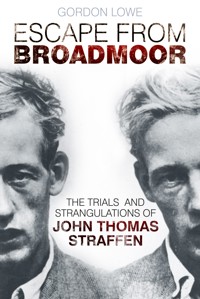
John Thomas Straffen – Britain's longest-serving prisoner – was the first patient to escape from Broadmoor Hospital and be prosecuted for a crime committed on the run. He killed within hours. Prior to this, at his home in Bath, he was dismissed as a loner, an imbecile, a 'child trapped in an adult's body'. On the afternoon of Sunday 15 July 1951, John Straffen strangled 8-year-old Brenda Goddard as she picked flowers. Three weeks later, he committed a similar murder before inadvertently confessing to the police. Faced with a serial killer with a mental age of 10, whose motive apparently was nothing more than to annoy the police, the court sent Straffen to Broadmoor Institute, as it was known then, for the criminally insane. But on 29 April 1952, having spent only six months at the Institute, he escaped in a carefully planned bid for freedom that should not have been possible. During these four hours on the run, hoping to show the authorities he could be free and not commit further offences, Straffen instead murdered 5-year-old Linda Bowyer. Prime Minister Winston Churchill and his beleaguered government intervened to prevent Straffen walking free again. But was Straffen insane? Using previously unpublished documents, including government classified papers, author Gordon Lowe paints a vivid picture of a man who shocked the nation and confused the courts with his crimes.
Sie lesen das E-Book in den Legimi-Apps auf:
Seitenzahl: 285
Veröffentlichungsjahr: 2013
Das E-Book (TTS) können Sie hören im Abo „Legimi Premium” in Legimi-Apps auf:
Ähnliche


















For Anne, Amelia and Verity
My mother said, I never should
Play with the gypsies in the wood.
If I did, she would say,
‘Naughty little girl to disobey.’
The wood was dark, the grass was green,
In came Johnny with a tambourine.
Nursery Rhyme
CONTENTS
Title
Dedication
Poem
List of Illustrations
Chapter 1
Chapter 2
Chapter 3
Chapter 4
Chapter 5
Chapter 6
Chapter 7
Chapter 8
Chapter 9
Chapter 10
Chapter 11
Chapter 12
Chapter 13
Chapter 14
Chapter 15
Chapter 16
Chapter 17
Chapter 18
Chapter 19
Chapter 20
Chapter 21
Chapter 22
Chapter 23
Chapter 24
Chapter 25
Chapter 26
Chapter 27
Chapter 28
Chapter 29
Chapter 30
Chapter 31
Chapter 32
Chapter 33
Chapter 34
Chapter 35
Chapter 36
Bibliography
Plates
Copyright
LIST OF ILLUSTRATIONS
Diagram used in the trial of Straffen’s route from Broadmoor to Farley Hill. Trial of JT Straffen (Fairfield and Fullbrook)
Trial Plan of Farley Hill village. Trial of JT Straffen (Fairfield and Fullbrook)
Front Page Daily Mirror 1 May 1952.
Churchill’s Minute 8 June 1952. The National Archives
Churchill’s Minute 5 September 1952. The National Archives
Home Secretary’s Reply to Churchill, page 1 of 2, 8 September 1952. The National Archives
1
If John Thomas Straffen had not escaped from Broadmoor Institution on 29 April 1952, then the day might have been remembered for its beautiful weather. For the first time that year the residents in the village of Crowthorne, at the bottom of the hill from Broadmoor’s twenty foot-high redbrick walls, were opening their windows and back doors to air their houses and hear the birds singing outside, while others decided to risk afternoon tea in the garden under a warm sun and blue sky. Daffodils were out on the lawns and primroses grew in clusters on the banks of country lanes. The woods were full of bluebells and children were coming out of school to play on their bikes in the streets. Spring breeds expectancy, but no one could have expected what was in store that afternoon.
Mrs Spencer in Crowthorne was telephoning through an order for dog food and had been promised delivery in the afternoon; seven miles away Mrs Sims in the village of Farley Hill was busying herself setting out a tray of tea things in anticipation of her sister-in-law arriving; and Mrs Loyalty Kenyon in Farley Hill House was halfway through her regular afternoon rest, safe in the knowledge that her two children were in the capable hands of their German nanny; the three of them were already playing a game of hide and seek in the garden among the shrubs and trees bordering the lawn. Mrs Miles in Wokingham was getting the car out of the garage to make a trip into Farley Hill to collect clothes for the Women’s Institute. Mr Taylor was starting his afternoon in the office, worried whether the local cricket pitch needed watering; he decided to make an inspection first thing after work. Mr Sims, who was working on an estate near Farley Hill, had warned his wife he would be half-an-hour late back after work because he was going to deliver a load of wood to his father, so there was a chance he’d miss tea with her and his sister at Pillar Box Cottage.
Linda Bowyer, aged 5, in her school on Farley Hill high street, could hardly wait for school to be over to get on her bike with the other children. She knew it was a good day because they’d been let out into the school playground during the dinner hour and this hadn’t been possible for ages because of the weather. Even though Broadmoor Institution was seven miles away, east of Farley Hill, she still knew it by name. The other children called it a loony bin, and she called it a loony bin, but she didn’t really know what that meant. It was a place you put mad people, she knew that much, and so she thought it must be a bin for mad people.
But a black cloud was about to cast its shadow over all of them – and for one it would shut out the sun forever.
The black cloud was John Thomas Straffen. At that moment he was lying spreadeagled over the slate roof of an outbuilding behind the main wall of Broadmoor. His thick-soled working boots had slipped as he groped his way up the roof. As he found his feet, the door of the main building behind opened. He prayed it wasn’t Mr Cash, the work party attendant, but it was John’s co-patient Whitcombe.
‘Mr Cash wants to know when you’re coming back in?’ Whitcombe shouted loud enough for Mr Cash to hear inside the building. He couldn’t stop himself smiling at the sight of John in three layers of clothing slipping and sliding around the roof like a beached whale.
‘Tell him I’m shaking my duster,’ John shouted back. ‘Back in a jiff.’
Whitcombe shut the door with a bang. John continued his ascent and clutched the top of the wall, levering himself onto the top to take a nervous peek over the side. He blinked at the road winding down the hill that he had last seen from the back of the police car which brought him into Broadmoor six months ago.
Like a passenger contemplating jumping over the ship’s side, common sense told him to give up and go back down the roof. It looked an awful long way down. What John had shouted back to Whitcombe just then was the truth. He was shaking his duster, or had been until he jumped onto the disinfectant drums under the wall and hauled himself onto the shed roof – but he’d never be back.
He’d never be back because if you escaped from Broadmoor they didn’t send you back. He told everyone that but no one knew where he’d got it from. He wanted to escape to show them he could be free and not harm anyone. That would show them he hadn’t done the two Bath murders. They’d say, ‘Look, he got out of the place and didn’t hurt a fly.’
He looked over the edge of the wall again and saw a fire hydrant cover that might break his fall. Then again, it might break his legs, he didn’t know whether to aim for that or the grass bank.
John swung off the top of the wall, clutching the stone ledge with his hands and allowing his feet to dangle under him in space. Then he closed his eyes and let go.
2
Eight months previously, at 2.30 p.m. on the afternoon of Sunday 15 July 1951, John Straffen left his family home in their crowded flat in Bath to make his weekly visit to the cinema. But instead of following his usual route across the city to the Forum Cinema, he turned in the opposite direction up Lansdown Road towards Camden Crescent. He was dressed in a striped blue suit with an open necked, white shirt and made light work of the climb up the steep hill, moving with a long, gangling stride, mouth slack and eyes fixed on the pavement ahead, without any attempt to look at or acknowledge the couples and families making their way to Victoria Park or Parade Gardens to cool off on the hot afternoon.
John enjoyed his Sundays. It was a day off from the labours of the market garden just outside the city in Bathampton where he’d worked steadily for the last few weeks, a day when he could get up late, have a good roast lunch cooked by his mother – her best meal of the week – and then the afternoon on his own at the matinée performance of whatever was on at the cinema. It didn’t really matter what the film was, but he preferred a good adventure like a western or Robin Hood, and that meant usually the Forum or Odeon cinemas, the two largest cinemas in Bath almost facing each other across Southgate Street. In fact they were so near each other that if the queue to get in looked too long at one, then he would simply cross the street to join the other, whatever the film.
Sometimes he’d see one film at the Forum and then watch the other at the Odeon, even if the programme had already started or was in the middle of the supporting film. They knew him at both cinemas and had stopped trying to work out what he wanted. He was such a frequent customer the usherettes during the intervals would let him have an ice-cream even if he’d forgotten his money.
But this Sunday hadn’t gone well. John hadn’t felt like getting up and his mother had said that until he was up, with his bed made, he wouldn’t get any lunch or be allowed out to the cinema. He said she could keep her lunch, but she knew he didn’t mean it because he wouldn’t miss Sunday lunch for anything. But not going to the pictures – that was different. This was his Sunday afternoon and now he was 21 she couldn’t stop him. So he got up and made his bed, muttering and cursing, but not too loud in case his father heard and gave him a beating.
What John did was to leave the flat at 2 p.m. as usual and walk out into the Paragon but, instead of crossing the road and going down Broad Street towards the cinemas, he made a sharp right in the opposite direction up Lansdown, and sped up a bit so that no one from the flat would see him.
He had friends up the hill on Lansdown he could meet and moan to about being told to make his bed, friends who understood this and saw it wasn’t fair.
And there was another thing that wasn’t fair. Last week he’d been seen by the doctor who had to assess him now he was 21 and still on licence from the offenders’ institute. The doctor said he could stay at home and get on with his job but they’d have to keep an eye on him and reassess him. So if he did anything stupid then the police could put him back inside and that wasn’t fair.
It was always the police – they were out to get him even when he did things right.
The friends he could have a bit of a moan at lived behind Camden Crescent among the trees in a den they called The Private. No one knew about The Private – not even his mother, it was that secret. He’d never told her or anyone about The Private.
There were a couple of children playing outside Belvedere halfway up Lansdown, but when he stopped to smile at them, they stuck their tongues out at him and said rude things. Anyway, he didn’t know them and they didn’t seem very nice.
People shouldn’t be rude to him, that wasn’t very nice either. At the Hortham Colony, the institute near Bristol where he’d been sent for pinching things, they’d told him what to do. The police who put him in there told him what to do. He hadn’t always made his bed at Hortham and Mr Beaver had thrown his weight around telling him what to do and said he wouldn’t have lunch unless he made his bed. Now his mother was acting like Mr Beaver.
A couple of hundred yards up from Belvedere he turned right into Camden Crescent, one of Bath’s half-moon Regency crescents and, head down and mouth open, he forked left to walk behind the crescent towards The Private.
Suddenly he wasn’t alone. A girl was stooped over the grass to the left of the path, picking something out of the grass.
John stopped. He said hello and smiled at her. She smiled back, not like the rude ones outside Belvedere. ‘What are you doing?’ he asked.
‘Picking flowers,’ she replied, and stuck out a small bunch of white flowers to show him.
‘What’s your name?’ he asked.
‘Brenda,’ she said, and went on picking flowers.
‘Are you allowed to pick the flowers, Brenda?’ asked John.
‘They’re wild,’ she said.
Then she ignored him and he wondered if he was being rude. ‘Do you have to make your bed?’ he asked.
When this didn’t produce an answer he said, ‘I can show you where there’s better flowers higher up, if you like.’
At this she looked up, more interested, and nodded. She was so nice he could see people might be upset if anything happened to her, especially the police. He took her by the hand and walked along to the copse. Nobody had seen them and nobody told them to stop. At the copse he lifted her over the wall and climbed over himself.
‘Where are the flowers?’ she asked.
‘I’ll show you,’ he said and they walked along under the high wall at the back of the copse, where the flowers grew in a white carpet under the trees.
The girl started to pick them, and as she did so he bent down behind her, wrapped his fingers around her neck and squeezed until she flopped and didn’t move. She didn’t make any noise, and he’d expected her to make some sort of noise. So he took her by the shoulders and banged her head on a stone at the foot of the wall to make sure. Then leaving her exactly where she fell, he jumped back over the wall and started walking down the back of Camden Crescent.
As he passed the spot where he’d met the girl he looked at his watch and decided there was still time to get to the film. Back in the street he paused a moment to take out his handkerchief and brush off some of the burrs and pollen that had stuck to his trousers, before taking the long route up to Lansdown Crescent and then down into Bath.
He was a bit early for the film and sat near the front with an ice-cream. There was no one else much around in the 1/6 rows at the front. He thought about how long it would take the police to find the girl and how long it would take them to try to find who did it. He’d waste their time now instead of them wasting his.
All in all it hadn’t been a bad Sunday. He’d got his lunch and he’d get the film.
The title of the feature film that afternoon was Shockproof.
3
Mrs Doris Pullen looked out of her window in the basement flat at 1 Camden Crescent at just after 2 p.m. that Sunday afternoon for her daughter, expecting to see her playing in the garden. Brenda was usually out there with her dolls in the pram, but sometimes she’d play at the back of the garden beside Rough Lane. Anyway, she’d have to come back in soon because it was Sunday school at 3 p.m. down at Hay Hill and she’d have to start getting ready.
Today had been a normal Sunday for the Pullen family. Doris and her husband Alf had taken Brenda down to the eleven o’clock service at Christ Church, Julian Road, and sat near the back like they always did. Alf had only been demobbed from the army for a couple of years and didn’t hold much with church or anything to do with religion. ‘Men in frocks’ he called the clergy, and if there was a God why did He let them do all those awful things in the war. Doris said that might or might not be the case but they had a duty to Brenda to bring her up properly, and that included church on Sunday morning and Sunday school in the afternoon. Christ Church was Brenda’s infants’ school round the back of the church and it wouldn’t look good if they didn’t show up on Sundays. When Brenda was old enough – she was only six now – then she could decide for herself.
Brenda was not their real daughter. They were her foster parents while her widowed mother Connie Goddard lived and worked at the Hospital for Rheumatic Diseases in Bath. But they loved Brenda as if she was their own. She was a lovely girl, with sandy hair tied up in ribbons in long ringlets; she could play by herself for hours with her dolls and prams. They knew her at the hospital as well when she came in and out to visit her mother. Although the family kept to themselves, the neighbours knew Brenda by sight playing in the house or garden.
If Brenda did play outside the garden in Rough Lane, it would be with her friend Ruth, but neither of them went up to the copse, known locally as The Private, further along the back of the crescent. For children of Brenda’s age, The Private looked like a fairy castle up on the hill, surrounded by a high wall and full of secrets among the thick foliage and trees enjoyed by the older and tougher children.
Mrs Pullen now went out into the garden, looked and then called over the wall, but she still couldn’t see Brenda. She called but couldn’t hear her. They had a rule that Brenda didn’t wander far from the garden gate onto Rough Lane unless she was with Ruth and then they could play together in the grass above the lane. It was safe enough from the road at the front of the crescent, and one of the reasons the Pullens had rented the flat was to give Brenda somewhere secure to play.
Next she went back into the house to check Brenda hadn’t somehow gone in to see Alf, which was unlikely as he invariably went to sleep after Sunday lunch and a cup of tea, thankful not to be involved with Sunday school. When Brenda wasn’t there either her stomach started to knot. She instinctively knew something was wrong; Brenda just wasn’t the sort of girl to go off on her own.
Mrs Pullen woke her husband and walked back to the rear of the garden, while he went out into the front of Camden Crescent to look there. Even now she didn’t think of going up to the copse to look. She didn’t really know anything about The Private; Brenda had never mentioned it, and the copse didn’t start until a long way down the crescent at No. 14 anyway. It was eerily quiet now at the back, with all the children who might usually play there having their lunch or getting ready for Sunday school. It would have helped if there had been someone to ask, even if they hadn’t seen Brenda.
But there was someone. As she walked back through the garden gate for a second time, praying that Alf might have found out something at the front, Mrs Pullen caught site of a man in a blue suit striding across the road in front of Camden Crescent. He bent down a moment to brush something off his trousers and then turned up Lansdown Road towards St Stephen’s Church. Striding was the wrong word, because he wasn’t quite co-ordinated and he seemed to be looking down at the ground and running his hand through his fair hair. Then he turned the corner and was gone, as quickly as he’d appeared.
Up until three o’clock Mrs Pullen was as much concerned about Brenda missing Sunday school as anything else but, after calling on the neighbours, including Ruth and her parents, with no success they wasted no more time. Mr Pullen went out to the telephone box at 3.30 p.m. to ring the police.
By coincidence Detective Inspector Tom Coles, head of Bath CID, lived less than a stone’s throw from The Private, his house facing the gate into the far end of the copse behind the crescent. He knew Brenda quite well, and was aware of her playing outside No. 1 as he walked into town. When he got the call from the central police station, Coles started organising a search party and soon had no less than fourteen CID officers on the job.
The copse was not at first their prime target. The Pullens were specific that Brenda did not play up there, and entry into the copse was difficult for a young child with its high walls and too far away for Brenda to reach in such a short time.
As the search widened, with some of the neighbours helping the police, it inevitably reached The Private. It wasn’t so much the density of the trees and undergrowth that slowed the search, but the steep slope that made it hard to stand up at all.
It was DC Jim Drew, at about 6.30 p.m. in the evening, who found Brenda, at the foot of the wall between the back of No. 18 and St Stephen’s Lane, about fifteen to twenty yards from the gate. There had been no effort to hide her, and some of the flowers she’d been picking were near her shoulder with the rest in a bunch under her arm.
4
John Straffen stretched his long legs under the cinema seat in front of him and let the film blot out the rest of the world. Up on the screen in Shockproof a parole officer was falling for his parolee, who’d taken the rap for a crime committed by her gambler lover. It was a good plot and he watched, chin up and mouth hanging open, until the lights went up and the usherettes were turfing them out. He walked home by Evans’ fish shop near the abbey courtyard and bought himself fish and chips. Only when he’d eaten them did he remember the girl. They’d be looking for her – perhaps they’d found her already.
He’d cause a big nuisance, he knew that. But that was the idea, wasn’t it? Whose fault was that? When they’d assessed him in Hortham Colony they should have given him a clean licence and he could have come home, and not have to worry about doing anything wrong or being sent back to Hortham where they told him what to do every minute of the day. When he was working on the farm he took that bag of walnuts and they sent him back to Hortham. Suppose he took something at the market garden now they might send him back to Hortham. Suppose someone framed him and they accused him of taking a plant or something?
Now they’d be so busy looking for the girl and who did it they wouldn’t have time to worry about him.
He wasn’t sorry. Anyone could see why he did it.
John wondered if his own probation officer, Mr Harding, had seen Shockproof and whether he had beautiful girls on his list and if he’d fallen in love with them. He would have to say so because that would be against the rules, falling for people on your list.
John finished the chips and threw the empty newspaper down on the pavement in disgust. He got a dirty look from some posh lady dressed up for evening service at Bath Abbey. He stood quietly in front of the abbey for a moment, looking at the angels climbing ladders to heaven up the front of the building, with the same look of wonder he wore in the cinema.
When he got home after a walk around the city, his mother gave him his usual supper of hot milk and bread with a sprinkle of sugar on the top. He liked to eat it at the kitchen table listening to the abbey bells ringing out one peel after another; he could imagine the angels going up and down their ladders singing the hymns they sang at Hortham. They might even stop the service in the abbey and ask if any member of the congregation knew anything about a murder up behind Camden Crescent, and if so would they please report to the police station.
They did that at Hortham when he escaped.
As he lay in bed that night, John smiled. He’d never take the rap for the girl. He knew that because they had no witnesses. Just a few days before there had been a murder of a girl in Windsor. It had been all over the Daily Mirror, the only paper he read. They had not caught the murderer, it said, although a number of people had been quizzed. Police from neighbouring forces had been brought in.
That’d given him the idea.
Before he fell asleep John thought what an easy way this was to waste police time – so easy he might even do it again.
5
After twenty-four hours the chief constable of Bath contacted the Flying Squad in London. It was not unusual in these circumstances to call in the boys from Scotland Yard, and it was not seen as a sign of weakness in a local force. Bath had the occasional domestic murder like any other city, especially with men coming back from the war and finding wives or girlfriends had been unfaithful or left them altogether, and these crimes could be sorted out in a few days by the local CID. But child murder was different. As was often the case with child murder there were no obvious clues as to who might have committed the crime. The only unusual features with this one were that no attempt had been made to hide the body and there had been no sexual interference.
On the morning of Tuesday 17 July Superintendant Rudkin and DS Foster arrived at Bath Spa station from London and were met by Tom Coles and the chief constable himself. Rudkin was a Bunter-like figure with a centre hair parting and a cigarette constantly in one hand. He looked more like a repertory actor than a detective, and the chief constable made a note that Rudkin and his colleague would need a good lunch. They were driven to the central police station and introduced to the local investigation team, given an update on progress – or lack of it – and then taken onto the Francis Hotel in Queen Square where rooms and a good lunch were booked for them.
Tom Coles watched them leave for their hotel and relaxed a little. They hadn’t suggested anything very original, just to get samples of Brenda’s clothing and the blood found on the stone behind her body off to the lab in Birmingham. They suggested it was someone local who knew the area judging by the difficulty the murderer must have had in getting them both over the wall into the copse and then selecting the spot for the murder. But then Tom felt he didn’t need the Flying Squad to tell him all that.
For the second time that day Tom went through the list he’d put together in the last twenty-four hours of men with records of child interference. The list wasn’t long and the offences weren’t serious, mostly involving hanging around school gates and that sort of thing. Towards the bottom of the list was the name of John Thomas Straffen, and he was only on it because he’d threatened a girl four years ago when he was 17. Straffen’s line was more petty pilfering and escaping from youth offenders’ institutions. Tom had known him and his family for years, and was rather pleased that he seemed to be settling down these days into a job.
Over the following couple of days DC Smith was given the job of rounding up these individuals and bringing them into the station for interview, starting with the ones they knew weren’t working and would be at home, and then making appointments to see the workers at a time that wouldn’t clash with their jobs and raise unnecessary suspicions. John Straffen fell into this second category as he’d been working as a general labourer in a market garden for the last ten weeks or so, and DC Smith arranged with his mother to pick him up from the flat at 2 Fountain Buildings at the bottom of Lansdown hill. The request caused little stir in the Straffen household, a cramped flat that John shared with his parents, brother and three sisters at the top of a grand Georgian building owned by Bath City Council, because they’d grown almost immune to John’s troubled history with the police through his boyhood and teenage years.
The first signs of future problems were John starting to speak late and then a speech defect that made him hard to understand. The family had returned to Bath after six years in India following John’s father’s discharge from the army. John, now 8, immediately started giving trouble and was referred to the child guidance clinic for pilfering and truanting. A year later it was the juvenile court for stealing a purse from a little girl and two years’ probation. His probation officer found John impossible, not least because John didn’t seem to understand what probation meant and at school couldn’t grasp the difference between right and wrong. Things were difficult for Mrs Straffen trying to bring up a family of five in cramped conditions at the top of a four-storey house, so it may not have come as a huge surprise to her when John’s probation officer took him to see a psychiatrist, who classified him as a mental defective under the Education Act 1921.
Then the juvenile court sent him to a couple of residential homes for mental defectives, where he was found to be well behaved but nervous and timid, with two significant characteristics: he was always a solitary with no friends, and he took correction badly, going off to sulk by himself if ticked off.
Then, at 14, John strangled two prize geese belonging to an officer at the home. At 16, after being discharged from the homes, he started stealing from unoccupied houses. At 17 he assaulted and threatened a 13-year-old girl and six weeks after that he strangled five chickens belonging to the father of a girl with whom he’d had a quarrel. He left the bodies of the birds in the chicken house. But he was not charged for the chickens because he used the occasion to admit to other charges of housebreaking. Instead, he was certified again as a feeble-minded defective and sent to Hortham Colony at Bristol.
So it was on the evening of Friday 20 July 1951, at about 6 p.m. in the evening, that a weary DC Smith brought in a washed and scrubbed John Straffen to the small office occupied by Tom Coles at the police station in Orange Grove. The office looked over to the north side of Bath Abbey with its flying buttresses and acres of glittering windows that always brought Coles solace when things got tough at work. Sometimes in his lunch hour, when he got one, he’d walk over the street and quietly sit in a pew in the abbey to recharge.
Tom stood as the pair entered the office and stuck out a hand. ‘Hello, John. How’s tricks?’
‘Not bad thank you, Mr Coles,’ replied John.
‘Take a pew then, lad,’ said Tom, motioning to the chair in front of his desk. DC Smith went over to his desk and turned the chair to face their guest.
John Straffen sat with a straight back on the edge of his seat, his huge hands resting palm down on his knees. With his mouth open and set in a permanent grin, he looked straight across the desk at Tom Coles, his lips working slowly as if he was going to say something but didn’t know how to say it. He wore a clean and pressed sports jacket over a white shirt. His cheeks were flushed, as if he had run up the stairs, and he only took a hand off his knee to push back the locks of hair flopping over his forehead.
‘How’s the job going, John?’ asked Tom, at this stage making no effort to keep any written notes.
John’s mouth worked for a second before answering. ‘They got me on watering next week.’
‘That’s good. Boss treat you alright?’
‘Keeps me busy,’ replied John, and for the first time he looked over to DC Smith. ‘Is anything the matter?’
‘We haven’t seen you for a bit, John, that’s all,’ said Tom. ‘What d’you get up to at the weekends these days?’
John thought about this. ‘I get Sundays off.’
Tom looked out of the window on his left. ‘And do you do the things most people do on Sunday?’
‘I go to the pictures in the afternoon, if that’s what you mean.’
‘Did you go to the pictures last Sunday, then?’ asked Tom.
John looked down at his hands. ‘I went to the Forum. I usually go to the Forum, unless it’s no good, then I go to the Odeon,’ he replied, closing his mouth for the first time.
‘What film was that, then?’
John looked up at the ceiling. ‘I don’t know but I think it had shock in the title.’
‘What time was that, John?’
John had to think carefully about this. ‘About three thirty, I think.’
‘Film any good?’
‘Yes, it was good,’ replied John.
Tom Coles looked back from the window and stuck both elbows on the desk to look John straight in the eyes. ‘The thing is, lad, someone saw you on Sunday afternoon in Camden Crescent.’
It was a long shot because all Mrs Pullen had said was she saw a man, whom she described as about 35, in blue clothing, striding across the road outside the crescent. Tom waited for the reply, expecting John to explain again how he always went to the pictures.
Instead he said, ‘Yes, that was me, I expect.’
Both officers blinked. ‘What sort of time was that, John?’ whispered Tom.
‘Before I went to the pictures. I go for a walk sometimes before the pictures,’ said John, starting to slur his words now the questions weren’t so easy.
‘What were you wearing – do you remember?’
‘My suit.’
‘Are you sure?’
‘It was Sunday.’
‘What colour’s your suit?’
‘Blue.’
‘Are you sure?’ Tom repeated.
‘It’s the only one I’ve got,’ said John.




