


Erhalten Sie Zugang zu diesem und mehr als 300000 Büchern ab EUR 5,99 monatlich.
- Herausgeber: The History Press
- Kategorie: Sachliteratur, Reportagen, Biografien
- Sprache: Englisch
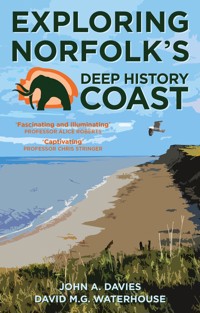
'Fascinating and illuminating – this book takes you on a trip to the seaside and back into the depths of the Ice Age, walking in the steps of our distant ancestors.' - Professor Alice Roberts Norfolk's Deep History Coast is a place of unique archaeological and palaeontological discoveries of international significance. Spectacular finds have transformed our understanding of the first human occupation of northern Europe and fossilised human footprints show people were here nearly a million years ago. This is the only part of Britain to have evidence of four species of humans, and it has also been home to giant prehistoric creatures, including three species of mammoth. This book will take you on a journey through time, looking at the geology, natural landscape and the creatures that have inhabited the area. Here you can explore the fascinating and beautiful sites around the 150km of Deep History Coast and see how you can share in this exciting adventure of discovery.
Sie lesen das E-Book in den Legimi-Apps auf:
Seitenzahl: 195
Veröffentlichungsjahr: 2023
Das E-Book (TTS) können Sie hören im Abo „Legimi Premium” in Legimi-Apps auf:
Ähnliche


















First published 2023
The History Press
97 St George’s Place, Cheltenham,
Gloucestershire, GL50 3QB
www.thehistorypress.co.uk
© John A. Davies and David M.G. Waterhouse, 2023
The right of John A. Davies and David M.G. Waterhouse to be identified as the Authors of this work has been asserted in accordance with the Copyright, Designs and Patents Act 1988.
All rights reserved. No part of this book may be reprinted or reproduced or utilised in any form or by any electronic, mechanical or other means, now known or hereafter invented, including photocopying and recording, or in any information storage or retrieval system, without the permission in writing from the Publishers.
British Library Cataloguing in Publication Data.
A catalogue record for this book is available from the British Library.
ISBN 978 1 80399 487 1
Typesetting and origination by The History Press
Printed and bound in Great Britain by TJ Books Limited, Padstow, Cornwall.
eBook converted by Geethik Technologies
CONTENTS
About the Authors
Acknowledgements
Illustration Credits
Foreword
Introduction
1 An Introduction to Norfolk’s Deep History Coast
2 The Natural Setting
3 The Geology
4 The Changing Fauna
5 The First Humans
6 The East: Pakefield to West Runton
7 The Central North Coast: Sheringham to Holme
8 The West: Hunstanton to the Wash
9 Accessing and Learning from the Deep History Coast
Glossary
Further Reading
ABOUT THE AUTHORS
DR JOHN A. DAVIES was Chief Curator for Norfolk Museums Service (NMS), member of the senior management team and Keeper of Archaeology until December 2018. Prior to retiring, he was Project Director (at NMS) for the major project to redevelop the historic Norman keep at Norwich Castle – the largest museum heritage project in the UK. He previously led the Interreg European project ‘Norman Connections’, linking historic sites in Normandy and southern England. He has worked as an archaeologist in Norfolk since 1984 and is a highly experienced museum professional of over thirty years. His publications include The Land of Boudica: Prehistoric and Roman Norfolk (2009), Castles in the Anglo-Norman World (2015), A History of Norfolk in 100 Objects (2015) and The Little History of Norfolk (2020). He is a Fellow of the Society of Antiquaries.
DR DAVID M.G. WATERHOUSE is a palaeontologist, evolutionary biologist and illustrator. He is the Curator of the Polar Museum at the Scott Polar Research Institute, University of Cambridge. Until early 2023 he spent sixteen years at Norfolk Museums Service (NMS), where he was Senior Curator of Natural History and Geology (responsible for the museums’ natural science collections from gnats to mammoths – and everything in between!). He is a former General Secretary of the Geological Society of Norfolk, a founder member of Norfolk Geodiversity Partnership, and a steering group member of the nationally acclaimed Norwich Science Festival. He was lead author and editor of The Wonder of Birds: Nature, Art, Culture (2014). David’s excavation experience includes the oldest archaeological site in northern Europe at Happisburgh in Norfolk, a complete ichthyosaur in Whitby, North Yorkshire, and a Tyrannosaurus rex dig in Montana, USA.
ACKNOWLEDGEMENTS
The authors would like to thank those who have willingly shared with us their knowledge of Norfolk’s landscape, geology, ancient fauna, early archaeology and information about specific discoveries, as well as their inspiration, over many years. In particular, and in alphabetical order, these are: Nick Ashton, Beau Brannick, Mike Chambers, the late Harold and Margaret Hems, the late Peter Hoare, Tony Irwin, Nigel Larkin, Simon Lewis, Jenny Lyon, Simon Parfitt, the late Peter Robins, Tony Stuart, Martin Warren and the late John Wymer.
The support and continued encouragement provided by Nick Ashton, Simon Lewis, Simon Parfitt, Chris Stringer and all members of the Ancient Human Occupation of Britain (AHOB) project team and the Pathways to Ancient Britain project team has always been gratefully appreciated.
We would also like to acknowledge the contributions of the many amateur enthusiasts who have shared information from their collections and those who have submitted their finds to NMS for identification and recording. They are too numerous to mention individually.
The idea of Deep History Coast was created and developed through our curatorial roles at NMS. The authors would like to thank all our friends and colleagues at NMS who have actively supported the project. The initiative has been progressed in partnership with North Norfolk District Council, who we would also like to thank for its involvement and support.
We hope that the project will serve to emphasise the importance of the role of museums and their staff in relation to the understanding of the county’s natural and historic heritage and the importance of wider community engagement towards its interpretation and preservation.
ILLUSTRATION CREDITS
Cover artwork and the following illustrations are by David Waterhouse: Figures 1, 8–15, 22, 24, 35, 49 and 56.
The following photographs were taken by John Davies: Figures 2, 16–17, 19–21, 26–32, 36–48, 50–55, 57–59. Figure 2 is reproduced by kind permission of Carole Lee.
The following images have been reproduced courtesy of Norfolk Museums Service: Figures 3–6, 33–34.
Figure 18 was taken by Sue Clarke; Figure 34 is by Nick Arber (copyright NMS); Figure 23 is reproduced by kind permission of Simon Parfitt (copyright Simon Parfitt); Figure 25 is by John Sibbick (copyright John Sibbick and AHOB).
FOREWORD
The delicate nature of Norfolk’s fragile coast has been further highlighted since the submission of our book for publication. The rate of erosion along the eastern seaboard has accelerated alarmingly in recent months. In February 2023 the small village of Hemsby hit national headlines when it lost 3m of coastline to the sea in just two days. Then, during the spring high tide in March, it was losing 3m in a single day. It became necessary for the beach to be sealed off beneath the unstable cliffs and properties were evacuated in advance of their destruction.
The causes of such catastrophes are complex, but changes around the east coast have become visible, with the build-up of sand banks alongside intensified erosion in other places. There is no question that the threat to parts of our coastline has become acute. Prior to the extreme weather conditions of 2018, which were referred to as ‘The Beast from the East’, erosion on this part of the coast was measured at around 1m per year. We are now seeing more extreme weather conditions on a regular basis, with what were once simply natural processes now being accelerated by the current climate crisis.
It is hoped that this book will serve to help raise awareness of the threat to some of our more delicate natural coastal habitats and their flora and fauna. Coastal communities, together with their homes and infrastructure, will continue to be at risk. The cycle of change is becoming more rapid.
Norfolk’s Deep History Coast remains a magical and dynamic place to visit. Most recently, Gorleston beach, with its stunning bay, has been included in the list of Europe’s twenty-five top beaches for 2023. It was also named the best beach in the UK. Here, we look to celebrate the beauty and significance of this historic coastline and to encourage your enjoyment and participation in its preservation.
John Davies and David WaterhouseApril 2023
INTRODUCTION
Some of the biggest and most fascinating questions of our time are those concerning who we are and where we came from. Now, in the twenty-first century, we are living through uncertain times for the human race, facing threats to the survival of our species in the form of global warming, pandemics and political instability, and all in the context of the threat of a sixth major extinction of life on the planet. Scientists are warning that our climate is currently at its warmest level since before the last ice age, some 125,000 years ago. Now may be an appropriate time to look back into distant deep time, from where we can regard a great panorama of past events in earth’s long journey and learn from it.
Our world has already undergone periods of climate change. Throughout history, human populations have been faced with problems relating to migration and displacement of peoples, ethnicity and identity. Yet, our species has survived, and we may be able to learn lessons from those who have gone before us.
So why is it that such massive issues are of relevance to Norfolk and, in particular, to its coastline? The answer is that past changes to the environment and climate, which have had a direct influence on the survival of the human species and the peopling of the earth, can be observed in the geology and archaeology that is being revealed in this county. In Norfolk, we are discovering important new clues to these events along the coastline, which is undergoing change brought about by a combination of natural forces, some of which have been accelerated by human action. Evidence here is also being uncovered that is able to shed new light on the very earliest human occupation of Europe and the delicate relationship our species has maintained with the natural landscape. The leading palaeontologist Professor Richard Fortey has described this part of Britain as ‘a fragile part of the country’ and ‘a place to feel the ephemeral grasp we have on the past’ (1993).
In recent decades, science has steadily made us aware of massive, submerged lost land masses around Great Britain and their significance to human occupation and survival. We now know that it was as recently as just 8,500 years ago that Britain was physically joined to mainland Europe. Archaeologists are currently investigating how and when areas of former dry land situated beyond Norfolk’s present coastline were drowned and are mapping these vast, hidden landscapes. There is now worldwide interest in drowned landscapes and coastal archaeology. Norfolk’s coastline is becoming a focal point in these studies.
From this approach, and from the emerging evidence on Norfolk’s coast, we can begin to understand how planetary processes and climate change have shaped the human story. We may also ask what other species we have shared the earth with and why so many of them are no longer with us. These are enormous questions and the study of Norfolk’s coastline is helping to provide some of the answers.
So, Norfolk’s geography and coastal geology are revealing unique vital clues to the earliest history of the human species and its natural environment. In this short introduction to what we have called ‘Deep History Coast’, we shall look at these discoveries and their significance, and also explain how you can become involved in this great adventure.
Fig. 1: The extent of Norfolk’s Deep History Coast.
1. AN INTRODUCTION TO NORFOLK’S DEEP HISTORY COAST
INTRODUCTION
The Deep History Coast is a part of England’s eastern seaboard, located where the land mass of the British Isles projects outward into the North Sea. Situated on the fringes of the county of Norfolk, where sea meets land, this is where some of the country’s most spectacular archaeological discoveries have been made. Here, it is possible to experience some of the most significant archaeological sites in the whole of Europe; all located within the most beautiful natural settings. Visitors can enjoy a range of natural habitats, open countryside and pretty villages, together with local museums and other attractions, along the county’s extensive coastline.
People are already attracted to this part of the country for recreation: to enjoy the unspoiled natural beauty of its beaches, the wildlife, a leisurely country stroll or bike ride, a meal in a scenic restaurant or fish and chips by the seaside. But few are fully aware of the aspects related to Norfolk’s history, less so, its very earliest past. Most people would be amazed to know that discoveries along Norfolk’s coast in recent decades show this apparently quiet and rural part of the country to have been the cradle of humankind for the whole of north-west Europe. And these discoveries continue to be made.
DISCOVERIES ALONG THE COAST
It has long been suspected that there had been an extremely early human presence on and close to what is now the coast of Norfolk. Early flint tools made by our ancient relatives have been found on the county’s beaches since the mid-nineteenth century. Here, early multipurpose prehistoric tools called handaxes (see glossary, page 164) have been discovered regularly. These objects tend to be worn and rounded from having been rolled in the sea and on sandy beaches for very long periods. It is also likely that some may have travelled from their original locations by the process of coastal drift.
Fig. 2: A Lower Palaeolithic flint handaxe found on Eccles beach in 2004. It is considered to be in excess of 500,000 years old.
Although they often lack association with dateable geological deposits, archaeologists regard these tools as an indicator of very early activity along and in the vicinity of Norfolk’s coast. But just how old are they? Other discoveries are now indicating that they may date to times long before what has previously been considered possible.
Interest in the earliest history of Norfolk’s coast was stimulated by a spectacular discovery during the winter of 1990. Following a storm, enormous bones were exposed in a cliff at West Runton, to the west of Cromer, which were later identified as those of a male mammoth, belonging to the species popularly known as the steppe mammoth.
Fig. 3: The huge jaw of the West Runton mammoth, which lived about 700,000 years ago.
This was probably the largest species of mammoth that ever lived. The creature was much larger and double the weight of the biggest elephant living today. The skeleton of the West Runton mammoth is now one of the county’s most important and iconic specimens. This important discovery served to focus the attention of both amateurs and professionals towards the importance of the north Norfolk coast for fossil discoveries, which have continued to be made.
Just a few years later, in the year 2000, Simon Parfitt, working at the Natural History Museum and University College London, recognised some distinctive marks in the bone of a very ancient prehistoric bison that had been found at Happisburgh, on the coast of north-east Norfolk. These were made by cuts from a flint tool, proving that very early humans had been present in the vicinity when the bison is known to have died, about 500,000 years ago. In the same year, local beachcomber Mike Chambers was walking on Happisburgh beach when he saw an object poking up from the surface of a peaty sediment on the wave line. This turned out to be a perfectly complete prehistoric handaxe. Not only was it in fresher condition than the other handaxes previously found on the Norfolk coast but it had also been found in situ, within a secure geological deposit, which is now also dated to about half a million years ago. As a result of these two discoveries, archaeological excavations were subsequently undertaken at Happisburgh, which led to the discovery of an even earlier human presence.
Another significant discovery associated with the presence of early humans on and close to the coast of Norfolk can be traced further back, to 1931, when a block of peat was dredged up a from the seabed beyond Cromer containing a beautiful polished, barbed harpoon made from red-deer antler. It was recognised that this weapon had been used by a prehistoric hunter. The peat around it had been formed in freshwater conditions, proving that this location had once been inland from the sea.
Fig. 4: The Happisburgh handaxe, discovered in 2000. It has been dated to approximately 500,000 years ago.
Fig. 5: The exquisite, polished antler harpoon found in peat from the seabed beyond Cromer, in 1931. It was used and lost about 12,000 years ago.
Radiocarbon dating subsequently showed that this area of peat had been formed about 12,000 years ago and the spearhead had been used by people at the end of the last ice age. It proved that a substantial area of dry land had once continued beyond the present Norfolk coastline and parts of the North Sea had provided a ‘land bridge’ to and from other parts of Europe. This discovery served to focus research into the exploration of a lost landscape and, ultimately, the concept of climate change, which continues as a major subject of study today.
Important archaeological discoveries have continued to be made on Norfolk’s coast and they are not restricted to just the very earliest episodes of our prehistory. In 1998, John Lorimer was walking on the beach at Holme dunes, in the far north-west, when he made the amazing discovery of a large, inverted tree trunk sticking up above the sand. This was found to be set within an oval-shaped wooden enclosure. This intriguing structure quickly became known by the popular name of Seahenge. Modern scientific techniques enabled it to be dated very precisely to 2049 BC, which was during the Bronze Age.
Fig. 6: The timber circle known as Seahenge, discovered in 1998. It was constructed over 4,000 years ago. It is no longer present on Holme beach.
Such discoveries continue to capture the attention and imagination of everybody interested in our human past. Norfolk’s beautiful coastline and its adjacent countryside have proven to be exceptionally rich in significant archaeological and palaeontological discoveries, which are important to the national and international, as well as our local, story. Together, they cause us to pose new questions and to rewrite the story of humankind. This all deserves to be better known. Norfolk’s Deep History Coast serves to provide an important opportunity, allowing us to better understand our ancient and most distant human origins.
THE SIGNIFICANCE OF NORFOLK’S COASTLINE
The prehistory and subsequent historical development of Norfolk are inextricably linked with its extensive coastline, which stretches for some 150km through varied scenery, embracing stretches of cliffs, beautiful golden sandy beaches and marshland. This entire coast provides wonderful places to visit and stay for holidays. It is also a great location to observe wildlife, especially its variety of birds, many of which make landfall on their migrations between Scandinavia and the rest of Europe.
For thousands of years, this coast has been integral to the character of the area’s inhabitants, as a source of their livelihood and prosperity. In more recent historical times, fishing ports were located at regular intervals, from Great Yarmouth in the east, through Cromer and the Glaven ports in the north, to King’s Lynn in the west. Such important locations would undoubtedly have been exploited at earlier times too, including in the Roman period (see Chapters 6 and 7). Strong cultural and trading links were forged with other parts of Europe and worldwide, and agricultural produce from inland was exported from here to other parts of Britain and the Continent.
But this is a coastline that also suffers from its exposed location, especially from strong seasonal gales and storms. The east coast, in particular, is highly unstable and prone to flooding and reclamation by the sea. In 1604, the entire village of Eccles was lost to the sea. Today, this is the fastest-receding coastline in the whole of Europe.
Although prevailing weather conditions sometimes pose an alarming threat to coastal communities and farmland, the resulting erosion has been responsible for a series of outstanding archaeological and palaeontological discoveries. Norfolk’s fascinating and internationally recognised geology is being eroded to reveal finds of the highest significance, which illustrate aspects of its past, providing evidence for some of the very earliest humans to enter Europe, as well as its ancient fauna.
The foreshore at Happisburgh revealed the oldest archaeological site in northern Europe, while the beach at West Runton yielded the largest and oldest nearly complete mammoth skeleton ever found in the British Isles. Norfolk now has evidence for more species of humans than any other county in the country. In fact, finds from this coast have been vital in helping us to understand just how the story of Britain began.
These discoveries have not only transformed our understanding of Britain’s earliest prehistory but also contributed to a much bigger story. They yield an insight into the very earliest human presence, occupation and settlement of Europe.
In addition to its lengthy coastline, Norfolk is also separated from the rest of Britain by water. While contained by sea to the north and east, today’s county is separated from Suffolk and Cambridgeshire in the south by the Little Ouse and Waveney rivers. To the west, situated between Norfolk and the English Midlands, are the watery expanses of the Wash and the fenland. The area comprising the modern county of Norfolk is, in effect, surrounded by water, creating almost an island.
THE IDEA OF DEEP HISTORY – WHEN WAS IT?
In this book, we shall consider the early history of humankind and the integral relationship between geology and the natural environment from the evidence being revealed in Norfolk. In order to do so, we need to understand the concept of very distant time. When we are looking at the transformation of the earth, it is almost impossible to comprehend the hundreds of millions of years in question. Human presence on the earth is relatively recent in such a context but still involves millions of years. The established terminology used by archaeologists has not been helpful.
The labels used to describe very early human times can be confusing to the non-specialist. The term ‘prehistory’ is a word that was first used in the early 1800s to describe the time before writing was invented. It literally means ‘before history’, although this is confusing because events were already happening, even if no one was writing about them. In different cultures and regions of the world, writing began at different times, so ‘prehistory’ isn’t even a fixed point in time across the globe.
It was during the nineteenth century that the study of prehistory was first structured on what were considered to be the predominant technologies used for the production of objects. Unfortunately, the terms ‘Stone Age’, ‘Bronze Age’ and ‘Iron Age’ have remained in use, although their significance has long been discredited and recognised as somewhat misleading. Archaeology in the twentieth century has constructed a more sophisticated interpretation of the past, which reveals a far more complex narrative, in which there were more significant developments in society than those simply based on the use of particular materials at different times.
Today, the Stone Age period is subdivided into the Palaeolithic, Mesolithic and Neolithic. These labels are also often explained as meaning the Old Stone Age, Middle Stone Age and New Stone Age. Even so, the terms still convey very little to most people.
The more attractive concept of Deep Time has become increasingly used to describe the very long expanses of time in relation to the development of the earth, and this covers the enormous periods when the sediments and rocks around us were being formed. The term was first used in the early 1980s, specifically in relation to the processes involved in geology. More recently, the term Deep History has been introduced and relates to the part of Deep Time when humans existed.




