



Erhalten Sie Zugang zu diesem und mehr als 300000 Büchern ab EUR 5,99 monatlich.
- Herausgeber: The History Press
- Kategorie: Sachliteratur, Reportagen, Biografien
- Sprache: Englisch
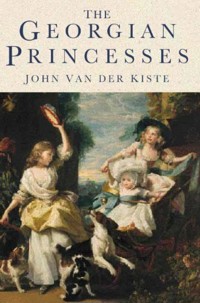
On 12 August 1762, Queen Charlotte gave birth to her first child. Twenty-one years later, to the week, the 15th and youngest was born. All but two children survived to maturity. The eldest of King George III's children, who became Prince Regent and King George IV, is less remembered for his patronage of the arts than for his extravagance, and maltreatment of his wife Caroline. As Commander-in-Chief to the British army, the administrative qualities of Frederick, Duke of York are largely forgotten, while King William IV, usually dismissed as a figure of fun, brought a new affability to the monarchy which helped him through the storms engendered during the passage of the Great Reform Bill in 1832. The princesses, for many years victims of their parents' possessiveness, married late in life, if at all, and are passed off as non-entities. This objective portrayal of the royal family draws upon contemporary sources to lay to rest the gossip and exaggeration.
Sie lesen das E-Book in den Legimi-Apps auf:
Seitenzahl: 437
Veröffentlichungsjahr: 2004
Das E-Book (TTS) können Sie hören im Abo „Legimi Premium” in Legimi-Apps auf:
Ähnliche






Contents
Title
Foreword
Prologue: King George III and Queen Charlotte
1‘I never saw more lovely children’
2‘Fatherly admonitions’
3‘Sincerely do I love this good and worthy man’
4‘If you fall all must fall’
5‘More wretched than I can express’
6‘Do not grieve for me’
7‘Noble and generous intentions’
8‘John Bull is a very odd animal’
9‘Like some gorgeous bird of paradise’
10‘In short a medley of opposite qualities’
11‘An immense improvement on the last unforgiving animal’
12Hanoverian Sunset
Genealogical Tables
King George III’s Children and Grandchildren
Bibliography
Also by John Van der Kiste
Copyright
Foreword
For many years, the Hanoverian kings and their families were ridicule personified. Such a process began with the Victorians, for Queen Victoria’s first Prime Minister, Lord Melbourne, never ceased to impress on her what a foolish crowd her uncles (three of whom were still alive and in good health at her accession) had always been. The sons of King George III, ‘the damnedest millstones round the neck of any government’, in Wellington’s impatient yet elegant phrase, received an almost uniformly bad press for nearly a century after the last one died in 1851.
Tentative efforts to help put the record straight began with the publication of Roger Fulford’s Royal Dukes in 1933. He related in his Foreword that he produced his work on the advice of an unnamed contemporary who suggested he ought to write a book about ‘those risible Dukes’. Yet, as he recognized, there was much clearing through the labyrinth of legend and rumour to be done.
In particular, Ernest, Duke of Cumberland and King of Hanover, stood out ‘from the pages of history as a shapeless lump of filth, from which it is now almost impossible to scrape off the mud and see what manner of man it really concealed.’ Largely through the efforts of Whig politicians, who were in power for much of the first forty years of the nineteenth century, Ernest became one of the most vilified characters in history since Attila the Hun. At various times he was reputed to have committed incest, rape, sodomy, and murder, and driven at least one cuckolded husband to suicide. Likewise King George IV, who was admittedly extravagant, untrustworthy, and behaved badly to his obnoxious wife, was thought to be the devil incarnate. His successor King William IV apparently spat at passers-by from his carriage window, and it was said that bets were placed on how long it would be before he went irrevocably insane like his father. This compounded the rather less than accurate supposition that King George III was mad, for it has been revealed comparatively recently that he suffered severely from porphyria, the symptoms of which were close to, but not completely consistent with, madness.
It suited the government, and the mentors of the young Queen Victoria and Prince Albert, to portray King George III’s large family as something of an aberration. Comparisons may be drawn not unprofitably with Shakespeare’s historical plays, produced partly to celebrate the glories of Tudor England and Queen Elizabeth I and to denigrate the last King of the preceding Yorkist dynasty, Richard III.
Had the politicians not made their contribution, the colourful distortions of contemporary diarists such as Greville and Princess Lieven would still have been sufficient to sustain the legends. Charles Cavendish Fulke Greville, Clerk to the Privy Council and Secretary to the Island of Jamaica, was a Whig whose dislike of royalty did not prevent him from accepting well-paid posts from the sovereigns whom he so despised; his diaries, originally published in 1872 and described as ‘indiscreet’ by Queen Victoria, make entertaining but not altogether accurate reading. Princess Lieven, wife of the Russian Ambassador and an indefatigable source of political gossip, likewise had scant regard for the truth. It was the letters, diaries and memoirs of people such as these whose half-truths were long accepted as fact.
Only with the publication of selections from the private correspondence of Kings George III and IV, edited by Professor Aspinall, has a truer picture started to emerge. The surviving letters, inevitably, only tell part of the story. King George IV wrote little, partly as he suffered from a weakness of and twitching in his hands in middle and later life; and an ill-advised series of passionate love-letters to the actress Mary Robinson in his youth, which had to be bought back at enormous cost by his enraged father, can have done little to encourage him to commit his thoughts to paper thereafter.
A stream of biographies since 1960, notably Anthony Bird’s The damnable Duke of Cumberland (which demolishes many of the more colourful myths pertaining to its subject and his family), volumes by John Brooke and Stanley Ayling on George III, by Olwen Hedley on Queen Charlotte, by Philip Ziegler on William IV, Christopher Hibbert’s two-volume study of George IV, and studies of the Dukes of Kent and Sussex by Mollie Gillen, have had the benefit of these and of other material which had long been unavailable, and only at last are some of the legends being laid to rest. Perhaps it is significant, however, that the Duke of Cambridge, whose life of seventy-six years was never tainted by debt, scandal or parental disapproval, has yet to find a biographer of his own. To quote Lucille Iremonger, there is not much to be said of him, ‘perhaps because he was the only son of George III to live above the age of four and keep all the commandments.’1
Over the years, the family have been frequently analyzed as individuals, though rarely as a group. The Princesses have been dealt with jointly by Dorothy M. Stuart, Lucille Iremonger (whose Love and the Princess purports to be a biography of Sophia, but is in effect a study of her sisters as well) and Morris Marples; but by and large their lives were so devoid of excitement that it would be idle to pretend that they merit biographies to themselves.
The concluding remarks of Percy Fitzgerald from his two-volume, Dukes and Princesses of the Family of George III, published in 1882, can be scarcely improved on more than a century later. He admits with restraint that they were remarkable persons, but ‘that in most of the members of the male family, with certain abilities, there was a strain of folly or eccentricity, owing a good deal to unrestrained self-indulgence and love of pleasure, which led to debt and difficulties; and which, in its turn, led to abandonment of principle, to strange shifts, and to careless oddities and recklessness.’ The King of Hanover, he maintains, was the one gifted with most ability, but unlovable; that King George IV was clever, versatile, and accomplished, but selfish and self-indulgent; that the Duke of York was perhaps the best of the family, but his debts ‘had the usual degrading effect’; that King William IV was straightforward and good-natured, but eccentric and wrong-headed; that the Duke of Kent was amiable, but unlucky: ‘a long-suffering personage of a really affectionate disposition’; that the Duke of Cambridge had perhaps the most respectable career of all, as he was the least talked of; and that the Duke of Sussex ‘had cultivated literary tastes, and his recorded observations, oral and written, show sound sense and study.’2
Fitzgerald was, however, writing at a time when little was known about them, and myths outnumbered fact. His remarks were both cautious and relatively accurate. All the same, the time seems right for an assessment of their lives as a family in the light of more recent research; and this I have endeavoured to do.
As ever, I am most grateful for the constant help, encouragement and advice during the writing of this book to my parents, Wing Commander Guy and Nancy Van der Kiste. I am also indebted to the staff of the Kensington and Chelsea Public Libraries, for a blissful morning of rummaging around in their superb biography collection; to Shirley Stapley, for the loan of material; to Steven Jackson, of the Commemorative Collectors Society; and last but not least, to Peter Clifford, Rosemary Aspinwall and the rest of the editorial staff, for their work in bringing this long-cherished project to fruition.
John Van der Kiste
Reference Notes
ABBREVIATIONS:
G III, The later correspondence of George III, 1783–1810, Aspinall (ed.), 5 vols, 1962–7.
G IV, The letters of George IV, 1812–1830, Aspinall (ed.), 3 vols, 1938.
PW, Correspondence of George, Prince of Wales, 1770–1812, Aspinall (ed.), 8 vols, 1963–70.
QV, The letters of Queen Victoria, 1837–1861, Benson and Esher (eds), 3 vols, 1907.
All references to Fitzgerald are to Dukes and Princes … unless stated otherwise.
1 Iremonger 88
2 Fitzgerald II 339–41
Prologue: King George III and Queen Charlotte
The Prince destined to become King George III was born on 4 June 1738, the second child of Frederick, Prince of Wales and Augusta, Princess of Saxony. It was an unfortunate tradition of the royal house of Hanover that father and son should dislike each other intensely. King George I, the first of the dynasty, had hated his son who succeeded him as King George II in 1727. The latter detested his eldest son Frederick, calling him ‘the greatest villain that ever was born’, and only public opinion persuaded him to allow the young man to come over to England from the ancestral home of Hanover. Frederick’s mother, Queen Caroline, hated him as well, calling him ‘such an ass that one cannot tell what he thinks,’ while his sister Amelia remarked disdainfully that he would ‘put one arm round anybody’s neck to kiss them, and then stab them with the other if he can.’
In 1736 he married Princess Augusta of Saxe-Gotha, and during the next fourteen years she presented him with five sons and four daughters.
Frederick was an unfaithful husband, but Augusta took his infidelities as a matter of course. Something of a dilettante, he took more of an interest in music, theatre and sport than politics. His children were well educated, and by the age of eight Prince George could read and write English and German, as well as taking an interest in public events and issues. He was also taught French, history, mathematics, religion, music and dancing, and he was the first British king to study science, learning the fundamentals of physics and chemistry as a boy. In later life, however, the King would regret his isolation from boys of his own age during adolescence. Unhappily, the experience did not prevent him from making similar mistakes with his own sons.
Frederick was never strong, and while gardening at Kew one winter, he caught a chill from which he died on 20 March 1751. A month after his death, his eldest son was created Prince of Wales and Earl of Chester. He had automatically succeeded to his father’s title of Duke of Edinburgh on the latter’s death. Frederick’s widow was aged only thirty-two, and with a son who would almost certainly be King before long, she expected to have some power over him when he came to the throne. In such a position, she was easy prey for favourites, and in her endeavours she was helped by her close friend (and lover, according to contemporary gossip) the Earl of Bute.
Unhappily, Augusta regarded it as a pious duty to her husband’s memory to maintain the feud with her father-in-law. Friendly overtures from the King to his grandson and heir were firmly rebuffed, until the King remarked disdainfully that the lad was ‘fit for nothing but to read the Bible to his mother.’ Under her upbringing George became an immature, inexperienced young man, full of prejudices. She would complain that he was too childish, albeit honest and good-natured. In 1756 he was offered an independent establishment by the King, but refused it on the grounds that his mother’s happiness depended upon their not being separated, and anything which affected or displeased his mother would make him uneasy.
On 25 October 1760 King George II died, and the next day his grandson was proclaimed King.
In his opening address to Parliament, King George III declared that he gloried ‘in the name of Briton’. Throughout his eighty-one years, of which almost sixty were spent on the throne, he was unique among British sovereigns, before and since, in never setting foot outside England. The first Hanoverian king, George I, was already an old man by the time he was called upon to succeed to the throne; he spent little time in England, and saw no point in attempting to learn the language. King George II learnt to speak it adequately for official purposes, though French remained the official language at court, as it was for most European courts, but he still regarded the ancestral home of Hanover with greater affection, and in private derided the House of Commons and the English as ‘king-killers or republicans’. There would be no such divided loyalties in the heart of his grandson.
The bachelor King of twenty-two longed to marry, having no desire for a mistress or a series of passionate entanglements. During his youth, it was said, he had fallen madly in love with the Quakeress Hannah Lightfoot and contracted a secret marriage with her. More serious was his infatuation with Lady Sarah Lennox, the daughter of the Duke of Richmond, and a direct descendant of King Charles II, with whom he was besotted for a while. There would have been difficulties in court protocol if His Majesty was to marry a subject; and she was related by married to the ambitious parliamentarian, Henry Fox. There was no love lost between Fox and Lord Bute, and the Dowager Princess of Wales had no desire to see her son make a marriage which would surely set him against her closest friend. It was imperative that the King should have some eligible young Protestant German Princess as his bride, before his infatuation with Lady Sarah should reach the point of no return. As he was not only King of Great Britain but also Elector of Hanover, it was almost inevitable that his bride would be drawn from one of the German ruling houses. Matters were made easier by the fact that the unambitious Lady Sarah only liked him as a friend, and was in love with Lord Newbattle, the future Marquis of Lothian.
Colonel Graham was sent to Germany to report on eligible princesses, and his choice fell on seventeen-year-old Charlotte. She was well-educated, particularly in history, botany and theology, and spoke French fluently. She had no interest in politics, a great advantage for a potential Queen Consort. Mecklenburg-Strelitz, or as it was unkindly dubbed by contemporary wags, ‘Muckleberg Strawlitter’, was a small duchy in North Germany, about the size of Sussex, and the family were accustomed to a dull, frugal and uneventful life. To be chosen as Queen of Great Britain was a dazzling honour for one of the Duke’s daughters.
Charlotte was small, thin and dark, with a nose tilted upward and a large mouth. Her hair was ‘a pleasant shade of brown’; this, according to some observers, was her only redeeming physical feature. She was said to be exceptionally plain, though the daughter of one of her gentleman-pages commented on her ‘slight, pretty figure’, and ‘her eyes bright and sparkling with good humour and vivacity’, giving the lie to a legend that she was exceptionally ugly. Her wardrobe was meagre; she had only one proper gown, which was kept for Sunday best. When Mr Drummond, the English ambassador to Prussia, was sent to Strelitz to perform the betrothal ceremony, she was dazzled by the gifts of jewellery which he brought with him.
On 8 July 1761, the betrothal of His Majesty King George III and Princess Charlotte of Mecklenburg-Strelitz was announced. Two ladies from court, the Duchess of Ancaster and the Duchess of Hamilton, were sent out to the Germany Duchy to escort her and her servants to England.
The Princess set off for England aboard a ship, tactfully named the Charlotte. On their crossing she behaved in cheerful and friendly fashion, her spirits surviving the nine days they spent at sea, while her servants and the English Duchesses suffered agonies from sea-sickness. She chattered away, sang, and proved how well she had been educated for her destiny by thumping out English tunes on the harpsichord, it was said, so as to ‘encourage her companions in their misery’. They were expected to sail up the Thames to be met by the King at Greenwich, but bad weather forced them to land at Harwich, and continue the journey by road.
The wedding was celebrated on 8 September, the evening of her arrival in London, at the Chapel Royal, St James’s. After supper the Queen was helped into her wedding dress, of white and silver, with a purple velvet mantle laced with gold and lined with ermine, fastened on the shoulders with large tassels of pearls. She trembled with nerves as the King’s brothers, the Duke of York and Prince William, led her up the aisle, the Duke comforting her with a gentle, ‘Courage, Princess, courage!’ Although she had ten maids-of-honour, including Lady Sarah Lennox, to carry her train, it was so heavy that as the evening passed it dragged down the neck of her gown, until ‘the spectators knew as much of her upper half as the King himself.’1 Apart from this, everything passed off satisfactorily, though one elderly peer had to be forcibly restrained from doing homage to Sarah as his new Queen.
Afterwards the Queen played the harpsichord and sang some songs while guests in the drawing-room awaited supper. She spoke a little French to them and German to the King, before excusing herself on account of tiredness, retiring to a private supper with him, and then to bed.
Out of consideration for her, the King dispensed with one of the less delicate wedding customs. It was tradition that the Queen should appear in her nightdress, to be ‘bedded’ beside her bridegroom before the whole Court, but King George decided to spare her this indignity.
A fortnight later, they were crowned at Westminster. There were some mishaps, particularly at the banquet in Westminster Hall afterwards. The principal diamond fell out of the crown, an apparent ill omen which superstitious spectators would recall some years hence when the Americans declared their independence; the London aldermen found no table prepared for them at the banquet; and the Earl Marshal was reprimanded after the heralds had made a muddle about the order of procession. Overcome with nerves, he confessed that there had been much he would have wished otherwise, but he had taken care that the next Coronation would ‘be regulated in the exactest manner possible.’ Far from being offended by such intimations of his mortality, the King roared with laughter at this gaffe and made the poor man repeat it several times.
Still dominated by his mother, he was sometimes inconsiderate to his wife. Shortly before the wedding, he had warned her, ‘Never be alone with my mother; she is an artful woman and will try to govern you.’ None the less, their first year of married life was made unhappy by Augusta’s selfish, often successful, efforts to crush any signs of independence in this young Princess whose head must have been turned a little by what had seemed such a glittering prize. When she discovered that the Duchess of Mecklenburg-Strelitz had asked her daughter not to wear jewels when taking Communion, she insisted that the Queen should as it was expected of her. The Queen liked playing cards with her maids for relaxation; the Princess of Wales prohibited games of chance, as they were ‘wicked’.
The King was too much in awe of his mother to defy her and stand up for his young wife. Neither did the rest of his family attempt to make her feel welcome, his unmarried sisters mocking her for her lack of sophistication. She was not encouraged to make friends among her husband’s subjects; no English ladies were permitted to approach her without first obtaining permission from her German attendants. Whatever lively spirits this plain but apparently eager young woman had when she came to England must have been soon extinguished by such cruelty. She had no contact with society, remarked the diarist Walpole acidly, ‘except for the Ladies of the Bedchamber for half an hour a week in a funereal circle, or a ceremonious Drawing Room.’ Overruled, insulted, a stranger in her husband’s kingdom, she resorted to defensive chilliness. It was hardly surprising that she became embittered and unpleasant, not to say cruel, to those under her control, particularly her adult daughters.
The King was the one sober and virtuous member of an otherwise raffish, self-indulgent family. Kind and considerate, others found him dull and on occasion mean. Any inclinations he had towards parsimony were reinforced by his Lord Steward, Lord Talbot, who had been responsible for the cheese-paring arrangements at the Coronation banquet. For example, the latter had issued no invitations to representatives of the citizens of London, and only when he was told firmly that they could hardly be expected to contribute £10,000 to provide a dinner for the King and have no share themselves, were seats hastily provided for them. Despite his ineptitude, he was put in charge of the staff of the royal household. Economy was his constant watchword. One of his first acts was to declare that in future no meals would be provided at the Palace for anybody other than Their Majesties, the maids of honour and the chaplains. The Queen’s first party, to which about a dozen couples were invited, was described as a ‘gingerbread affair’. The guests arrived at seven, and danced until after midnight, when they were sent home without any refreshments whatsoever.
As for the King and Queen, they usually dined off tough mutton and inferior claret. To them, though, this was no hardship, for they were abstemious by nature. The King drank little wine, and enjoyed simple food. As the satirist Peter Pindar put it, ‘A leg of mutton and his wife, Were the chief pleasures of his life.’ He was afraid of growing fat, and his careful diet, coupled with regular exercise, prevented him from the Hanoverian tendency to put on weight in middle age.
Members of the aristocracy did their best to avoid the Court, but Cabinet Ministers were obliged to wait in attendance regularly on the King. They were disgruntled to find that no refreshment was ever offered them either, but the local inns must have been grateful at the resulting increase in trade from hungry servants of the crown.
Humble country folk were more fortunate. The King liked to stroll into their cottages unannounced to talk about simple everyday matters. If he suspected that a cottage’s tenants seemed lacking in creature comforts, he would spontaneously leave some money behind. When a committee was appointed to examine the state of his finances during one of his first major illnesses, it was found that nearly a quarter of his personal income was thus given away in charity.
As for relaxation, King George III loved the theatre, and he went once a week for much of his life. Sometimes leading actors and actresses of the day were invited to entertain at court, Sarah Siddons being a particular favourite with the King. Slapstick and pantomime always amused him, and were greatly preferred to Shakespeare’s ‘sad stuff’. He played the violin, flute and harpsichord, and enjoyed listening to music, particularly religious songs. Sometimes boys were invited from Eton to come to ‘feasts’, or long concerts of church music – although they were sent away afterwards without refreshment. In the Chapel Royal, he would beat time enthusiastically with his music roll, and thump the heads of the pages with it if they began chatting among themselves.
During the first few years of his reign, King George was a zealous collector. In 1762 he acquired two excellent collections of Italian, Flemish and Dutch drawings and paintings. As his grandfather had presented the royal library formed by his predecessors to the British Museum in 1757, there was none in the palaces on his accession, so be began to form a new one. Within a few years it comprised several thousand volumes, and kept two cabinet makers in regular employment making bookcases and presses to keep up with new acquisitions. Medals and maps particularly fascinated him, but his greatest passion as a collector was for clocks and watches. He fully understood how they worked, and paid large sums for several very complicated and expensive timepieces, as well as barographs, telescopes and barometers.
Painting held less interest for him, although he played his part in encouraging the fine arts, particularly by assenting to the foundation of the Royal Academy in 1768, visiting its annual exhibitions and attending the banquet. Yet the work of Sir Joshua Reynolds, the Academy’s first President, found little favour at court, and nor did the revolutionary paintings and drawings of William Blake. His favourite painters were Allan Ramsay, who was entrusted with executing the formal state portraits of King and Queen early in the reign, the expatriate American Benjamin West, who became the Academy’s second President, Thomas Gainsborough, who produced surely the most charming portraits of the family, including the famous oval portraits of parents and thirteen of the children in 1782, and the German-born Johann Zoffany.
His most famous nickname, ‘Farmer George’, was a result of his interest in agriculture. From time to time he sent letters on the subject to the ‘Annals of Agriculture’ under the pseudonym of Ralph Robinson. He regularly sent produce from the farm at Great Park, Windsor, to market and sold it at a profit, a practice not calculated to make him popular among his fellow-farmers.
Like the lack of hospitality offered to visitors, this indicated something of a mean spirit at the royal court, reputed to be the dullest in Europe. If a King and Queen live simply and economically, they are taken to task for being dull. If they are hedonists and spendthrifts, they are taken to task for gross extravagance while the poorest of their subjects starve (as were King George and Queen Charlotte’s contemporaries at the court of Versailles, King Louis XVI and Queen Marie-Antoinette). How do they strike a satisfactory balance?
The answer, of course, is that they cannot. As James Gillray’s pair of savage caricatures published in 1792 showed, it was impossible to please everyone. The first, ‘Temperance enjoying a frugal meal’, mocked a miserly King George and Queen Charlotte at dinner. The second, ‘A voluptuary under the horrors of digestion’, portrayed their debauched eldest son recovering from a heavy meal, surrounded by gambling dice, unpaid bills, and patent cures for venereal disease. Similar comparisons may be made with the King’s great-granddaughter, the widowd Queen Victoria, and her raffish, society-loving son Prince Albert Edward; according to the then (1870) Prime Minister W.E. Gladstone, the Queen was invisible and her heir not respected. As in the time of Queen Victoria and Prince Albert, the lack of fashion and fashionable vice in the head of society during King George III’s reign disappointed if not shocked aristocracy, letter-writers and diarists alike. It was their opinions which passed into history, and suggested that such lack of vice made the sovereign and his wife unpopular. Dull, yes, and often objects of ridicule; but to suggest that they were hated for leading such a quiet, unpretentious life is surely exaggeration.
Such was the contrariness of human nature, though, that the children born to them would in time yearn to be everything that their stolid, staid, dutiful parents were not.
Reference Notes
ABBREVIATIONS:
G III, The later correspondence of George III, 1783–1810, Aspinall (ed.), 5 vols, 1962–7.
G IV, The letters of George IV, 1812–1830, Aspinall (ed.), 3 vols, 1938.
PW, Correspondence of George, Prince of Wales, 1770–1812, Aspinall (ed.), 8 vols, 1963–70.
QV, The letters of Queen Victoria, 1837–1861, Benson and Esher (eds), 3 vols, 1907.
All references to Fitzgerald are to Dukes and Princes … unless stated otherwise.
1 Walpole III 432
1
‘I never saw more lovely children’
On 12 August 1762 Queen Charlotte gave birth to her first child. Twenty-one years later, to the week, the fifteenth and youngest was born. By any standards the family of King George III and Queen Charlotte was a large one, and it was unequalled in the annals of British royalty. Queen Anne had endured eighteen pregnancies, but only five babies were born alive, and of these only one lived long enough to celebrate an eleventh birthday. The unhappy overtaxed mother herself died at forty-nine, having been a virtual invalid for several years.
That Queen Charlotte lived into her seventies and her husband, a sickly seven-months infant, attained the age of eighty-one, is evidence that the line was comparatively healthy. Even more remarkably, most of their sons and daughters were physically robust, with boisterous spirits to match. The stamina of the elder ones did not extend to the younger, however. Of the first twelve, all but the Duke of Kent (who died of pneumonia at fifty-two) reached their sixties or seventies, and two (the Duke of Cumberland and the Duchess of Gloucester), like their father, lived into their ninth decade, but the last two sons died in infancy and the youngest daughter only lived into her twenties.
Some of the children, namely George, Frederick, Augustus, probably Edward and perhaps Sophia, suffered from the royal malady of porphyria. It was a complaint, not a fatal disease, but it does perhaps account for the chronic or regular bouts of ill-health from which they suffered, albeit far less severely than their father.*
When dignitaries gathered on the afternoon of 12 August while Queen Charlotte was in labour for the first time, no heir had been born to a reigning monarch for nearly three quarters of a century. The last occasion had been the arrival of King James II’s son in 1688, when absence of credible eye-witnesses had led to suggestions that an infant had been brought into the royal chamber in a warming-pan. So that there should be no dispute in future, a custom was adopted whereby a group of eminent persons would be summoned to St James’s Palace to testify that the newly-born heir to the throne was indisputably royal. They included the Archbishop of Canterbury, the First Lord of the Treasury, two Secretaries of State, and officers of the Privy Council and the Royal Household. The father-to-be remained within his own apartments at the palace, but despite his reputation for being careful with money, he had promised £500 to the bearer of news of a daughter, double that sum if it was a son.
At twenty-four minutes past seven, the child was born. The Earl of Huntingdon hurried to the King’s rooms and informed him that he was the father of a baby girl. Whether he received his recompense or not was not recorded, but the King assured him with delight that he cared little for the child’s sex as long as the Queen’s health was not in jeopardy. Going straight to her, he discovered that the Earl had been incorrect; the child was ‘a strong, large, pretty boy’.
Five days later, the royal infant was created Prince of Wales. A week later, members of the nobility were admitted, for two hours on six successive afternoons, filing into the room in groups of up to forty at a time, to see the heir. They gazed at him as he slept in a cot behind a latticework partition, or rested on a velvet cushion on the lap of his wet nurse, Mrs Margaret Scott. While doing so they were served with royal cake and caudle, a mixture of warm eggs and wine. On one day alone five hundred pounds of cake and eight gallons of caudle were consumed.
On 16 September the baby was baptized George Augustus Frederick, in an unpretentious domestic ceremony in the Queen’s drawing-room at St James’s.
Shortly after his marriage, King George III purchased Buckingham House, a few hundred yards from St James’s, from Sir Charles Sheffield, a natural son of the Duke of Buckingham, for £28,000. Within two years he had spent considerably more on structural alteration, extensions and redecoration. The Queen’s House, as it was known until further enlargement and partial rebuilding some sixty years later, and then renamed Buckingham Palace, thus made an ideal royal residence within easy reach of the capital with its view down The Mall towards the cities of Westminster and London, and St Paul’s Cathedral in the distance.
Here the royal couple and their children lived in relative privacy and simplicity, and used the Palace at St James’s for more formal functions, such as drawing-rooms and levees.
On 16 August 1763, during a summer of intense heat and thunderstorms which caused some discomfort to the mother in labour, Prince Frederick was born at Buckingham House. At the age of seven months, he was created Bishop of Osnabruck in Hanover. There were considerable emoluments attached to the Bishopric, which was, alternately with the Holy Roman Emperor, in the gift of the Elector of Hanover, and King George III was anxious to keep it in the family when the right of appointment fell to him. Until created Duke of York, this second son was always known by his ecclesiastical title, and his first set of china, made specially for him by Josiah Wedgwood, was stamped with his mitre.
In 1764 the Queen had a miscarriage, but on 21 August 1765 she produced a third son, William. The first daughter, Charlotte, arrived on 29 September 1766, and on 2 November 1767 another son, Edward. He was born the day before his dissipated bachelor uncle Edward, Duke of York, was buried, and thus given the name in his memory. In later life, he would remark theatrically that the circumstances of his birth ‘were ominous to the life of gloom and struggle which awaited me.’
Next came two daughters, Augusta, born on 8 November 1768, and Elizabeth, on 22 May 1770. On the morning of 5 June the following year, the experienced mother attended a reception, and gave birth in the afternoon after only fifteen minutes’ labour to another son, Ernest. He was followed by two more boys, Augustus (27 January 1773) and Adolphus (24 February 1774). As if the royal nurseries were not full enough by this time, along came Mary (25 April 1776) and Sophia (3 November 1777), followed by the less healthy, short-lived Octavius (23 February 1779), Alfred (22 September 1780), and Amelia (7 August 1783).
The parents’ efforts to show their children to some of their subjects were not well-received. In October 1769 some of the nobility were invited to an infants’ drawing-room. At one end of the room was a dais on which stood the Prince of Wales, aged seven, in scarlet and gold, wearing the Order of the Garter, and the Bishop of Osnabruck, in blue and gold, attired in the Order of the Bath. The Princess Royal was seated on a sofa between William and two-year-old Edward, ‘elegantly dressed in togas according to the Roman custom’. While the Princes may have received the fawning courtiers with ‘the utmost grace and affability’, and while such traditions were commonplace in the courts of Germany, in England the event was greet with hilarity. In the press, caricatures were printed of outraged noblemen humbling themselves before a kite-flying Prince of Wales, a Bishop on his hobby-horse, William spinning a top, and a baby Princess receiving sustenance from a wet nurse behind a screen. The King and Queen were wise enough not to repeat the idea.
The Prince of Wales had been created a Knight of the Garter at the age of three and a half, and soon afterwards he would be invited to the Queen’s ‘drawing-rooms’. It was considered important to introduce the future King into such ceremonial functions at an early age. Extrovert by nature, he revelled in this, and when he was five, Lady Sarah Lennox commented with disdain that his father had ‘made his brat the proudest little imp you ever saw.’ Such an upbringing was not calculated to make him anything other than conceited, but endearing qualities were also evident. He had a great sense of humour and a pronounced gift of mimicry. As there was little for him to do in the often artificial life at court but to observe those around him, he soon sharpened his talent for imitating those around him to perfection.
George and Frederick were always close during childhood, and at Kew they were encouraged to cultivate a strip of land, although they did so without any of their father’s enthusiasm. Despite the age difference, they attended the same classes for eight hours each day, and learned to ride and fence together.
The educational regime, supervised by their father, was strict. Lord Holderness was appointed the Prince of Wales’s governor, and Dr Markham, the Bishop of Chester, their chief preceptor. The former resigned in 1776, and the latter was promoted to the Archbishopric of York, his place being taken by Dr Hurd, Bishop of Worcester. The boys rose at six o’clock and began lessons at seven, studying Latin, French, German, Italian; mathematics; religion and morals; history, government, and laws; natural philosophy or the ‘liberal sciences’; and ‘polite literature’ (mainly Greek and Latin; the only English writers considered worthy of study were Shakespeare, Milton and Pope). Additional accomplishments, such as fencing, music and landscape drawing, were also taught. To Dr Hurd, the King remarked that they all lived ‘in unprincipled days, and no change can be expected but by an early attention to the rising generation.’1 Yet the rising generation, at least as far as royalty was concerned, consisted of high-spirited boys who were difficult to control. One tutor, Mr Fairley, recalled in later life that there was ‘something in the violence of their animal spirits that would make him accept no post to live with them.’
From an early age, the Prince of Wales irritated his father, thus giving some portents of the traditionally stormy relationship between King and heir. When shut out of his father’s dressing-room one day, as a boy of ten, the Prince of Wales retaliated by shouting ‘Wilkes and Liberty!’ through the keyhole. To His Majesty, the radical journalist John Wilkes was the devil incarnate; but whether the King was infuriated by his son’s impudence, or laughed it off ‘with his accustomed good-humour’, depends on whose version one reads. The boy particularly resented being made to wear a baby’s cambric frock with lace cuffs, long after seeing other children of his age wearing more suitable clothes. To servants, he would complain in exasperation how his father treated him, seizing his lace collar and complaining bitterly that he was to be kept looking like a baby.
This mischievous child grew up to be a mischievous adult. When he was twelve, the King complained to Holderness that the Prince did not apply himself to his work; he showed ‘duplicity’ and had a ‘bad habit … of not speaking the truth.’ Naturally intelligent, he was inclined to be lazy, unlike the more honest, lively and industrious Frederick, whose conduct and progress pleased his father and tutors far more.
King George loved his children when they were small, but as they grew up he became less fond of them. As a parent, he was over-protective, attempting to teach his sons the virtues of rigorous simplicity, hard work and punctuality. The boys must be beaten at the first signs of laziness, and it distressed their sisters to see their two eldest brothers being held by their tutors and thrashed with a long whip.
The Princesses fared better under the eye of their mother and their much-loved governess Lady Charlotte Finch, who was appointed to the household in 1762 and stayed for thirty years. The King’s drawing master, Joshua Kirby, was responsible for introducing Thomas Gainsborough, a close friend, to the royal family, and the latter taught the princesses the rudiments of painting and drawing. With his tutelage, and the art collection being formed by their parents, they had no shortage of inspiration or of fine pictures to copy. Charlotte and Elizabeth were the most active artists in the family, and several copies made by them survive in the Royal Collection. From copying drawings, perhaps tracing, Elizabeth progressed to become the most prolific of the sisters. Later she published lithographs, etchings and mezzotints, mainly of interior decoration at the Queen’s House and later Frogmore, where she helped design garden buildings, and painted flower murals in the upper room of the Queen’s Cottage at Kew. Sophia, an excellent horsewoman, preferred embroidery, and Amelia inherited her parents’ love of music.
They were all strictly brought up, and the Queen insisted that the governesses must never ‘pass any incivilities or lightness in their behaviour.’ She lacked spontaneity with her children and was perhaps too stern with her daughters, for in later years they would complain about their mother, while always retaining great affection for their father. Mrs Harcourt thought that she kept them at ‘too great a distance’, and another lady at court doubted whether she had ever possessed any maternal feeling at all.
It was no wonder that they enjoyed breaks from family routine, when they were allowed to visit the houses of more indulgent hosts. Their indulgent great-aunt Amelia often invited them to her home at nearby Gunnersbury, where they played riotous games of skittles for hours on end.
There were also duty visits to various acquaintances of the elder generation, such as when the whole family were taken to Farnham to see Dr Thomas, Bishop of Winchester, on his eighty-second birthday. The Bishop’s niece, Mrs Chapone, was particularly impressed with Prince William, then aged twelve. He was ‘so sensible and engaging that he won the Bishop’s heart,’ staying to talk to the elderly gentleman while his brothers and sisters ran playing around the house.
Buckingham House was the family’s main London residence, but the elder children were brought up mainly in the country, at first at Richmond Lodge. The Dowager Princess of Wales lived at the nearby White House, Kew. Soon after her death in February 1772, the growing family moved in, and Richmond Lodge was demolished.
As the family grew, it became necessary to set up additional establishments for the elder children. By 1773 the Prince of Wales and Prince Frederick had their own apartments in the Dutch House at Kew (sometimes also known as the Prince of Wales’s House), as well as at Buckingham House, and Princes William and Edward were ‘boarded-out’ in the house on the south side of the Green now known as Kew Palace. Their education was entrusted to two governors, General Bude, and Dr Majendie, a classical scholar who had taught Queen Charlotte English. Princes Ernest and Augustus, by then aged five and three respectively, were similarly settled in the smaller house next door accompanied by a staff of servants, including their own page, dresser, and governor.
All the children were expected to join their parents for breakfast at the Queen’s House, taken punctually at nine o’clock, the youngest being brought in by the wet nurse. They were given milk, or sometimes tea, and dry toast. The boys had already risen at six and spent two hours at their lessons, and after this refreshment, they would return to their houses for at least two hours of lessons, generally more, followed by a walk in the gardens, whatever the weather. Dinner was taken at about three o’clock, with ‘soup if they choose it, when not very strong or heavy, and plain meat without fat, clear gravy and greens’. Fish was available, ‘but without butter, using shrimps strained from the sauce or oil and vinegar’, usually followed by ‘the fruit of a tart without the crust’.2 As a treat, on Thursdays and Saturdays they were allowed an ice of whatever flavour they wanted. Coffee was likewise available only twice a week, but they were normally permitted a glass of wine to finish the meal.
After dinner, all the children joined together in the garden for games. Cricket, hockey and football were the favourites, and Charlotte was particularly proud of her cricketing skills. They also had a model farm in which they were expected to work; one small field was set aside for them to sow and reap wheat, which they subsequently ground and used for making bread.
At five o’clock the children gathered again at their parents’ apartments to read, write or ‘make improving conversation’. The governesses were expected at six-thirty to take them off to bed, and a light supper was served except on Mondays.
As for clothes, each Prince had six suits of full-dress clothes a year and ‘various common suits’, new boots every spring and autumn, and new shoes once a fortnight.
The King and Queen set great store by their children’s health. Two doctors were always kept in attendance. Bleeding and blistering were frequent remedies for childhood complaints, and all the youngsters suffered this with great regularity. They were vaccinated at an early age, a hazardous procedure in the days before Dr Jenner had substituted cowpox for inoculation with smallpox itself. When the Prince of Wales was four, and had to stay in bed with the curtains drawn after his vaccination, his mother’s Keeper of the Robes, Mrs Schwellenberg, asked him if he did not find it dull having to rest. ‘Not at all,’ he replied rather precociously. ‘I lie and make reflections.’3
The court at Kew enjoyed pleasantly rural surroundings, by no means cut off from their subjects. Many of the houses around the Green were residences for other members of the royal family, yet no attempt was made to keep the public out. The Botanical Gardens at Kew were open to the public on Thursdays, and Richmond Gardens on Sundays. Londoners would regularly come on Sunday afternoons in the hope of seeing a crocodile of neatly-paired royal infants taking a well-ordered walk across the lawns. The King himself would usually be seen setting a brisk pace at the head of this procession or, watering can in hand, directing operations among the flower beds.
Some fifty years later Charlotte Papendiek, daughter of one of the royal pages, recalled the summer of 1776 when she had been a girl of eleven, and Kew Green was covered with carriages on both days. Parties would travel up the river, with bands of music; ‘The whole was a scene of enchantment and delight; Royalty living among their subjects to give pleasure and to do good.’4
Once they had moved to their own ‘establishments’, the princes and princesses seldom saw their parents, and never informally. Their Sunday afternoon walks were often the only time they met. During the season they were taken to London on Thursdays for the drawing-rooms, and when they reached the age of ten, they were expected to attend evening parties for music and cards at Kew or Windsor, hardly the most lively occasions for these high-spirited youngsters. When summoned to be present at royal games of whist, they had to stand behind the Queen’s chair, and sometimes fell asleep in that position. Unless offered a chair themselves, they were not allowed to sit down. When leaving their parents’ presence, they had to walk backwards. Conversation was limited, as Queen Charlotte was particularly strict about the royal code that prevented children from speaking to their parents, unless spoken to first.
The King was happiest at Kew, where he could drive over to his Observatory, spend contented hours in the botanical gardens, and retire to the thatched cottage built for Queen Charlotte. There they would take tea, listen to their daughters playing the harpsichord or mandolin, and help them with their sketching.
He had always disliked Kensington Palace and Hampton Court, places which would ever be associated with the unhappier moments of his childhood. At Hampton he had once had his ears soundly boxed by King George II. Not until the second decade of his reign did the growing family make it necessary for him to consider living at Windsor Castle, largely neglected since the death of Queen Anne in 1714. Later the state apartments were brought back into commission, and in 1804 the royal family moved into the Castle, much to the chagrin of Queen Charlotte, who found it cold and inconvenient. King George intended to have further modifications made, but such plans were not put into effect before his final serious illness, and it was left to his eldest son and heir to complete the Castle’s modern transformation.
In 1802, the White House at Kew was demolished and the King moved into the Dutch House* as a temporary measure, pending the building of a Gothic palace nearby. The Dutch House was small and inconvenient, with the Princesses’ bedrooms on the top floor so tiny that they had to hang their dresses on the backs of doors. As the King’s health declined he visited Kew less, and left it in 1806 for the last time. The unfinished Gothic Palace was demolished in 1828.
While the children played and attended to their lessons at Kew, their father was engaged in promoting legislation which would have an adverse effect on several of them – the Royal Marriages Act. The virtuous King was almost exceptional by Hanoverian standards in making a successful and reasonably happy marriage which did not compromise family dignity. One of his sisters, Caroline Matilda, had been married at fifteen to the mentally-unbalanced, homosexual King Christian VII of Denmark; their unhappy union was dissolved after she took their court physician as a lover: he was executed for adultery, and she was sentenced to exile, ostracized by her family, dying at the age of twenty-three. Two of his brothers, the Dukes of Gloucester and Cumberland, made secret marriages with commoners, only informing him when it was too late to annul them. Determined that his children should not make such unsuitable matches, he brought his influence to bear on Parliament.
In order to maintain the dignity and purity of the British monarchy, he was determined that none of the direct descendants of King George II might marry before the age of twenty-five without the King’s consent. After that, they could marry provided they gave a year’s notice to the Privy Council, and as long as Parliament assented. He warned his Prime Minister, Lord North, that he expected ‘every nerve to be strained to carry the Bill through both Houses with a becoming firmness’; as it did not relate to the government of the country, but personally to him, he had ‘a right to expect a hearty support from everyone in my service and shall remember defaulters.’5
Several leading parliamentarians expressed their disgust at such an authoritarian measure, one prophesying with some foresight that it should be called ‘An Act to encourage fornication and adultery in the descendants of George II’. Yet the King had his way, and by the end of March 1772 the Bill was law. It had thus been decreed that Protestant royalty could only marry other Protestant royalty, restricted the right of his sons to marry almost anyone who was not a German princess, and so limited the possibilities for his daughters that they were forced either into prolonged spinsterhood or secret liaisons.
During their adolescence, however, the cares of the future weighed less heavily on them. On 12 August 1778, the sixteenth birthday of the Prince of Wales, the royal family was expected to breakfast at Bulstrode Park (about nine miles from Windsor) with Queen Charlotte’s friend Mrs Delany and the Dowager Duchess of Portland. Their hosts watched them coming up the drive, the King driving the Queen in a phaeton and pair, the Prince of Wales and Prince Frederick trotting behind on horseback. In a post-chaise and four behind them came the Princess Royal, looking after their then youngest brother, Prince Adolphus. Following was a coach and six in which rode Princesses Augusta and Elizabeth, with Princes William and Edward. They all alighted and came clattering cheerfully into the hall. While the King showed the two eldest boys the pictures in the dining-room, the Queen and Mrs Delany talked about embroidery, and then the family came to admire the Duchess’s collection of china, the young ones looking carefully and asking questions, the boys whistling and trying not to look too interested. They then sat down to breakfast with a hearty appetite.




