


Erhalten Sie Zugang zu diesem und mehr als 300000 Büchern ab EUR 5,99 monatlich.
- Herausgeber: Crown House Publishing
- Kategorie: Fachliteratur
- Sprache: Englisch
This unique, practical and accessible healing manual explores the most powerful methods of healing, primarily focusing on guided imagery, a healing technique integrating the connection between mind and body. "Well-researched and authoritative." Belleruth Naparstek, LISW, The Guided Imagery Resource Center
Sie lesen das E-Book in den Legimi-Apps auf:
Seitenzahl: 639
Veröffentlichungsjahr: 2007
Das E-Book (TTS) können Sie hören im Abo „Legimi Premium” in Legimi-Apps auf:
Ähnliche














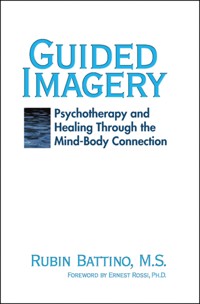
Guided Imagery
Psychotherapy and Healing Through the Mind-Body Connection
Rubin Battino, M.S.
Department of Human Services Wright State University
Dedication
This book is dedicated to the brave people who have let me share in their lives on my journey to become a healer. Their courage and hugs and laughter and living in the present were and continue to be what teaches me and sustains me. Thank you, friends.
Table of Contents
Title Page
Dedication
Preface
Foreword
Contributors
Part One. Guided Imagery for Healing
Chapter 1. Introduction
1.1 Introduction
1.2 A Personal Note
1.3 Disease/Cure and Illness/Healing
1.4 Complementary and Nontraditional Approaches; Alternative Medicine and Therapies
1.5 Summary
Chapter 2. Scientific Evidence
2.1 Introduction
2.2 Psychoneuroimmunology (PNI)
2.3 The Pioneering Work of the Simontons
2.4 Michael Lerner’s Guide
2.5 David Spiegel’s Research
2.6 Conclusions
Chapter 3. An Overview of Guided Imagery
3.1 What is Guided Imagery?
3.2 Some Different Forms of Imagery
3.3 Duration of a Guided Imagery Session
Chapter 4. The Placebo Effect
4.1 Introduction and Definitions
4.2 The Placebo through History
4.3 Factors Affecting the Placebo Effect
4.4 The Nocebo Phenomenon
4.5 Ethics of Placebo Usage
4.6 Prayer as a Placebo Effect?
4.7 Summary
Chapter 5. Relaxation Methods
5.1 Introduction
5.2 Jacobson’s Progressive Relaxation
5.3 Benson’s Relaxation Response Method
5.4 Meditation
5.5 How to Relax
5.6 Relaxation Script
Chapter 6. Rapport Building Skills
6.1 Introduction
6.2 Rogerian Approaches
6.3 Gathering Information
6.4 Representational Systems
6.5 Pacing and Leading
6.6 Eye Accessing Cues
6.7 Anchoring
6.8 The Utilization Approach
Chapter 7. Language for Guided Imagery
7.1 Introduction
7.2 Delivery
7.3 Words
7.4 Suggestions, Implications and Presuppositions
7.5 Negation
7.6 Binds
7.7 Summary
Chapter 8. Analysis of Guided Imagery Scripts
8.1 Introduction
8.2 The Wellness Community Script
8.3 Achterberg, Dossey, and Kolkmeier Scripts
8.4 Belleruth Naparstek Scripts
8.5 Bernie Siegel Imagery Scripts
8.6 Summary
Chapter 9. Some Guided Imagery Scripts
9.1 Introduction
9.2 Review of the Components of an Imagery Session
9.3 Healing Presence Imagery Script
9.4 Healing Light Imagery Script
9.5 Healing Hands Imagery Script
9.6 Ken’s Cowboys: Prostate Cancer Imagery Script
9.7 Cindy’s Story
9.8 Summary
Chapter 10. Preparation for Surgery
10.1 Introduction
10.2 Details on the Preparatory Sessions
10.3 Hearing Under Anesthesia
10.4 Letter to the Surgeon and Healing Statements
10.5 Esther’s Surgery Preparation Tape
Part Two. Psychotherapy Based Approaches
Chapter 11. Introduction to Psychotherapy Based Approaches
Chapter 12. Support Groups
12.1 Introduction
12.2 David Spiegel’s Breast Cancer Support Groups
12.3 Exceptional Cancer Patient (ECaP) Groups
12.4 The Charlie Brown Exceptional Patient Support Group (Dayton)
12.5 Residential and other Support Groups
Chapter 13. Working Through Unfinished Business
13.1 Introduction
13.2 Secret Therapy—Content vs Process
13.3 The Gestalt Therapy Two-Chair Approach
13.4 Changing Personal History
13.5 Reframing and Seven-Step Reframing
13.6 Time-Line Therapy®
13.7 Beliefs
13.8 Submodalities and the Swish Technique
13.9 “As If” and the Miracle Question
13.10 Rossi’s Moving Hands Model for Mind/Body Healing
13.11 Rossi’s Use of Ultradian Rhythms for Healing
13.12 Ideomotor Finger Signaling
13.13 Metaphors for Healing
13.14 Summary
Chapter 14. Bonding Approaches for Healing
14.1 Introduction
14.2 Bonding for Healing
14.3 Healing through Fusion
14.4 Summary
Part Three. Related Alternative Approaches
Chapter 15. Journaling/Structured Writing/Videotapes/Art Therapy/Ceremonies
15.1 Introduction
15.2 Journaling
15.3 Structured Writing—A Workbook for People who have Cancer
15.4 Structured Writing—A Workbook for Grieving
15.5 Structured Writing—A Workbook for Care-Givers
15.6 Videotaping and Autobiographies
15.7 Art Therapy
15.8 Cancer as a Gift
15.9 Rituals and Ceremonies
Chapter 16. Coping
16.1 Introduction
16.2 Communicating with Medical Personnel
16.3 Helplessness, Hopelessness, and Control
16.4 Practical Concerns, Wills, etc.
16.5 Communicating with Others—Relationships
16.6 Support Networks
16.7 Counseling and Psychotherapy
16.8 Prayer and Religious Support
16.9 Helping Others
16.10 Massage
16.11 Information Sources
16.12 Controlling Medication
16.13 Nutrition
16.14 Physical Exercise
16.15 Acupuncture
16.16 Pain Management
16.17 Hypnosis
16.18 Talking to a Comatose Patient
16.19 Grieving
16.20 Ideomotor Signaling
16.21 Meditation and Relaxation
16.22 Simplicity
16.23 Laughter
16.24 Dying Well
16.25 Summary
Chapter 17. Nutrition and Life-Challenging Diseases. H. Ira Fritz, Ph.D.
17.1 Introduction: Lifestyle and an Integrated Approach
17.2 Prevention
17.3 Nutrition for Controlling or Curing a Disease
17.4 Eating Pattern
17.5 Summary
Chapter 18. Growing Up as a Non-Full-Blooded Native American Healer Helena Sheehan, Ph.D
18.1 Introduction
18.2 About Healers
18.3 History
18.4 Stories
18.5 Self-Healing
18.6 Conclusion
Chapter 19. Some Beginning Words
19.1 Inspirational Words
19.2 Bernie Siegel’s Words
19.3 Rachel Naomi Remen’s Words
19.4 Sharp and Terbay’s Words
19.5 Stephen Levine’s Words
19.6 Joan Borysenko’s Words
19.7 Viktor E. Frankl’s Words
19.8 Closing Healing Imagery Script
Appendix A Questions for People in Their Dying Time
Appendix B Patient’s Bill of Rights
Appendix C The Wellness Community Patient/Oncologist Statement
Appendix D Living Will Declaration (State of Ohio)
Appendix E Durable Power of Attorney for Health Care (Ohio)
Appendix F Christian Affirmation of Life
Appendix G The Christian Living Will
Appendix H Some Relevant Web Sites and Phone Numbers
References
Index
Copyright
Preface
One of the things I do as I drive is to listen to audiotapes on hypnosis, psychotherapy, and guided imagery. This practice is not dangerous because I am listening to the tapes analytically, i.e., critically taking apart their use of language and delivery styles. My training in Ericksonian hypnosis and hypnotherapy has made me acutely sensitive to language. My experiences in community theater have sensitized my ear to modes of delivery. There are some tapes with excellent content, but the voice characteristics of the speaker feel to me like chalk screeching on a blackboard. There are occasionally good speakers with trained voices presenting nonsense. Many tapes use music that is not background and is intrusively loud; other tapes use music that is just not my style. The field of guided imagery has exploded, but the quality of available tapes is not very high. So, part of my motivation for writing this book was to give professionals a step-by-step approach in doing quality guided imagery work. In that sense, this is a primer or text on guided imagery.
However, the book deals with much more than guided imagery. It is also a systematic presentation of all of the other things I do to help people who have life-challenging diseases. In the early drafts of this book I used the word “threatening” rather than “challenging”—the former is too scary and negative—challenges can be met and overcome. “Threatening” induces a passive reaction, “challenging” an active one. The differences between these two words are not subtle, particularly since this book is about the very careful use of language. My approach to helping people is multifaceted since the disease itself is but one factor affecting the health of a person. As Viktor Frankl has pointed out, a human being is body and mind and spirit. All three need to be considered to help a person to health. The primary goal of guided imagery work is to diminish or cure the disease, the physical things wrong in the body. The entire second part of this book covers ways to help the client deal with the unfinished business and garbage in their lives. This work typically leads to a peace of mind and clarity, although physical improvement is not uncommon. I do not deal directly with spirit (or soul or inner sense of being), but rather let the words of other healers speak to this issue at the end of the book.
Part One is a systematic development of the structure of a guided imagery session. It starts with a review of the scientific evidence for the effectiveness of mind/body work. After an overview of guided imagery, there is a long chapter on the placebo effect. The client’s belief system is central to both the effectiveness of guided imagery and placebos. There is also an extended exploration of prayer under the heading of “Prayer as a Placebo Effect?” Since guided imagery sessions begin with a relaxation component, Chapter 5 explores various relaxation methods. All interpersonal work depends on first establishing rapport with your client—Chapter 6 is on rapport building skills. The importance of the skillful use of language is highlighted in a separate chapter (7) on language for guided imagery. My training in hypnosis is the foundation for the way I work. Indeed, I consider it important for all professionals who do guided imagery work to have approved training in hypnosis, and I urge you to get such training. I have chosen to continue the development by next doing a detailed analysis of several published guided imagery scripts (Chapter 8). This chapter applies all of the preceding materials to actual scripts. A two-column format is used for this analysis, with recommended usage in italics. Chapter 9 contains three of my general guided imagery scripts, and two specific ones that were developed for two special people. Part One ends with an entire chapter on preparing someone for surgery. The end of this chapter is a surgery preparation script I developed for a friend with breast cancer.
The second part of the book is concerned with adjunct psychotherapy-based approaches to healing. Most of these approaches require the skill of a professional trained in counseling or psychotherapy, and should not be attempted by neophytes. After some introductory material, Chapter 12 discusses support groups. Chapter 13 presents a variety of approaches and methods that I have found to be useful in helping clients work through unfinished business, and for the elimination of the garbage in their lives. The last chapter in Part Two gives details and scripts for two approaches (bonding for healing, and fusion for healing) that I have developed, and which appear to be quite effective.
Continuing my emphasis on a multi-modal approach to healing, Part Three deals with related alternative approaches. Chapters 15 and 16 are written for both the lay person who has a disease, and the professional helping them. Chapter 15 discusses a number of things like journaling and ceremonies. A special feature of this chapter is Section 15.3 on structured writing with a workbook for people who have cancer. Section 15.4 has a workbook on grieving, and Section 15.5 has a workbook for care-givers. The heart of Part Three is Chapter 16 on coping which details the many practical ways that people can cope with a serious disease in a variety of settings. There are two specialist written chapters in Part Three. The first is by H. Ira Fritz, Ph.D., on nutrition. Professor Fritz has done research on nutrition and taught the nutrition courses at Wright State University for nurses and doctors for over three decades. Helena Sheehan, Ph.D., is a Native American and a healer. Her chapter is on native American healing traditions and her own experiences as a healer. Part Three ends with “some beginning words,” a collection of inspirational words by healers who have influenced my life and my style.
Finally, there are appendices with useful special information, and a full list of references. Comments on the book and its contents are always welcome. My email address is:
This book is a personal statement and was deliberately written in the first person. The book has grown out of my years of working as a facilitator in groups for people who have life-challenging diseases, and those who support them. The content is based in large part on a course I teach in the Department of Human Services at Wright State University.
I wish to give especial thanks to the three people who helped with the typing of this book: Connie Niles, Ruba Vignesaran, and Ann Yoxtheimer. I also appreciate the many helpful comments made by the classes I taught on this subject at Wright State University. Patricia Brooks, Rose Corner, Helena Sheehan, and Nicholas Piediscalzi all read the book in its entirety in draft form. Their comments and suggestions and advice were most welcome. Several members of the Charlie Brown Exceptional Patient Support Group of Dayton have read and commented on the Workbook for People Who Have Cancer, the Workbook for Grieving, and the Workbook for Care-givers—their feedback was most useful. In addition, three members of the Charlie Brown Group read the chapter on coping—their suggestions and experience were most helpful. They are Carolyn Mlinac, Clarissa (Chris) Crooks, and Mary Dyer. I also thank my friends in the Charlie Brown Exceptional Patient Support Group for all they have taught me about living in the moment, and about loving.
Rubin Battino Yellow Springs, Ohio
Foreword
This new volume on guided imagery by Rubin Battino is being created at the crossroads between psychology, biology and physics. It is a work that is still very much a creative process. Rubin Battino brings his professional background as a professor of chemistry and researcher in thermodynamics to the leading edge of the theory and practice of the new mind-body chemistry of psychoneuroimmunology and healing.
Readers will appreciate the lucid manner with which Battino reviews just enough of the current scientific data to lay the foundation for his unified approach to the practical daily work of psychotherapists. His enthusiasm for developing creative, highly individualized approaches to healing is inspiring. The integrity of Battino’s approach is evident in his careful scrutiny and exploration of the most useful attitudes, words and scripts of the pioneers and current practitioners in this field. Battino introduces the tools that a new generation of workers will need to carry on the ancient alchemical ideal of using mind and spirit to develop practical approaches to healing that the individual can actually use. He shows us how the medical profession and therapists of all schools need to carefully integrate the best of modern research and statistical documentation with positive healing attitudes and traditional rituals to facilitate well-being. In all of this he helps readers of a wide variety of backgrounds to construct a solid foundation for the therapeutic arts in the new millennium.
Ernest Lawrence Rossi, Ph.D.
Contributors
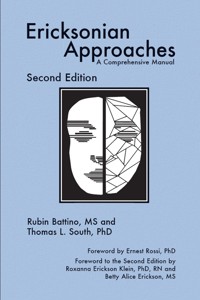
Rubin Battino, M.S. He has a private practice in Yellow Springs, and also teaches courses for the Department of Human Services at Wright State University where he holds the rank of Adjunct Professor. This book is based on one of those courses. He has over seven years of experience as a volunteer facilitator in a Bernie Siegel style support group for people who have life-challenging diseases and those who support them.Also, he has many years of experience in individual work with people who have life-challenging diseases. He is President of the Milton H. Erickson Society of Dayton, and co-author with T.L. South, Ph.D. of Ericksonian Approaches: A Comprehensive Manual, a basic text on Ericksonian hypnotherapy and psychotherapy. He is currently Professor Emeritus of chemistry at Wright State University.
H. Ira Fritz, Ph.D. He received his B.A. in Zoology and his Ph.D. in Nutrition from the University of California at Davis. He was an NIH Postdoctoral Fellow at the University of Pennsylvania. He has taught nutrition at the University of Pennsylvania and at Wright State University. His 34 years of teaching experience have included undergraduate, graduate, nursing, veterinary, and medical students. He is currently Professor Emeritus in the Department of Biochemistry and Molecular Biology at Wright State University. He is also Core Faculty Professor at the Union Institute in Cincinnati, Ohio.
Helena Sheehan, Ph.D. She is a Native American from Oklahoma who attended high school in Oklahoma and did her undergraduate work in California. Her graduate degrees in Counseling are from Ohio State University. She has taught undergraduate courses in psychotherapy, tests and measurement, social psychology, abnormal psychology, theories of psychology, and also courses in counseling and hypnosis. She has a private practice using hypnotherapy and healing. In addition, she has worked as a counselor and teacher for over 24 years in secondary education. She is a member and officer of the Milton H. Erickson Society of Dayton.
Part One
Guided Imagery for Healing
Chapter 1
Introduction
1.1 Introduction
The purpose of this book is to share with helping professionals the approaches that I have found to be useful in working with people who have life-challenging diseases. Part One is designed to systematically teach how to do guided imagery work. Part Two details the psychotherapy-based approaches which I consider to be necessary for comprehensive work in healing. Part Three is concerned with related approaches.
A broad definition of guided imagery for healing might be: any internal work that you do that involves thoughts (uses the “mind”) and has a positive effect on health. This can range from “thinking positive” to elaborately structured processes involving relaxation, meditation, and body postures. It can include biofeedback and various enhancements of mood via music, electrical or vibrating stimulation, massage, acupuncture, magnetic (or other) fields, or ingested supplements of drugs and herbs. The common denominator is thoughts, and their effects on body function. There is currently a great deal of evidence for this assertion. Scientific evidence is presented in the first part of the book. There is then a systematic presentation about the theory and practice of guided imagery, with an emphasis on the “how to.” The latter will involve excursions into rapport building and hypnotic language forms. The overall intent of the book is to provide practical methods in such a way that workers in the field can use them with their own clients. Exercises will be introduced where appropriate. One example of this approach is the detailed linguistic analysis of transcripts of guided imagery. Examples of recommended language usage and the design of guided imagery are also provided. Finally, the audiotapes accompanying this book contain examples of generic and specific guided imagery sessions.
Welcome!
1.2 A Personal Note
I have spent most of my professional life as a professor of chemistry, dividing my interest between chemical education and “hard” research in the area of the thermodynamics of solutions, which I continue in retirement. This has been a rewarding career, and includes two co-authored books on thermodynamics and many technical publications.
A number of years ago I was in treatment with a Gestalt Therapist. After I completed my significant personal work with him, I approached him about doing some more group work. Instead, he invited me to join a training group in Gestalt Therapy. I did so, and was the only lay person in training. This involvement led me to obtain a master’s degree in mental health counseling in 1978. I have had a small private practice specializing in very brief therapy since that time. (I am licensed in Ohio and a national board certified counselor.) In addition to Gestalt Therapy, I have had training in bioenergetic analysis, Neuro-Linguistic Programming (NLP), Ericksonian hypnosis and hypnotherapy, and solution-oriented approaches among other modalities. T.L. South and I recently (1999) have had published Ericksonian Approaches: A Comprehensive Manual. For over fifteen years I have taught specialty workshops for the Department of Human Services (counseling) at Wright State University as an Adjunct Professor. This book is based on one of those courses.
How, then, did I become interested in healing and working with people who have life-challenging diseases? About seven years ago I read Bernie Siegel’s first book (1986)—Love, Medicine &Miracles—and afterward asked myself the question, “With your skills and training, why aren’t you working with the kinds of people Bernie describes?” A phone call to ECaP (Exceptional Cancer Patients, 522 Jackson Park Drive, Meadville, PA16355: (814) 337-8192) put me in touch with the Charlie Brown Exceptional Patient Support Group of Dayton. They kindly let me sit in on their semi-monthly sessions. With what I learned from them, I started a support group in the village of Yellow Springs. This group ran for two years while I continued to attend meetings of the Dayton group. Eventually, I became one of the facilitators of the Dayton group. (The way the Dayton group functions is described later for those interested in establishing similar groups.)
It has been my practice to “adopt” two or three members of the support group for more intensive follow-up and individualized work. (All of this is done as a volunteer.) The individual work involves teaching guided imagery, information, and the clearing up of unfinished business. My personal philosophy can be summarized in two statements, “I always have hope” and “I believe in miracles.” Certainly, some miracles have occurred. In some ways, this book is about facilitating miracles.
Is this work wearing and depressing? Most emphatically NO! There is always laughter and joy in our support group. Of course, there is also some sadness and crying and depression. But, the overall mood of these exceptional people is one of hope and unconditional love. I invariably leave a meeting feeling renewed and inspired by their incredible courage. It sounds paradoxical, but everyone I know who has a life-challenging disease has said at some time that their disease was a blessing. For most of them, life was pretty routine, even dull, up to that point. Now, every day, every hour, every minute is important—they are really living in the here-and-now, experiencing life, moment by moment, with an unprecedented intensity. Someone pointed out that the “present” is called that because it is indeed a gift. To be alive now, rather than dwell in the past or the future, is what my friends have taught me.
Through the very nature of this work many of my friends have died. Yet, I would not trade getting to know them and being part of their lives for anything—they have all become part of me.
1.3 Disease/Cure and Illness/Healing
Despite the ancient adage of “sticks and stones can break your bones, but words can never hurt you” words can have powerful positive and negative effects on the human mind and body. Since this book is primarily about the careful use of words to help people (see Chapter 7), it is important to define certain words carefully. We will start this process with a few significant words.
It is popular in some quarters to write the word “disease” as dis-ease, implying that it describes a state which is the opposite of being at ease, in comfort, or relaxed. In this book we define a disease as something that is physically wrong with the body. That is, a disease is the pathology itself. Examples are: cancer, infections, hormonal imbalances, diverticulitis, ulcers, strokes, myocardial infarctions and insufficiencies, and broken bones. The reversing or fixing of a disease (in Western societies) typically involves a “mechanical” intervention of some sort: surgery, chemotherapy, radiation, antibiotics, supplements, dieting changes, physical rehabilitation, and drugs. When the disease is fixed or has gone away, the person is said to be “cured.” So, a cure is the reversal of a disease, the disappearance of its physical manifestations, and a return to normal healthy functioning. We are fortunate that there are a great many diseases that can be cured in a straightforward manner.
The title of this book uses the word “healing.” How is healing different from curing? To clarify this, we first need to make a distinction between an illness and a disease. We define illness to be the meaning that you personally attribute to the disease. These meanings are unique to you and are determined by your history, culture, religion, ethnicity, belief system, intellectual predilection, upbringing, heritage, philosophy of life. Siblings are more likely to interpret a given disease in the same way than people from different cultures. Yet, due to different life experiences, sisters may react in very different ways to a preliminary diagnosis of breast cancer. Healing applies to the meaning of the disease, i.e., the illness. The root of healing signifies “to make whole.” Healing is more related to internal feeling states than physical states.
For example, when I was growing up in the Bronx in a Greek-Jewish subculture, the word “cancer” was rarely mentioned, or spoken in only a whisper. There was a belief that saying the word out loud (or even thinking it!) would catch the attention of the “Evil One” and you would then be more susceptible to getting cancer. Evil Ones or devils were part of the belief system of my relatives. This reaction to a word colored all of our thinking and responses. A person who had CANCER was doomed to a horrible death, but it also bore connotations of shame and pity. The illness was worse than the disease; it led to a helplessness and hopelessness on the part of the afflicted person, as well as care-givers and well-wishers. Thankfully, many of our attitudes towards cancer-the-disease have changed. Bernie Siegel sums it up best by saying, “Cancer is not a sentence, it is just a word.”
Healing deals with attitudes and meaning. When a person is healed, they become whole again, and can be at peace with themself, the disease, and the world at large. Healing is involved with the spirit, the soul, and one’s essence. For some, a healing experience may be described as a religious experience, perhaps even a religious transformation. To become whole, to be in harmony, to be centered, to find one’s true self, to be at peace with yourself and the world—all of these are manifestations of healing.
Remarkably, although healing is an end in itself, healing is often accompanied by some degree of curing, if not complete cures, with sufficient frequency to be taken seriously. The goal of healing work is not a cure—the cure is a by-product of healing. In fact, if the sole motivation for healing work is a cure, then the healing work becomes contaminated and side-tracked. Healing invariably involves a search for meaning, a spiritual quest. What does it all mean? Why am I alive at this moment in time? Are there things that are meant for me to do in the rest of my life? About two thousand years ago Rabbi Hillel was once asked to summarize his lifelong wisdom. He responded with the following three questions:
If I am not for myself, who will be?
If I am only for myself, what am I?
If not now, when?
We might say that healing an illness involves the honest answering of these questions.
A related linguistic pairing to the subject of this section is in the words “patient” and “client.” My unabridged dictionary has a number of meanings for patient. Its origins are in the Latin word for suffer. As an adjective, the two main definitions are: 1. Bearing or enduring pains, trials, or the like, without complaint or with equanimity; having, exercising, or manifesting the power to endure physical or mental affliction; as, a patient invalid, sufferer, victim. 2. Exercising or manifesting forbearance or self-control under provocation from others; indulgent to the shortcomings or offenses of others; long suffering; as, a patient nurse, guardian, teacher. As a noun: 1. A sufferer; one who endures. 2. A sick person, now commonly, one under treatment or care, as by a physician or surgeon, or in a hospital; hence a client of a physician, hospital, or the like. So, the root of “patient” is in suffering and, in seeking healing, we suffer through to a resolution. In this sense, there is an active suffering, rather than a victim suffering. In modern usage the medical establishment uses the word “patient” rather than “client.” Perhaps this is because in so many medical settings a person has to be patient in waiting for a treatment. For me the word “patient” implies a one-down position, superior/inferior, an unequal status. For many reasons I prefer to use the word “client” which implies providing a professional service for a fee. Clients “hire” professionals to carry out a specific function such as: write a will, set a bone, fix a leak, and identify and cure an infection. These are contracted services and the professional works for you. Which professionals routinely keep you waiting for the service for which you pay them? It is almost as if your time is not as valuable as that of the physician. Occasional waits for medical services would be reasonable due to unforeseen circumstances. But, waiting seems to be the rule rather than the exception. I had a dentist in Chicago who always had me in the chair at the appointed time. He had an emergency repair at one of these sessions and asked my permission to take care of that client first. He treated his clients with respect, just as I responded to his request with respect. In the patient position, procedures are generally done to you. As a client, there would be more cooperation in what happens. In relation to medical practices it is wise, and even healing, to be a client rather than a patient.
1.4 Complementary and Nontraditional Approaches; Alternative Medicine and Therapies
Bernie Siegel rightly insists that your healing/curing journey needs to be done in partnership with traditional medicine. After all, there are a great many diseases that can be competently and effectively treated by modern medicine. These range from fractures to by-pass surgery (where needed, since there is evidence that this procedure is over-prescribed), (most) infections, hernias, allergies, and cataract surgery. While it is true that the most significant contributor to the increase in longevity since 1900 has been public sanitation, the armamentarium and skills and contributions of present-day allopathic physicians are indisputable. One would be foolish, indeed, to not avail themself of such proven services. Yet, somehow, parallel with the advances of medicine we find increasing interest in nontraditional approaches to health and health care. Why is this?
Although great progress has been made in many areas, there are still many diseases like cancer, AIDS, and the common cold which continue to defy modern medicine. Since hope springs eternal and your Aunt Mary had this tonic that always worked in your family, why not try it? There are many folk remedies and traditional Chinese herbal medicines that have been used for centuries. There is occasional scientific evidence, such as double-blind studies, for some of these substances. But, mostly, the evidence for efficaciousness is historical and anecdotal. One advantage of most of these substances is that side-effects appear to be minimal. “Above all, cause no harm to your patients.”
There is a small problem in labeling non-modern-medicine (allopathic) approaches. They have been called “complementary,” “nontraditional,” and “alternative.” Each of these words has advantages and disadvantages, but since they all convey the sense of being different from standard traditional Western medicine I think they can be used interchangeably—let your preference guide you. Another way to describe these approaches is transpersonal medicine (Lawlis, 1997).
Historically, scientific Western medicine is quite young. It can probably be dated from Semmelweis’ introduction of antiseptic practices, Pasteur’s germ theory of disease, and Morton’s use of diethyl ether for anesthesia. This makes modern medicine a little over one century old. Until this time, the medicine that was practiced worldwide was based on historical traditions in each culture. Native Americans have a rich lore of natural products, as well as various healing rites. This is also true in China, Africa, South America, India, and even in Europe. The 19th century apothecary in London, Vienna, and Philadelphia contained many of the same substances, almost all of them “natural.” Trial and error was the “scientific” basis proving the efficacy of these materials.
Before the development of western medicine, practitioners relied on giving patients many of the same natural or synthetic materials that are in use today. Their primitive surgical methods were sometimes successful. But, the advent of scientific medicine led to an emphasis on “mechanical” interventions (surgery and drugs) and ignored the mental, spiritual, belief, and meaning sides of both healing and curing. To be sure, physicians had to be aware of exceptional patients who got well without their help. A scientist understands cause and effect: splinting a broken bone leads to its proper knitting together; a by-pass operation improves heart capacity; an antibiotic rids the body of an infection. But, where does an AIDS or cancer patient who becomes symptom free fit in? How do you explain Norman Cousins’ cure from ankylosing spondilitis? How can sand paintings and psychosurgery help? By what mechanisms do acupuncture and hypnosis let patients undergo major operations pain free?
Western medicine has separated the mind from the body. The much older, traditional medicines made no such distinctions—man was a whole: integrated mind, body and spirit. Viktor Frankl (1959, 1962) repeatedly stated in his lectures that physicians treat only the body, psychologists and psychiatrists the mind, and that both ignore the third dimension of the spirit or soul. In Frankl’s sense, you can’t really be a healer if you deal with only one aspect of the mind/body/spirit continuum. They are inseparable. There may be times when, for convenience, you deal with just one part, but that is done for whose convenience? Native healers, shamans and witch doctors have always dealt with the whole person—how can you be in harmony with yourself and nature as isolated parts?
Organized and personal religion have used prayer as a method to attain healing and cures. Prayer has been basically used in four ways. The first is simply a person talking to God, supreme being or spirit: a way to communicate with something or someone beyond themselves—a sharing of their inner thoughts with this external presence. The second is to ask this external and knowledgeable and powerful entity for help in a specific concern. These concerns range from mundane specific items (winning the lottery, passing an exam, appropriate weather) to the correction of physical ailments to attain cures. In some way, the justice of your cause or plea is recognized and the all-powerful all-knowing being or entity directly intercedes in your behalf. The third form of prayer is more spiritual, and is a kind of meditation whose result is some degree of fusion with, or knowledge of, the universal spirit. When someone has a life-challenging disease, the second type of prayer appears to be the most common. There have been double-blind style studies where people pray for the improved health of a person whose name they know or picture they’ve seen, but the patient does not know of this prayer. A fourth form of prayer is the simple “thank you” that is part of saying grace or just a way of showing appreciation. (There will be more on the subject of prayer later when Larry Dossey’s work and others are discussed in Section 4.6.)
Belief systems can have powerful influences on our lives. Many people who consider themselves to be hard-headed rationalists still react in nonrational ways in particular circumstances. These may be automatic learned responses that they learned in childhood. For example, is the power of prayer correlated with the depth of your belief? Is belief the core of the placebo effect wherein an inert substance or neutral intervention results in a profound physical change? (See Chapter 4 for a more detailed account of the placebo effect.) Bandler and Grinder (the founders of NLP) coined the word “psychotheology,” and indicated that if your client believed in your brand of psychotheology that you could probably help them. Are all alternative therapies psychotheologies?
The search for meaning drives many people. When a person functions with that meaning directing their life, there can be profound physical and psychological effects. This quest has been expressed in different ways: (1) Viktor Frankl as a search for meaning; (2) Joseph Campbell as finding and following your bliss; and (3) Lawrence LeShan as discovering and singing your own unique song. The quest involves identifying your hopes, dreams, and unfulfilled desires. What is it that you’ve always wanted to do or be? Bernie Siegel tells the story of a lawyer who had “terminal” cancer. This man became a lawyer to please his father. Faced with a limited life, he gave up his law practice and returned to his first love of playing the violin. The cancer disappeared and he found a new career as a professional musician.
The lawyer’s story is “anecdotal evidence” of the power of the mind, the spirit. As such, it is inadmissible in the court of modern medicine. Yet, every physician (if pushed!) could tell you such stories about their own patients, i.e., people who underwent, for no scientifically known reason, complete remission or cures. How many such anecdotes are needed before the scientific establishment starts a serious hunt for their causes? The National Center for Complementary and Alternative Medicine (NCCAM) of the National Institutes of Health (NIH) is currently funding such research activities. The study of exceptions has led to many discoveries.
Lawrence LeShan (1989) in the introductory chapter to Cancer as a Turning Point cites many sources prior to 1900 which connect cancer to hopelessness and deep anxiety and disappointment. These observations recognized mental state as a major contributor to the onset of cancer. Based on his studies LeShan wrote (p. 14)
… The profound hopelessness was, in many of the people I saw, followed by the appearance of cancer. Over and over again I found that the person I was working with reminded me of the poet W.H. Auden’s definition of cancer. He called it “a failed creative fire.”
As this pattern became clearer, I also began to work with control groups, people without cancer to whom I gave the same personality tests and worked with in the same way psychologically. Over a period of many years, I found this pattern of loss of hope in between 70 to 80 percent of my cancer patients and in only 10 percent or so of the control group.
Hopelessness is certainly a factor in cancer, but it is only one factor. Knowledge of this factor was the basis for LeShan’s approach to working with people who have cancer, to have them find and sing their own “unique song.” The importance of hope and meaning in life is a central theme of Bernie Siegel’s work. It is a major part of my work. Appendix A lists LeShan’s 31 significant questions (1989, pp. 161–165) as a guide to his work and yours.
Bernie Siegel has frequently stated, “What’s wrong with hope?” In the face of all of the evidence of mind/body interaction and exceptions, is it still necessary for physicians to baldly state, “Statistics show in your case a four month longevity”? The hopeful statement would be, “While your prognosis is not good, perhaps a few months, there have been many remarkable recoveries. Let’s continue to work together. Would it be okay if we prayed together? And, I could certainly do with a hug before you leave.” Which statement is more honest? Pancreatic cancer has a high mortality rate; typically people rarely survive three months beyond diagnosis. But, studies have shown that one per cent are still alive five years after diagnosis! Are we “percentiles” or unique human beings with amazing potentials? Even though hope cannot be quantified, it seems to have only positive side effects. Hope depends on the way you say things.
An excellent book on alternative treatment for cancer is the one by Michael Lerner (1996). This book is based to a large extent on a governmental study (U.S. Congress Office of Technology Assessment, Unconventional Cancer Therapies, 1990). All of the alternative treatments that Lerner writes about have in fact helped some people. The outcomes are neither consistent nor predictable. People are unique and vary in characteristics—this is what the Bell curve or the Gaussian distribution of probabilities is all about. The pharmacopeias can give you the dose for the average person of a given body weight, but, this will be an overdose for some people and ineffectively low for others. Lerner’s book does give balanced and well-researched guidelines to alternative/complementary treatments for cancer.
The psychiatrist, David Spiegel (1989, et seq.) has now provided definitive proof that a psychotherapeutic support group has been effective for last stage breast cancer. The women in the support group lived about twice as long beyond the start of the study as the women in the control group. It is not clear why the support group had this effect, although the original study has been replicated.
1.5 Summary
Hopes are dreams, and without dreams we are doomed to a humdrum existence. The remarkable people I work with are dreamers—along with whatever travails the capriciousness of life has brought to them, they continue to hope, to dream, to be, and to be more alive in the moment than the rest of us. This book is a tribute to what they have taught me about living, about being alive. From time to time they can benefit from the guidance of a professional helper. This book is a guide for such professionals.
Chapter 2
Scientific Evidence
2.1 Introduction
For some people the word “scientific” in relation to alternative therapies is a contradiction in terms. Yet, these same people may have a favorite remedy inherited from their parents or grandparents. I have spent most of my life as a “hard” scientist working in physical chemistry and chemical thermodynamics. But, when I have an upset stomach, nothing seems to settle it like strong chamomile tea and several slices of wholegrain toast. This is what my mother gave me as a child. Does drinking the tea and eating the toast regress me to an earlier time when I was comforted by her care and love? Probably. On the other hand, chamomile tea has been a folk remedy for millennia for stomach distress, and dry toast is nourishing and bland. None of these “facts” connect to the special effect of tea and toast for me.
We begin our exploration of the extant scientific evidence with a study of psychoneuroimmunology (PNI), which implies not only a mind/body interaction, but an involvement of that interaction with the immune system. The field of PNI is considered to be the mainstay of proof for mind/body healing.
2.2 Psychoneuroimmunology (PNI)
For years physicians have accepted the idea of psychosomatic illnesses. That is, stress has been noted as a factor in migraine headaches, ulcers, spastic colon, lower back pain, tension headaches, allergic reactions, and autoimmune disorders. A cynic might say that the medical establishment accepts the idea that mental factors can cause physical problems because they make money from the results. In addition, some physicians may have difficulty with mental attitudes leading to the diminution or curing of diseases since that happened without their participation. Not being a cynic, I think that one reason that alternative therapies are not accepted is that cause/effect relationships cannot be demonstrated consistently. Also, while some cause/effect relationships have been shown, the mechanism connecting the cause to the effect is itself unknown. For example, it is well-known and demonstrable that antibiotics disrupt and destroy bacteria. But, how does hypnosis or acupuncture control pain, and by what possible “mechanism(s)” can guided imagery or support groups lead to the disappearance of a tumor mass?
The brain was once considered to be accurately described as a complex telephone switchboard, and more recently as some kind of computer. It is, of course, known that the brain controls a host of functions within the body and, like a computerized industrial process, that it uses sensors of various types and feedback controls to maintain homeostasis and normal body functions. This version of a brain describes a passive-mechanical-biophysiological processor. The autonomic nervous system maintains and regulates the internal environment; and is considered to be involuntary, i.e., beyond voluntary control. It has been known for a long time that some individuals can control involuntary functions like heart rate, blood pressure, and the temperature of particular body parts like fingers. People can also be “trained” via biofeedback to control these functions. (Since the pain of headaches is caused by the dilation of blood vessels in the brain, increasing the volume of the blood system by creating warm hands through biofeedback frequently gives symptomatic relief.) The beginning steps in reintegrating (conceptually) the mind and the body are the many examples of “mind” control over some autonomic nervous system functions.
The next step may be found in the work of Candace Pert (she was then at NIH) and others who showed that the brain is not just this passive regulating blob, but also is capable of synthesizing many specialty molecules. You may wish to read the interesting dialogue between Pert and Ornish in the latter’s book (1997, pp. 216–220) that contains much up-to-date information on PNI research. To date, dozens and dozens of such biochemicals have been identified and their methods of interaction elucidated. There are opiate receptors in the brain that can produce a class of compounds collectively called endorphins that have opiate-like properties. These endorphins have been shown to provide relief from pain via the placebo effect (Levine et al., 1978). Enkephalins, brain molecules, have a role in modifying the immune system. So, here we have two groups of brain-synthesized molecules which are involved in pain control and the immune system. These biochemicals are sometimes referred to as neurotransmitters and, in modern terminology, as “messenger molecules.” Rossi (1993) likes to think about these mind/body processes being exercises in information transduction. After all, it is well known that the surface of individual cells contain thousands of specialized receptors, each fitting a particular molecule (like a key in a lock). With the development of PNI over the past twenty years (see, e.g., Ader, 1981) we have the scientific basis for mind/body interactions, i.e., a rationale for Norman Cousins’ cure.
Human cancers can be considered to be caused by a breakdown in the automatic functioning of the immune system. One theory of how cancers develop starts with the idea that, for whatever reason, aberrant cells are continually produced in the body. These cells may be the product of radiation (x-rays, cosmic), known and unknown chemical carcinogens, genetic predisposition, or just random events that occur because of the billions of cells the body produces. Normally, the immune system can identify such abnormal cells and eliminate them. For most of us, this is the ongoing automatic outside-of-awareness process that keeps us cancer-free as well as protects us from various viral and bacterial invasions. In some people, the immune system functions less effectively over a particular period of time, and a certain kind of cancer cell proliferates as a small or large mass, or in several locations. It is known that certain cancers are “clever” in the sense that they can fool the immune system into ignoring them. Whether the immune system has been tricked or overwhelmed, these aberrant cells can multiply to the point of detection by their size or by their effects on normal body functions.
Some treatments for cancer involve enhancing and strengthening the immune system. Traditional medical interventions such as surgery, radiation, and chemotherapy serve to eliminate and destroy cancer cells to give the immune system a helping hand. The surgical removal of a well-defined and encapsulated tumor (some of these can be grapefruit size) may be all that is needed to become cancer free. Once a cancer has metastasized or spread from its initial site(s), only the systemic treatments like chemotherapy and bone marrow transplants seem to work. Dr. O. Carl Simonton emphasizes in his lectures that aberrant cancer cells are typically weaker and less capable of survival than normal cells. Since we now know from all the PNI studies (among others) that the mind and mental processes can have profound physiological and psychological effects, how can this information be utilized to strengthen the immune system?
Ader and co-workers, and others (1981), have shown that the immune system is trainable. In a classic study with rats they found that pairing an immunosuppressive agent (something that destroys white blood cells and otherwise suppresses the immune system) with a harmless stimulus such as saccharin resulted in the saccharin alone having the same effect. In a study of allergic reactions an artificial rose was found to trigger the allergy—an immune response—and even thinking about the allergen can bring on the allergic reaction. This shows how powerful the mind is. It is a strange phenomenon that most people have a sense that “they can make themselves sick,” but then need to go to a physician to get well. And yet they do not pay attention to the obverse of the statement in quotes. Glaser (1985) and Kiecolt-Glaser (1984) have demonstrated the effect that stress has on the immune system—basically, stress serves to weaken the immune system. The death of a spouse is one of the most stressful things that can happen to a person. It is not unusual for the surviving partner to come down with some life-challenging or severe disease within 12 to 18 months after this death.
If stress can suppress the immune system, will the opposite emotional states such as joy, happiness, peace of mind, and relaxation strengthen the immune system? Can thinking happy thoughts heal? Norman Cousins (1981) with the cooperation of his physician apparently laughed himself to health. If one human being is capable of a documented “spontaneous remission,” i.e., the disappearance of the disease due to non-physician related interventions, that means that we all have the potential for such happenings. After all, we all have the same wiring and physiology. The important word above is “potential.” Norman Cousins did it, but will the next person who tries laughter achieve the same results? What percentage of cures attributable to laughter and happy living is needed before this becomes a standard treatment like the chemotherapy agents taxol and cis-platin? This is an important question because many of the chemotherapy agents that are in present-day use have effectiveness ratings (via the usual double-blind studies) of significantly less than 50%. Is it preferable to try chemical X because your oncologist can cite studies that prove that it is 33% effective, versus an alternative therapy with an anecdotal helping rate of 25% (or whatever percentage)?
Green and Green (1977) examined four hundred reported cases of spontaneous remission and found that the only common factor was a change of attitude from despair and hopelessness to hope and positive feelings before the remission occurred. While changing your attitude does not guarantee a remission, neither does taking chemotherapy; the major difference is that the former has no physical side effects. These spontaneous remission patients can all be classified as being exceptional. In addition to positive attitudes, life expectancy is increased by being more creative and receptive to new ideas, and to being flexible and argumentative. A certain amount of orneriness appears to help. Denial is commonly considered to be a bad idea, but when it is denying being a victim rather than denial of the existence of the disease, it can be a force for health. Many of these exceptional people turn outward for an external source to give them extra strength. They are fighters, and were fighters before the onset of the disease.
Let me add a few words about the word “victim” since it is still common usage to refer to people who have cancer as cancer victims. Victim comes from the Latin victima which means to consecrate. Thus, the first dictionary definition states: 1. A living being sacrificed to some deity, or in the performance of a religious rite; a creature immolated, or made an offering of. The second definition is: 2. A person or living creature injured, destroyed, or sacrificed, in the pursuit of an object, in the gratification of a passion, from disease, accident, or the like. The third definition is: 3. Hence, one who is duped or cheated. Is a “cancer victim” someone who is being sacrificed due to sins they have committed, or because of some manner of improper living, or at the whim of some powerful person or force? There is a fateful helplessness involved in being a victim. The opposite stance is probably that of the hero or heroine, a person who takes action, and who has some control over their life. Survivors, people who beat serious diseases, are more like heroes and heroines than victims.
Lawrence LeShan, a psychologist, has worked with terminal cancer patients for several decades (1974, 1977, 1982, 1989). He has indicated three reasons that a person typically gives for not wanting to die: (1) they fear the circumstances of death or dying, i.e., pain, the unknown, the helplessness; (2) they want to live for others, helping the others attain their goals; and (3) they want to live their own life, to be able to sing their own unique song. Of these reasons LeShan states (1982, p. 139):
For reasons I do not fully understand, the body will not mobilize its resources for either or both of the first two reasons. Only for the third will the self-healing and self-recuperative abilities of the individual come strongly into play. When individuals with cancer understand this and begin to search for and fight for their own special music in ways of being, relating, working, creating, they tend to begin to respond much more positively….
LeShan’s conclusion ties in with the importance of hopes and dreams, and dealing with unfinished business in healing. It was LeShan’s finding that psychotherapy invariably led to some level of healing for terminal cancer patients. He was probably not surprised to find some remissions and increased longevity. Does psychotherapy work through some psychoneurological/immunological process? Probably. There will be more on this later in this chapter.
Rossi’s book (1993) on the psychobiology of mind/body healing, gives an excellent summary of the research in this area. Rossi started his career as a Jungian analyst, and through his work with Milton H. Erickson, M.D., has gone on to pioneer new directions in hypnosis and hypnotherapy. For example, his recent book (1996) attempts in part to provide a theoretical basis for hypnotherapy in nonlinear dynamics or chaos theory. Part of the 1993 book deals with hypnotherapeutic techniques for healing. I am a practicing Ericksonian hypnotherapist, and much of the material in this book is based on that perspective. Using words to lead a person into a relaxation and guided imagery session is not unlike an hypnotic induction. One of the themes of Rossi’s 1993 book is “state dependent learning and behavior” (SDLB). This simply means that a stimulus in the present calls forth in all dimensions the experiences from your past which were triggered by that stimulus. This means that you have to be an astute reader of body language when delivering a guided image. You may find being at a beach relaxing, but a beach setting may have been the site of a severe sunburn or a near drowning for your client. The SDLB theory states that just words can be a sufficient trigger to recall past events, and as a therapist you have to be prepared in case those events were traumatic.
Dean Ornish (1997) provides an excellent summary in his recent book of the scientific basis for the healing power of intimacy. In fact there are ten pages of references for his chapter 2 on this scientific basis. Chapter 6 is a long chapter wherein he holds dialogues with many of the people in the field, asking them to comment on their experiences and research on the healing power of intimacy. The question he asks them is, “Why do you think love and intimacy are such powerful factors in affecting diseases and premature death from virtually all causes?” Their responses should convince the most skeptical. Ornish’s multi-faceted program for reversing heart disease (1991) is considered in some detail in Chapter 17 of this book.
Finally, we report on some recent studies that show that new nerve cells can be formed in the adult human brain. In a popular article, Kempermann and Gage (1999) cite the evidence for this interesting phenomenon. Factors that enhance the growth of new nerve cells are an enriched environment by which the brain is challenged with new information, and novel experiences and puzzles to be solved, and by physical exercise. Research is continuing in this area for its potential for better treatments for neurological diseases, but this work also emphasizes the importance of mind/body/environment interactions.
The bottom line is that research in PNI and related areas have provided the missing scientific foundation for mind/body healing. If miserable and stressful thoughts can harm the body, then relaxation and happy thoughts can both heal and cure the body. This idea has long been a tenet of folk wisdom.
2.3 The Pioneering Work of the Simontons
It is now over twenty years that Simonton et al.’s book (1978) entitledGetting Well Again appeared. O. Carl Simonton is an oncologist and his (then) wife Stephanie is a psychologist. They reasoned that a combination of relaxation and guided imagery would have a healing effect, if not also a curing one. They began their work before PNI had been established. In the early stages of development the relaxation and guided imagery were done with groups of patients. The imagery, which was for everyone in the group, typically involved some scavenging or fierce animal like a shark or a wolf who would be inside them and destroy cancer cells, much as a lion eats a deer. The method was slowly refined and the images tailored to the person in individual work. A shark is not a proper anti-cancer agent to use for a Quaker or a pacifist. An angel might be more appropriate.
The not-so-surprising results from a modern perspective showed that there was increased longevity (beyond medical predictions) for a significant number of patients using imagery. Also, a number (again, beyond medical prediction) of patients using imagery went into remission. Their book opened an entire new field for ways of working with people who have serious diseases. Stephanie Simonton continues to work in this area in Texas, and O. Carl Simonton has a clinic based on his principles in California (Simonton Cancer Center, P.O. Box 890, Pacific Palisades, CA 90272; (800) 459-3424).
2.4 Michael Lerner’s Guide
Michael Lerner’s Choices in Healing (1996) is a wonderful resource compiled by the director of the Commonweal Cancer Help Program (P.O. Box 316, Bolinas, CA 94924; (415) 868-0970). Commonweal is a place where people who have cancer can visit for one week at a time and be in a healing milieu involving: nutrition, massage, group sessions, information on alternative treatments, and staff consultations. Lerner’s book is based in part on a government study (1990) on alternative treatments, and gives much detail on the history, the practitioners, the treatments themselves, and the results of any scientific or other studies on outcomes. Each of the treatments discussed has helped some people to cures; however, the scientific evidence from carefully controlled studies is missing. Some of the practitioners use substances and methods which they consider to be proprietary, and will divulge no information as to composition. Other practitioners openly published such details. Without controlled studies, Lerner could not recommend any of the described treatments.
However, Lerner indicated that there was sufficient evidence to suggest the efficacy of a few approaches. The following were not recommended, but rather the reader was encouraged to investigate them seriously for potential benefit. The first of these was psychotherapy and psychotherapeutic support groups. (See Section 2.7 below on David Spiegel’s work.) In addition to individual psychotherapy along the lines of LeShan’s work and that described in Part Two of this book, the benefits of support groups was discussed. People are often actively discouraged by friends and relatives to discuss openly their feelings about having cancer or the trials and tribulations of various treatments. Such personal statements are encouraged and respectfully attended to in support groups. One caveat here is that support groups are highly variable, and you need to attend several before making a choice.
A second area to explore for potential benefit is guided imagery, the primary concern of this book. From the Simontons’ early work to Jeanne Achterberg’s ground-breaking book (1985) to Rituals of Healing by Achterberg et al. (1994) (which contains healing imagery transcripts for many conditions), there are many choices and much evidence for help.
Hypnosis has proven to be effective for helping people who have life-challenging diseases in many ways. It has proven to be useful for controlling pain, and for such side effects of chemotherapy as nausea. Hypnosis has been useful in preparing people for surgery and other interventions—for these purposes the main modality is a dissociation triggered via a posthypnotic suggestion. Guided imagery may be considered to be a form of hypnosis. The American Society of Clinical Hypnosis (2200 East Devon Avenue, Suite 291, Des Plaines, IL 60018-4534. (847) 297-3317) has a rigorous set of standards for certifying hypnotists. There are many studies showing the efficacy of hypnotism for pain control and for helping patients with life-challenging diseases (see the special issue of the American Journal of Clinical Hypnosis, 1982–1983).




