


6,99 €
Mehr erfahren.
- Herausgeber: neobooks
- Kategorie: Sachliteratur, Reportagen, Biografien
- Sprache: Deutsch
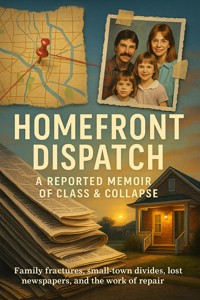
This book follows one return home and what it reveals. Part memoir, part reporting, it explores work, money, addiction, and how a city's story changes when the paper that told it goes silent. It's also about family—how people break, hold on, and sometimes find their way back. The story begins with a move to a divided town. On one side: steady jobs, bright streets, and neat lawns. On the other: shuttered shops, temp work, and apartments where the heat is a maybe. The narrator grew up between these worlds—first as a kid with a paper route, later as a reporter chasing local stories. Then the newsroom shrank, the presses slowed, and the old map of the place stopped making sense. Told in scenes and short field notes, the book paints a portrait of a fractured economy. Payday loans beside empty factories. A hospital wing named after a donor who left long ago. A school board meeting with no reporter in sight—just rumor filling the gap. The prose is plain and clear. Each page offers facts you can trust and moments you can feel. Addiction threads quietly through the narrative. It doesn't define every home, but it touches many. The author traces one cousin's slide and another's climb back. She rides with a counselor knocking on doors no one else will. She shows what treatment looks like when buses run late and childcare fails. The goal isn't drama but clarity—what helps, what doesn't, and why recovery sticks or slips. Media collapse is not abstract here. It's a missing cop on a beat. A court record no one pulls. A mayor who learns he can wait out bad news. The book shows how a paper once held a town together—births, deaths, games, budgets, hope—and what happens when those lines go dark. Neighbors try to fill the void with Facebook groups, flyers, and kitchen-table podcasts. Some efforts work; others just spread noise. Family is the hardest beat. There are sharp words, old wounds, and rare laughter that still lands. A father saves yellowed clippings. A sister critiques drafts in three colors. A mother holds space for everyone, even when she's tired of doing it. The book stays tender and blunt, respecting privacy while telling the truth. Race, church, and politics appear as they live—woven into daily life, not staged for headlines. A choir potluck, a union hall turned yoga studio, a gun raffle funding Little League. The author doesn't use people as symbols; she listens, quotes, and lets contradictions stand. Hope appears in small forms: a mobile clinic in a church lot, a librarian extending a due date, a judge trying to keep a parent employed and a child at home. Repair is quiet, slow, and real. By the end, the narrator stays. She teaches a writing class at the library, starts a youth newsletter, and cooks Sunday dinners for whoever needs a seat. The town remains divided. The paper still thin. But the map holds new bridges. Read this if you care how information builds trust, how addiction tests it, and how families learn to begin again. The sentences are short, the scenes clear, the facts checked, the heart open.
Das E-Book können Sie in Legimi-Apps oder einer beliebigen App lesen, die das folgende Format unterstützen:
Seitenzahl: 192
Veröffentlichungsjahr: 2025
Ähnliche



















Table of Contents
Chapter 1: A Return to Divided Streets
Two Worlds Defined
Echoes of My Childhood
The Role of Local Journalism
Addiction’s Grip
Chapter 2: The Disappearance of Local News
The Role of Local Newspapers
The Impact of Media Decline
Voices from the Field
Filling the Gap
The Future of Local Journalism
Chapter 3: The Ripple of Addiction
The Faces of Addiction
The Struggle Within
The Path to Recovery
Community Impact
Chapter 4: Work and Worth
The Landscape of Employment
Identity and Work
Stories of Struggle and Resilience
The Role of Education and Training
Community Responses to Employment Challenges
The Future of Work in the Community
Chapter 5: Family Dynamics and Tensions
The Weight of Expectations
Echoes of Past Conflicts
The Role of Communication
Love and Loyalty Amidst Strife
Navigating Recoveries Together
Chapter 6: Rumors and Reality
The Echo of Silence
The Spread of Misinformation
Facts, Feelings, and Community Trust
Community Narratives and Resilience
Navigating Fear and Misinformation
Rebuilding a Shared Narrative
Chapter 7: The Local Landscape
A Stroll Through Divided Streets
Homes that Reflect Lives
The Impact of Abandoned Spaces
Different Realities in Local Businesses
Parks as Community Oasis
Connecting Through Shared Spaces
Chapter 8: Threads of Community Repair
Building from the Ground Up
Networks of Support
Reviving Local Journalism
Creative Arts as Connection
Chapter 9: An Era of Opioids
Understanding the Opioid Crisis
Family Struggles and Resilience
Healthcare Perspectives
Combating Stigma
Paths to Recovery
Chapter 10: The Role of Faith and Community
The Landscape of Faith
Faith as a Source of Comfort
Faith and Community Resilience
Challenges of Faith in a Divided Community
Chapter 11: The Political Landscape
The Influence of Local Government
The Role of Politics in Personal Relationships
Trust in Local Leadership
Political Engagement Beyond Elections
Chapter 12: Celebrating Hope and Progress
Small Victories in Everyday Life
Stories of Individual Resilience
Community Organizations Making a Difference
Local Journalism's Role in Celebrating Progress
The Power of Collective Action
Chapter 13: The Future of our Town
Conversations at the Crossroads
Reimagining Local Journalism
Addressing the Divide
The Role of Education
Revitalizing Community Spaces
A Vision of Hope
Closing Reflections: Finding Our Way Forward
Chapter 1: A Return to Divided Streets
The journey back home starts with familiar sights and sounds. Two sides of town stand starkly apart—one with thriving businesses and blooming gardens, the other dotted with empty storefronts and forgotten dreams. As I navigate these streets, memories intertwine with the present, revealing not just the physical changes but the widening gap that defines our community. This chapter explores what it means to return to a place where economic disparities shape lives and futures.
Two Worlds Defined
Returning home, I'm struck by the contrast between two sides of town. This isn’t just geography; it’s a depiction of two disparate lifestyles molded by economic fortunes. The richness or scarcity of resources has left its mark, creating visible dividing lines that affect families and local businesses.
Contrast in Living Conditions
On one side of town, manicured lawns and bustling markets create a vivid picture of prosperity. These areas feature thriving businesses and active community gatherings, where neighbors exchange greetings over picket fences. The streets are often filled with families enjoying weekend events, reflecting a palpable sense of stability and pride.
In stark contrast, the other side is a landscape marked by vacant buildings and crumbling infrastructure. Here, you find shuttered storefronts that have become silent witnesses to neglect and despair. This stark literal and figurative divide goes beyond mere aesthetics; it encapsulates the narrative of a community where dreams have faded, leaving behind stories of loss and unfulfilled potential.
The Influence of Employment
Access to stable jobs is a defining characteristic of the town's two sides. On the affluent side, long-standing companies offer reliable employment, fueling financial security and enabling residents to invest in their homes and communities. Workers here are more likely to enjoy benefits that come with good jobs, such as healthcare and retirement plans.
Conversely, the other side struggles under the weight of temp work and inconsistent hours. A significant number of residents rely on jobs that offer little stability or security, often juggling multiple part-time roles to make ends meet. This economic disparity contributes to a cycle of poverty that perpetuates itself, diminishing the prospects for those caught on the wrong side of the divide.
Community Identity
The identity of each side of town is profoundly influenced by its resources and historical narratives. On the prosperous side, community pride flourishes in the form of well-attended local events and investment in public spaces. Residents exhibit a sense of ownership and belonging that is nurtured by their economic standing.
In contrast, the struggling side grapples with a more fractured identity. Many residents may feel overlooked or marginalized, leading to a community spirit that is more about survival than celebration. This divergence shapes how individuals view themselves and their neighbors, painting a complex picture of social dynamics defined by economic realities.
Generational Divide
The economic divide in town significantly impacts different generations, often skewing opportunities based on neighborhood residency. Youth growing up in the affluent area enjoy access to quality schools, extracurricular activities, and mentorship programs that encourage achievement and upward mobility.
In contrast, young people from the less fortunate side face numerous barriers that limit their prospects. Underfunded schools, lack of job training programs, and fewer role models can make the path forward seem daunting. This inequity influences not just individuals but entire families, further deepening the divides and perpetuating the cycle of poverty for future generations.
Echoes of My Childhood
As I wander familiar streets, childhood memories rush back. They reveal the unity and challenges of growing up in a divided town. The past intertwines with the present, showing how my experiences shaped my understanding of this community.
Memories of Delivering Papers
My childhood job delivering newspapers was more than just a means of earning pocket money; it offered me a unique glimpse into the very heart of my community. Each morning, I would rise before dawn, the air crisp and fresh, as I pedaled my bicycle through the neighborhoods. The sound of my tires crunching on gravel accompanied by the faint rustle of leaves became the soundtrack of my early years.
The route I took was like a tapestry woven with stories—each house, each porch sitting like a chapter waiting to be unfolded. Through this job, I witnessed the routines and rituals of my neighbors: the elderly couple sipping coffee, the children playing before school, the single parent rushing out the door. These moments fostered an intricate understanding of local issues and provided an early introduction to the socio-economic fabric of our town.
Vivid Local Characters
The people I encountered along my delivery route were not mere faces; they were the vibrant threads that formed the tapestry of our small-town narrative. From the friendly shop owners who greeted me with a smile to the aloof neighbor with a penchant for keeping to himself, each interaction left a lasting impression. Their stories shaped my perspectives and colored my understanding of society.
I remember Mr. Thompson, the hardware store owner, who shared tales of the town's glory days, instilling a sense of nostalgia and pride. Then there was Mrs. Jenkins, whose kitchen always smelled of freshly baked cookies, offering warm shelter amid the economic turmoil. These characters were the living, breathing essence of my community, illustrating both resilience and vulnerability in the face of change.
Changing Neighborhood Dynamics
As I return to these streets, I am struck by the stark differences from my childhood. Neighborhoods that I once loved are now mere shadows of their former selves, a reflection of the broader socio-economic shifts impacting our town. The once-bustling main street feels eerily silent, with storefronts boarded up and dreams deferred.
Block after block, evidence of neglect tells a story of a city grappling with loss as jobs disappeared and families struggled. Where children once played in community parks, I now see overgrown grass and rusting playground equipment. This transformation serves as a poignant reminder of how economic disparities shape lives and futures, marking the passage of time with a heavy heart.
Lessons Learned Early
Growing up in a divided town instilled in me valuable life lessons that still resonate today. Every conversation and every experience contributed to a framework of understanding that defines my perspective. I learned early on about the struggles of those living on the margins, but also about their resilience and unyielding hope.
Witnessing adversities firsthand taught me the importance of community and connection. Whether it was the neighbor lending a hand or small acts of kindness during hard times, these moments were foundational. They shaped my beliefs and fueled my desire to return home, to reconnect and contribute to the ongoing narrative of my community.
The Role of Local Journalism
Local news has always played a vital role in connecting and informing the community. As I consider my hometown, I reflect on how the consolidation and decline of journalism impact our shared narrative and accountability.
The Importance of Coverage
Local newspapers serve as a vital record of a community's history, documenting births, deaths, and significant milestones. This coverage creates a shared narrative that connects residents, fostering a sense of belonging and identity. When people read about their neighbors' achievements or losses, they engage in a collective experience that goes beyond mere headlines. Each story adds a thread to the fabric of the community, showing who we are and where we come from.
Additionally, local journalism highlights community events—from parades to town hall meetings—giving citizens a chance to participate and engage in their local governance. A vibrant local paper not only informs but also invites dialogue among residents, encouraging them to voice opinions and concerns. Without this coverage, individuals risk feeling isolated and uninformed, leading to a decline in civic engagement and community cohesion.
Informing Decisions
In a community where local journalism thrives, it serves as a watchdog, ensuring that vital information about school board meetings, city council decisions, and even budget allocations is accessible to the public. This transparency is crucial for accountability; when residents are informed, they can question decisions and demand better governance. However, the decline of local journalism creates a dangerous vacuum.
Without reporters covering these essential meetings, an array of critical information is left unreported. This silence can lead to unchecked power dynamics, where decisions are made behind closed doors without public scrutiny. Consequently, residents may lose their ability to influence policies that directly affect their lives, leading to feelings of disenfranchisement and neglect within the community.
Changes in Local Newsrooms
The landscape of local newsrooms has significantly shifted in recent years due to layoffs and financial cutbacks. As newspapers downsize, the number of reporters on the ground dwindles, resulting in fewer stories being told about pressing local issues. Each layoff represents not just a loss of a job but a loss of a voice that once highlighted community needs and concerns.
Fewer reporters mean critical aspects of the community, such as public health initiatives, infrastructure developments, and local arts scenes, go unmonitored. With diminished resources, the breadth of coverage narrows, which can fundamentally alter how residents perceive their community and limits their awareness of issues that directly impact their everyday lives.
Emergence of Alternative Sources
In the void left by traditional journalism, many neighborhoods have turned to alternative sources for information, primarily social media and community-led initiatives. Facebook groups and neighborhood apps have sprung up, allowing individuals to share news and updates rapidly. However, while these platforms can foster connection, they often struggle with reliability and accuracy.
Rumors can spread faster than fact-checking, leading to misinformation that can exacerbate tensions or create unfounded panic within the community. The lack of trained journalists also means that nuanced stories and in-depth reporting—vital for informed communities—may be replaced by sensationalized posts. Thus, although residents seek ways to stay informed, the absence of trustworthy journalism can undermine the community’s shared understanding and complicate the path to accountability.
Addiction’s Grip
Addiction affects many families in my hometown. It doesn’t define everyone, but its presence starkly illustrates the struggles faced by our community. This section looks at the intertwining lives grappling with addiction and the road to recovery.
Visible Signs in the Community
The signs of addiction are woven into the fabric of our town, manifesting in both subtle and stark ways. Abandoned houses line once-vibrant streets, their boarded windows casting shadows on memories of the families that once thrived there. Empty playgrounds, once filled with laughter, now echo a silence that underscores the departure of both children and their dreams.
Neighborhoods are marked by the social stigma surrounding addiction, visible through the whispered conversations and averted gazes. Each vacant storefront serves as a reminder of lives interrupted; businesses that once supported families now stand as hollow shells. This visual landscape paints an urgent picture of a community reeling under the weight of substance abuse.
These physical reminders create a bond among residents, drawing attention to the underlying issues that hurt many families. As I walk these streets, I can feel the collective ache, a silent acknowledgment of how addiction has reshaped not just individual lives, but the very essence of our community.
Personal Stories of Struggle
To illustrate the complex nature of addiction, my cousin’s journey exemplifies the dual realities many face. One cousin fell deeper into the cycle of dependency, battling demons that consumed their spirit. I watched as their life unraveled, affected by choices that seemed to spiral out of control, leaving family and friends to grapple with the heartache of their decline.
Conversely, another cousin's story portrays a flicker of hope—a testament to resilience amid despair. Their journey to recovery was not linear; it was fraught with setbacks and triumphs. These contrasting experiences highlight that while addiction's grip can be unyielding, it is not without potential for redemption. Such personal narratives illustrate the multiplicity of addiction: despair can exist along with hope, demonstrating the fragile balance within our community.
Community Support Systems
In response to the growing crisis, local churches and grassroots organizations have emerged as lifelines for those impacted by addiction. These entities work tirelessly to address the pervasive effects of substance abuse, often compensating for the shortcomings of formal mental health resources. They provide not just spiritual guidance, but tangible support—offering everything from food pantries to counseling services.
These initiatives foster a sense of solidarity among residents, allowing individuals to share their experiences in a safe space. They create networks of care, while breaking down the barriers often faced in seeking help. By mobilizing community resources, these organizations help to fill the void left by a strained mental health infrastructure, exemplifying the tenacity of our community in confronting addiction head-on.
Challenges of Recovery
While hope and support abound, the path to recovery is often obstructed by significant challenges. Transportation barriers become a daily hurdle for many, making access to treatment programs infrequent and uncertain. For those juggling multiple responsibilities, finding reliable childcare can derail commitment to recovery plans, further complicating their journey.
Day-to-day stressors can erode the gains made in recovery. The pressure to navigate life’s demands, while longing for a healthier future, creates a tumultuous terrain. Each setback serves as a reminder of the uphill battle against addiction, emphasizing the need for sustained community commitment to easing these burdens. Understanding these barriers is crucial; without addressing them, many find themselves in a cycle that feels inescapable.
Chapter 2: The Disappearance of Local News
With the decline of local newspapers, our town's narrative has shifted. This chapter examines the consequences of a silence that settles over the community as reporters disappear, and essential stories go untold. Interviews with former journalists and residents highlight how vital information once woven into the fabric of local life contributes to a collective identity now fading into obscurity.
The Role of Local Newspapers
Local newspapers have traditionally been the heartbeat of communities, serving as a vital source of information and a platform for civic engagement. This section explores how local papers shaped our town's identity and connected residents to the stories that mattered.
Community Connection
Local newspapers have historically served as the lynchpin for fostering community connection. By covering local events such as high school sports, town meetings, and neighborhood celebrations, these publications curated a shared narrative that brought residents together. People felt a sense of belonging as they saw their stories reflected in print, from a child's achievement to a local hero's bravery. The coverage of schools, community projects, and public safety initiatives cultivated civic pride and cohesion.
Moreover, the local newspaper was often the first place residents turned to for news about their friends and neighbors. This connection went beyond mere reporting; it helped forge relationships and networks within the community. When a local paper flourished, it acted as an inclusive platform where every voice could be heard, reinforcing the idea that everyone’s story mattered, thus knitting a fabric of a unified community.
Accountability for Power
One of the most critical roles of local newspapers is to act as a watchdog over those in power. Reporters tirelessly investigated local officials, ensuring transparency in governance and holding leaders accountable for their actions. They covered town council meetings, budget discussions, and policy changes, providing the community with the information necessary to engage with and influence the decision-making processes that affected their lives.
This role of scrutiny was fundamental in reinforcing the democratic process. With investigative journalism on the decline, many communities face a vacuum where essential oversight once thrived. The absence of local reporting has allowed gaps to form where corruption or negligence may fester unchallenged, highlighting the dire need for vigilant journalism in ensuring that power is held accountable.
Civic Engagement
Local newspapers enriched public discourse through mechanisms like letters to the editor, opinion pieces, and community forums. They not only reported news but also served as a platform for dialogue, enabling residents to voice their opinions and engage with pressing issues. This dynamic interaction fostered not only a sense of community but also encouraged civic literacy and participation.
As citizens contributed their perspectives, issues such as local education, infrastructure, and social services became focal points for public engagement. Through these discussions, local papers helped cultivate an informed citizenry, grounding community debates in factual reporting. Therefore, the decline of these platforms raises concerns about future civic engagement and the ability of residents to impact decisions that matter most to them.
Celebrating Local Culture
Celebrating the unique culture of a town has always been a central function of local newspapers. They highlighted local arts, businesses, and traditions, providing a stage for local talent and initiatives to shine. Festivals, art shows, and local cuisine received the attention they deserved, instilling a sense of pride among residents for their community's achievements and heritage.
By showcasing artists, entrepreneurs, and civic initiatives, local news made residents appreciate the richness of their surroundings. This celebration of local culture fostered a collective identity, reinforcing the notion that there is something worth treasuring and preserving in their community. As local newspapers vanish, so too does this celebration, leaving a cultural void that can never be fully replaced.
The Impact of Media Decline
The decline of local news has serious implications for community cohesion and information access. This section examines the repercussions when newspapers cut back or close altogether, and how that silence affects shared experiences.
Information Vacuum
The decline of local newspapers creates a significant information vacuum, leaving communities without the crucial stories that once shaped local governance and civic life. With fewer reporters in the field, significant issues such as city budgets, school board decisions, and crime reports remain uncovered. As a result, residents may feel disconnected from the mechanisms that govern their daily lives.
This lack of coverage deprives them of understanding key developments that affect their surroundings, leading to uninformed decisions and a sense of helplessness. The once-vibrant dialogues about local policies and community events dwindle, leaving a silence that amplifies feelings of uncertainty. In its absence, informal networks may arise, yet these often lack reliability. Consequently, what emerges is not just a gap in information but a deterioration of trust in the institutions that shape community life.
Loss of Shared Reality
The decline in local news contributes to a profound loss of shared reality within communities. As common stories fade, residents often find themselves in isolated bubbles, where diverse narratives exist without a unifying thread. Once, the local paper served as a gathering point, a source of both pride and identity, bringing residents together through shared experiences and collective challenges.
Without this shared narrative, social cohesion weakens. Residents stop engaging with one another about local events, decisions, and issues, which may lead to increased polarization. The neighborhood bond dilutes, as people feel isolated by differing narratives and experiences that are no longer collectively acknowledged. This fragmentation creates a landscape where individual realities diverge, hindering the community's ability to unite for common causes and fostering a sense of alienation among its members.
Rise of Misinformation
As trusted local news sources fade away, misinformation rises to fill the void left behind. Social media platforms become the predominant means of information exchange, often rife with rumors and unverified claims. In this chaotic space, the absence of credible journalism allows sensationalism to overshadow factual reporting.
This trend can have dire consequences. When residents rely on questionable sources, the potential for misunderstandings and conflicts increases, leading to a further erosion of trust within the community. Inaccurate information can distort public perception, influencing community discussions and public sentiment based on false premises. The reliance on unreliable channels not only changes the narrative landscape but also exacerbates divisions among residents, making it harder to rally around shared truths.
Diminished Civic Participation
The decline of local journalism correlates with diminished civic participation among community members. When residents lack awareness of local issues due to insufficient coverage, their engagement in civic duties—such as voting, attending town halls, or participating in community initiatives—significantly decreases.
This disengagement undermines the democratic process, as informed citizens are essential for a healthy, functioning community. When individuals do not understand local governance or the serious implications of local policies, apathy can ensue. Over time, this disengagement fosters a culture where public participation dwindles, allowing a small number of voices to dominate decision-making processes. As a result, the community risks losing its collective power, reducing its ability to advocate for change in response to pressing concerns.
Voices from the Field
Personal insights from former journalists and residents paint a vivid picture of the changing landscape of local news. Their experiences reveal the deep emotional and practical impacts of a silenced press.
Journalist Testimonials
Former reporters from our local newspaper often reflect on their time covering vital stories that shaped the town’s identity. They share how each article, whether about a contentious school board meeting or a community fundraiser, acted as a thread weaving the town's narrative together. The absence of these journalists now leaves a profound silence that resonates in the lives of residents who once relied on their insights.




