


Erhalten Sie Zugang zu diesem und mehr als 300000 Büchern ab EUR 5,99 monatlich.
- Herausgeber: The History Press
- Kategorie: Sachliteratur, Reportagen, Biografien
- Sprache: Englisch
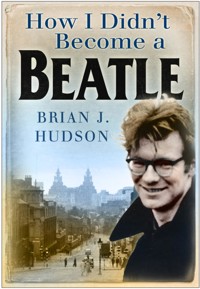
In the late 1950s and early 1960s Liverpool was an exciting place to be a university student. For Yorkshire-born Brian Hudson, schooled in the south of England, it was a joy to be back in the north, and on Merseyside at a time when the Cavern Club was just one of many Liverpool clubs where live music could be enjoyed. A jazz enthusiast and a keen drummer, Brian tried to find work for the university jazz band at the Jacaranda Club. Unable to persuade the owner, he was invited instead to join two guitarists and form a new beat group, Cass and the Cassanovas, later to become part of the Beatles story. Brian's decision to leave the group to focus on his studies and devote his leisure time to university jazz may have steered him away from a life in rock & roll, but it allowed him to remain on the Liverpool scene, meeting and getting to know many of its most colourful characters. Many entertaining, amusing and sometimes deeply touching anecdotes are recounted here, sure to strike a chord with anyone who remembers the city during the heady days of Liverpool Sound. Accompanying the text of How I Didn't Become a Beatle are a wide variety of photographs, which have as a backdrop a rapidly changing Liverpool.
Sie lesen das E-Book in den Legimi-Apps auf:
Seitenzahl: 169
Veröffentlichungsjahr: 2008
Das E-Book (TTS) können Sie hören im Abo „Legimi Premium” in Legimi-Apps auf:
Ähnliche



















How I Didn’t Become a
BEATLE
How I Didn’t Become a
BEATLE
BRIAN HUDSON
First published in 2008
The History Press
The Mill, Brimscombe Port
Stroud, Gloucestershire, GL5 2QG
www.thehistorypress.co.uk
This ebook edition first published in 2013
All rights reserved
© Brian Hudson, 2008, 2013
The right of Brian Hudson to be identified as the Author of this work has been asserted in accordance with the Copyright, Designs and Patents Act 1988.
This ebook is copyright material and must not be copied, reproduced, transferred, distributed, leased, licensed or publicly performed or used in any way except as specifically permitted in writing by the publishers, as allowed under the terms and conditions under which it was purchased or as strictly permitted by applicable copyright law. Any unauthorised distribution or use of this text may be a direct infringement of the author’s and publisher’s rights, and those responsible may be liable in law accordingly.
EPUB ISBN 978 0 7509 5341 2
Original typesetting by The History Press
This book is dedicated to all the people who have been touched by Liverpool.
‘ . . . the sensation of life, exquisite when it is not painful.’
Rebecca West, I Believe, 1940
‘Life is what happens to you while you’re busy making other plans.’
John Lennon, Beautiful Boy, 1980
CONTENTS
About the Author
Author’s Note & Acknowledgements
1.
Liverpool Drummer
2.
Student Life
3.
There Goes the Neighbourhood
4.
Art in the City
5.
Love Me Do
6.
Liverpool Notebook
7.
My Place in the Universe
8.
The Globe Encircled, A Triangle Completed
9.
P.S. The Beatles and Me
ABOUT THE AUTHOR
Yorkshire-born Brian Hudson now lives in Brisbane, Australia, having migrated from Jamaica with his family in 1985. He and his wife, Anne both teach at the Queensland University of Technology where Brian is an Adjunct Professor in the School of Urban Development.
AUTHOR’S NOTE & ACKNOWLEDGEMENTS
I was a young drummer on the Liverpool Scene in the late 1950s and early ’60s. One of the bands in which I played regularly is often mentioned in books about The Beatles, whose early story includes their search for a suitable drummer. I was not invited to join them; I never applied. Ringo got the job.
One day, he and his fellow Beatles drove past me in a limousine as I watched from the top deck of a Liverpool Corporation bus. They went on to unprecedented fame and fortune in the world of popular music. I didn’t. But I, too, was soon to begin a career that took me all over the world and would enrich me with undreamed of experiences. The following chapters record some of them. The main characters in my story are the city of Liverpool and the people who lived there at the time when the Mersey Sound burst upon the world.
This account relies largely on my memory, but letters and postcards that I sent home during my student days, correspondence preserved by my late parents, have helped me. Scant and often cryptic entries in old diaries and notebooks also provided a useful source. I have tried to be as accurate as possible but memory does play tricks; and, of course, I cannot recall exactly the spoken words I uttered and heard all those years ago. In a few cases I have changed personal names where I thought it preferable to hide identity. Phil Morris, Bill Hart, Tony Teale, Gus Craik, Ron Lloyd, Keith Allcock, John Rotherham, Hugh Potter, John Chambers, Jim Trimmer, John Wilson, Dave Twiss, John Haylett, Norma Herdson and the late John Barnes are among those to whom I am indebted for kindly reading and commenting on earlier versions of the manuscript or searching their memories to help me. My wife, Anne, also helped me very much in this way and I am grateful for her unfailing support and encouragement at all times.
For editorial help and advice, I owe a debt of gratitude to Neil Marr whom I met, very appropriately, through Fred Burnett’s wonderful Jazznorthwest website. My thanks, too, to Michelle Tilling and Simon Fletcher of Sutton Publishing for being receptive to my ideas and smoothing the path to publication.
Except where indicated, all the photographs and drawings are from the author’s collection.
Brian Hudson
Brisbane, Australia,
March 2008
CHAPTER ONE
LIVERPOOL DRUMMER
The narrow entrance and the grimy steps down into that hot, smelly, crowded, noisy cellar might have been compared to the gates of Hell. To me, a nineteen-year-old student newly arrived in Liverpool, it was more like discovering Heaven.
The Cavern had opened only a few months earlier and that night in 1957 its resident group, the Merseysippi Jazz Band, was playing. This was how I had always imagined a real jazz club to be; a dingy cellar filled with devotees listening to inspired musicians. Until then, my experience of jazz had been confined to radio broadcasts, a few records – 78s, EPs and LPs – some films like The Glenn Miller Story and The Benny Goodman Story, and one jazz concert – Louis Armstrong and the Allstars at London’s Empress Hall in 1956. That vast, impersonal venue was better known for boxing matches and the revolving stage on which the band played, caused the sound to come and go.
Here at The Cavern, with local musicians inspired by Louis, the atmosphere was just right; the band and the audience tightly enclosed in the basement of a converted warehouse. In company with fellow enthusiasts from Liverpool University, I descended into that secular crypt which was soon to become sacred as one of the most famous music venues in the world.
What brought me to Liverpool was a bright working-class grammar schoolboy’s desire for a university education and all the imagined privileges it would provide. This and the urge to return to the north of England where I was born. I had spent most of my childhood and teenage life in the genteel Kentish suburbs of London, but I retained a strong attachment to my native North Country with its moors, dales, rugged coast and grim industrial towns.
I was to learn that Liverpool, at the mouth of the River Mersey, was a very different kind of North, very different even from the county of Lancashire, of which it was, at least geographically, a part. Set near the centre of the British Isles, Liverpool has felt the influence of all the countries around it. England, Wales, Scotland, Ireland and the Isle of Man were in the melting pot with the world beyond linked by centuries of trade and shipping.
I recall an occasion in a Chinese restaurant where the patrons were the usual Liverpool multi-racial mix, with skin colour ranging from white to black and someone among them was speaking Welsh Gaelic. On a clear day the hills of Wales can be seen from Liverpool and boats and planes maintain close links with Ireland and the Isle of Man. Scotland lies a couple of hours’ drive to the north.
So Liverpool – Merseyside – evolved its own distinctive speech, Scouse, a linguistic form of English that became familiar all over the world in the 1960s when The Beatles happened. There was quite a lot of Scouse, with various levels of refinement, at Liverpool University, but accents from all over Britain and beyond were to be heard there. Mine, I suppose, was a kind of slightly northern-tinged south-east London English. Despite the years of life and schooling in the South, my vowels hinted at northern origins. My pronunciation of ‘dance’ rhymed with the first syllable of ‘Kansas’, rather than sounding like ‘dahnce’, the southern way.
For me, university meant the beginning of life as an independent man. I had won a State Scholarship and, while my parents still contributed a little to my keep, I was no longer dependent on them. For the first time, home was not where my parents lived.
The shock of lifestyle change was softened by my first Liverpool lodgings in a family home in Huyton, a suburb similar in many ways to that which I had just left. Encouraged by fellow students who had found rooms near the city centre a short walk from the university, I soon exchanged the familiar world of semi-detached suburbia for a very different life in the decayed terraces and squares of Liverpool 7 and 8.
One of the reasons for this change of residence was my purchase of a second-hand set of drums, which I found through the small ads of the Liverpool Echo. It cost me £20 – two weeks’ wages for a Liverpool dockworker at the time. I later forked out as much again on expanding and improving my drum kit, spending on it most of what I earned by playing at paid gigs. Cheap and basic, this crudely made ‘Broadway’ drum set opened up possibilities about which I had long dreamt – and my dream was to be a jazz drummer.
The acquisition also raised a couple of problems. Not only did it threaten the peace of the household, but the relatively long bus ride from Huyton to the city was inconvenient with drum accompaniment. On one occasion, this problem drew witty comment from a bus conductor who was watching me trying to stuff my bass drum, which lacked a cover, and the case containing the rest of the kit into the luggage space under the stair of the double-decker. ‘Is dat yer drum?’ he asked as I struggled with my burden. ‘Yes’, I answered, puzzled by the unexpected question. ‘Then beat it!’ he responded. The bus conductor was ‘just ’avin’ a bit of a laff’ at my expense, his way of welcoming me aboard.
It was the inspiration of the Liverpool University Jazz Band that had persuaded me to blow a huge hole in my very limited funds on a set of drums. I particularly remember relaxing in the Students’ Union Library and listening to the Armstrong-influenced trumpet of medical student, John Higham, downstairs in the Gilmour Hall. He was playing Keeping Out of Mischief Now. The band he led had earned a proud reputation on the local music scene and in university jazz circles around the country. Among its most outstanding members was bass player Hughie Potter, named best individual musician at the annual Inter-University Jazz Federation band competition in 1957 and 1958. Years later, in 1970, John, by then well established in medical practice, joined the Merseysippi Jazz Band. How I wanted to play with musicians like that.
How I wished I had the ability! My musical education was minimal. An uncle in Yorkshire had introduced me to the rudiments of drumming and my short stint as a trainee drummer with a silver band in Orpington, Kent, had done a little to improve my skill, but I never really mastered the arts of paradiddle and mummy daddy. Fortunately, I had an ear for music of all kinds, from British folk music and Negro spirituals to popular classics – Handel’s Water Music, Bach’s Sheep May Safely Graze, Mendelssohn’s Hebrides Overture, and Ravel’s Bolero. Now jazz had become a passion. I had joined the university’s jazz society, Rhythm Club, and was desperate to play in a band.
Opportunity came when graduation began to take its toll on Liverpool University musicians, leaving vacancies that younger students were keen to fill. I heard that a new university band was being formed and that it needed a drummer. My informant was a woman who was a year ahead of me in the geography course in which I was enrolled. She worked sometimes at a coffee bar, The Pack of Cards, near the Students’ Union, and was aware of what was happening there. She was also familiar with the local jazz scene. One day in the Students’ Union she introduced me to a group of young musicians who were forming a new band and they invited me to fill the drumming spot.
They were a mixed lot, including students from various backgrounds. Over time there were personnel changes and among the academic and professional disciplines represented in the band at some time or other were medicine, engineering, veterinary science, dentistry, English, psychology and biochemistry. I was the only geographer in the group and later, as a postgraduate, the only Civic Design student. Liverpool University’s School of Architecture had its own jazz band and some other students played in local bands. Except for myself and a Shropshire lad, all the original players were from Merseyside or neighbouring parts of Lancashire and Cheshire. Standards of musical skill varied but several of the jazz musicians had classical training to a high level. An engineering student who joined us later was a Licentiate of the London College of Music. He, like some others in Rhythm Club, was competent on more than one instrument. We practised together in the Union, playing what was generally described as traditional jazz, although there were among us those who had learned to appreciate modern jazz, including bebop. The late Charlie Parker was my jazz idol and the Modern Jazz Quartet was my favourite combo at that time. We recognised that we were unable to play complex music of that standard and wisely stuck to ‘trad’, only later progressing into mainstream and even beyond.
Liverpool University Panto Day, Pier Head, 1958. Phil Morris is playing trumpet, Keith Allcock is on clarinet and his girlfriend Rita Kilgallon (now Keith’s wife) is the guitarist. The author is the drummer. (Author’s Collection)
Liverpool University Panto Day, 1959. Rhythm Club musicians brave the wet weather on the steps of St George’s Hall. Again, the author is the drummer. (Author’s Collection)
The original group included trumpet, trombone, clarinet, piano, banjo or guitar, and me on drums. We didn’t have a bass player to begin with but over the next few years several different students filled that role. During my time at Liverpool, the core group of musicians expanded and contracted. It assumed various forms, ranging from a trio and a Shearing style quintet, complete with vibraphone, to an eleven-piece band that included a full reed section and two French horns.
It was during one of our early practice sessions in the Union that a young woman invited us to play at a function which was to be our band’s first gig. I felt elated. It was to be my public debut as a jazz drummer. We were even going to be paid. I was a professional musician at last! Over the next few years, my modest earnings from drumming were spent on improvements to my original drum kit, but I never possessed a good set. Delighted at this opportunity to perform to an audience, we readily accepted the invitation. The occasion was a dance for student teachers and their guests at Barkhill, a women’s college in the suburb of Aigburth. How we got there I don’t recall. Very few students had cars in those days. To get to our gigs, we usually stuffed ourselves and our instruments into a small, borrowed van. Sometimes we had to travel considerable distances in this way with scarcely enough room for the driver. Bad weather could make travelling even more difficult. On some trips to Manchester we drove through fog so dense that visibility was down to a couple of yards.
Manchester University Arts Festival Jazz Band Ball ticket.
I was later to be reminded of those days early in the twenty-first century, by which time I was a grandfather living in Brisbane, Australia. After listening to a group with the intriguing name of The View from Madeleine’s Couch and chatting with the musicians afterwards at a club in the city’s Fortitude Valley, I was invited to join them for drinks when they went home. It felt just like old times when a group of us piled into the van with the instruments, including vibraphone and conga drum, with me sitting on the floor at the back of the vehicle together with a visiting American sailor who’d sat in on flute during the band’s second set.
Unlike the club performance that night in Brisbane, the Liverpool college dance all those years ago was quite a formal affair with at least some of the dancers in evening dress. Despite our inexperience as a group, we felt confident as we set up on the small stage. We had not prepared a programme but, like true jazzmen, we had in our heads many standard tunes, a legacy we shared as jazz aficionados. We began with a lively number and to our delight, the audience started to dance. Some of the elegantly dressed young couples jived enthusiastically to our music and it felt great to be the drummer, driving the band along and exerting such a powerful influence on the audience.
My newfound musician friends seemed pleasantly surprised at my drumming, one complimenting me by saying that I was ‘a natural’. That boosted my confidence and I offered to sing a song I had learned from a Louis Armstrong record but which I had never before sung in public: Mack the Knife. After some hesitation, the band began to play the well-known tune and at the appropriate time the leader, no doubt feeling somewhat apprehensive, turned to me for my unrehearsed vocal contribution. Overcoming my nervousness and continuing to beat out the rhythm, I began to sing into the microphone that had been placed beside me. What I did was an imitation of Louis Armstrong’s famous vocal performance and my attempt to reproduce that muchloved gravelly voice and exquisite timing was well received by band and audience alike. I basked in the enthusiastic applause I received and the story of my impromptu performance was spread by a student friend who had been in the audience. This gave me quite a reputation for hidden talent and Mack the Knife has remained a party piece of mine ever since.
Decades after my public debut as a jazz drummer and singer, I celebrated my sixtieth birthday with family and friends at the Brisbane Jazz Club in Australia. I had issued strict instructions that no one should request the band to play the traditional Happy Birthday song, a piece that offends me greatly by its lack of melody and utter banality, as well as the tuneless way in which it is usually sung. Despite my wish, someone did approach the pianist leader of the trad band playing that night and requested the detested song. To avoid being made unhappy by Happy Birthday, I offered to sing something myself instead – Mack the Knife.
While admitting that he and his fellow musicians knew and could play the song, the man at the piano showed some hesitation about letting a white haired, drink-merry stranger perform with him onstage. Nevertheless, with the support of the part of the audience that comprised my party guests, I was given access to the microphone and the band started to play. As I swung into the song, I sensed in the band and the audience a feeling of relief that my performance was much better than they expected. There was even a surprised appreciation. My Satchmoesque rendition of the popular song was received with loud applause that encouraged me to demonstrate yet another of my ‘hidden talents’, a skill originally taught to me as a child by my drummer uncle in Yorkshire. Though I no longer played drums, I was still a maestro on the spoons and I dazzled my Brisbane audience with a virtuoso display of rhythmic cutlery in a way rarely, if ever, before witnessed in a jazz performance.
After that first public performance in Liverpool, band practices and gigs became a regular part of my university life. Most weeks there was a dance at the Students’ Union, sometimes two, and our group usually played as support band. On these occasions there was often a nationally famous British jazz band, such as Alex Welsh or Mick Mulligan. Invariably, there were one or two other supporting groups, usually including a top local band together with the university band. The principal band played in the Union’s large Stanley Hall, while the university band spent most of its time in the smaller Gilmour Hall. The latter was preferred by some couples who wished to smooch around the dance floor away from the wildly jiving dancers in the larger hall. The university band often took to the Stanley Hall stage while the main band enjoyed a break. There were even times when a third dance hall was used, the students’ cafeteria upstairs being temporarily converted for the purpose. It was there that I first met and sat in with the Architects’ Jazz Band, briefly taking the place of its exuberant drummer, Seamus McGonagle, an Irishman.




