


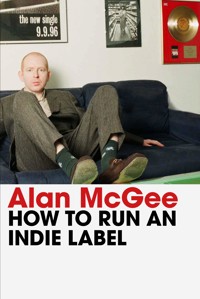
Erhalten Sie Zugang zu diesem und mehr als 300000 Büchern ab EUR 5,99 monatlich.
- Herausgeber: Allen & Unwin
- Kategorie: Sachliteratur, Reportagen, Biografien
- Sprache: Englisch
From founding Creation Records to discovering Oasis, a no-holds-barred rampage through gigs, clubs, boardrooms, drugs and booze that shows the wild spirit of the UK indie music scene. 'A true believer in the power of music and more importantly a believer in the people that make music' Noel Gallagher 'McGee was our Malcolm McLaren and Tony Wilson. An instigator and motivator, a born upsetter. I've never met anyone like him' Bobby Gillespie Music is like no other business. It's about being at the right place at the right time, following your nose and diving in feet first. It's about being plugged into the mystical electricity and about surfing on the wild energy. It's about how to fuck up and how to survive and be sustained by the holy grail of the high decibel. It's about never being boring. No-one captures this wild feral spirit better than Alan McGee whose helter-skelter career in music has made him a major force. His nose for danger and his ear for classic guitar rock'n'roll brought us The Jesus and Mary Chain, Primal Scream, My Bloody Valentine, Teenage Fanclub and Ride before topping out in the nineties with the biggest band in the world, Oasis. His ability to start a raw power ruckus brought the visceral danger back to a moribund mid-eighties music scene. This book tells you everything you need to know about how to be a creative force.
Sie lesen das E-Book in den Legimi-Apps auf:
Seitenzahl: 366
Veröffentlichungsjahr: 2024
Das E-Book (TTS) können Sie hören im Abo „Legimi Premium” in Legimi-Apps auf:
Ähnliche

















First published in Great Britain in 2024 by Allen & Unwin,an imprint of Atlantic Books Ltd.
Copyright © Alan McGee, 2024
The moral right of Alan McGee to be identified as the author of this work has been asserted by him in accordance with the Copyright, Designs and Patents Act of 1988.
All rights reserved. No part of this book may be reproduced or transmitted in any form or by any means, electronic or mechanical, including photocopying, recording or by any information storage and retrieval system, without prior permission inwriting from the publisher.
No part of this book may be used in any manner in the learning, training or development of generative artificial intelligence technologies (including but not limited to machine learning models and large language models (LLMs)), whether by data scraping, data mining or use in any way to create or form a part of data setsor in any other way.
Every effort has been made to trace or contact all copyright holders. The publishers will be pleased to make good any omissions or rectify any mistakes brought to their attentionat the earliest opportunity.
Picture credits
AJ Barratt/Avalon/Getty Images; Mick Hutson/Redferns; Fred Duval/FilmMagic; Brian Rasic/Getty Images; Gie Knaeps/Getty Images; Kevin Cummins/Getty Images; Nickie Divine/Avalon/Getty Images
A CIP catalogue record for this book isavailable from the British Library.
Hardback ISBN: 978 1 83895 798 8
Trade Paperback: 978 1 83895 799 5
E-book ISBN: 978 1 83895 800 8
Printed in
Allen & Unwin
An imprint of Atlantic Books Ltd
Ormond House
26–27 Boswell Street
London WC1N 3JZ
www.atlantic-books.co.uk
To all the people who bought the records
CONTENTS
Introduction by John Robb
Prologue: Where it all began
Part One: Getting Started
1 A DIY attitude can make things happen
2 It’s all about the people
3 Create an image and sell it
4 Entering the big time
5 Stay loyal to your artists and friends
6 The art of A&R
7 Go where the action is
Part Two: Party Central
8 Stand your ground
9 The importance of mentors
10 What defines a great record
11 The art of discovery – and going supernova
12 Stick with your vision and trust your instinct
13 Dealing with egos and superstars
Part Three: The Comedown and Rebirth
14 Drugs
15 Staying motivated
16 Don’t mix business and politics
17 Know when to walk away
18 The ones that get away
19 The art of being a manager
Epilogue: The future beckons
INTRODUCTION
by John Robb
I’ve known Alan McGee since 1981. It was the tail end of the punk rock wars, a time of post-punk DIY ideology and a belief that we could change the world with three chords and self-released records. We were all making music on our own terms, wild-eyed outlaws who believed in the power of rock ’n’ roll. Anything was possible and the music scene was a wild west full of possibilities and dreams.
It’s been a long and strange journey. Whilst some people made records, others made history.
Some people made both.
Before that, growing up in the pre-punk seventies, no one would have thought of running a record label, let alone releasing a record. That seemed like a supernova glam world, way out of reach of mad music geeks like Alan McGee. Punk rock changed all that. It was empowering and it tore a hole in the cultural fabric and allowed everyone in.
Looking back, decades later, McGee would say of the mid-nineties Britpop years, ‘We all took too many drugs, and my behaviour was quite mad.’ In those post-punk years, however, when everything was possible, he took no drugs but was perhaps even madder. In that time of both grinding political nihilism and thrilling cultural possibility, he was like a whirlwind of energy and enthusiasm, driven to make sense of the world and his own life through music. As we all plotted our own take on this brave new world, he suddenly appeared out of the ether. I couldn’t say no to the vision from this passionate and fiery Scottish voice crackling down the line when I picked up the phone at my parents’ house in Blackpool, where I was living for a few months after being kicked out of Stafford Polytechnic.
I was one of the early people to get the McGee treatment. That tidal wave of spittle-flecked optimism wrapped in a strong Glasgow accent. He was offering my band, the Membranes, a gig in London and would not take no for an answer. We had decided for some long-lost reason that we would never play the capital again. It was the kind of irrational decision that defined the maverick ridiculousness of the then underground music scene as we railed against the then-horrible music-biz stench of the small-gig circuit of the capital. Maybe this was because the gigs in the big city were rubbish – you were treated like fools who were desperate to play in London because, hey, you might get spotted by a label!
Unlike the rest of the country, where there was a spider’s web of thriving local scenes appearing on the back of the fanzine culture, with ’zine editors and music fans putting on gigs and building networks in their towns, the London venues made you feel you were lucky to be allowed to play in their city. They thought it was an honour for desperate bands to drive all the way there and back on the same day for the half-hour set that they often wanted you to pay for. The venues had pick-and-mix bills of bands, and came with grumpy promoters who hated the music. For fresh-faced new bands there seemed to be nowhere in the city that was remotely interested.
We had experienced enough of this London gig vibe in joints where there was no sense of community or scene. Of course, we were not superstars, but we were beginning to build a good following after one of our early 1981 releases, ‘Muscles’, was made single of the week in the music press and played relentlessly by John Peel. We had also just had our first big feature in Sounds music paper, written by Dave McCullough. The late music writer was a firebrand, fixated on the brave new world of post-punk ruckus and like a parallel scribe to the NME’s Paul Morley. They were both seeking out the music future with a wild enthusiasm and ornate and captivatingly pretentious prose, armed with an entertaining and compelling vision about what music could be. Dave was tireless, typing his missives whilst sieving through the post-punk underground of never-ending bands and labels and looking for the gold dust of a new direction in the cultural confusion.
Punk had affected people and made them want to do something – anything – and writers like these seemed like lone wolves, typing extraordinary and thrillingly affected missives about obscure skinny outsiders, many of whom have become unlikely gatecrashers in the mainstream.
In 1981, Dave came up to Blackpool to interview us on the prom surrounded by vicious seagulls and even more vicious grockles. He was bemused by the plastic weirdness of the place, which had nothing to do with us.
In the same period, Dave also wrote about a young Glasgow band, The Pastels, and other youthful angular outfits like Alan McGee’s own early band, The Laughing Apple. He was searching for the holy grail in the fresh-faced guitar youths who were appearing in the post-post-punk hinterland and joining the dots in this fragmented new culture. He was already on the case with the wonderful bands like the caustic snark genius of The Fall to the highbrow pop of Scritti Politti, or the sound of young Scotland – from Postcard Records to the Fire Engines. He was looking for the next narrative in this brave new world. Maybe me, McGee and Stephen Pastel were brief moments of hope before he found his band when he wrote about The Smiths. Once they had been located, music moved into a new phase.
Yet the mavericks that had signposted this journey were too full of idealism and brimming with pop culture to fade away. Whilst Dave was typing, Alan McGee was plotting, and a new bunch of disparate bands were twitching. McGee was savvy enough to spot this. He had just moved to London from Glasgow and was trying to find a space for his band. He was releasing his own records, booking his own gigs and now running his own tiny gig night, and whether by accident or design, he was tearing up the fabric and creating a new pop art future.
Alan had read the interview with us in Sounds and that’s when the phone calls started, which massively entertained my mother who is Scottish and liked hearing this manic accent down the phone whenever she answered.
Eventually, in 1983, McGee persuaded us to play his new night at the Adams Arms on Conway Street in central London. Calling his club The Living Room, the weekly gig was built around the coterie of underground bands he was collecting and who were beginning to create a new scene coalescing around his new night and his Communication Blur fanzine.
These were bands like the Nightingales, The Three Johns, his own band, and especially Television Personalities. The latter’s vision of a high-octane mix of sixties pop art and punk rock would dominate the Creation narrative, from its twitching small roots to Oasis at Knebworth, and that crush collision of sixties beat and seventies punk was the core of what would become the label’s aesthetic. It was this disparate scene of maverick bands playing for the wild-eyed promoter in the tiny upstairs room of a London pub that would construct the foundations of future indie. The smallest of small acorns that would grow into the biggest icons, but somehow it all made sense – these were awkward misfit bands who were not playing anyone’s game, and each had their own vision that would eventually catch fire. Like McGee, they were musical nut jobs who were always seeking something else.
Of course, Alan was the maddest of them all. Like all the best visionaries, he believed. In everyone. He himself was a rock ’n’ roll star but with no perfect vehicle. His own bands were great but they never cut through and he ironically found stardom and escape in being the conduit for everyone else’s dreams.
The Living Room gave us all room to live. The club was a blast and the gig was great. It was rammed with fellow souls and gave us and many other lost souls a step into London.
In the idealistic early eighties, it was the only gig in London where the music heads would turn up and where there was a sense of scene. Also, Alan would pay you properly, with the agreed wedge of money pulled out of his pocket, making him the only person with any business savvy on the scene, as he didn’t drop money on the floor or lose it from a ripped plastic bag like the drunken promoters at other venues. He even saved a bit every week for his new venture – an as-yet-unnamed record label. It all sounds fundamental now, but in the London of the times it was rare to be treated properly and it was rare that anyone had any vision.
From that point on, McGee and I became pals. I would hang out with him in London and we would talk of changing the world one record at a time. We would meet people in the warehouse at Rough Trade and liberate lots of the records in their huge storeroom, selling them to cover train fares and food. Rought Trade didn’t seem to mind. Maybe it was their way of supporting the waifs and strays who made up the indie underground.
In this post-punk hoedown, McGee planned his new label, which he christened Creation after the sixties psych band. I would write about his early label releases in my Rox fanzine and then in Zig Zag magazine, which I had started writing for. I was intrigued by the look of those early Creation records – the Xerox machine folded sleeves inside plastic bags and the pop-art logo on the labels that matched the off-kilter jangle of the music with its punk-rock art ferocity. You could see and feel the love of decibels and the possibilities of guitar pop. There were great songs like The Pastels’ ‘I Wonder Why’, there were obtuse slogans from The Legend!, and there was the mystery-stained melody from The Revolving Paint Dream.
It was all very much a trip and initially hardly anyone was listening. The records got little attention or radio play, yet McGee didn’t blink. He had this evangelistic zeal about him and could make anyone feel ten feet tall with his vision and wild enthusiasm. Unlike most people you met in those days, he didn’t seem to have any fear, and he also had absolute certainty. At some point this insane energy was going to blow big. It just needed the right band.
Within a year they had turned up c/o a demo tape and the Glasgow connection that is core to this story.
I first met The Jesus And Mary Chain in The Living Room before they played their debut London show. They were shyly detached yet had a surly cool, and McGee was already sketching out a bigger picture for them that they had no idea about. With a couple of killer tunes already in demo stage on the famous cassette that they had given to Bobby Gillespie in his Glasgow club that he had raved about to Alan, his old school pal, they knew their genius but McGee knew how to amplify it.
I did their first interview when Alan came with them to my flat in Manchester at the back end of 1984. I coaxed the quotes out of the reticent Reid brothers before we went to meet the legendary Manchester-based artist Linder Sterling, who had designed iconic sleeves for Buzzcocks and Magazine, to discuss her doing the sleeve artwork for the band’s planned debut single. The meeting feels like a thousand years ago now, in a then-grotty, broken Manchester city centre in an old-school cafe by Manchester’s then-ugly bus station. We ended the night watching Lee ‘Scratch’ Perry in the cavernous Hacienda, where Alan had his first meeting with Tony Wilson.
Soon after this, my band was signed to Creation. McGee had come to see us play Reading University in early 1985, where he was impressed by us kicking over a PA system, and one of our followers raving about the band and also The Doors and leather trousers on their shared car journey back home. McGee promptly rang up, signed us and told us to buy leather trousers, which we could not afford so we had to decline this sartorial masterstroke. He got the Mary Chain to wear them instead and they looked great.
We released our first album, Gift of Life, on Creation. McGee rightly described it as ‘schizophrenic’, and it was a crazy piece of work that somehow got to number 2 in the indie charts. It was never going to last and of course we were inevitably going to fall out – we were both mad hatters at the time. The last straw – quite literally – came at a Creation Records night where we had to draw lots for who headlined. Of course, we lost, and we didn’t speak for a couple of years until I bumped into him at Reading Festival in the backstage compound where he was buzzing on Es. Typically of McGee, we became firm friends again and have wandered in and out of each other’s lives for decades. McGee’s music-first journey in culture is like mine – but possibly better paid!
I know his story inside out, and the best way of telling it is around how to run a record label because Alan, like so many of the punk generation, used the sound and fury of that scene to create something. The beauty of punk was that it provided an escape route if you dared to take it. It empowered and it thrilled. McGee escaped the rainy day Glasgow of his youth to become the last rock-star label boss. There was no manual, and if there had been Alan would have torched it. Headstrong and steeped in music, he followed his muse and created the most unique of record labels that defined indie and charted and changed the music scene. He was a musician who ended up running the show, a visionary with vision and a punk with attitude. But he was the type of person whose vision was not propagated through his own band but through his label. His vision of punk crisscrossed with psychedelia was not propagated though his own band but through his label. That vision which borrowed from Television Personalities, became the nineties music mainstream via Creation – with Oasis ending up as the biggest band in the world – and was forged in the underground of wild outsider nights, tiny venues and unsold records.
Alan learned from scratch how to run a record label – an indie label that defined the word – in a story that goes from DIY Letraset record sleeves, scratchy high-treble guitars as machine guns, and mainly awkward young men, to cocaine, helicopters, supermodels and the biggest band in the world. Despite the seismic shift McGee himself never really changed; even at the stadium height he was still the DIY label boss full of gold dust and ideas and that vibrant enthusiasm.
Somehow, the song had remained the same.
PROLOGUE
Where it all began
The music biz is nuts and there is space for all kinds of mavericks, but I think we took it to the extreme. We made crazy decisions. Signed lunatic bands and made and lost fortunes, and it was all done on instinct. But it worked. I’ve lived a rock ’n’ roll lifestyle and I’ve burned myself out and I’ve come back. Everything the bands did I did ten times more and it eventually broke me. With Creation Records, I made all the mistakes, had all the triumphs and the label became the most successful in the country. And then I got bored.
If you want to know how to run a record label properly, go and buy a manual. If you want to know how to run a record label as a 24/7 music fanatic living in the eye of the high-decibel hurricane and full of the rock ’n’ roll lifestyle, then read on.
I grew up in Glasgow in the sixties and seventies and my home life was grim, but it made me. Glasgow was a tough, angry and violent place, with a reputation for being a hard city that drank a lot, which was deserved. Yet its tough outer shell masked a deep warmth, and it was artier than it was letting on, with, I believe, more galleries per capita than any other city in Europe. Glasgow taught you how to survive, how to front people off and how to get street-smart. It was also a city of deep loyalty and it was where I made the most important friendships of my life – friendships that have stayed with me for decades and were the core of Creation. Even though it was a London-based label, Glasgow and all its personality traits were important in Creation Records.
Following my birth in1960, I lived in Govanhill near Paisley, before moving to Mount Florida in 1963. I was just around the corner from Hampden Park, where my dad would take me to see Scotland play England every couple of years. Those huge crowds and the amazing atmosphere was like nothing else I’d experienced and maybe planted something in me that I would try and find in music years later. For my weekly fix of football, I was a Rangers fan, as their ground was only half an hour from where I lived. I never did that sectarianism stuff – I don’t even believe in god – but football was tribal in Glasgow and very much part of the culture.
When I was a teenager, my father and me seriously fell out and he would beat me, but when I was a wee child all he beat was panels at work. He was a handsome, strong man, and when I was young seemed heroic but we grew apart. Especially when music came into my life. By then my home life was violent but I thought everyone’s home was like that. It probably was where I lived in Glasgow. It was a tough place, and even more violent when mixed with drink and frustration, and there was not much opportunity for escape. I didn’t want that kind of life, so for me, music was my way out.
I always wanted to be in music. I started as a fan, then I had a band, but I was never sure if I was good enough to play music. So I ended up running a record label. I was meant to be behind the scenes but somehow I ended up being the boss. And it was like being a rock star. Growing up in Glasgow was a good background for learning how to run a label: one thing I learned from my father was to have no fear. This would be crucial when I ended up in the music biz. I had nothing to lose, so in some respects, I wasn’t frightened to fail.
I hated school and hated the teachers. School was a waste of time. It was violent. There were knife fights in the playground! Anyone who tried at school got battered. No wonder that in that kind of world, even at the age of eleven, before punk came along and changed my life, I was fast becoming a music obsessive. I was a fucking geek. Nobody wanted to hang out with me because I was into weird music that wasn’t in the charts. The hard lads liked fighting and a few songs, but the weirdoes and geeks were obsessed with music.
I spent all my money on records – that was my escape and my real education. Glam rock was my O levels and punk rock my A levels. Everything I learned about life came from those seven-inch singles and not from school. I had no idea what I was going to do with this knowledge until punk happened. That was the great thing about punk though. You crossed the line from being a fan to being involved.
To this day I have no idea where this love of music comes from. My parents somehow grew up in the sixties without liking any of the great music of that decade, even though they were young enough to be into it. I’ve never been able to figure that out. Instead of going to all those classic gigs, they stayed in and listened to Tony Christie. For me, though, it was an obsession, and I would skive off school with my mates and listen to records all day.
These mates were a big part of my journey. It was at King’s Park Secondary School on Glasgow’s south side where I met them. There was Bobby Gillespie, Robert Young and Jim Beattie, who would eventually go on to form Primal Scream. I was a year above Bobby at school and he lived around the corner from me. When I met him, he was like me – a normal lad and not a rock star. Robert Young was a wee lad but very bolshie, and would also end up in Primal Scream where he was nicknamed Throb. He was the Les-Paul-playing rock ’n’ roller and heart-throb of the band before he sadly died in 2014.
At first, we were football boys. We just loved football. Then we got obsessed with music. Bobby is my oldest friend and, like all close pals, we have had an on/off friendship for years, and one that is at the core of the Creation story. Punk was the big moment for us, and going through it together made us best friends forever and we shared music and gigs.
In the very early seventies, I needed money to sort my music fix. Even though I was not yet a teenager, I learned all sorts of tricks to make money on the Glasgow streets, and that kind of resourceful savvy was the best education I had for eventually running a business like a record label. My parents had no money for pocket money, so I had to get a job. I also needed that independence from them and the money to spend on music.
So in 1971, I got a job delivering papers with South Side News – the local paper. It was one of those newspapers that was mainly paid for with adverts. Every town had them then. For every paper that I sold for ten pence, I got to keep four pence. For a week I thought that was great; I think I sold 200 papers so made myself eight quid, which was quite good for the eleven-year-old I was then.
By the second week, I’d worked out a scam. If I went down to the depot at half five in the morning I could steal loads of extra papers, then sell them and not give the paper the money and get the full ten pence. That was a buzz – not only did I have the money to feed my music habit, but there was also the thrill of making money. Both things were the start of the music biz for me in a sense, and the core of what later made me good at running a record label. I loved the buzz of grafting to make money and I could see an escape.
My music fix was changing my life. And for the better. I had so much spare cash I wasn’t just buying things I liked. I could afford to buy every record that came out because this was the era of the seven-inch single, and they were only about 50p. So I bought virtually everything that came out, whether I knew the song or not, from this record shop in nearby Battlefield in Glasgow. That’s how I know bands like Jethro Tull and Uriah Heep, as well as all the glam shit that I loved which was pop perfection.
For most people my age at the time, glam rock was our soundtrack. I was there from the start in 1971 with T. Rex’s ‘Get It On’, which I bought the day it came out and which was the first record that really connected with me. Then I bought Slade’s ‘Coz I Luv You’ and I was away.
At first, I thought albums were for grown-ups and singles were where it was at for teenagers, which is perhaps true in pop culture. Later on, when I got into albums, I borrowed them from the library and taped them at home. That’s how I got into The Beatles – by taping their 1973 compilations, the Red and the Blue albums, from the library. Those two albums were the point at which most of my generation found The Beatles, a couple of years after they had split up.
I didn’t buy an album proper until I bought Bowie’s The Rise and Fall of Ziggy Stardust and the Spiders from Mars just before that in the summer of 1972. It’s one of my all-time favourite albums to this day, and Bowie’s still probably my strongest musical influence. He was a life-changer, musically and culturally. Along with Bolan and Slade and the other artists of that period, it was glam that made me who I am. It was always there in the background of Creation. I would argue that, in a way, I’m a child of glam more than a child of punk though you can hear glam in punk as well – The Ramones, another of my favourite bands, had that glam thing about them. I then, after that, also came to love the classics, like Bob Dylan and all the sixties stuff.
Pop was generational then, and there really was a generation gap. That stuff about your parents not understanding it was true. Me being really into music was bad enough for my parents, but my Bowie fixation was too much for my father. Especially when I started wearing a bit of make-up (remember this was Glasgow in the seventies). After that, the beatings really started, and they hurt both physically and emotionally. That affected me deeply, and the only positive side probably was that they drove me deeper into music, and then running the label and making a success of it. On the negative side, that also drove me towards a streak of self-destruction and hedonism, and left me with my own nasty streak and a dose of clinical depression that was eventually diagnosed when I was thirty-five. Music, and later on the success and the drugs, were in many ways my self-medication from the beatings and what they did to me, because no one had heard of depression in the seventies. That decade had a dark side and music was the only salvation, yet that dark confrontational side of me which came from Glasgow is probably why I made it in the music business.
By 1974, at the age of fourteen, I was taking the next step from buying records to going to see live bands in Glasgow. At that time I would be at every gig, whether I liked the artist or not: Queen, Santana, The Who, Alex Harvey and Lynyrd Skynyrd. Glasgow was pretty special for gigs – the crowds were famously some of the toughest yet most loyal in the UK, with an atmosphere to match, just like Hampden Park. In the sixties and seventies, bands like The Kinks went down so well in the city that they recorded their 1967 Live at Kelvin Hall album in Glasgow. It was the same with Status Quo and their 1977 release Live! They were recorded there because the atmosphere was like nothing else.
Once I had the bug for live gigs I’d go to anything. I was enthralled and totally excited by the whole experience. It’s that buzz that drove me all the way through running Creation and, to be honest, still to this day.
One day Bobby Gillespie knocked on my door and asked me to take him to see Thin Lizzy. He was like a wee kid then – he was only fourteen and I was the grand old age of fifteen. We were already friends but this was the start of a long on-and-off musical journey that we have been on ever since. You see us in the media or in films and they make it look like I’m the Svengali and he was the swaggering rock star, but we are nothing like that. We were both fucking music geeks back then, and we are both music geeks now. He just followed his music obsession to become a rock star, and I followed mine to create and run a label. We were driven and we were fans and that’s the truth.
Running a record label is not something you plan to do when you get into music. Especially not in Glasgow, as the music biz seemed like something that went on somewhere else, like London, which felt totally remote from us. I was just into the bands and the music, and I didn’t have a plan beyond that – but my time spent growing up in the city certainly helped put me on the road to running a record label attitude-wise, even if I had to go to London to do it.
Everyone has self-doubt, but failing with Creation was never an option. Fear of failure was the reason for my inner confidence – that’s what drove me. I couldn’t go back. The determination not to end up with the lives my parents had or what was laid out in front of me in Glasgow was a driving force for me in running a record label – and is crucial for anyone who is creative. I had to make the label work. The only place for me was in music.
I was not your typical record label boss either. I had the vision and belief, a kamikaze attitude to business, and I was totally immersed in it. Creation became the biggest indie label of them all and the records we released were the soundtrack to the nineties, but when I started out it was a DIY operation. That was not by choice, but it was a brilliant education. I didn’t know how you ran a record label, but it made sense at the time and I made it up as I went along. At first, we would stick our own sleeves together and try to get the press and radio interested in the singles. I signed bands on instinct and belief. I also signed bands not just because of the music; often it was because I was intrigued with the people in them. I believed in them. Some became massive and some disappeared. I must have been totally mad but I was driven by self-belief and a passion for music and music culture.
I learned all this from the streets of Glasgow and from my love of records and gigs. I knew that music was going to be my life, but I had no idea how. I was an outsider and I didn’t have any way in, and then punk happened...
PART ONE
Getting Started
CHAPTER 1
A DIY attitude can make things happen
Growing up in Glasgow, you never met anyone who was in a band, let alone ran a record label. Even a mad wee music nut like me, who bought every record he could, had no idea he could cross over to the other side. Punk was the revolution that made me and other kids believe that we could do it. Anyone my age will tell you the same. We were the right age at the right time with the right attitude for the right music. Punk changed our lives – it lit a fire that’s never gone out.
In many ways, I was a ticking time bomb and perfectly primed for punk. In 1977, in the middle of my darkest times, I heard the Sex Pistols’ ‘God Save The Queen’ and it was a life-changing moment. Looking back now, I obviously had depression, but it was undiagnosed because no one knew what it was back then. In those days, all people would say was ‘pull yourself together’ – if you even mentioned it, which you never would. My father’s bullying fucked me up and made me angry and alienated, a cynical crazy bastard, which was perfect for punk and then for the music biz, and so I have to thank him for that. The way I grew up made me want to make something of myself, to escape, and punk was the perfect catalyst. It arrived at just the right time to fire up teenage minds like mine, taking the dreams of glam and making them a reality. I left school in 1977 with only one O level, but now the music was my education and my life.
Punk was like all the best bits of previous pop culture cut up and put back together into something far more incendiary and exciting. It was all-consuming and its simplicity made it easy to get into. It didn’t just create a great soundtrack; there was an urgency to it that told you that you had to be part of it as well – here’s three chords, now form a band, as Sideburn #1 fanzine famously printed in 1976. If not that, then run a record label or put gigs on or print a fanzine. And if you didn’t know what you were doing, who cared? Punk was about empowerment and doing things anyway. Just for the hell of it.
Sex Pistols were the band, and ‘God Save The Queen’ blew my mind. I didn’t really get the politics, or what it was all about at first, but I could feel it and the sound of it really connected with me and the state I was in at the time. I needed more of this new fix so I rushed down to the record shop and bought The Stranglers’ ‘Go Buddy Go’ and The Ramones’ ‘Sheena Is a Punk Rocker’, and those records were also life-changing for me. All of them. I also loved the possibilities of bands like The Slits or Siouxsie and the Banshees, whose first two albums, The Scream and Join Hands, still sound amazing. To this day, the people that impress me the most are those from the punk era, like Paul Weller, Siouxsie and John Lydon. I was a total fan. I loved the music, the attitude and the way it made you want to do your own stuff. Glam was great but you couldn’t take part in it. All you could do was buy the records. With punk you believed you could be in a band, you could be on Top of the Pops, you could be Marc Bolan or David Bowie. No one had believed in you before. You hadn’t believed in yourself. Yet punk inspired you. It had a DIY attitude. It said you didn’t need anyone’s permission to create stuff. And it was a big part of how I ended up running a record label.
For my dad, already pissed off that I was into glam and David Bowie, punk was a step too far. I was obsessed, dressing like a Buzzcock in their modish pop art take on punk, and would put the eyeliner on when I went out. He hated that, and the beatings increased. Punk did that. It was the revolution of the every day. It was a big fuck you.
Eventually, the tension and the beatings got too much and I moved out to a bedsit in Glasgow’s West End. It was a crummy place, but at least I was safe. I bought a bass because I was struggling to learn how to play the guitar. I think the bass was the instrument of choice in punk rock because you could learn it pretty quick, and the cool one in most bands seemed to be the bass player. With a bit of messing around, I could blag being a bassist. That was DIY in action. You didn’t need to go to music school to be in a band. You just did it. That attitude was crucial to the whole story.
It wasn’t long before I found my way in to this new band world. There was a punk show on the local station Radio Clyde every Wednesday night hosted by Brian Ford. A show like that was pretty rare at the time as most radio stations would not play punk. They were scared of it, which made it even better. On the show there was an advert for a band called The Drains, who were looking for a bass player. I answered the ad and that’s how I met Andrew Innes, who would end up being part of the core of Primal Scream. It was his bedroom band with his next-door neighbour, Pete Buchanan, on drums. Innes was the guitar player. I thought it was a shit name for a band but it was probably just Andrew taking the piss out of shit band names with his sarky sense of humour. In the grand tradition of punk rock, Innes taught me to play bass as we sat in his bedroom. It didn’t matter that I couldn’t play when I turned up. This was about learning on the job. Picking out the riffs as you went. Innes would put my fingers on the correct frets and I would fumble and try to play along. It was just like Paul Simonon when he joined The Clash, with Mick Jones teaching him how to play. That was how punk worked. You just got on with it. There were no barriers.
A couple of hours of fumbling with the bass and we had a band. It wasn’t long before Bobby Gillespie would tag along to our Friday night sessions as well. Even though we were just playing in a bedroom it felt like the real deal to us. For a wee while, as we did The Drains, we also had these imaginary bands in our heads, like the jokingly named Captain Scarlet and the Mysterons. We were just messing around, but we were also serious in trying to make something happen even then. We would start by singing The Clash, Sex Pistols and even Sham 69 songs in Andrew’s bedroom whilst he worked out the chords because he was by far the most musical out of us all. We were getting our kicks on these nights when there were no punk gigs to go to, which, to be honest, was most nights.
Innes could really play, though. That was really something at the time because in those days no one learned guitar. No one at school even had a guitar! It seemed amazing that he knew all this stuff. We would spend all night learning and eventually we could perform the whole of the first Clash album that had come out in April 1977. By then Bobby would be singing and also rolling around on the floor doing his Iggy Pop thing – although, thinking about it, it was more likely to have been his Jimmy Pursey thing because he was a big fan of Sham 69 then – whilst us older guys drank beer and played the bass and guitar.
By 1978 we had renamed ourselves Newspeak after George Orwell’s 1984, which I had just read, got a good-looking lad called Jack Riley in on vocals, and added Neil Clark, who ended up being the guitar player in Lloyd Cole and the Commotions after Newspeak. I guess this was what everyone was going through at the time – trying out bands in the hope of finding something that worked and like-minded people to work with. It was a revolving door of young kids fired up by punk running around the city looking for bands to be in.
About the same time, Innes and I also started playing in a local band called H2O. They were a new wave band who went on to have a couple of hits after I left. I played bass with them for about four months and got Innes in for a short stretch as well, playing guitar. H2O wasn’t punk rock but it was cool to be in a proper band and they were good guys. They taught us a lot about music and being in a real band rather than a bedroom punk band. I learned about rehearsing properly and getting organised as a band, which was an early lesson for me in how to run that side of things and already interested me. I still had this raging ambition and desire to escape, driven by my upbringing. That drive to be successful is key in business. To be successful at anything, you have to have willpower. That’s more important than having talent, and is especially true in the music business, even for those independent labels that liked to look like they were above that kind of thing. We were all the same.
People in the city remember me as being on the fringes of the Glasgow scene at the time. In Glasgow I wasn’t even in the fucking top 200 people most likely to make it in the city! I was on the outside of the outside. People in the local music scene thought that my band were the 27th most likely to make it. Out of 30. That’s how much of an insider I was.




