


11,99 €
Mehr erfahren.
- Herausgeber: Luath Press
- Kategorie: Sachliteratur, Reportagen, Biografien
- Sprache: Englisch
This is a story of a confused, chaotic and repressive childhood lived in the West Country before, during and after WWII.As WWII began and rumbled along in the background of her young life, MacLeod offers a children's perspective of life in wartime Britain. Evacuees came (and went). Her father built an air-raid shelter. A plane crashed into her village. The local school children collected scrap metal for the war effort. Following the death of her mother at a young age, a tenuous relationship with her father and stepmother, and financial difficulties that prevented her from achieving her dream of becoming a GP, MacLeod settled for second best. From childhood to nursing education, and ultimately State Registration, this is the tale of how The Island Nurse became an adult and began her long and fruitful career.
Das E-Book können Sie in Legimi-Apps oder einer beliebigen App lesen, die das folgende Format unterstützen:
Seitenzahl: 469
Veröffentlichungsjahr: 2020
Ähnliche


















MARY J. MACLEOD rose to fame with her two memoirs The Island Nurse and More Tales from the Island Nurse. She was born in Somerset, educated in Bath and qualified as a state registered nurse in Bristol. Now retired, she worked as a nurse in Bristol, London, Bedfordshire and the Hebrides. She has four children, five grandchildren and six great-grandchildren and lives in Berkshire with her husband and two dogs. Her first book was published when she was 80 years old. Hush! The Child is Present is her third book.
By the same author:
The Island Nurse (Mainstream Publishing, 2012)
More Tales from the Island Nurse (Luath Press, 2013)
First published 2015
eISBN: 978-1-912387-95-3
The author’s right to be identified as author of this book under the Copyright, Designs and Patents Act 1988 has been asserted.
The paper used in this book is neutral-sized and recyclable. It is made from elemental chlorine free pulps sourced from renewable forests.
Printed and bound by Bell & Bain Ltd., Glasgow
Typeset in 10.5 point Sabon
© Mary J. MacLeod 2015
Contents
Acknowledgements
Introduction
The ‘Before’ Time
The ‘After’ Time
The War Years
Growing Up
Into the Big, Wide World of Work
Acknowledgements
I thank all those members of my family and my friends who have encouraged me, especially my ‘techno wizard’, without whose help this book and others would probably not have been written.
This book is dedicated to the memory of my mother, whose love I knew for so short a time. And to my baby sister, whom I did not know at all.
Introduction
The story is of a confused, chaotic and repressive childhood lived in the West Country before, during and after the Second World War.
My childhood – in fact, my life as well – was very clearly defined by a ‘Before’ period and the ‘After’: before my mother died in 1937, when I was just five years old – these years are the lost time, the joyful time – and the events that followed after.
At her death, I was shunted from one relative to another, attending three different schools in as many months. My father was a man of his time, not expecting to look after a child himself, so he married again, only nine months after my mother’s death, perhaps partly to have someone to look after me.
After my father’s remarriage, my name was changed from my mother’s choice of Mary to Julia. My father started to tell me that this new ‘Mum’, Mildred, was a better mother than my own would have been. Then my stepmother told me that my mother had not even wanted me. All these things made me an unhappy child, but I did not realise that I was unhappy. Things were just the way they were.
My experiences are set against a background of the Second World War. Evacuees came (and went); Father built an air-raid shelter; a plane crashed in the village; my stepmother’s parents and cousin were bombed out in Bath and came to live with us for a while; German prisoners of war worked for my father for a while. There were sirens and air-raids, and although the village escaped lightly we spent many nights in the shelter as bombs landed around us.
I gleaned what I could from playground talk, but my concept of events, local and global, was patchy, inaccurate. I was not allowed to listen to the wireless or read newspapers until late in the war, but those events that did enter my consciousness were to have a lasting effect on me and shape the way I thought for many years after.
I won a scholarship at 11 years old and tasted freedom from home, eventually choosing to study medicine and train as a nurse at Bristol Royal Infirmary. The hospital rules were severe but consistent, and I was ‘growing up’ all the time – learning about life as well as nursing.
I felt Mum’s control gradually loosening and I slowly began to have my own opinions and develop my own character, priorities and sympathies. I finished my three-year training, passed the final examinations and gained State Registration when I was 21 – officially an adult.
The ‘Before’ Time
The Child
‘HUSH! THE CHILD is present.’
Firmly, my grandmother admonished Grandfather. He had been sitting in his big leather armchair with his head in his hands. Crying, he had just murmured, ‘I do grieve. Indeed, I do grieve!’
I was ‘the child’ – I knew that. And I knew why he was grieving.
Mummy
I WAS ONLY five years old when my mother died. To me, she was the person who was always there, always loving, always ready to soothe or cuddle: able to find the lost doll, to locate the ice-cream van when we heard the ‘ding-dong’, to tuck me up in bed. I was safe, secure and fortunate – without knowing it. I took her presence and her love for granted. Then, suddenly, she was not there any more.
I had been taken to my grandparents’ home nearby one day. They said, ‘Mummy is not very well, but has gone away to hospital to get better and will soon be coming home again.’ But she didn’t come home again – ever.
My memories of that time and of my mother are fragmented and I only pieced them together over a number of years. At the time I was not supposed to think about her – it was ‘bad for me’, she was ‘best forgotten’, I was told: I certainly did not dare ask about her or reminisce about ‘when Mummy was alive’. It seemed that they all thought her death did not matter to me too much. ‘The child does not appear to cry over her mother,’ they said.
It mattered – oh yes, it mattered a great deal – but those were the days of the stiff upper lip, when children were to be seen and not heard, and we certainly didn’t ask questions. In those days, a motherless child was a ‘problem’.
Fathers rarely attempted the care of small children; some woman in the family was always found to do this. I knew nothing of the current attitudes, of course, but I could feel an atmosphere in the house, almost of embarrassment, that told me to remain silent: not to cry when among people and to hide away from all these things that I was deemed not to understand. I was not aware that I was miserable and lonely. Things were just the way they were.
I heard all the talk, or snippets of it: ‘She does not understand’, ‘She’s a quiet child anyway’, ‘She will soon forget – she is so young.’ But I didn’t forget – not for a minute.
Everyone talked about ‘it’ between themselves, but only once did anyone speak to me about Mummy’s death and that was immediately after she died (at least, I think it was). My father told me: ‘Mummy has gone to see Jesus.’
At first, I wanted to ask why she could not come back when she had seen Jesus, and why had she not taken me with her to see Him? But I was a product of the old-fashioned attitudes, and had no proper religious teaching or understanding. I had a bluff, preoccupied, unimaginative father who was doubtless in shock and grieving. So I kept all this worry to myself and, only by what I overheard was I able to understand that my mother had died. I knew what that meant. Death. And dying. I don’t know how I knew. I think it was to do with a chicken that had been killed by a fox.
I remembered that the chicken had also ‘gone to see Jesus’.
The Early Years
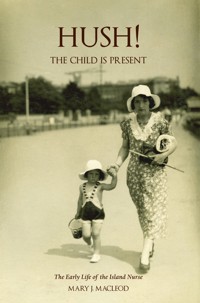
MUMMY HAD BEEN slim and rather elegant in the tube-like dresses of the ’30s. Naturally, as a small child, I did not think of her like this. Mummy was just Mummy: she smelled nice, had a soft voice and wore pretty dresses. I was an adult before I found a photo of her, and even now I have but three. One of them shows a smiling lady holding the hand of a small, rather thin little girl in a sun hat, walking along a seaside promenade. I must have been about four. Neither of us knew that this would be the last picture of us together: in less than a year, she had gone.
Another lovely memory of mine is her blowing up balloons for Christmas. I recall Mummy and my father putting up paper chains and then sitting by the fire with the balloons. I know that I sat watching them and a warm feeling, even now, tells me that we were a happy threesome. My father had more ‘puff’, so he did the blowing, while my mother tied the balloons’ necks. But she was not very good at it and they kept zooming off across the room. I loved that!
I remember some words exactly.
‘Why do you try to take the long end through the knot?’ my father asked.
‘I’ll try the short end,’ Mummy replied.
Pause.
‘You’ve done the wrong one again,’ he said.
‘I did the short one, so now it is the long one’s turn!’
Why should I remember such trivia when there must have been many other conversations that I overheard? Could it be that the atmosphere of love and joy etched this little piece of nonsense in my mind?
Then there was the doll episode. Again, I must have been about four because I was going out of the front door by myself to play with some friends on the communal grassy area in front of the houses. I had in my arms a fairly large doll called Margaret. As I went down the steps, Mummy came running out, calling, ‘Don’t take your dolly – those boys might get her again!’ By which I gather ‘those boys’ had caused trouble with Margaret before.
I must have been an adventurous child. We moved house soon after this and there were some derelict buildings on the opposite side of a wide, shallow stream which ran in front of our house now. I was warned sternly by Father not to go there, as they were unsafe and, so far as I remember, I did not go into these buildings but spent much time standing beside the stream looking at them. Occupied in this way one day, I was startled by an old man emerging from one of them and shouting at (or to) me. I was terrified and, in my hurry to escape, I fell into the stream.
I was in no danger: the stream was so shallow, and this ‘ogre’ of a man was kindness itself, pulling me out, establishing, with difficulty, where I lived and returning me to my mother. She was not at all cross but wrapped me up, cuddled me to get me warm, and then made the old tramp a cup of tea. Father, however, was cross when he came home but, as always, Mummy smoothed things over by saying, ‘She didn’t go into those houses. She was only looking at them.’ I remember my father’s ‘Hmm.’
My next two adventures must have happened in the few months before her death. I had a tricycle and was persuaded to go out with some friends who were also the proud owners of similar small trikes. Near our home some new houses were to be built and the roads had been laid out and partially surfaced ready for work to begin. Since they were totally free of traffic and ran down the side of a hill, they were considered by my friends (all of whom were a good three or four years my senior) to be most suitable for a good ‘whizz’. And they were!
I began to whizz with the rest, but the trike was new and, unfortunately, I had not mastered the use of the brakes. Faster and faster I went! I remember the shouts of encouragement behind me. We were all totally oblivious to the dangers. The road ended in a T-junction and I failed to negotiate the corner and was unable to stop. I careered across the road and hit the newly installed kerb with my head.
I woke sitting on a stool in the workmen’s hut, with a grubby but kindly man sponging the warm sticky stuff that was pouring from a cut on my forehead. At that moment, my father arrived, having been fetched by the other children. Pressing his handkerchief to my head, he wrapped me in something and carried me to the car. Holding the mangled tricycle out of the open driver’s window with his right hand – I remember that so vividly – he drove me home to a distraught mother who was being regaled by the children’s tale of accident and blood – much embellished, I believe. Sometime later, I recall Father saying to my mother, ‘I want to give those chaps something for their kindness.’ I don’t remember what they received.
While still with plasters all over my face, I went to call on a little friend. On her doorstep was her very old spaniel, sleeping soundly. I was very fond of dogs, so I bent to pat him, startling the old dog, which had not heard my approach. Frightened, he turned quickly and bit instinctively. My already battered face received several additional bites, as did my neck. For some reason, instead of knocking on the door, I ran all the way home, once more with blood pouring from me and terrifying my poor mother. But I know that I received love and comfort. Perhaps I had been foolish, but it was an accident and that was the end of the matter.
I think it was with the same little friend that I shared my next adventure. I believe her name was Audrey, and I remember her as being small and always dressed in blue. She was slightly younger than I was and therefore I was considered to be the ringleader in our games or escapades.
Near ‘the house with the stream in front’, as I always thought of it, there was a little park with flowers and swings. One afternoon we went there and spent a long time on the swings. We tried to outdo each other to see how high we could go before the ropes bent and jerked. I seem to remember that we went very high!
These days, parents would be unlikely to allow five-year-olds to go to a park, even a nearby one, unaccompanied. But life was safer for children then and we were free to make our own fun.
At the park, there was an old man who swept up and kept an eye on the children’s area. We spent a long time chatting to him from the swings. He must have been a patient old fellow because he kept saying that he would have to shut the gates and we kept saying, ‘Just one more swing.’ We were the only ones left there and I remember that the sun had gone in, but as children we had no idea of time. The old man did not tell us to go but kept asking if our mummies would be worried about us. With great confidence, we assured him that we were allowed in the park. I don’t suppose he knew what to do with us.
Suddenly, there was a commotion at the gate, and Daddy and Audrey’s father came striding towards us. They stopped to speak to the man, who smiled and nodded towards us. We got off the swings and ran to the two daddies – with our usual grins, no doubt.
We were amazed when we saw their faces. I think they were cross and relieved at the same time. We had apparently been out for hours and had forgotten to tell our mothers where we were going. And it was not that the sun had just gone in… No, it was getting dark!
We were scooped up and given a good talking to, plenty of hugs and a piggy back home. Poor Mummy greeted me with tears of relief, as she held me tightly. I couldn’t understand this at all. We had been fine, I reasoned.
I remember being made to sit down and listen to Daddy telling me why they were worried. There was a long, deep brass fender in front of our fire and two square leather-topped wooden boxes, like small ottomans, were attached at each end to form seats. One held old newspapers and one contained sticks, both for lighting the fire. I used to like sitting on these and I can almost smell the brown leather as I remember my mother holding my hand that night as I sat on a box as Daddy talked.
All these years later, I can still feel the warmth of my mother’s love, known for just those few years, not even understood, but perhaps more precious because it all ended so soon.
Grandparents and Aunts
THERE WERE OTHER members of both my parents’ extended families who lived fairly near us and so were part of my early life. When at my father’s parents’ home at ‘Meadow View’, I had to be ‘grown-up’ even at the age of four. These grandparents seemed very, very old to me, probably because they both suffered ill health in different ways.
Grandma had been totally blind from the age of about 30. As a very small child, I understood that this meant she could see nothing at all, so I wondered how she knew when I came into the room or whereabouts in the room I happened to be. I was sure that she had a magic way of knowing when I was there and where things were kept, like Grandpa’s slippers or the ornaments on the side tables. Much later I learned that her hearing had become more acute as her blindness progressed and she had developed the ability to interpret little sounds, such as footsteps. She could judge the rough weight of a person by the noise that the feet made on the floor, so she knew if it was a child or an adult. She also had a phenomenal memory for the way in which everything was arranged in the house. Woe betide anyone who moved anything without warning her! It must have happened, though, because I remember her poor wrinkled face always had bruises where she had bumped into a half-opened door or fallen over a chair carelessly left protruding from the table.
She had a dog called Flossie, a gentle, fluffy creature, who happened to be blind too. Flossie always moved out of Grandma’s way when she heard her feet coming but would stubbornly remain where she had decided to lie if anyone else tried to pass. She seemed to understand that we could see her, while Grandma could not. ‘Doggie magic,’ I believed. I remember asking one day if we were ‘going to see Flossie’ and having to be reminded that we were going to see Grandma and Grandpa too! I loved Grandma and Flossie in about equal amounts, I think.
I was afraid of Grandpa. As a result of a stroke, his left hand had set in a claw-like shape and he had no real appreciation of the strength that still remained in it. He would play at ‘rough and tumble’ with my cousins and me, and had no idea that he was hurting us by squeezing, prodding or pulling us. We had all been told that Grandpa ‘had a bad hand’ and we must not complain if he hurt us because ‘he can’t help it’. We did as we were told (of course) but often tried to slink away so that he should not see the tears. I can remember the terror I felt one day when he held me down for so long that I thought I was going to scream. That would not have done at all!
Under his rather rough exterior, however, he must have been something of a gentleman because one day, to our enormous relief, he decided that we were getting to be ‘young ladies’ (at five or six years old) and it was not ‘seemly’ to play-fight any more.
When I look back on these times at my grandparents’, it is often without the warm feeling that trickled down through those years when my mother was alive; I can’t hear a voice in my head that could have been hers. This makes me think these years must belong to the ‘after’ time. But, then again, it was perhaps just that her quiet presence was somehow overwhelmed by my father’s large family of a brother, a sister, nephews, nieces and, it seemed, an endless parade of aunts, all of whom seemed to look alike to me.
Auntie Jinny
THERE WAS ONE aunt who stood out from the rest: Auntie Jinny. She was not part of the great gaggle of aunts in my father’s family but rather my mother’s aunt, so in fact she was a great aunt to me. She was a tiny lady who had lost her husband in the Great War. She spoke of this long-dead, much-loved heroic man with great reverence.
She always referred to the ‘Great’ War, so I thought it was something splendid, imagining shining armour and glossy horses. It was only after school history lessons that I realised she meant the First World War. (The Second World War was a few years ahead then, and so the Great War was still thought of as the war to end all wars.)
She lived in a tiny cottage in a little town in the Cotswolds and we used to go to stay with her quite often when my mother was still alive. My father did many odd jobs for her about the cottage while I ‘helped’ to dig the garden. Mummy would rattle about in the stark kitchen making all manner of nourishing foods for Auntie, being convinced that she did not eat properly because she lived alone. The kitchen was more of a scullery because the actual cooking was done on a huge old range which stretched the length of the living room and was faithfully black-leaded daily. The big china sink in the kitchen was very low down, supported on two little brick walls, while a board placed across one end of the room held back the coal heap. I remember a lot of talk about the dust from the coal getting into the food, but we just washed the dust off the plates before we used them. Daddy said it was ‘clean dirt’.
The front door led straight into the living room from the pavement. In order to reduce draughts and add a little privacy from passers-by when the door was open, a huge settle was placed inside the doorway to hide the room. Looking back now, I believe it had been a church box-pew before being demoted to Auntie’s cottage. In front of the fire (the open part of the range), was a rag-rug that I remember Auntie once repairing with some old stockings. I was allowed to cut the thick material into small pieces for her to hook into the holes in the ancient rug. A comfortable old settee faced the fire, while a sort of chaise longue (Auntie did not call it that – it was the ‘couch’) was placed against the wall under the window. I used to stand on this and watch the people walking past. Somewhere in the room there was a square, highly polished dining table with a huge china ‘something’ in the middle. The room must have been smaller than I remember and probably very cluttered, but I loved that room!
There was no bathroom in the cottage and I remember being washed in front of the fire and my clothes warmed on the fender. The lavatory was in a little brick building outside the back door. It was very cold in the winter, but I liked the picture of Jesus that hung on the wall.
Many more pictures of a golden-haired Jesus, with a shining halo, adorned the rest of the cottage, as did images of a stately St Francis. I liked the animals and birds that always surrounded him. Another picture showed God sitting on a cloud, and I know I used to feel uneasy sometimes when it rained because I would worry that God would get very wet. But where did he sit when there were no clouds? That was another worry. I was intrigued by a particular picture showing Jesus knocking at a door overgrown with weeds. Much, much later I learned that this was a print of the famous Holman Hunt painting. I think Auntie’s interpretation of these pictures was about the nearest I got to any understanding of what it was all about because my father prided himself on being an agnostic. None of this made sense to a four- or five-year-old, but I loved Auntie, I loved the pictures and I was happy in her cottage, so I associated God and Jesus with a warm, comfortable feeling.
Interspersed among the religious pictures were so many photographs of family members that it was difficult to see the flowered wallpaper. One day my father asked Auntie Jinny to name one or two of them. Her reply caused a lot of laughter: ‘I can’t remember their names,’ she said, ‘because several have been dead for years.’ But the photos were still there the next time we visited her.
The staircase opened from a kind of cupboard beside the range. It had a latch door. If my father stood on the floor at the bottom of the stairs, he could place his hand on the floor of the tiny landing: the ceilings were so low and the stairs so steep.
There were only two bedrooms, both with steeply sloping ceilings. Mummy and Daddy slept in the front and larger room, which was kept aired for guests, while I slept in the double bed, on a feather mattress, with Auntie Jinny in the smaller room at the back. I was on the inside, under the slope of the ceiling. If I sat up without thinking, I banged my head; it was so low.
The back gardens of the row of cottages were all joined together; there were no fences between them. There were narrow paths running down the gardens and across them, made from years and years of ashes from the fires, and in the squares of ground all the neighbours grew cabbages, peas, carrots and all manner of vegetables and soft fruit and shared the produce between them. I loved to run up and down and across these paths, pretending that they were roads. At the bottom of the gardens was a brook with tadpoles and frogs and sometimes a water vole.
I loved it! All of it: Auntie, her cottage, staying there with Mummy and Daddy, the laughter and the quiet chats about ‘dear Frank’ and about God. Auntie was the only person in the family who spoke of such things (and certainly the only one who spoke about my ‘dear mother’ after her death). She loved Mummy and me; in fact, she seemed to love everyone. She had no children and, although she would have loved to have had a child, she said, ‘If God had wanted me to have children, He would have given me children.’ Those were the days when one accepted such things, rather than moving heaven and earth to change them.
Auntie Jinny was the link between the time ‘before Mummy died’ and the time ‘after Mummy died’, which was how I thought of my life. Even then, when that life was not very good, we went to see her. I cherished those times! They were like an oasis in an otherwise bleak world because instinctively I knew that she loved me. She was the only person who spoilt me and spent time with me when my mother was no longer there.
She talked about my mother in a natural way: with sadness, but not in the hushed, embarrassed way that others did, if they said anything at all. Later still, when even the mention of my mother became taboo, she still spoke of her and would not be silenced.
Great Aunt Louisa and Grandmother
THERE WAS ANOTHER aunt on my mother’s side: a very different lady from Auntie Jinny. She was Great Aunt Louisa and she suited her name. I was always overawed when we went to tea in her elegant flat, which had been left to her by her employers. She had been a lady’s maid to an aristocrat in Cheltenham and had frequently attended court with her, absorbing much of that way of life. She had acquired a very precise way of speaking, which gave her an autocratic bearing.
When we arrived, the door would be opened by the ‘daily’ (who never seemed to have a name) and we would be shown in to the drawing room, a long, rather cold room with huge windows. After curtsying slightly, while being greeted, I was expected to answer questions about every aspect of my young life. Her opinions would then be offered about any shortcomings, as she saw them, in my upbringing and general behaviour. After that the ‘daily’ would bring in tea in small cups, tiny cucumber sandwiches and dainty cakes. I would be given a glass of milk because it was not socially correct for small children to drink tea, we were told. Oddly, I was not afraid of her, as one might have expected. I think I was fascinated by this glimpse into a different world.
After my mother’s death, Great Aunt Louisa would not entertain my father so I did not see her again. When she died, however, she left me £100, which was a lot of money in 1950!
Great Aunt Louisa was my maternal grandmother’s sister. Grandmother was a stickler for social niceties in much the same way as Great Aunt Louisa and, although kind and careful of my emotional well-being (‘Hush! The child is present’), she seemed remote, reserved and unapproachable. I must have spent much time with those grandparents before my mother’s death, but I do not remember any hugs, just a peck on the cheek on arrival and another when I left.
Grandfather was a bank manager, which was considered to be a very good job in those days, and he always seemed to be going out of the front door in a pinstripe suit with a bowler hat, carrying a rolled umbrella and a briefcase, or coming in looking exactly the same.
I never saw Grandfather open the big briefcase, but one day I was bold enough to ask him what was in it. He humphed a bit, saying in an irritated way, ‘Papers, child, papers!’ I was no wiser but dared not ask again.
Their house smelled of furniture polish and had soft carpets. There was a formal dining room, a parlour and a great big kitchen, where I had my meals.
Crib
I LOVED MEADOW View, Grandma’s and Grandpa’s house, better than Grandmother’s house because it was not so precise and there were animals there: Flossie and Crib, and the three big shire horses.
Crib was a big bull terrier, an outside dog, a working dog. The waste-water treatment plant, which we called the Works, and the horse’s stables were infested with rats and mice, so Grandpa had bought Crib and trained him to eliminate them.
I loved Crib in a different way from the fluffy, cuddly Flossie, who was so gentle. Crib was lively, cunning and deadly to rats, cats and even other dogs (other than Flossie, whom he adored), but he was the champion protector of small children such as me and my cousins. We would put him on a rope and march him round the garden, supposedly taking him for a walk. Compared with his free and busy life, this must have been quite boring, but he happily trotted with us, tail wagging. He would join in our hide and seek, crouching behind a bush or a building until someone would find us and he would leap about in ecstasy, having no idea what all the fuss was about but delighted to be part of our game.
One weekend, when Daddy and Mummy and I were staying at Meadow View, two small friends joined my cousin Ellen and me for a game of hide-and-seek in the garden – but this time the grown-ups had to find us. They gave us a good long time to get hidden and then they began the search. After some time they must have started to worry, as I could hear Daddy saying, ‘What have they got up to now?’ then, ‘They have been gone too long.’
We were trying not to giggle when we heard him say, ‘I think that dog knows something. Look at him, sitting there in the doorway of his kennel. He looks far too pleased with himself.’ But we could contain ourselves no longer and pushed our way out of the huge kennel past Crib, who had been doing a grand job of hiding us by filling the doorway with his huge bulk. He joined our victory dance with barks and leaps, and the event joined all the other stories that grew around Crib.
When he was not working, he would often be chained to the kennel, which was placed beside the garden path. It must have been there for years because all sorts of grass and weeds were growing around it, so that it looked partially buried. I used to annoy Grandpa by saying that Crib would be cold.
‘He’s a tough outside dog and he’s got a warm straw bed in there. He’s fine!’ he’d say.
He certainly seemed fine. He was a big, muscular dog, healthy and alert. One day he was chained outside the kennel as usual, when a mouse ran past his nose on its way up the garden path. In no time, Crib was after it, dragging the enormous kennel and assorted plants and turf with him. He must have had great strength to pull it virtually out of the ground. And he caught the mouse!
Grandpa had a hazy photo of Crib, sitting against the house wall at about 9 am one day, looking extremely smug. Tied across the wall behind him were some pieces of string holding the remains of ten rats and several mice. He had caught and killed all these before breakfast.
The men used to take Crib to the Works early in the morning and just let him loose in the stables and other buildings. They would troop back for a full breakfast at about 9 am and when Crib saw the preparations for the return home (perhaps he was to have his breakfast, too) he would gather the dead rats by their tails and jauntily trot back with them. I’m not sure what Grandma thought of this: she would have smelled them even though she could not see them.
These were good times.
Fun, Floods and Peter the Pup
I KNOW THAT I must have forgotten many, many things that happened in the ‘before time’ – that is, before my mother died – because I was so young. But I certainly have not forgotten the celebrations in May 1937 for the Coronation of King George vi. Mummy and Daddy took me to Victoria Park in Bath to see the fireworks and hear the bands playing. I remember lots of people laughing and shouting and the darkness being split by swooshing rockets. We walked along a wide path, watching and listening to all the fun. I had never seen so many people, and Mummy and Daddy held my hands very tightly as I skipped excitedly. I felt quite grown-up because I was out in the dark. I was told that we had a new king, which would not have meant much to me, but none of that mattered – it was all such fun. I remember the bright lights shining on the underside of the leaves on the trees that lined the road. I thought that fairyland must be like this. Then Daddy bought some sparklers from a stall, lit one and handed it to me, telling me to hold it well away from my face. All was well for a while, but as it began to burn down I became frightened and tried to flick it away. It stuck to my woolly glove and flicked straight into my face. I recall being worried that this would mean that we would have to go home. I wasn’t bothered about the stinging sensation on my cheek. It could not have been very bad because after the inevitable fuss and an inspection of my face Daddy picked me up so that I could see better and we stayed on until Mummy became tired.
We must have been living in Bath at that stage because a few days later, I think, when we went to visit Grandma and Grandpa and Flossie at Meadow View, we had to go in the car. It would have been about five miles. As we began to go down the lane bordering the river, we had quite a shock. It was flooded! There were some gnarled old willow trees growing on the river bank beside the lane and these seemed to me to be floating, the water was so high.
Daddy got out and walked to where the lane disappeared into the water. He returned, saying that it was not too deep and we would manage it. To me, peering from the back window as we drove slowly through the water, it was all very exciting – almost as good as the Coronation. But it was over too soon. When we reached the dry part of the lane, we seemed to be hopping along in a series of leaps and jumps, but that, too, was fun. Much later I was told that Daddy was drying the brakes. We must have done the same thing on our return, or perhaps the water had retreated, as I have no memory of it at all.
Daddy called his car ‘Tin Lizzy’. It was an Austin 7, black with nice-smelling leather upholstery. I loved the smell of Tin Lizzy – and even liked the smell of the petrol. (Petrol was less than an ‘old’ shilling a gallon at the time, just five pence!) We had lots of outings in Tin Lizzy in the ‘before’ time – and in the ‘just after’ time.
My father must have sold her soon after my mother died because the next car was a blue Ford, which we called ‘Bluebird’.
While we still had Tin Lizzy, we used to take Grandma out for rides. I used to wonder why she liked this because she couldn’t see anything. I think she just liked the company. One day we took her with us for a picnic. We ate jam sandwiches and had tea out of a thermos. Suddenly, Grandma cried out and Mummy and Daddy rushed to her. A wasp, which had landed on the jam in her sandwich, had stung her face. Daddy quickly sucked the poison out, spitting it onto the ground while Mummy held Grandma’s hand. Whether we had to go home or how bad Grandma was, I don’t recall, but I was very impressed with Daddy’s quick action in sucking out the poison. Even today, this is still the quickest way to relieve the pain of a wasp or bee sting.
There are many other stories surrounding Tin Lizzy, but whether I actually recall these or whether others have told me, I don’t know. Sometimes people can tell such vivid tales that you could easily think that you remember the incident yourself.
Peter the Pup, however, was real enough. I can’t picture where we were living at the time – in the house by the stream or the house with the grass in front – and I do not even remember Daddy actually bringing Peter the Pup home. He was just there one day. A small, slim short-haired mongrel, I loved him as soon as I saw him.
I once got cross when he knocked down my carefully built tower of bricks, but I was allowed to play with them on the table and Peter the Pup was back in favour.
We used to chase about outside, and up and down the stairs and in and out of the table legs. But we never took him with us when we went to see Grandma and Grandpa! ‘You don’t want to let Crib see him,’ Daddy said. ‘He might think he is a rat!’ Crib’s great prowess with rats and his bad reputation with cats might have extended to small dogs, it seemed.
Peter the Pup had a bad habit of wandering off and he wasted a lot of Daddy’s time, trying to locate him. Some local lads offered to help on several occasions and Daddy gave them sixpence every time.
One day I heard Daddy say, ‘I think those boys are enticing that dog away so as to get sixpence for bringing him back. I’ll have to see these scallywags.’ ‘Scallywag’ was a favourite word of Daddy’s.
Peter the Pup did not go missing as often after that.
We often took Peter the Pup on picnics with us, when we’d all sit on the ground on rugs. One hot day, Uncle Jake and Auntie Aggie and their four children were with us. They had one car and Daddy took Grandma and Grandpa, Mummy and me.
We pulled off the road into the shade of a sort of wood with big open spaces in a place called Burrington Combe. There was some joking because one of my cousins was picking some flowers and the grown-ups pretended that a policeman would come and tell him off. (Actually, the picking of wild flowers was allowed at that time.)
At that moment, a policeman did appear and, after a bit of banter, he ‘booked’ (Daddy’s word) Daddy and Uncle Jake for parking more than 15 yards from the highway. I had never heard the road called ‘the highway’ before. It made it sound very grand, but it was only a lane. I was a bit scared, thinking that they would be sent to prison, but they all had a laugh with ‘that copper’, telling him about the flower-picking joke.
About a week later, they were both fined and Daddy said that it was very unfair as it was the first time that he had ever been ‘had up’. I can still remember the two cars, in the clearing with the dappled sunlight and lots of moss and green logs. We jumped off these and ran about playing hide and seek while the grown-ups did boring things like smoking and chatting.
There is a warm feeling as I remember that day, partly because my two girl cousins were still children in the way that I was – wearing much the same type of clothes as I did, so I felt the same as them. When we were a few years older, after my mother’s death and things were very different, I felt silly and embarrassed when I was with them, as they were allowed to wear more grown-up clothes but I was still made to wear childish dresses, lace-up shoes and knickers with elastic round the legs. My hair was kept very short and straight, while they grew theirs and had plaits or loose curls.
But my cousins had never had a dog and I had Peter the Pup! I loved that dog, but I have no idea what happened to him. Like so much in that time after Mummy died, no-one was there to explain it to me. He was just not there any more.
The Shire Horses and Crib – Again
BEFORE MUMMY DIED, and afterwards, when I lived at Meadow View, I was able to see quite a lot of the horses. They were three big Shires: Punch, Charlie and Old Bob.
Old Bob was a tall, black horse who was getting very old and no longer worked. He had been ‘retired’, said Daddy, and just stood about and munched grass. He was always ready to come to the fence for a carrot. Daddy used to lift me up to give this to him, as he was so tall.
Punch and Charlie were brown and not quite so tall but had very big, lovely hairy feet. They still had to work. They made hay, they ploughed, they dragged various things about the Works and generally farmed the land that formed part of the whole waste-water treatment plant area. They were placid and friendly. They had a sort of stable for the cold weather and several fields for the summer.
Before my mother died, Grandpa or Daddy used to take me along to the blacksmith. There was no farrier, apparently (although I would not have known what one was), so the blacksmith did the shoeing. This was usually the way for working horses in the countryside in those days: farriers were mostly used for racehorses or by rich people who rode horses about for fun.
The blacksmith lived in the village on the hill, on the opposite side of the river, so there was a special ferry to take the horses across the water. It was a big, old flat-bottomed, almost square, sort of boat – almost like a floating bridge. It was made of old planks that had the scuff marks of generations of horses’ hooves. One end could be let down to form a ramp from the bank for the horses to board. There was no engine, and one of the chaps usually poled it across a shallow part of the river and then walked the horse up through the fields to the forge. Daddy would drive us up there by road. It was a very long way round, as we had to go to the next village before there was a bridge, or all the way into Bath in the other direction. This is why there was a horse ferry.
I loved the forge. It was always warm, with its fire and the bellows. Then there were all the things that the blacksmith made apart from horseshoes, such as gates and fancy things for rich people’s gardens. He was a big man with a very bushy black beard, a red face and a loud, gurgling laugh. He always gave me a sweet from the blackest hands that I ever saw, but I was told that they were not really dirty: it was just the soot from the fire. There was a sort of stone seat against the wall and I would be told to sit there and watch.
The horse, perhaps Punch, would be led in. Mr Blacksmith would talk to him and pat his neck and then lift his feet one at a time, take off the old shoes and scrape the hooves. ‘Paring the hooves’, I was told. Then the blacksmith would work the bellows with one foot, while making the new shoe, or altering the old one. The shoe would be red hot – I could feel the heat from my seat by the wall – and then there would be much hissing and steam (or perhaps it was smoke) and the shoe would be placed against the hoof that Punch so quietly offered. I took a lot of convincing that the hot shoe did not hurt him as it was pressed onto his hoof. Then the nails, each one held in the blacksmith’s mouth, were banged in. Again, I winced with every bang until I was shown that the horse did not feel any pain because the hoof was ‘dead’ just like my fingernails.
During all this, there was much grown-up talk about the weather, something called ‘the corporation’ and something else called ‘income tax’. I don’t know why I remember little things like that, for I had no idea what it was all about: I just sat and watched and was happy. I didn’t know that I should have treasured those times – as they would stop all too soon.
When the shoeing was done, Daddy and I would go into the house for a cup of tea with Mrs Blacksmith while ‘the chap’ took Punch back across the fields to the horse ferry and across the river in his new shoes.
Just as my days of visiting the blacksmith stopped, so too did those of the heavy horse. Thankfully, we were behind the times and carried on using our horses for years, because when the war came and people had problems getting fuel for tractors and lorries, many people wished that they had kept their animals.
Old Bob, however, must have reached the end of his life at about the beginning of the war. Grandpa and Daddy decided that it was best to have him put to sleep and the vet was sent for with his gun. I remember Daddy had tears in his eyes as he told me that the old fellow had gone. I was very sad too and cried at the thought that I would not see Old Bob again.
Punch and Charlie lived into the time of the war and beyond, though I do not remember what happened to them (I had probably left home by the time their end came).
So the shoeing at the blacksmith went on for some years, but later on I was not allowed to go to the forge. Why? Like so much else, I don’t know.
I missed the times with Daddy, and I missed Punch and Charlie.
*
I think Crib, however, was my favourite animal. But how he hated cats! To him, they were probably just another sort of rat or rabbit, and everyone praised him for catching those. And because of where we lived – with few neighbours and surrounded by fields with haystacks (and haystacks attract mice and cats love to catch mice…) – there were quite a few semi-feral cats around, in addition to some pet cats belonging to a nearby farm.
While Mummy was still with us and we stayed at Meadow View, I would sometimes wake early to hear Daddy in the garden as he dug yet another grave to bury someone’s cat before they missed it. I know now that none of these cats were real pets, but I worried then in case someone was sad. But Daddy was protecting Crib from irate farmers, I think.
There was one story about Crib that was told for years. Daddy smoked in those days and used to walk up the lane with Crib to have a last smoke before bedtime. One night, a small black dog appeared from our neighbour’s wooden bungalow (they didn’t have a dog – perhaps someone was visiting with this Scottie). Crib saw him and gave chase. He caught him in no time and started to bite him round the neck. Daddy said ‘he meant business’. There was a lot of snarling and growling, he said, and then Crib would not let go. Daddy hauled him back, even kicked him – he did everything to try to separate the two fighting dogs.
‘The little ’un didn’t stand a chance,’ said Daddy.
Eventually, he caught them both by the scruff of their necks and, with his big, strong arms, swung them round and round, releasing them when they were high enough to sail over the hedge into the field with the haystacks.
‘Crib is bound to let go as they land,’ he thought.
But Crib did not let go. Daddy was amazed to hear the snarling continue on the other side of the hedge. He pushed his way through and again attempted to part them by getting between them – a dangerous thing to do! He was bitten and shouted in pain. Immediately, Crib let the small dog go and skulked on his tummy towards Daddy because he thought he had bitten his master. Luckily, it was the other dog that had bitten and the wound was not as deep as it would have been had Crib’s big teeth done the damage. The little dog ran off, a bit bloodied but not badly hurt.
Daddy wore a large bandage for several days and Crib was tied up at the kennel until the little dog and his owners left. I used to love hearing this story, imagining Daddy swinging the two dogs round and round at shoulder height and then letting them sail over the hedge.
Understanding
ALL THESE GOOD times changed on the day that my father told me of my mother’s death.
We were at the home of my grandmother and grandfather Radford, Mummy’s parents. My father took me into the hallway (I think there were people in the parlour) and told me while we sat on the plush red-carpeted stairs. I already knew that something was wrong because Grandmother had red eyes and Grandfather had suddenly seemed to shrink. Father held me tightly after he told me about Mummy ‘going to see Jesus’. It was lovely to have him cuddling me, but I was crying and I wanted to blow my nose, so I had to wriggle away to get my hankie. I was full of questions: ‘Is she coming back?’, ‘Can we go to meet her?’, ‘Why?’, ‘How long?’… But because I voiced none of these my father thought that I understood. He went back to the adults and Grandmother called me into the kitchen to have my tea. So far as they were concerned, I had been told and that was that.
In the kitchen, another person whom I called Aunt but who was not a ‘real’ aunt put bread and butter before me, and as she stroked my hair she started to cry. She talked to me, but I wished she wouldn’t. Later I learned that she was totally deaf, which explains why she spoke with such a loud voice and why it was often hard for me to understand her. I thought she was kind, but I always worried in case I seemed rude. On this occasion, Grandmother came in and instructed her: ‘Dry your eyes and pull yourself together.’
My aunt – I think her name was Daphne – immediately ran from the room and left me with Grandmother. She talked to me about my tea, my toys and so on in her clear, kind but rather clipped tones. The rest of the day, in fact the next few days, was a blur. I just remember missing Mummy.
I gradually came to realise that she was dead, dead, dead.
The blur must have lasted through the funeral, but no-one told me that there was one. I just stayed with Grandmother, played with my dolls and ate my food, and was probably taken for walks in the park.
Then suddenly I became a pupil at a ‘dame school’ on the outskirts of Bath. It was not far from Grandmother’s house, so she took me there each day. The school was in a big Victorian house and was run by two elderly ladies. Or perhaps they were only 30 or so; they just seemed old to me. It was rather posh, so I think it was Grandmother’s choice and I always felt that Daddy did not really approve of the school. Perhaps his in-laws were paying for it. I don’t remember anything specific but just a certain grim look on his face on the occasions that he delivered or collected me.
I do remember being rather unhappy at first, as I started there so soon after losing my mother, but I made friends with two sisters, who must have been twins, who mothered me. There were only about six little girls, all aged within a few years of my five years old, but I remember the two sisters were eight. They had just obtained something called a scholarship to another school and seemed very grand and grown-up to me. I was comforted by their friendship.
Then one day Daddy came to the school during dinner time and went into the study with the two ladies. When they all emerged, I was told to pick up my pencils and drawing books and say goodbye because I was going to go to a different school. The ladies were rather stiff with Daddy, but were kind to me and said that they hoped I would like my new school. These days a child would ask questions, I’m sure; make objections, possibly indulge in tears or tantrums and undoubtedly explanations would follow. But I did nothing, asked nothing and possibly felt nothing. I was just a child being told what was to happen, so I just collected my things and followed my father to the car. I remember an empty feeling as I waved to the ladies, but I just did what was expected of me. I was there to be taken or sent wherever it was deemed right.
When I look back I think surely I must have asked why I had to go to another school. But no! I just climbed dumbly into the car.
Another shock awaited me at Grandmother’s house.
In the hall was a little case with my heavy coat draped over it and, beside it, a basket with my dolls and books. Grandmother bustled me into the kitchen for milk and biscuits while my father put my case and toys into the car. Only then was I told what had been decided for me.
‘You are going to live with Auntie Doris, now.’
I would have nodded and accepted the news, even though I hardly knew Auntie Doris. She was Mummy’s sister – I had been a bridesmaid at her wedding to Uncle John only a few months earlier. I had worn a yellow dress and a floral headband, and had carried a little silk purse that matched the dress. I still have the tinted photograph. I had been so proud and happy then, and my aunt and uncle had seemed nice. But we hardly ever saw them now, as they lived in Bristol.
Bristol and Bath seem very close these days, but the road from one to the other was narrow and winding then, and the towns themselves were much smaller, with large stretches of countryside in between, so the distances seemed greater. And now, suddenly, I was going to live with virtual strangers in a different town.
‘Are you going to live there too, Daddy?’ I wanted to know.
‘No, I’ve got to go to work. And I’ve got to finish the bungalow.’




